The Orphan Who Found a Lubavitcher Father in Shanghai
The final installment of the series about the life of Harav Meir Ashkenazi of Shanghai tells the remarkable and dramatic story of the young orphan boy he took into his home and raised to live a life of devotion to Torah and the Jewish people.
Part 1 of the Harav Ashkenazi series related the fascinating and colorful story of his life from his hometown of Cherikov to yeshivah studies in Lubavitch, suffering in the Russian army during World War I, rabbonus in Vladivostok, leadership of the diverse Jewish community in cosmopolitan Shanghai, and his heroic wartime efforts on behalf of thousands of refugees and yeshivah bochurim in the Far East.
Part 2 continued with the rest of Harav Ashkenazi’s life story: his response to the Holocaust, post-war communal activism, visit to Eretz Yisrael and America, and his final years in New York as the rov and father figure of the international Shanghai diaspora.
The third and final installment of the series changes gears from historical overview to a human story, and from communal leadership to a personal relationship. We will relate the remarkable story of a young boy, orphaned of both parents with no one in the world to care for him, and how Harav Ashkenazi took him into his home, raised him, educated him, and inspired him to a life of devotion to Torah and the Jewish people.
A Lonely Orphan in Shanghai
The first part of our story begins with the second section of a profile and interview of Harav Ashkenazi published in Hatzofeh newspaper in 5702 (19 Adar—March 8, 1942). This article was written by Dr. Zechariah Zilberpefnig-Kasif (5662-5746), a refugee from Poland who passed through the Far East on his way to Eretz Yisrael in the early years of the war, and we cited a section of it in Part 1 of this series.
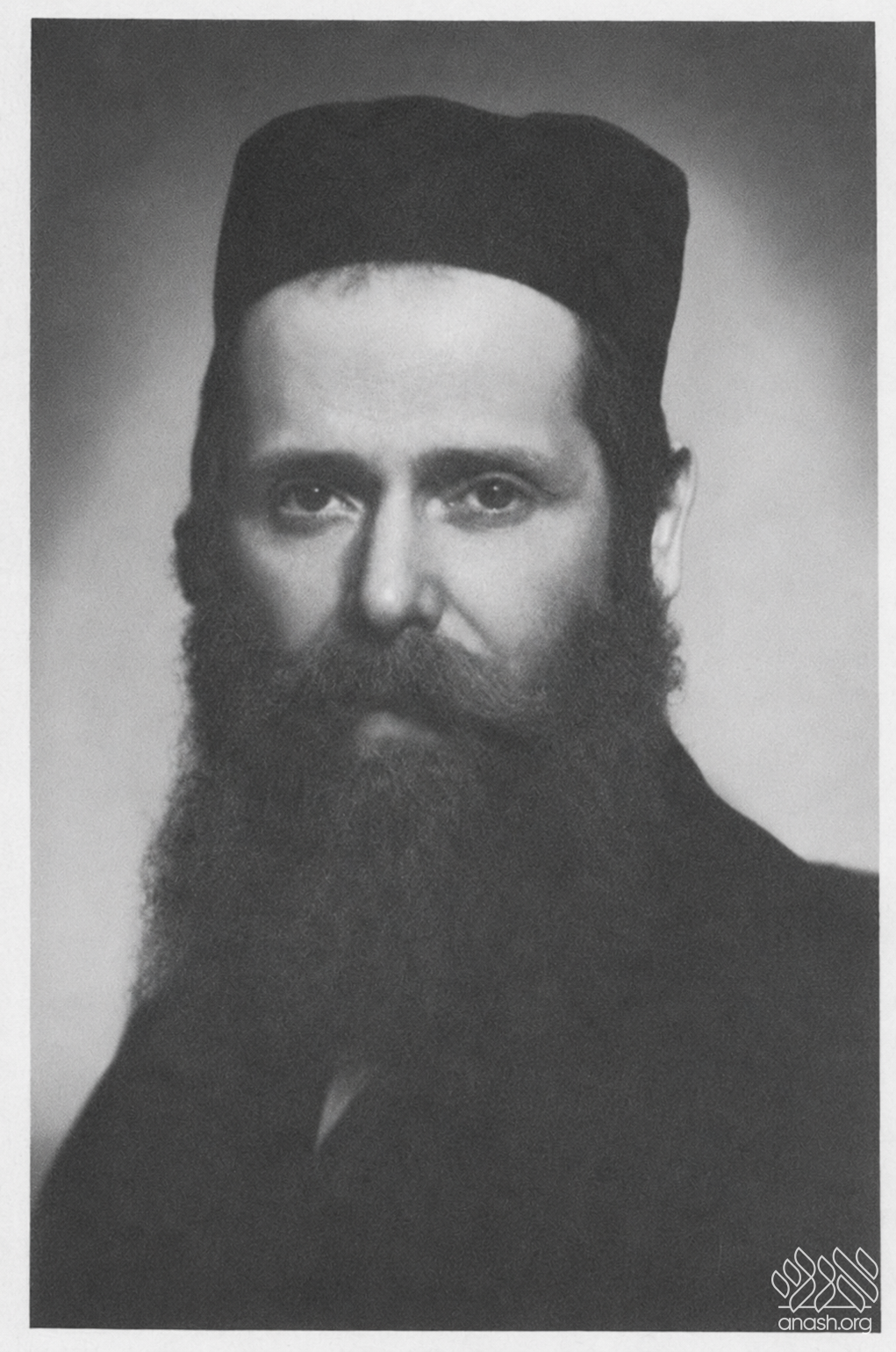
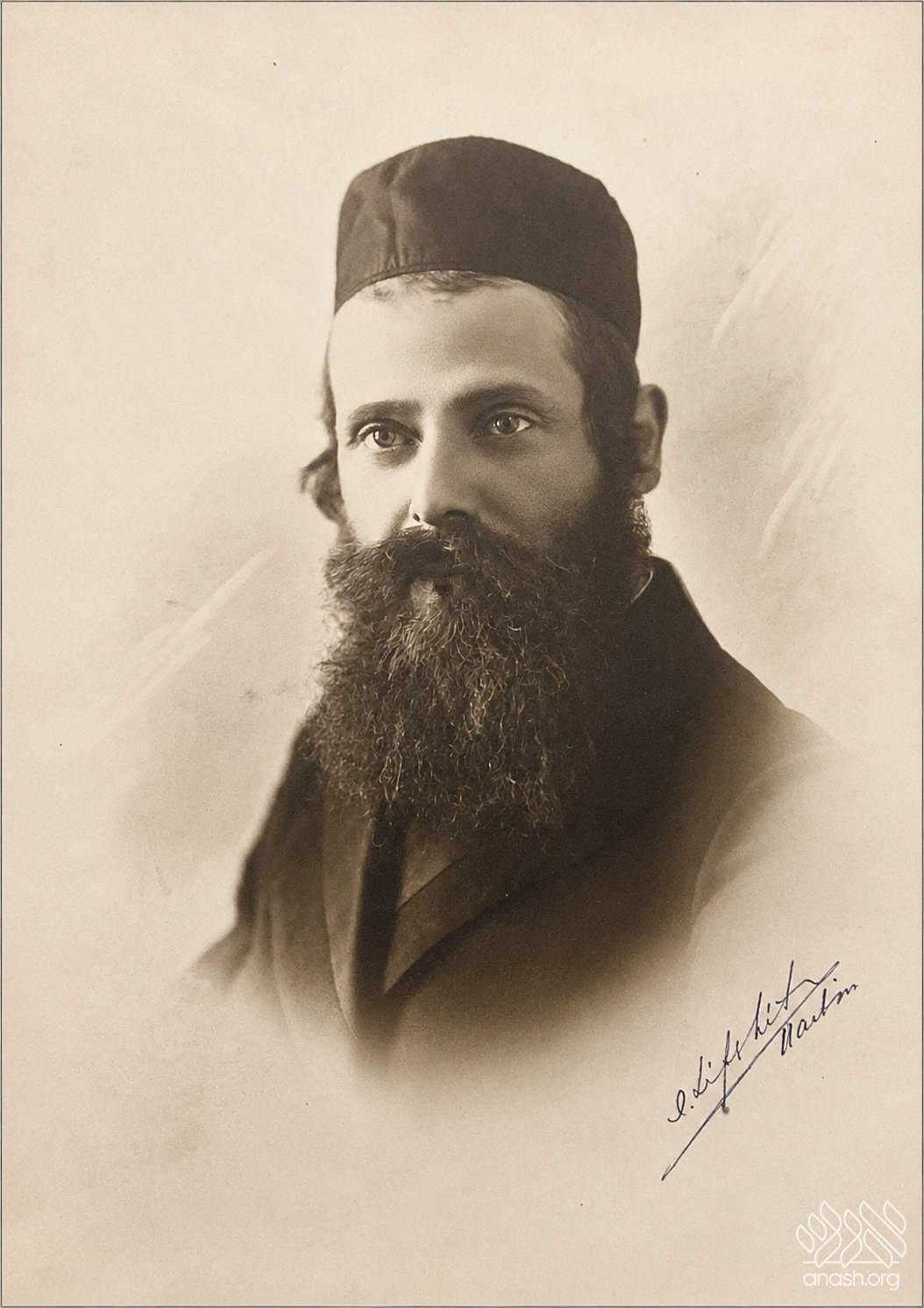
Harav Ashkenazi. Courtesy of Dovid Zaklikowski and HasidicArchives.com.
The section we cited earlier focused on Harav Ashkenazi and his activities in Shanghai. Zilberpefnig then relates the story of a young protégé of the rov, as he heard it from the very proud mentor. This is the story of “Walter of Hong Kong.”
Walter of Hong Kong
Hong Kong has played only a minor role in the history of Jewish migration. It served as a transit port for all of the ships sailing to the Far East, a place where passengers would dash ashore for a few hours, snatch a glimpse, and move on. Only a handful were privileged to see Hong Kong at close range, and when they did, it was largely thanks to a remarkable young man whom, on account of his youth, we shall call the Jewish vice-consul of Hong Kong. His name was Walter Duffield.
Walter was orphaned as a child. Until the age of fourteen, he was raised by Christians. When he grew older, his guardians told him that he was of Jewish origin and offered him a choice: he could remain a Christian or return to his people. Walter immediately decided to leave his guardians’ home and return wholeheartedly to Judaism.
Harav Ashkenazi of Shanghai took him in as a son. Walter lived in the rov’s home for more than two years, during which time he not only learned Yiddishkeit and the Yiddish language, but also absorbed, to his very core, the warm, folksy spirit of a religious Jewish home.
After earning his high-school diploma, Walter left Shanghai and the rov’s home and traveled to Hong Kong to pursue advanced training in education at the British university there. He chose teaching primarily because the British schools were closed on Shabbos.
Harav Ashkenazi
“From that point on—Harav Ashkenazi relates with the quiet satisfaction of a man saying, ‘See what I have raised!’—’my Walter’ turned Hong Kong around completely.” The Jews of Hong Kong, who had already completely assimilated, began to feel their Yiddishkeit once again.
Walter was one of the three regulars at the shul. Walter brought Yiddishkeit into Hong Kong’s Jewish club. He was the driving force behind the refugee-aid society. He was the representative of Yiddishkeit in a place where even “Judaism” was scarce.
The University of Hong Kong once sent a lengthy telegram to the rov of Shanghai regarding Walter. Walter had refused to write during an exam held on Shabbos, and the university authorities were seeking a special dispensation from the rov to permit him to write…
Every refugee who passed through Hong Kong carried only one address in his pocket: Walter!
The heart aches with pain when we think of our consul, who enjoyed no special diplomatic privileges and, when the time came, went to the front as a simple soldier. Like all the Jews of Hong Kong, he too served in the volunteer regiment that assisted the British army during the Japanese siege of the city.
Walter, did the merit of your good deeds stand by you on that dark and bitter day?
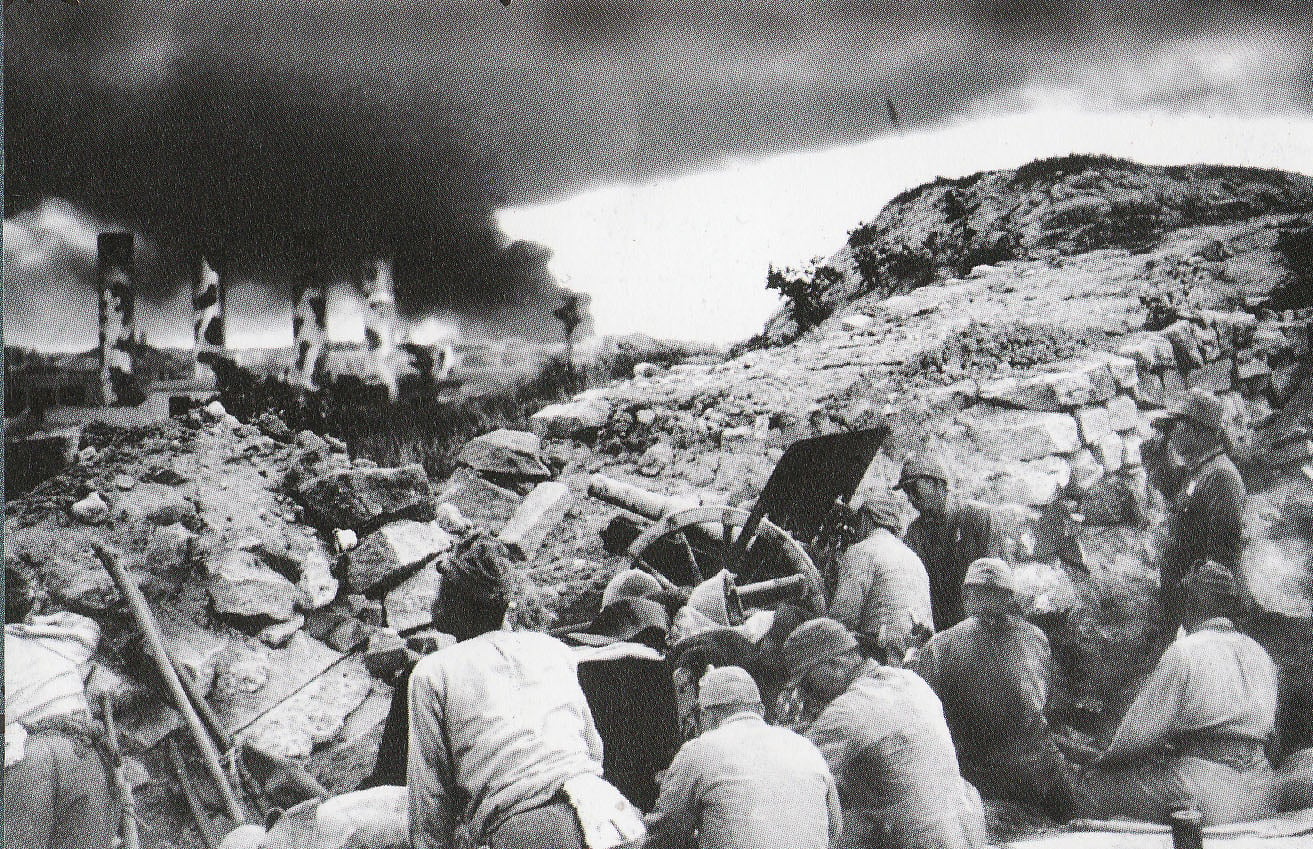
Japanese artillery firing at Hong Kong.
Zilberpefnig tells us an incredible story of a Jewish orphan raised by Christians who somehow landed on the rov of Shanghai’s doorstep. The rov raised him like a son, and he became the focal point of Jewish life in Hong Kong.
But this account leaves us with some questions: Where did young Walter come from? How did he end up in Christian hands? And finally, Zilberpefnig’s own concluding question: Did the merit of Walter’s good deeds stand by him when the Japanese besieged Hong Kong?
Walter’s Story
There’s no one better to answer these questions than Walter Duffield himself. Here is his story, as he related it in interviews.
Walter Duffield comes to communal work from an unusual background. He was born in England on April 2, 1921. His father was a shipping consul at the British Consulate in Shanghai. Walter was educated at Davenant Grammar in London and at a public school in Shanghai. When he was 11, his father died. The death of his mother, a Russian Jewess, one year later left 12-year-old Walter, an only child, an orphan and a ward of the consulate.
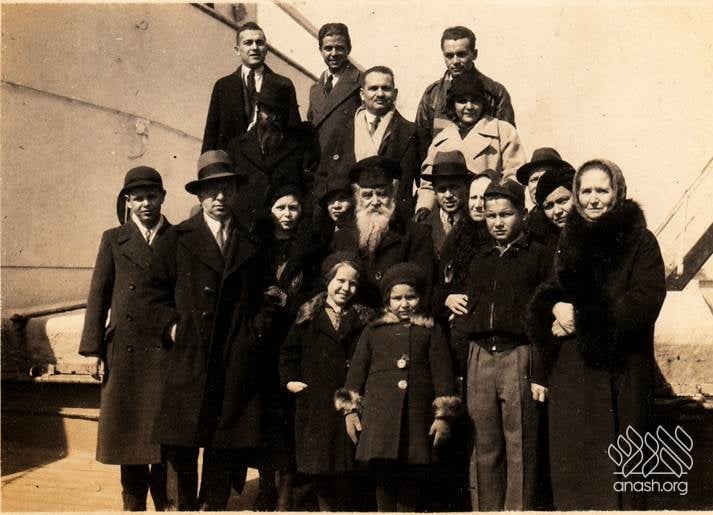
The extended Ashkenazi family in Shanghai bidding farewell to their parents and Harav Ashkenazi’s son Moshe as they depart for Eretz Yisrael, 24 Shevat 5694.
“My home had not been Orthodox, but I knew that I wanted to remain a Jew,” Mr. Duffield said. “The rabbi of the community, Rabbi Ashkenazy, a Lubavitcher, happened to have a 13-year-old son who had just gone to a yeshivah in Jerusalem. So there was a spare room in the house and he asked me to come and live with him.”
“I lived with the rabbi and was a ward of the consulate until matriculation when the consulate said ‘We’ve done our duty and will get you a job with a British firm.’ Rabbi Ashkenazy encouraged me to get some tertiary education. I wanted to study law but didn’t have the money to go to England. So I went to the University of Hong Kong (they didn’t have a law faculty). I graduated B.A. Dip. Ed. in 1941.”
Mr. Duffield intended to teach at a Jewish day school in Shanghai but World War II broke out. He was attached to the British garrison in Hong Kong on Christmas Day, 1941. He became a POW and in 1943 was sent to Japan as a dockyard worker on an island 30 miles from Hiroshima. He was there when the A-bomb was dropped. . . .
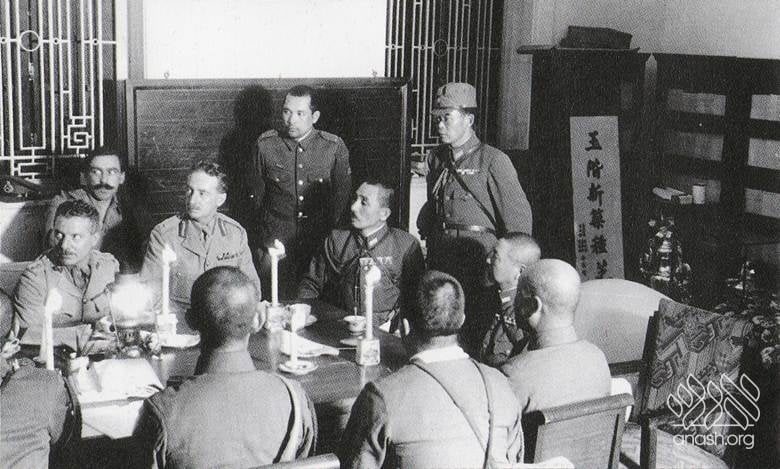
The surrender of British forces in Hong Kong, 5 Teves 5702 (December 25, 1941).
There were 40 Jewish prisoners of war in a camp of 5000, some of the Jews being with Canadian and others with various British regiments. Secret Sabbath and Holy Day services were held with two sedarim and a miniature Sefer Torah instead of a chumash. An ex-Yeshivah bocher was chazan (he had been taken prisoner as a member of the Free French Forces). The gabbai was the Hon. Philip Samuel, a son of Lord and Lady Samuel. The camp guards were as cruel as published reports have recorded. . . .
When the war finished, all British POWs in Japan were sent to Sydney. Because the political situation in Shanghai looked grim, Mr. Duffield decided to stay in Australia.
Walter Duffield’s account of his eventful life appeared in the Sydney Jewish News of 26 Cheshvan 5713 (November 14, 1952) and the Australian Jewish News of 19 Iyar 5731 (May 14, 1971). The citation above includes selections from both of these articles.
(Regarding the minor discrepancies between Walter’s account and the interview with Harav Ashkenazi, it seems logical to prefer Walter’s version.)
Walter’s account rounds out the picture given in Harav Ashkenazi’s interview and answers the questions we raised. Combining the two narratives provides us with the following outline:
Walter Duffield was born in England and lived as a child in Shanghai, where his father worked for the British Consulate. When both of his parents died, the 12-year-old boy was left alone in the world, and the non-Jewish consulate staff assumed responsibility for his care.
To their great credit, the staff offered the young orphan a choice: to be raised with them as a Christian or to join his Jewish brethren. Despite not having been raised in a particularly observant home, Walter chose to live as a Jew, and that is how the bar-mitzvah-aged boy ended up on the doorstep of the rov of Shanghai.
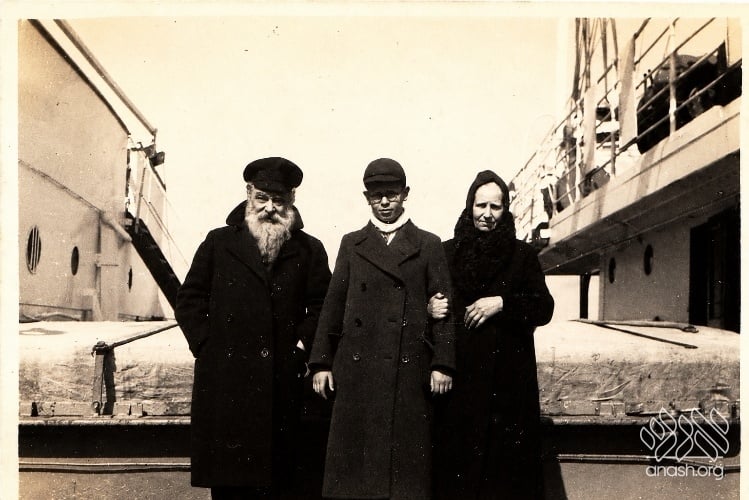
R. Shneur Zalman and Keila Ashkenazi with their grandson Moshe before departing for Eretz Yisrael.
As mentioned in Part II, in 5694 Harav Ashkenazi had just sent his 13-year-old son Moshe to Eretz Yisrael to live with his grandparents and study at Yeshivas Toras Emes. The rov took the lonely orphan into his home and raised him like his own son.
A few years later, when Walter graduated from school in Shanghai, the rov encouraged him to further his education, and he studied for a diploma in education at the University of Hong Kong. Loyal to the Jewish education he had received in the rov’s home, Walter became the central figure in Hong Kong Jewish life, as Harav Ashkenazi described in the Hatzofeh interview.
When Hong Kong fell to the Japanese in Teves 5702, Walter became a prisoner of war. This is why Zilberpefnig expressed such concern about his fate in the article he published a few months later.
We now know that Walter’s merits did indeed protect him, and he survived almost four long years of suffering in Japanese captivity. Throughout this time, he and his fellow Jewish POWs continued to tenaciously practice their Yiddishkeit. When the Japanese surrendered in Elul of 5705, Walter Duffield was finally free.
A New Life in Australia
The Australian Jewish press and other contemporary sources enable us to draw a rich picture of Walter’s life after his liberation and arrival in Australia.
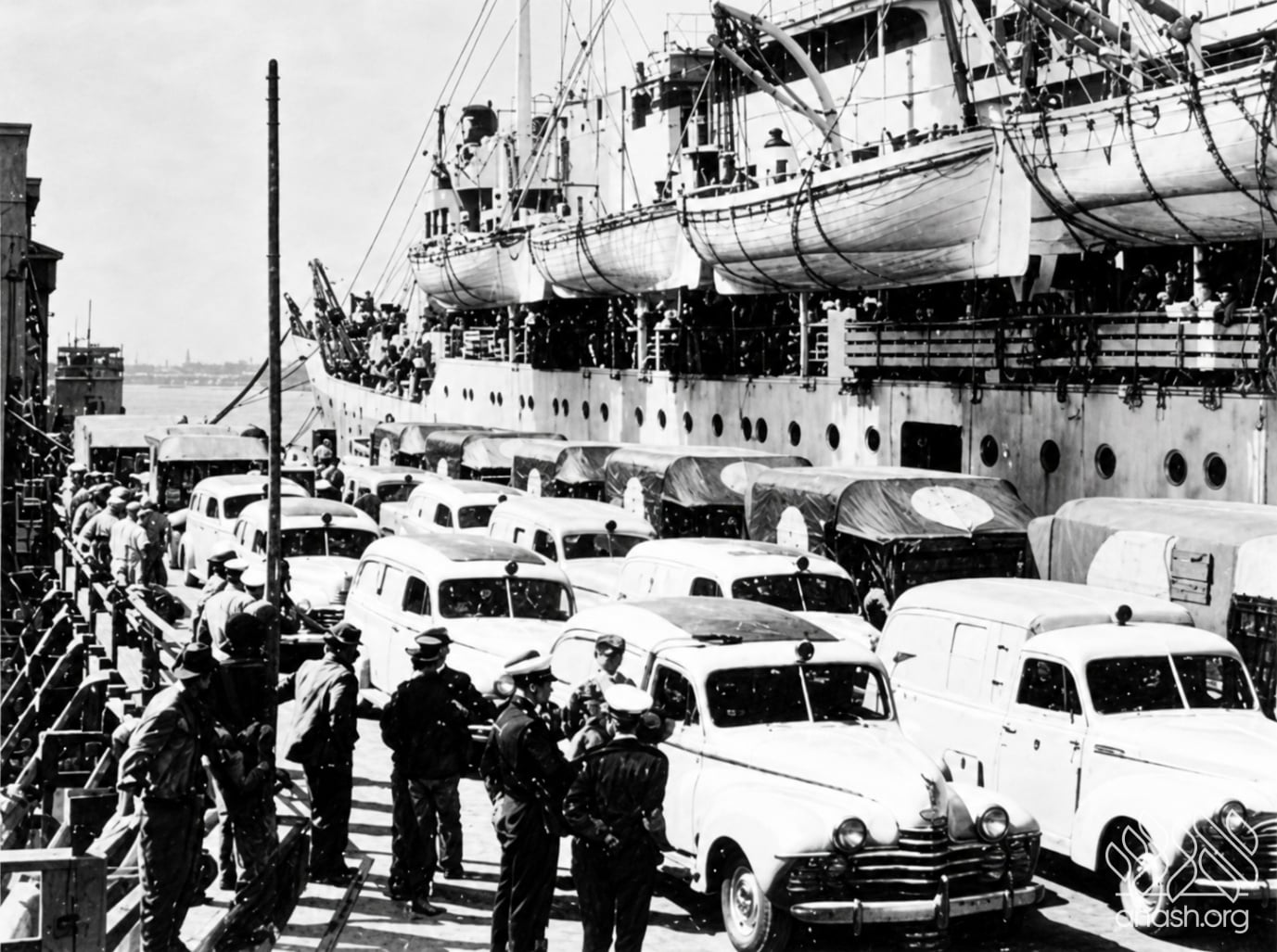
Ambulances lined up at Brisbane Wharf asH.M.H.S. Oxfordshire arrives on13 Tishrei 5706 (September 20, 1945).
Weak and emaciated after their terrible ordeal, Walter’s group of almost 400 POWs were sent on the naval hospital ship Oxfordshire to nearby Australia for treatment.
This was the first boat of released POWs to arrive in Australia, and their pitiful condition shocked the country when they docked in Brisbane on 13 Tishrei 5706 (September 20, 1945). Six of the released prisoners died during the voyage, and 87 had to be stretchered off and rushed to hospital. Those well enough to continue their journey, Walter among them, arrived in Sydney two days later and were taken to local hospitals for treatment and recovery.
With no family waiting for him in the UK, and the political situation in Shanghai precarious, Walter had no home to return to. Days after arriving in Australia, he applied for and received permission to stay and build his life there.
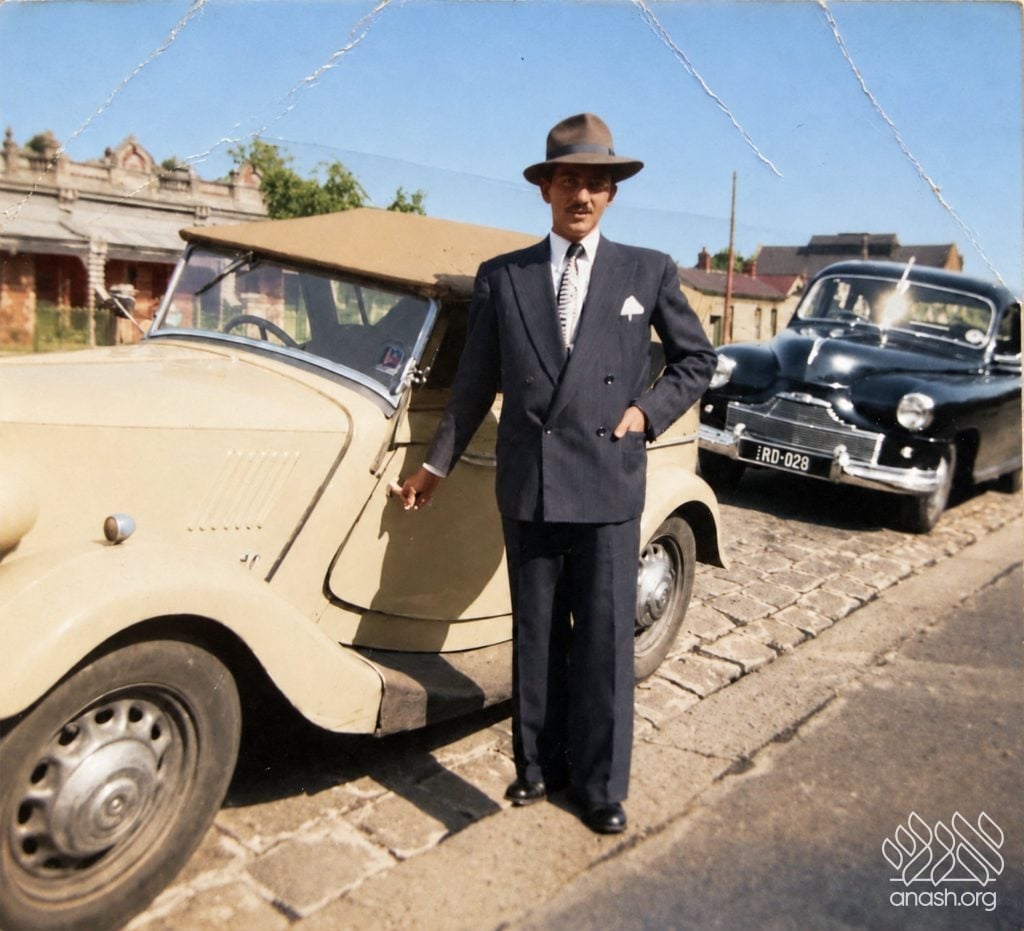
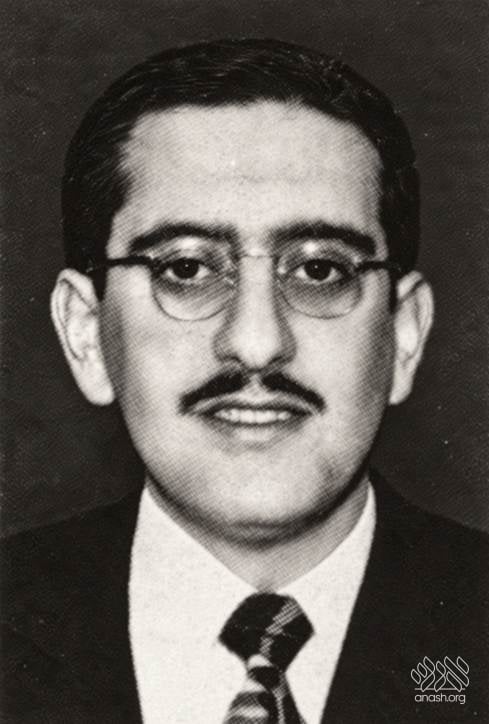
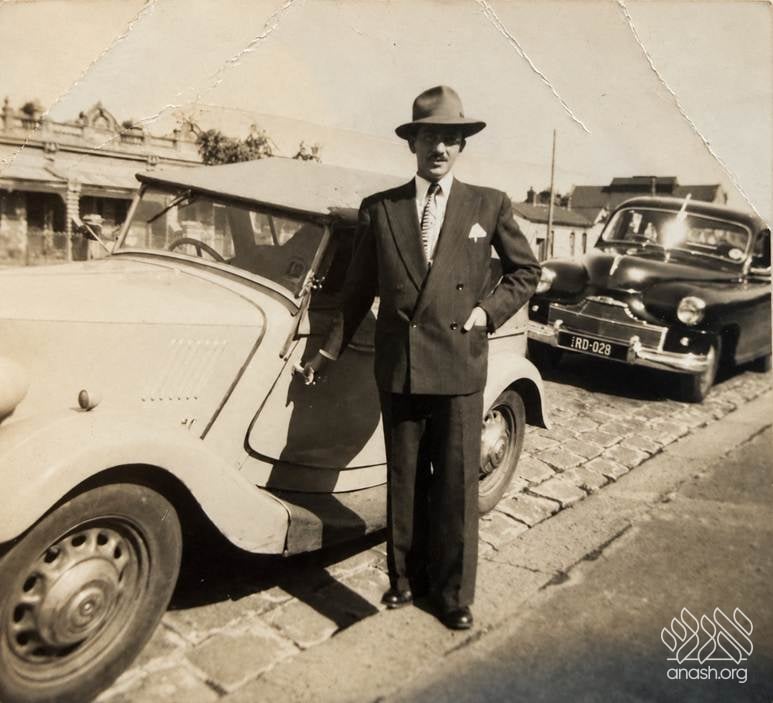
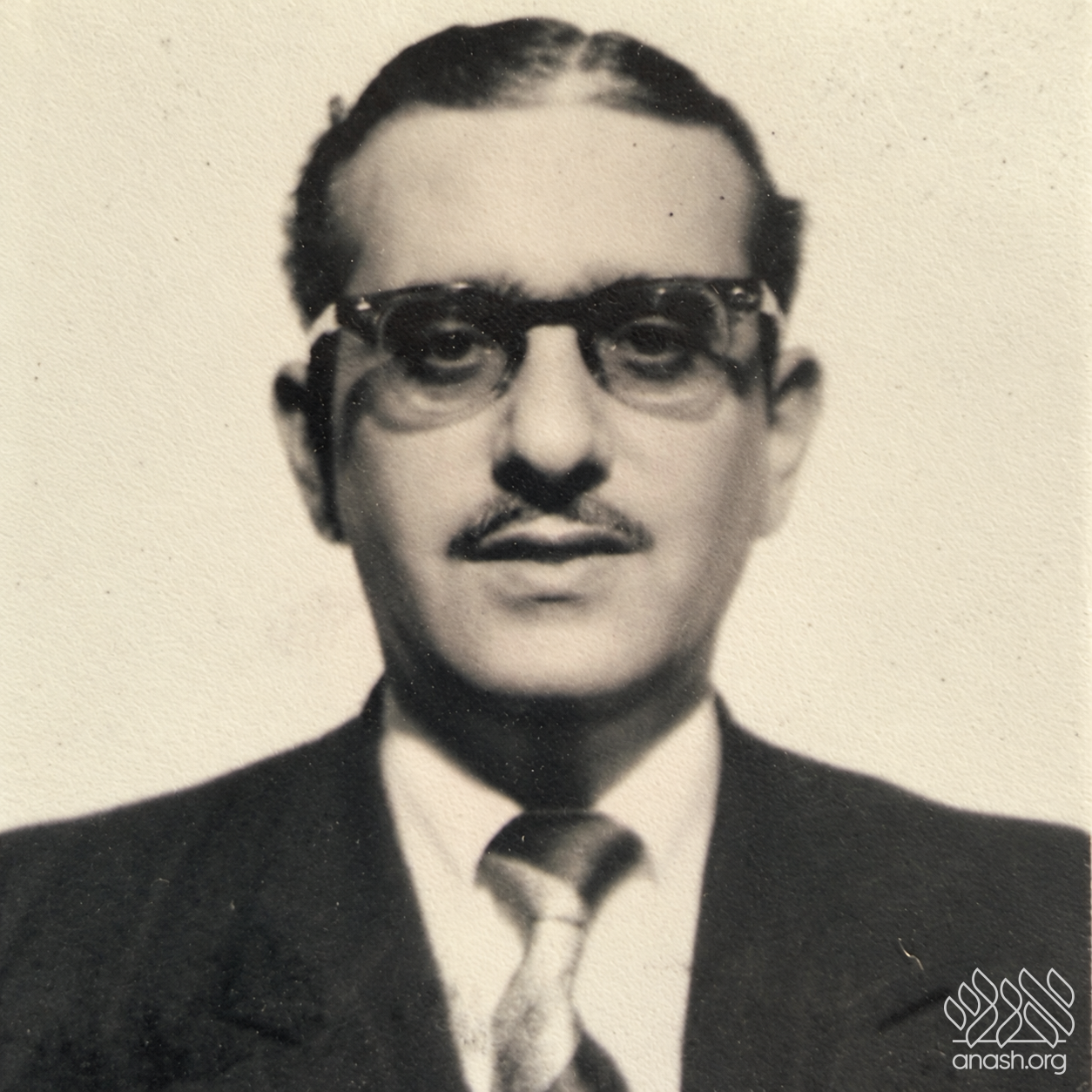
Walter Duffield
Immediately after settling in Australia, Walter entered communal service, a cause to which he would devote the rest of his life. He became the Program Secretary at Sydney’s Young Men’s Hebrew Association (YMHA), and Secretary of the local Zionist Federation.
After two years in Sydney, Walter moved to Melbourne, where he married Ruth Gubbay. In Melbourne, Walter became the General Secretary of the State Zionist Council of Victoria and served multiple tenures as General Secretary of the Zionist Federation of Australia and New Zealand.
As we saw in Part I of this series, Harav Ashkenazi was passionately devoted to Eretz Yisrael and an enthusiastic participant in all Zionist activities in Shanghai. Walter was following the example his mentor had shown him.
In matters of Torah observance as well, Walter was loyal to the path on which Harav Ashkenazi had raised him. During his early years in Melbourne, he was a prominent member of the Melbourne Hebrew Congregation in Toorak, and led the children’s program at the shul.
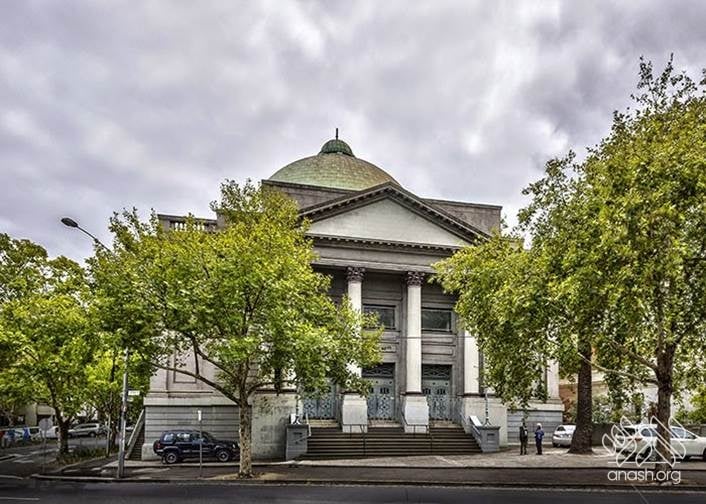
Toorak Shule, home of the Melbourne Hebrew Congregation since 5690.
But Walter didn’t feel at home at the Toorak Shule. The shul operated in the old English synagogue style, and it had various nontraditional features, such as a mixed choir. Walter campaigned against these practices, and also advocated for the shul to take a proactive outreach approach, rather than just focusing on serving its members.
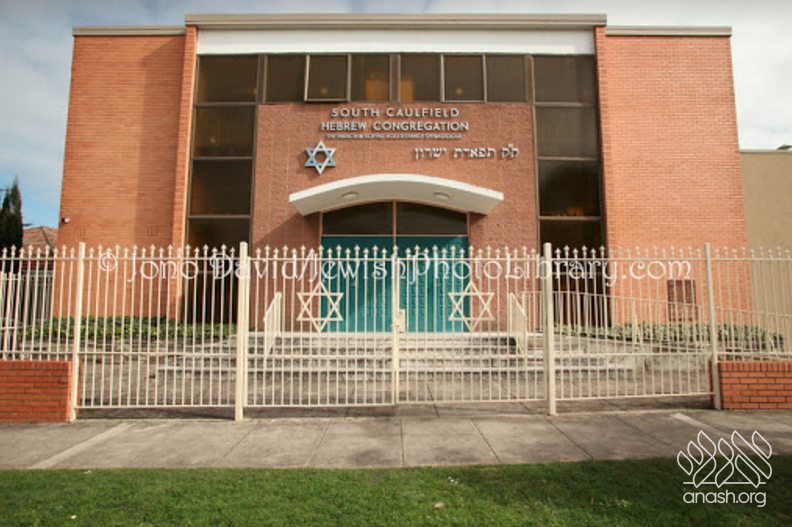
In 5714 Walter moved to South Caulfield, where he became a leader at the newly formed South Caulfield Hebrew Congregation, a more traditional and heimish shul. A lifelong campaigner for Jewish education, he became the principal of the shul’s popular Hebrew School and served a five-year term as president of the shul.
Beyond his role at the South Caulfield shul, Walter advocated for traditional standards in Melbourne’s shuls, using his oratorical skills at public debates to argue against the Reform movement and associated practices such as changing the language of the services to English.
South Caulfield Hebrew Congregation
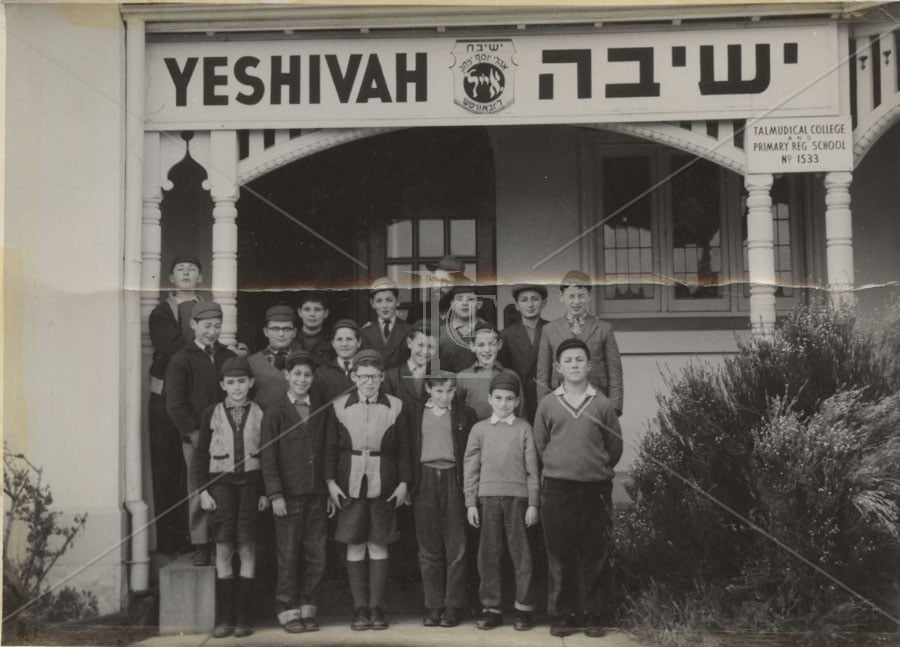
Raised as he was in the home of the Lubavitcher rov of Shanghai, it should come as no surprise that Walter Duffield was a staunch supporter of the Chabad institutions in Melbourne. In the early years of the Yeshivas Oholei Yosef Yitzchak school, many in the wider Jewish community looked down on it as an outmoded institution that had no place in the modern Australia.
But Walter understood the importance of a yeshivah for the entire community, and lent it his enthusiastic support, a rare endorsement from a prominent activist in the institutional establishment. Writing in the Australian Jewish News ahead of the opening of Yeshivah’s new building at 92 Hotham Street, Walter called upon the Jewish community to participate and extend its support to the fledgling Yeshivah (17 Adar 5715—March 11, 1955).
A House of Life
As you walk or drive past 92 Hotham Street, Melbourne, today, you can catch the murmur of a voice and the twinkle of a light—the voice of a Yeshiva Bocher at the newly founded Lubavitcher Yeshiva of Melbourne—the tune, the same ageless, expressive tune of Torah learning that has accompanied the Jew through the centuries, and the light—not a mere electric light but really the “light of the Torah”.
Aclass at Melbourne’s Yeshivas Oholei Yosef Yitzchak, 5720. The teacher in the back is R. Arel Serebryanski. Library of Agudas Chassidei Chabad.
Bialik, who wrote the beautiful lines above in his famous poem “Ha’Matmid”, called the Yeshiva a House of Life and the Treasure House of our Soul.
Melbourne Jewry has grown to maturity as a Jewish Kehilla with the establishment of the Yeshiva and owes a debt of gratitude to the self-sacrificing efforts of the Lubavitcher Hassidim and religious individuals who planted the Yeshiva in our midst.
There are those in the community today who consider the Yeshiva an outmoded institution of the past and say that Jewish Torah learning can be incorporated with modern University and High School education. But to do this relegates Torah learning to a secondary place and makes it a sort of adjunct to the study of science, medicine and general secular knowledge. The Yeshiva on the other hand, ensures that Jewish studies should have a primary place. Secondly Judaism is a way of life and the Yeshiva lives and breathes Judaism as no other type of educational institution can do. . . .
Walter Duffield, 5711.
Soon the Yeshiva will be inviting Melbourne Jewry to its official opening ceremony. If you want to be associated with this milestone in the educational, spiritual, and cultural development in the Melbourne Jewish community, make sure you are there—and, for the sake of the Jewish people and of Israel—keep alive that—“murmur of a voice—that twinkle of a light”—that re-assures us and tells the world that the people of Israel lives.
WALTER DUFFIELD
From another article written by Walter, we learn that he also visited the Rebbe in New York and participated in a farbrengen, but unfortunately, we don’t know any further details.
Walter’s fruitful life was cut short by a difficult illness, and he passed away in Adar of 5735 at the young age of 53. He left behind a widow and two young daughters.
In an interview with this column, his daughter Judy recalls him as a devoted public servant and a paragon of kindness who never spoke negatively about anyone. All his life, he remained devoted to the Torah and Yiddishkeit he learned from Harav Ashkenazi in Shanghai as a young orphaned boy, she says. The family in Melbourne continues to maintain their long-standing relationship with local Chabad institutions and rabbis.
Walter Duffield speaking at a function in Eretz Yisrael for olim from Australia, 5729.
Eretz Yisrael was a lifelong love and aspiration for Walter. As he once said in an interview, “I do have one ambition for changing my situation. I’d like to settle in Israel while I can still walk… and work.” He didn’t merit to fulfill this dream himself, but his children did, raising frum families in Eretz Yisrael.
A life of devotion to Torah and the Jewish people that all traces back to the kindness of Harav Meir Ashkenazi, who took a young orphan into his home and raised him as his own.
Mourning Harav Ashkenazi
After settling in Australia, Walter Duffield maintained his relationship with his mentor and foster father, Harav Ashkenazi. In later years he was in contact with Harav Ashkenazi’s son Harav Moshe, whose bed he had taken when he first entered the rov’s home.
When Harav Ashkenazi passed away on 26 Av 5714, Walter mourned him deeply, together with the many Jewish Shanghai refugees who had settled in Australia after the war.
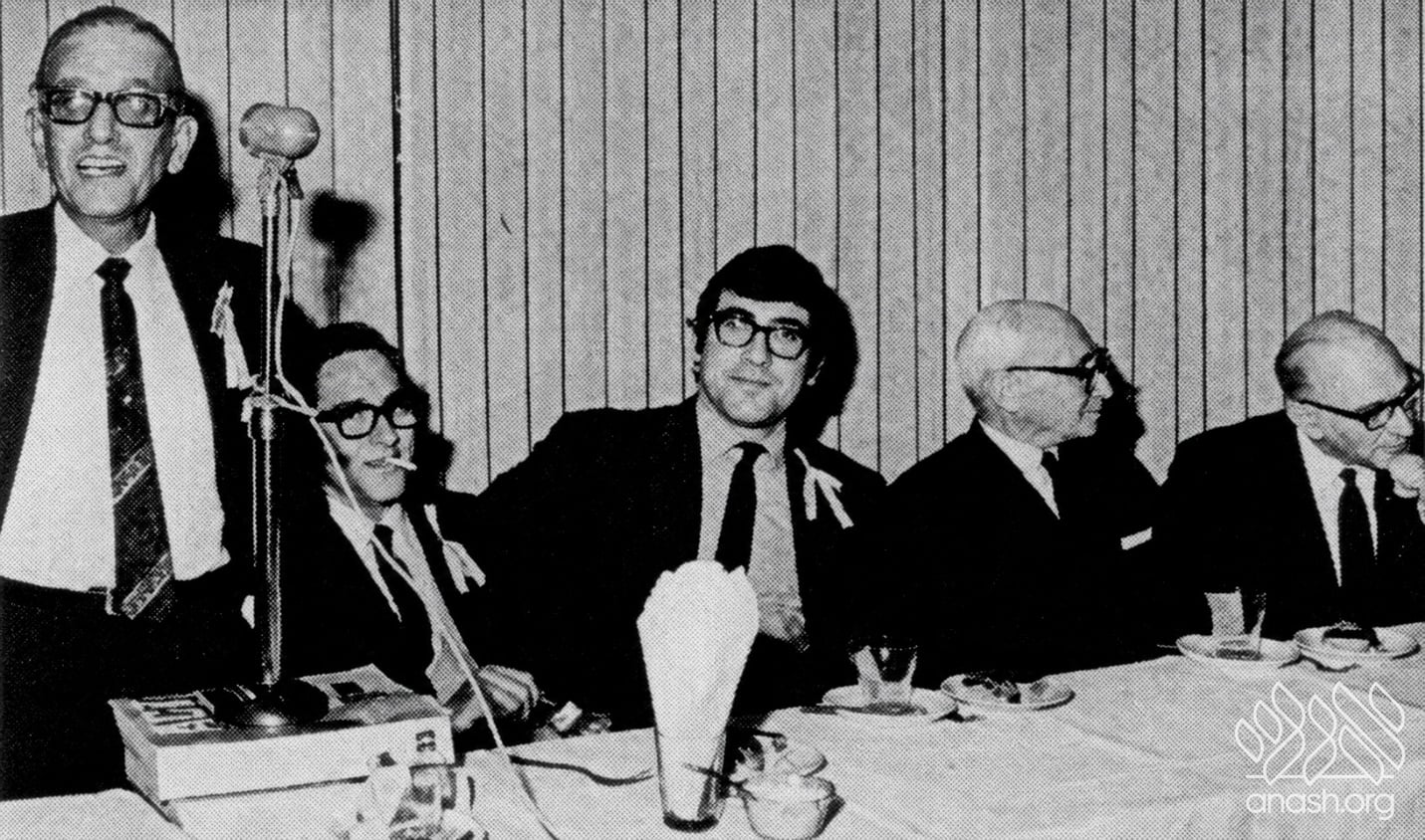
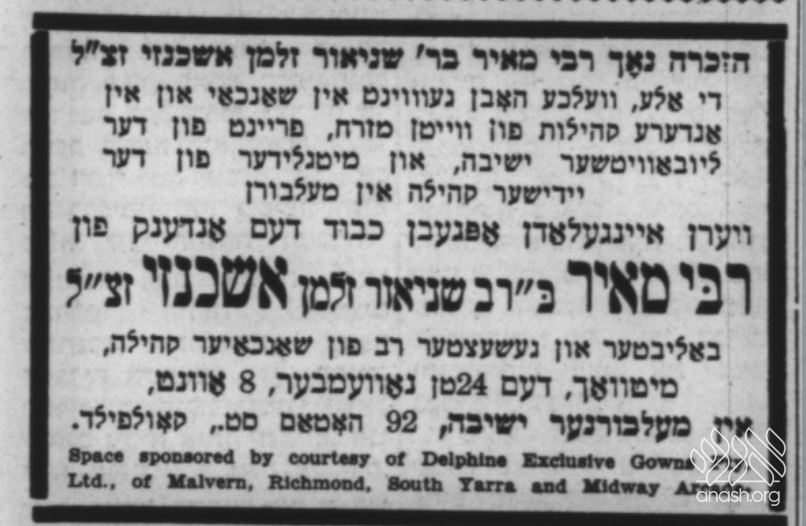
The Shanghai expats in Melbourne organized a memorial event in honor of their beloved rov, and Walter was among the eulogizers. The Australian Jewish News (15 Kislev 5715—December 10, 1954) reported:
Walter Duffield speaking at an appeal in 5719.
Shanghai F.E. Jews Honour Rabbi Meier Ashkenazi
About fifty former Jewish residents of Shanghai and other Far Eastern Jewish Communities, and friends of the Lubavitcher Yeshiva, met at the Melbourne Yeshiva, Hotham St., on Wednesday evening Nov. 17th, [sic] to pay tribute to the memory of the late beloved Rabbi of the Shanghai Jewish Community, Rabbi Meier B’rab Schneer Zalman Ashkenazi, the sad news of whose passing was recently received in Australia. A number of eulogies were made, speakers being Rabbi Gardyn, Mr. Joseph Tugendhaft, Mr. Shiffrin, and Mr. Walter Duffield.
After the tributes, those present contributed towards a fund for the erection of a memorial tablet in the Melbourne Yeshiva in the name of the late Rabbi Ashkenazi, and it was decided to suggest to the Association of Far Eastern Jews in Sydney that a Memorial Evening be held there as there were many more former residents of Shanghai and other Eastern Communities in N.S.W. than in Victoria.
Those present also decided to send a cable of condolence to Mrs. Ashkenazi and family in New York, expressing the grief of all former members of the Rabbi’s community at his passing, their deep appreciation of his wonderful life and devoted work for the Jewish people, and informing them of the memorial evening held here.
The invitation to the Melbourne memorial event for Harav Ashkenazi, published in the Australian Jewish News, 23 Cheshvan 5715 (November 19, 1954).
Harav Ashkenazi’s passing was mourned around the world, and many beautiful obituaries were written for him. We quoted from some of these in the earlier parts of this series. But no one eulogized the rov better than Walter Duffield, the orphan who grew up in his home and knew him so intimately.
Walter’s moving tribute appeared in the Australian Jewish News of 23 Cheshvan 5715 (November 19, 1954).
A Tribute to the Memory of a Beloved Rabbi
By Walter Duffield
Just before Rosh Hashona the sad news was received in Melbourne of the passing away in New York of Rabbi Meir b’rab Schneur Zalman Ashkenazy, of blessed memory, late Rabbi and spiritual leader of the Shanghai Jewish community. All former members of the Shanghai Jewish community, as well as former members of other Far Eastern communities mourn the passing of Rabbi Ashkenazy, who was a beloved and saintly personality in Jewish life in the Far East.
Nor was his influence felt only in the Far Eastern communities. Shanghai, a great metropolis and world port with a population of over 4 million people and the largest European settlement in the Far East was visited by Jews from all parts of the world on business or pleasure, and the work of Rabbi Ashkenazy for his community became a by-word for unselfish devotion to all who had the good fortune and privilege to meet or hear him.
Rabbi Meir Ashkenazy was the eldest son of a simple but deeply religious chassidic family. A graduate of the Lubavitcher Yeshiva, he was forced to serve as a young man in the Russian Army during World War I, and the hardships he underwent as a religious Jew during this period undoubtedly affected his health which, even in middle-age, was delicate.
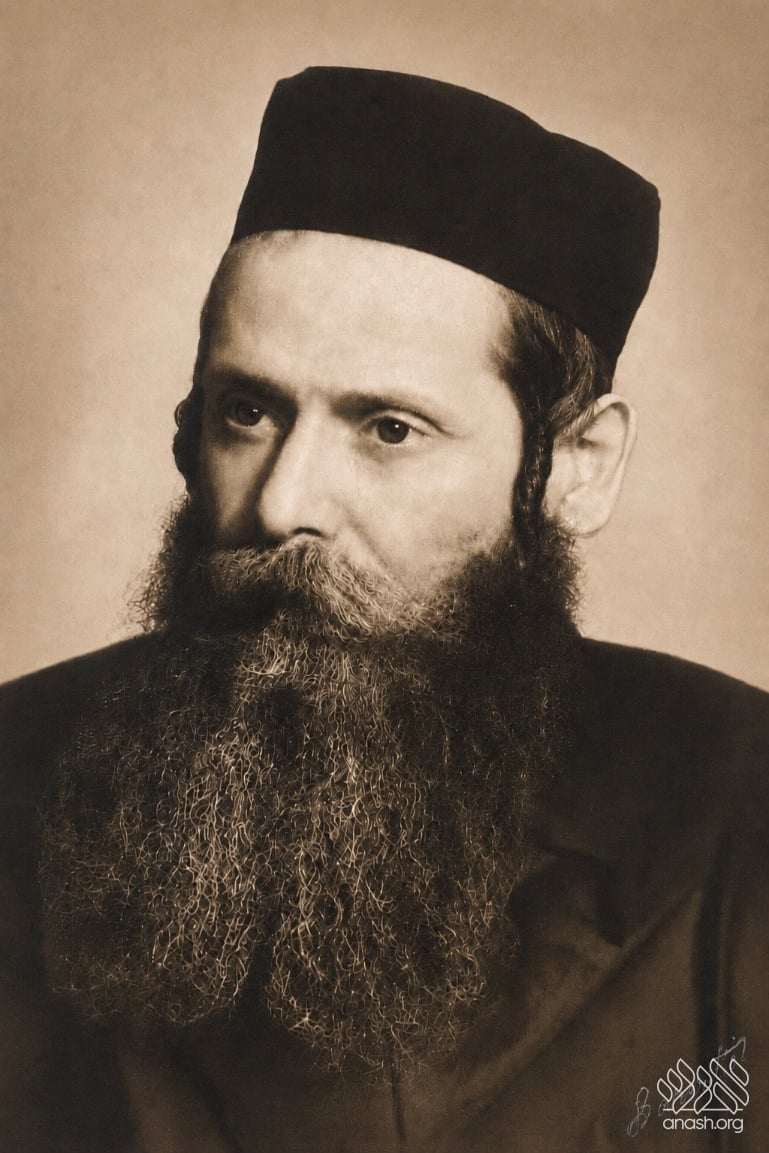
Harav Ashkenazi.
With the advent of the Russian Revolution, the Rabbi’s family moved eastwards across Siberia, and for a brief period the young Rabbi risked his life in keeping Judaism alive in the Siberian port of Vladivostok. As his flock gradually disappeared, either in flight from the Bolsheviks or arrested by them, the young Rabbi saw that his further stay there was pointless and finally escaped with his family to China. Here he found several growing communities of Russian Jews who had escaped from the Revolution and he accepted the spiritual leadership of the community in Shanghai. That was in 1926 and from then until 1948 by when the Communist regime in Shanghai had made most Jews emigrate from the city, Rabbi Ashkenazy was the Rav of the Ashkenazi Jewish community there.
And what was it that made Rabbi Ashkenazy so beloved of his community and all who met him? He was not a Rabbi in the sense that so many communities and so many Jews understand the title today. He was rather, like our sages and Rabbis of old, a teacher and guide, a father, beloved friend and confidant to all his flock, rich and poor, young and old alike. He knew no restrictions of congregation, synagogue, money, time, health or even family. His love of his people knew no bounds. His heart took in the sorrows, the problems, the fears, and the hopes of all who were in any trouble of any kind.
And he did not wait for those in need of help and sympathy to come to him. He made it his duty to know or find out how every family in his ever-growing congregation was faring. If he felt that he was needed, he would leave everything, and in complete disregard of his own welfare, would hurry to bring them comfort and relief and above all a real “helping hand”—even if it meant travelling for hours to distant parts of the city. He had no car. He received only a minimal salary. He owned no house or property. But he had a permanent place in the hearts of every Jewish family in the community. To them he was the living embodiment of the ideals of the Torah and the true Jewish life.
The door of his humble flat was ever open and his living room was the real centre of Jewish life in Shanghai. To the Rabbi came Jews from all walks of life with their problems, suggestions, hopes and needs and he somehow found enough love, strength and faith to impart so that all left feeling better for the visit. He was the most humble man you could find. But every Jew and Jewess in Shanghai stood when he passed—whether it was in a Jewish club or a non-Jewish hall. They stood, not because it was the right thing to do or as a matter of decorum, but because they felt and knew of the selfless devotion and boundless love which he emanated and with which he worked and prayed for one and all.
There are many people who, by nature studious, are able to spend their lives poring over their books and absorbed in deep study. And there are some, too, who, being good-natured and warm-hearted, delight in helping people and doing good deeds. But rarely—perhaps only one in a continent or once in a lifetime—do we come across a person able to combine, as Rabbi Meir Ashkenazy did, the highest qualities of learning and knowledge with a boundless urge to give his all, be it of means or of spirit, for his fellow beings.
Walter Duffield
A Jew of Rabbi Ashkenazy’s learning, piety, and personality, could probably have been spiritual leader in a larger, safer, and richer community than that in Shanghai. But he would not leave his flock while they needed him and even in this far corner of the world his life influenced many who may now be in varied parts of the world but who still remember the saintly deeds, the fatherly love, and the deep faith of this great Rabbi.
With his passing a real light of the Torah has been extinguished. A great scholar, a great heart and soul full of love for his people has left us. May the Almighty comfort his mourning family and give us, who remember him and mourn with them, the strength and courage to live as Jews in the light of his inspiring example.
The Prototype Shliach
Walter Duffield’s beautiful tribute to his rov and father figure does a masterful job of capturing the unique character of Harav Ashkenazi. His description of Harav Ashkenazi’s multi-faceted personality and activities, transcending typical labels and official positions, brings to mind the ideal of the contemporary shliach.
Harav Ashkenazi was not a shliach in the literal sense, as he was not sent by the Rebbeim to Shanghai. However, after arriving there independently, he established contact with the Frierdiker Rebbe and received his detailed guidance on what his role in Shanghai entailed and how to navigate its unique challenges.
Decades before the contemporary role and function of a shliach developed, Harav Ashkenazi was dealing with strikingly similar realities and operating in a way that makes him a prototype for what a shliach should be.
Unlike many classical rabbonim, the typical contemporary shliach doesn’t serve a largely homogeneous, tight-knit community with deep-seated traditions and well-established communal institutions.
The typical shliach serves a modern Jewish community that hails from a range of countries and ethnic backgrounds and spans a very broad spectrum of religious observance. A shliach doesn’t serve as a functionary providing religious services to the members of a congregation that pays his salary. He feels a responsibility to care for every Jew in his city, and in every area in which they need it. A shliach serves with absolute dedication, with no concept of “working hours” or other limitations.
This responsibility is reflected in the way a shliach functions. A model shliach wears a variety of hats: He is a rov and mara deasra, a communal activist, menahel of mosdos, teacher, and life counselor. In addition to the spiritual welfare of his community, he concerns himself with its material needs with equal dedication.
Shanghai was an early example of a modern Jewish community in an international cosmopolitan city. It was a new community which included Jews from a broad range of backgrounds: Sefardim of Iraqi origin, Russian Jews, British Jews, German Jews, and more. The level of observance of the local Jews ranged from old-school frum people to completely assimilated Jews, with every shade in between. Although he was nominally the salaried rov of the Russian Ashkenazi community, Harav Ashkenazi served them all.
He was a classic talmid chacham and rov who paskenedshailos for the city and broader region. He established and directed schools for boys and girls, taught Torah to youth and adults, and counseled people in need of empathy and sage advice.
And he showed the same degree of devotion and care for the physical needs of his flock as he did for their spiritual needs. When thousands of refugees from Europe arrived, Harav Ashkenazi spearheaded fundraising efforts to care for them, and they all saw him as a father figure who cared for them personally.
And when a young orphaned boy with no one left in the world showed up on his doorstep, he took him into his home and cared for him with the love of a father.
A shliach ahead of his time, Harav Ashkenazi is an excellent role model for ours.
With thanks to Walter Duffield’s daughter Judy and members of the Ashkenazi family for providing pictures and information.
To view all installments of From the Margins of Chabad History, click here.
For additional exclusive content, follow the column on X: x.com/ChabadMargins
COMMENTS
We appreciate your feedback. If you have any additional information to contribute to this article, it will be added below.











 COMMENTS


We appreciate your feedback. If you have any additional information to contribute to this article, it will be added below.