A Holy Jew Lived In Shanghai: The Remarkable Life of Harav Meir Ashkenazi
A learned rov, a tireless activist, a fearless leader, and a devoted chasid. From Cherikov to Vladivostok, Shanghai, and New York. In honor of his 72nd yartzeit, From the Margins of Chabad History tells the remarkable and colorful story of Harav Meir Ashkenazi. Part 1 of a series.
The name of Harav Meir Ashkenazi (5651-5714), the rov of Shanghai, is well-known and deservedly celebrated. Books and articles about the incredible survival of hundreds of Yeshivah bochurim in Shanghai all describe his heroic efforts and mesiras nefesh on behalf of the refugees. Even as some wartime events remain the subject of controversy, Harav Ashkenazi stands tall as a figure of universal consensus: a gaon and tzadik respected and loved by all.
But as important and life-saving as Harav Ashkenazi’s wartime activities were, they only represent a few years of his life. The broader story of his life, and particularly his 23 years as rov of Shanghai between 5686 and 5709, remains largely untold.
In honor of Harav Ashkenazi’s 72nd yartzeit today, 26 Av, From the Margins of Chabad History sets out to fill this gap and provide a fuller portrait of the unique life and character of this remarkable multi-faceted rov. This present article is Part 1, covering Harav Ashkenazi’s life until the end of World War II, while Part 2 will tell the story of the final years of his life.
Early Years
Harav Meir Ashkenazi was born in Cherikov, Belarus, on the first day of Chanukah, 25 Kislev 5651, to a Chabad family. As a young bochur, he traveled to learn in the renowned Yeshivah Tomchei Temimim in Lubavitch in 5666.
To his lifelong regret, Harav Ashkenazi was not able to stay long in Lubavitch. Less than a year after arriving, he fell ill with typhus and was forced to return home. But despite the short duration of his stay, the time he spent in Lubavitch shaped his life and identity forever.
After leaving Lubavitch, Harav Ashkenazi studied privately in Cherikov with Harav Chaim Eliezer Soloveitchik, a Kopsuter chasid, and received semichah from him and from Harav Tzvi Hirsh Tumarkin of Kremenchug.
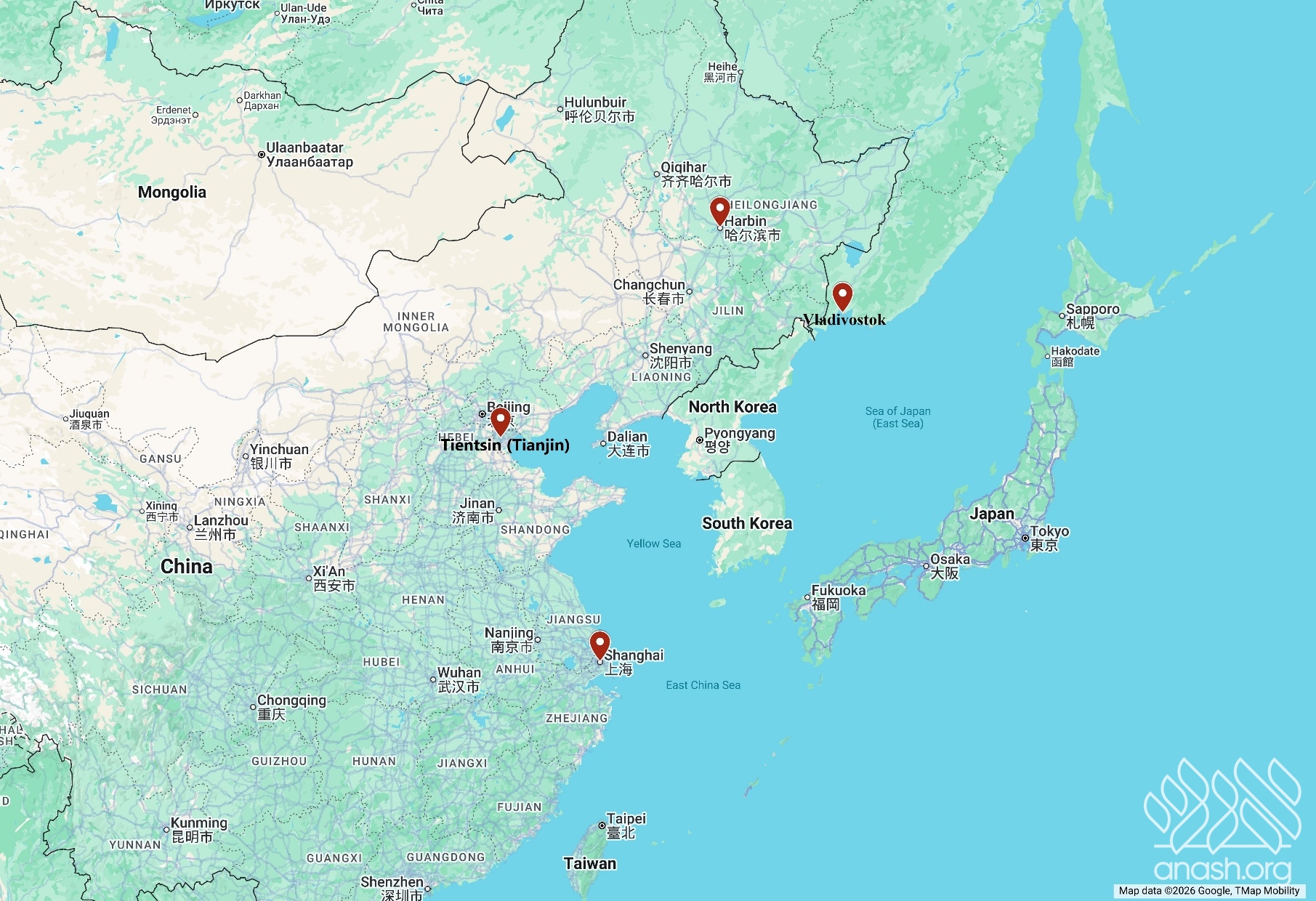
The major Jewish communities in the Far East, 5680
During World War I, Harav Ashkenazi was drafted into the Russian army, where he suffered greatly as a frum Jew. According to his New York Timesobituary, he was also wounded in action during the war.
After the Russian revolution of 5677 and the pogroms that swept the Russian Empire, Harav Ashkenazi and his family fled to the Far East. Harav Meir settled in the city of Vladivostok, a port city at the eastern edge of the massive Russian Empire, which was ruled by a multinational military force during this period. The young, and still unmarried, Harav Ashkenazi was appointed rov of the growing Jewish community in 5678.
Harav Ashkenazi’s parents settled in Harbin, a city in the Manchuria region of China that was home to a large Jewish community of around 20,000 people at this time. Also settling in Harbin was the Soloveitchik family from Cherikov. Harav Meir had been engaged to marry his teacher Harav Chaim Eliezer’s daughter Toibe Liba before the war, and on 10 Teves 5679 they finally married in Harbin.
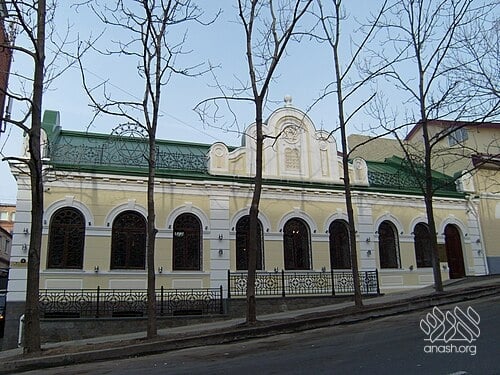
The Vladivostok shul, built in 5677. The shul was recently restored and is currently operated by Chabad of Vladivostok.
Rebbetzin Toibe was a true eishes chayil, and a full partner in all of her husband’s activities. In the devotion and care she showed to every individual, particularly to refugees who had nothing and knew no one, she was her husband’s equal. Indeed, Jewish refugees who spent time in Shanghai during World War II describe Harav Ashkenazi as the father of the refugees, and Rebbetzin Toibe as their mother.
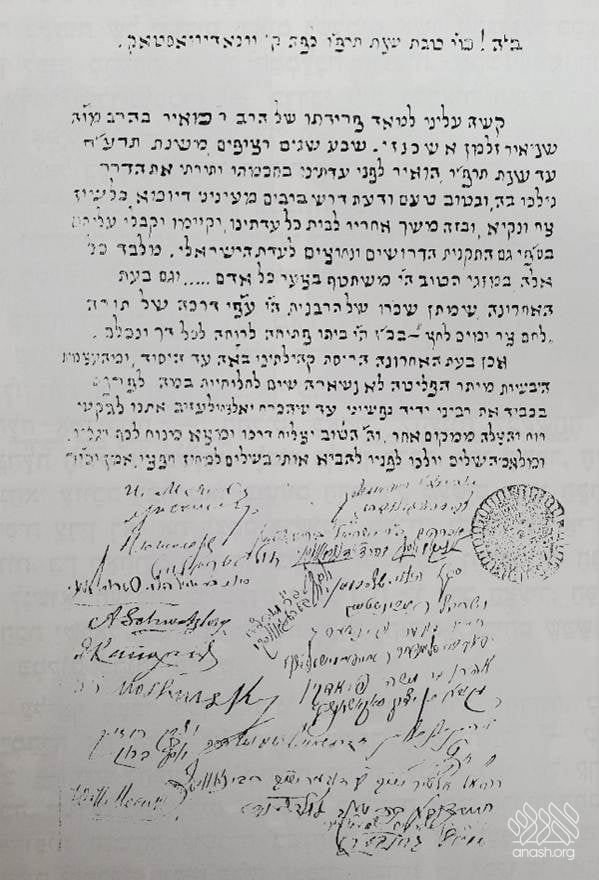
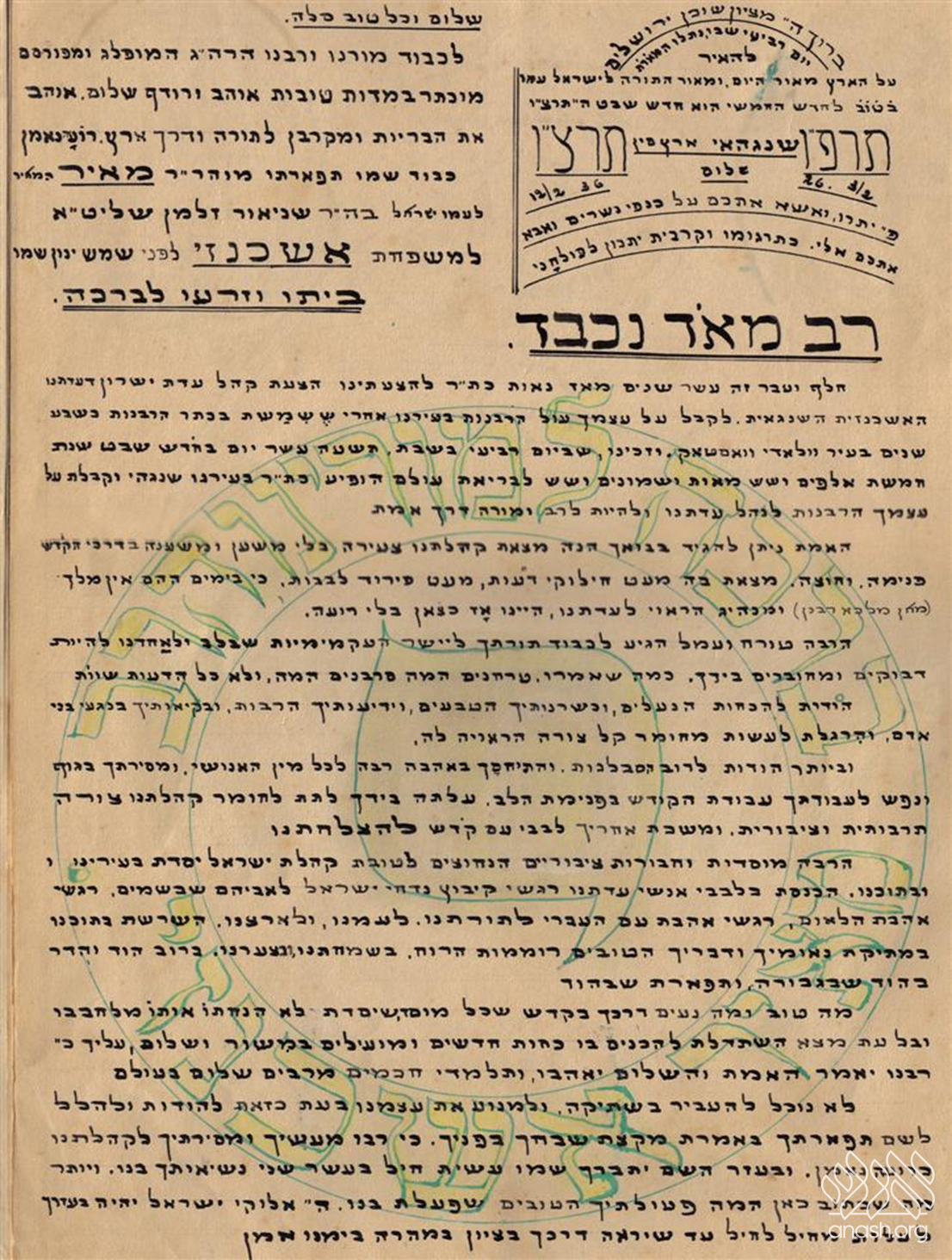
For over seven years, Harav Ashkenazi led the distant community of Valdivostock. We don’t have much information about this period of his life. A parting letter given to him by the members of the community when he left in Teves 5686 highlights some of the young rov’s characteristics: his captivating derashos, leadership qualities, deep compassion, and generous hospitality—even when he barely had enough food for his own family. These are the attributes that always defined Harav Ashkenazi, through all the phases of his eventful life.
We get a small glimpse into Harav Ashkenazi’s activities in Vladivostok from the memoir of Rena Krasno (5682-5769), who was born in Shanghai to a family that had previously lived in Vladivostok. Krasno kept a diary in her youth in Shanghai, and she later edited it into a memoir titled Once Upon a Time in Shanghai: A Jewish Woman’s Journey Through the 20th Century China. Her description of Harav Ashkenazi in Vladivostok, based on her grandmother’s stories, matches everything we know of him from later sources (pp. 13, 37-40).
The Vladivostok community’s parting letter to Harav Ashkenazi, 15 Teves 5686.
My father and his twin brother Gabriel who had arrived in Shanghai in 1921 later sent for their parents who had remained behind in Vladivostok. Their father, Boris Rabinovich, was a very religious man. Many people honored him, calling him Rabb (a Jewish learned man qualified to teach Jewish law). . . .
In Vladivostok, my grandfather was a close friend of Rabb Meir Ashkenazi. They worked night and day to help various Jews who had been harmed by anti-semitic pogroms.
Babushka often talks to me about my grandfather. . . In Siberia, she said, Meir Ashkenazi had been one of his closest friends, admiring him when, in Vladivostok, he worked round the clock to help Jews fleeing from pogroms in Russia. . . Thousands fled to Vladivostok looking for shelter and respite and were welcomed by Rabbi Ashkenazi.
In 5683, the foreign forces left Vladivostok, and the Soviets seized control of the city. Under Soviet oppression, Jewish life in Vladivostok was gradually shuttered, and most of the Jews fled into neighboring China.
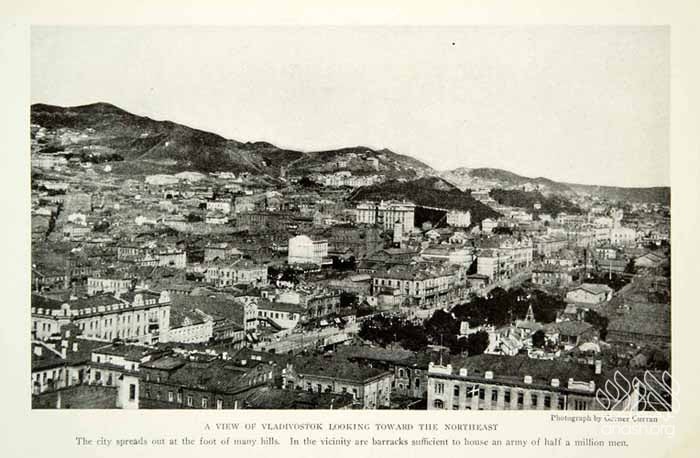
Vladivostok in the 5680s.
As the community fled, Harav Ashkenazi prepared to leave as well. He initially planned to move to Eretz Yisrael and received the Frierdiker Rebbe’s berachos and guidance for the move (Igros Kodesh, vol. 1, p. 506). Family tradition reports that he also received an offer of a rabbonus in Boston.
Arrival in Shanghai
In Shevat-Adar of 5686, Harav Ashkenazi arrived in Shanghai, presumably as a stopover on his journey. To understand the community he was walking into, a brief historical overview of the Jewish community of Shanghai is necessary.
The origins of the Jewish community in Shanghai go back to the 5600s (mid-19th century), when Elias David Sassoon, a member of the famous Sassoon merchant family from Baghdad, established a branch of the family trading company in Shanghai. The Sephardi Beth-El shul was the first founded in the city, in 5647 (1887). At this time, the old city of Shanghai was under Chinese rule, while Western powers governed autonomous zones called “Concessions.”
Ashkenazi Jews began migrating to Shanghai in the 5660s (1900s), establishing the Ohel Moshe shul in 5667 (1907). The small Ashkenazi community experienced significant growth after the Russian Revolution of 5678 (1918), and after the Soviets consolidated control over Siberia in the following years. With over 1000 members by 1926, the Ashkenazi community was numerically much larger than the Sephardi community, but they were financially and politically weaker.
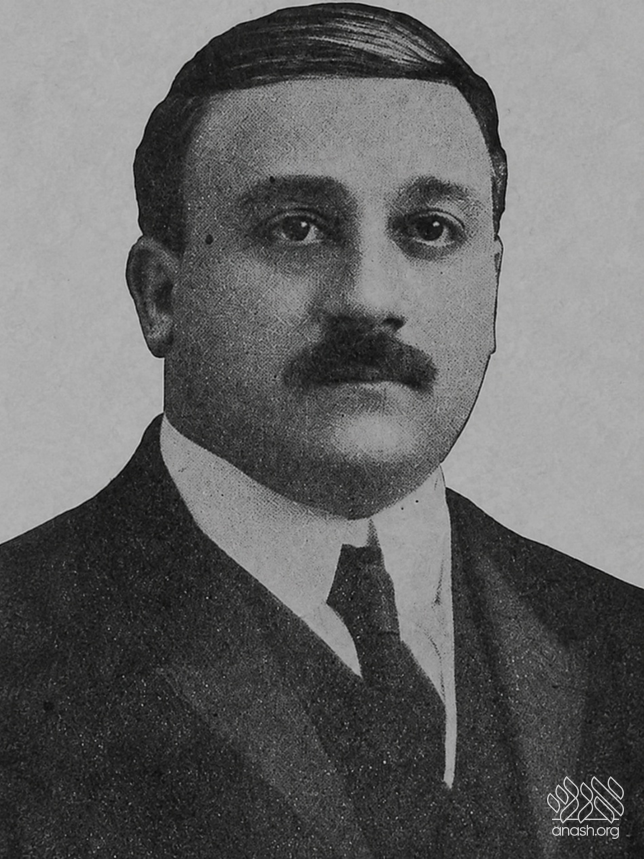
Nissim Elias Benjamin (N.E.B.) Ezra (5643-5696), founder of the Shanghai Zionist Association, and editor of Israel’s Messenger.
The state of Yiddishkeit in Shanghai was very weak. The city was a modern cosmopolitan place, without strong institutions and traditions. The general atmosphere was materialistic and lawless. Jewish observance was lax, and assimilation was a major problem. The Ashkenazi community included some committed older Jews—including some from a Chabad background—but the state of Jewish education was very poor, and the youth were disengaged.
The Shanghai Zionist Association, established by Nissim Elias Benjamin (N.E.B.) Ezra, a Baghdad-born Sephardi Jew, published Israel’s Messenger, an English-language newspaper. This newspaper, edited by Ezra, provides us with contemporary reports on Harav Ashkenazi’s activities in Shanghai, and we will quote from it extensively.
The first report about Harav Ashkenazi appeared on 19 Adar 5686 (March 5, 1926), immediately after his arrival in Shanghai:
Rabbi Zalman Ashkenazi has arrived in Shanghai from Vladivostock. It is not improbable that he will accept a position from the local Ashkenazie community as its spiritual leader. Rabbi Ashkenazi is a sound Talmudic scholar and has an engaging personality. He will doubtless be an acquisition to local Jewry.
This report got Harav Ashkenazi’s name wrong, naming him as Zalman instead of Meir. As we will see, Harav Ashkenazi used his father’s name (Shneur Zalman) as part of his own in English. During his first years in Shanghai, he styled himself as S. M. Ashkenazi, and later as M. Z. Ashkenazi. It appears that his use of his patronymic led to this confusion.
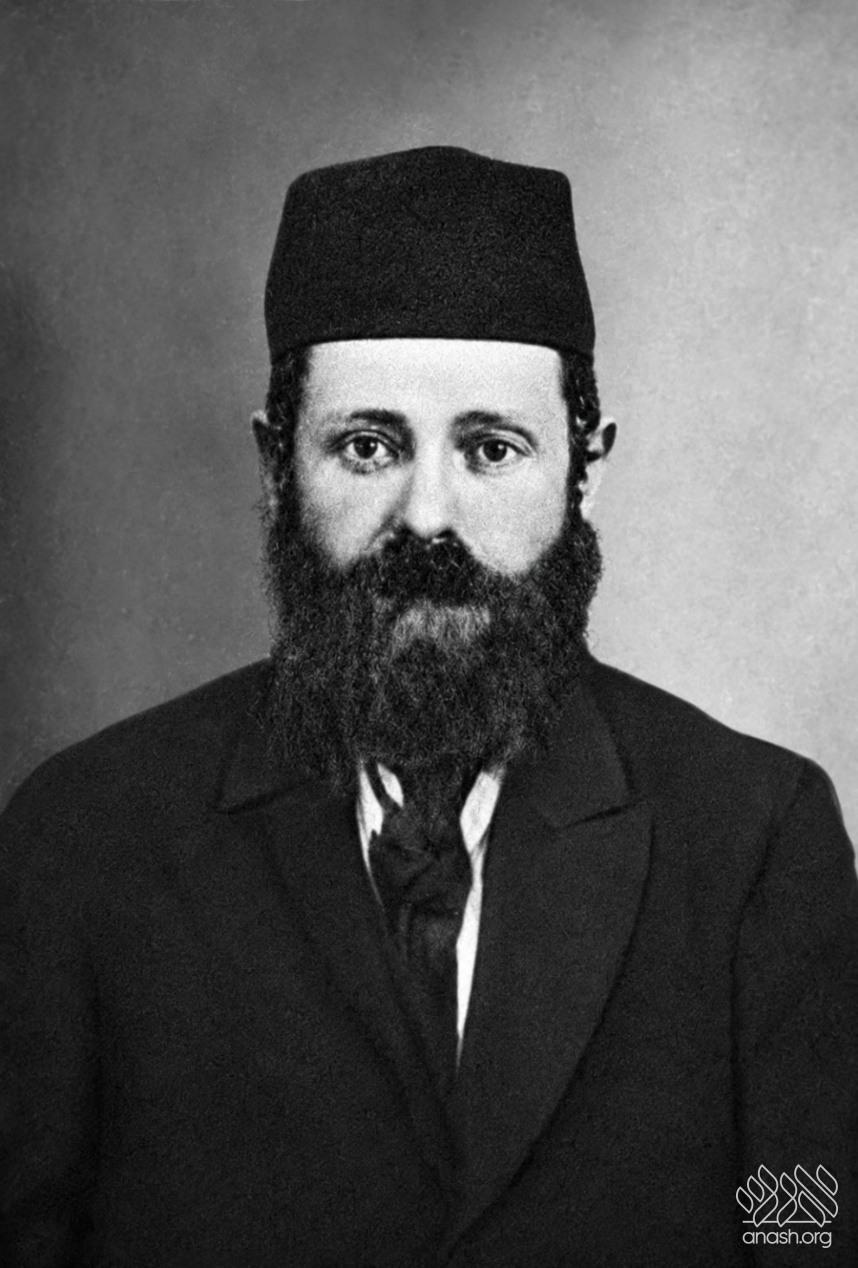
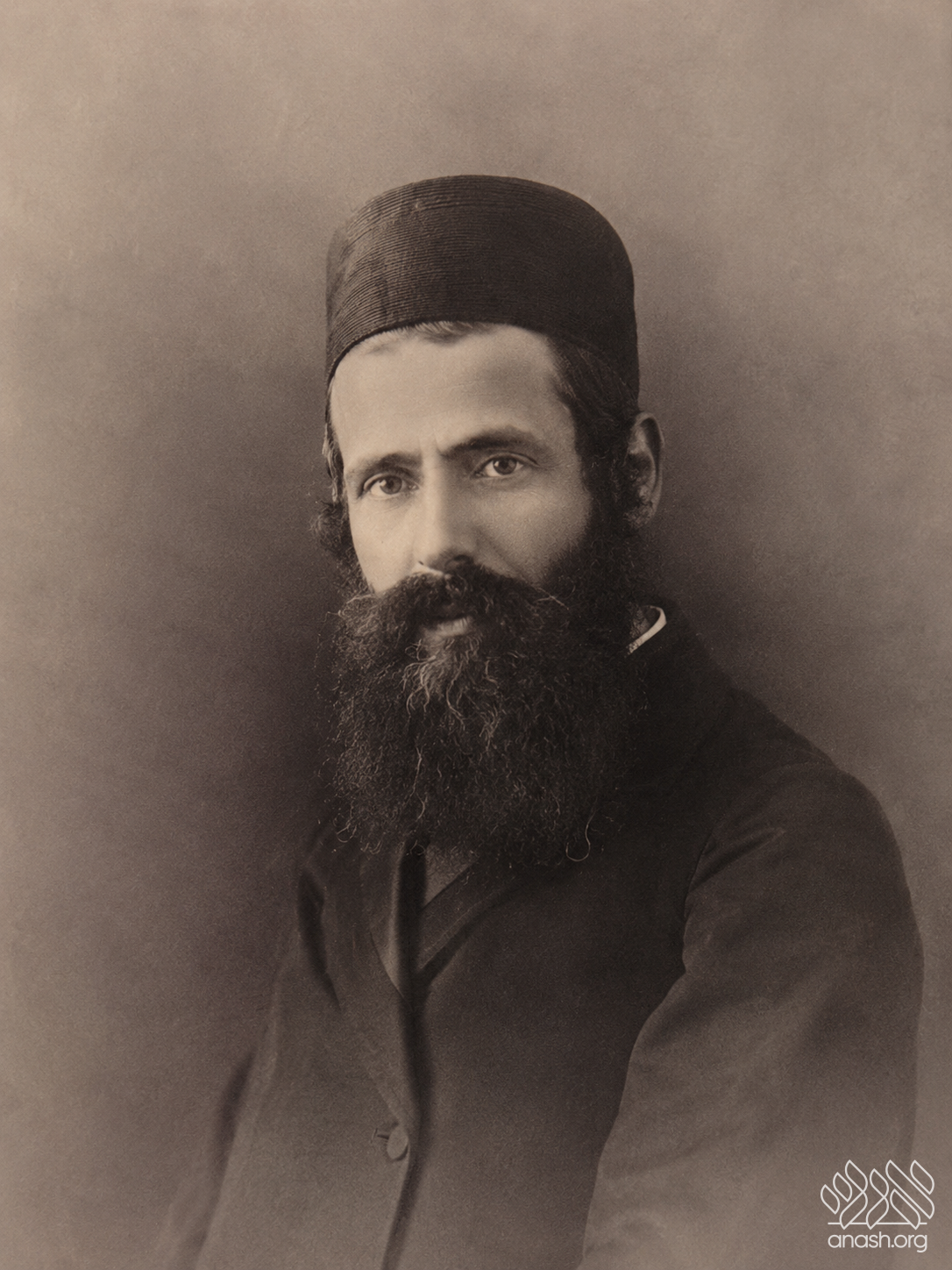
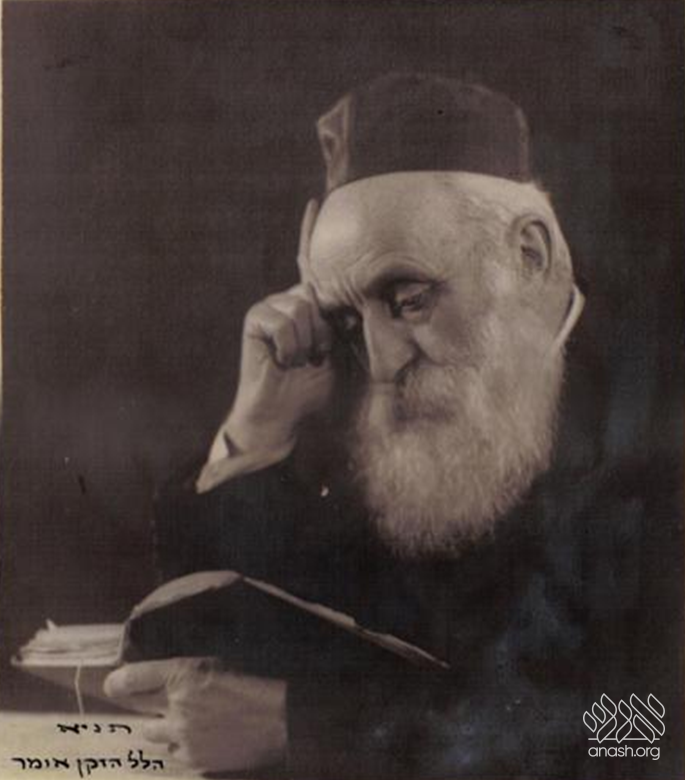
This picture of Harav Ashkenazi was used in Israel’s Messenger during his first years in Shanghai.
Sure enough, Harav Ashkenazi was indeed appointed as rov of the Shanghai Ashkenazi community. In fact, according to an album produced in honor of Harav Ashkenazi’s 10th anniversary as rov, his appointment was a little earlier than Israel’s Messenger recorded it, on 19 Shevat.
Harav Ashkenazi’s appointment came at a time when the community was growing, as more refugees like the rov himself arrived, and as the community was in the process of acquiring a new building for their Ohel Moshe shul, which had previously been housed in rooms allotted by the Sephardi Sheerit Israel synagogue.
Israel’s Messenger reported on 23 Iyar (May 7):
Our Ashkenazie brethren have also substantial records of good work to show to their credit. First and foremost, they have acquired a commodious place of worship in the most central district of Hongkew, and to cap the climax they have recently engaged a Rabbi from Vladivostock to preside over their spiritual needs. Rabbi Ashkenazi is entitled to a hearty welcome in our midst and we hope his pastoral work in Shanghai will be productive of good results.
Rena Krasno’s description of Harav Meir and Toibe Ashkenazi as she knew them in her youth up contains some background information about the rov’s appointment, as she heard it from her grandmother (pp. 37-40):
Rabbi Ashkenazi is a Lubavicher Hassid, a member of a very pious sect who strictly observe Jewish laws and traditions. Their teachings are based on the three pillars of “Wisdom, Insight, and Knowledge.” . . .
The Masthead of Israel’s Messenger, 19 Adar 5686.
Rabbi Ashkenazi is a tall, handsome man while his wife is physically plain. However, the rabinsha’s intelligence, kindness, and practical wisdom quickly earned her the position of First Lady in the hearts of Jewish Shanghailanders. Babushka, Papa’s mother, idolizes her and often speaks to me about her generosity and understanding. In fact, Babushka told me that it is on the initiative of my grandfather (who passed away when I was three) that Meir Ashkenazi was invited in 1925 to Shanghai. At that time, the Jewish Community included only some 300 people and their synagogue was in a private home. Later, a building was rented on Wayside Road in the International Settlement, its second floor removed, pillars erected to support the roof, and a mezzanine constructed since women prayed separately from men. The architect of this proud new synagogue was my father’s twin brother, Gabriel.
One of Rabbi Ashkenazi’s achievements was to bridge differences between the Ashkenazi and Sephardi Jewish Communities. . . . Sadly, one of the first duties of Rabbi Ashkenazi in Shanghai was to conduct a funeral service for his longtime friend, my grandfather.
Harav Ashkenazi immediately got to work in Shanghai, giving speeches and establishing shiurim in Mishnah and Gemara. Israel’s Messenger reported (23 Iyar—May 7):
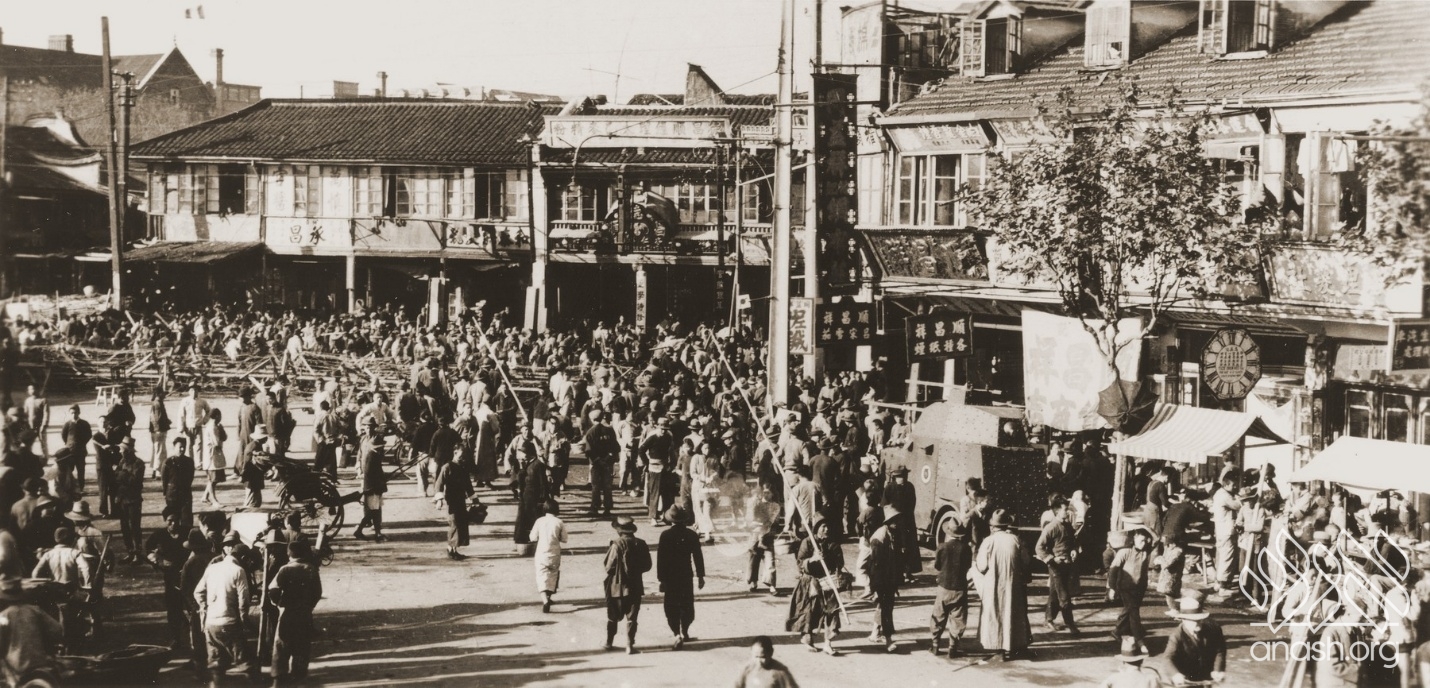
The French section of Shanghai, 5690s.United States Holocaust Memorial Museum
Since the arrival of Rabbi Ashkenazi in Shanghai he has delivered several sermons during the services at the Ohel Moshe Synagogue. He is also expounding daily the Mishna to the newly-formed Society for the Study of Mishna (Hebra Mishnayoth) and Talmud to Hebra Shas. It is hoped that classes for the children will also be organized in the near future. In our next issue we shall publish an interview with Rabbi Ashkenazi.
As promised, the next issue of Israel’s Messenger (22 Sivan—June 4) contained an interview with the new rov about his background, the state of the Jews in Russia, and his plans for the Shanghai community. We produce the article here in full, except for a few lines towards the end that appeared garbled in the original.
An Interview With Rabbi Ashkinazi
Jewish Religious Disabilities In Soviet Russia
By J. L’ami
The Ashkenazi Community of Shanghai are to be congratulated on the occasion of having secured the services of Rabbi Meir Shneior Zalman Ashkinazi as their spiritual leader. Rabbi Ashkinazi has a very pleasing personality and impresses those who come into contact with him, and there is no doubt his stay in Shanghai will result in many far-reaching consequences to the Jewish Community at large.
In spite of his young age, Rabbi Ashkinazi is a protagonist of the old Rabbinic school (ultra-orthodox) with all its aspects. His sermons are a spectrum of passages from the Talmud, Midrash, Poskim as is customary with the types of Rabbanim of the Eastern European Jewry, (Russia, Poland and Litvonia) in contradistinction to the Western European types of Rabbis, to whom the ancient Jewish literature is but a secondary matter.
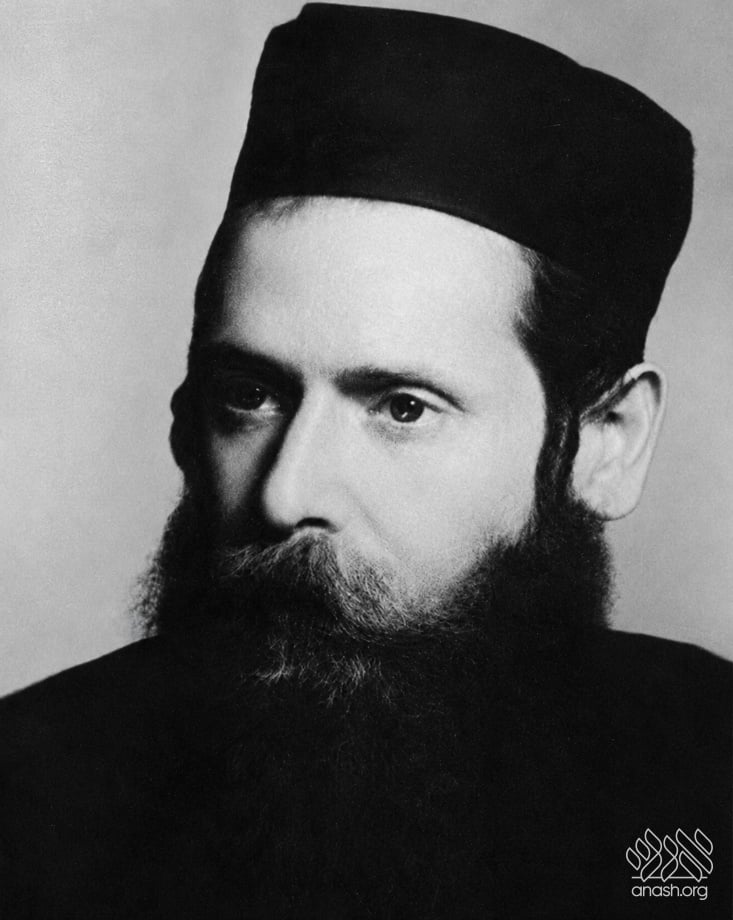
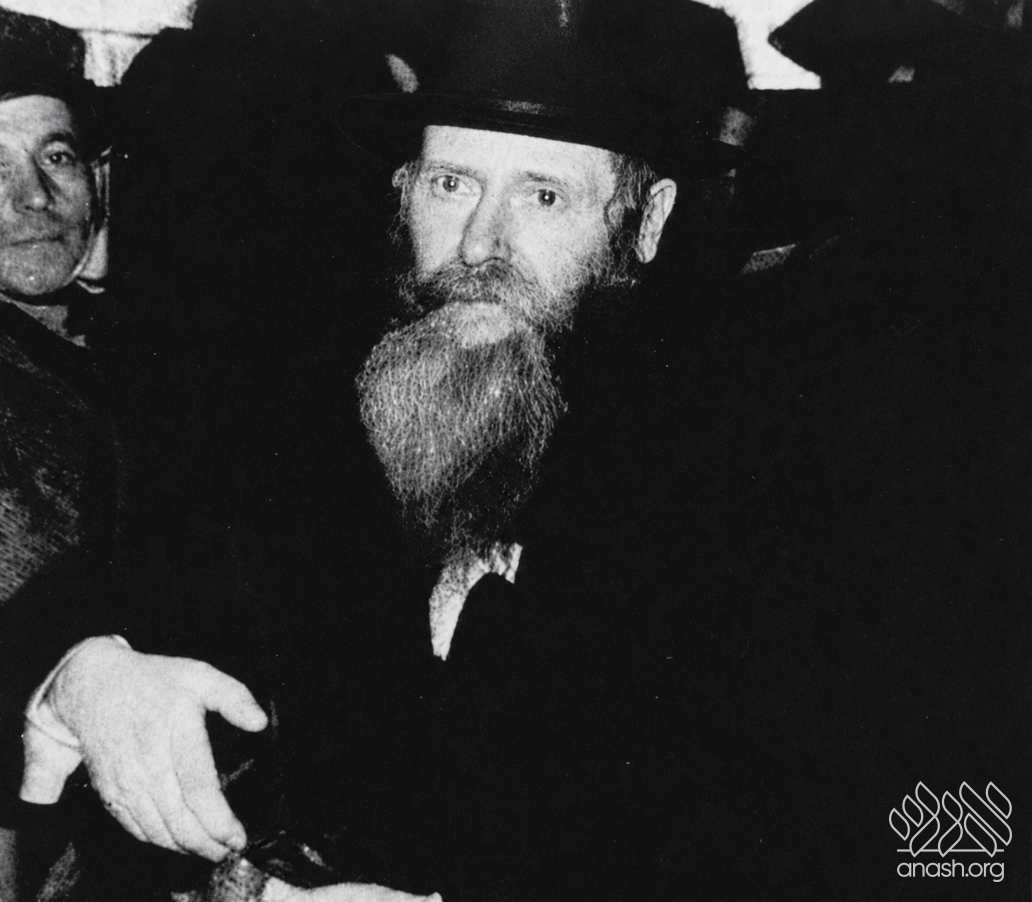
Harav Ashkenazi
That the local Community is in need of a leader goes without saying. The growth of our Ashkenazi section during the last fifteen years has by far outnumbered the Sephardi Community which had been in Shanghai for more than half a century. The variety of customs and even dinim among the Jews in Shanghai resulting from their being brought up from all the four corners of the earth, has many a time resulted in clashes among the members of one and the same Synagogue, and it is only the authority of a Rabbi that can dispel these differences and bring about uniformity of customs and clearness of vision.
A Fine Career
Rabbi Ashkinazi is a native of Litvonia and entered the yeshiba at the early age of 10 years. He spent his early days in the yeshiboth of Dubrovna (well-known all over Russia for its famous taleth-trade) and Liubavitsh having been the seat of the famous hasid-rabbi the founder of the so-called HBD (“chabad” section of Hasidim).
At the age of 18 years, Rabbi Ashkinazi obtained the title Rabbi securing his “semicha” from the Rabbis of Cherikoff and Liubavitsh (both in Litvonia) whence he was invited to Vladivostok to occupy the post of Rabbi of the Jewish Community.
For more than eight years Rabbi Ashkinazi was active in Vladivostok and acquired the highest respect and esteem of the local Jewry. Besides his regular duties he organized a Talmud Torah for the poor children, was a Committee member of the Zionist Organization and ex-officio in the various Jewish organizations in connection with the many refugees, and helped in the repatriation of Jewish prisoners of war, etc., who were passing Vladivostok, the only outlet to the sea of former Russia.
With the occupation of the district by the reds it was apparent that Jewish activities were destined to die out, and to-day there is hardly any remnant of the former flourishing Jewish Community. Most of the properties were confiscated, thus reducing the Jews to extreme poverty and compelling them to migrate. The Soviet anti-religious efforts are playing havoc with the rising generation. Zionism is being considered “imperialism” of the worst degree and the adherents thereof are either gaoled or banned to the remotest places in northern Siberia.
Jewish Economic Life Shattered
This picture of Harav Asheknazi was used in Israel’s Messenger beginning in 5689.
The Jews are at present passing a period of unheard sufferings. It is true they are not being persecuted by the government as Jews, but their existence has been made impossible by virtue of the economic policy of the Soviet. The struggle for existence is indescribable. People still exist from the past, i.e. selling quietly their own hidden jewellery in order to keep body and soul together, and no one knows what will be the next fatal step.
Education, Jewish And General
It is true that the government has opened up many schools, but these are only for the proletarians’ children. The so-called burgoise children (to which practically all the Jewish children are classified, for their parents were traders or otherwise non-proletarians before the revolution) are left to their own fate.
The main subjects throughout Russian schools is how to hate counter revolutionaries, and anti-religious propaganda. The latter propaganda, curiously enough, has brought about a very strong religious feeling among many who before were by no means adherents of religion, but as a whole all the traditions of centuries are being rooted out with a vigour unparalleled before. It is no wonder that parents are anxious to have their little ones taken away from the poisonous influence of Bolshevism especially on young minds.
The above reason was mainly instrumental in Rabbi Ashkinazi’s decision to leave Vladivostok coupled with the practical extinction of Jewish life in that city. The Soviet officials make every obstacle possible for intellectuals to leave Russia and it was only after two years’ attempts on the part of Rabbi Ashkinazi that he was granted a visé.
In Shanghai
Rabbi Ashkinazi is very optimistic with regard to his new Community. The fact that the Ashkenazi Jews of this city have attained a certain amount of unity and organization in spite of the cosmopolitan character of their origin speaks highly for their good qualities as Jews and citizens of their respective States in general, and he is confident that Shanghai Jewry will in time become the leading Jewish centre in the Far East. Certain shortcomings were unavoidable in the past, but with the present influx and settling down of a good portion of the regular type of Eastern European Jews with quite a few intellectuals well versed in matters Jewish, one believes he is living in a real Jewish town. The many Jewish organizations of Shanghai with provisions for religious, educational and charitable needs of the Community are a healthy sign . . . .
Then there are matters of inter-communal interest between the Sephardi and Ashkinazi Jews. The new Rabbi has not had yet the opportunity of coming in proper contact with the Sephardim of our city, on account of his not being conversant with the English language but hopes to overcome this difficulty before very long.
The Pre-War Years in Shanghai
Harav Ashkenazi was hired to serve the Ashkenazi community in Shanghai. But with his Torah scholarship and engaging personality, he quickly gained the respect of the Sefardi community as well.
The Sefardi community was serviced by “reverends,” religious functionaries trained to serve as chazanim and conduct the basic elements of Jewish life, but not talmidei chachamim and rabbonim in the classic sense. As a result, Harav Ashkenazi became universally recognized as the highest Jewish authority in Shanghai, a “Chief Rabbi” of sorts.
The Beth Aharon synagogue in Shanghai. During World War II, this building housed the Mirrer Yeshivah.
Shortly after his arrival in Shanghai, the Sefardi community dedicated their new shul, Beth Aharon, sponsored by the wealthy local businessman Silas Aaron Hardoon, then one of the richest people in the world. Harav Ashkenazi was an honored participant at the dedication, and also wrote a letter of blessing to the community on the occasion (Israel’s Messenger, 3 Sivan 5687—June 3, 1927):
A Golden Epoch in The Life Of The Jewish Community
From S. M. Ashkenazi, Rabbi Ohel-Moshe Synagogue
We are now approaching a golden epoch in the life of the Shanghai Jewish Community, when a land-mark will appear in the shape of a new Synagogue, to be known as Beth Aharon, and dedicated to the glory of the Most High.
This new edifice is a model in every way, and is an imposing structure. There are great hopes stirred within us, for will not this new G-d Centre help in radiating a spiritual current to young and old? On the other hand, one must not forget the auspiciousness of this holy occasion which falls on the eve of the Feast of Shabuoth, and which has a great significance. The Divine Commandments of G-d were handed down to Israel through the Lawgiver Moses during Shabuoth, and in return we are now rejoicing in dedicating this Synagogue consecrated to Israel’s Law and Depository of the Scrolls. It is really a symbol of the spirit of Judaism, as it is said in Malachi—“In every place shall incense be offered unto my name, and a pure offering.”
We are deeply indebted to Mr. and Mrs. S. A. Hardoon for throwing open the doors of such a beautiful building to Shanghai Jewry and we are still more thankful for the spirit of the gift. May they live long to earn the fruits of their labour and carry on the work for humanity.
S. M. Ashkenazi.
Shanghai, 15th May, 1927, 14th Iyar, 5687
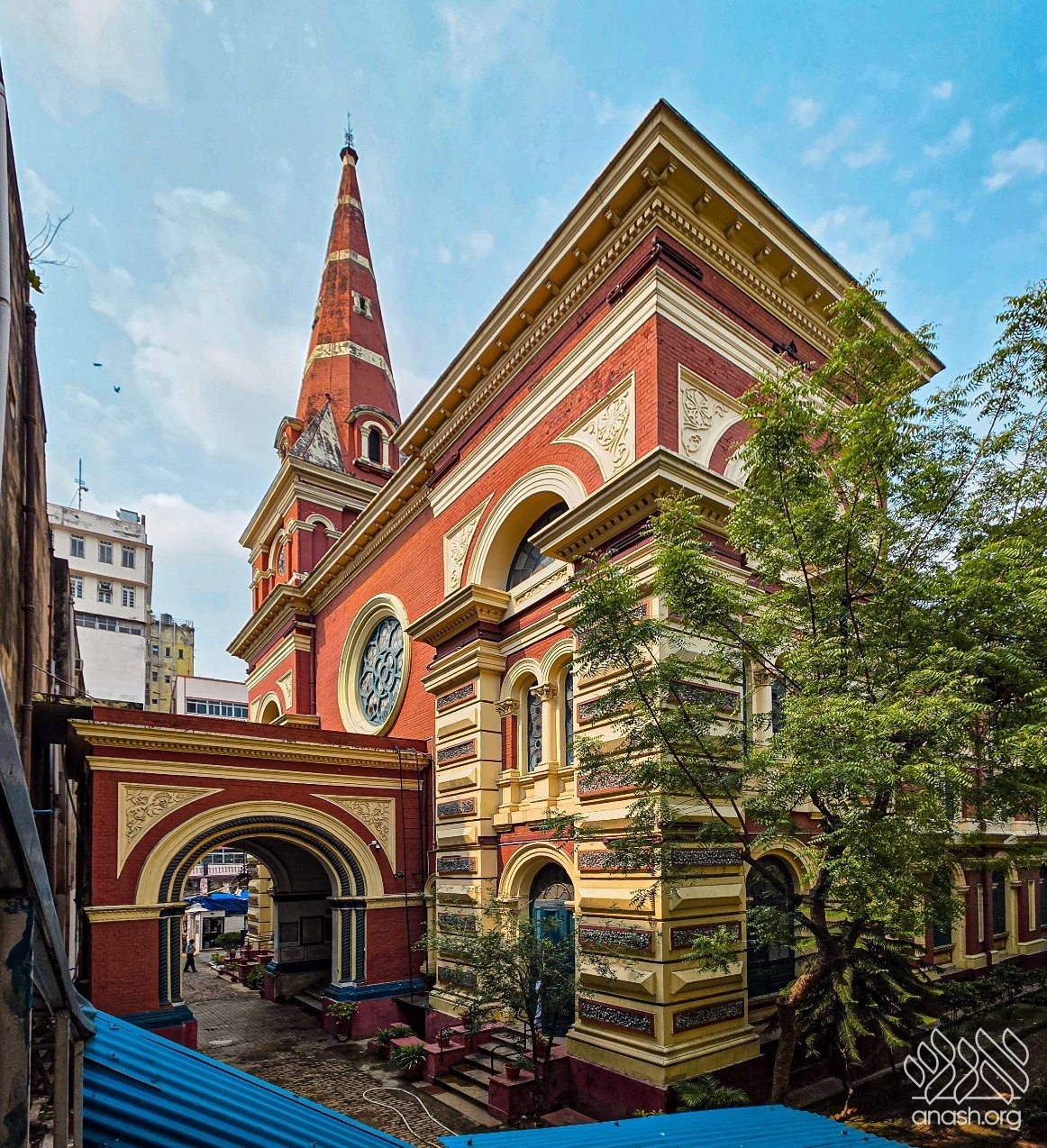
Harav Ashkenazi even began exerting his influence beyond the borders of China. Calcutta, India, was also home to a Sephardi community of Baghdadi origins. The community had several shuls, including the magnificent Magen David Synagogue in the city center.
The Magen David synagogue in Calcutta, India. The shul has recently been renovated and restored.
In 5687, an emissary of the Slabodka-Chevron yeshivah, Harav Mordechai Smith, toured the Far East, and in an interview with Israel’s Messenger about the state of Judaism in the region advanced a radical proposal: the Calcutta community should sell their beautiful shul and use the money to establish a yeshivah to train rabbonim who would service all of the Far East.
N.E.B. Ezra, Israel’s Messenger’s editor, began campaigning vigorously for this project. The campaign focused on convincing the prominent Calcutta businessman Sir David Elias Ezra, whose late father had built the shul, to approve the sale.
Harav Ashkenazi joined the campaign, writing a public letter imploring Mr. Ezra to set aside the sentimental value the shul held for him in favor of the yeshivah project, which could revitalize Judaism in the entire region.
Editor, Israel’s Messenger.
In addressing these few lines in your esteemed magazine, I am really appealing to Mr. David Ezra, of Calcutta. I earnestly hope that he will put aside all thought but the welfare of his community, and rise to the occasion.
In disposing of the Synagogue to which reference was made in your last issue, in the course of an interesting interview with Rabbi Mordecai Smith, and building with the proceeds thereof another one with a Rabbinical College, is in accordance with the Din (Orah Hayim §153 paragraphs 1, 6 and 7. Bach and Beth Yosef. Also Talmud vol. Meggilla, chap. Bnai Ha ir).
King Solomon said, (Prov. 4 :23) “Keep thy heart with all diligence, for out of it are the issues of life.” If this may be applied to the present case, I think it would be good for Mr. Ezra to keep his heart free from exaggerated sentiments and do the only true and beneficial thing for the present and future generations, so that his name may be immortalized among great names of Calcutta Jewry. Then, when he has attained and completed this work, the world may say that he has really done justice to his Religion and G-d.
In carrying out the scheme already outlined, we will have a modern synagogue with an up-to-date College radiating its beneficent influence on the true worshippers who will really do justice to their Creator, so that it may be said, “The L-rd is in His Holy Temple, let all the earth keep silence before him” (Habakuk 2 :20).
I am, etc.,
S. M. Ashkenazi.
Shanghai, 17th January, 1927.
The campaign was unsuccessful, and the Magen David shul remains in the same place to this day.
Serving in the modern city of Shanghai brought some unusual “shailos” to Harav Ashkenazi’s door. In one instance, Mr. Ezra, the editor of Israel’s Messenger, solicited the rov’s learned opinion on whether Shakespeare’s famous Merchant of Venice play, which features a grotesque Jewish character named Shylock, should be banned from Shanghai’s public schools on the grounds that it would breed antisemitism among the students.
Harav Ashkenazi’s response appeared in Israel’s Messenger, 19 Iyar 5694 (May 4, 1934):
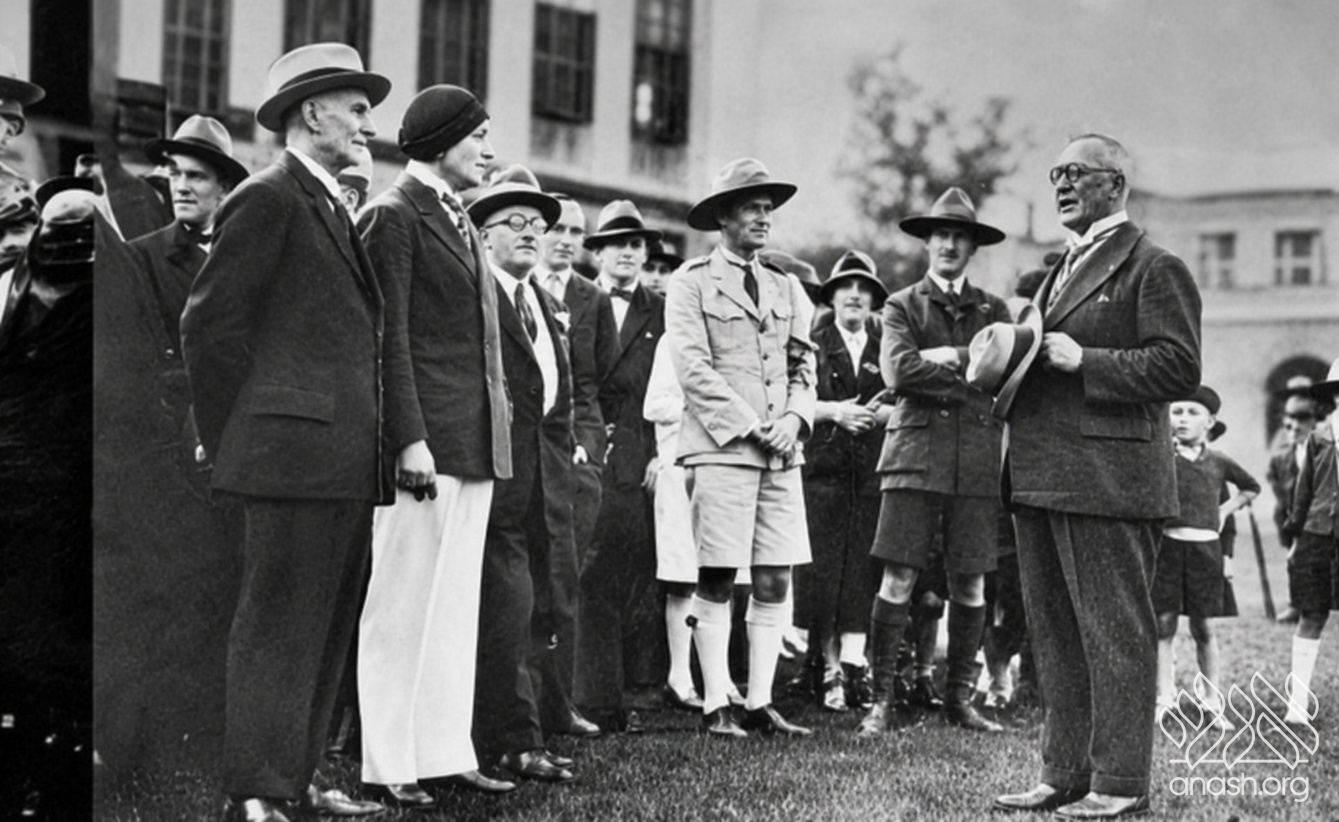
Harav Ashkenazi (on the left wearing a top hat) at a ceremony presenting a new flag to the Shanghai Jewish School Boy Scouts. Harav Ashkenazi spoke at the event, hailing it as “a great day in the history of the local Jewish community as well as the history of Scoutdom in Shanghai.” Israel’s Messenger, 24 Kislev 5689 (December 7, 1928).
Dear Mr. Ezra,—Appreciating your good efforts in eliminating causes of anti-Semitism, I wish to endorse your opinion, that the teaching of the “Merchant of Venice” should be banned from Schools as it breeds anti-Semitism and gives an unjust picture of a Jew.
The play, as it reveals the Jew, is fictitious and in no way has it any inkling of the true Jewish traits, no religious and law abiding Jew can even imagine that such an act as depicted in the play could ever be committed by a Jew; it is contrary to the Jewish law and moral, and as such it should not be permitted in the curricula of schools.
Shanghai, June 21, 1933.
Rabbi M. Z. Ashkenazi
Harav Ashkenazi also published public messages for Pesach and Rosh Hashanah in Israel’s Messenger. His messages from the year 5687 make reference to the civil war raging in the Shanghai region, as Chinese nationalists, Communists, and a local warlord vied for control. Eretz Yisrael was a constant theme in all of his public messages.
Here is Harav Ashkenazi’s Pesach message (Israel’s Messenger, 28 Adar II 5687—1 April, 1927):
A Passover Message
From S. M. Ashkenazi, Rabbi Ohel-Moshe Synagogue
We are now approaching the Passover Festival in commemoration of the liberation of Israel from Egyptian bondage. The significance of such a Festival is two-fold, namely, historical and allegorical, and may be applied to our every day life. Israel, the first-born of G-d is now crossing once more the sea of bitter experience in spite of the many hardships and temptations and is again in sight of the Promised Land. We have succeeded by virtue of the Torah, that Divine Book within which lies the mystery of mysteries, that has affected not only our lives but as well as those of our neighbours.
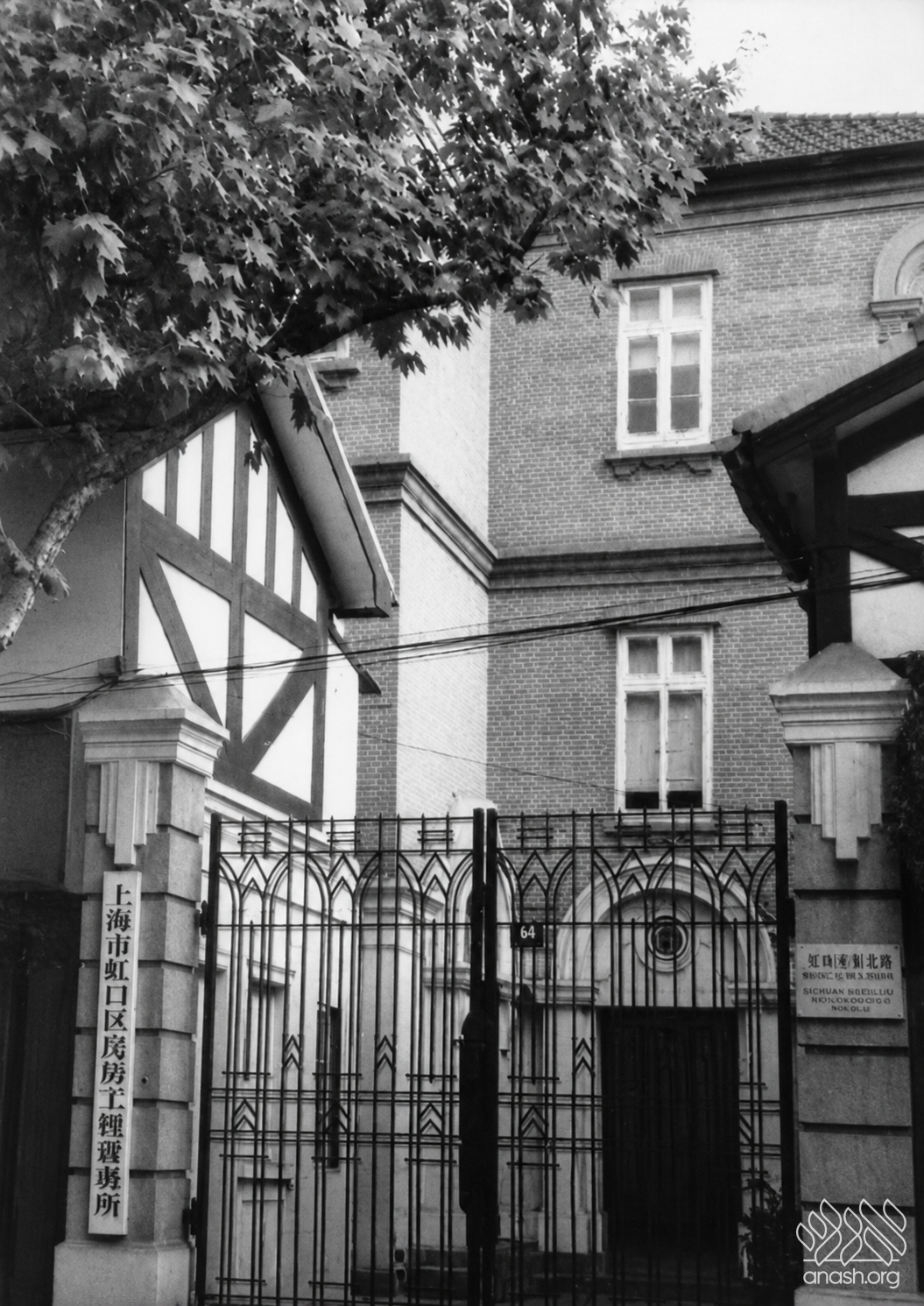
The original entrance to the Ohel Moshe shul in Shanghai.
We are passing today through a crucial period when the peoples of China are warring against each other and the whole nation is in a state of turmoil. Let us sincerely hope and pray by virtue of this sacred Festival that out of the present chaos will spring forth peace, so that harmony and goodwill may once more exert their soothing balm on us all. We are right in deploring the great distance that exists between our life as it is and as we know it ought to be. We must not only hold these ideas in our minds but must transform them instead into action infusing them into daily life. Each and every individual must strive to rise up on to higher realms, striking a sympathetic chord in the harp of his innermost being.
Now more than ever must we double and treble our energies to work for the upbuilding of Erez Yisrael and support enthusiastically the Keren Kayemeth and the Keren Hayesod. The eyes of the world are focussed upon us and it behoves us to rise up to the unique occasion to work for the salvation of Israel and the redemption of our Shechina from Galuth. May our work be blessed and may we see in our own eyes the fulfilment of the age-long dream, L’shana haba’a b’Yerushalayim. Next year in Jerusalem!
S. M. Ashkenazi.
Shanghai, 1st April, 1927. 28th Adar Sheni, 5687.
Harav Ashkenazi’s New Year’s message made a passionate call for teshuvah, and also addressed the local and Eretz Yisrael concerns (Israel’s Messenger, 5 Tishrei 5688—October 1, 1927):
New Year Message
From S. M. Ashkenazi, Rabbi Ohel-Moshe Synagogue
We are now celebrating Rosh Hashanah, the New Year, marking off yet another milestone in our progress towards righteousness. The words of the ancient prophet “What doth the L-rd require of thee” on this solemn occasion is the crying need of the hour. While living on this earth, we must try, “and build thee more stately mansions” for the Soul, and follow our higher inclinations. The Shofar will once more blow the clarion call warning our people to take heed of the Laws of Moses, stop our evil doings, and look up to G-d to forgive us all our past misdeeds, and to mark the new path which we will travel in future. One must repent, and keep in mind that repentance according to our Sages is one of the seven things which G-d created before the world came into existence. The power of repentance is great, for it reaches the Throne of the Almighty, and arouses His pity for his children who are walking in the pathway of Truth and pain. In the beginning of the New Year, let us form our good resolutions, fortify ourselves, gain courage and renew our strength, so that our hearts may be full of righteousness, peace and joy.
Let us not forget China in her troubles, when the whole country is in a state of unrest, where the people are split up into different factions warring against each other, and let us pray for the peace which abideth, and which will heal the wound thereby creating harmony and goodwill.
Israel is now launching all her efforts in rebuilding Palestine, the land of our ideals, and every individual Israelite should give moral and financial support to the Zionist strivings in Eres Yisrael and should be identified with that spiritual movement with interest, joy and sympathy. In days gone by our brethren used to go to Eres Israel to die, to-day the Halusim go there to revivify the whole land and to live there. Help this great movement, to rebuild Zion for the prophesy of Isaiah shows that “From Zion shall go forth the Law and the word of G-d from Jerusalem.”
S. M. Ashkenazi.
Shanghai, 20th September, 1927.
The Jewish rabbi’s prayers for China’s welfare caught the attention of the local non-Jewish North China Herald newspaper, which cited the “striking passage” referring to the Chinese crisis in its October 1 issue.
It is noteworthy that both of these messages contain passionate Zionist appeals. Coming from a chasid of the Rebbe Rashab and Frierdiker Rebbe, who were staunchly opposed to the Zionist project, this sentiment is somewhat surprising. It should be noted that in the modern and assimilating city of Shanghai, Zionism was a key part of many people’s Jewish identity and kept them engaged with Judaism. At any rate, Harav Ashkenazi was a participant and speaker at all local Zionist events.
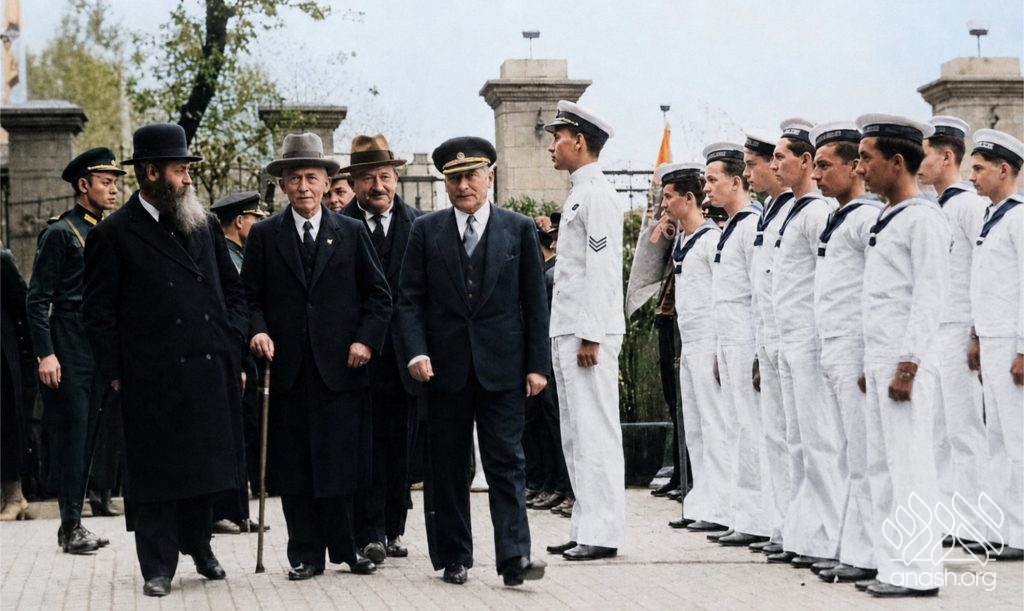
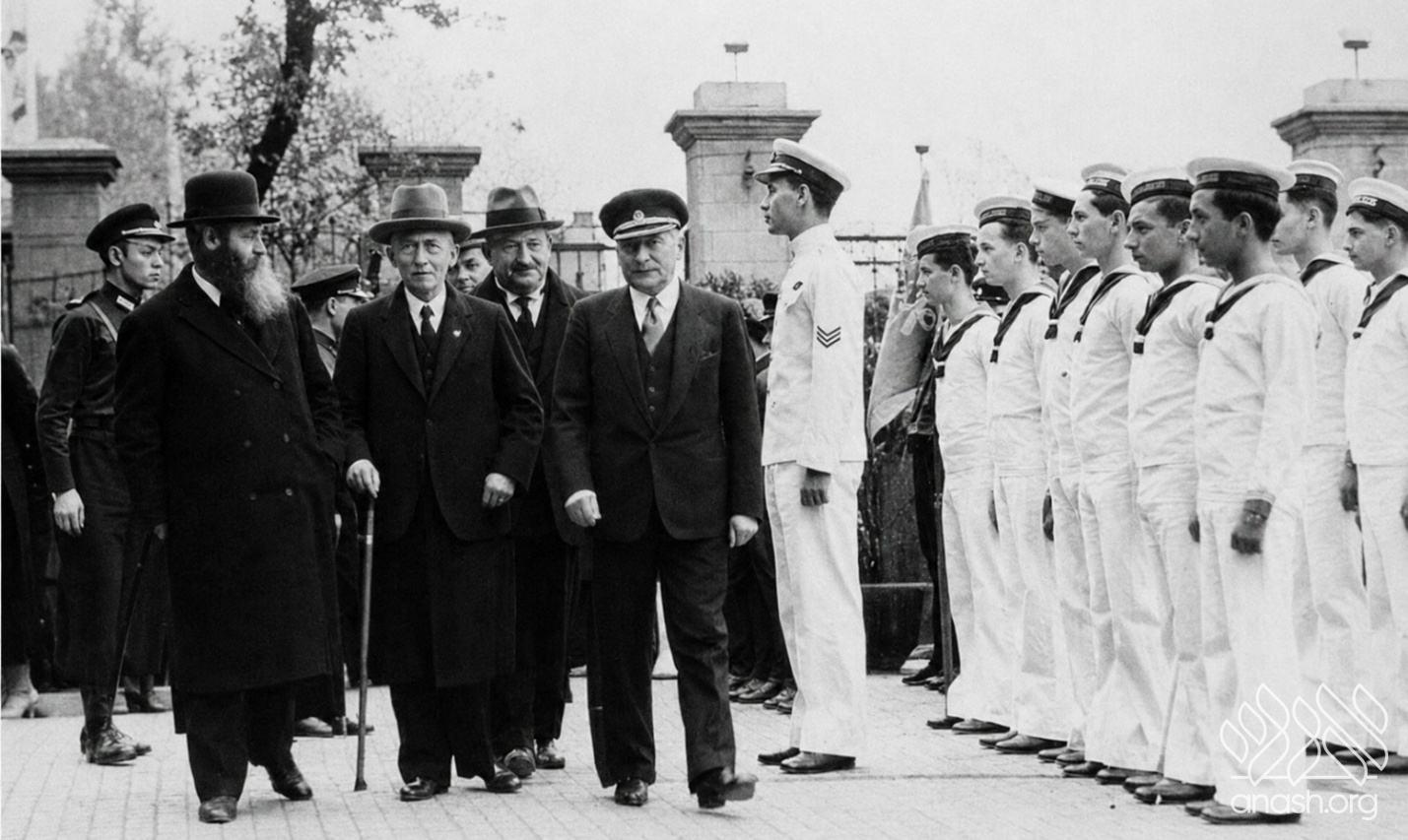
Harav Ashkenazi and leaders of the Shanghai Jewish community inspect the naval unit of the local chapter of the Betar movement in 5698.
While Shanghai was a modern community and rabbonus there looked quite different than it did in the old-world shtetl, Harav Ashkenazi also filled traditional rabbonishe roles. He supervised shechitah and kashrus, gave Gemara shiurim, and even held chasidishe farbrengens.
As we read earlier, one of the very first things Harav Ashkenazi did after arriving in Shanghai was establishing a chevra for Mishnah and Gemara shiurim. In Cheshvan 5692, over five years after the establishment of the shiur, the chevra held a grand siyum at the Ashkenazi family home to celebrate the conclusion of seder Nezikin and the beginning of seder Moed.
The lack of rigorous Jewish education for the youth of the community was also discussed at the siyum, and ideas were advanced for dealing with this issue. Here is the part of the report that focuses on Harav Ashkenazi (Israel’s Messenger, 21 Cheshvan 5692—November 1, 1931):
Talmudic Circle Makes Progress In Shanghai
The “Circle for the Study of the Talmud” in Shanghai gave a banquet on the 22nd ultimo, at the home of Rabbi and Mrs. M. Z. Ashkenazi, 8 Chusan Road, where fifty people sat to dinner after a splendid darush given by the Rabbi, who is the founder of the ‘Circle’ six years ago. It was established for the study of Mishna, Ein Ya Akob and the Talmud.
The celebration this year was conducted on a lavish scale, there being present some of the leading members of the Sephardim and Ashkenazi communities, which proved a great success. Rabbi Ashkenazi and Mrs. Ashkenazi acted as host and hostess and the guests were shown great hospitality. At 7.30 P.M., the Siyum of Seder Nezikin was started, and a short passage from the tractate Moed was read, which will be the next portion of study for the ensuing year.
Hillel Epstein, a prominent member of the Ashkenazi community in Shanghai and participant in Harav Ashkenazi’s shiurim. He was born in Sosnitza, 5625.
It was a lively gathering and the atmosphere was nothing short of a yom tob. Rabbi Ashkenazi took almost an hour in delivering his address, which was listened to with rapt attention by those present. After reading the Hadran, Kadish was recited by Mr. Hilel Epstein and Mr. R. S. Poliak, after which the invited guests sat to dinner.
Mr. N. E. B. Ezra was called upon to address the gathering, which he did. He congratulated Rabbi Ashkenazi and his co-workers for fostering Jewish knowledge and keeping the lamp of Judaism burning coruscatingly in Shanghai. Mr. Ezra also deplored the inefficiency of the Talmud Torah classes here, and stressed the necessity of inaugurating advanced Hebrew classes for the young ones.
Israel’s Messenger was a Sefardi Zionist newspaper, so its pages don’t reflect much about Harav Ashkenazi’s uniquely chasidishe personality and life. One exception is an article about the 19 Kislev farbrengen at the rov’s house in 5689, from which we learn that this gathering was an annual tradition.
Shanghai certainly did not have a vibrant chasidishe life, but some of the members of the community came from Chabad homes in Russia and retained a certain identification with their heritage. As explored in an earlier installment of this column, the 19 Kislev farbrengen was one of the most basic planks of Chabad identity.
The 22 Teves 5689 (January 4, 1929) edition of Israel’s Messenger reported on the farbrengen:
The traditional annual seudah (meal) of the local hassidim took place on the 19th Kislew at the residence of Rabbi and Mrs. M. Ashkenazi. There were about 40 guests present. A suitable address on the significance of the day was delivered by Rabbi Ashkenazi. The latter also appealed to those present to assist the newly formed “Society for supporting needy orthodox Jews in countries of religious oppression,” the inauguration of which Society took place on that day. A collection of $100.00 was made (including $60 by Mr. D. G. M. Aronovsky) and the following Committee was elected: Rabbi M. Ashkenazi, President, Mr. H. Epstein Hon. Sec., Mr. D. G. M. Aronovsky, Hon. Treas. and Mr L. Merkin, Committee.
This farbrengen took place just a few weeks after Harav Ashkenazi renewed contact with the Frierdiker Rebbe, after an interruption of almost three years since their last contact before Harav Ashkenazi left Russia. In his first letter to Harav Ashkenazi in Shanghai, the Frierdiker Rebbe gave him instructions for how to work together with the Sefardi community to strengthen Torah and Yiddishkeit and addressed other local issues that Harav Ashkenazi informed him about.
In this letter, the Frierdiker Rebbe also made two requests of Harav Ashkenazi: to establish a committee for the support of the underground yeshivos and chadorim in Russia, and to institute recital of the daily shiur of Tehillim after davening.
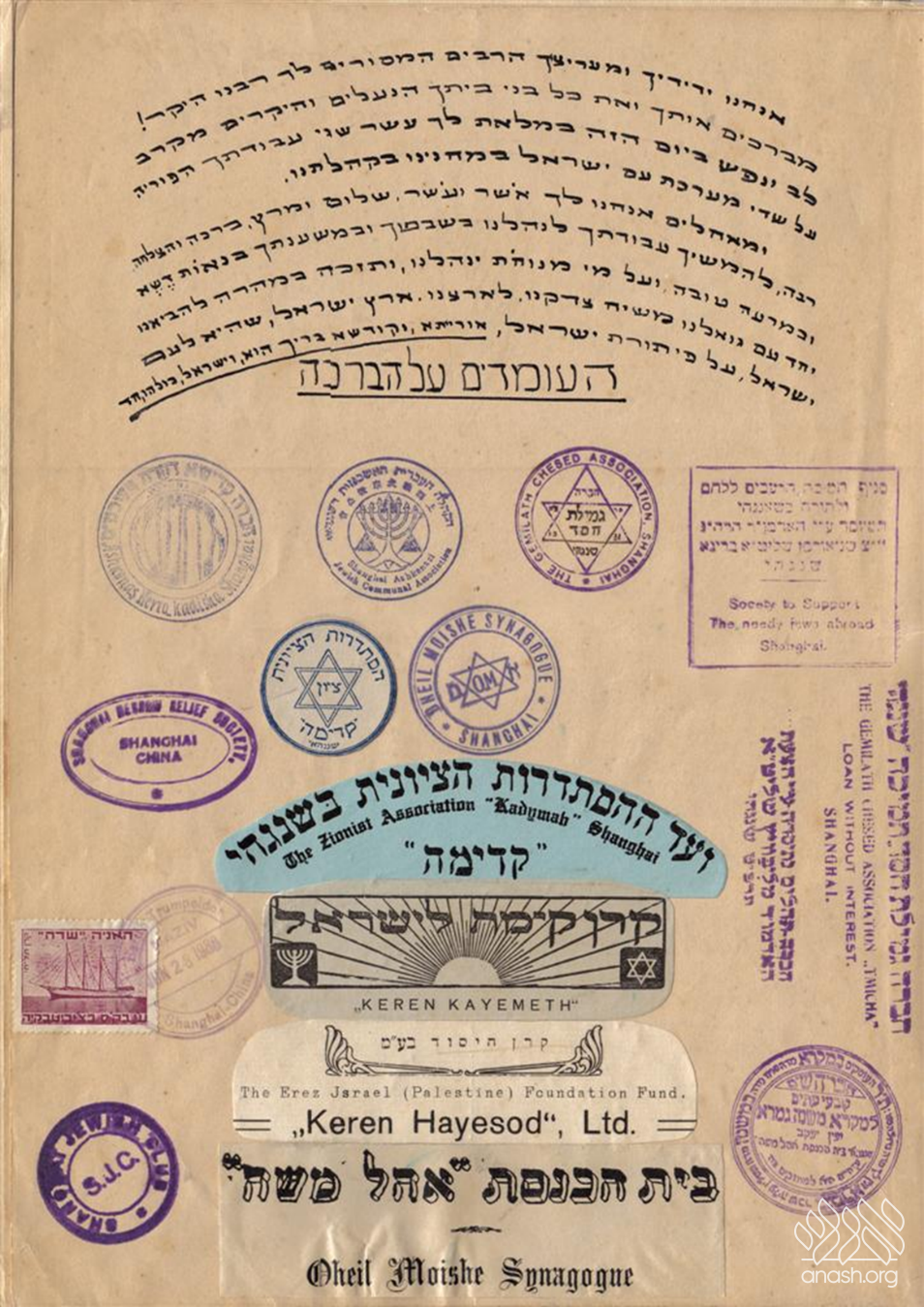
The above article shows us how Harav Ashkenazi acted immediately on the first suggestion. A stamp on the 10th anniversary album gifted to him in 5696 shows that he also acted immediately on the second, establishing a “Chevra Tehillim” in 5689.
Shanghai Jewish organizations wishing Harav Ashkenazi well on the occasion of the 10th anniversary of his rabbonus in 5696. One of the stamps visible is that of the Chevra Tehillim, established in 5689at the Frierdiker Rebbe’s request.
To round out the picture of Harav Ashkenazi’s chasidishe personality in Shanghai, we will cite from an obituary written for him by Harav Simchah Elberg, the chairman of Agudas Harabbonim in America. Harav Elberg met Harav Ashkenazi later, when he arrived in Shanghai as a refugee from Poland during World War II. But his beautiful description of the rov’s chasidishe character reflects every day of his life in Shanghai (Einei Ha’Edah, p 483):
For twenty-three years, Harav Ashkenazi lived in Shanghai. Throughout those years, he devoted himself to Torah in kedushah and taharah. Holy were his days, and holy were his nights. He gathered up all the nitzutzei kedushah scattered throughout that place and absorbed them into his being.
His first labor was to refine himself. He was forever seeking the path to spiritual perfection, striving to refine and sanctify himself. And his efforts were not in vain. He became an oved Hashem.
He weighed every word with care and measured every step, until he became a man of distinguished spiritual stature, possessed of lofty attainments and an unceasing desire to rise ever higher. How much avodas Hashem could be felt in each weekday Shemoneh Esreh he davened! Anyone who saw him davening was himself filled with a sense of holiness and spiritual elevation.
A holy Jew lived in Shanghai, and his name was Harav Meir Ashkenazi.
Rebbetzin Toibe Liba Ashkenazi (5654-5739)
As we close out this section of the article, we must devote a few lines to Harav Ashkenazi’s eishes chayil, Rebbetzin Toibe Liba. On the same page as Israel’s Messenger’s report about the 19 Kislev farbrengen, a tribute to the rebbetzin also appeared, accompanied by her picture.
Mrs. Ashkenazi, wife of Rabbi M. Z. Ashkenazi, of Ohel Moshe Synagogue. Mrs. Ashkenazi is highly popular in local circles, having made innumerable friends during her three years’ stay in Shanghai. She is active in all the local communal institutions, devoting much time and attention to the Hebrew Shelter Home. Recently she was elected on the “Kadimah” Committee, which is a compliment to her great devotion to Zionism. Mrs. Ashkenazi is in every respect a true helpmate to her husband and shares his dream of a united, peaceful and G-d-fearing community.
*
The Clouds of War
A letter of appreciation for Harav Ashkenazi in the album celebrating the 10th anniversary of his rabbonus in 5696.
In 5693, Hitler yemach shemo rose to power in Germany, and the Jewish world began to change forever. Over 5000 miles away from Germany, the Jewish community of Shanghai also began to change, as hundreds of German Jews arrived looking for a safe haven.
The first Jewish immigrants from Germany were mainly well-off professionals, including university professors and medical doctors. The stream of German refugees turned into a flood after Kristallnacht, with close to 20,000 arriving before the outbreak of World War II, many of them penniless.
The Jewish population of Shanghai was now comprised of three distinct communities: Sefardim, Russian Ashkenazim, and German refugees. As the rov of the city, Harav Ashkenazi served all of the communities, and his devotion and care for the refugees earned him universal respect.
The refugee influx strengthened the community numerically, but it also brought financial and religious challenges. Harav Ashkenazi devoted himself to caring for the physical needs of the refugees with the same commitment as he showed to their spiritual needs. For him, a Jew’s physical and spiritual needs were always an inseparable package.
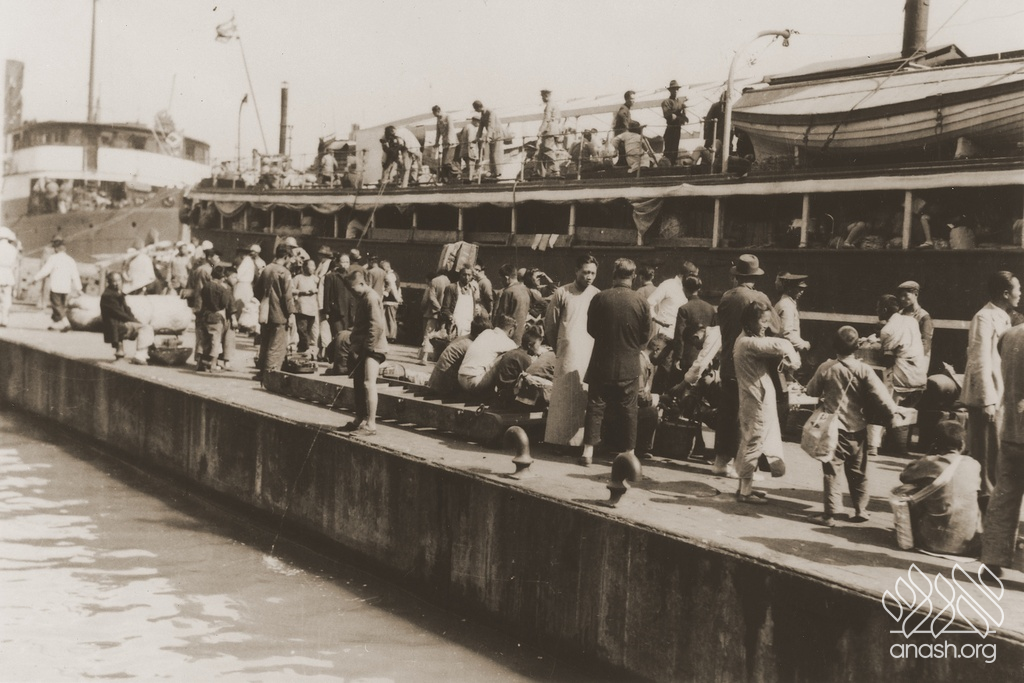
German-Jewish refugees arrive in Shanghai. United States Holocaust Memorial Museum
This period also saw a change in the political situation of Shanghai. The Japanese conquered the city in Kislev of 5698, establishing a puppet regime that ruled the Chinese sectors while leaving the international neighborhoods of the city under foreign rule until 5702.
The local community was forced to turn to American Jews for help, and Harav Ashkenazi led the appeal, as reported by the Jewish Telegraphic Agency (JTA) on 19 Kislev 5698 (November 23, 1937):
$125,000 Asked of U.S. Jews to Aid Communities in China
Jewish leaders here have issued an appeal to American Jewry for $125,000 to aid destitute Jews in Shanghai and other Chinese cities.
M. Ashkenazi, chief rabbi of the Jewish community here, gave a statement in Hebrew to the Jewish Telegraphic Agency correspondent in which he appealed to the Jews of the United States to come to the aid of their brethren stricken by the undeclared war.
The latest blow to the community came when a matzoh factory in Yangzepoo, bought by the community for $3,000, was blown up by the Japanese, together with its temporary bakery.
When the flood of refugees arriving in Shanghai grew even stronger in 5698, the American Joint Distribution Committee (JDC) stepped up and assumed responsibility for providing their basic necessities.
The German Jewish influx also presented spiritual challenges, as many of them brought along their “Reformed” version of Judaism. Harav Ashkenazi worked hard to stymie the establishment of Reform in Shanghai, and to raise the level of Yiddishkeit among the refugees.
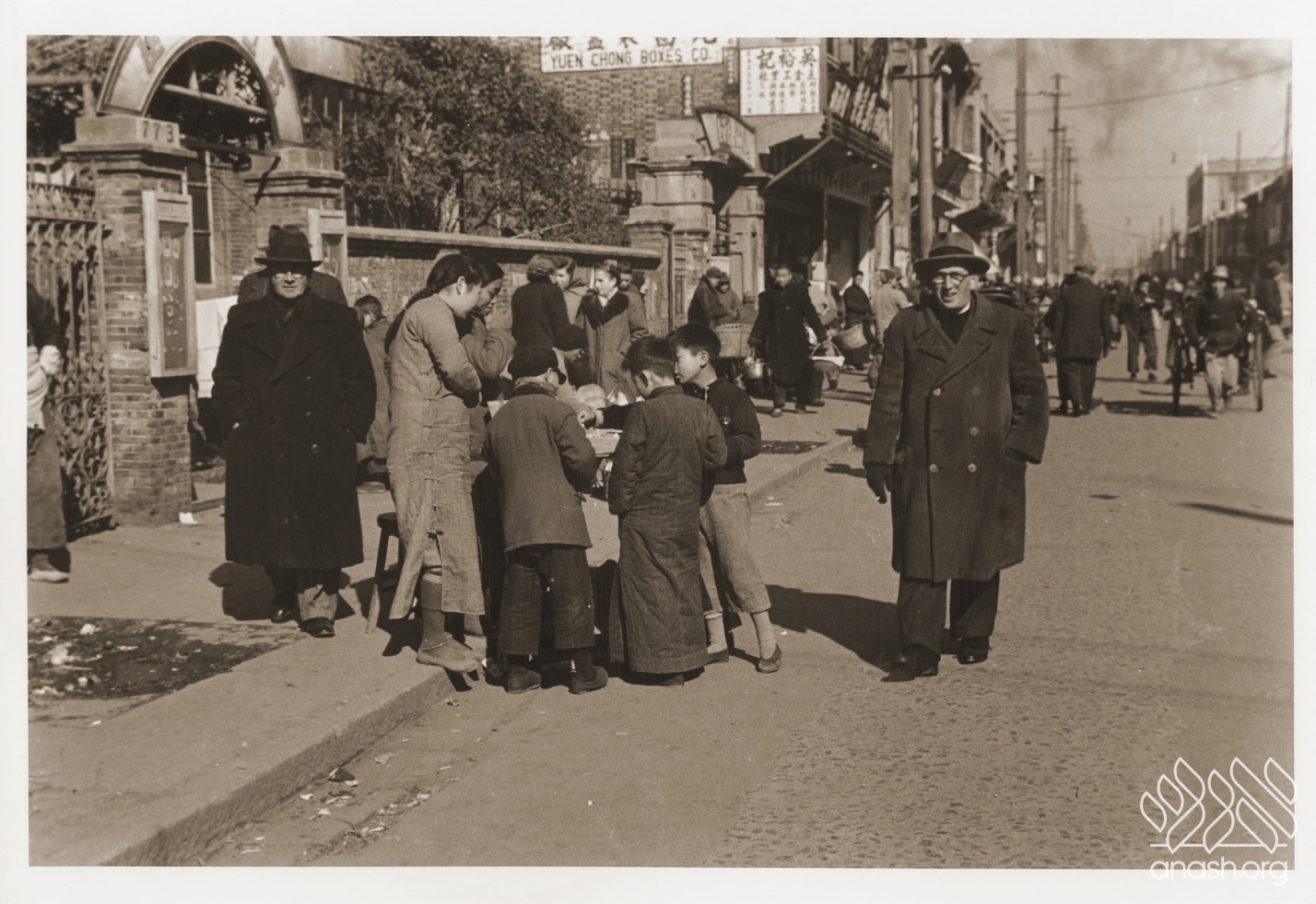
Jewish refugees on Tongshan Road, Shanghai. United States Holocaust Memorial Museum
For a description of the situation in Shanghai during the years leading up to World War II and Harav Ashkenazi’s activities, we turn to Harav Ashkenazi himself, as he related the story in a post-war interview with the Israeli Hatzofeh newspaper.
This interview, published on 4 Cheshvan 5747 (October 26, 1946), has been used by later writers, and is reproduced in the Beis Moshiach magazine, issue 871. We will cite the section relevant to the pre-war period now, and incorporate other sections of the article later in the narrative.
“When I assumed the rabbinate of Shanghai twenty years ago,” Harav Ashkenazi began, “there was only a small Jewish settlement amid the millions of non-Jews who inhabited Shanghai, that great international port. It consisted of approximately three thousand Jews from Russia and another thousand Sephardic Jews from various countries.
“For the most part, this small group was financially well established. They engaged in import and export, forging commercial ties between Shanghai and markets in the most distant corners of the world. In general, Shanghai had the appearance of a Russian city.
“In my capacity as rov, I devoted all my efforts to reviving religious life in my Shanghai community. I appointed shochtim and supervised them properly. Each day, I taught a daf Gemara to elderly Jews. My principal aim, however, was to establish a Talmud Torah for the tinokos shel beis raban, together with institutions of Torah and Jewish culture for the younger generation. At first, I was unable to accomplish this.
“Several years later, in 1934, when Hitler, yemach shemo, rose to power in Germany, the first waves of refugees began arriving in Shanghai. Approximately one thousand German Jews came, and the quiet, placid community began to experience something of a Jewish awakening, at least in numerical terms.
Harav Ashkenazi with Boris Topas, a leader of the Ashkenazi Jewish community.
“These first arrivals were generally financially well-off and came largely from the educated professional classes. They brought money and valuables with them from Germany, succeeded in business, and settled comfortably into their new surroundings.
“They were followed by a steady stream of refugees from Germany, Austria, and Czechoslovakia, until the outbreak of the war. These people were less well-off. The number of new immigrants in Shanghai eventually reached seventeen thousand.”
“At first, Shanghai’s three communities, the Ashkenazi, Sephardi, and German Jewish communities, did not know how they could possibly support such a massive influx. The entire burden fell upon the Ashkenazi community, or more precisely, upon several hundred wealthy Russian Jews, a burden far beyond their capacity.
“They therefore contacted the Joint in America, and they assumed responsibility for supporting the refugees. Since it was clear that the refugees would be unable to leave Shanghai for the duration of the war, and there was no practical way to determine which of the fifteen thousand truly required assistance, the Joint set the relief allowance at a low level. The intention was to compel most of the refugees to seek and find employment rather than rely upon the Joint for support.
“From a national and religious standpoint, this influx of refugees brought little benefit to Shanghai’s Jewish community. The older Jewish population, composed of immigrants from Russia, was bound to Tzion and Yerushalayim with all their heart and soul. The mass of refugees, by contrast, was alien to Jewish national ideals and estranged from them. Chilul Shabbos, in particular, was rampant.
The War Years
Exterior view of a large public kitchen for Jewish refugees in Shanghai.United States Holocaust Memorial Museum
World War II broke out when the Germans invaded Poland on 17 Elul 5699. However, Shanghai didn’t feel its effects directly for a while. Japan wasn’t actively involved in the war until the Pearl Harbor attack on 17 Kislev 5702, at which point they also seized control of the international sections of Shanghai. The influx of frum Polish and Litvishe refugees who escaped on the Sugihara visas arrived at the end of 5701 and beginning of 5702.
During this time, the pre-war influx of German Jewish refugees enabled Harav Ashkenazi to finally achieve his longtime dream of opening a Talmud Torah. While the Shanghai Jewish School had existed since 5663, and Harav Ashkenazi taught Jewish studies there, the level of learning was woefully insufficient. Although the German refugees weren’t very frum, the sheer number of them gave the rov something to work with, and in Tishrei 5701 he announced the establishment of the Talmud Torah.
The notice announcing the new Talmud Torah appeared in the Shanghai Jewish Chronicle, a German-language newspaper published by the refugee community. In English translation, the notice reads:
Foundation of a Talmud Torah
Harav Asheknazi
The association “Machasike Laumde Tauroh” and the Beth Din of Shanghai hereby announce that a Talmud Torah will shortly be opened under the patronage of Rabbi Ashkenazi, where intensive instruction in Jewish subjects such as the Hebrew language, Tanach, Mishna, and Talmud will be provided in the afternoon hours. Boys from the age of 6 can be admitted to the Talmud Torah. Registration will take place on Tuesday, October 24th, at the Ward Road 62 Synagogue between 3:00 and 5:00 PM, and on Wednesday, October 24th, at the Museum Road 50 Synagogue between 5:00 and 7:00 PM.
Machasike Laumde Tauroh
Beth Din–Rabbinate
Shanghai
The Talmud Torah began on a small scale with less than 30 students, but after the community was strengthened by the arrival of the frum refugees from Poland and Lita, it grew to include over 200 students, with another 150 girls in the associated Beis Yaakov. Almost all of the students were from assimilated German Jewish families, as the Polish and Litvishe refugees were primarily bochurim, not families with children.
The story of Harav Ashkenazi’s heroic work on behalf of the refugees and yeshivah bochurim during the war is well documented in frum books and memoirs. We will tell this story here from a series of contemporary articles written by people who met and interviewed him during this period. With the exception of the Hatzofeh interview we began citing earlier, the articles we present here haven’t yet been used by researchers.
Refael Ben Natan (5679-5757), pictured in the 5700s.
Our first article was written by Refael Ben Natan (Mintz), a Mizrachi activist from Poland who fled to the Far East and made his way to Eretz Yisrael in 5701. He wrote about his experiences in a series of articles in Hatzofeh, and one of them contains his impressions of Shanghai and its rov from his brief stop there.
This article, published on 4 Av 5701 (July 28, 1941), captures the mood of the city and its rov during the early war years, before the arrival of the Polish and Litvishe refugees. Harav Ashkenazi speaks of the challenges of Yiddishkeit in Shanghai, and the hope that the arrival of frum refugees would help him transform Jewish life in the city.
The next morning, my host accompanied me to the shul. I found some fifty or sixty mispalelim there, all Jews from Russia. In every detail, the synagogue reminded me of a Litvishe shul: the same benches and shtenders. A Jew from Bialystok stood before the amud, davening in the same nusach and with the same familiar tune. I had the impression that I had somehow been transported back to a shul in Vilna.
One of the mispalelim had been at the club the previous evening during the meal. He recognized me and introduced me to the rov.
The rov is a Jew from Minsk, with a dignified patriarchal countenance and a long flowing beard. He is about sixty years old. He gives off the impression of the type of rov we are used to in Poland and Lita.
He invited me to lunch. The rov’s daughters speak English and French; their Yiddish is broken. The family’s wanderings had not changed the rov himself, but they had ground the rest of the family between the wheels of time and circumstance.
The rov pours out his troubles to me.
“To my great sorrow, religious life in Shanghai is in a state of utter neglect. These Jews have been cut off from Yiddishkeit for many years, and it is difficult to reconnect them.”
He was particularly distressed that he had no balebatim who are bnei Torah and yerei Shamayim with whom he could discuss religious matters, or occasionally engage in a halachic discussion.
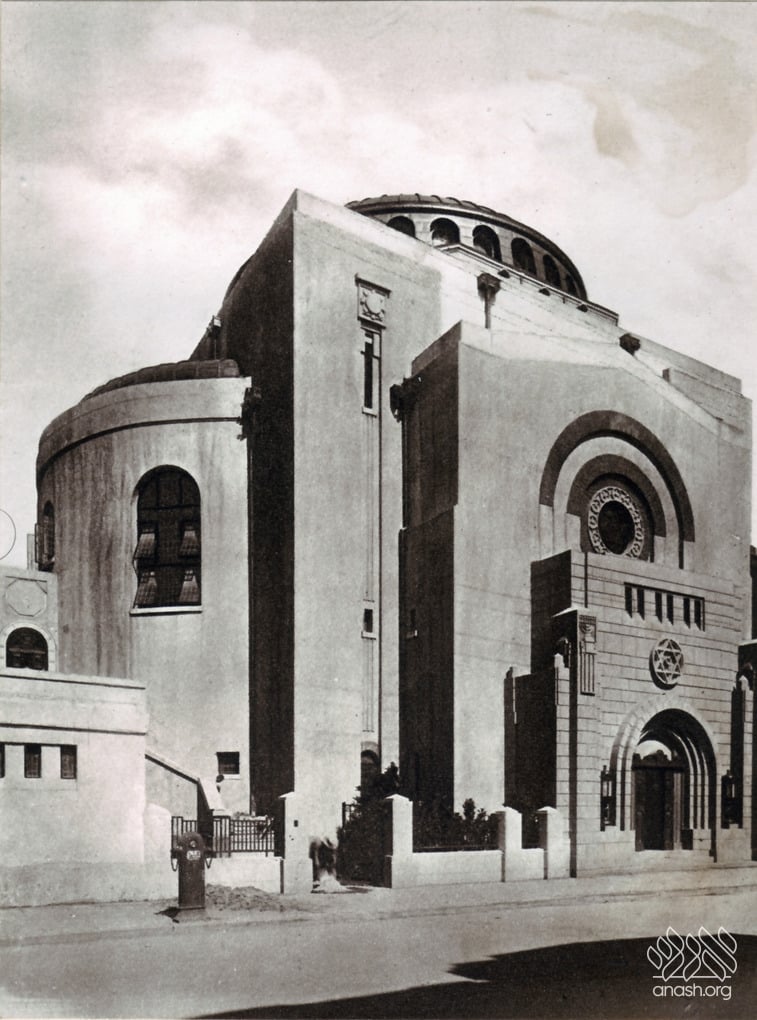
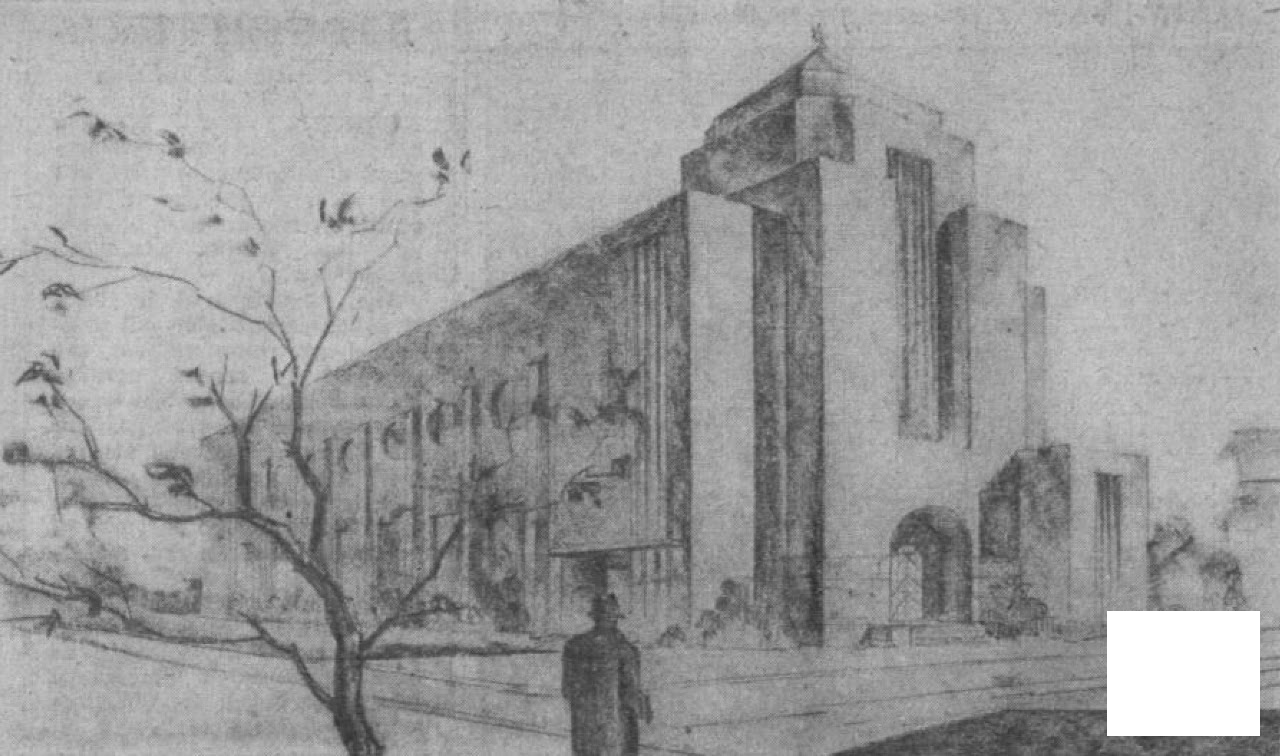
The design plans for Shanghai’s “New Ashkenazi Synagogue,” in the French Concession. This shul finally opened on 9 Nisan 5701.
When I told him about the effort to transfer the yeshivah bochurim out of Lita, he immediately seized upon the idea. Perhaps there might be a way to bring yeshivah bochurim to Shanghai. He began explaining all the good that could come of it.
“It would create a religious atmosphere here. Jewish life would be transformed.”
It is difficult to say anything definite in this regard. Yet from all my conversations with these Jews, so long severed from Yiddishkeit, I came away with the conclusion that anything was possible. Even in Shanghai, a yeshivah might take root. Even here, Jews who have drifted far away still yearn for the source.
The rov complained that the worst of the religious neglect and contempt for Jewish values had developed in recent years. The Jewish refugees who arrived from Germany had done much to bring this about. They introduced official Reform Judaism, and the Russian Jews began imitating them. If the situation continues, the Jewish community would steadily wither away.
“I do not understand,” the rov said to me. “What drives impoverished Jews to hanker after an organ in the shul? When they were wealthy, one could at least say, ‘vayishman yeshurun vayivat’; their prosperity led them astray. But why should a destitute man kick? Does he imagine that this will save him?”
I spent the entire day at the rov’s home. We ate the seudah shelishis in the shul. A group of Jews gathered, ate and drank a little, sang Shabbos zemiros, and enjoyed an hour of Jewish pleasure, just as they once had “there,” in their spiritual homeland somewhere in Poland or Lita.
The chain has not yet been severed.
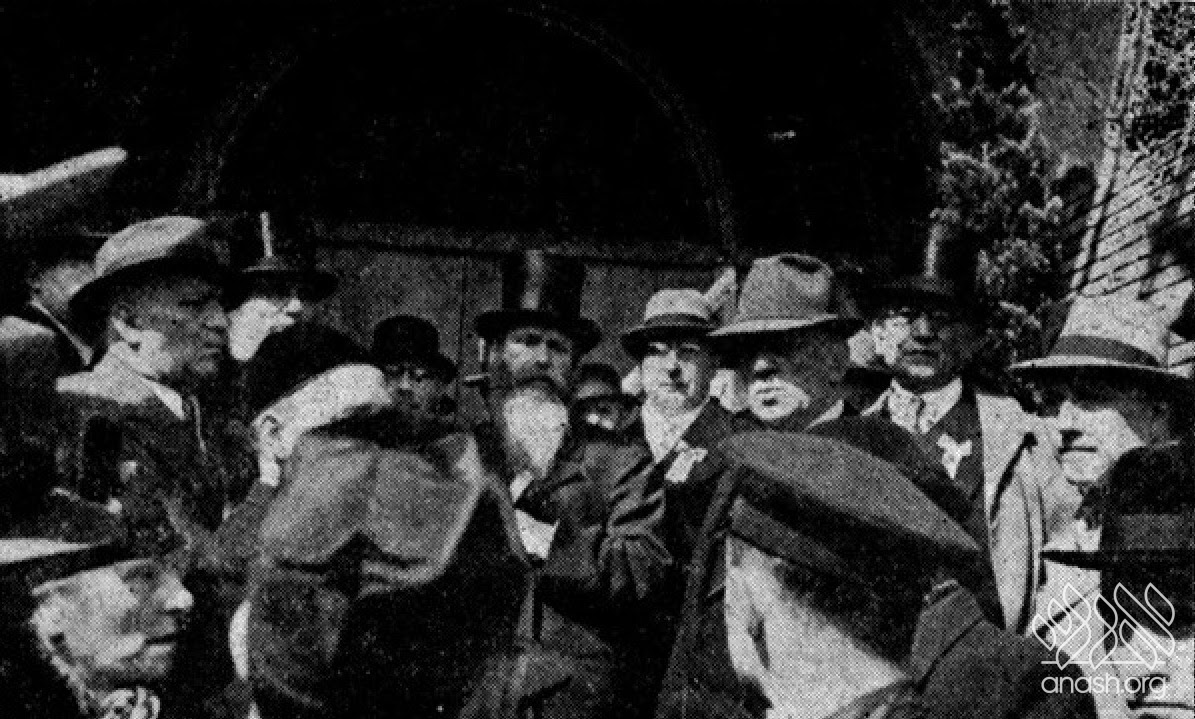
Harav Ashkenazi (center) at the opening of the New Synagogue, 9 Nisan 5701. This picture appeared in the China Press newspaper.
Our next article was written by Dr. Zechariah Zilberpefnig (5662-5746), another refugee from Poland who passed through Shanghai and other countries in the Far East on his way to Eretz Yisrael in the early years of the war. After arriving in Eretz Yisrael, Zilberpefnig changed his name to the easier-to-pronounce Kasif and served as the principal of the Alliance High School in Ramat Aviv. He was a masterful writer, as is evident in this article.
First published in Hatzofeh on 19 Adar 5702 (March 8, 1942), this beautiful portrait of Harav Ashkenazi describes him at an earlier point, before the major influx of frum refugees and Pearl Harbor.
The Rov of Shanghai
Shanghai’s Jewish consulate is not found in the official communal organizations, though they, too, have done something for their refugee brethren. Nor does the title “Jewish consul” properly belong to Mrs. Margolis, the representative of the Joint in the Far East. An ordinary Jew could hardly gain entrance to her splendid quarters in the city’s most expensive hotel. A retinue of secretaries and attendants saw to it that she should not be too greatly sullied by Jewish poverty, lest this diminish the organization’s prestige or embarrass those who sent her and paid her salary: the tailors of New York and shopkeepers of Brooklyn, who scraped together dollars from their own meager earnings to support their stricken, storm-tossed brethren.
Harav Ashkenazi
The consul general of Shanghai’s Jews is a Jew with a beard and peyos, as meticulous with a minor mitzvah as with a major: Harav Meir, son of Harav Shneur Zalman Ashkenazi, the rov of Shanghai’s Russian Jewish community.
Harav Ashkenazi is one of the most remarkable figures in the Far East. His physical origins lie in White Russia, in the region of Minsk and Vitebsk; while the root of his soul is Lubavitch and the teachings of Chabad. He served as rov of the Jewish community of Vladivostok in the Czarist era, until the Bolsheviks reached the Far East and abolished its religious institutions.
From Vladivostok he came to Shanghai, where he became rov of a community composed almost entirely of Siberian Jews: grandchildren of the Cantonists, soldiers of Nicholas I, and children of prisoners sentenced to hard labor. Yet amid this congregation, where Siberian roughness blends with Shanghai lawlessness, Harav Ashkenazi has remained precisely what he had been twenty-five years earlier: a Chabad rov, as though he had left the court of the Lubavitcher Rebbe only yesterday. Not the slightest trace of Shanghai’s impurity has touched him.
Within his community and also beyond it, Harav Ashkenazi has attained a standing unmatched among Shanghai’s Jews. Even in this city, notorious throughout the world for its thieves and predators, people respect this upright, humble, sincere, good man, whose hand and heart are open to everyone who turns to him.
Harav Ashkenazi with Reverend Mendel Brown, the reverend of the Shanghai Sephardi community. Courtesy of Dovid Zaklikowski and HasidicArchives.com.
The doors of Rabbi Ashkenazi’s home are never closed, and his wife, the Rebbetzin, never tires of the many who arrive at their doorstep from early morning. Every unfortunate and downtrodden person goes first to the rabbi to seek advice and assistance. People turn to him not only with questions concerning agunos and gitin, and disputes between one person and another, but also for help arranging visas and residency permits, covering travel expenses, securing food and lodging, and finding employment.
In brief, in all those matters for which members of other nations turn to their consuls, Jews throughout the Far East turn to the consul general of Shanghai Jewry, Harav Meir Ashkenazi.
And he responds to every appeal. His many worries rob him of sleep. He rescues refugees who are in danger in Russia, feeds hungry yeshivah bochurim, and looks after impoverished rabbonim. Along the way, he even saves assimilationists and meshumadim, for he is the representative of a people who are rachmanim benei rachmanim, who suffer insult but do not return it.
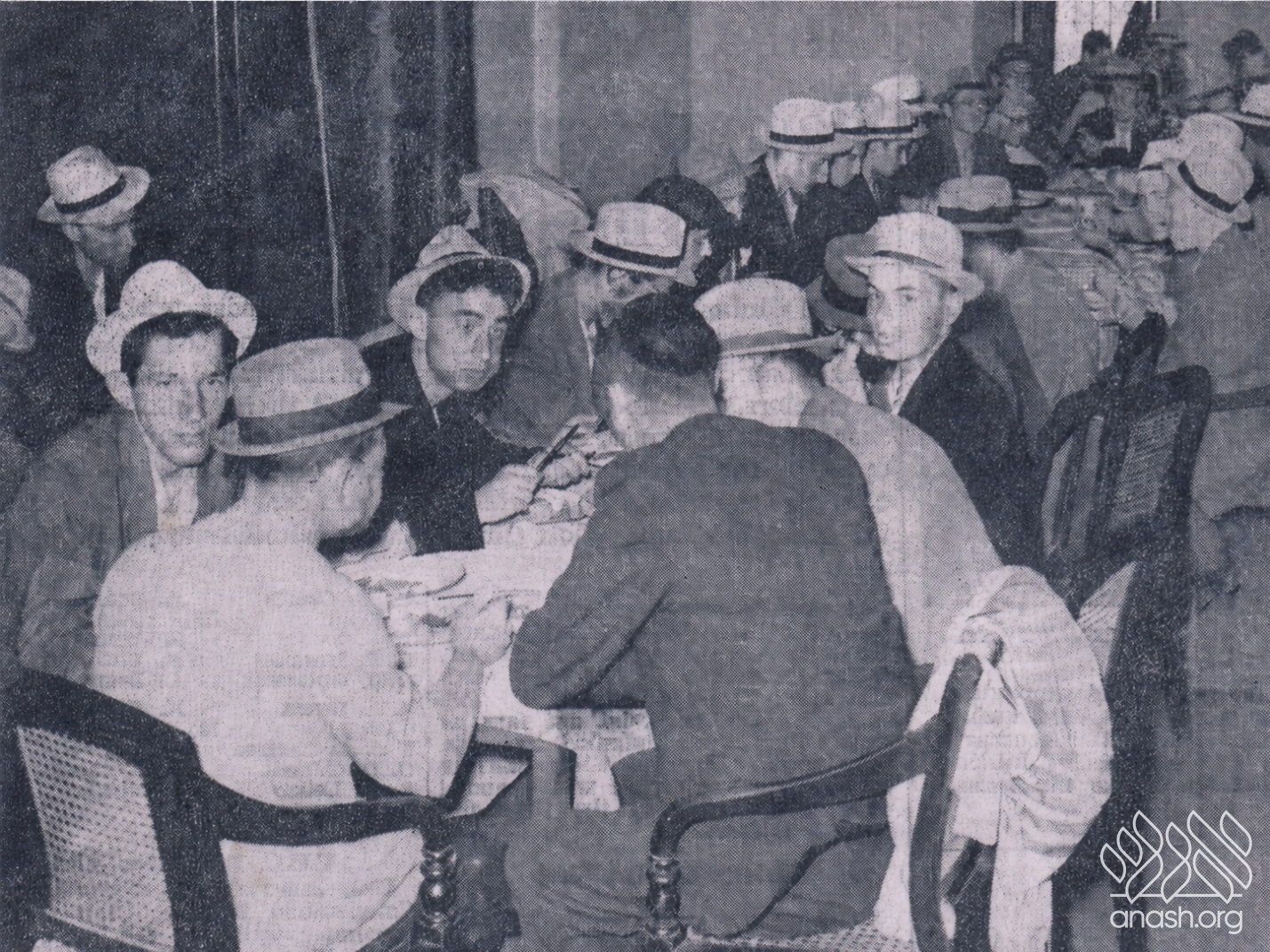
A photo from the North-China Daily News (August 24, 1941) showing newly arrived yeshivah bochurim in Shanghai, refugees from Poland and Lita.
For the story of the later war years, we return to the Hatzofeh 5707 interview, and allow Harav Ashkenazi to tell it in his own words:
“The situation [of Yiddishkeit] took a turn for the better in 1941, when more than a thousand Jewish refugees arrived in Shanghai from Poland, over half of them rabbonim and yeshivah bochurim.
“But then war broke out between Japan and the United States and England, and Shanghai was completely cut off from the outside world. At first, several hundred wealthy Russian Jews advanced funds on the Joint’s behalf, on the understanding that they would be reimbursed from America after the war. But as the war dragged on, they became unwilling to lend any more, and the seventeen thousand refugees were left without assistance.
“The year 1942 was a terrible one for the refugees, a year of hunger in the plainest sense of the word. There were cases in which refugees literally starved to death.”
“As rov of all three communities, I of course did not sit idly by in the face of the terrible plight of so many starving, destitute refugees. My conscience was especially troubled by the five hundred lomdei Torah scholars who upheld the Torah amid poverty and, despite all the suffering of hunger, never ceased their learning.
“I pursued various avenues until I finally succeeded in establishing contact with people abroad through neutral Switzerland. From there, funds were sent to me to alleviate the poverty and deprivation among Shanghai’s Jewish refugees. As the years passed, the situation improved, and I began receiving substantial sums from the Vaad Hatzalah in America. At first, the funds were sent in my name; later, in the name of the rosh yeshivah of Mir, Harav Chaim Shmuelevitz; and most recently, in both our names.
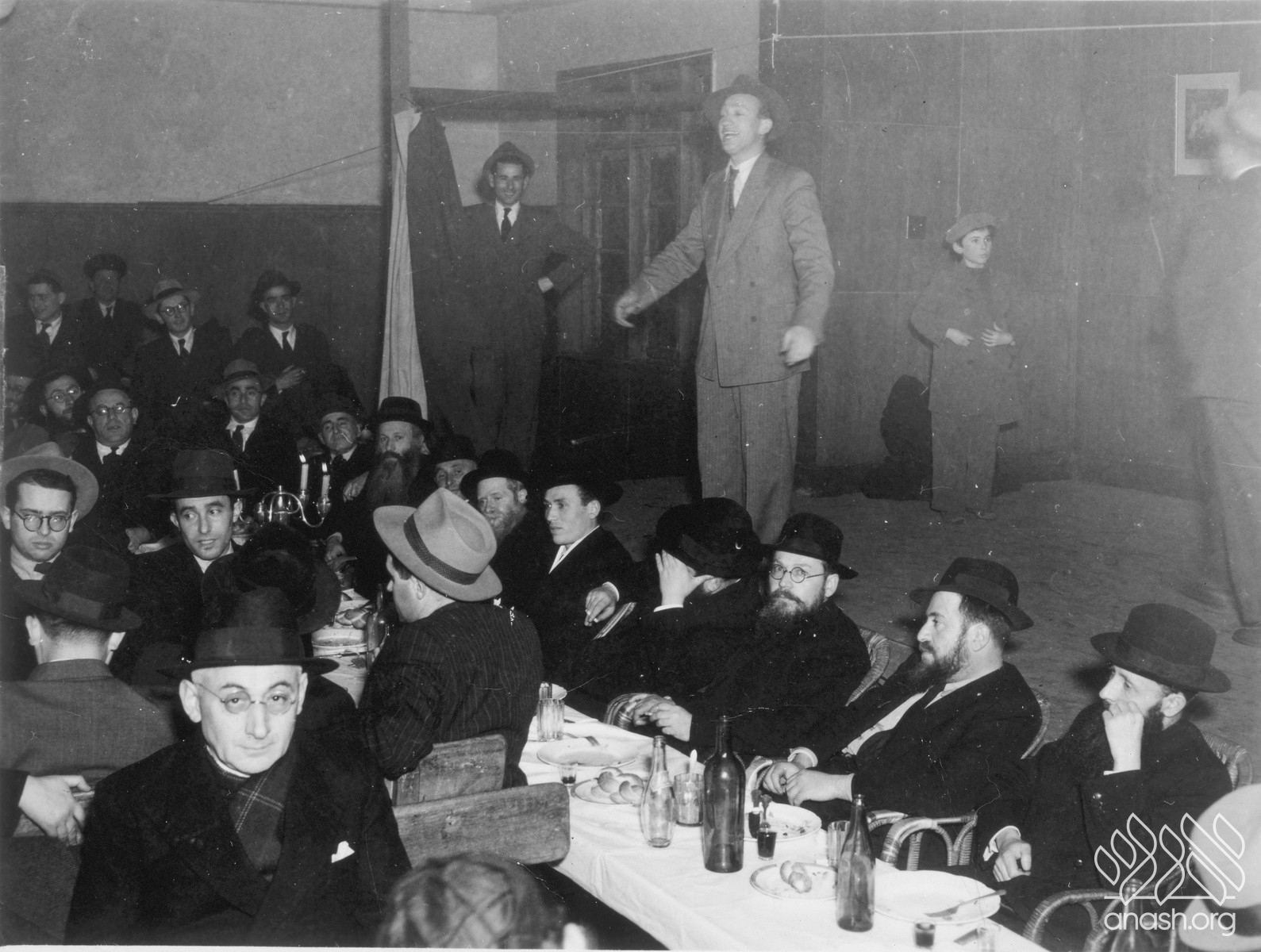
Yaakov Ederman, a talmid of the Mirrer Yeshivah, entertains guests at the wedding of a bochur during the war years in Shanghai. Harav Ashkenazi and Harav Shmuel Walkin are visible at the head table, towards the left.
“Words cannot describe the extraordinary tenacity with which those five hundred yeshivah bochurim labored in Torah throughout the years of hunger. Even when they received money for food, they used it to print sefarim for their studies. They lived by a simple principle: better to go a little hungry, so long as they would have sefarim from which to learn.
“Those five hundred yeshivah bochurim brought about a revolution in Shanghai’s Jewish community. In 1940, when I finally established a Talmud Torah in Shanghai, faithful in every respect to the traditional method of Jewish education, I could not find even thirty children among the seventeen thousand Jewish refugees from Hitler.
“But I did not rest until, baruch Hashem, we reached the point where more than two hundred boys now study in the Talmud Torah and approximately one hundred and fifty girls in the Beis Yaakov. Every one of them is a child of refugees from Germany.
“Thirty boys who had begun learning the alef-beis in the Talmud Torah at a late age had already advanced by last year to the Mir Yeshivah.
“Under the influence of the yeshivah students, from Mir, Lubavitch, and Chachmei Lublin, and of these schools, the three hundred and fifty boys and girls brought about a revolution in their parents’ homes. They compelled their parents to close their stores on Shabbos, establish kosher kitchens, and discard all their previously nonkosher utensils.
“Thanks to them, the face of Shanghai’s Jewish community was completely transformed.
“In this work, we received especially strong support from the Shanghai Zionist Federation, which unites all of the Zionist parties. It is headed by Mr. A. Grodintz, the representative of Hapoel Hamizrachi, who conducts extensive work to strengthen the religious character of Shanghai’s Jewish community.”
Reno Krasno, from whom we already quoted earlier, was an eyewitness to the Rov and Rebbetzin’s work on behalf of the refugees during the war years. She gives her description of this period in her memoir, based on her diaries written during the war years (pp. 37-40):
Front, left to right: Harav Meir Ashkenazi, Michel Speelman, Chairman of the Committee for the Assistance of European Jewish Refugees in Shanghai (CAEJR); A. Herzberg, Executive Officer, CAEJR; Captain Koreshige Inuzuka, head of the Japanese Bureau of Jewish Refugee Affairs.
In spite of gathering clouds, cultural activities continue in the Jewish Community, highlighted by the opening of a library of Hebrew and Yiddish books at the Shanghai Jewish Club. The core of the library is a private collection donated by our Chief Rabbi, Meir Ashkenazi. . . .
Rabbi Ashkenazi, his wife, and two friendly daughters live rather modestly. According to Babushka, Rabbi Ashkenazi also has a son in Jerusalem. In spite of the rabbi’s limited income, his home is always open to those who seek advice, and the warm-hearted rabinsha sees to it that a large table is permanently set for unexpected visitors. The Ashkenazi family is loved and respected not only by the Ashkenazi Jews, but also by the Sephardis. Today, even the Japanese treat our rabbi with respect. According to Papa, Rabbi Ashkenazi manages often to spare our community much suffering. When I pressed Papa to clarify as to how this was achieved, he said: “It’s a very confidential matter. You don’t have to know.”
Some of the biographical information and the images from Harav Ashkenazi’s 10th anniversary Shanghai album are drawn from “Rav Chasid Hayah,” by Chaya Mushka Wilschansky (Nisselelvitch).
With thanks to Dovid Zaklikowski of HasidicArchives.com, Yisrael Barda, and Nochum S. Zajac for their help with information and pictures.
To view all installments of From the Margins of Chabad History, click here.
For additional exclusive content, follow the column on X: x.com/ChabadMargins
COMMENTS
We appreciate your feedback. If you have any additional information to contribute to this article, it will be added below.














 COMMENTS


We appreciate your feedback. If you have any additional information to contribute to this article, it will be added below.