




ה׳ אייר ה׳תשפ״ו | April 21, 2026
Revisiting Rabbi Lipskar’s Impact on his First Yahrtzeit
Marking the first yahrtzeit of legendary Bal Harbor shliach Rabbi Sholom Ber Lipskar a”h, we share stories of his profound impact, from the ‘forty-year handshake’ with a Holocaust survivor, to a “clean slate” for a woman in crisis, to breaking the stigma for inmates.
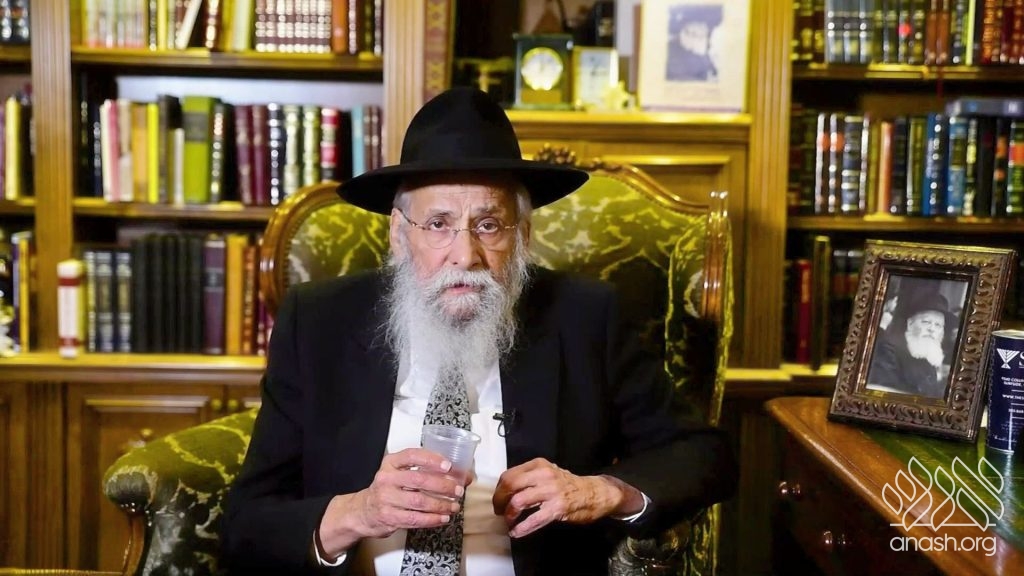
Marking the first yahrtzeit of legendary Bal Harbor shliach Rabbi Sholom Ber Lipskar a”h, we share stories of his profound impact, from the ‘forty-year handshake’ with a Holocaust survivor, to a “clean slate” for a woman in crisis, to breaking the stigma for inmates.
Adapted from the writings of Rabbi Lipskar.
*
The Handshake
I had a dear friend who was a Holocaust survivor. He was a brilliant man who had gone on to become extremely successful. We would meet weekly with a group of his friends and talk. He was deeply antagonistic to anything Jewish and would often say: “Don’t tell me about G-d, I don’t believe in this and I don’t believe in that.”
Some time later, a friend managed to convince him to come to shul on Shabbos. Afterward, they came to our home for the meal. It was a full, lively table that day and we said l’chaim. The tradition at our Shabbos table was that everyone shares a word of Torah or takes on a mitzvah. Around the table it went, one person committing to pray daily, another to put on tefillin, another to keep Shabbos.
Then we came to him. He looked at me and asked, “What do you want me to do?”
I was feeling bold that day, the mood at the table was very warm, and I said: “I think you should start putting on tefillin.”
“Let me tell you about my tefillin,” he said.
“I was twelve and a half years old when the Nazis were moving into our town. One day, just before they arrived, my father called me over with my uncle. My father was a sofer, a scribe of the highest level, who had worked for one of the great Torah scholars of that generation. He took my hand and said, ‘I want you to make me a promise. Promise me that when you become bar mitzvah, you will put on tefillin, and that you will always put on tefillin.’
“I lifted my hand to take his and seal the promise. At that moment, my uncle reached over and grabbed my hand. He said to my father, ‘Why are you making him promise something he may not be able to keep?’
“I remember it as though it were yesterday. My father’s hand outstretched toward me. My hand rising to meet it. My uncle’s hand clamping down on top of mine before it could get there. And then nothing. We never finished the handshake.”
The table was completely silent. Something came over me — I probably would not have done it had I paused to think — and I reached my hand out across the table.
“Let’s finish the handshake now.”
“Finish the handshake? I can’t.”
“Come on. Let’s finish it.”
He looked at me for a long moment. And then he raised his hand and took mine. I felt what I can only describe as an electric shock passing through my hand. It is hard to describe the emotion of the moment, but it was so deep. There was not a dry eye at the table.
We had just completed a forty-year-old handshake. One that had begun in 1944, in a town with the Nazis at the door. And we finished it now, around a Shabbos table in Bal Harbour, Florida.
He came to my office the next morning and put on tefillin. And he continued to, every single day, until the last day of his life.
*
A Clean Slate
I got a collect call one day from a man in prison. He had tried reaching people he knew in the community, but nobody would accept the charges. The prison chaplain suggested he try us.
He made clear from the start that he wasn’t calling about himself. His wife couldn’t find work, they were about to throw her out of her apartment, and he was sitting behind bars with nothing he could do about it. Was there any way I could help?
I asked him to have her call me. She reached out from a payphone — three months behind on rent.
I told her I’d send a check directly to the landlord. Not out of distrust, I explained — I wanted him to understand that there was somebody paying attention to her situation, that she had someone in her corner.
There was a pause on the line. “Can I talk to you?” she said. “You sound like someone I can talk to.”
She had two boys. The nine-year-old was healthy. The six-year-old was not. Every night, after she put the children to bed, she would go out and search through the garbage cans behind pizza shops and restaurants for whatever food had been thrown out. She had been banned from the local gas station because she kept taking the toilet paper since they had none at home. They had no electricity either. They lived in the dark and ate what other people had discarded.
Her boys would cry: “Mom, can we eat normal food?”
“One night,” she continued, “I did the worst thing in the world. I went into a bar and sold myself.”
“I don’t remember who the man was. I don’t remember what happened,” she told me. “I just remember that I felt I needed to die.” She never touched the money. She came home, wrote a note to her children, and went to kiss them goodnight and goodbye.
She kissed her older boy. “Somebody’s going to adopt you,” she whispered. “They’re going to be so happy because you’re such a bright and good kid.” But when she got to her younger son, her little sick boy, she stopped. Nobody is going to want him. She couldn’t leave him.
“I can’t live with myself and I can’t die,” she said to me. “What should I do?”
I gave her a ruling right there on the spot. In Jewish law, a person who acts in a state of complete mental collapse — where the capacity to reason has broken down entirely — is not held responsible for their actions. And so I told her: “According to Jewish law, you are not guilty for what you did. It doesn’t count. You’ve got a clean slate.”
“I can’t believe it,” she said. “It doesn’t count?”
“It doesn’t count.”
I helped her slowly get back on her feet. She found a job. And then I never heard from her again.
Many years later I was teaching my Tuesday night class at The Shul. Hundreds of people came every week and after class there was always a line of people waiting with questions. I noticed a woman I didn’t recognize standing quietly to the side. When she finally reached me she said simply: “Good evening. I just want to say thank you.” And she walked away.
I stood there for a moment, not quite sure what she meant. Then, about three minutes later, her voice rang in my ears. It was her.
*
In The Same Room
One of the greatest obstacles Rabbi Lipskar faced in his prison outreach work was not the prison system — it was the Jewish community itself. The attitude he encountered, again and again, was one of polite dismissal. As one philanthropist put it to him directly: “Who cares about Jews in prison? Why don’t you worry about children or something?”
There was a deep stigma attached to incarceration, and most people preferred to keep the issue at arm’s length and felt it was not something a respectable Jewish organization should concern itself with. When he was invited by a Jewish organization in South Florida to speak on the subject, he decided the moment called for something more than a talk.
The evening coincided with a two-week Torah program that Aleph was running in Miami Beach, where screened federal inmates had been brought out for a period of Jewish learning and mentorship.
Without saying a word to the program’s organizers, he brought the twenty-odd prisoners along. They wore regular clothing, arrived during the social hour, and spent the next half hour moving through the room — shaking hands, making conversation, settling into seats alongside members who had no idea who they were talking to.
Rabbi Lipskar took the podium and made his case. He drew on classical Torah sources, on years of visiting prisons and sitting with inmates and their families, and argued that the Jewish community’s obligation to a fellow Jew does not dissolve the moment he finds himself behind bars. The audience listened attentively and nodded in the way that people nod when they find an argument compelling and plan to do absolutely nothing about it.
“Jewish prisoners are human beings like us,” he said. He paused. “And there are some here, even in this room.”
An uneasy silence settled over the room. He let it sit.
“Will all those who are currently serving time in federal prison please stand up?” Two dozen men rose to their feet. For a moment the room was absolutely still, and then it filled with audible gasps. The young man who had been standing at the bar with them an hour earlier.
The person they had been talking to about their grandchildren, their neighborhood, their winter plans. Each one of them was serving a federal prison sentence. The issue that had seemed so distant and abstract was suddenly sitting in the chair right next to them, and they had spent the last half hour enjoying his company.
“The shock in the room was overwhelming,” Rabbi Lipskar recalled. “It was quite an awakening for them.”
(Adapted from Despite All Odds: The Story of Lubavitch by Edward Hoffman)
*
The Call That Woke Me Up
I had a serious medical issue and went to the hospital for a very difficult procedure — one that at the time was not yet fully developed. The next morning, my wife called the hospital to speak with me. There was no answer. The man sharing my room eventually picked up and told her I was sleeping, but when she asked him to wake me, he found that he couldn’t. The doctors were called and it turned out I was in a coma.
By the time she rushed to the hospital, a Code Blue had been called and the room was sealed off with an entire team of doctors working inside. The doctors could point to no clear cause — whether it was the anesthesia or something about the procedure itself, they simply didn’t know.
The first thing she did was run to the nurses’ station and call 770 and Rabbi Klein answered. She told him that I was in the hospital, unresponsive, and that the doctors didn’t know why. He asked for the hospital’s number and called back a few minutes later: someone from the Rebbe’s office needed to speak with me directly.
“He’s in a coma and cannot speak,” my wife said. “I’m standing outside by the nurses’ station.”
“I have a message for him from the Rebbe, and I need to speak with him.”
The doctors did not want to let her in, but she forced her way through and told them the Rebbe wanted to speak with me. They connected the phone from the nurses’ station into the room and held the receiver to my ear.
What I remember next is hearing the Rebbe’s voice. He was saying that Professor Herman Branover was coming to Miami and that I needed to ensure he was introduced to the right people at the university. And just like that, I was awake, speaking and responsive. The doctors were bewildered. Moments earlier, I had been completely unresponsive, and now I was having a conversation!
What is remarkable is that the Rebbe didn’t call to ask how I was feeling or what the doctors were saying. He called to tell me that I had a job and what I needed to do. That is what the Rebbe conveys to each and every one of us, that we are here on a mission, and that there is something waiting for us to accomplish.
*
Nobody Slips Through
A year into their shlichus in Miami, Rabbi and Rebbetzin Lipskar went to the Rebbe and presented him with a detailed written report of everything they had accomplished. The Rebbe bent over the pages and read with full concentration.
In the middle of reading, the Rebbe looked up.
“What about that young girl you wrote to me about?”
Rabbi Lipskar drew a blank. And then, slowly, it came back to him. Months earlier, on their way to shul one Shabbos, he and his wife had encountered a young Jewish woman who had become entangled in a religious cult. They had built a relationship with her, helped draw her away, and in the process learned that she came from a broken home. They had written to the Rebbe about the situation and asked for a blessing, and in that letter had mentioned something about the mother’s marital status.
The Rebbe had responded with a blessing, but had also asked Rabbi Lipskar to verify that the mother had received a halachically valid get.
Rabbi Lipskar had made some initial inquiries but couldn’t locate the mother. The pressures of daily life gradually pushed the matter out of his mind entirely. He had forgotten, but the Rebbe had not.
After the audience, Rabbi Lipskar threw himself into tracking down the answer. Forty-eight hours later he was able to confirm that the woman had in fact received a proper get.
He understood the Rebbe’s question as a lesson that would stay with him for life. A person can build something meaningful, touch many lives, and feel proud of what he has accomplished. But not a single person who has been helped along the way can be allowed to slip through the cracks.
*
What the Rabbi Left In Me: A Conversation with Dovid Speyer
INTERVIEW CONDUCTED BY DEVORAH LEAH ANDRUSIER AND CHAYA MINKOWITZ
The following is an excerpt from an interview with Mr. Dovid (Terry) Speyer. Dovid served as Executive Director of The Shul of Bal Harbour for over a decade, working side by side with Rabbi Lipskar during some of the most formative years of our community.
Q: WHEN AND HOW DID YOU FIRST MEET RABBI LIPSKAR?
A friend of mine from college, Jerry Levine, invited me to the Tuesday night classes, which were then being held in a motel because the Rabbi hadn’t yet built the shul. I went to a few classes and loved them. You just felt your heart, your soul get turned on.
At some point, Jerry said, “Come, I’ll introduce you to Rabbi Lipskar.” I had been doing a little graphic design at the time, and I made what I thought was a beautiful graphic of tefillin. But I made them with red straps, not knowing that this wasn’t right, as tefillin are meant to be black. I walked in and handed the Rabbi this painting, and I could see he was not pleased.
Finally, he looked at me and said that red straps aren’t what tefillin are supposed to look like. Then he added, “But if you did it for graphic purposes — to beautify them — you’re okay.” And I said, “Rabbi, that’s exactly what I did.” That was my first meeting with him.
Q: WHAT QUALITIES MADE RABBI LIPSKAR SUCH A UNIQUE AND POWERFUL PRESENCE IN YOUR LIFE?
I actually wrote down my answer to this one because it required me to dig really deep inside myself.
His soul shone beyond his body. Just to see him at a distance made me happy. He didn’t have to look at me. But when he turned, and that smile landed on me, it penetrated me so deeply and made my day. He didn’t have to say hi or ask what kind of day you were having. The smile was enough.
There’s a Kabbalistic teaching that the Divine light you receive from fulfilling the mitzvah of tzedaka stays on your head the whole day. Rabbi Lipskar’s smile stayed on my head the whole day. He had the power to light your soul with just his smile. That’s all it took.
Q: CAN YOU SHARE SOME STORIES THAT SHOW HOW RABBI LIPSKAR SAW PEOPLE THAT OTHERS MIGHT HAVE OVERLOOKED?
One afternoon, people came running upstairs to the office and told me there was a man in the sanctuary, over six feet tall, spread-eagled on the steps leading up to the aron kodesh, a tallis over him, crying and screaming. Everyone was frightened. I went down and sat with him. As he settled, I asked what he needed. He said, “I need Rabbi Lipskar.”
Within minutes, the Rabbi came down, took one look, and brought the man upstairs to his office. He came to me afterwards, asking for the key to the main sanctuary for this man. I started to ask questions. The Rabbi just gave me the look, and I immediately understood: this needs to happen, no questions asked.
I got to know the man over the following months, and he turned out to be a major executive in the entertainment world. The Rabbi arranged for him to come late at night, when no one else was there, to do what he needed to do. I’ll be honest, I wish I had that ability to pour myself out to Hashem like that. This was not a religious man, but the Rabbi saw something in him immediately. You didn’t always immediately understand the ways of the Rabbi, but if the Rabbi said it, I was in.
Another time, I got a call that the father of a childhood friend had passed away. He was a Holocaust survivor, and the family had decided to cremate him because they didn’t have the money for a proper burial. I went to the Rabbi and told him. He said, “Arrange a meeting.”
Then he gave me a list of names to call — people in the community who wanted to be involved in situations like this, and we quickly raised the money. When the daughter came to see him, the Rabbi already had a plan. He spent about fifteen minutes with her and told her he was going to take care of everything. An hour later, we got the call: “Okay, we’ll bury him.”
A man with no connection to the community — his family living out of state — got a proper Jewish burial, a headstone, and a place in a Jewish cemetery. For Rabbi Lipskar, no Jewish soul was ever too far, too lost, or too forgotten.
Q: WHAT DID WORKING CLOSELY WITH RABBI LIPSKAR TEACH YOU ABOUT HOW HE OPERATED AND WHAT DROVE HIM?
Early on, the Rabbi sat me down and told me about his relationship with the Rebbe, and then asked me one simple question: “Can I trust you?” Coming from the corporate world, I understood what trust meant. But when he asked me that and was going to take my word for it, I understood that this kind of trust was on a completely different level.
Anything I heard, anything I saw, anything he shared with me stayed with me and went no further. If I had a question, it went back to the Rabbi, and he gave me guidance on how to handle it. That was the foundation of everything, and that’s when he became my spiritual father and guide.
I once suggested he get a driver so he could make return phone calls in the car instead of working until three or four in the morning. He thought about it and then said no. The calls he was making were deeply private — things people had shared with him in confidence.
He wasn’t willing to risk that someone in the car might overhear something and it would get out into the community. He would rather give up his own time and sleep than put a single person at risk. That was just who he was.
One thing that always amazed me was that you could never force the Rabbi to make a decision. If he didn’t have clarity on something, he simply would not decide. He would wait, do his research, speak to whoever he needed to speak to, and sometimes go to the Ohel.
In the beginning, that frustrated me. Eventually, I understood — there’s a reason for the wait. A decision could affect somebody’s life, a marriage, a relationship with a child, a person’s spiritual wellbeing. Everything went into it before he moved forward.
The same sensitivity showed up in the way he approached asking people for money, which he told me was the hardest thing he did. This surprised me because he was known throughout the Chabad world as one of the great fundraisers. But he said, “You don’t understand. I am so careful that G-d forbid they should never think that the only reason I wanted a relationship with them is because of their money.”
For Rabbi Lipskar, the money was never the point. It was an opportunity for someone to partner in something they both believed in. He wanted you for your soul. That’s all he ever wanted.
Q: LOOKING BACK, HOW DID RABBI LIPSKAR TRANSFORM YOU PERSONALLY?
Those ten years were the best years of my life — from a personal growth standpoint, a spiritual standpoint, from the standpoint of recognizing Hashem and getting closer to who I am as a Jew. And so much of that came from the way the Rabbi guided me. He never told me what to do, and he just knew exactly what you needed to hear.
I remember one time he spoke to the community and said, “If you want to feel free as a Jew, take 24 hours and wear a kippah the whole day.” I thought about it for a few days and then one Monday, I tried it. I put on a kippah and spent the whole day in the world with it on. And I felt good about it, I felt at home. It never came off my head after that.
Every person who knew Rabbi Lipskar carries something of him, but each in their own way. As he used to say, we all have fingerprints, but each person’s is completely unique. He lit something in each of us that nobody else could have lit, in a way that nobody else could have done it. That’s his legacy, and we each have a responsibility to carry it forward.
*
Florida Shliach Rabbi Chai Amar speaks on Rabbi Lipskers Yartzeit:

 COMMENTS


We appreciate your feedback. If you have any additional information to contribute to this article, it will be added below.