



ט׳ אייר ה׳תשפ״ו | April 25, 2026
Renowned Mir Rosh Yeshiva’s Surprising Connection to the Rebbe
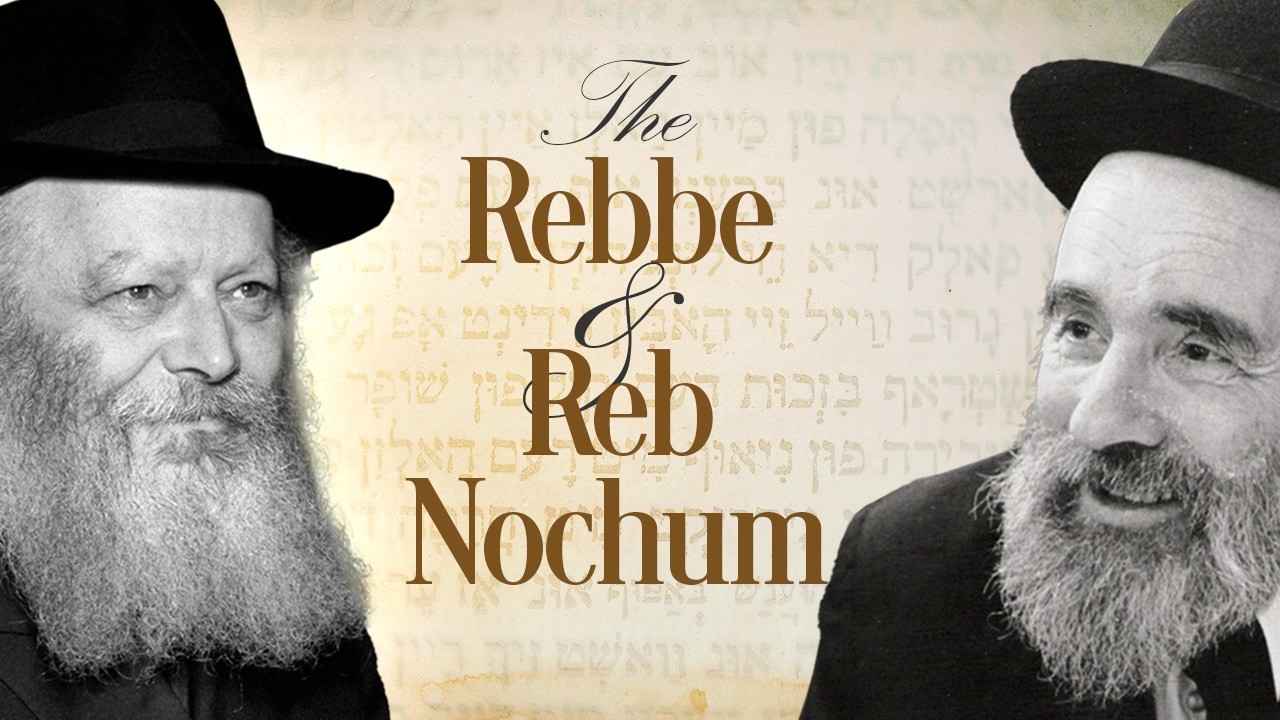
Reb Nochum Partzovitz, the legendary Rosh Yeshiva of the Mir, was one of the towering Torah minds of the twentieth century. What is less known is his decades long personal connection with the Rebbe that came to matter at an unexpected moment in his life.

Reb Nochum Partzovitz, the legendary Rosh Yeshiva of the Mir, was one of the towering minds of the twentieth century. His daily two-hour shiurim drew hundreds of students, and the seforim later compiled from his lectures – Chiddushei Reb Nochum and Shiurei Reb Nochum – became standard reference works across the yeshiva world.
What is less known is the connection between Reb Nochum and the Rebbe – a connection that stretched back decades, and was of critical importance at an unexpected moment in Reb Nochum’s life.
Rabbi Moshe Havlin – today the Rosh Yeshiva in Kiryat Gat – had learned by Reb Nochum at the Mir before transferring to Kfar Chabad and eventually coming to learn at 770 in 5729 (1969). Shortly after his arrival, he delivered a pilpul in the yeshiva. Among those present was Rabbi Yaakov Moshe Leizerson, a Rosh Yeshiva at Torah Vodaas who was closely connected to the Rebbe and a frequent visitor at 770.
Rabbi Leizerson approached him afterward. “From the pilpul you delivered, I see you’re a student of Reb Nochum.”
Rabbi Moshe Havlin was surprised. “How do you know?”
Rabbi Leizerson smiled: “Reb Nochum and I were chavrusos for many years – in Baranovitch, in Mir, and in various other places. You must be a student of Reb Nochum.”
The two became close friends.
In the winter of 5731 (1971), Reb Nochum – who had been suffering from a serious neurological condition – was persuaded to travel to New York to consult with doctors. Rabbi Leizerson arranged for him to meet with the Rebbe.
When Reb Nochum entered, the Rebbe rose to greet him.
The Rebbe then asked him a question that caught him off guard: “Do you remember the Frierdiker Rebbe visiting your home when you were a child?”
Reb Nochum did remember. The visit had taken place in 5692 (1932), around the time of the wedding of the Frierdiker Rebbe’s youngest son-in-law, Reb Mendel Horenstein. The wedding was held near the Lithuanian town of Trok, where Reb Nochum’s father, Rabbi Aryeh Tzvi, served as rav. The Frierdiker Rebbe had stopped at the family home.
“I remember my father asked the Rebbe to bless me,” Reb Nochum recalled. “I was nine years old at the time.” He also remembered that two younger men had been present – men who appeared to be around thirty years old.
“One of those young men at your home was me”, the Rebbe told him.
The Rebbe then urged Reb Nochum to put his chidushei Torah into writing. Reb Nochum later reflected on this with some regret. “The Rebbe had vision,” he said. “Had I listened to the Rebbe then, I would have had a sefer of my work. Now, my illness has progressed, and I can no longer write.” The seforim that exist today were not written by Reb Nochum himself – they were reconstructed from recorded shiurim.
The following Pesach, in 5732 (1972), Rabbi Yosef Yitzchok Havlin – today rov of the Anash community in Ramat Shlomo neighborhood of Yerushalayim – was in New York for the Rebbe’s seventieth birthday, on Yud Alef Nissan, and was preparing to return to Eretz Yisroel after Yom Tov. After Pesach, Rabbi Leizerson tracked him down with a mission.
On Erev Pesach, the Rebbe had distributed matzah. Rabbi Leizerson had received a piece, and the Rebbe gave him another piece and said, “This is for Reb Nochum.” The Rebbe then asked, “Is Reb Nochum still giving shiurim?” Rabbi Leizerson answered that he believed so. The Rebbe said, “He should continue to do so; he should not stop.”
Since Rabbi Yosef Yitzchok Havlin was traveling to Eretz Yisroel, Rabbi Leizerson asked him to deliver the matzah – as well as wine that he had received from the Rebbe at kos shel bracha on Motzoei Yom Tov – to Reb Nochum’s home, and to relay the Rebbe’s message.
When he arrived, he visited Reb Nochum and told him what the Rebbe had said. Upon hearing the Rebbe’s words, Reb Nochum exclaimed: “Baruch Hashem, I did the right thing!”
He explained: At the beginning of Nissan, when the yeshiva went on Pesach break, a prominent doctor had been brought from abroad to evaluate his condition. After meeting with him, the doctor delivered his verdict: Reb Nochum must stop giving shiurim for six or seven weeks. It may help his condition.
Reb Nochum refused.
“I cannot listen to you,” he told the doctor. “If I don’t give shiurim, I am certain I will die. I can’t live without the shiurim. If I do give the shiurim, perhaps I will live, perhaps not. But if I stop, I will have no life.”
He made his decision, but it weighed on him. The doctor had told him to stop, and he had defied the advice. Now, hearing that the Rebbe had sent word that he should continue, Reb Nochum felt the burden lift.
“If the Rebbe told me to continue giving shiurim”, Reb Nochum told him, “I can rest assured that I’m doing the right thing.”
Reb Nochum then asked what the Rebbe had spoken about on his seventieth birthday.
Rabbi Yosef Yitzchok Havlin shared what he had heard at the farbrengen. The Rebbe said that he was asked if at seventy it was a time to slow down. The Rebbe quoted the pasuk, “If with strength, man’s life is eighty years,” saying that now it was time to work with even greater strength. With that, the Rebbe announced that over the coming year, at least seventy-one new institutions should be established.
Reb Nochum listened and then spoke, “I don’t know whether the Rebbe is Moshiach or not. But what I can tell you is this: there are great Torah scholars, there are great geonim, there are leaders, there are Rebbes, there are tzadikim – but the Rambam describes Moshiach as ‘an anointed king.’
“Moshiach will indeed be a rav, a gaon, a leader – but he must also be a king. His conduct must be kingly.”
He paused, then continued: “At age seventy, when one is expected to retire and take a rest, the Rebbe announces that he is beginning anew with renewed strength – and what does he want? Seventy-one new mosdos in a year.
“That is kingly conduct! That is a king. Therefore, if there is among us a Yid, a leader, a rav, a gaon who is worthy of being Moshiach – it can only be the Rebbe.”
In subsequent years, Rabbi Moshe Havlin continued to visit the Rebbe annually. Each time, Rabbi Leizerson would send back for Reb Nochum wine the Rebbe had distributed or lekach from before Yom Kippur.
“Whenever I came to Reb Nochum, he was very warm to me,” Rabbi Moshe Havlin recalled. “He spoke about the Rebbe with great admiration.”
WATCH
 COMMENTS


We appreciate your feedback. If you have any additional information to contribute to this article, it will be added below.