




ז׳ אייר ה׳תשפ״ו | April 24, 2026
Mashpia Shares Practical Steps to Daven Like a Chossid
Article by Reb Zushe Alperovitch: Some claim they’re not on the level for avodas hatefillah, thinking they have simpler mitzvos they haven’t yet perfected. They are deeply mistaken.
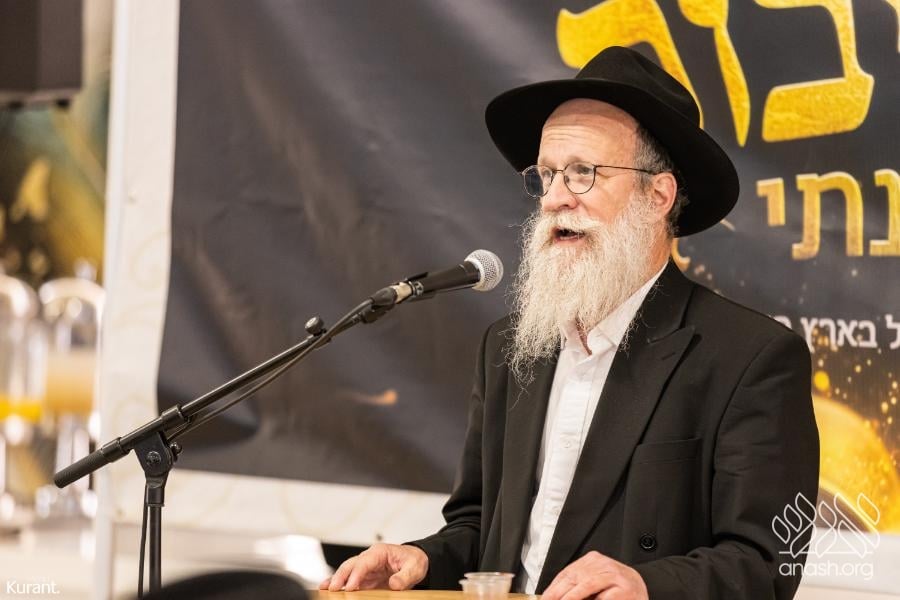
By Reb Zushe Alperovitch – Mashpia in Kiryat Gat, Eretz Yisroel
Avodas HaTefillah is one of the foundations of darkei haChassidus. There is learning Chassidus, and there is contemplating Chassidus.
The goal of contemplation, hisbonenus, is to internalize and connect to the learning. For example, you can learn about how the entire creation is renewed every second, but it’s another thing to take it personally, realizing that you are the neshama being renewed each moment. As a result, you will relate to everything differently.
There are many levels of connection. Some leave you feeling that the idea matters, others provide a deep understanding of it, and some reach the truth of it – even without feeling – which can also give you a chayus.
Some claim they’re not on the level for avodas haTefillah, thinking they have simpler mitzvos they haven’t yet perfected.
They are deeply mistaken.
First, every Jew needs to and is worthy of davening properly. A bochur once thought he lacked a sense of avodah and wrote about it to the Rebbe. The Rebbe answered that every Jew has a sense of avodah, and he should ask his mashpia how to use it. The thought of being unworthy for one thing or another is driven by the yetzer hara as a distraction, meant to prevent proper davening.
Second, even if you’re not perfect in simpler areas, this should not prevent you from being properly engaged in davening. On the contrary, davening strengthens all other areas. We should not look for excuses but strive to push our way in (dachak v’nichnas).
It is a zechus for us to daven properly, just as fulfilling any of the Rebbe’s directives. (See the Rebbe’s words about davening at the Shabbos Farbrengen of Ki Tisa 5740).
Practically speaking:
The first step is to “stand up” for davening, as the Mishnah says, “Ein omdin lehispalel,” meaning to detach ourselves from all other matters and completely devote oneself to davening as a serious endeavor.
The next step is to contemplate a ma’amar or idea in Chassidus – something you can actually connect to personally and reflect on in a practical way.
The third step is the actual davening. It is not enough to understand the words; you must also listen attentively and connect your davening with the prior contemplation. This creates a real chance for it to touch the neshama.
Even if you are busy, you can find a few moments to do hisbonenus before davening. At the very least, you should occasionally reflect before davening and daven with proper attentiveness and care. Hopefully, through this, we will rectify the issue the Rebbeim spoke about – that Chassidim often do not engage sufficiently in avodas haTefillah – and hasten the coming of Moshiach.
Unfortunately, this area has been neglected for various reasons, but recently it has been brought back onto the agenda BH.
As we prepare for the coming of Moshiach, it is of utmost importance to strengthen ourselves in davening. As the saying goes, when Moshiach comes, one will rise in the morning “like an op-gadventer,” just as after an inspired davening. When we daven properly, that itself will hasten the coming of Moshiach.
Since davening is all about connecting to Hashem, kavanah is central and important. From the perspective of bringing down Elokus from above, davening with a minyan is very important. But from the perspective of the neshama, “from below upward,” davening with care and focus carries even greater merit. Kavanah is the essence of davening; it surpasses the great things we can draw down from above.
In truth, these two aspects do not conflict: one can begin davening with a minyan and still attain the individual connection of the neshama to Hashem.
The Chassidishe understanding of davening with a minyan emphasizes gathering all ten powers and kochos of the neshama during davening. As explained, this is the main point of davening – the connection of a person’s neshama to Hashem.
Tanya clarifies that through davening, one can change the will of Hashem; however, it is dependent on avodas ha’adam. Accordingly, the greater the kavanah in davening, the greater the influence one draws down from Above. This is how the Rebbe taught us to daven. Obviously, this applies only to those who daven with proper kavanah and care, and it should not justify davening without a minyan.
From the Lubavitch Monthly, with permission
 COMMENTS


How do I make the choice between the suggested approach and trying to build a minyan in a situation that involves a shakey minyonb metzumtzam, time pressures, hurry up and wait, and the application of a full set of heterim and kulos?
The third step is the actual davening. It is not enough to understand the words; you must also listen attentively and connect your davening with the prior contemplation. This creates a real chance for it to touch the neshama.
What does it mean to “listen attentively” and “connect your davening with the prior contemplation “ ?