




ו׳ תמוז ה׳תשפ״ו | June 21, 2026
Yaacov Agam, Artist of World’s Largest Menorah, Passes Away
R’ Yaacov Agam, a world-renowned Israeli artist and pioneer of kinetic art who created the world’s largest menorah on Fifth Avenue in Manhattan, passed away on Sunday, 6 Tammuz.

R’ Yaacov Agam, a world-renowned Israeli artist and pioneer of kinetic art who created the world’s largest menorah on Fifth Avenue in Manhattan, passed away on Sunday, Vov Tammuz.
He was 98 years old.
Agam was born Yaacov Gibstein on Chof Alef Iyar, 5688, 1928, in Rishon LeTzion, to Rabbi Yehoshua Gibstein, a rov and mekubal. Raised in a religious home, he learned in cheder as a child before later studying art in Yerushalayim, Zurich, and Paris.
He went on to become one of the best-known Israeli artists in the world and a pioneer of kinetic art, creating colorful works that changed with movement, light, and the viewer’s perspective. His wife, Kalila, was a descendant of the Alter Rebbe.
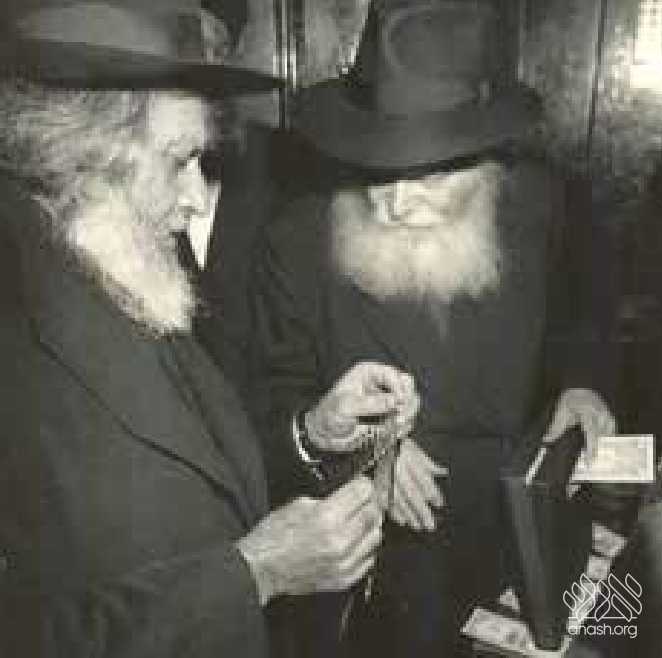
Agam’s connection with Chabad began through his close friend Yosef Ciechanover, who brought him to a farbrengen with the Rebbe. During the farbrengen, the Rebbe spoke with him directly and showed deep interest in his artistic work.
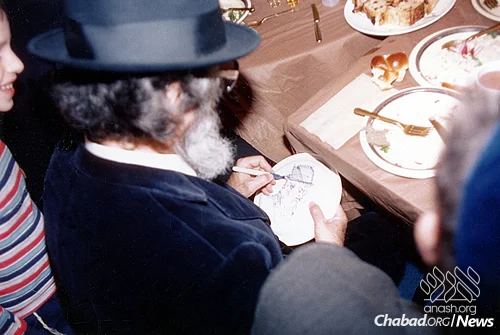
In 1977, in honor of the Rebbe’s 75th birthday, Agam gifted the Rebbe a 500-page album showcasing his work, inscribed with a colorful handwritten dedication using light and shadow in the lettering. The Rebbe responded with a lengthy letter, printed in Igros Kodesh Vol. 32, explaining that although shadow appears to conceal light, Torah teaches that everything Hashem created was created for His glory, and when placed in its proper form and place, even shadow can become a source of positive influence, with a lesson for every Yid to “turn darkness into light.”
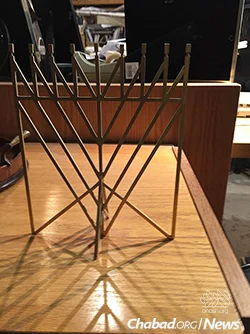
Agam is best known in the Chabad world for creating the iconic Chanukah menorah at Fifth Avenue and 59th Street in Manhattan. The project began after the Rebbe approved the idea of replacing the earlier menorah with a more beautiful and dignified one, built according to the Rambam’s drawing of the Menorah in the Beis Hamikdash, with diagonal branches.
At the suggestion of Mrs. Atara Ciechanover, wife of Yosef Ciechanover, Agam was asked to design the new menorah. He later said he was “excited to fulfill a request coming from the Rebbe,” and donated his design work for the project.
A miniature model of Agam’s design was brought to the Rebbe and remained on the Rebbe’s desk for 3 days before being approved. The Rebbe also made corrections on Agam’s plans. When questions were raised about the artistic shape of the menorah, the Rebbe said that the primary emphasis of the Rambam’s design is the diagonal branches, and that within those parameters, an artist such as Agam should be given room to express himself.
Agam later said that his goal in designing the menorah was not only to create something beautiful, but something “beautiful and Jewish,” modern in form while remaining true to its ancient roots.
The menorah was first lit on Friday, December 26, 1986, and became one of the most prominent displays of pirsumei nisa in the world, drawing large crowds, public officials, and worldwide media attention each Chanukah. Standing 32 feet high, with sculpted bronze branches, it was certified by Guinness World Records as the world’s largest menorah.
Earlier this year, in Teves 5786, Agam was awarded the Israel Prize for visual arts, painting, sculpture, and photography, recognizing seven decades of groundbreaking contributions to Israeli and international art.
The levaya took place at the Yaacov Agam Museum in Rishon LeTzion and continued to the military cemetery in Rechovot, where the kevura took place.
Yehi zichro boruch
WATCH: Artist and sculptor Yaakov Agam presents the Rebbe with a small model of his newly designed public Menorah. The Rebbe says: “Thank you for designing the Menorah according to the opinion of Maimonides. You will be lighting the full-sized versions of your Menorah in Los Angeles and New York – may this be a good beginning for the entire United States and the entire world.”

 COMMENTS


We appreciate your feedback. If you have any additional information to contribute to this article, it will be added below.