



י׳ אייר ה׳תשפ״ו | April 27, 2026
The Emergency Kit Sat Unopened for Four Decades
When an erev Shabbos injury threatened to upend a packed bar mitzvah Shabbos at Chabad of Chautauqua, NY, an emergency room doctor stepped in with a long-forgotten casting kit he had prepared nearly 40 years earlier.
In honor of our son’s bar mitzvah, we traveled from Brooklyn to Chautauqua, on the opposite end of New York State, where we direct a seasonal Chabad House. We planned to drive up on Thursday afternoon (a 7-8 hour drive) with a trailer stocked with kosher supplies, arrive at night, unpack and set up, leaving us a full day Friday to prepare for what would be a very busy Shabbos and bar mitzvah celebration.
Everything went smoothly until our final rest stop, when my youngest daughter, Rivka, tripped and injured her hand.
Friday morning was a whirlwind. While my husband gave a Kabbalah class, I prepared dough for a challah-baking workshop. Ahead of us lay a community Shabbos dinner, a full Kiddush lunch after services, and a festive bar mitzvah celebration on Shabbos afternoon. I knew I was facing an intensive, non-stop kitchen experience right up until candle-lighting.
Knowing how late we all went to sleep (or didn’t), it didn’t surprise me that Rivka slept undisturbed until early afternoon! When she finally sauntered into the kitchen, she told me her hand was still hurting her. Among our arriving guests was Dr. Baum, an emergency room physician. I sent him a quick message, and he met us in the kitchen minutes later. His verdict was immediate: he was certain her wrist was broken.
My mind raced. A broken wrist meant a trip to the nearest urgent care, hours of waiting, and the challenging logistics of returning on Shabbos. How would I finish the cooking and all the prep?
While I spiraled through a series of “impossible” delegation plans, Dr. Baum remained calm. “Don’t worry,” he said. “Let me see what I can find. I’ll take care of her.”
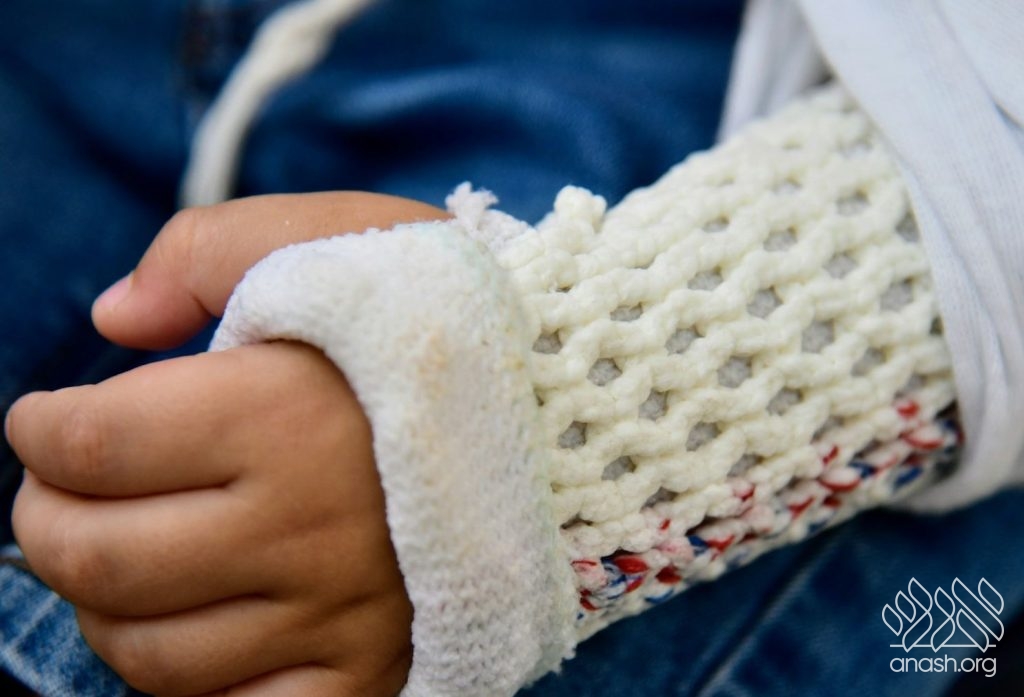
A while later, the dining room tables were beautifully set from wall to wall. Dr. Baum returned with a mysterious package, and with just 30 minutes left before candle-lighting, he spread newspapers on the floor, took out a plaster kit, and began casting Rivka’s arm. She looked up with the brightest, most relieved smile I had ever seen.
Then, Dr. Baum revealed the backstory.
Nearly 40 years ago, he was the doctor at Camp Stone, about 30 minutes away. Back then, he had envisioned this exact scenario: a camper getting injured on the eve of Shabbos, far from a hospital. He had put together a casting kit, hoping to spare a camper and accompanying staff that stress, but thank G‑d, he never had the occasion to use it.
When I showed him Rivka’s injury, he remembered that kit. He drove to Camp Stone, wondering if a box left four decades ago would still exist after years of renovations and staff turnover. Remarkably, the box was still there—unopened and untouched—waiting for its intended purpose 40 years later.
This experience reminded me of a well-known teaching from the Talmud, which explains that G‑d treats a good intention like an actual deed performed. The Sixth Rebbe, Rabbi Yosef Yitzchak Schneersohn, elaborated on this concept in a Chassidic discourse:
When someone intends to do something in regard to Torah study, fulfillment of mitzvot, or attaining good character traits, and desires this with all his heart and might. G‑d arranges matters by Divine Providence so that his intention comes to fruition!2
I marveled at how Dr. Baum’s decades-old intended kindness was finally completed through Rivka.
We recently witnessed this same principle on a global scale.
Like all of Israel, we waited in anguish for the return of our brothers and sisters held in Gaza. Segev Kalfon, who survived 738 days of captivity, later shared what he was thinking while deep in an underground tunnel. He was shown footage of the hostages who had been forced to undergo staged, humiliating releases for propaganda, and he vowed to himself that if he were ever released, he would reclaim that stage with the ultimate “revenge”: he would get up there and proudly shout “Shema Yisrael!” with all his soul.
When Segev was finally released in October 2025, the humiliating performances were no longer being conducted, but G‑d held onto that ardent intention. This year, at the CTeen Shabbaton in New York City, nearly 5,000 Jewish teens gathered in Times Square. Segev was invited to the stage. As he stood before the world, he realized his wish. He led 5,000 voices in a thunderous, public declaration of faith: “Shema Yisrael Hashem Elokeinu Hashem Echad!”
Both stories serve as a stunning reminder: G‑d considers a sincere intention like an actual deed, and ensures every heartfelt wish will find its way to completion.
This article is dedicated to my mother, Rebbetzin Tzivia Miriam (Gurary) bas HaRav Yitzchak Hacohen obm, on the occasion of her 20th yahrtzeit.
 COMMENTS


We appreciate your feedback. If you have any additional information to contribute to this article, it will be added below.