



ח׳ סיון ה׳תשפ״ו | May 23, 2026
Russian Chassidim Reveal Secrets of Soviet-Era Mesiras Nefesh
Six elder Chassidim who learned Torah in the Soviet underground gathered in Moscow for a rare Yiddish-language panel, sharing firsthand stories of hidden mikvaos, secret yeshivos, smuggled tefillin, and the unbroken fire of Torah under Communist persecution.
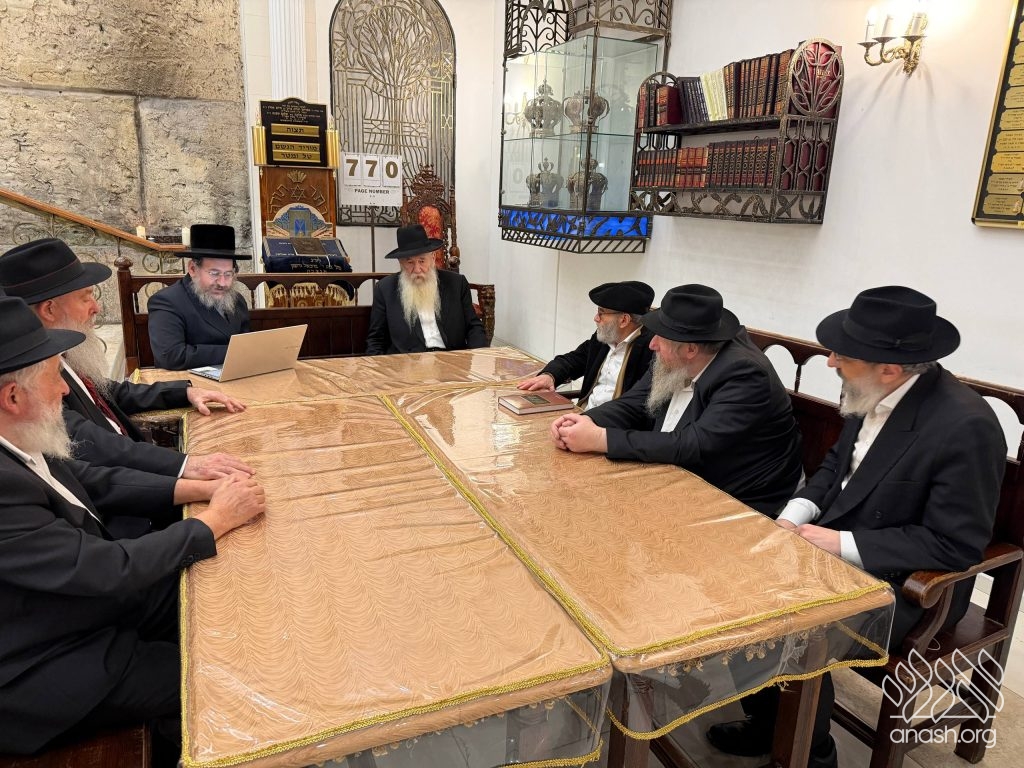
Ahead of Shavuos, six elder Chassidim who lived through the Communist oppression of Yiddishkeit in the Soviet Union gathered in Moscow for a rare and historic panel, sharing firsthand accounts of the mesiras nefesh with which they and their families learned Torah, kept mitzvos, and preserved Jewish life under the watchful eyes of the KGB.
The gathering, held at the Bolshaya Bronnaya Chabad shul in central Moscow, brought together veterans of Russian Jewry who studied Torah in the underground and remembered a time when every letter of Torah was learned with fear, courage, and sacrifice. Speaking in Yiddish, they described secret shiurim, hidden mikvaos, smuggled tefillin, underground yeshivos, and families who risked everything to ensure that the chain of Torah from Har Sinai would not be broken.
The panel was hosted by the shul’s rov, Rabbi Yitzchak Kogan, who emotionally recounted how his grandfather was tortured to death for the “crime” of baking matzos. Yet even after that tragedy, the family continued baking matzos in secret inside their home and arranged hidden shechita for chickens. Rabbi Kogan also told of his mother’s difficult efforts to obtain tefillin for his bar mitzva, which were smuggled from Eretz Yisroel inside a package of matzos and handed to him by an elderly woman in exchange for one request, that she be hosted each year at his family’s Pesach Seder.
Joining him were Rabbi Yehoshua Raskin, Rabbi Velvel Rapoport, Rabbi Boruch Kleinberg, Rabbi Moshe Tamarin, and Rabbi Avrohom Eliyahu Neimark, each sharing another chapter of courage from life behind the Iron Curtain.
Rabbi Rapoport related the story of his father, Reb Chanoch Henich Rapoport, who ran an underground yeshiva in Kursk at just 17 years old. He was caught, tortured during interrogations, and sentenced to ten years of hard labor in Siberia. When the KGB offered him freedom in exchange for informing on the mispalelim in the shul, he refused, declaring that it was better for his children never to see him again than for them to live with the shame of a father who became an informer.
Rabbi Neimark described the underground Jewish community of Tashkent, where a mehudar mikva was hidden inside what looked like an ordinary wardrobe in a private apartment. The water was changed in the dead of night by a silent human chain of young men, passing buckets hand to hand so neighbors would not hear. Rabbi Raskin shared how he kept his Yiddishkeit hidden from friends until the age of 19, while his family’s cramped one-room apartment served as a secret stop for starving Jewish prisoners newly released from labor camps.
The powerful stories carried one message throughout, that the fire given at Har Sinai continued to burn even in Soviet prisons, hidden rooms, and darkened apartments. The gathering was not only a look back at history, but a call of chizuk for today, showing that decrees and oppressive regimes can come and go, while Torah remains eternal.
The participants also pointed to the open miracle of Jewish life in Russia today. The same country where Torah was once learned in whispers now has thriving shuls, yeshivos, mikvaos, and Jewish communities, led by Russia’s Chief Rabbi Berel Lazar and shluchim across the country.
“Decrees pass, empires come and go,” the elder Chassidim said in their message to the next generation. “But the holy Torah remains and endures. The torch that passed even through the dark underground will continue to burn in the halls of the yeshivos and batei midrash forever.”
VIDEO
 COMMENTS


We appreciate your feedback. If you have any additional information to contribute to this article, it will be added below.