




כ״ה סיון ה׳תשפ״ו | June 10, 2026
When the Dollar Sign Becomes the New Hechsher
“It used to be that Kashrus was the ultimate boundary line. A Lubavitcher Chassid wouldn’t let a single morsel cross their lips without knowing exactly who stands behind the hechsher. Today? It seems the most powerful hechsher on the market is the dollar sign.”
By Moshe Freind
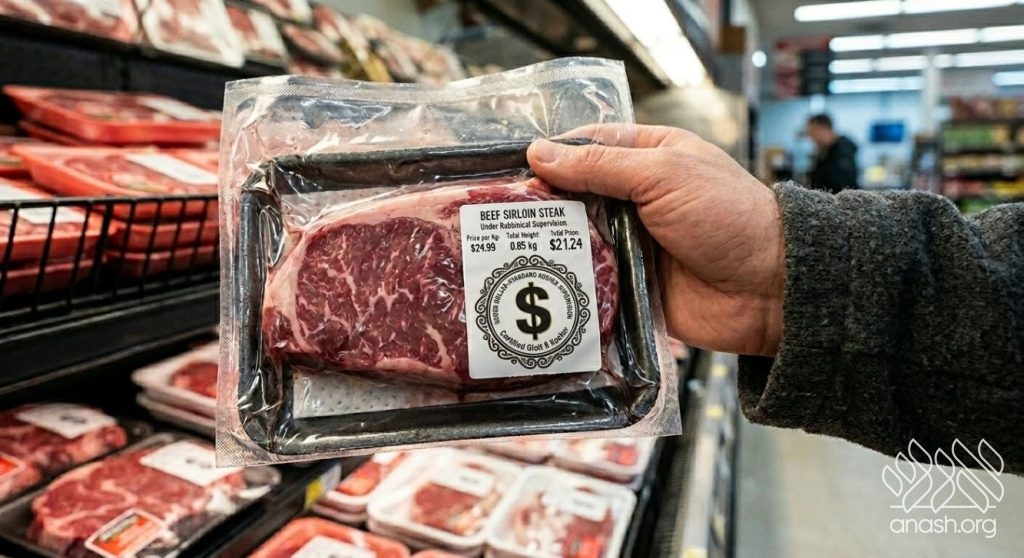
We live in an era of unprecedented convenience. If you walk into any frum supermarket today, the shelves are bursting with every treat, gourmet dish, and high-end culinary creation imaginable. But beneath this surface of abundance, a quiet and dangerous shift is taking place in our community’s mindset—one that strikes at the very foundation of a Chassidishe home.
It used to be that Kashrus was the ultimate boundary line. A Lubavitcher Chassid wouldn’t let a single morsel cross their lips without knowing exactly who stands behind the hechsher, who the Rav Hamachshir is, and whether the standards meet the non-negotiable requirements of Chassidisher shechitah and proper oversight.
Today? It seems the most powerful hechsher on the market is the dollar sign.
Open any local chat or community group and you will see the same pattern. The moment a new food establishment or product hits the scene, the first question isn’t, “Who is the Rav? What are the standards of Bishul Yisroel? Is it Lubavitcher Shechitah?”
Instead, the frenzy is entirely about the price point. “Did you see how cheap the chicken is?” “They have a sale on prime beef!”
We have become a community obsessed with chasing the cheapest option, adopting a corporate “race to the bottom” mentality for the food that literally builds the blood and tissue of our children. The Alter Rebbe explains in Tanya that non-kosher food—or food lacking in proper, meticulous Kashrus standards—clogs the mind and the heart (metamtem hamoach ve’halev). It creates a spiritual block that no amount of learning or davening can easily pierce.
Yet, for the sake of saving a few dollars a pound, some are willing to play Russian roulette with their family’s spiritual well-being.
Somewhere along the line, ensuring a high standard of Kashrus got mislabeled as a chumrah. We hear people say, “Oh, I’m not that crazy strict,” or “It has a symbol on the window, it must be fine.”
Let’s be entirely clear: knowing who the Rav Hamachshir is and validating their standards is not a Chumra. It is basic Halacha.
When it comes to buying a house, a car, or even a laptop, we spend hours researching, reading reviews, and checking specs. We want to know exactly what we are getting for our money. But when it comes to the meat that goes onto our Shabbos table, we suddenly blindfold ourselves, hand over our credit cards, and trust a massive loophole because it’s a bargain.
The Rebbe demanded of us to be a light, to raise the standards of the world, and to be meticulously careful with what enters our homes. We cannot afford to let financial convenience or personal politics dictate our spiritual boundaries.
The next time you hear about a cheap new food trend or a store boasting prices that seem too good to be true, don’t ask how much it costs. Ask who is behind it. Our Neshamos, and the Neshamos of our children, are worth a whole lot more than a discount at the checkout counter.
 COMMENTS


People used to not touch a piece of fleish they didn’t schecht or know the Shochet either
This exact issue is playing out in a prominent Anash community in North America. Besides the questions surrounding the supervision, this new store is selling cuts from the back half of the cow, something traditionally not eaten in Ashkenazi communities.
The hindquarters contain chelev (forbidden fats) and the Gid Hanasheh (sciatic nerve). Removing them requires a complex and painstaking process known as nikkur.
Because of the difficulty involved and the possibility of error, Ashkenazi communities accepted generations ago not to use the back half of the animal at all. Rather than rely on nikkur, the hindquarters are sold to non Jews. As a result, major Ashkenazi and Lubavitcher hechsherim such as the OU, OK, and CHK do not certify hindquarter cuts like sirloin, tenderloin, or flank steak. In commercial kosher slaughterhouses, the entire back half is routinely sold into the non-kosher market.
How can Chassidishe families feel comfortable buying fresh meat from a store that is introducing practices outside the standards accepted in our community? And who is actually overseeing such a sensitive process day after day?
Please find zchus on yidden.
Where are the positive thoughts and limmud zchus?
Let’s make yidishkeit meaningful and exciting on this site so people will come to this level instead of just complaining when people are trying their best in the last seconds of golus…
I’ve been seeing alot of articles against all types of things and not one pro article for the sweetness truth and depth of chassidus.
When you light a candle it dispels darkness
Well said!
People are struggling with all kinds of things, including debilitating costs of basic living.
It can be hlealthy or an individual to vent where necessary, but publick judgement and criticism objectively do not move the needle in a constructive direction.
Inspiring people about the value and importance of being particular about what they eat is a beautiful idea.
Doing with without judgement, criticism, and lashon hara would be even better 🙂
. . . Yisroel Glick
If someone who was not qualified would open an office offering heart surgery for cheap, would you also say that we need to be “positive” and understanding? Or would you shout from the rooftops that it’s dangerous?
What then is the difference? Because we lack faith that treif food is deadly for the neshama…
Practically the only way to make a real lasting difference is EDUCATION.
The laws and the practical application in the world of Kosher.
I found this to be very helpful.
Kashrus Be in the know
Rabbi Nissan Zibell- Va’ad RC
https://open.spotify.com/playlist/057p2KPJrtLUjBiXDbBS3L?si=TWjA_g2DQYWuizoMmMkMqg
I requested chatgpt to rewrite this article in a positive manner, this is what he offered:
When Kashrus Remains Our First Question
We are living in a remarkable time of abundance and convenience. Walk into any frum supermarket today and you will find an incredible variety of products, prepared foods, and culinary options that previous generations could scarcely have imagined. Alongside this blessing comes an opportunity to reflect on one of the foundations of a Chassidishe home: the importance of thoughtful and informed kashrus choices.
For generations, kashrus was never viewed as simply another detail of shopping. People wanted to know who stood behind a hechsher, who the Rav Hamachshir was, and what standards guided the supervision. These questions reflected not only a commitment to halacha, but also an appreciation for the profound role that food plays in Jewish life.
Today, conversations about food often begin with affordability, convenience, and value. These are legitimate concerns, especially during times when many families are working hard to manage rising expenses. At the same time, the discussion presents an opportunity to ensure that kashrus remains part of the conversation as well.
When a new product or establishment appears, we can ask both sets of questions: Is it affordable? And who is behind the supervision? What are the standards being followed? Is it aligned with the practices and expectations of our community?
The Alter Rebbe explains in Tanya the unique impact that food has on a person’s spiritual sensitivity and avodas Hashem. Because what we eat affects us so deeply, taking an interest in kashrus standards is not merely an added stringency for a select few. It is a meaningful aspect of living a Torah life and making informed choices for ourselves and our families.
In many areas of life, we naturally invest time in learning about what we purchase. Whether buying a home, a vehicle, or even a household appliance, we seek information and guidance before making decisions. The same thoughtful approach can enrich our kashrus choices, helping us better understand the standards and supervision behind the products we bring into our homes.
The Rebbe continually encouraged us to elevate our surroundings and approach every area of life with awareness and purpose. By learning more about kashrus and taking an active interest in the standards behind the food we eat, we strengthen not only our own homes but also the broader culture of Torah and Yiddishkeit within our communities.
The next time a new product, store, or food trend catches our attention, we can view it as an opportunity—not only to consider price and convenience, but also to deepen our understanding of kashrus. By asking informed questions and valuing both affordability and spiritual responsibility, we help ensure that our choices reflect the priorities we want to pass on to the next generation.
Laptops and cars have pages of reviews.how would you recommend we find out about the rav hamachshir? Looking forward to a practical answer. Thank you!
You Google the name of the rabbi and/or kashrus org.
In this particular case he won’t find too much…lol