




כ״ז אב ה׳תשפ״ו | August 10, 2026
Lubavitcher Knesset Appointment Revives Coalition Debate
Following the announcement that a Lubavitcher chossid was being appointed as a member of the Knesset, many noted the Rebbe’s halachic opposition to frum Jews joining the coalition which is complicit to acts against halacha.
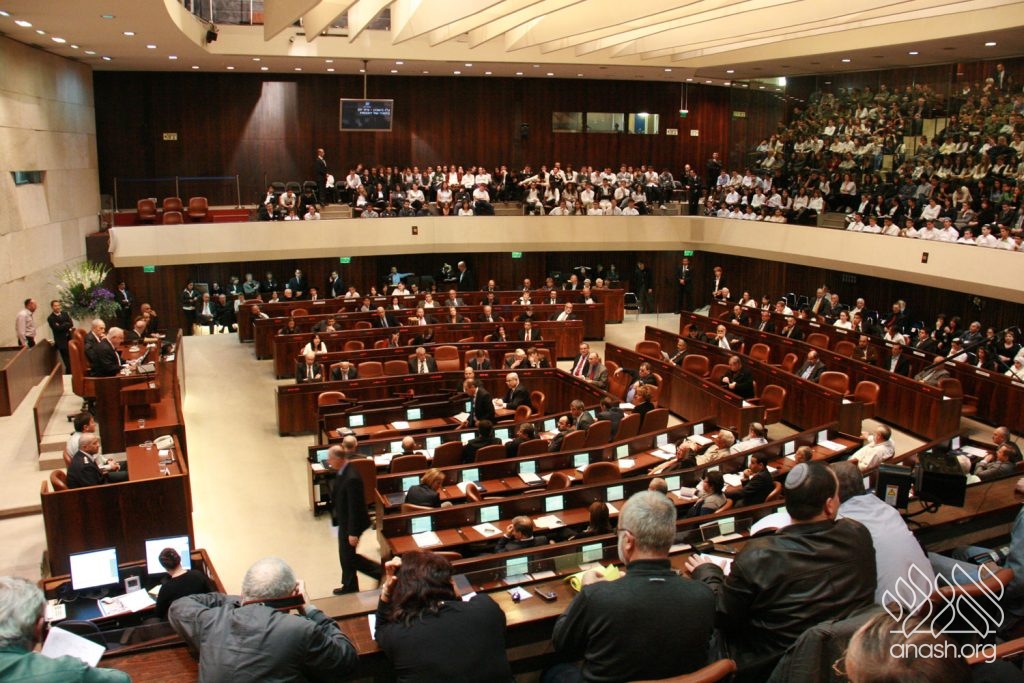
R’ Shabtai Katash, a Lubavitcher chossid and chairman of the religious council in Lod, was announced this past week as the next MK to enter the Knesset, taking over the seat of Dan Iluz following Iluz’s resignation and move to Yisrael Beiteinu.
“Likud is a party of the people, and the chareidi sector also has something to say within Likud,” Katash said in an interview with Kikar HaShabbat. “I can represent the religious community no less than the other representatives.”
Katash also described his political outlook as rooted in the Rebbe’s teachings. “The shlichus of Chabad chassidim is to reach every Yid, without checking which sector he comes from. In the Knesset too, I see shlichus, to connect between parts of the nation,” he said.
However, while many are excited that a Lubavitcher in the Knesset can help accomplish things that are on the table, others are pointing out that the Rebbe repeatedly emphasized the need for Chabad to remain apolitical. This is most clearly demonstrated by the fact that, aside from one specific instance, the Rebbe specifically did not tell Chassidim which party to vote for.
However, a distinction can easily be made between the position of Chabad as a whole and the personal affiliation of one Chabadnik. Moreover, Katash is not an official Chabad representative, but an active political operative, and his entry into the Knesset should not be seen as a case of Chabad involvement in politics.
That aside, there is a more serious issue at hand, and that is the Rebbe’s longstanding view against joining the government coalition.
On numerous occasions, the Rebbe encouraged and pushed for chassidim to participate in the elections. The Rebbe specifically asked that chassidim vote for the party which is faithful to Torah and mitzvos.
However, at the same time, the Rebbe was very strong in his opinion that it is absolutely forbidden to join the coalition, and that those sitting in the coalition bear full responsibility for all government decisions, some of which are against halacha (women’s army service, Shabbos, support of non-Jewish religious sites, etc.).
In a letter from 28 Tammuz 5715, written before the 1955 elections, the Rebbe clarified the distinction between voting for the Knesset and serving in the government:
“By participating in the elections, one strengthens the frum position without bearing responsibility for the laws and decrees, etc., because one has the ability to protest with full force against even the slightest infringement upon yiddishkeit, and even a minhag, etc. This is not the case when one enters the coalition, for then he bears responsibility, through his participation, for all the laws and decrees, etc.”
Around the same time, the Rebbe wrote to noted mashpia Reb Volf Greenglass of Montreal, Canada, who was in contact with his cousin, R’ Yeshaya Asher Zelig Margoliyos, a kano’i in Yerushalayim who objected to voting at all. After explaining the absolute obligation to participate in the elections, the Rebbe adds: “Although entering the coalition, in my opinion, is forbidden because it involves participating in decrees against [Torah and mitzvos], etc.”
By the elections for the Fourth Knesset, members of the Mizrachi party were preparing for their ministerial positions in the next government. The Rebbe immediately dispatched a letter to Harav Shlomo Yosef Zevin, who was also on good terms with the leaders of Mizrachi.
“My position is clear: Participation in the coalition, and certainly serving as a minister, who brings about a dvar aveira, etc., is absolutely forbidden according to the Shulchan Aruch. The matter of transgression exists in most of the ministries, and perhaps in all of them. First and foremost, in the Ministry of Religious Affairs, in the plural, where there are actual prohibitions of avodah zarah.
“This is compounded many times over when the person signing the order is someone who puts on tefillin, for this constitutes an additional declaration that one should, R”L, participate, etc.”
While some argued that there is a need to serve in government, to address important issues including funding for frum institutions, the Rebbe explained in the letter that mitzvos and aveiros cannot be treated as commodities to be traded against one another. If something is prohibited, no benefit – even spiritual – can allow it.
When the controversy over “Mihu Yehudi” began, the Rebbe launched a major campaign to have the law amended. As members of Mizrachi were also serving in the Israeli government, the Rebbe demanded that they resign rather than bear responsibility for the grave consequences of assimilation among the Jewish people in Eretz Yisroel.
“Those who are sitting in the government should have banged on the table, and said that such a thing can’t happen,” the Rebbe declared at the farbrengen of Shabbos Hagadol 5730. “It is contrary to Torah, and it must be abolished. And if not, they will leave the government!”
The Rebbe continued to speak on why, in general, it is forbidden to sit in the government: “In general, it’s forbidden to continue sitting in the government, because participating with those who establish laws that are contrary to Torah is forbidden according to Torah. Some argue and say that there is no prohibition in doing so, but in my opinion, it is forbidden.”
In a telegram sent to Rabbi Isser Yehuda Unterman, the Chief Rabbi of Israel, the Rebbe wrote: “Every representative of Yiddishkeit who is currently sitting in the government adds yet another stamp of religious approval to all this, contrary to the Torah of truth. The security and morale of Am Yisroel cannot be strengthened by something contrary to the truth.”
It should be noted that for decades, the Moetzes Gedolei HaTorah (the committee of Torah leaders of the Agudas Yisroel party) maintained the Rebbe’s position that serving as a government minister meant assuming responsibility for the government’s actions, including any that went against Torah. Over the years, however, largely to gain greater influence and resources, its position gradually softened, first allowing coalition participation, then deputy-minister posts, and more recently, actual minister positions.
Some have pointed out that there are precedents of Lubavitcher chassidim, such as Reb Leizer Mizrachi, who served in the Knesset with the Rebbe’s guidance, preventing the formation of a dangerous left-wing government. He participated in the coalition and even served as a deputy minister.
It also remains to be clarified whether the Rebbe’s opposition was limited to joining the coalition, serving as a minister, or taking a position in the government at all.
 COMMENTS


A Rov told me not to put a Mezuza on someone’s luxury wine shop. True, they had a full line of Kosher wines…