




ט״ז סיון ה׳תשפ״ו | June 1, 2026
Postcard Hidden for 50 Years Reveals a Lubavitch Family Connection
When a shliach in Argentina came across a postcard he had found as a child in Crown Heights and kept hidden for 50 years, he decided to post it online. Within hours, it led a Lubavitch family to discover the postwar message their father was sent in Shanghai, reconnecting a forgotten chapter of history.
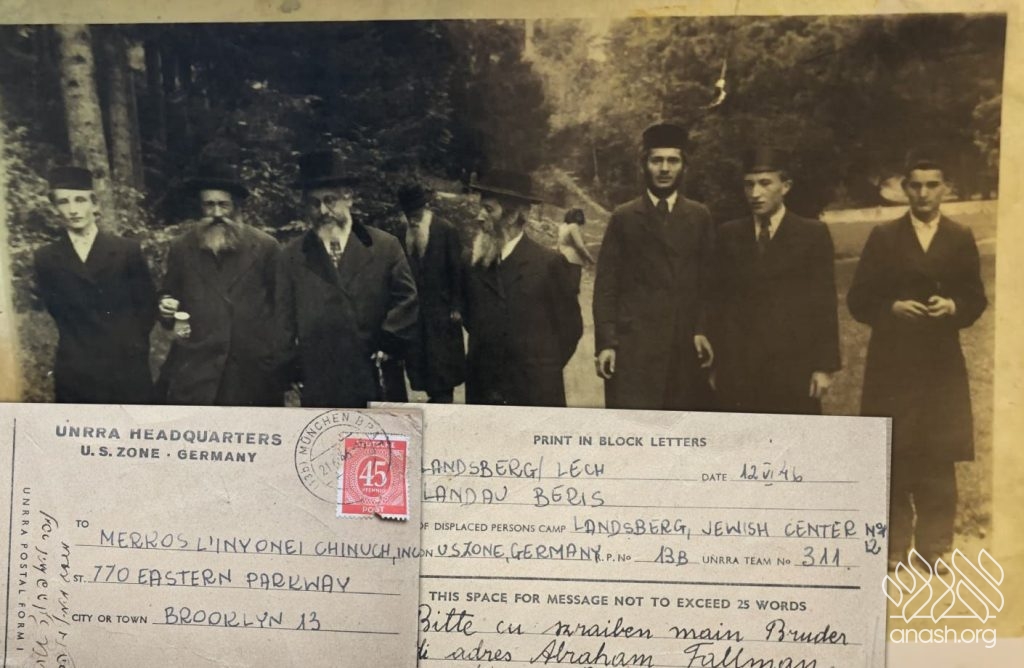
A worn postcard tucked away since childhood turned out to be far more than a stamp collector’s find.
Rabbi Yossi Turk, shliach in Cordoba, Argentina, kept the card since he was a boy at Oholei Torah in Crown Heights.
“I have had this card saved for almost 50 years since I was a kid,” he told Anash.org. “Kehos used to be in the basement right next to Oholei Torah. When they moved, it was abandoned – full of garbage on the floor. And we kids really enjoyed ourselves looking for souvenirs there in the dump, in the garbage.”
At the time, he collected postage stamps. “Every envelope with a stamp on it, I saved. For me, it was like finding a treasure.”
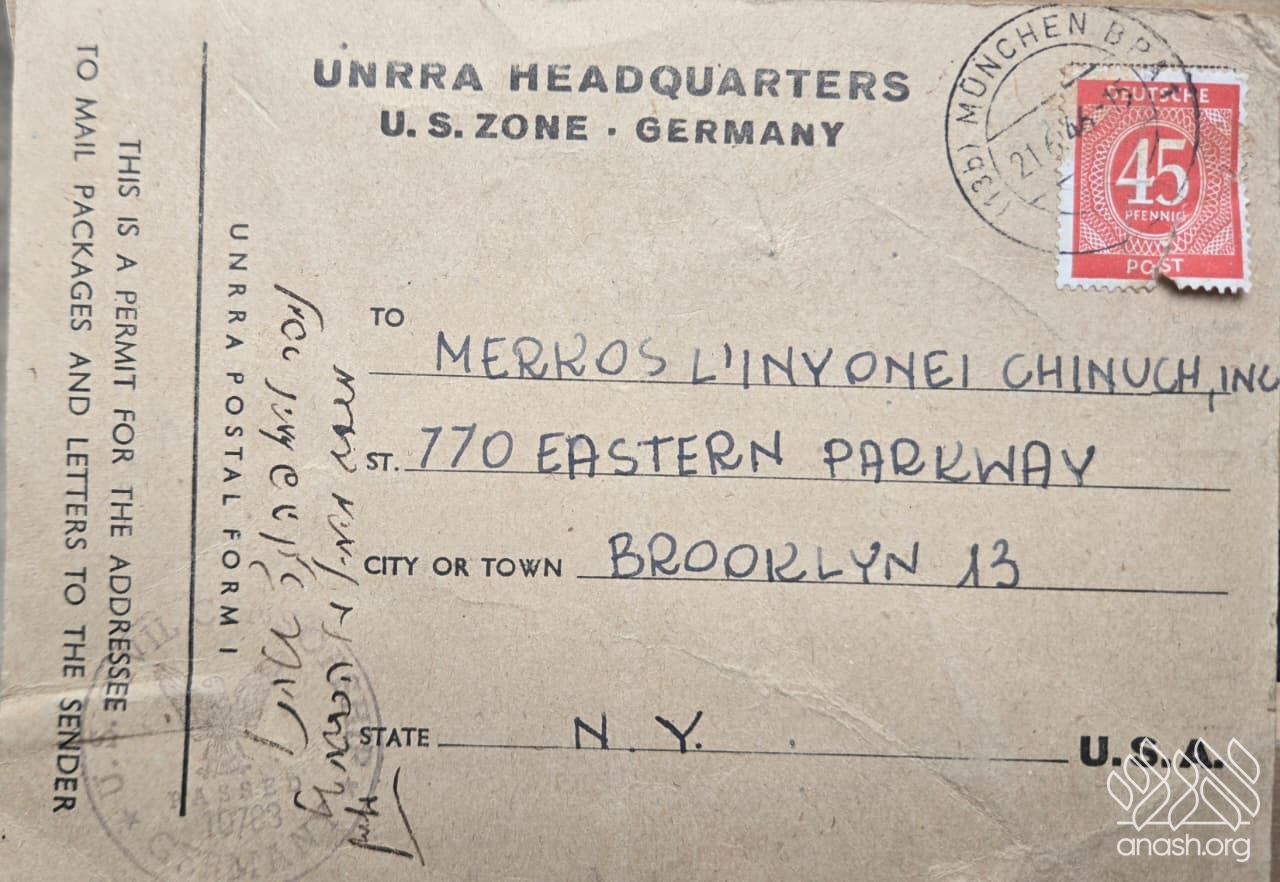
Most of the envelopes were empty, but among his finds was a postcard bearing a Deutsche Post stamp, postmarked München, June 21, 1946, and stamped “PASSED / 10783 / US ARMY” by military censors. He put it aside and forgot about it for decades.
“I hadn’t even bothered to look at the name on it, or where it was from or going to”, he says.
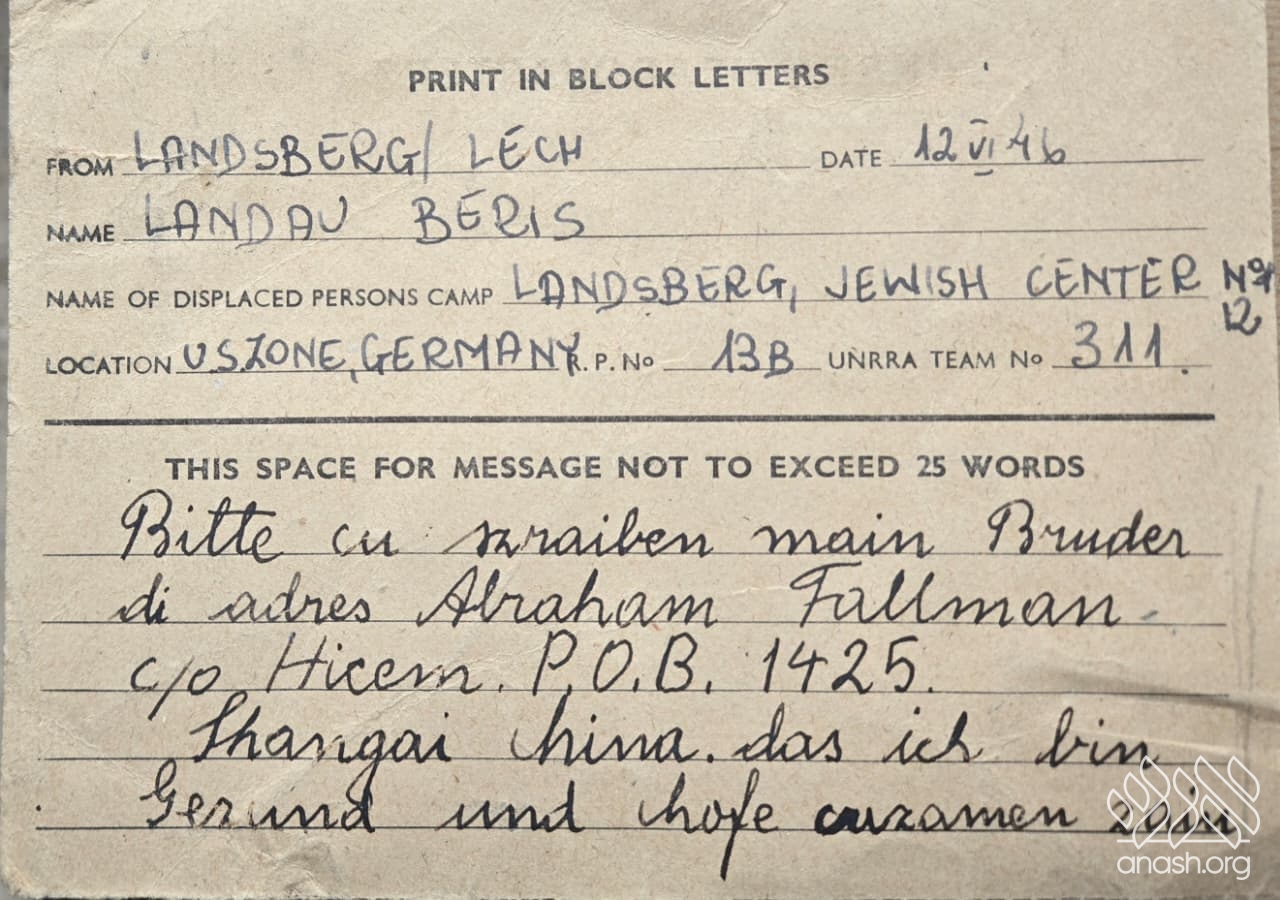
That changed recently. While going through old belongings, he decided to take a look at that long-forgotten envelope. The card turned out to be an official UNRRA postal form sent from the Landsberg Jewish Displaced Persons Camp in Germany, written by Berish Landau and addressed to Merkos L’Inyonei Chinuch at 770.
In phonetic Yiddish written in Latin letters, limited to just 25 words, the message read: “Please write to my brother, the address is Abraham Fallman, c/o Hicem, P.O.B. 1425, Shanghai, China, that I am healthy and hope we will be together.” On the margin, a handwritten Yiddish line added: “So they shall hear and see — may you be written and sealed for a good year.”
“I shared it last night,” Rabbi Turk said, “saying it would be interesting to know who these families are today – this man from a DP camp asking Merkos to let his brother in Shanghai know that he’s okay.” By the next morning, his phone was already buzzing. The Landau family had found the post.
The brother listed in Shanghai, recorded as Avraham Fullman (his European name), was Avraham Tzvi Landa. Born in 5678 (1918) in Sanz, Galicia, he later made his way to the Chabad yeshivah in Vilna during the war, where he organized farbrengens and learning sessions for chassidishe bochurim who had gathered there.
He maintained a close correspondence with the Frierdiker Rebbe, who blessed him with “long, good and illuminating days and years, within the tent of Torah.” Indeed, he lived a life full of Torah until the age of 100.
When American visas did not come through, Landa and his fellow students escaped east on visas issued by the Japanese consul Chiune Sugihara. They traveled through Siberia, passed through Kobe, Japan, and ultimately reached Shanghai during the war years. His peers later recalled that whenever danger struck – whether bombs fell or storms at sea – they would gather near him, confident in the Rebbe’s bracha that accompanied him.
Berish’s postcard, sent through UNRRA channels to Merkos in June 1946, became one small thread in the wider postwar effort of survivors trying to reconnect with scattered family members across the world.
Avraham Tzvi Landa survived the war, reached New York later that year, and rebuilt his life in Boro Park, where he taught Torah for decades. He was the last surviving member of that group of Polish Chabad yeshivah students who had endured the Holocaust in Kobe and Shanghai. He passed away several years ago at the age of 100.
His son, Rabbi Yosef Landa, serves today as a shliach in St. Louis. Rabbi Landa shared with Rabbi Turk a photo showing Berish Landa in his youth. The photo, taken a couple of months before WWII broke out, shows Berish (on the far right), his brother Yoshe Landa (third from the right), and the Boyaner-Lemberg Rebbe (third from the left).
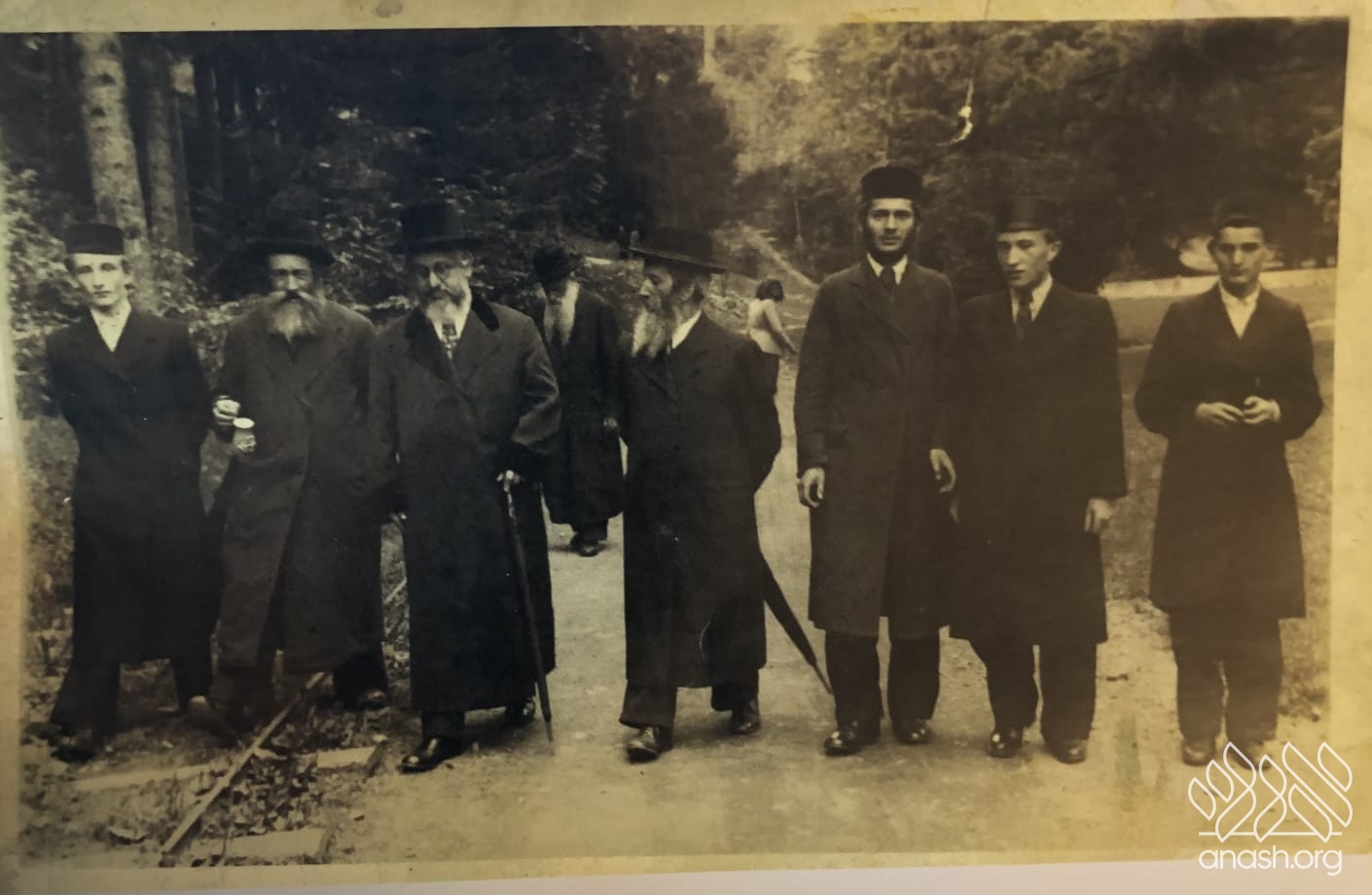
In this photo taken a couple of months before WWII broke out, Berish is on the far right. Third from the right is another brother, Yoshe Landau. Third from the left is the Boyaner-Lemberg Rebbe.

Rabbi Avraham Landa passing by the Rebbe


 COMMENTS


Who was his brother Berish? Where did he end up? How did he know of his brother’s Chabad connection?