



ט״ז סיון ה׳תשפ״ו | June 1, 2026
Chassidus and AI Conference Returns for Second Year
Following the success of last year’s inaugural gathering, which drew over 400 participants from across the globe, the Chassidus and Artificial Intelligence Conference will return for a second year, continuing its mission of harnessing today’s most advanced technology in the service of hafotzas hamaayonois.
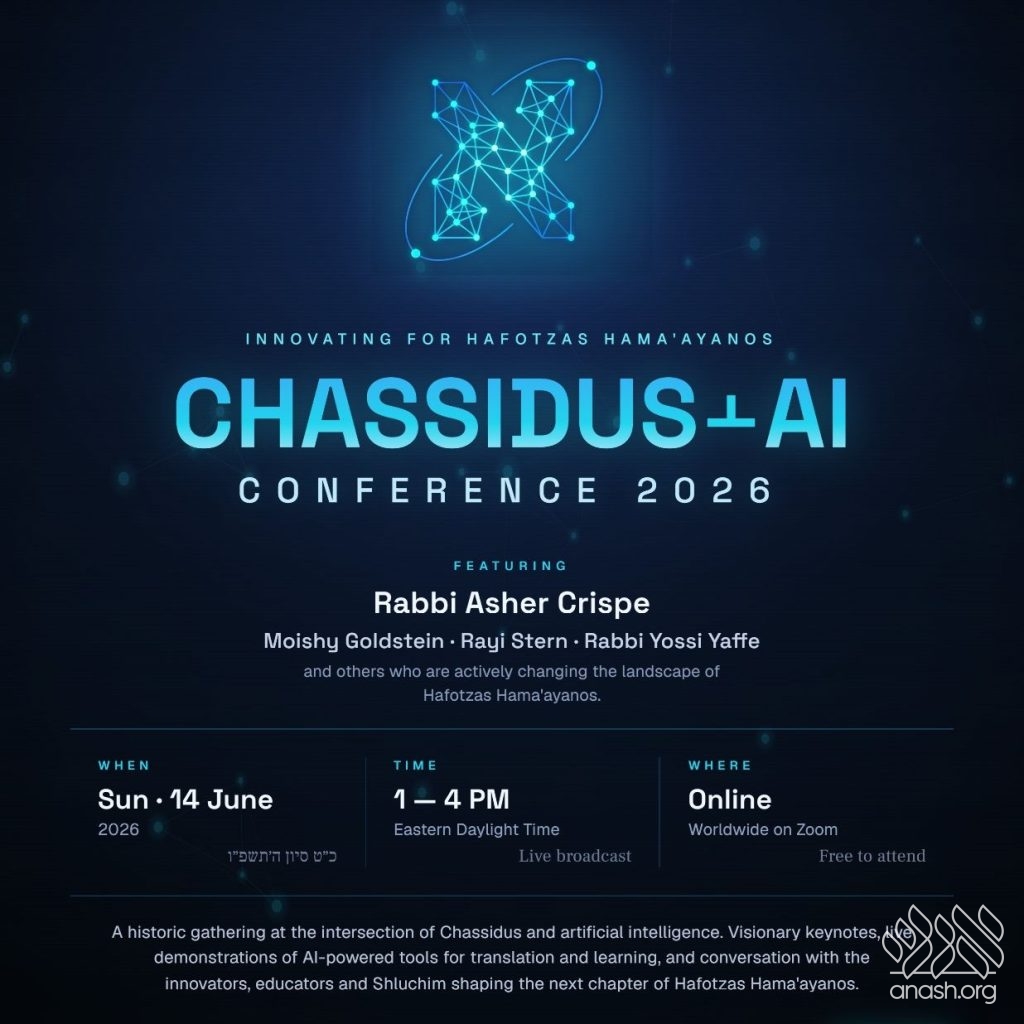
Following the success of last year’s inaugural gathering, which drew over 400 participants from across the globe, the Chassidus and Artificial Intelligence Conference, hosted by Rabbi Zalman Abraham, will return for a second year, continuing its mission of harnessing today’s most advanced technology in the service of hafotzas hamaayonois.
When the first Chassidus and AI Conference convened last year, few were certain what to expect. A virtual gathering devoted entirely to the question of how artificial intelligence might be enlisted for the spreading of Chassidus was without precedent. By the time it concluded, more than 400 Anash, educators, developers, and mashpiim had taken part, and the organizers understood that they had touched something the community had been waiting for.
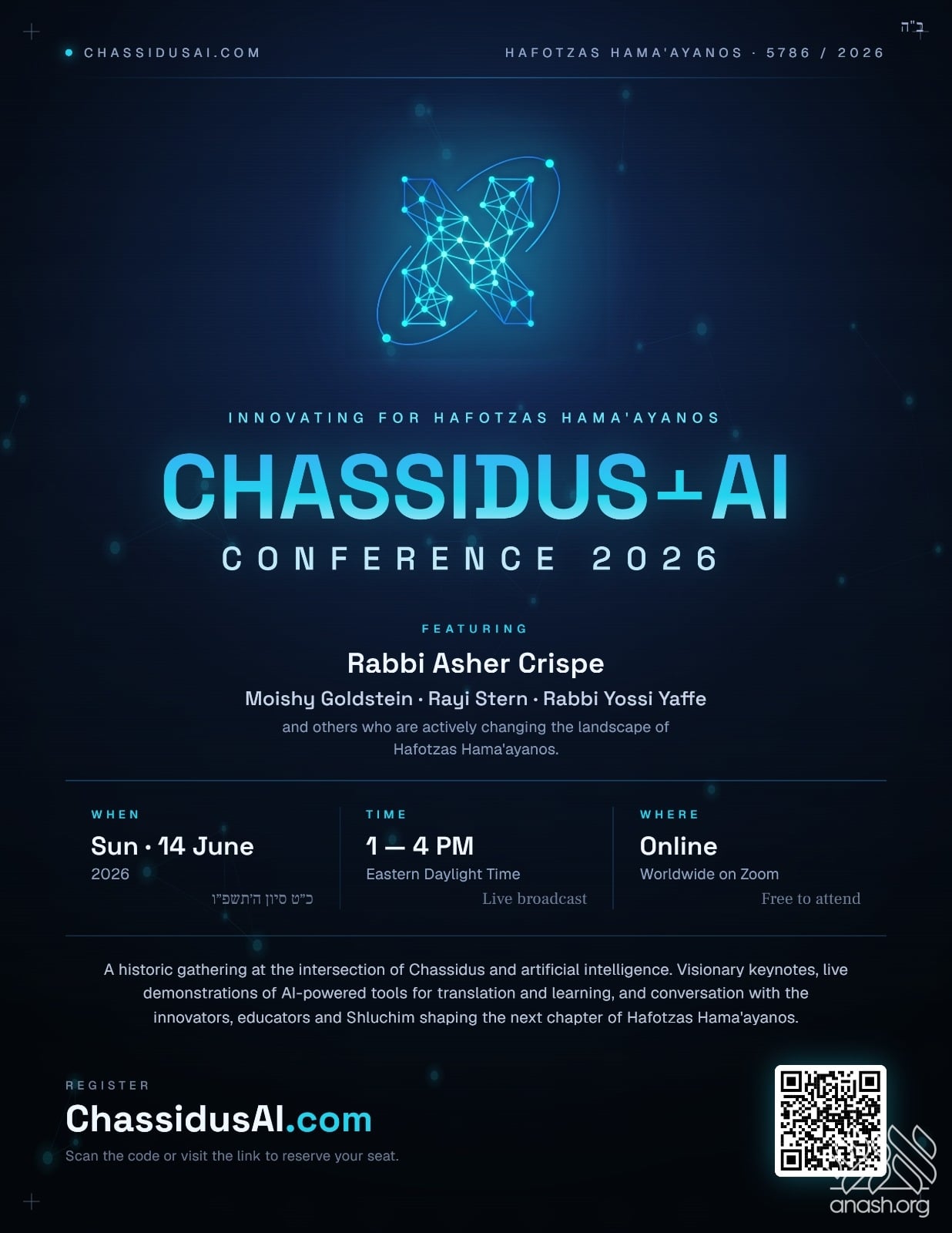
This year, the conference returns. The free, virtual event is scheduled for Sunday 29 Sivan / June 14, 2026, with registration now open at ChassidusAI.com.
The premise remains the same as it was at the outset. The Rebbe charged every chossid with the task of hafotzas hamaayonois chutzah, the spreading of the wellsprings of Chassidus to the farthest reaches. In each generation, the means available for fulfilling that directive have changed. The printing press, the radio broadcast, the satellite hookup, and later the internet each opened doors that an earlier generation could not have imagined. Artificial intelligence has already taken its place in that line. It is in the community’s hands today, being used by people in every corner of the world, and the only real questions left are how it will be used and whether it will be used well.
That theme of responsibility figured prominently at last year’s conference, and it is expected to remain central. Presenters spoke frankly about the dangers alongside the promise. A language model that fabricates a source, or one trained on material foreign to Torah values, can mislead as easily as it can teach. The consensus among speakers was that these tools demand the same scrupulous care for accuracy and mesorah that has always governed the transmission of pnimiyus haTorah.
What a single year has brought is striking. The arrival of “vibe coding,” in which a person describes in plain words what they want and the machine writes the code, has placed real building power in the hands of people with no technical background at all. Someone who has never written a line of code can now produce a working app or website. Last year, the notion of an effective Chassidus RAG, Retrieval Augmented Generation, was raised as a theoretical answer to the problem of accuracy.
Today several such models have been developed and stand at the cusp of release. Research has been transformed by AI databases that contain entire libraries of Torah and Chassidus. Hundreds of websites have already been built to carry the work forward. The same leap has reached the world of media production. High-end visuals, animation, infographics, and polished video, once the work of a studio, are now within reach of an individual at a keyboard, and some are already using these tools to recast a single piece of Chassidus for different audiences and age levels, from a young child to a seasoned learner.
And yet the organizers are the first to acknowledge that the major breakthroughs still lie ahead. The harder question remains open. How do we find new ways to bring people in, to spark the interest of someone who has never tasted Chassidus and does not yet know what they are missing?
This year’s program features a new roster of presenters:
Rabbi Asher Crispe, a technology futurist who is working with a French company on building Artificial General Intelligence (AGI), will address the future of AI and Chassidus, considering where the technology is headed and what its continued advance may mean for the study and dissemination of pnimiyus haTorah in the years to come.
Moishy Goldstein will offer practical instruction on producing this kind of high-level visual content effectively, a subject of growing importance as more educators turn to multimedia to reach their audiences.
Rabbi Yossi Yaffe will speak about an exciting project to map the intellectual history of chassidus scholarship.
Rayi Stern will present his Torah API project, an effort to make authentic Torah sources readily available to developers building the learning applications of the future.
Several additional speakers are expected to be announced in the days ahead.
Participation is free, though space is limited and preference will be given to those actively involved in advancing the work. All who register will receive access to the full recordings following the conference.
The conference is offered in partnership with Rabbi Mendy Shishler‘s popular “AI for Shlichus” WhatsApp groups for shluchim.
To register or to learn more, visit ChassidusAI.com.
 COMMENTS


Is there a recording of last year’s Zoom?