America at 250: When Chabad First Reached Its Shores
On July 4, the malchus shel chesed of America will be celebrating 250 years of independence. In honor of this occasion, the present installment of From the Margins of Chabad History is devoted to the early history of Chabad in America. The article features a new interactive map of early Nusach Ari shuls in North America, and two letters of the Frierdiker Rebbe to America, published here for the first time.
“A tall, swart Israelite wearing a summer overcoat walked into the registrar’s office and said he wanted to be a reverend.”
No, this is not the beginning of a joke. It’s the beginning of Chabad history in America. But first, a pre-history.
On July 4, the malchus shel chesed of America will be celebrating 250 years of independence. In honor of this occasion, the present installment of From the Margins of Chabad History is devoted to the early history of Chabad in America.
Drawing on historical newspapers, archival documents, and unpublished letters of the Frierdiker Rebbe, we will tell the story of the first chasidim to step foot in America, the earliest Nusach Ari shuls established, the founding of Agudas Chasidei Chabad of America, and the Frierdiker Rebbe’s first public message to American Jewry.
In 1776, there were no more than a couple of thousand Jews in America, and no Chabad chasidim. In fact, Chabad had not even been fully established yet at this point. Between 1840 and 1880, a wave of immigration from Western Europe brought over 200,000 Jews to America, primarily German Jews who brought the Reform movement with them. The number of traditional heimishe Yidden was paltry.
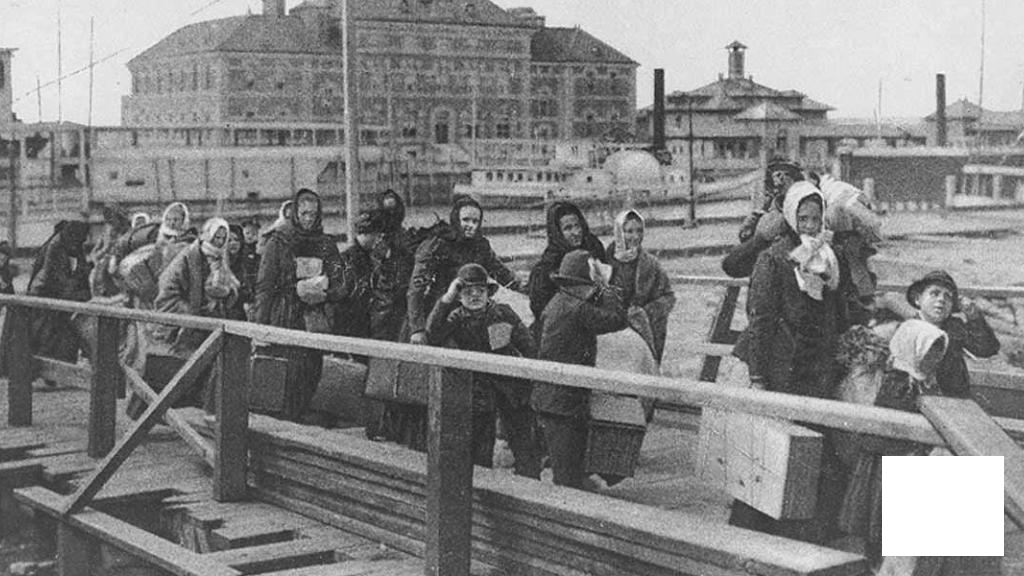
Immigrants arriving at Ellis Island, c. 1902.
In 1881, a massive wave of Jewish immigration to America began, changing the landscape of American Judaism forever. The 4–5 million Jews living in the Russian Empire’s Pale of Settlement during this period had long suffered from great poverty and endured periods of antisemitic oppression. In 1881–1882, a wave of antisemitic pogroms swept through the Pale of Settlement, convincing many Jews that they had no future in Russia. This became the spark for one of the largest population movements in world history.
Over the course of the following decades, more than one-third of the Jewish population of Russia, over 2 million people, migrated to the United States. Over a million of these immigrants settled in New York, making the Lower East Side of Manhattan the most densely populated neighborhood on Earth. Large numbers of Jews also settled in Chicago, Philadelphia, and Baltimore, and many also settled in small towns across the American Northeast and Midwest.
The wave of immigration continued until the Johnson-Reed Immigration Act of 1924 imposed strict quotas on immigration, specifically designed to end mass Jewish migration.
Chabad was a massive movement in White Russia and Malarussya (now Ukraine), during this period, with hundreds of thousands of chasidim. Naturally, many of the immigrants to America from these areas came from a Chabad background.
While almost all of the Russian immigrants came from a traditional frum background, most were undergoing some process of modernization, and their move to America accelerated this. America achieved a reputation in Europe as a spiritual wilderness, where the youth cast off the yoke of Torah.
The strongest elements of frum Jewry in Russia were deeply concerned about the state of Yiddishkeit in America, and did not join this migration in large numbers. The Chabad Rebbeim, like many other frum leaders, discouraged immigration for this reason (see Heichal HaBaal Shem Tov, vol. 43, pp. 273-277 for details).
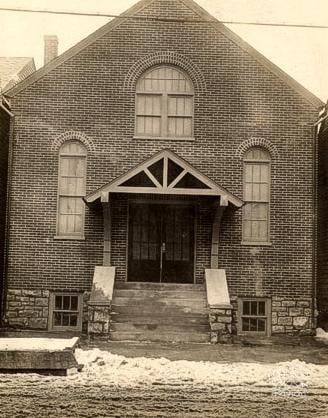
Ohev Sholom Nusach Ari, on Hepburn St. & Edwin St., Williamsport, PA. This shul was founded in 1904.
As a result, very few committed and practicing chasidim, yerei Shamayim, and ovdei Hashem made the journey to America. The immigrants from a Chabad background were largely people with a loose ancestral connection to Chabad, not those who actively learned chasidus and traveled to the rebbeim.
But however loose their Chabad affiliation was, these immigrants davened Nusach Ari, and they needed shuls that davened in their nusach. Over this period, dozens of Nusach Ari shuls sprang up across the United States. Over 40 Nusach Ari shuls opened across New York City, and multiple shuls were also established in the large cities of Chicago, Philadelphia, and Baltimore. Nusach Ari shuls even appeared in small outlying cities such as Ansonia, Connecticut; Williamsport, Pennsylvania; Sheboygan, Wisconsin; and Sioux City, Iowa.
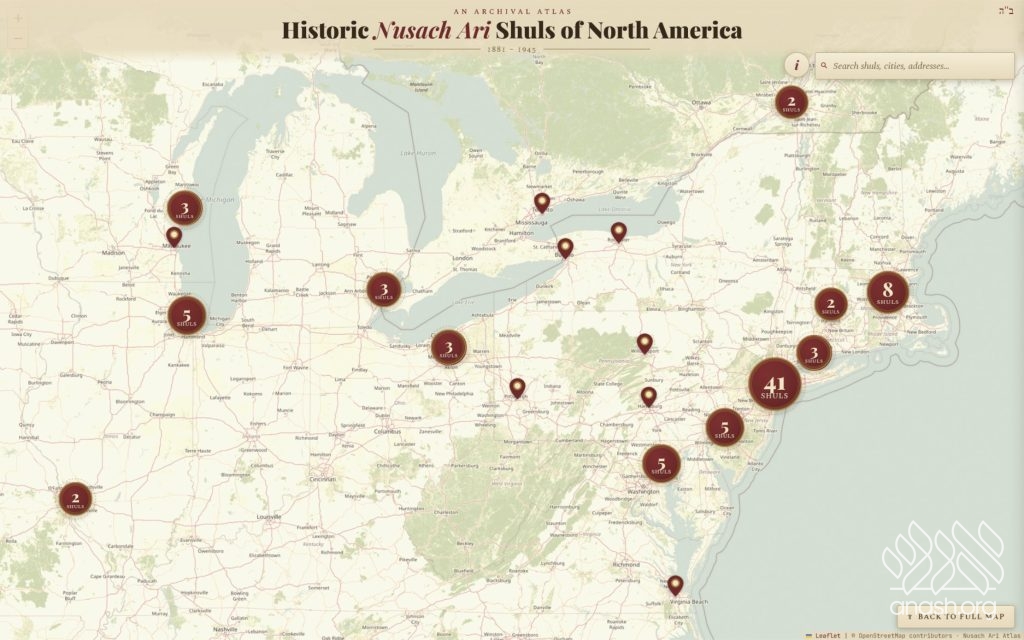
To visually present the historical landscape of Nusach Ari shuls across North America between 1881 and 1945, we have created an interactive map showing their locations and details.
The core data is drawn from a series of lists published in Toldos Chabad BeArtzos Habris (pp. 125–128). The basic information in these lists has been supplemented with details gathered from contemporary directories, historical newspapers, archival records, and other sources. Some additional shuls have also been added based on this research. Thanks are due to Zalman Abraham for graciously assisting this project with his technological genius.
Click on “Open the Atlas” to begin. Click on top right button to expand to full screen.
*
The First Chabad Shul in America
If we wish to put a date on the beginning of Chabad history in America, we need to identify the first Chabad institution founded in America, as opposed to individual immigrants. Extensive research points us in the direction of that “tall, swart Israelite [who] walked into the registrar’s office.” The news comes to us from none other than the New York Times, February 9, 1887.
Wanted to Be a Reverend
The agitation by the better class of Hebrews to secure a uniform marriage system and prevent divorces by rabbis is bearing fruit. Yesterday a tall, swart Israelite, who wore a Summer overcoat, went to Dr. John T. Nagle’s office and said he “wanted to be a reverend.” He produced a document signed by several persons in Hebrew before Aaron Levi, notary public, to the effect that they and others intended to organize at No. 9 Bayard-street, the Congregation Anshe Libowitz, with Abraham Judelson President.
The gentleman who “wanted to be a reverend,” said he was either plain David Feinberg or David Ben Rabbi Naphthali. It gradually leaked out that he wanted a book of blank marriage certificates, but he was told that if he would bring a certificate of the incorporation of his congregation he could have one. Just after he went away Jacob Hammer, who keeps a cigar stand at the Bowery and Canal-street, and who is Rabbi of the Congregation Anshe Minsk, at No. 39 Ludlow-street, an incorporated institution, filed three certificates of marriage with Dr. Nagle.
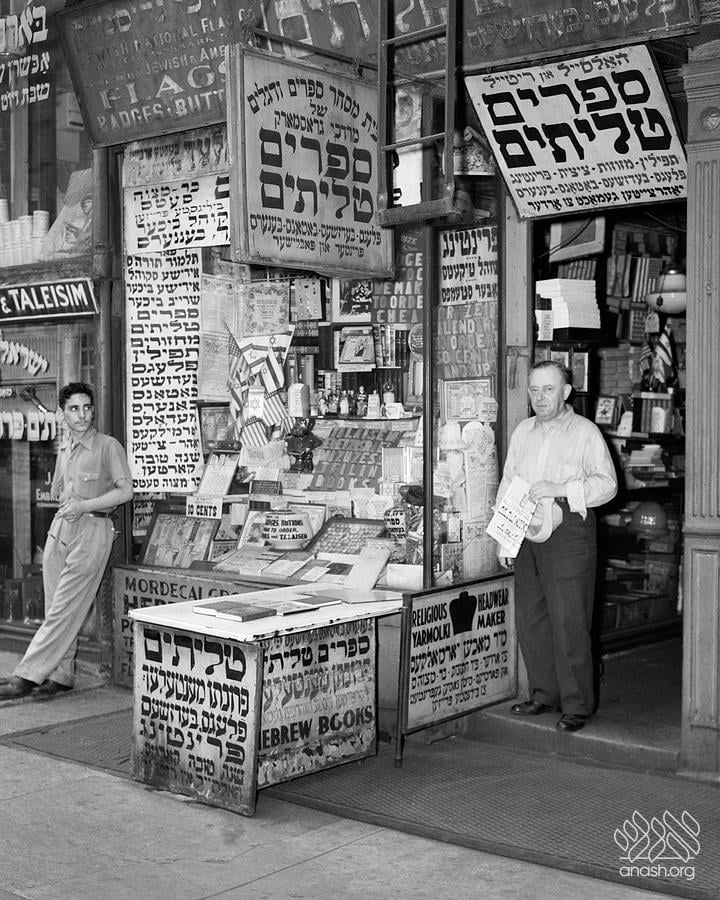
A Judaica store on 55 Norfolk St. on the Lower East Side.
It is clear from this news report that a “Congregation Anshe Libowitz” had formed on Bayard Street, in the heart of Manhattan’s Lower East Side. But what exactly is going on here? Who is “David Feinberg,” or “David Ben Rabbi Naphthali”? Why does he want to be a reverend and obtain a book of blank marriage certificates? Who was agitating against divorces by rabbis? And most fundamentally, why is the newspaper of record reporting about a tall swart Israelite in a summer overcoat who wants to be a reverend?
The answer to these questions lies in the culture clash that the Eastern European Jewish immigrants to America were experiencing. Individual Jews had little interaction with the decentralized government. Rabbis didn’t have to be “recognized” by the Russian imperial authorities; shuls didn’t need permits; and while marriages had to be registered, they were all conducted within the community by the rabbi and registered by the rav mitaam, essentially the secretary of the Jewish community.
In America, these immigrant Jews naturally just continued doing things as they had been accustomed to. They formed shuls organically, selected their rabbonim independently, and conducted their marriages and divorces within the community. But this old style of life caused problems in America.
Here, the government wanted all marriages and divorces to be registered with the authorities. While religious clergy were authorized to perform them, they needed to be authorized by the authorities and submit documentation to them. The independent marriages and divorces conducted by the rabbonim of the immigrant community caused many problems for the system. Married people were considered legally single, and their children were classified as illegitimate, a status that bore legal implications. Unregistered divorces caused “accidental bigamists” to proliferate in the Lower East Side.
The city officials, including Deputy Registrar of Records Dr. John T. Nagle, waged a campaign against unregistered marriages and divorces, including using legal means to go after the rabbis who performed them. The “better class of Hebrews,” the established and acculturated American Jews, were very concerned with the “backward” conduct of their co-religionists and worked within the Jewish community to put an end to it.
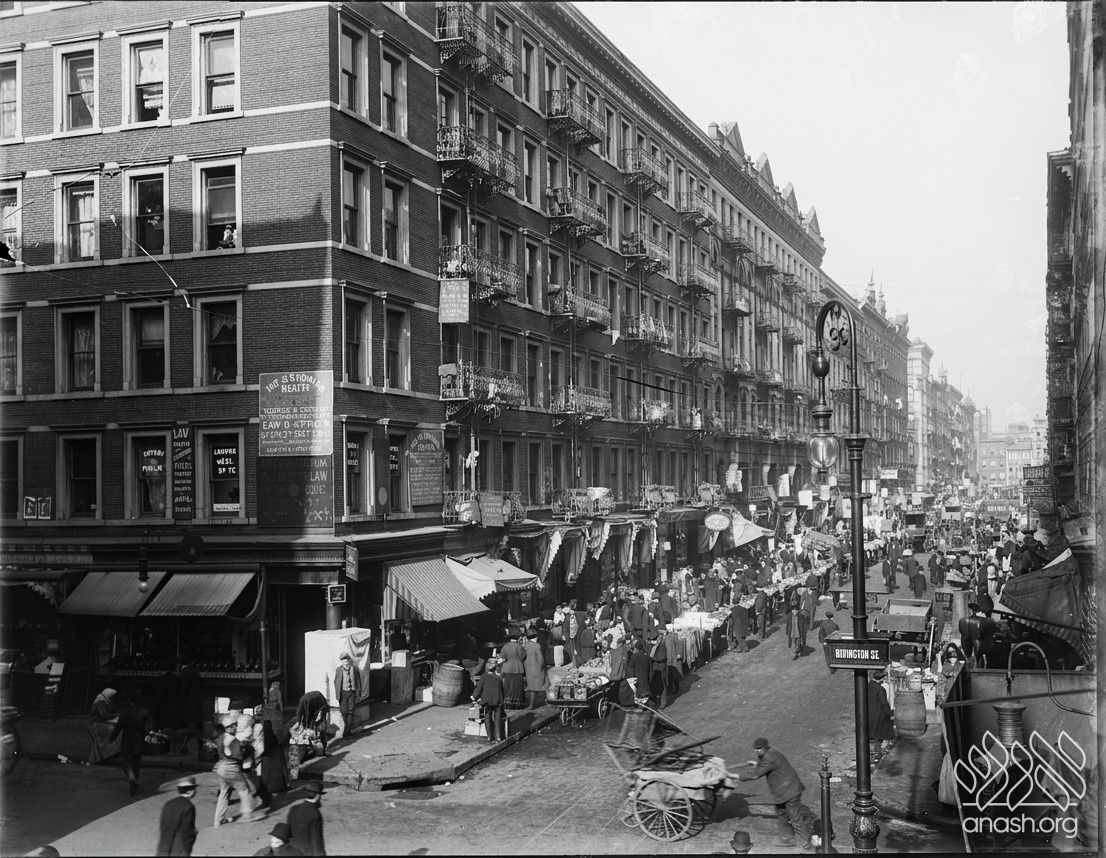
The intersection of Orchard and Rivington streets, Lower East Side.
The solution would be for the immigrant rabbis to obtain official recognition as “reverends,” allowing them to file records with the city officials. In this 1887 report, the New York Times is reporting happily that progress is being made, as immigrant rabbis are coming to the registrar’s office for authorization. In the case of David Ben Rabbi Naphthali Feinberg, there was a problem, as the Congregation Anshe Libowitz was not officially incorporated and registered with the city.
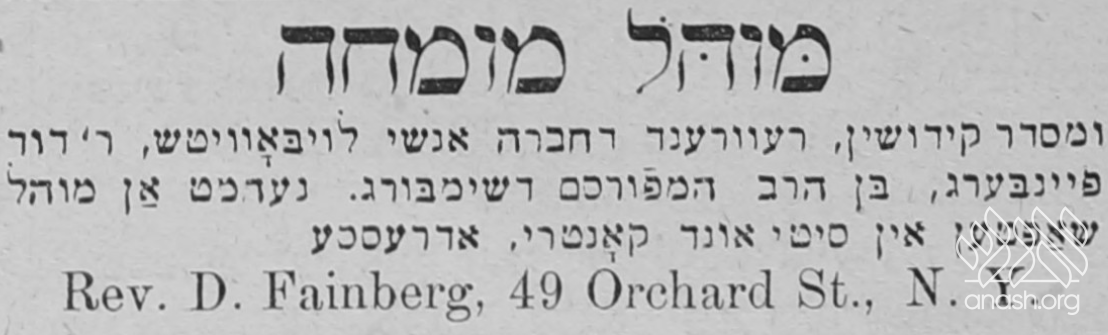
Unfortunately, the New York Times didn’t provide running coverage of developments at Congregation Anshe Libowitz and with its David Ben Rabbi Naphthali. But from an advertisement that appeared in Di New Yorker Yiddishe Folkstzeitung ten months later, we can glean that the legalities had been taken care of, and the congregation and its reverend were now fully recognized. First published on December 2, 1887, the advertisement reads (in translation):
Expert Mohel and mesader kidushin, Reverend of Chevra Anshei Lubavitch, R. Dovid Fainberg, son of the famous rov of Shimburg. Accepts engagements as a mohel in the city and the country.
Address: Rev. D. Fainberg, 49 Orchard St., N.Y.
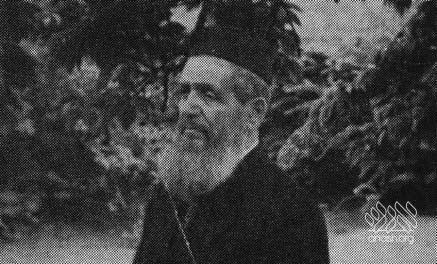
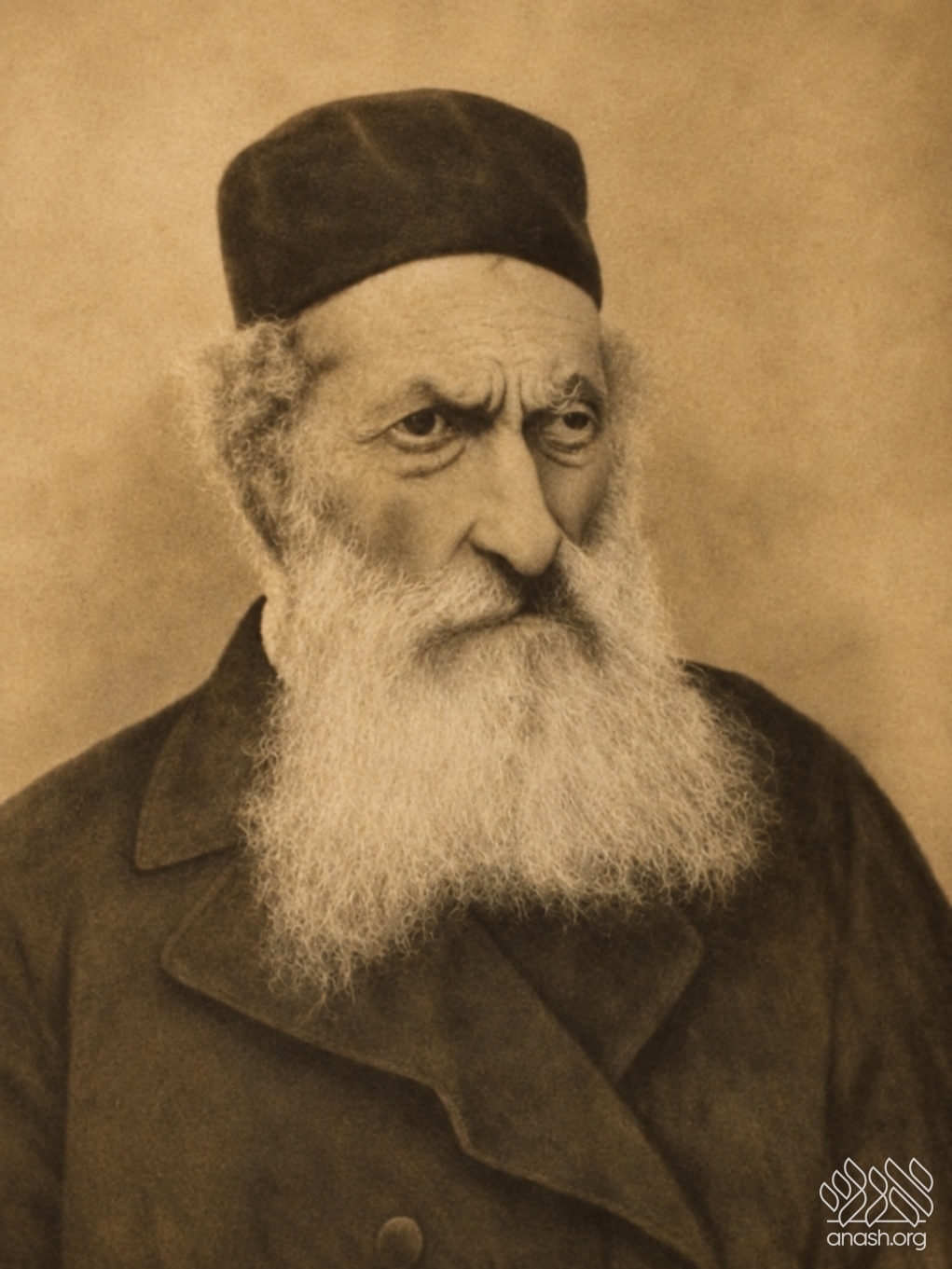
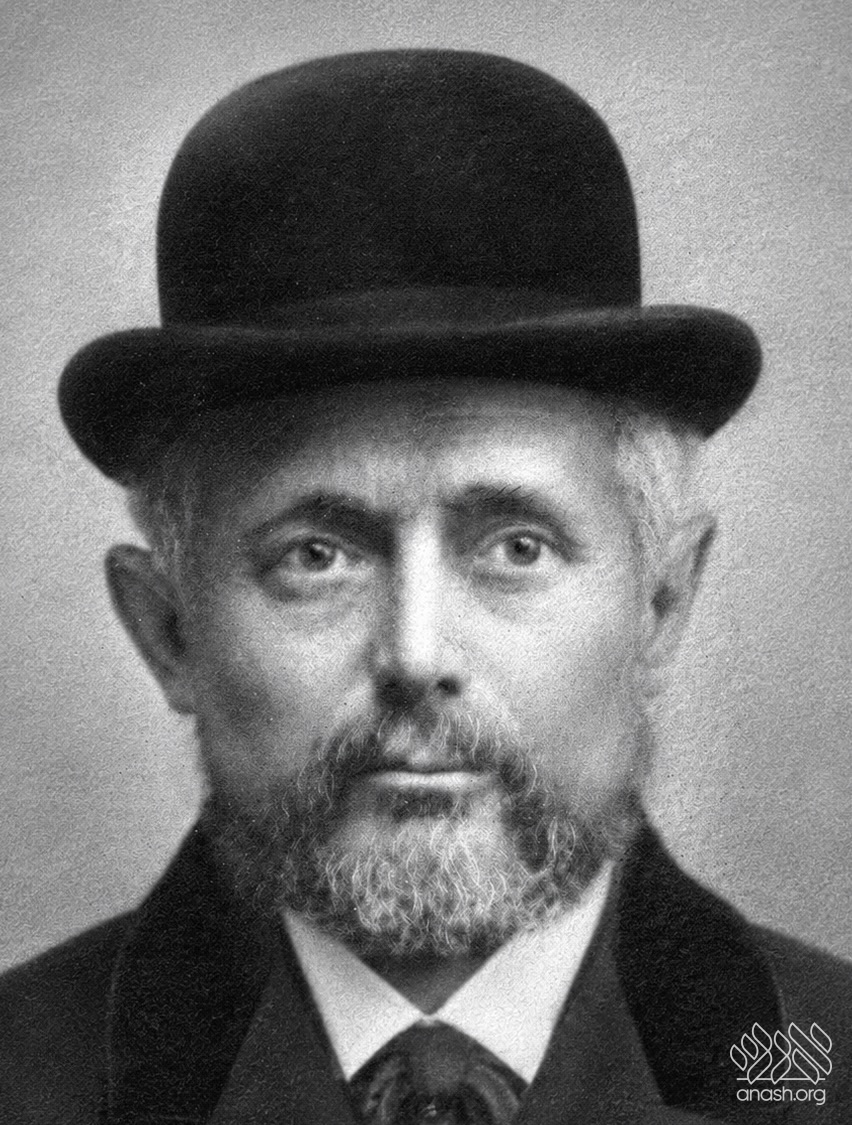
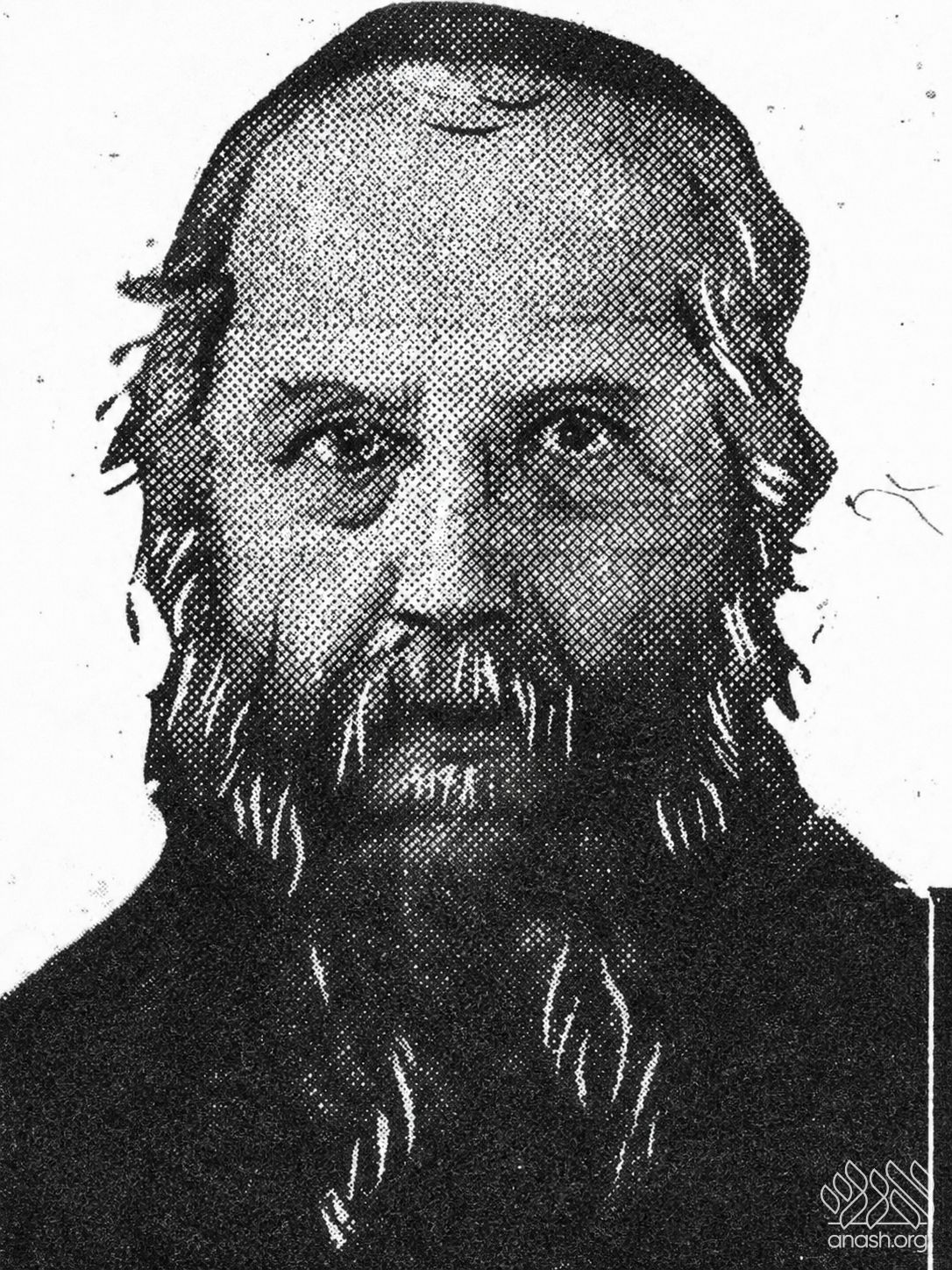
Harav Naftali Klatzkin (5583–5654)
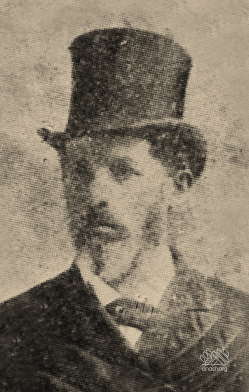
This advertisement also helps solve the puzzle of R. David Feinberg’s identity by identifying his father as the “famous rov of Shimburg.” The famous rov of Shimburg was Harav Naftali Klatzkin, a chasid of the Tzemach Tzedek. Harav Naftali had seven sons, five of whom became prominent rabbonim. The Klatzkin brothers are listed in the 5672 rabbinic directory Oholei Shem (p. 108), and the list concludes with: “they had another brother, R. David Feinberg, who excelled in Torah and yiras Shamayim and passed away in the city of New York.”
New York City records tell us that David Feinberg was born in approximately 5606. In his youth, he presumably accompanied his father on visits to the Tzemach Tzedek in Lubavitch. His immigration records have proven elusive, but we can presumably date his arrival between 1881 and 1887.
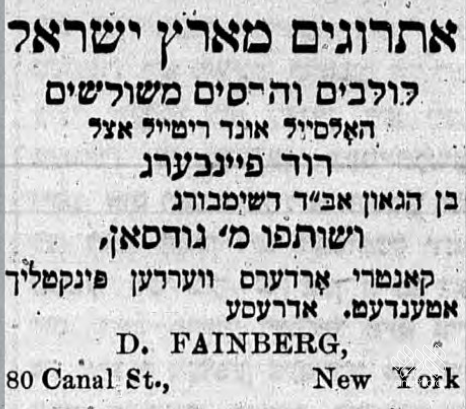
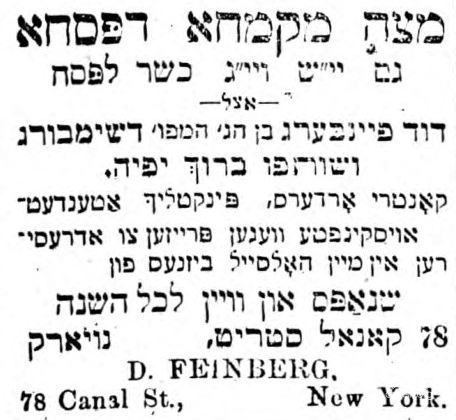
A series of advertisements in the New York Yiddish newspapers shows that R. David made his parnasah as a jack-of-all-trades in the Jewish world. In addition to his services as a mohel and mesader kidushin, he also sold Jewish necessities such as daled minim for Sukkos and matzos for Pesach. His yichus as the son of the rov of Shimburg is always highlighted.
His name also appears in a 1903 (5663) directory of Jewish chevros in America published in Der Yidisher Zhurnal (June 26). Listing 118 is for the “Chevra Anash DeKopust,” which combines “chasidei Kopust from different cities.” Founded in 5656, the inaugural president of this chevra was “David Feinberg, son of the gaon of Shimburg.” The Kopust chevra would get together every second Motzei Shabbos at a shul on 27 Ludlow St. in the Lower East Side.
The fact that the founding leader of Anshei Lubavitch in New York also doubled as president of the local Kopust chevra highlights a point that has been lost on some researchers. Unlike the case in Russian shtetlach, the word “Lubavitch” in the name of a shul in America did not indicate an affiliation with the specific Lubavitch branch of Chabad. The large majority of Nusach Ari Yidden in America were not shpitz mekusharim of any particular Chabad rebbe, and “Lubavitch” had simply become a synonym for Chabad over the decades of the nesius of the Mitteler Rebbe and Tzemach Tzedek.
Similarly, shuls named “Anshei Niezhin,” such as those in Philadelphia and Bayonne, New Jersey, do not indicate any affiliation with the chatzer of Harav Yisrael Noach of Niezhin. In this case, it was simply the city of origin of the shul’s founders. The Russian Jewish immigrants tended to group together as landsleit, based on their cities of origin. Such “landsmanschaft” shuls and societies proliferated across the United States, and particularly in New York, with its enormous concentration of Jews.
The record of the Kopust chevra is notable, as it shows that there were actually a small number of Nusach Ari people who bore a strong affiliation to a Chabad rebbe and chatzer.
The earliest evidence we have of a gathering specific to Lubavitcher chasidim dates to a few years after the Kopust chevra was founded. This came after Harav Avraham Chaim Rosenbaum, a distinguished chasid of the Tzemach Tzedek and the later rebbeim of Lubavitch, was forced to flee arrest in Russia and settled in New York. The biography and scholarship of this extraordinary chasid are documented in Toldos Avraham Chaim.
In 5662, Harav Avraham Chaim gathered some Lubavitcher chasidim together and made contact with the Rebbe Rashab, who encouraged them to meet regularly and establish shiurim in Chasidus (Igros Kodesh, vol. 1, pp. 263-264).
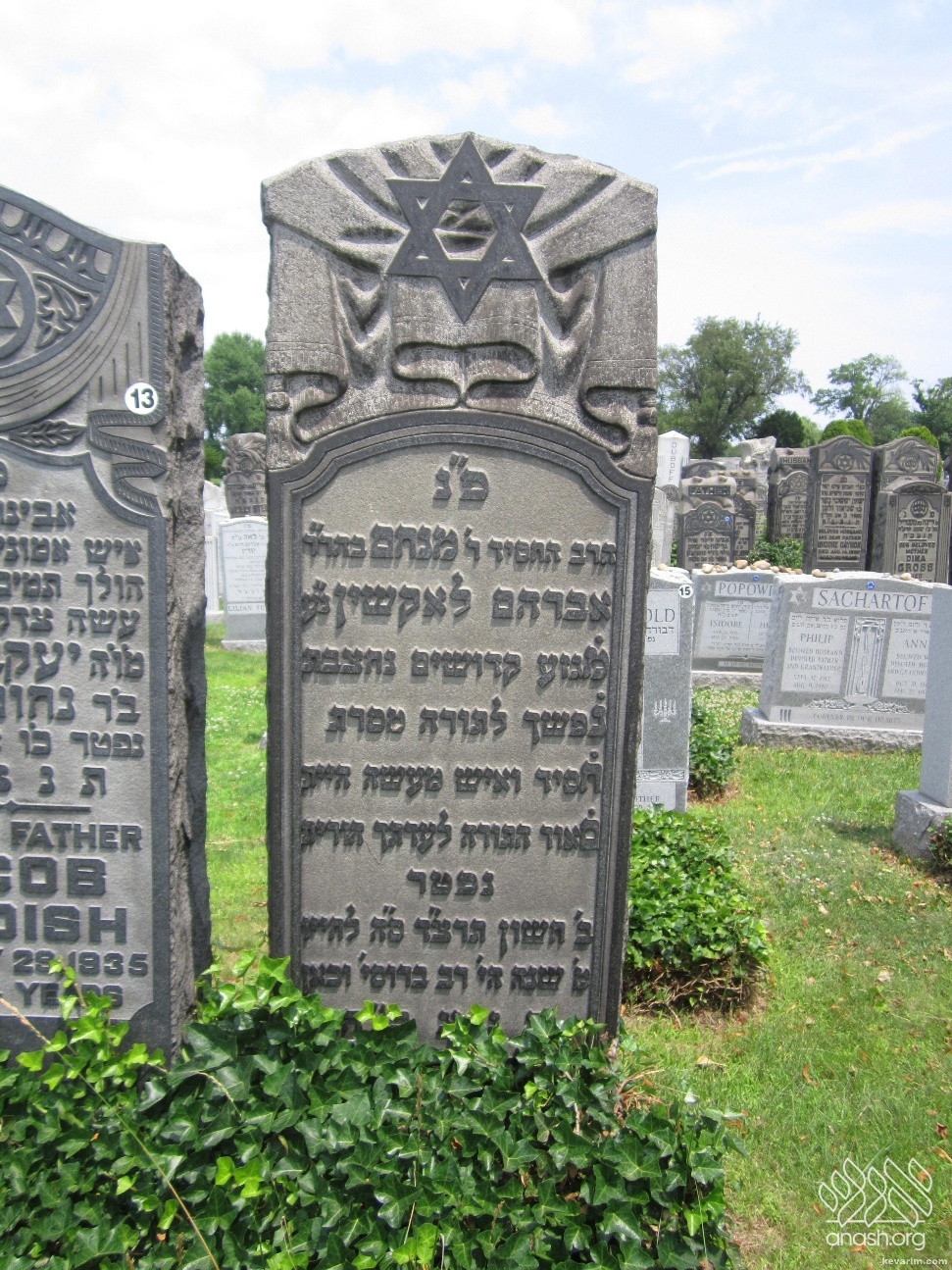
R. David Feinberg passed away in Manhattan on Adar 28, 5666 (March 26, 1906) and is buried in the Acacia Cemetery in Queens. Forgotten until now from Chabad history, this early pioneer deserves to be remembered.
Returning now to the Anshei Lubavitch shul, based on the information currently available to us, this shul, led by R. David Feinberg on the Lower East Side, is the earliest Chabad activity we can date in America, in 1887. However, it is apparent from the New York Times article that the shul was already functioning in February before being incorporated.
Given that Russian Jews had been immigrating to America in large numbers for a few years by this point, and that they didn’t initially care to register their shuls officially, it is likely that Anshei Lubavitch had already been operating for some time earlier. Likewise, we cannot rule out the possibility that there were other Nusach Ari shuls that operated without records, even before this Anshei Lubavitch.
A close competitor would be the Tzemach Tzedek Anshei Lubavitch shul on 125 Moore St. in Williamsburg, for which founding dates of 1887 or 1888 are given in various records. Over the next few years, Nusach Ari shuls began to appear across America, including Ahavas Achim Anshei Niezhin of Philadelphia in 1889, and Anshei Lubavitch of Buffalo in 1890. At any rate, 1887 is currently the earliest documented date we have for a Chabad organization in America.
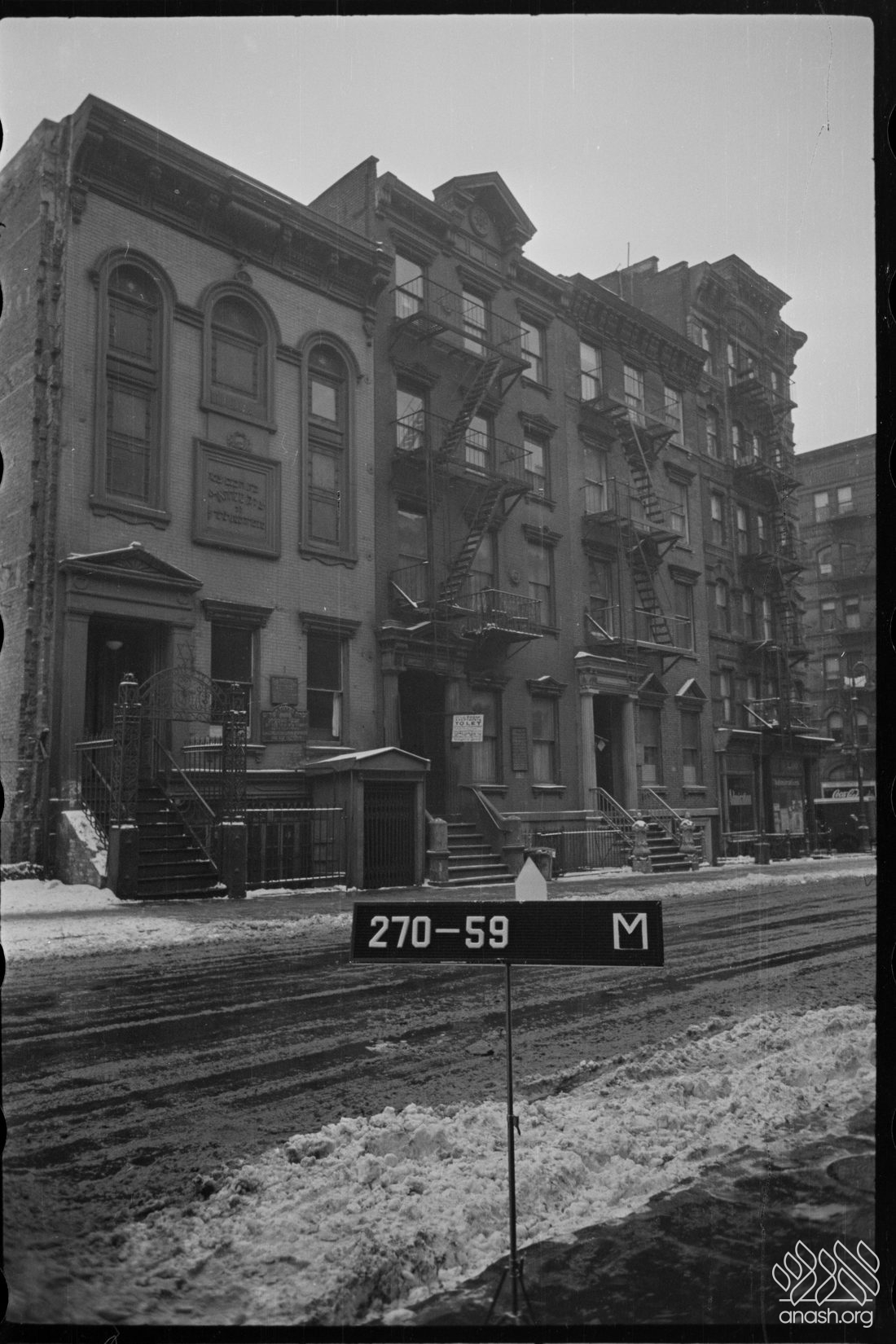
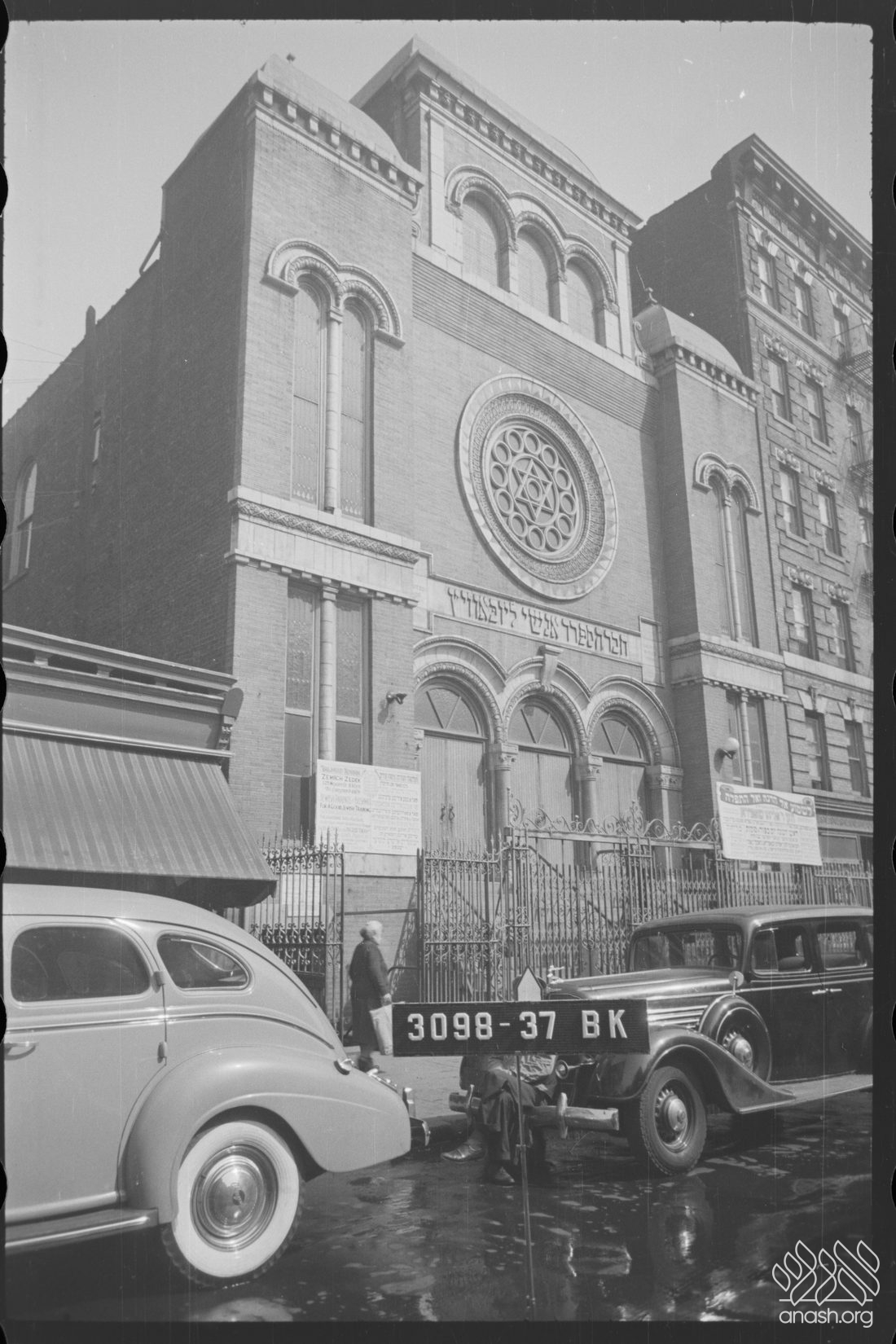
Named in the 1887 New York Times article as Anshei Lubavitch on 9 Bayard St., by 1907, the shul had moved to a building of its own on 169 Henry St., and it was known as Anshei Lubavitch VeNiezhin, probably as a result of a merger with a separate group of Niezhiner landsleit. The rov of the shul at this time was Harav Chaim Yaakov Viderevitch, a chasid of the Tzemach Tzedek and the editor of the Shut Tzemach Tzedek, who immigrated to America in 1892 after being expelled from Moscow.
By 1919, the shul was known as Anshei Lubavitch VeHomel, following a merger with the Anshei Homil Nusach Ari shul, which had been operating on Orchard St. since approximately 1906. In later years, the smaller Nusach Ari shuls of Anshei Kurenitz, Anshei Borisov, and Anshei Lyepel also moved into the premises. This series of mergers is indicative of the shul landscape in New York throughout this period, with shuls constantly in a fluid state of moving and merging.
“Anshei Lubavitch VeHomel” is the name by which the shul was known for the remainder of its existence. This was the name that appeared on the sign above the door, with the founding date given as 5648 (1887–1888). In Elul of 5707, the Frierdiker Rebbe sent the shul a letter of blessing for the celebration of their sixtieth anniversary (Igros Kodesh, vol. 13, pp. 442-443). It seems that the shul marked the date of their official incorporation, even though actual operations began a little earlier, in 5647 at the latest.
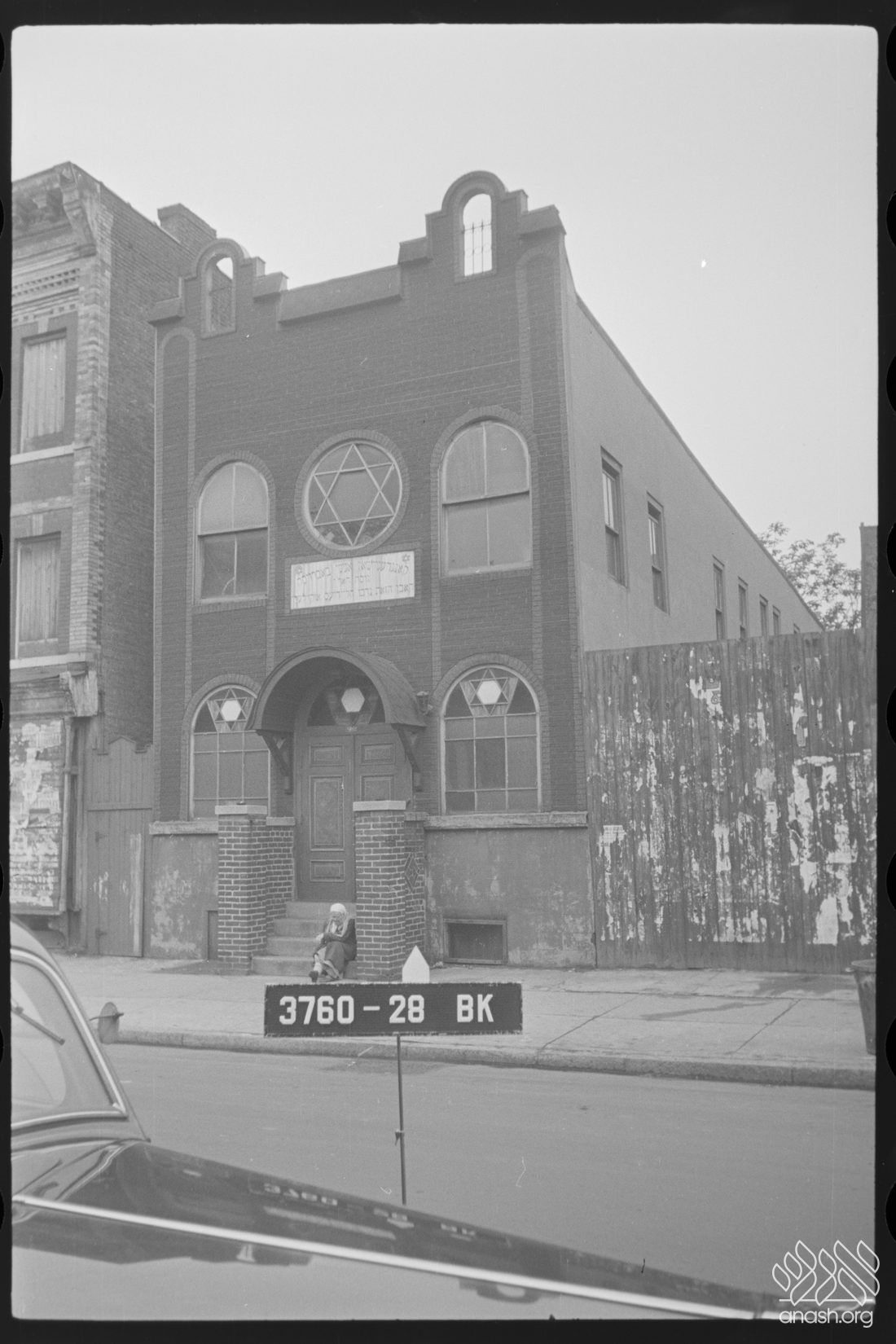
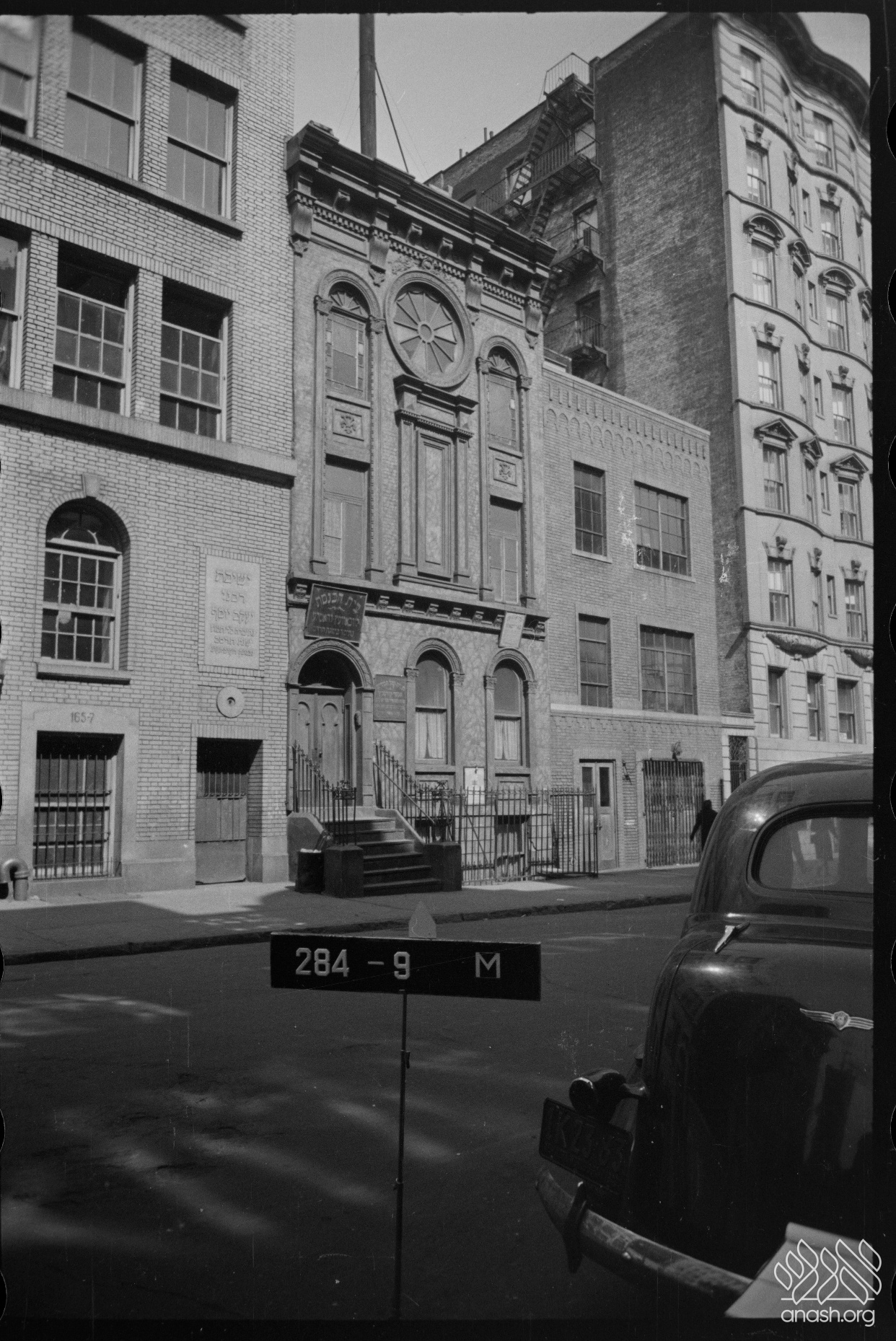
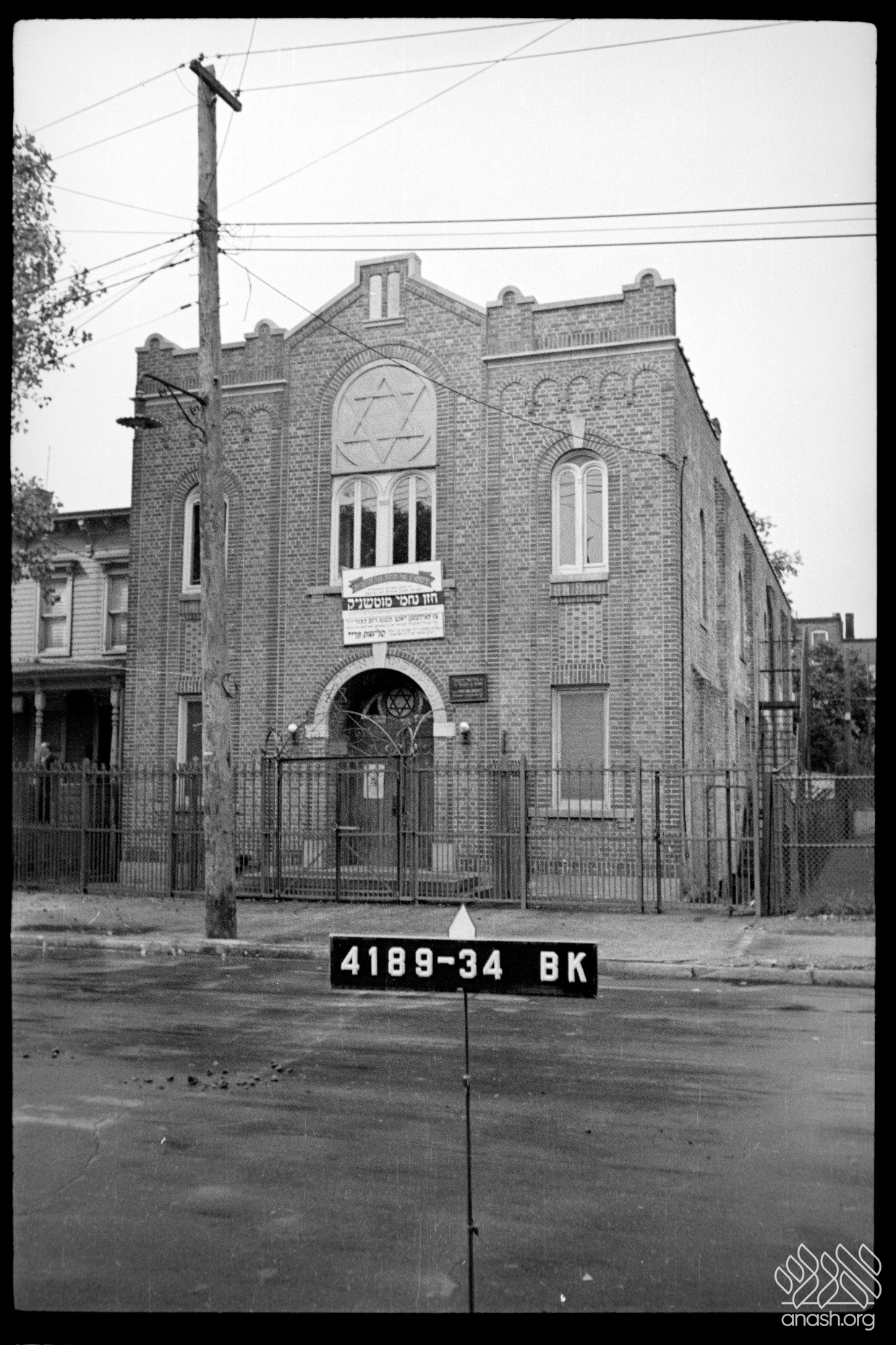
Anshei Lubavitch VeHomel, 169 Henry St., pictured in 1940 by the New York Tax Department.
Agudas Chasidei Chabad of America
In the summer of 5684, a new era of Chabad history in America began with the establishment of Agudas Chasidei Chabad (Aguch) of the United States and Canada.
The story of the establishment of Aguch is related in Toldos Chabad BeArtzos Habris, chapter 4. The narrative in Toldos Chabad is based almost entirely on the letters of the Frierdiker Rebbe to the chasidim in America. While this perspective is, of course, critical to understanding the foundation and purpose of Aguch, it only tells part of the story.
Missing from the Toldos Chabad narrative are the details about how things actually played out on the ground in America—how the Frierdiker Rebbe’s guidance was translated into a reality. Based on contemporary newspapers, we will now tell this side of the Aguch story for the first time.
The first letter of the Frierdiker Rebbe to anash in America instructing them to establish an Agudah was written in Cheshvan of 5684 (1923). The actual incorporation of Agudas Chasidei Chabad occurred in Tammuz of that year, on July 22, 1924.
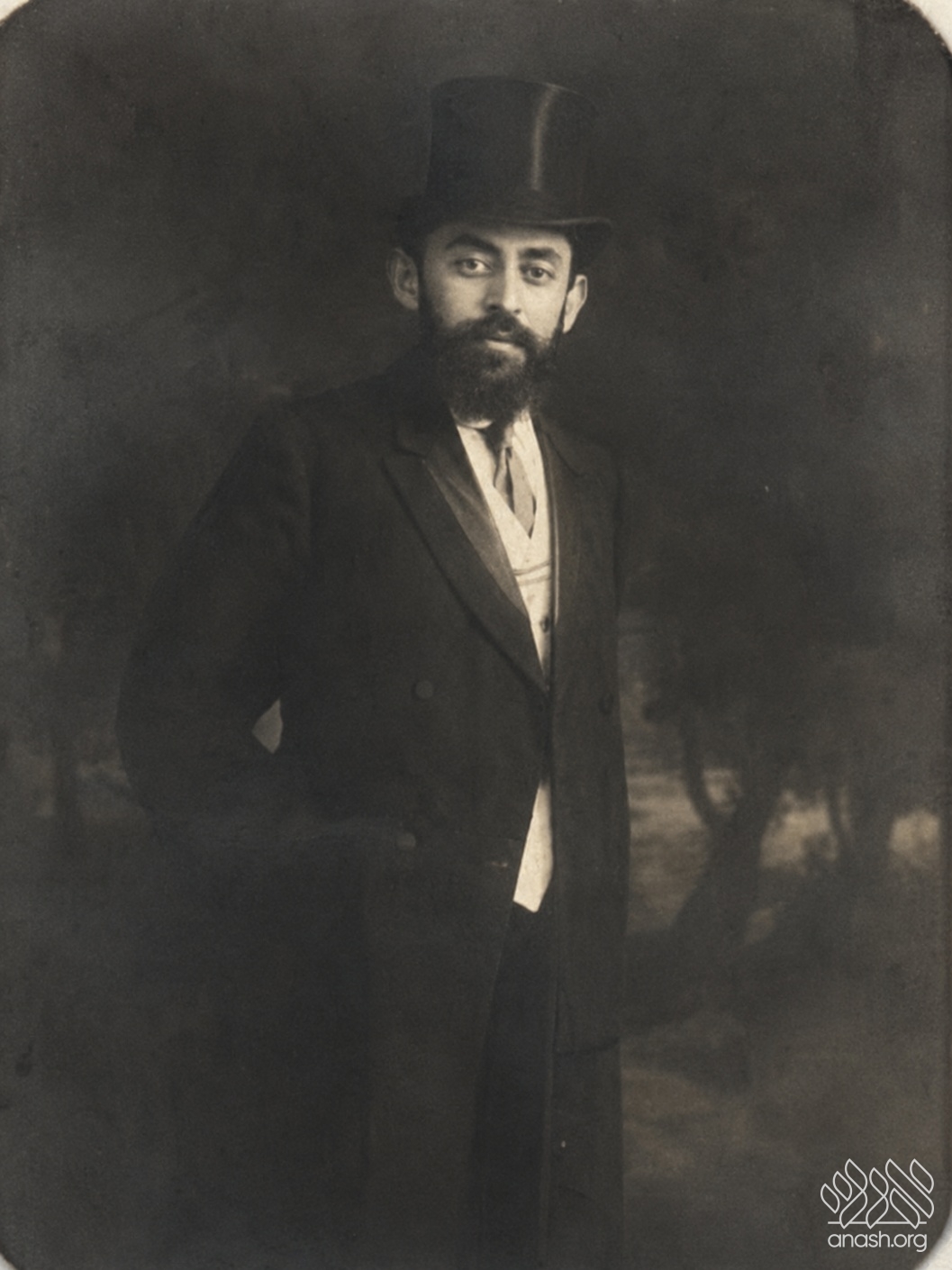
One of the key figures in the founding of Aguch in America was Harav Menachem Mendel Leib Lokshin (5633–5694), a Lubavitcher chasid who had served as a rov in Krivoy Rog (today in Ukraine) and immigrated to America in 5684 (1923).
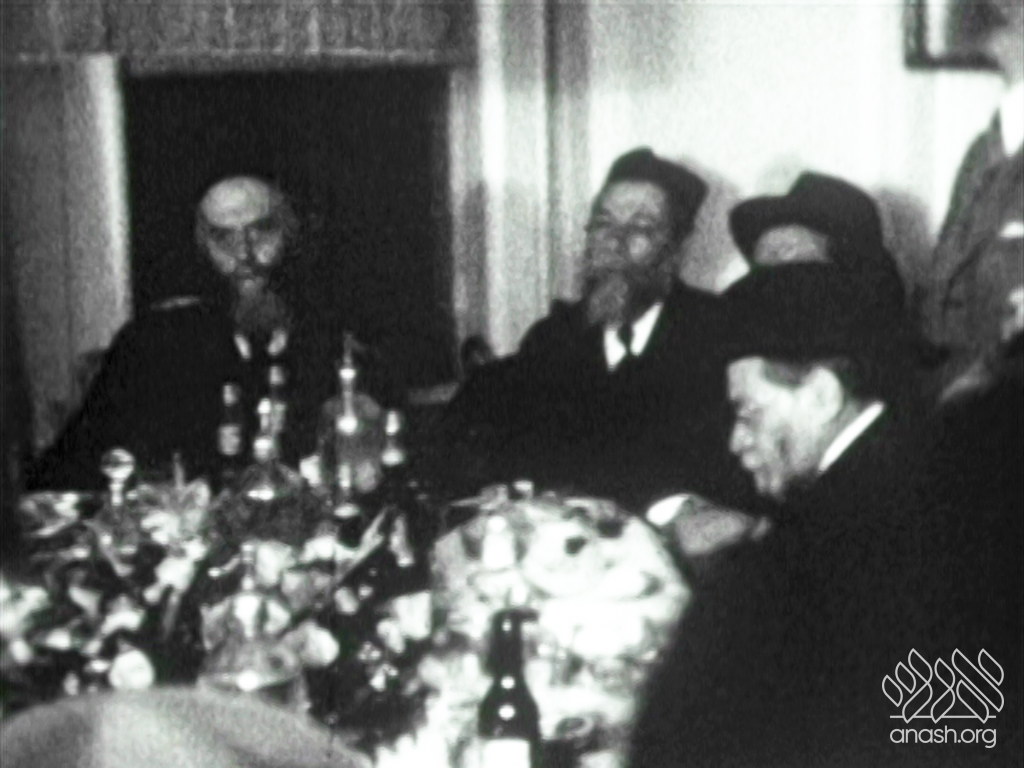
Harav Lokshin, seated next to the Frierdiker Rebbe during the Rebbe’s visit to America in 5689–5690.
Harav Lokshin’s name is mentioned in the Frierdiker Rebbe’s letters about the founding of Aguch as a new arrival with the ability to accomplish a great deal on behalf of anash in America. Harav Yisrael Jacobson, who immigrated to America two years later in 5686 (1925), relates that Harav Lokshin told him that before immigrating to America, he had visited the Frierdiker Rebbe in Rostov and received instructions from him regarding the founding of Aguch.
The contemporary American newspapers were unaware of the Frierdiker Rebbe’s instructions regarding the founding of Aguch. From their perspective, Aguch was a local initiative, and its catalyst was Harav Lokshin. As we will see, in addition to his greatness in Torah and Chasidus, Harav Lokshin was a charismatic leader, a dynamic speaker, and a tireless activist. He was the perfect man for the moment.
We will now lay out the story of the founding of Aguch as it was reported in the American press, a narrative that rounds out the picture we already know from the Frierdiker Rebbe’s letters and internal Chabad sources.
Harav Mendel Lokshin arrived at Ellis Island on December 1, 1923. Aged 59 at the time, he was accompanied by his wife Chanah, and their children Rivkah (17), Nechama (15), and Miriam (11).
A few weeks later, a reception was held in Brooklyn to welcome this distinguished new arrival. The notice in the Morgen Zhurnal (December 21, 1923) read as follows (translation):
Ahavas Achim Bnei Avraham shul, 394 Logan Street.
Baruch Haba! A Grand Kabalas Panim!
In honor of Rabbi Lokshin at Ahavas Achim Bnei Avraham shul, 394-96 Logan Street, Brooklyn
This Sunday, at 4:00 in the afternoon, with ceremony and pomp, a kabalas panim will be held for
Harav Menachem Mendel Lokshin
We hope and expect that, in addition to the members of our shul, landsleit, and good friends, all those who know the rov as a gadol in Torah, a great darshan, and a communal activist will also come.
Rabbi Lokshin is the famous rov who took part in the founding assembly in Russia in 1917. He was the representative of the homeless refugees, the fighter for Jewish education, and the well-known advocate for the Ukrainian kehillos.
Let all Jews come and say “Baruch Haba” to a great man.
A few days later, the Morgen Zhurnal reported on the event and Harav Lokshin’s speech. (December 26, 1923):
A Beautiful Reception for Rabbi Lokshin
On Sunday evening, a reception was held at Congregation Ahavas Achim Bnei Avraham, 394 Logan Street, East New York, for the renowned Ukrainian rav and gaon, Reb Menachem Mendel Lokshin.
A large crowd attended, among them many landsleit living in New York, and they listened as Rabbi Lokshin gave a moving description of the state of Yiddishkeit in Ukraine.
“We are not asking you for bread,” he said. “We are not asking you for clothing. We ask you only this: save the she’eris hapeleitah, the Jewish souls who are being poisoned by our own brothers in lawless Ukraine.”
As he spoke, he was choked with tears.
He was greeted by the Rabbonim Gelerenter, Binyamin Levi of New York, and Harav Kahana, the famous Vilna maggid. They described the American situation to the rov and assured him that he had a broad field here for his work. They said that America had entered a period of revival, and that Rabbi Lokshin’s efforts to save Ukrainian Jewry would be supported in every possible way.
After the reception, refreshments were served.
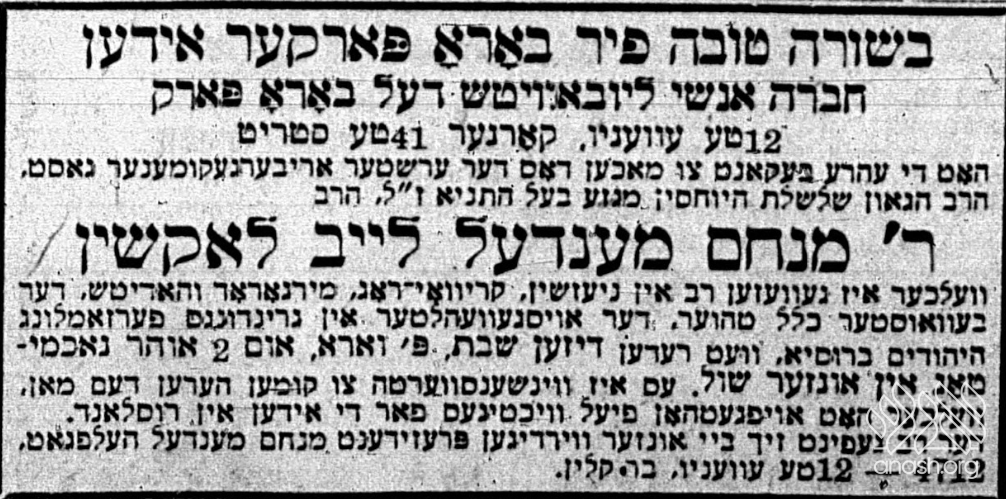
The next week, Harav Lokshin was the guest of Anshei Lubavitch of Borough Park for Shabbos, and a notice was published inviting everyone to come and hear him speak.
Notice announcing Harav Lokshin’s visit to Borough Park. Morgen Zhurnal, January 4, 1924
Harav Lokshin continued making the rounds of the Nusach Ari shuls in New York, and a few weeks later, he was the guest of anash in Brownsville, then the neighborhood with the largest concentration of Chabad chasidim. The Morgen Zhurnal (February 28, 1924) reported on the Shabbos with Harav Lokshin, which clearly left a strong impression on all who were present. So impressed were the Brownsville chasidim by Harav Lokshin’s Torah and Chasidus, the newspaper reported, “they are even willing to pay for the eser sefiros in American dollars” and give him a salaried position.
A Distinguished Guest in Brownsville, Harav Menachem Lokshin
Rabbi Menachem Lokshin, who arrived in America from Ukraine two months ago, served for fifteen years as rav of the city of Krivoy Rog, in the Yekaterinoslav province, and later for a long period in Nezhin. This Lubavitcher chasidishe rov has now become a resident of Brownsville, residing at 1118 Eastern Parkway.
Last Shabbos, he was invited to the Nachlas Yisroel shul on Chester Street. He delivered a brilliant drashah in the rabonishe style before Minchah and after Minchah, at Shalosh Seudos, a genuine chasidishe drashah. Many of the chasidim present were reminded of the old heimishe times.
It was beautiful to see Yidden singing zemiros in the old style. Even a young American boy sat beside his father and sang along with the Shalosh Seudoszemiros with great dveikus.
In addition to his great lomdus, his talents as a darshan, and his great ability to speak Chasidus, Harav Lokshin is an educated man, a man of the world. He has even lectured in Russian.
The Brownsville chasidim would like to keep him in Brownsville, so they will have someone from whom to hear a chasidishevort. They are even willing to pay for the eser sefiros in American dollars.
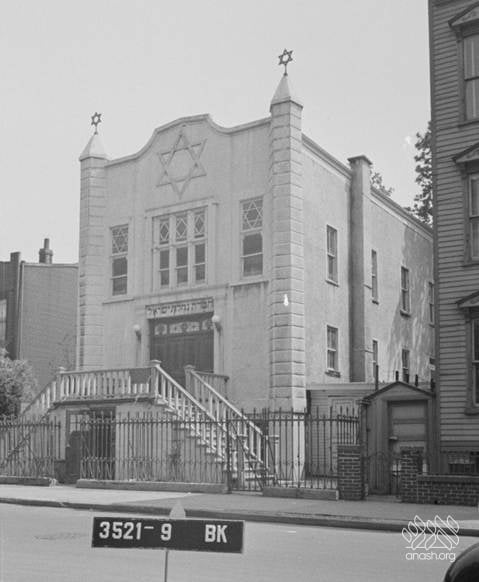
Nachlas Yisrael Nusach Ari Shul, 167 Chester St.
Indeed, the chasidim of Brownsville got straight to work on appointing Harav Lokshin as their rov. Rather than giving him a position in one specific shul, they formed an Agudas Hachasidim uniting all of anash in Brownsville, and appointed him rov of the umbrella organization. The announcement was published in the Morgen Zhurnal on March 4, 1924.
Be’ezras Hashem
Yiru yesharim veyismachu!
A Call to All Chasidim!
Agudas Hachasidim of Brownsville announces that on Sunday evening, 26 Adar I, March 2, at a general assembly of representatives from the chasidishe shuls of Brownsville, in the presence of the distinguished gvir Mr. Moshe Eliezer Kramer, with Mr. Shmuel Hein presiding as chairman, Harav Hagaon Moreinu Harav Menachem Mendel Leib Lokshin was chosen to serve as the chief rabbi of Agudas Hachasidim in Brownsville.
Everyone is deeply impressed by his Torah and wisdom, his popular derashos, and his Chasidishe Torah. This great rov, who comes from the family of the Alter Rebbe זצ”ל, the Baal HaTanya, is known from the alte heim as a gadol in Torah and Chasidus, and a communal activist.
R. Moshe Eliezer Kramer (5624–5685), the founding president of Agudas Chasidei Chabad.
He was chosen to participate in the general Jewish assembly in Russia during Kerensky’s time, together with all of the great geonim: the Lubavitcher Rebbe זצ”ל, Hagaon Hatzadik R. Chaim Brisker זצ”ל, Hagaon Ha’amiti the Chafetz Chaim שליט”א, and Hagaon Menachem Mendelson זצ”ל.
We ask all Chasidim to fulfill our duty, our obligation lehagdil Torah uleha’adirah, and to support him in every way.
We have secured a residence for our esteemed rov, שליט”א, at 462 Stone Avenue, and he will be moving in shortly, im yirtzeh Hashem.
The Committee
Moshe Eliezer Kramer, President 687 Broadway, New York
This local Agudas Hachasidim of Brownsville became the seed from which Agudas Chasidei Chabad of America would sprout. The Morgen Zhurnal reported on May 22, 1924:
The Brownsville Chabad Organization becomes Kehillas Chabad of the United States
As is known, the Chabad chasidim of Brownsville, that is, the Lubavitcher chasidim, recently founded a Chabad organization comprised of several congregations. They appointed the newly arrived rov, a gaon in Torah and Chasidus, Harav M. M. Lokshin.
Now, Jews from other cities and other Lubavitcher baalei batim became deeply envious of the Brownsville Jews. At the Agudas Harabbonim convention held at the Broadway Central, they convened a meeting to demand support from Central Relief for the chasidishe Torah mosdos in Europe. There, instead of forming only a Brownsville Chabad kehillah, they founded Kehillas Chabad of the United States.
The following are the rabbonim and baalei batim who called for this: Harav Hagaon R. Dovid Meir Rabinowitz and Harav Hagaon Lifland of Boston; Harav Hagaon Reznikov of Moscow; Harav Hagaon Robinson, rav of the Tzemach Dovid shul on 115th Street in New York; Harav Hagaon Mendelson of Newark, New Jersey; Harav Hagaon Werner of Paterson; Harav Hagaon Toppler of Passaic; Harav Shifrin of Bensonhurst; R. Moshe Eliezer Kramer; Reb Hillel Rabinowitz of the Bronx; and H. Weiler of New Haven.
It was resolved that Harav Hagaon M. M. Lokshin would serve as the rov and leader of the entire kehillah. They also called upon the Brownsville chasidishe Yid, Reb Shmuel Hein, to serve as the organizer.
R. David Shifrin (d. 5703), the longtime secretary of Aguch.
A few weeks later, an official meeting was called, and decisions were made. The Morgen Zhurnal reported on 2 Sivan (June 4, 1924):
Brownsville Chabad Organization Expands
On Sunday, 28 Iyar, a large meeting of chasidei Chabad was held at the Tzemach Tzedek shul, 184 Henry Street. Representatives of nineteen Nusach Ari kehillos from New York, Brooklyn, and the surrounding cities were present.
The gathering took place in the presence of Harav Lokshin, rov of Agudas Hachasidim; Harav Levin; Harav Posen; Harav Reznik; Harav Telushkin; and Harav Simpson.
The purpose of the meeting was to unite all the kehillos and shuls that follow the path of Chabad and Nusach Ari into one Agudah. The questions of how to establish this important Agudah were discussed with great enthusiasm. A resolution was then accepted unanimously, with much excitement, to proceed with the legalization of a federation of Chabad kehillos under the name “Agudas Hakehillos D’Anshei Beartzos Habris.”
Eleven batei midrash appointed their representatives to an organizing committee, which is to begin immediately with the work of legally establishing the Agudah. They are:
Mr. Kramer, Nusach Ari of Bensonhurst, 18th Street; Mr. Zalvadnik, Tzemach Tzedek, 184 Henry Street; Mr. Cohen, Tzemach Tzedek of Harlem; Mr. Ronsky, Lubavitcher Shul, 169 Henry Street; Mr. Mendel Helfgot, Lubavitcher Shul of Boro Park; Mr. Yitzchak Helfgot, Lubavitcher Shul on Moore Street, Brooklyn; Mr. Miller, Nusach Ari of Washington Avenue; Mr. Zeldin, Nachlas Yisroel, Brownsville; Mr. Fogelman, Zembiner Shul; Mr. Sokolov, Bobroisker Shul, Brownsville; and Mr. Waksberg, Tzemach Tzedek of Bayonne, New Jersey.
The chairman also appointed the following baalei batim: Shmuel Hein, David Shifrin, Simenovsky, and Mr. Hoffman.
The creation of this important Agudah, which will hopefully play a very significant role in the American Orthodox world in general, and in the chasidishe world in particular, is due to the great efforts of the gvir R. Moshe Eliezer Kramer, Chairman Harav Lokshin, Shmuel Hein, and David Shifrin.
Tzemach Tzedek Shul, 184 Henry St.
On July 22, 1924, the official documents of incorporation were filed, and Agudas Chasidei Chabad became a reality. It should be noted that the full name of the Agudah appears differently in every document and report, and the title by which we know it today only became standardized in subsequent years. Toldos Chabad reproduces the Agudah’s incorporation document, but it contains only a list of 15 founders, with no breakdown of the official positions within the organization. The earliest detailed listing of officers in Toldos Chabad comes from after 5686.
On Sunday, 3 Av 5684 (August 3, 1924), the first conference of the new Agudah was held at Tzemach Tzedek shul on 184 Henry Street on the Lower East Side. At this conference, the leadership of the Agudah was elected, and the report in the Morgen Zhurnal (August 14, 1924) reproduces the list of officers in full, completing the record of the founding of Aguch.
Agudas Hakehillos Chasidei Chabad
Finally, after much effort and energetic work, the great wish of the Chasidei Chabad in America to be joined together in a legal organization has been realized.
On Sunday, 3 Av (August 3), a mass meeting of “Agudas Hakehillos Chabad (Nusach HaAri), in America and Canada” was held at the Tzemach Tzedek shul, 184 Henry Street, New York. There, with great seriousness, the assembled listened to a detailed report on the sorrowful condition of all the yeshivos and Talmud Torahs in Eretz Yisroel and Europe (Poland and Russia). Particular attention was given to Soviet Russia and the Caucasus, where 1,500 students are studying with hasmadah and mesiras nefesh, suffering from poverty and hunger.
The report described how much the great leader of all these Torah mosdos, the Lubavitcher Rebbe שליט”א, is suffering in body and soul. Due to the severe persecution by the Yevsektsiya, he was forced to move from Rostov-on-Don to Leningrad. He is the only general communal activist in Russia, and his mesiras nefesh is beyond description.
According to the latest budget, as reported in a letter to Harav Hagaon R. M. L. Lokshin, assistance from Central Relief is still not enough to save the Torah institutions.
The large assembly was deeply inspired and resolved to take every possible measure to expand the Agudah throughout America and Canada, to include all shuls that do not yet have representatives, to reach out to all presidents of Nusach HaAri congregations, to send committees, and to make appeals.
The well-known distinguished gvir, Mr. Moshe Eliezer Kramer of 687 Broadway, was elected president of the Agudah. The respected Mr. Binyamin Miller of the Bronx was elected treasurer.
The vice presidents and directors of the executive committee are:
Mr. Jacobson and Mr. Weiler—Bronx; Mr. Cohen, Harlem; Mr. Shaul Donskoy, Harav Moshe Dov Yakov, Avraham Shaul Levin, Tzvi Padnas, Zaivodnik, Aizik Kaplan, and Binyamin Bass—New York; Yitzchak Helfgot, Tuvia Belkin, and Mr. Davidson—Brooklyn; Menachem Mendel Helfgot—Boro Park; Chaim Elchanan Fogelman, Zev Kahanowitz, Harav R. N. Telushkin, Kalman Sokolov, Shmuel Hein, Simenovsky, Chaim Avraham Berson, Mordechai Hoffman, Mr. Yoel Kaplan, Zaretsky, Lasker, and Robinson—Brownsville; Meir Rabinowitz and Yehudah Tzaitz—New Jersey; Avraham Yaakov Waksberg, Bayonne, New Jersey; Yitzchak Fogelman, Shabtai Zacharowitz, Shmuel Dov Arlikov, and Yosef Paderevsky—Passaic.
The well-known gaon and av beis din of Agudas Hachasidim, R. M. L. Lokshin, was elected director of the Agudah. R. Dovid Shifrin was elected chief secretary.
The office address of the Agudah is:
M. L. Kramer 687-89 Broadway New York
The articles about the founding of Aguch place great emphasis on fundraising efforts on behalf of Russian Jewry, under the leadership of the Frierdiker Rebbe. While this was an urgent cause of pikuach nefesh in the material and spiritual sense, it was not the only goal that the Frierdiker Rebbe had in mind for Aguch. Beyond fundraising for Russian Jews, Aguch was intended to advance the learning and practice of actual Chabad Chasidus in America.
Under the leadership of Harav Lokshin, Aguch indeed fulfilled this role. After serving as the rov of Anash in Brownsville for about a year, Harav Lokshin was appointed rov of the Tzemach Tzedek Shul on Moore St. in Williamsburg, the largest Nusach Ari shul in the city—and probably the country—at this time. However, as a kind of chief rabbi of Chabad chasidim, he remained active in Brownsville and beyond.
Tzemach Tzedek Shul, 125 Moore St., Williamsburg.
At the end of 1924, the Morgen Zhurnal reported on the establishment of a new Tanyashiur by Harav Lokshin in Brownsville, and happily noted that Chabad has become active in America. The reporter was so excited by the development that he even dared to dream that chasidim and misnagdim might one day have a machlokes in America—what a sign of life that would be!
Chabadniks Learn a Shiur Tanya Every Tuesday Evening
The Chabad chasidim, that is, the Nusach Ari Lubavitcher shul chasidim, have recently become active. They have united under Agudas Hakehillos Chabad in order to strengthen Chasidus in America in general, and to assist the chasidishe kehillos in Europe.
Harav R. Menachem Mendel Lokshin has contributed greatly to this. He arrived in America a year ago, and as a gadol in Torah and Chasidus, he has had a strong influence on this unification.
Harav Lokshin is now the rov of the Williamsburg chasidishe Tzemach Tzedek shul on Moore Street. Every Tuesday evening, he comes to the Bobroisker shul in Brownsville and teaches Tanya to a large gathering of chasidim.
The roshei teivos Chabad stand for Chochmah, Binah, and Daas. This is a lofty and deep subject, the gateway to Kabbalah, from which chasidishe Yidden derive great pleasure when they hear it from such a great man as Harav Lokshin.
It is genuinely delightful to note that on one side, the young men of Brownsville are gathering to learn a Gemara shiur, while on the other side, chasidim are gathering to learn Tanya. Perhaps, with time, a machlokes will develop between them—this would be evidence that Yiddishkeit is alive.
The Anshei Bobroisk Shul, 228 Christopher Avenue, Brownsville.
This completes the story of the first year of Aguch and Harav Lokshin in America, a historic year that changed the path of Chabad history in the United States.
It is appropriate to conclude this section with a report of the passing of Harav Lokshin on 2 Cheshvan 5694. A key figure in the establishment of Chabad in America, his name deserves to be better known. The Morgen Zhurnal, October 23, 1933, reported:
Harav Menachem M. Lokshin Has Passed Away, the Levayah Will Take Place This Morning
Yesterday, Harav Menachem Mendel Lokshin, one of the most prominent rabbonim in New York, passed away suddenly at his home, 54 Morrell Street, Brooklyn.
Rabbi Lokshin was highly respected in the rabbonishe and Orthodox circles of the country. He served as chairman of the Brooklyn Vaad Harabbonim and as treasurer of the Vaad Harabbonim of Greater New York. He was the spiritual leader of Congregation Nusach Ari, 125 Moore Street, Brooklyn.
He had previously filled rabbonus positions for many years in European kehillos.
Harav Lokshin leaves behind a widow and three children, two daughters and one son.
The levayah will take place today at 10 a.m., from his home.
The matzeivah of Harav Mendel Lokshin in Mount Carmel Cemetery, Queens. Courtesy of kevarim.com.
The Frierdiker Rebbe’s First Message to American Jewry
Today is Yud Beis-Yud Gimmel Tammuz, the anniversary of the birth of the Frierdiker Rebbe and his geulah from Soviet arrest. In honor of this occasion, we will publish here for the first time two new letters of the Frierdiker Rebbe, both of them written to America.
Our first letter was published in New York’s Der Tog newspaper, on Elul 10, 5688 (August 26, 1928). This letter was written to Harav Shlomo Sadowsky, one of the first talmidim of Yeshivas Tomchei Temimim in Lubavitch, and later a rov in America. After a period in Albany, New York, he was appointed to serve as the rov of Rochester in 5671.
Harav Sadowsky maintained an extensive correspondence with the Frierdiker Rebbe during this period. In a lengthy letter to him dated 7 Av 5688 (Igros Kodesh, vol. 2, pp. 99-110), the Frierdiker Rebbe mentions that Harav Sadowsky had told him of his intention to publicize excerpts of an earlier lengthy letter he had sent him.
The earlier lengthy letter referenced is not published in Igros Kodesh, but excerpts from it, in Yiddish translation, are preserved in the article that Harav Sadowsky arranged for in Der Tog magazine.
Harav Shlomo Sadowsky
The letter clearly made a strong impression on its readers, as it was even quoted in Riga’s Haynt newspaper on Elul 26. Yisrael and Shlomo Barda published the Haynt article in Ginzaya, issue 26, but this citation omitted a few paragraphs of the Frierdiker Rebbe’s letter, paragraphs that are of particular interest to us, as they relate to America.
By this point, the Frierdiker Rebbe was already in regular contact with America, and he had also written letters addressed to anash in America in general. However, it seems that this was the first time a letter of the Frierdiker Rebbe was published in the American press, bringing his message to the general American Jewish audience.
Importantly, the Frierdiker Rebbe devotes space in this letter to the historic role of America. Surveying the broader picture of Jewish history in galus, the Frierdiker Rebbe notes how Divine providence has preserved the Torah and the Jewish people by guiding them to new safe shores as conditions in their previous homes became inhospitable.
Now, the Frierdiker Rebbe writes, “Torah is in the process of emigrating across the sea, to America.” The Frierdiker Rebbe expresses his certainty that, with hard work, the atmosphere of America can be purified and Yiddishkeit can flourish there, just as it did in the alte heim of Europe.
The first part of this letter is about the state of Russian Jewry, a matter that required the urgent assistance of Jews in America. We reproduce the full article below, in translation, with the editor’s narration in italics.
*
A sketch of a picture of the Frierdiker Rebbe that accompanied the article in Der Tog.
The Lubavitcher Rebbe, Rav Yosef Schneersohn, whose letter we are printing here, has become renowned throughout the Jewish world for the mesirus nefeshdike struggle he has led to sustain religious life among the Jews of Soviet Russia.
Despite the great obstacles placed in his path by the Yevsektsiya, the Lubavitcher Rebbe established yeshivos—first in Rostov, then in the Caucasus, and also in Krementchug—where hundreds of bochurim sit and learn, preparing themselves for rabbonus posts and religious leadership. These yeshivos are the only ones Russian Jewry has today, and they are largely supported by funds collected from the thousands of Lubavitcher Chasidim here in America, who are organized under the name “Agudas Chasidei Chabad.”
A year ago, the Lubavitcher Rebbe was forced to leave Russia after he was arrested for a short time. His arrest shook the entire Jewish world, and the most prominent Jewish leaders in Europe, as well as in America, worked to secure his release. He is now in Riga and remains in contact with his Chasidim in America and throughout the world.
This letter was written to Harav Shlomo Sadowsky of Rochester, and we present here the most important excerpts.
Writing about his struggle to maintain religious Jewish life in Russia, the Rebbe notes the following:
“My work does not have the character of a party or a sect. It has nothing to do with chasidim, misnagdim, or the intelligentsia. This is a struggle that concerns the entire Jewish people. It touches the frum Jew, to whom the Jewish Torah is precious, and also the one who enters shul only once a year, on Yom Kippur, because he wishes to say Yizkor for his parents or his relatives.”
The Lubavitcher Rebbe then describes the terrible persecutions endured by the Jews who wish to preserve Yiddishkeit, at the hands of the Yevsektsiya:
“Both the deeply frum people and those who are not frum, but still have some small attachment to traditional Jewish life, are persecuted with the most brutal cruelty. These Jews are treated like criminals and rebels against the government. They are constantly spied on; all kinds of slanders are fabricated against them; they are accused of being counterrevolutionaries. The rabbis and other klei kodesh are accused of sucking the blood of the poor, and the masses are incited against them. The government has taken over the sale of meat, and the shochet and mashgiach are regarded as government employees. If the shochet wants to preserve kashrus as it ought to be kept, and not allow kosher meat to be mixed with treif, he must endure terrible suffering.
“Heavy taxes are imposed on the rabbonim and the religious institutions, such as mikvaos and the like. Most of the mikvaos have been destroyed; the springs have been blocked up and the walls broken down. The women who go there are threatened as well. Many shuls and batei midrash have been shut down and turned into clubs. Terrible vengeance is taken against every Jew who goes to shul and merely wishes to remain somewhat Jewish.
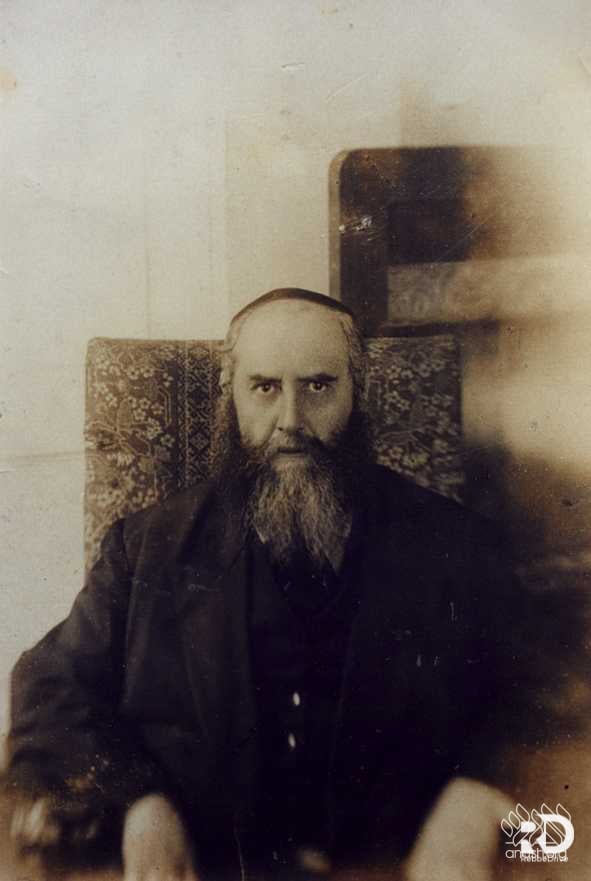
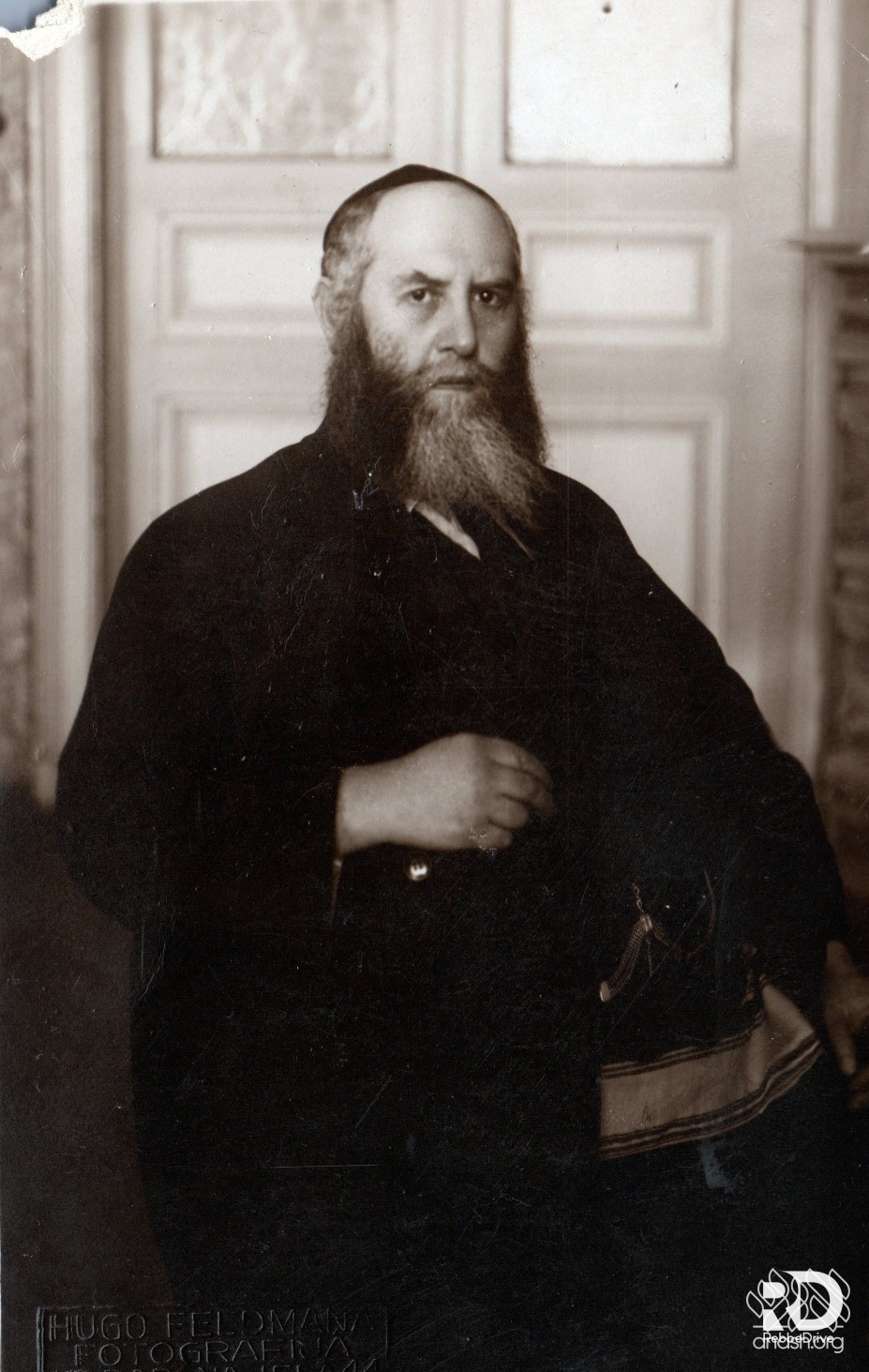
The Frierdiker Rebbe in Leningrad, 5687. Courtesy of RebbeDrive. The sketch above is based on this picture.
“Anyone who has not seen all this with his own eyes, and has not lived through it himself, cannot even imagine that such a thing is possible. One might think it is exaggerated, but it is the absolute truth. Everything you read in your newspapers and in the newspapers in other countries about the persecutions and inquisitions suffered by the Jews in Soviet Russia, those who still wish to maintain some bond with Yiddishkeit, is only one thousandth of what is actually taking place. For no matter how much one describes it, one still cannot convey everything that is happening there.
“They even take vengeance against the Jewish dead. Has the world ever heard of such a thing, that the dead should be dug up from their graves, and that gardens and parks should be planted on the site of a Jewish cemetery? Not long ago, such an incident took place in Polotzk. The Jews pleaded with the government; every form of intervention was attempted, but nothing helped. The dead were dug out of their graves.
“As reports describe it, that day was a real Tisha B’Av for the Jews of Polotzk. Men, women, and children burst into bitter tears when they saw the bones of their parents lying scattered before their eyes, and when they saw the silver being torn from the talleisim with ataros in which some of the dead had been buried. The non-Jews stood around laughing at the Jews, calling out to them: ‘Look what your own brothers are doing to your parents and your holy people, and you remain silent…’
“I want you, and all our brethren, to know that the Jews in Russia have no protection. Three million Jews are struggling against a bitter spiritual and physical death. Among these three million are two and a half million who are being persecuted and tormented in the most terrible manner, with burning hatred, by a small group of wicked, corrupt people who seek to take bitter revenge against the two and a half million Jews who wish to remain faithful to their G-d and their people.
“This group knows that it can do to the Jews whatever they want, and no one will stand in its way. The Jews have no one who will come to their defense and speak on their behalf.
“This group also knows how to ensnare innocent people in other countries in its net, to stir up agitation on their behalf, and to organize various societies that will help them in their wicked, destructive work. They are capable people in this regard. They have fifty years of experience behind them in conducting all kinds of propaganda, both illegal and legal, in Russia and abroad. They already know how to win over world opinion, how to mislead newspaper editors, writers, and correspondents in various countries. They also send their own people into different countries, smooth-talking men who open offices, conduct extensive propaganda for their causes, and toot their own horns in order to confuse people. All of this is done with the purpose of undermining Yiddishkeit in Russia and plunging a sword into the heart of the Jewish people.
“‘What must be done?’ you will ask.
“First, efforts must be made to interest Jewish leaders throughout the world in the terrible plight of Russian Jewry, to acquaint them with the true facts, and to mobilize them for the purpose of protecting and helping the Jews of Russia as much as possible. It is also important to be careful in choosing the people involved. One must know whom to draw close and whom to keep at a distance.”
The Lubavitcher Rebbe then sketches out in his letter a plan for organizing the Lubavitcher Chasidim in America and everywhere else into a strong body, one that will become a factor in the religious life of Jews in every country and also serve as a source of help for the Jews in Russia.
The Rebbe proposes that a large central organization be established in America, with regional organizations in every state and branches in every city. In every city, there should be centers where the Lubavitcher chasidim can gather and conduct various spiritual activities, and also raise funds for the yeshivos in Russia and Poland.
The Rebbe therefore favors the establishment of Lubavitcher yeshivos in America, modeled after the Tomchei Temimim yeshivah that the Lubavitcher Chasidim operate in Warsaw. The Rebbe writes:
“It is known that Torah and mitzvos are eternal, and do not depend on one country or another, nor on one era or another. Torah and mitzvos have a time and a place, but that is their own time and their own place. It has no connection to the time and place as understood by the world, to the borders drawn by the nations, or to their aims, ambitions, and opinions.
The Frierdiker Rebbe, Riga 5689. Courtesy of RebbeDrive.
“When we turn through the pages of Jewish history in galus, we see how right our chachamim were when they said: ‘Hashem performed an act of kindness for am Yisrael by scattering them among the nations.’ For this is how it is: If a wicked government arises in one country and imposes harsh decrees that prevent the Jews of that country from learning Torah and keeping mitzvos, Jews in another country sit and learn Torah and observe mitzvos. By doing so, they give strength to their brothers who suffer under the decrees in the other land, enabling them to overcome their enemies and preserve the wholeness of their neshamah.
“We see this throughout the long chain of Jewish galus, in Eretz Yisrael and in Bavel, and in the era of the Geonim. It is told that one of the Geonim was brought to Toledo as a slave in iron chains, and from him, Torah spread throughout the entire land. The same happened later as well. We see how Torah traveled from France to Germany, then to Poland, from there to Russia, and now Torah is in the process of emigrating across the sea to America.
“The great Jewish migration, the terrible World War, and the upheavals throughout Europe are bringing it about that the vineyard of Torah should be planted in America, and that a great platform for Yiddishkeit should be established there. America can certainly become this if the people of Torah and yiras Shamayim unite for this purpose. They will be able to purify the atmosphere and create, for themselves and for others, the possibility of continuing the same path of life which they followed in the old country.”
The Lubavitcher Rebbe further points out in his letter that in recent years, hundreds of rabbonim have emigrated from Europe to America, along with thousands of frum Jews, and they can become a great spiritual force in the life of American Jewry and exert a powerful influence on the entire direction of Jewish life here. He again emphasizes the need to establish as many yeshivos as possible, where the youth can receive a proper education and absorb the spirit of Torah. In this regard, he makes the following observation:
“I was pleased to hear that the Jewish youth in America are not made up of kofrim like the Jewish youth in Russia. But I also want to point out to you that it is a mistake when people among you think that the young Jews in Russia are kofrim. For in order to be a kofer, one must first possess broad knowledge. The Jewish youth in Russia do not have that. They have been stuffed with such fare as looks like kefirah, but this is not the denial that comes from knowledge. It is a kefirah built on brazenness, taavos, and foolishness. It comes from the victory of matter over spirit.
The Rebbe also expresses his deep conviction that America is capable of producing a frum generation, and even chasidim, and that the Lubavitcher chasidim in America can contribute greatly toward this. He also places great hopes in the “parochial schools,” about which Rabbi Sadowsky had written to him.
*
Harav Shlomo Aharon Kazarnovsky (5657–5743)
We conclude our July 4-12 Tammuz article with a brief letter of the Frierdiker Rebbe to Harav Shlomo Aharon Kazarnovsky, upon his appointment to serve as the rov of Congregation Ein Yaakov in Rochester in 5686. This letter was published in the Yidishes Togblat newspaper on 13 Av 5688 (July 30, 1928), and has not been published elsewhere until now.
Rochester, N.Y.
A Mazel Tov blessing from the Lubavitcher Rebbe שליט”א to Harav Hagaon Hachasid Shlomo Aharon, ben Harav Moshe Kazarnovsky, and to Congregation Ein Yaakov in Rochester, N.Y., on the occasion of the election of this worthy rov for their congregation.
Tammuz, 5686, Leningrad
To my honored friend, yerei Shamayim, the distinguished and respected Moreinu Harav Shlomo Aharon Kazarnovsky שי’.
Shalom Uvrachah.
In response to your letter of 14 Sivan, informing of your successful arrival together with your family שי’, and of your being chosen as rov of Beis Midrash Ein Yaakov, I hereby bless you that Hashem should bestow from on high an abundance of life and generous blessing upon the entire holy congregation, and may Hashem grant you success in all your affairs.
May G-d give you the verbal abilities to fulfill your sacred duty and mission and to institute and deliver shiurim. May you be the cause of adding benches to the shul to be filled by those who come to hear words of Torah, with the intent to observe, to do, and to fulfill.
Please convey to them my blessing: may Hashem bless them and all that is theirs, and may the light of Torah dwell in their homes. May they serve as a good example among their brothers, in supporting Torah and honoring it, both in spirit and in deed.
May you be blessed.
From one who seeks your welfare and blesses you to rise ever higher, both materially and spiritually,
Yosef Yitzchak Schneersohn
(Copied from the original handwriting.)
(Thanks to R. Shraga Homnick for his assistance in piecing together the story of R. David Feinberg and the first Nusach Ari shul)
To view all installments of From the Margins of Chabad History, click here.
For additional exclusive content, follow the column on X: x.com/ChabadMargins
COMMENTS
We appreciate your feedback. If you have any additional information to contribute to this article, it will be added below.
BH
Excellent article. truly a pleasure.
One small quible.
In the article it states:
In the alte heim, Jews appointed their rabbis, opened their shuls, and conducted their marriages and divorces. They had little interaction with a decentralized government that was happy to leave them to their own affairs. Rabbis didn’t have to be “recognized” by the Russian imperial authorities; shuls didn’t need permits; and while marriages had to be registered, they were all conducted within the community by the rabbi and registered by the rav mitaam, essentially the secretary of the Jewish community.
…
Here, the government wanted all marriages and divorces to be registered with the authorities. While religious clergy were authorized to perform them, they needed to be authorized by the authorities and submit documentation to them. The independent marriages and divorces conducted by the rabbonim of the immigrant community caused many problems for the system. Married people were considered legally single, and their children were classified as illegitimate, a status that bore legal implications. Unregistered divorces caused “accidental bigamists” to proliferate in the Lower East Side.
This description understates what took place in Russia and overstates what took place in America.
In addition, one reading this article gets the impression that in Russia, there was some sort of freedom where the practice of marriage and divorce occured without the government breathing over ones back, while in america there was suddenly some sort of government oversight. In reality it was mamash the reverse.
















 COMMENTS


BH
Excellent article. truly a pleasure.
One small quible.
In the article it states:
In the alte heim, Jews appointed their rabbis, opened their shuls, and conducted their marriages and divorces. They had little interaction with a decentralized government that was happy to leave them to their own affairs. Rabbis didn’t have to be “recognized” by the Russian imperial authorities; shuls didn’t need permits; and while marriages had to be registered, they were all conducted within the community by the rabbi and registered by the rav mitaam, essentially the secretary of the Jewish community.
…
Here, the government wanted all marriages and divorces to be registered with the authorities. While religious clergy were authorized to perform them, they needed to be authorized by the authorities and submit documentation to them. The independent marriages and divorces conducted by the rabbonim of the immigrant community caused many problems for the system. Married people were considered legally single, and their children were classified as illegitimate, a status that bore legal implications. Unregistered divorces caused “accidental bigamists” to proliferate in the Lower East Side.
This description understates what took place in Russia and overstates what took place in America.
In addition, one reading this article gets the impression that in Russia, there was some sort of freedom where the practice of marriage and divorce occured without the government breathing over ones back, while in america there was suddenly some sort of government oversight. In reality it was mamash the reverse.
Masterful, and well written account- yashar koach!
Where can I contribute sources for the map?
The “About” section says:
For corrections, comments, or additional information, please contact [email protected].
https://maps.app.goo.gl/z1bcxrJni47C6STN9
this shul in Kansas City seems from the name (obviously) to originally be a Nusach Ari shul – is it the same as the one on the map?
This is the current iteration of Ohev Sholom Nusach Ari of S. Louis. The shul is listed already.
Does anyone have more information about the Nusach Ari shul on Washington Ave in the bronx? my grandfather used to daven there.
Does anyone perhaps know where it was located in its later years?