




י״ט מרחשון ה׳תשפ״ז | October 29, 2026
When Personal Agendas Are Dressed Up as Chassidus
“In recent online article, people are making passionate arguments, speeches, and attempts at persuasion, all presented in the name of Torah and Chassidus. Everyone seems to be claiming to represent the true kavonah ha’elyonah.”
By Dov Yarchi
In Parshas Vayeira, we encounter three terrible mistakes: The people of Sedom and their wicked behavior, the daughters of Lot and their sin, and Avimelech and his actions.
As I was learning, my attention was drawn to Rashi’s explanation of the punishment of Lot’s wife. Between the lines, I noticed a striking connection to a powerful message that the Rebbe addressed on numerous occasions.
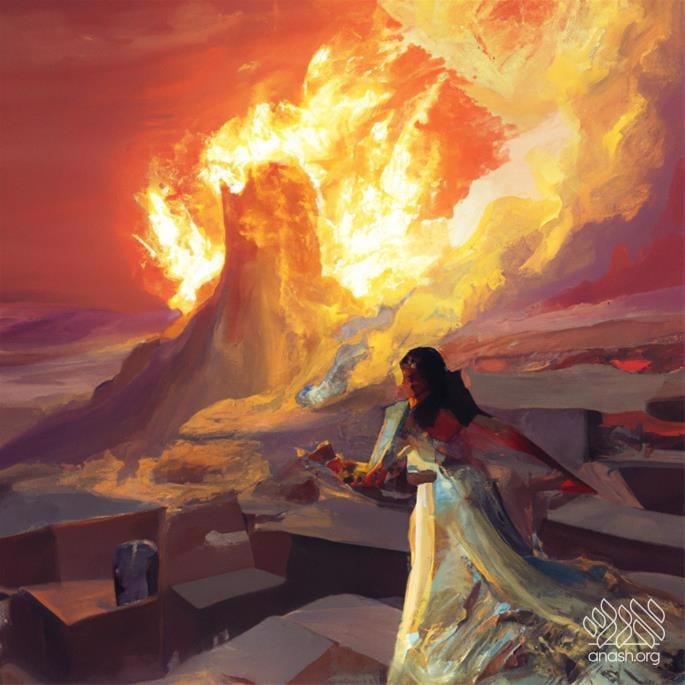
The Torah tells us that Lot’s wife “became a pillar of salt.” Rashi explains that she was punished with salt because she had sinned with salt. What had happened? When Lot asked her to bring some salt for his guests, she responded indignantly, “Are you trying to introduce this evil custom here as well?”
In her mind, she was fighting for what was right!
According to her understanding, welcoming guests was a terrible practice. When she saw this dreadful breach of accepted standards taking place in her own home, she raised an outcry and did everything she could to put a stop to it. She really believed that she was standing up for what was good and proper.
No sooner do we finish reading about the tragic consequences of the mother’s actions than we encounter another terrible tragedy, this time involving her daughters. Lot’s daughters took matters into their own hands and committed a grave sin with their father.
Like their mother, they had confused right and wrong. Convinced that their actions would save the world, they instead brought about terrible destruction.
Once again, we see the same underlying cause behind very different failures.
The danger of building one’s moral outlook and understanding of right and wrong on personal feelings and independent reasoning.
The third episode brings this lesson into even sharper focus.
After Avimelech was prevented through Divine intervention from sinning with Sarah, he confronted Avraham Avinu: “What have you done to us? What wrong have I done to you, that you have brought such a great sin upon me and my kingdom? You have done things that should not be done!”
Avraham responded, “Because I said, surely there is no fear of Hashem in this place.” Had the people of Avimelech’s kingdom lived according to yiras Shamayim, none of this would have been necessary.
True morality must be determined by Hashem’s instructions, not by what people independently decide is right or wrong. Only by remaining faithful to the Torah and its guidance, down to the smallest detail, can a person avoid the terrible mistake of turning right into wrong and wrong into right.
The Rebbe addressed this point many times, even drawing an example from the horrors of the Holocaust.
While the Nazis were slaughtering Jews, organizations devoted to animal rights were active in Germany. Their supposedly enlightened and cultured society could concern itself with the welfare of animals while committing the most horrific atrocities against human beings.
How could such a contradiction exist?
Because their understanding of morality was based on their own ideas and values, rather than on the standards established by Hashem.
The lesson for us is to ensure that our outlook is rooted in Torah, in Chassidus, and in the Rebbe’s teachings.
In recent online article, people are making passionate arguments, speeches, and attempts at persuasion, all presented in the name of Torah and Chassidus. Everyone seems to be claiming to represent the true kavonah ha’elyonah, the higher Divine intent.
Of course, there are shivim panim laTorah, seventy faces to the Torah, and there is room for different perspectives. But a discerning person can recognize the difference between another legitimate perspective within Torah and an entirely new approach being introduced under the guise of Torah.
I found it both interesting and amusing to read between the lines of supposedly idealistic arguments and try to determine whose words are genuinely grounded in the solid foundations of Torah and Chassidus, and who is simply engaging in demagoguery.
The real challenge, however, is to apply that same scrutiny to ourselves.
 COMMENTS


We appreciate your feedback. If you have any additional information to contribute to this article, it will be added below.