




י״ח מרחשון ה׳תשפ״ז | October 29, 2026
My Daughter Ran Up to the Rebbe and Gave ‘Sholom Aleichem’
Rabbi Pinchus Feldman was aghast when his little daughter ran up to the Rebbe during yechidus and gave him a Sholom Aleichem. But what really surprised them was what happened when they returned for yechidus two years later.
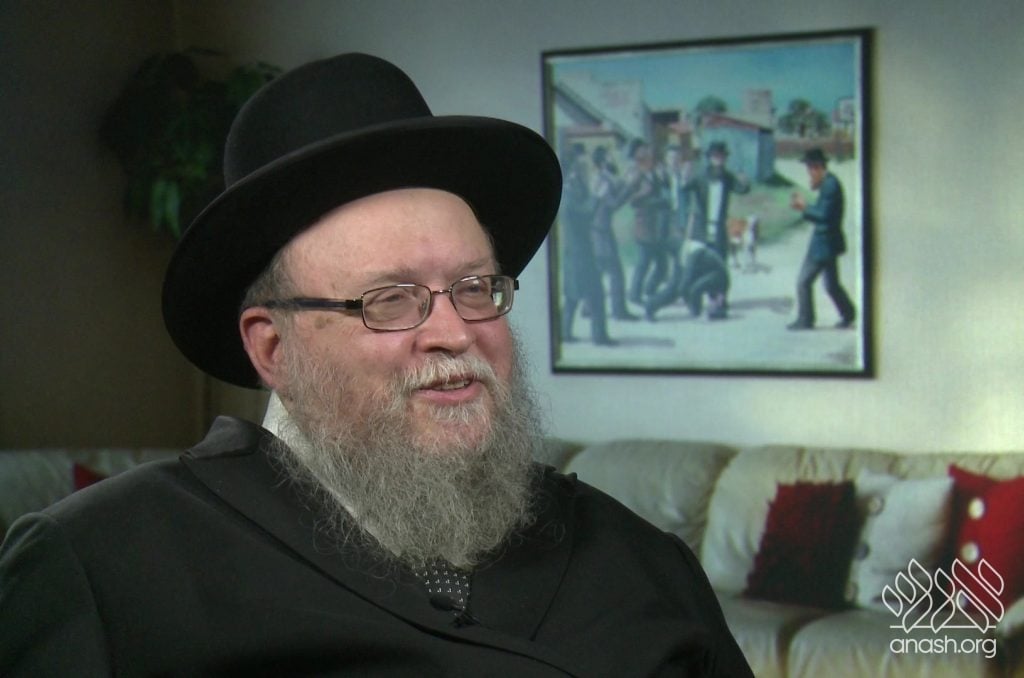
Rabbi Pinchus Feldman was sent as the first Chabad emissary to Sydney, Australia, in 1967, and has served as the rabbi of the local Yeshivah Centre since then. He was interviewed in March of 2015.
Living in America in the 1930s and ’40s, my father, Rabbi Mendel Feldman, became close with Lubavitch, and then became connected with the Previous Rebbe. He was such an outstanding Torah scholar – as a student in the Yeshiva Torah Vodaath, he had been considered a Torah prodigy – that the Previous Rebbe asked my father to tutor his grandson and, as a result, my father became something like an adopted member of the Previous Rebbe’s household. The Previous Rebbe sent him to serve in rabbinic positions across America, and they kept up this special relationship through letters as well as in private audiences. As a young child, I came along for a number of these audiences.
When I was about four, I walked into the Previous Rebbe’s study together with my parents, and he turned to me and asked, “Vos machstu?” How do you do?
My parents had taught me the proper way to respond to such questions and so I innocently, but somewhat irreverently, replied: “Thank G-d, and how do you do?”
The Previous Rebbe gave a very big smile, although my parents, who would have never spoken in such direct terms themselves, probably wanted the earth to swallow them up.
In 1950, while my father was serving as a rabbi in Jacksonville, Florida, the Previous Rebbe passed away. I was five when my parents got the phone call, but seeing them receive that traumatic news was one of those experiences one never forgets.
Shortly after the Rebbe succeeded his late father-in-law, my parents moved back to Crown Heights for my education; there were no Jewish schools for me in Jacksonville. I began to attend Lubavitcher Yeshiva, and from then on I basically grew up around 770. In addition to the private audiences we had with the Rebbe as a family, I would attend his public chasidic gatherings. Although I was still quite young, I can recall him calling out to me at these farbrengens: “Pinchus Hakohen Feldman – say l’chaim!”
Typically, Bar Mitzvah boys would come to an audience with the Rebbe to receive his blessing ahead of the day. But before I turned thirteen, in 1957, the Rebbe told my father that rather than blessing me in private, he wanted to do so publicly, during a farbrengen. Since my birthday was at the end of the festive month of Tishrei, the last farbrengen before my birthday was on the holiday of Simchas Torah, and this was when he would bless me.
Farbrengens could be very long but I knew that I had to stay in the room the entire time because at some point the Rebbe was going to call for me. So I waited, but after nearly five hours, I got tired and needed to go out for a break.
As I was heading out, I suddenly heard people clamoring after me: “The Rebbe is calling for you!”
I came back, and the Rebbe gave me his blessings for my Bar Mitzvah, and then gave me some of the challah he had on his table as well as a bit of wine to say l’chaim.
As a teenager, I spent several years learning in yeshivah, and I received various bits of advice relating to my Torah studies. Officially, our studies began each day at 7:30 AM and ended at 9:30 PM, but between meal breaks and nighttime, I was still left with a couple more hours in the day. “How,” I once asked the Rebbe, “should I spend my free time?”
The Rebbe replied that I should divide this time between studying the “revealed” and “hidden” parts of Torah. Practically, this meant that I should spend an extra hour each day studying chasidut and an extra hour studying Talmud or halachah. At another stage, he clarified that both of these studies should be in-depth – “l’iyun” – as well as wide-ranging – “l’giras.” In general, the Rebbe was very keen on making sure that Lubavitcher boys were real Torah scholars.
At twenty-one, I went to yeshivah in Eretz Yisroel. Before leaving, I had a fifteen-minute meeting with the Rebbe which, for a bochur, was extraordinarily long.
I was planning to continue studying Torah in Eretz Yisroel as I had before, but as the Rebbe told me in this audience, he wanted more from me: While you are there, “you will be a shliach.” I understood this as a kind of mission statement: Serving as a representative of the Rebbe was to be my goal in life.
The Rebbe gave me various instructions on what I was to do in Israel, most of which concerned my studies there. I was to focus on studying halachah, and to eventually seek rabbinical ordination. At the same time, he also wanted me to keep studying chasidic teachings, and to publicly recite a discourse on the subject at least once a month.
Years later, when I was already married with children and living in Sydney, Australia, as the Rebbe’s emissary there, I had an audience with the Rebbe that recalled my experience as a child with the Previous Rebbe.
My wife and I had traveled all the way from Australia with our children – at that time we had four under the age of six – which was no easy trip. Before we brought the children for our private audience, we of course cautioned them to be on their best behavior.
As soon as we walked into the room, however, our little daughter Fruma ran over to the Rebbe and greeted him with a “Sholom Aleichem!”
Of course, the Rebbe was very nice to her, and gave her his hand to shake, but we didn’t know where to put ourselves!
Then, two years later, we again traveled to New York and brought our children to the Rebbe. When we came into his office, the first thing the Rebbe did was to turn right to Fruma and say, “Sholom Aleichem,” before going on to speak with her about lighting Shabbos candles, and to speak with the other children about what they were learning in school, and so on.
It took us a moment to understand why he was addressing her specifically, but then we realized that he had remembered our last audience. The Rebbe’s devotion to children was absolutely unique, and his dedication to the education of young people was incredible.
With all of his greatness, he was still able to pay such close attention to a little child – to me as a child, then as a young yeshivah student, and to my own children in turn.
 COMMENTS


We appreciate your feedback. If you have any additional information to contribute to this article, it will be added below.