In honor of the upcoming 126th yartzeit of Harav Shlomo Zalman of Kopust, From the Margins of Chabad History presents new information about his life and stance towards the Zionist movement.
27 Iyar marks the 126th yartzeit of the Kopuster Rebbe, Harav Shlomo Zalman Schneersohn. The story of Harav Shlomo Zalman’s life is artfully related at length in R. Amram Bloi’s Benei Hatzemach Tzedek, pp. 215–288. In an installment of this column last year, we published the first detailed eyewitness account of life in his chatzer in Kopust.
This year, we add new information about his biography, character, and his views on the Zionist movement of his time.
It is no secret that there were periods of tension and points of contention between Lubavitch and Kopust.
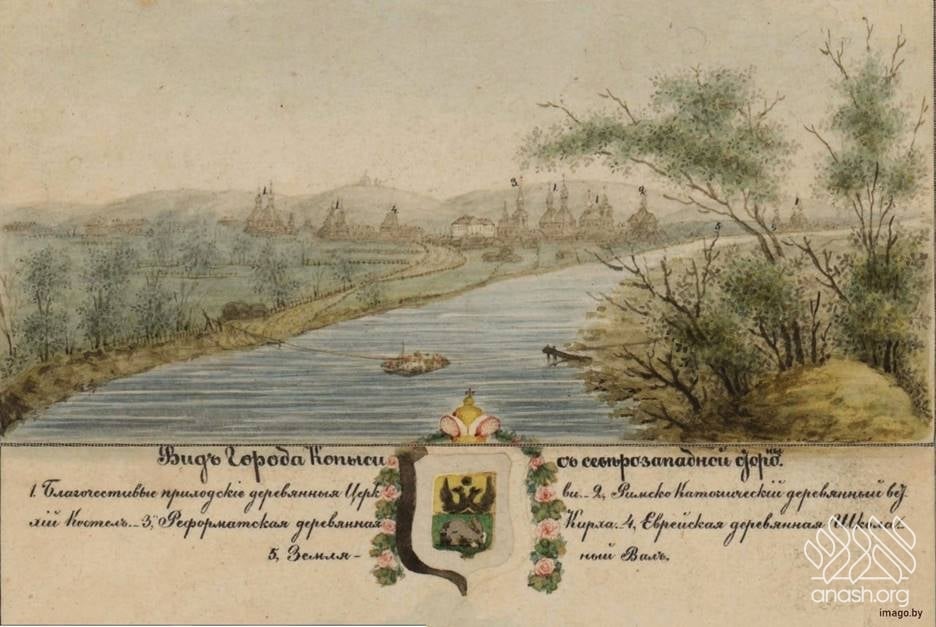
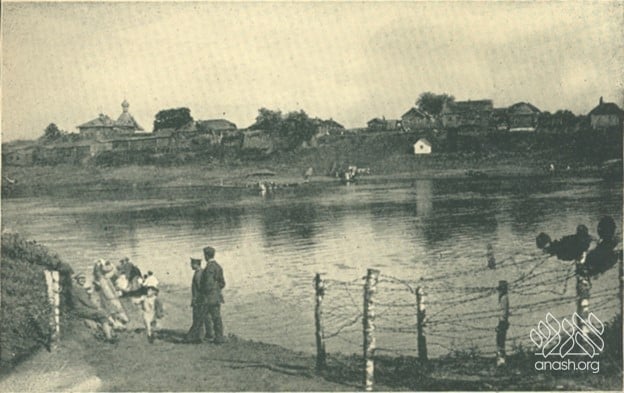
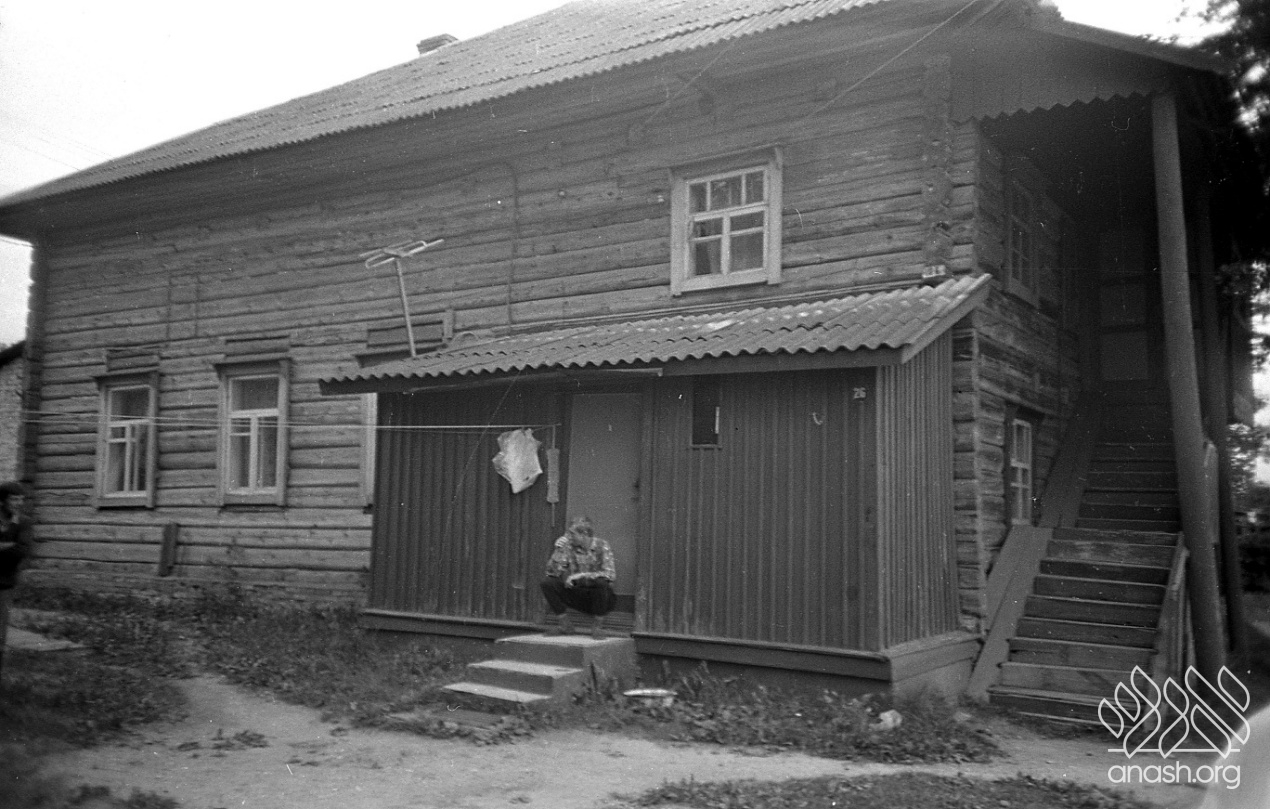
A drawing of Kopust on the Dnieper River, between the years 5585 and 5600. The building marked 4 is the wooden shul.
However, the Frierdiker Rebbe, and especially our Rebbe, displayed a conciliatory attitude towards Kopust and the other branches of Chabad. The Rebbe explained that the split within Chabad was not a machlokes in the simple sense; it was a division leshem shamayim. As such, both sides are destined to endure for eternity (Sichos Kodesh 5752, p. 11-12). The different streams of Chabad, the Rebbe said, have since flowed into and merged with the great river of Lubavitch, under the leadership of the Frierdiker Rebbe (Toras Menachem 5713, vol. 3, p. 57).
The Hameilitz Obituary
The Kopuster Rebbe passed away on 27 Iyar, as mentioned. But, despite his being a very important rebbe with many thousands of chasidim, none of the Jewish newspapers at the time published an obituary for him.
The simple explanation for this omission is that the Kopuster Rebbe focused exclusively on teaching chasidus and had minimal engagement with Jewish communal life in general, and almost no interaction with the maskilic circles that published these newspapers. So while his passing was a major event among traditionally frum shtetl Jews, it didn’t register as significant to the maskilic publishers.
One maskilic writer, however, was disturbed by this omission and, six months later, set out to rectify it. The following obituary appeared in the Hameilitz newspaper of 15 Cheshvan, 5661 (November 7, 1900), and is reproduced here for the first time, in translation:
After the Passing of a Tzadik
On Shabbos, 27 Iyar, 5660, Harav Hatzadik R. Shlomo Zalman Schneersohn, the Rebbe of Kopust, passed away and was gathered to his people. He was the contemporary pillar upon whom Chabad Chasidus leaned.
It is surprising that nothing has been written in the Hebrew newspapers about the deceased until now. Since I knew him, I will record a brief account of his life.
Harav R. Shlomo Zalman was born in the year 5590 to his father, Harav Hatzadik R. Yehudah Leib, the son of the renowned tzadik R. Menachem Mendel, the rebbe of Lubavitch, author of Tzemach Tzedek.
Until the age of twelve, his father taught him only nigleh. On the day he turned twelve, his father began to guide him in the teachings of Chabad and started learning Tanya with him. This study captured his heart, and he devoted himself entirely to the teachings of Chabad. The experts in the field immediately recognized that, in time, he would become one of the greatest and strongest pillars of Chabad.
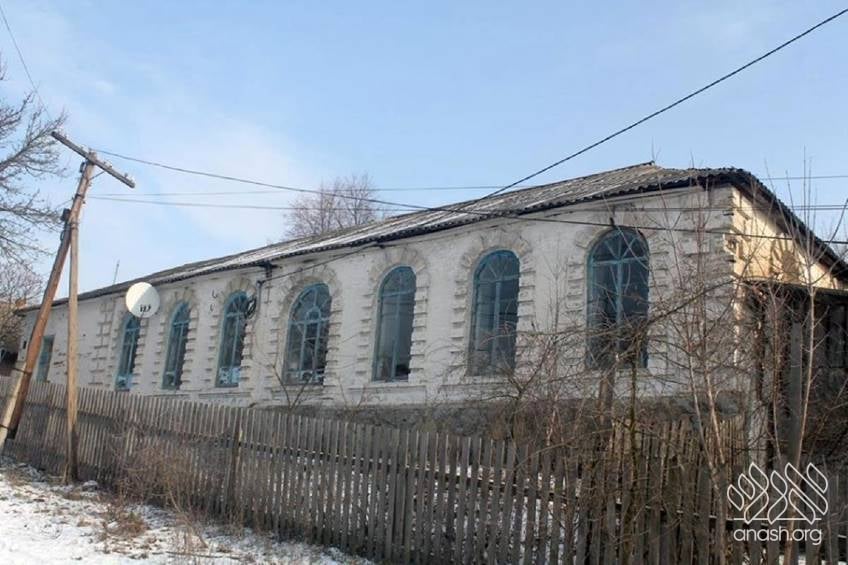
A shul in Lyepel.
On 10 Teves, 5606, he married the daughter of the gvir R. Leib Luria of Lyepel, and he lived at his father-in-law’s expense. In Lyepel, he turned nights into days, studying Torah with great diligence, both nigleh and nistar.
During that period, he began engaging in business, as he distanced himself completely from rabbonus. But he was not cut out to be a businessman, and he lost his money. His father-in-law’s financial situation also worsened steadily, and R. Shlomo Zalman found himself in distress. His grandfather, the saintly Rebbe of Lubavitch, then invited him to come and live at his expense and devote himself entirely to Torah and avodah.
Here, in Lubavitch, R. Shlomo Zalman was able to immerse himself in study under an outstanding teacher and guide: his grandfather, the Rebbe. The Rebbe drew him very close and studied with him every night, both nigleh and nistar.
The Rebbe of Kopust really was a talmid muvhak of his grandfather. He delved deeply into his writings, which amount to thousands of pages, and he would explain them with his great bekius and sharp intellectual analysis. The chasidim who came to the Rebbe of Lubavitch would go to hear from his mouth how he clarified and explained his grandfather’s teachings. This later caused him much heartache, as many jealous zealots attacked him.
After the passing of the Rebbe of Lubavitch, Harav Hatzadik R. Yehudah Leib settled with his son, Harav R. Shlomo Zalman, in the town of Kopust. But shortly thereafter, Harav R. Yehudah passed away and was gathered to his people. His son, Harav R. Shlomo Zalman, assumed the position of Rebbe in Kopust, holding it for thirty-four years.
Thousands of chasidim flocked to him to hear his Torah, the Torah of Chabad. He was like an ever-flowing spring, and every Shabbos he delivered his derushim, known for their great depth and breadth. Copies of these derushim are found among the chasidim, and a small portion of his thousands of derushim have now been gathered and published. This book contains several hundred pages.
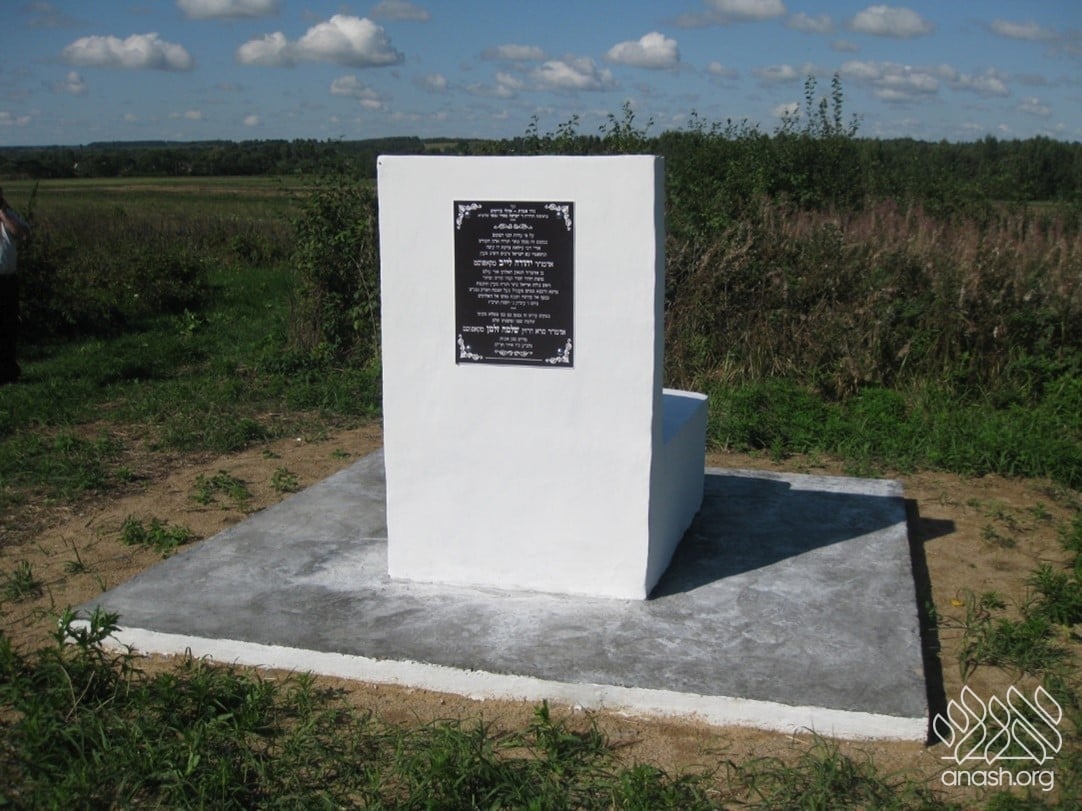
The wooden ohel that once surrounded the adjoining kevarim of the Kopuster Rebbes was destroyed during World War II. In 2009, Geder Avos and Oholei Tzadikim located and marked the site where it once stood.
In addition to his great Torah scholarship and tzidkus, he was humble and modest. He spoke gently, did not engage in idle talk, and received every person pleasantly.
He was a true chovev Tziyon. I spoke with him about this idea more than once, and it found great favor in his eyes. Last year, when he was here, a letter of the Mitteler Rebbe encouraging Jews to engage in farming and labor was printed in the Hamֵeilitz newspaper. The deceased rov read that letter in Hamֵeilitz and testified before me to its authenticity. He also looked very favorably upon the society supporting workers in Eretz Yisrael and Syria. However, he opposed political Zionism, but not with noise and agitation, insults and denunciations, as another well-known Rebbe did. In general, he could not tolerate insults and denunciations directed at an idea that many Jews supported.
May his memory be blessed, and may he rest in peace.
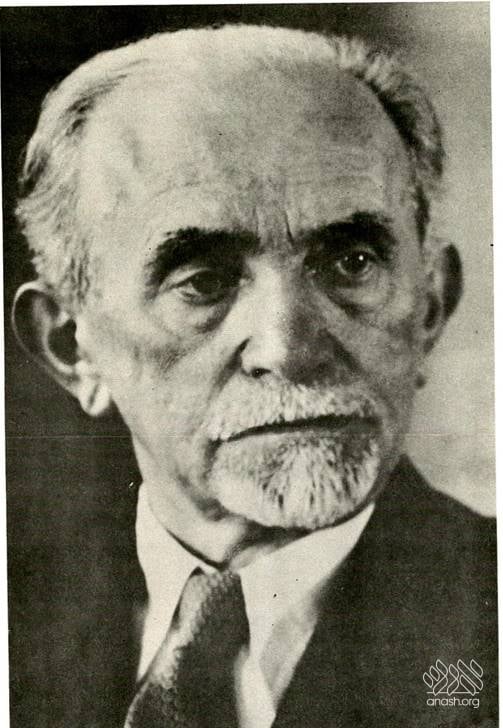
Shmuel Abba Horodetzky
Analyzing the Obituary
This obituary, unknown to scholars until now, is notable for several reasons. The primary biographer of the Kopuster Rebbe was his chasid, Harav Chaim Meir Heilman, the author of Beis Rebbe. In this work, which chronicles the first three generations of Chabad rebbes, R. Chaim Meir also included brief biographical descriptions of the later rebbes from the various branches of Chabad.
A close analysis of the Beis Rebbe biographical sketch (pp. 383-385) shows that he used Horodetzky’s obituary as the basic framework, editing it and adding information from other sources. One of the edits R. Chaim Meir made was to correct the year of the Kopuster Rebbe’s wedding to 5507. A detail he omitted is the mention that the Kopuster Rebbe tried his hand at business for a short period in his youth. It is unclear whether R. Chaim Meir omitted this because he believed it was inaccurate or just insignificant.
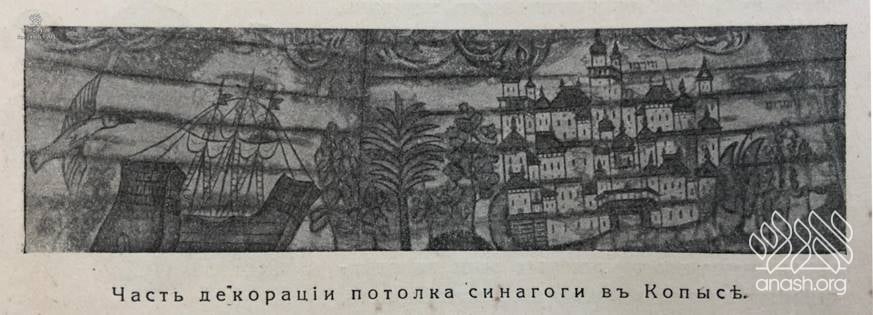
Wall painting in a shul in Kopust, published in 5683.
Horodetzky also mentions that he met the Kopuster Rebbe “last year, when he was here,” and spoke to him about the Mitteler Rebbe’s letter advocating Jewish industrial labor and farming in Czarist Russia, which had just been published in Hameilitz. This letter was published in Hameilitz of 21 Kislev 5660 (November 23, 1899), and can be found in the Igros Kodesh of the Mitteler Rebbe, pp. 187-189. Apparently, the Kopuster Rebbe visited Berditchev, where Horodetzky was living at the time, at the beginning of 5660.
The novel feature of this obituary is its discussion of the Kopuster Rebbe’s stance towards the Zionist movement. The portrayal of the Kopuster Rebbe as supportive of the Zionist movement is popular in scholarly, Zionist-leaning circles. However, the reality is quite different.
In Benei Hatzemach Tzedek, R. Amram Bloi presented a range of sources on this topic, clarifying the Kopuster’s position. Generally averse to involvement in communal affairs, the Kopuster Rebbe, in private conversations, expressed support for the general concept of the Chovevei Tzion movement and was quoted to this effect by Zionist writers.
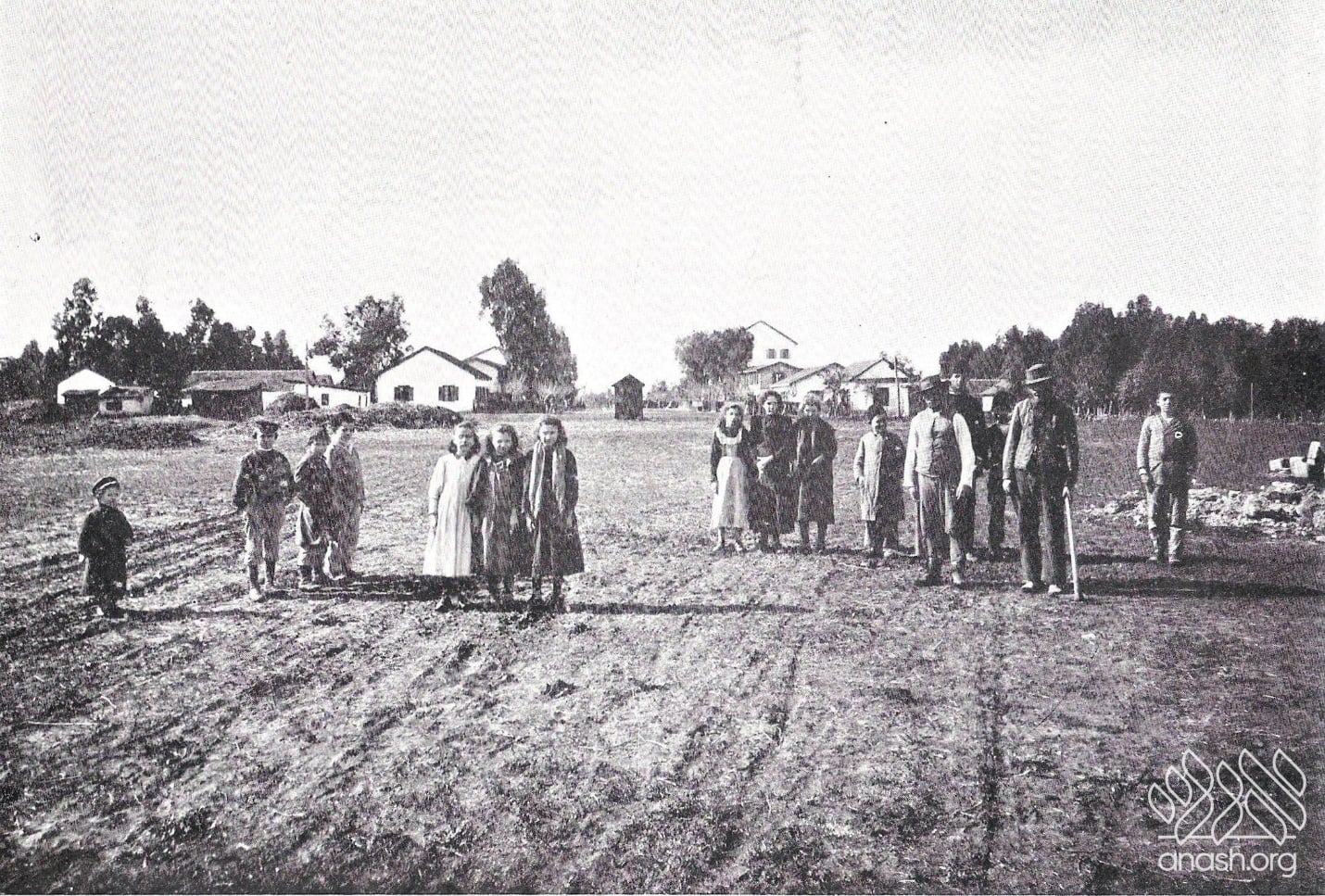
Early settlers in Ekron (now Mazakeret Batya). This farming village was established in 5644 by frum Chovevei Tzion members from White Russia. The farmers of Ekron had mesiras nefesh to observe shemitah without compromise.
Chovevei Tzion was an association established in the 5640s amid rising antisemitism in Czarist Russia, advocating for self-sufficient Jewish agricultural settlement in Eretz Yisrael. Many rabbonim supported this movement, and the organization proclaimed that all of its activities would follow halachah, including shemiras Shabbos and mitzvos hateluyos baaretz.
Like many rabbonim of the period, the Kopuster Rebbe saw the new Chovevei Tzion movement as a continuation of traditional efforts for yishuv Eretz Yisrael, with the only difference being the establishment of new self-sufficient agricultural settlements. Accordingly, the Kopuster Rebbe expressed passive support for this idea, subject to the commitment that everything was being conducted al pi halachah (a commitment that was not actually upheld).
At the end of the 5650s, a new form of Zionism rose. This was political Zionism, which focused on political efforts to establish a sovereign Jewish state, rather than practical yishuv Haaretz. This movement refused to subject itself to halachic guidance even nominally, and many of its leaders expressed radically anti-Torah positions.
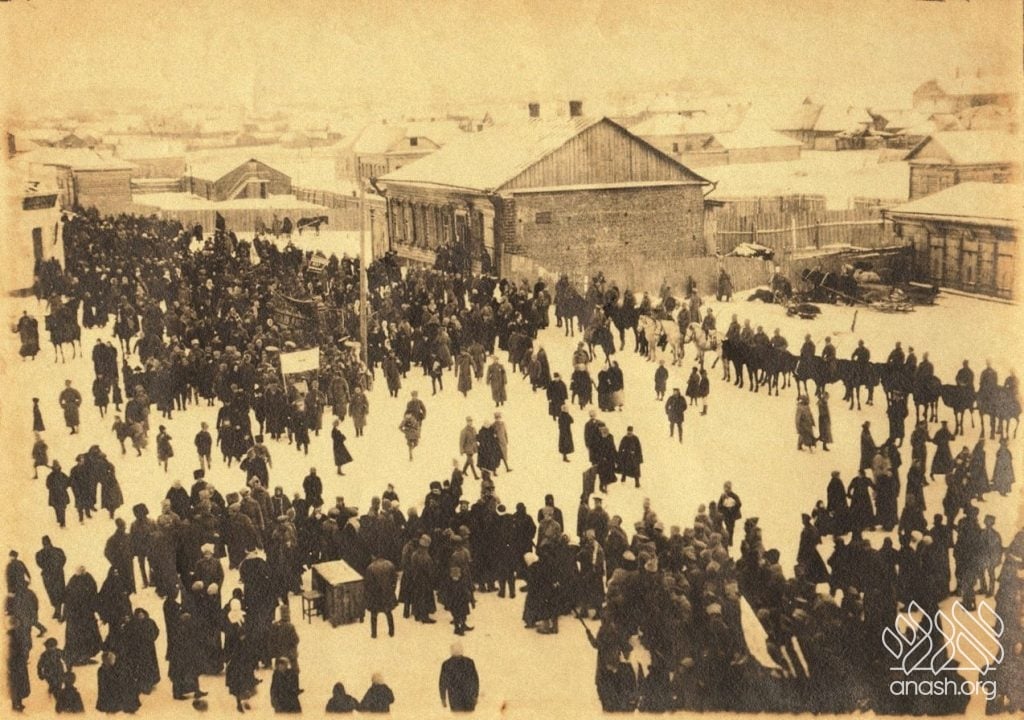
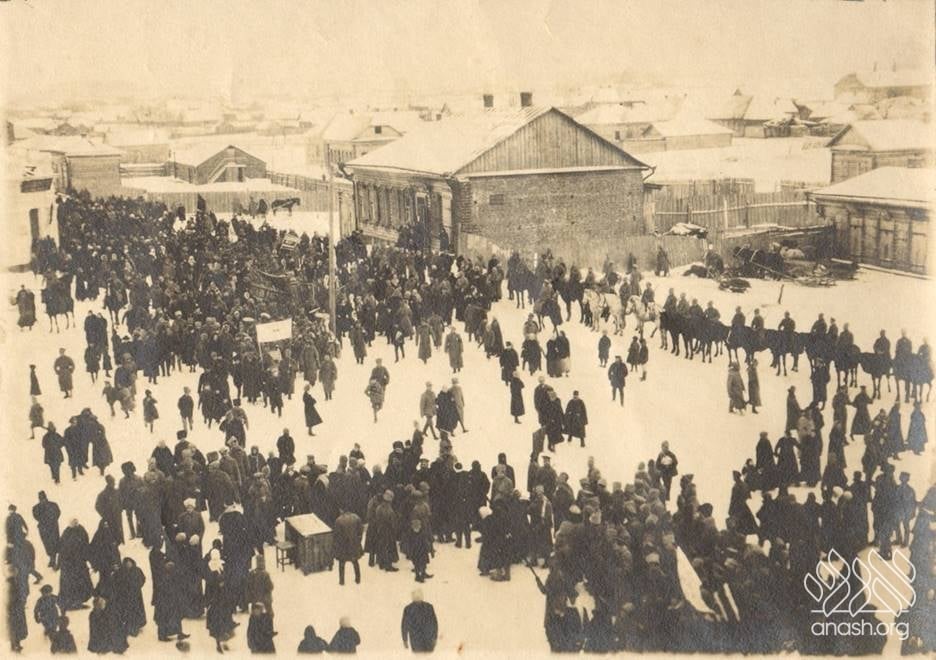
The marketplace in Kopust. The picture shows a demonstration and rally following the signing of the Treaty of Brest-Litovsk on March 3, 1918, ending Russia’s involvement in World War I.
With the rise of this new Zionism, many of the rabbonim who had been supportive of Chovevei Tzion revoked their support, including the Kopuster Rebbe. This evolution is clearly documented by R. Amram Bloi, and further supported by a newly discovered letter from the Kopuster Rebbe and additional information published by this writer in Heichal Habaal Shem Tov, vol. 45, pp. 203-206.
Horodetzky’s first-hand testimony gives additional confirmation for this narrative. The rise of political Zionism and its anti-religious element is what led the Rebbe Rashab to launch his public campaign against Zionism, with the dissemination of a public letter in 5659. It is with this strident public opposition that Horodetzky contrasts the Kopuster Rebbe’s passive disapproval.
Shmuel Abba Horodetzky
The writer of this obituary, Shmuel Abba Horodetzky, clearly possessed good personal knowledge of the Kopuster Rebbe’s biography and opinions. This leads us to the question: who exactly is this Shmuel Abba Horodetzky, and what was the nature of his relationship with the Kopuster Rebbe?
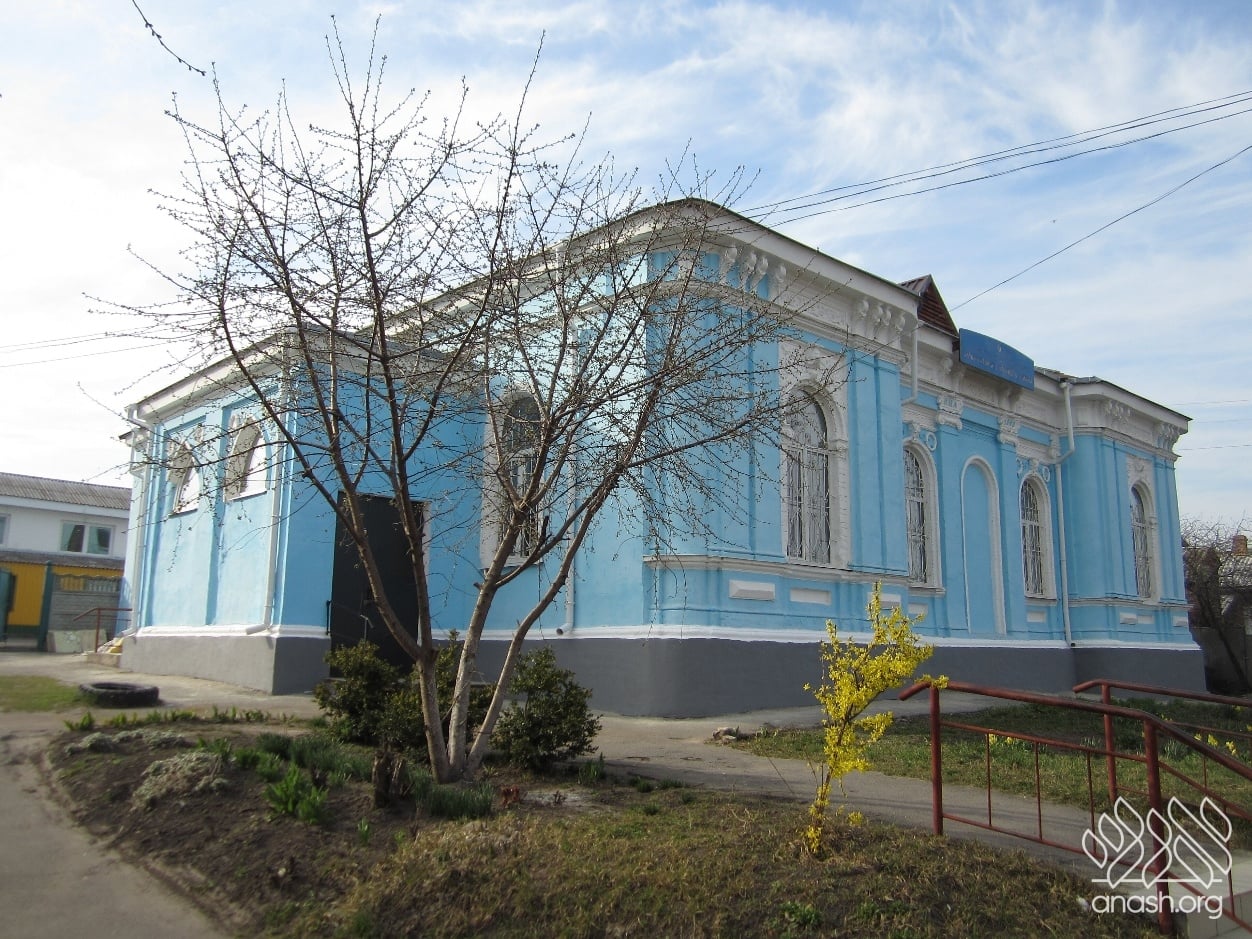
A shul in Malin.
Shmuel Abba Horodetzky was born in 5631 in Malin, Ukraine, to an illustrious chasidishe family. His grandfather, Harav Gedaliah, served as a chasidishe rebbe in Malin, and he was descended from all the great chasidishe tzadikim in Ukraine: The Baal Shem Tov, Harav Nachman of Breslov, Harav Pinchas Koritzer, the Apter Rov, Harav Nachum of Chernobyl, and more.
Orphaned at a young age, Shmuel Abba was raised in the rebbishe courts of Malin and Chernobyl. But instead of becoming a chasidishe rebbe, he took a different path in life. In 5652, he moved to Berditchev, where he took a job for his uncle and aunt, Avraham Ber and Feiga Magazanik, working in their textile factory.
In Berditchev, Shmuel Abba began writing. His first book was a traditional Torah sefer, but his lifestyle and writing gradually took a more maskilic bent. He wrote modern-style biographies of gedolei Yisrael before turning to focus on the history of Chasidus from a respectful but non-observant perspective. Leaving Russia in 5667, he lived in Berlin and Switzerland before moving to Eretz Yisrael shortly before World War II, remaining there until his passing in 5717. He wrote many historical works about gedolei yisrael, Chasidus, and Kabalah.
Avraham Ber Magazanik’s shul in Berditchev.
It was during his Berditchev period, between 5652 and 5660, that Horodetzky became acquainted with the Kopuster Rebbe. During this period, Horodetzky was still relatively traditional and frum. Horodetzky tells us the story in his memoirs (Zichronot, Tel Aviv: Dvir, 1957, pp. 54-57). Parts of this account were cited by R. Amram Bloi in Benei Hatzemach Tzedek (pp. 235-240), but here we will provide the full section about his experiences in Kopust, reflecting his personal perspective.
I would occasionally travel on behalf of my aunt to Kopust (in the Mohilev province, on the Dnieper river) to visit her daughter, who was married to Yehudah Leib, the only son of the Kopuster Rebbe, R. Shlomo Zalman Schneersohn. He had succeeded his father, R. Yehudah Leib, the son of R. Menachem Mendel of Lubavitch.
R. Shlomo Zalman was one of the great scholars of Chabad Chasidus. Not only his late father’s chasidim came to hear this Torah from him; he attracted new chasidim as well. He was a classic Chabad tzadik. The Chabad tzadik is a teacher, educating his chasidim in the teachings of Chabad Chasidus. Wonders and miracles, which hold such an important place in the broader Chasidic movement, are insignificant in Chabad.
The Chabad tzadik serves only as a means to achieve the primary matter: Chasidus. Among other chasidim, by contrast, the tzadik is primary. Chabad chasidim do not come to their Rebbe to ask him for miracles and wonders; they don’t demand that he alter the natural order. As a result, they do not tell dramatic miracle stories about their tzadikim—such stories are almost entirely absent in their circles.
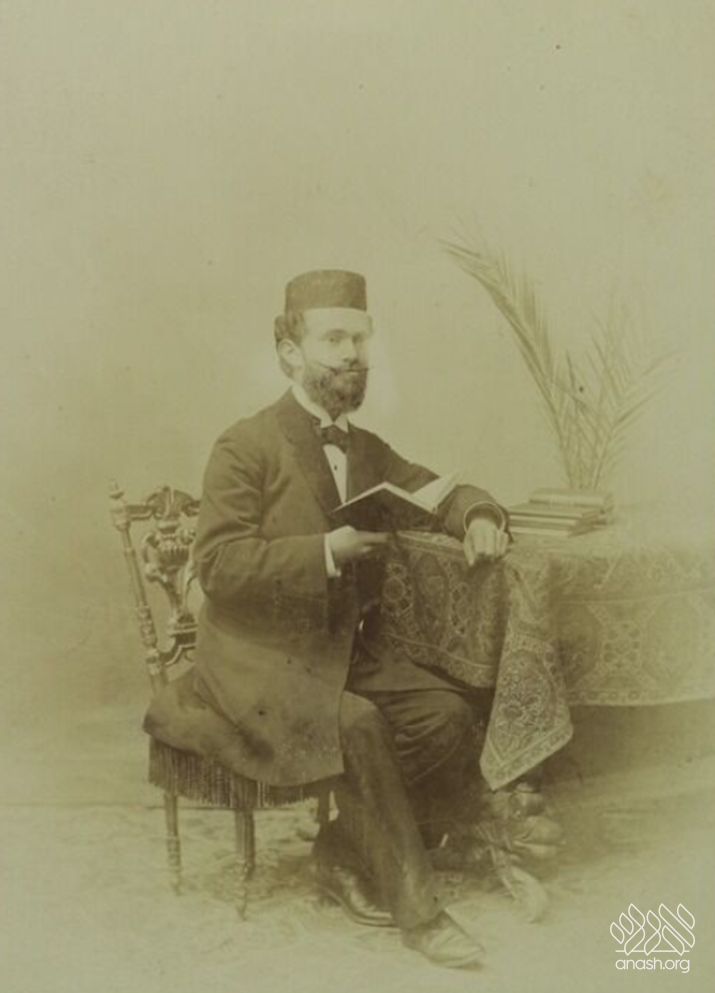
Shmuel Abba Horodetzky, pictured in 5655.
The Chabad tzadik maintains a certain distance from his chasidim—“his right hand pushes away, and his left draws near.” When chasidim come to greet him, he does not extend his hand to them. He doesn’t sit together with them at the Shabbos or Yom Tov table aside from rare occasions, three times during the year: Rosh Hashanah, Simchas Torah, and Yud-Tes Kislev—the day of the release of the “Rav,” R. Shneur Zalman, from imprisonment. Other tzadikim, by contrast, tend to all their chasidim’s needs, spend time in their company occasionally, and eat together with them on Shabbos and Yom Tov. . . .
R. Shlomo Zalman of Kopust was, as mentioned, a classic Chabad tzadik. He would receive me pleasantly and generously. Against my wishes, I would have to sit in his large study, filled with seforim. Since his son lived in an adjoining home, he would occasionally visit his son’s home and converse with me about various matters.
On one occasion, he turned to me and said, “I heard that you are a writer and are interested in the teachings of Chasidus. I have in my possession a collection of manuscripts, among which you will find various letters that have not yet been published. I will give them to you to read during your stay here, and if you find among them anything that you feel worthy of publication, I grant you permission to publish it.”
Indeed, I copied there the letter of R. Shneur Zalman, a response to an insulting letter written against him by one of the chasidim of R. Baruch of Mezhibuzh, a man named David, concerning the meeting between R. Shneur Zalman and R. Baruch. R. Shneur Zalman’s letter opens with the words: “I received the letter shigayon ledavid, and my insides trembled.” [see Igros Kodesh of the Alter Rebbe, pp. 370-372.]
Kopust, 5678
R. Shlomo Zalman would deliver derushim of Chabad teachings to his chasidim on Friday night. After davening in his shul, he would sit in the center of the shul, and the chasidim would gather around him, eagerly absorbing every word. After the meal, they would assemble again and review their rebbe’s words.
They had among them a particular individual who lived in the tzadik’s town and was especially close to him. This person knew how to absorb every word and every nuance of the tzadik, and he would chazer the Rebbe’s words for the chasidim. For this role, he was given the title “the chozer.” After he would chazer the Rebbe’s words with exact precision, the chasidim would turn to him with questions, and he would respond, clarifying whatever required explanation.
While in Kopust, I heard both the words of the tzadik and the repetition of the chozer. While I was impressed by the radiant personality of the Kopuster tzadik and the spiritual Chabad atmosphere, even then—some fifty-five years ago—I preferred the Ukrainian style of chasidus, which felt more popular, more warmhearted, and closer to the simple chasid and his character.
Chabad chasidus is intellectually sharp and scholarly. It is Torah, and it demands study—not everyone is suited to it. By contrast, pure faith and a simple love for the Jewish people—for the entire people—these are the foundations of the Chasidus of the Baal Shem Tov.
Shmuel Abba Horodetzky, pictured in 5701.
This fascinating description gives us a glimpse of the refined and humble character of the Kopuster Rebbe. It also fills in a biographical detail, telling us the family name and background of his daughter-in-law. Sefer Hatze’etzaim (p. 214) identifies her simply as “Perel,” and now we can identify her as the daughter of Avraham Ber and Feiga Magazanik, a descendant of a prominent family of great wealth and chasidishe yichus. Interestingly, we know that the Kopuster Rebbe’s younger brother, Harav Shalom Ber of Rechitsa, also made a shiduch with the Magazanik family when his daughter Rachel married Tzvi Magazanik (Sefer Hatze’etzaim, ibid.).
Thanks to Yehudah Ber Zirkind for helping us obtain the material from Horodetzky’s Zichronos.
To view all installments of From the Margins of Chabad History, click here.
For additional exclusive content, follow the column on X: x.com/ChabadMargins
COMMENTS
We appreciate your feedback. If you have any additional information to contribute to this article, it will be added below.




 COMMENTS


ישר כח
A pleasure to read
Thanks for the research
Always enjoyable and informative, these articles. Zai matzliach.