The Refugees Who Astonished the Jewish World: 80 Years Since ‘The Great Escape’
In Sivan 5706, chasidim began to flee the Soviet Union for the free world. As we mark 80 years since the Great Escape, From the Margins of Chabad History launches a series documenting the vibrant chasidishe life of the escapees in the refugee centers and DP camps, until they reached their final destinations.
The story of the heroic Great Escape of 1000 chasidim from the Soviet Union after World War II is one of the foundational experiences of the modern Chabad community. The incredible saga is related in detail in various books and articles, most comprehensively in Peilut Chotzah Gevulot and Hayetziah Mirusiyah.
As we mark 80 years since the Escape, From the Margins of Chabad History is launching a series that documents the experience from a unique perspective: previously unknown contemporary accounts by people who encountered the chasidim on the many stops of their long journey to security.
While the series doesn’t aim to provide a detailed account of the Escape, some background is needed to set the stage for the eyewitness accounts that will follow.
As Germany advanced into the Soviet Union in 1941, more than 1.5 million Jews—and many millions of non-Jews—fled eastward into the Soviet Union, to Siberia, Kazakhstan, Uzbekistan, and nearby regions.
Many Lubavitcher chasidim were among the refugees, concentrating in Samarkand and Tashkent. With the Russian authorities’ attention turned to the war, the chasidim enjoyed a period of relative relief from persecution and were able to live with some measure of freedom.
When the war ended in Iyar 5705, there were over a million refugees from Poland in the Soviet Union, including over 300,000 Jews. As part of a repatriation agreement between the Soviet Union and the reconstituted Polish government, the Polish refugees were granted permission to return home, or to what was left of it.
Many Russian Jews took advantage of the opportunity by obtaining false Polish identities. As Soviet anti-religious persecution began to ramp up with the conclusion of the war, many Chabad chasidim joined. After initial hesitation due to the complex and evolving circumstances and a lack of clarity about the Frierdiker Rebbe’s opinion, a trickle of chasidim began leaving the Soviet Union in Sivan and Tammuz of 5706. As circumstances and the Rebbe’s opinion cleared up, the trickle quickly turned to a flood, and by early Elul, around 500 chasidim had left the Soviet Union.
Hundreds more chasidim flocked to the border city of Lvov (Lemberg), from where the trains to Poland departed. But by Elul time, most of the Polish refugees had already left, and with fewer trains and fewer legitimate refugees to hide amongst, and fake Polish papers harder to come by, the doors were almost shut.
During Sukkos and Cheshvan of 5707, a few dozen chasidim managed to get themselves spots on Polish refugee trains. But hundreds more remained stuck in Lvov, living precariously as illegals without local residency permits.
After heroic efforts, as detailed in the sources referenced above, Anash were able to arrange papers and transport for themselves. In three trains (eshalonen) that left on 9 Kislev, 21 Kislev, and 9 Teves, almost 400 chasidim were able to leave Russia. At this point, the Soviet authorities cracked down on the operation, arresting the organizers and leaving dozens more of Anash trapped in the Soviet Union for another few decades. In total, around 1,000 chasidim managed to escape Soviet Russia.
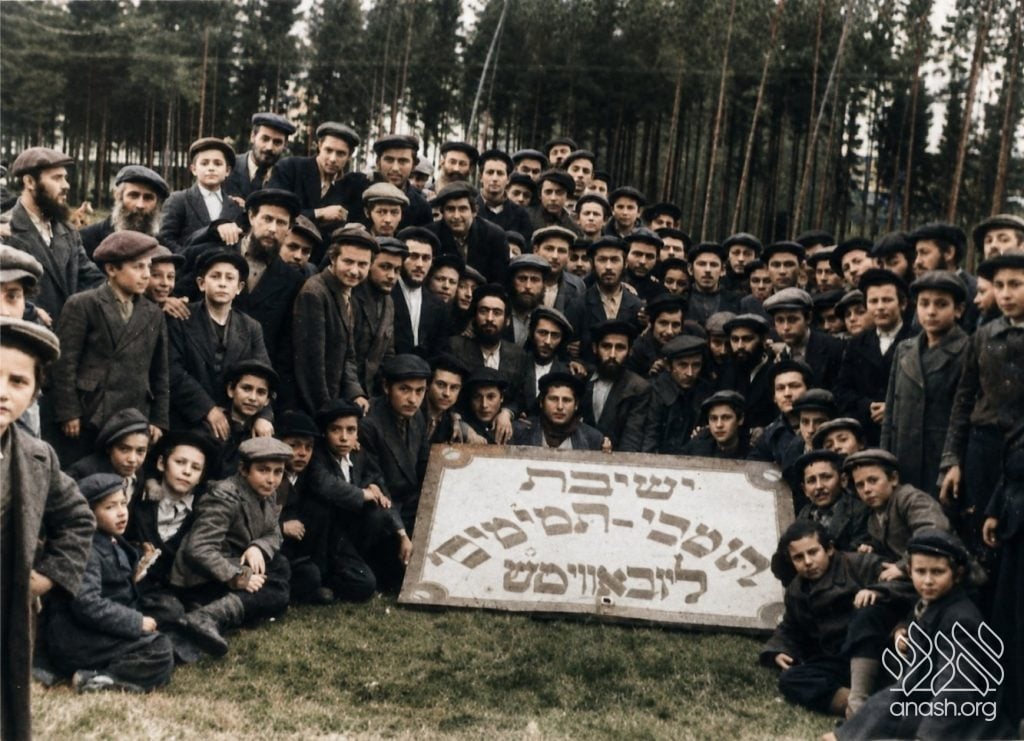
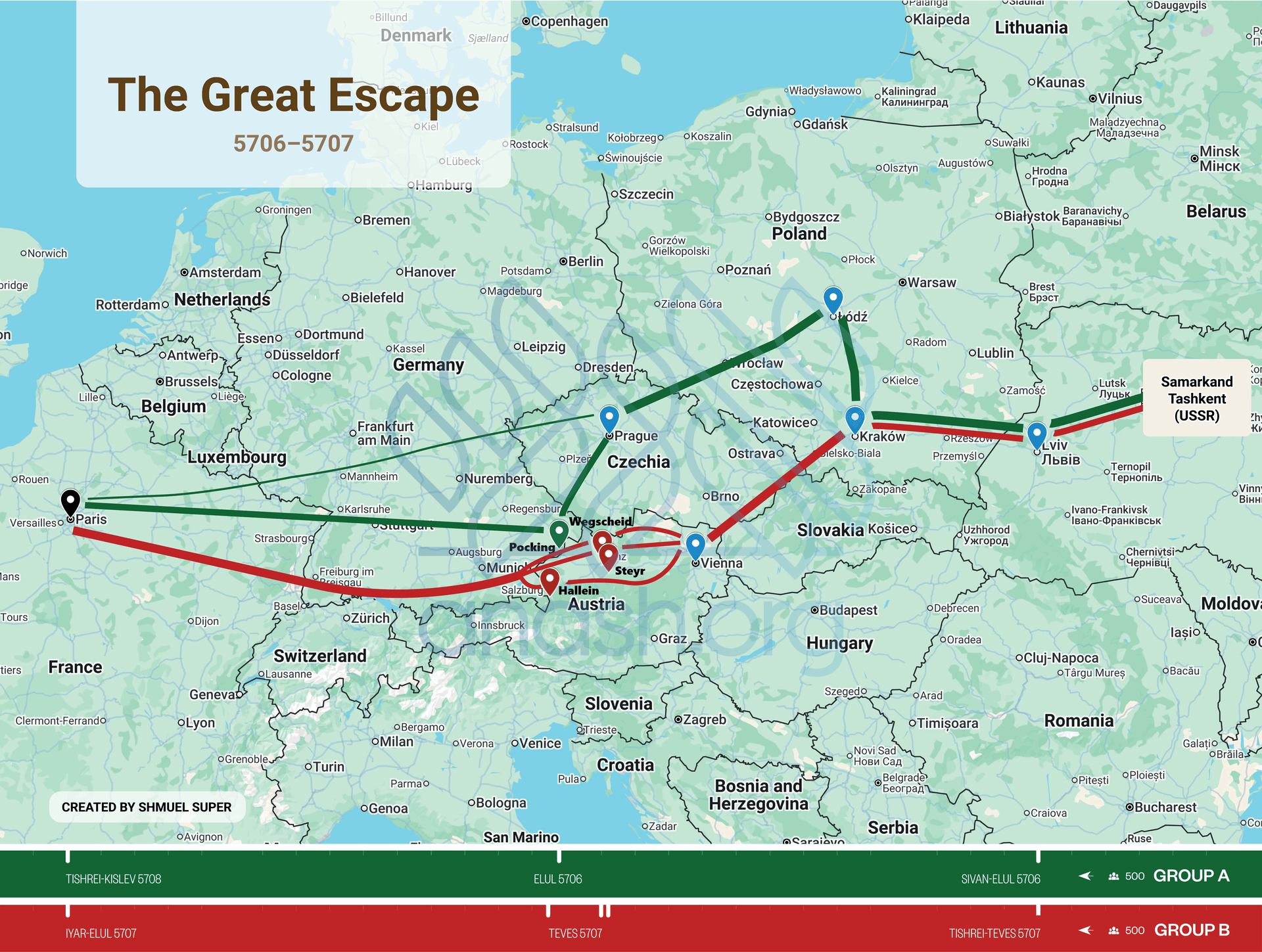
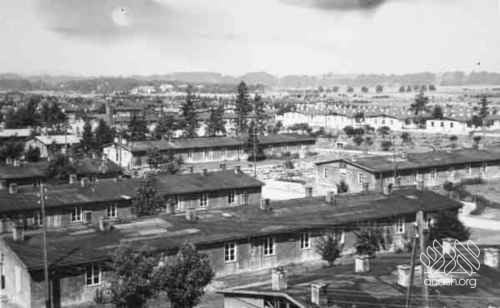
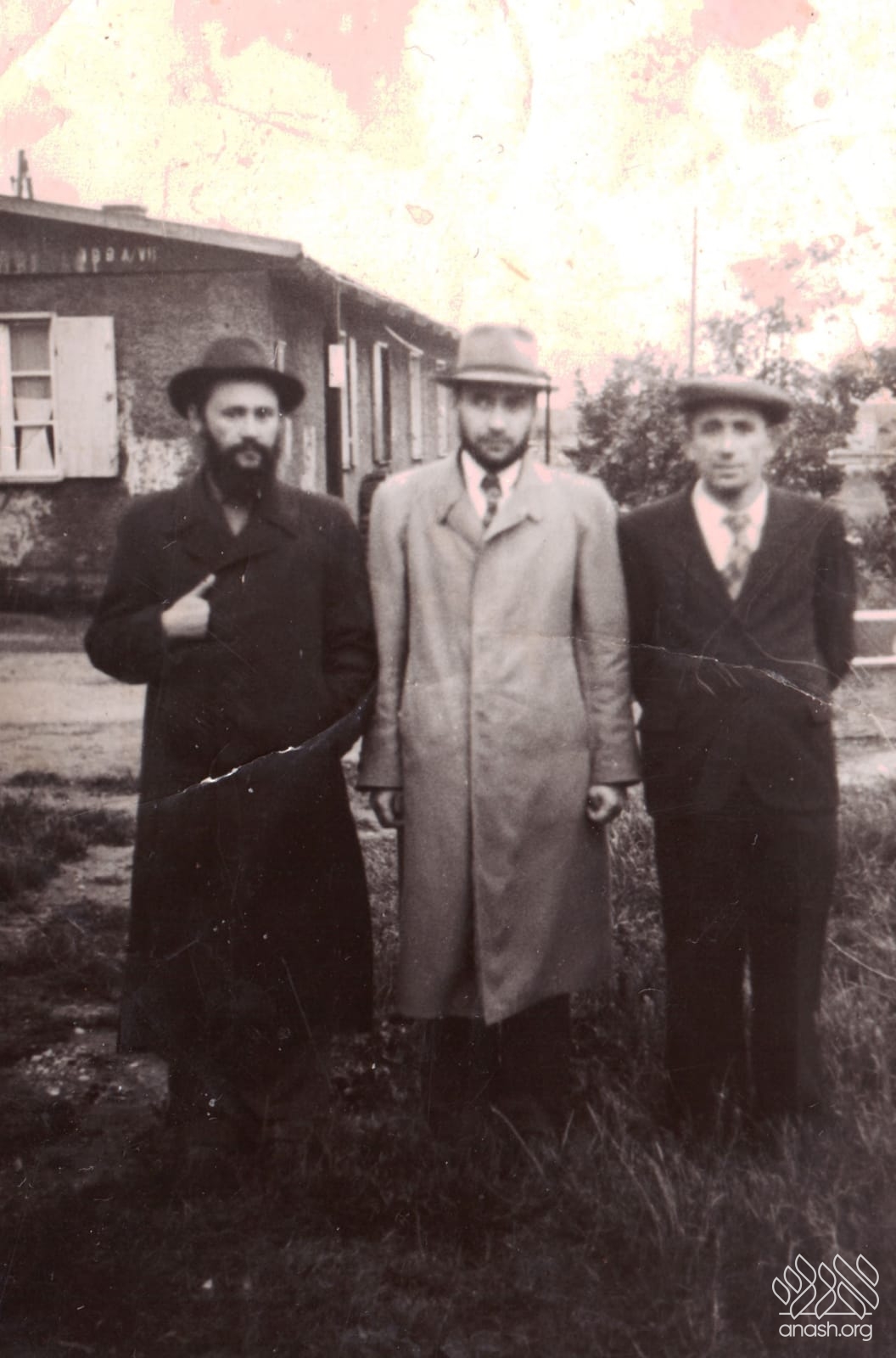
The experiences of the chasidim after leaving Russia varied based on the time of their exit. Those who left in the summer of 5706 (Sivan-Elul) spent some time in Krakow and Lodz in Poland, before smuggling across the Czechoslovakian border to Prague. Some of the early escapees traveled from Prague to Paris, while the bulk of the group continued to the American-occupied zone of Germany, settling in the Pocking Displaced Persons (DP) camp from Elul 5706. We will refer to this group as Group A.
The Pocking Displaced Persons camp.
The chasidim who left in the winter (Tishrei-Teves) of 5707 stopped in Krakow and then crossed into Czechoslovakia and Austria, spending some time in a refugee center in Vienna. As the Pocking DP camp had filled up by this point, the chasidim who left in the winter of 5707 (Tishrei-Teves) were directed to DP camps in Austria, splitting between camps in Wegscheid, Steyr, and Hallein. We will refer to this group as Group B.
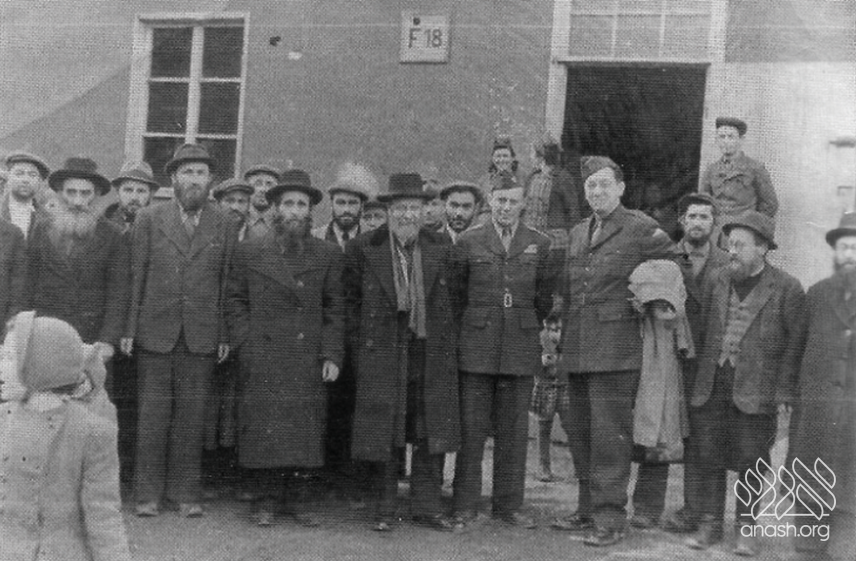
While no DP camp had comfortable conditions, Pocking was considerably better than the Austrian camps. In addition, Pocking had a larger concentration of Anash, around 350 people, and under the leadership of the mashpia and menahel Harav Nissan Nemanov and the rabbonim Harav Avraham Elle Plotkin and Harav Mendel Dubrawsky, the ruchniysdike state of the chasidim in Pocking flourished.
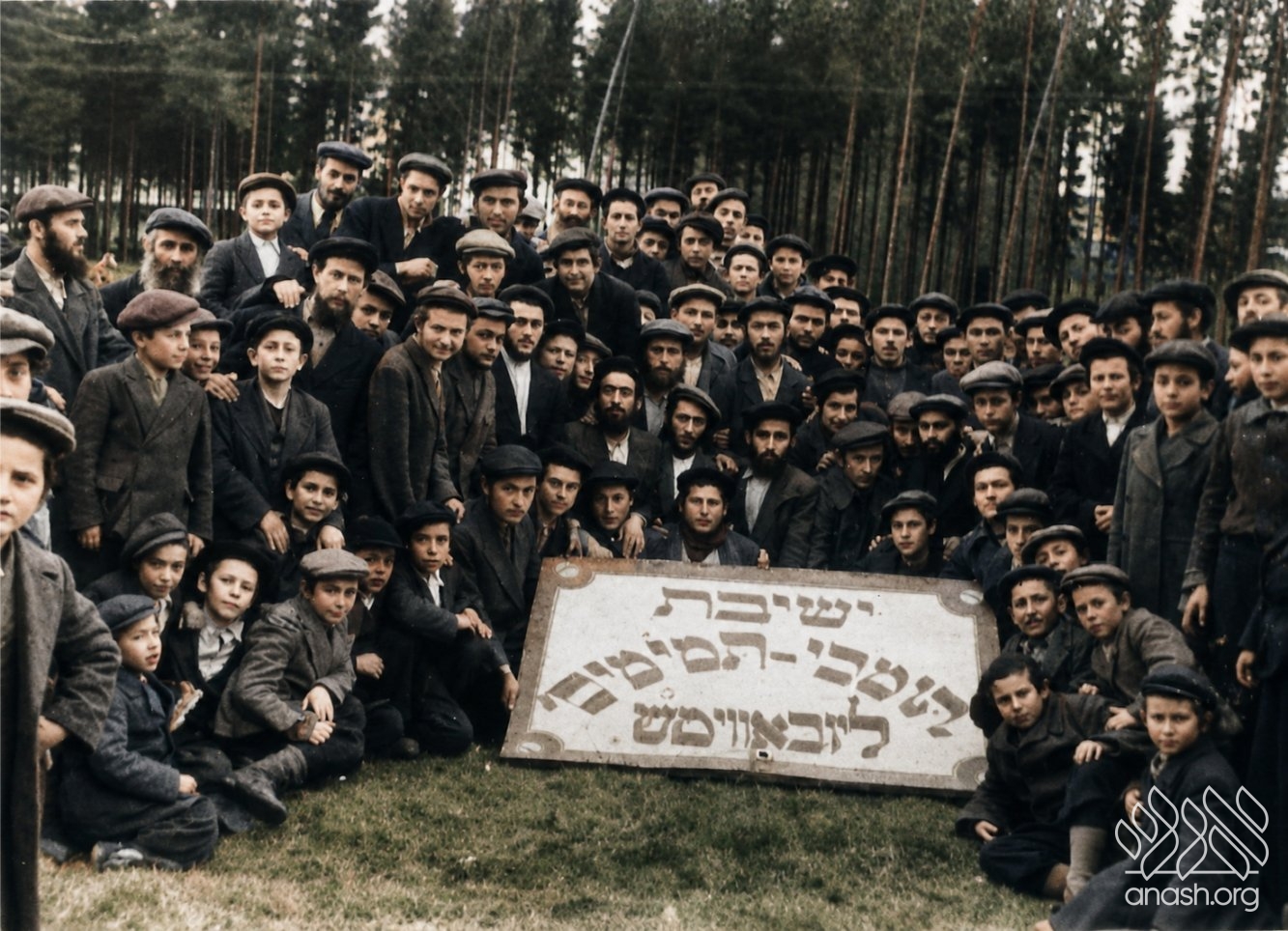
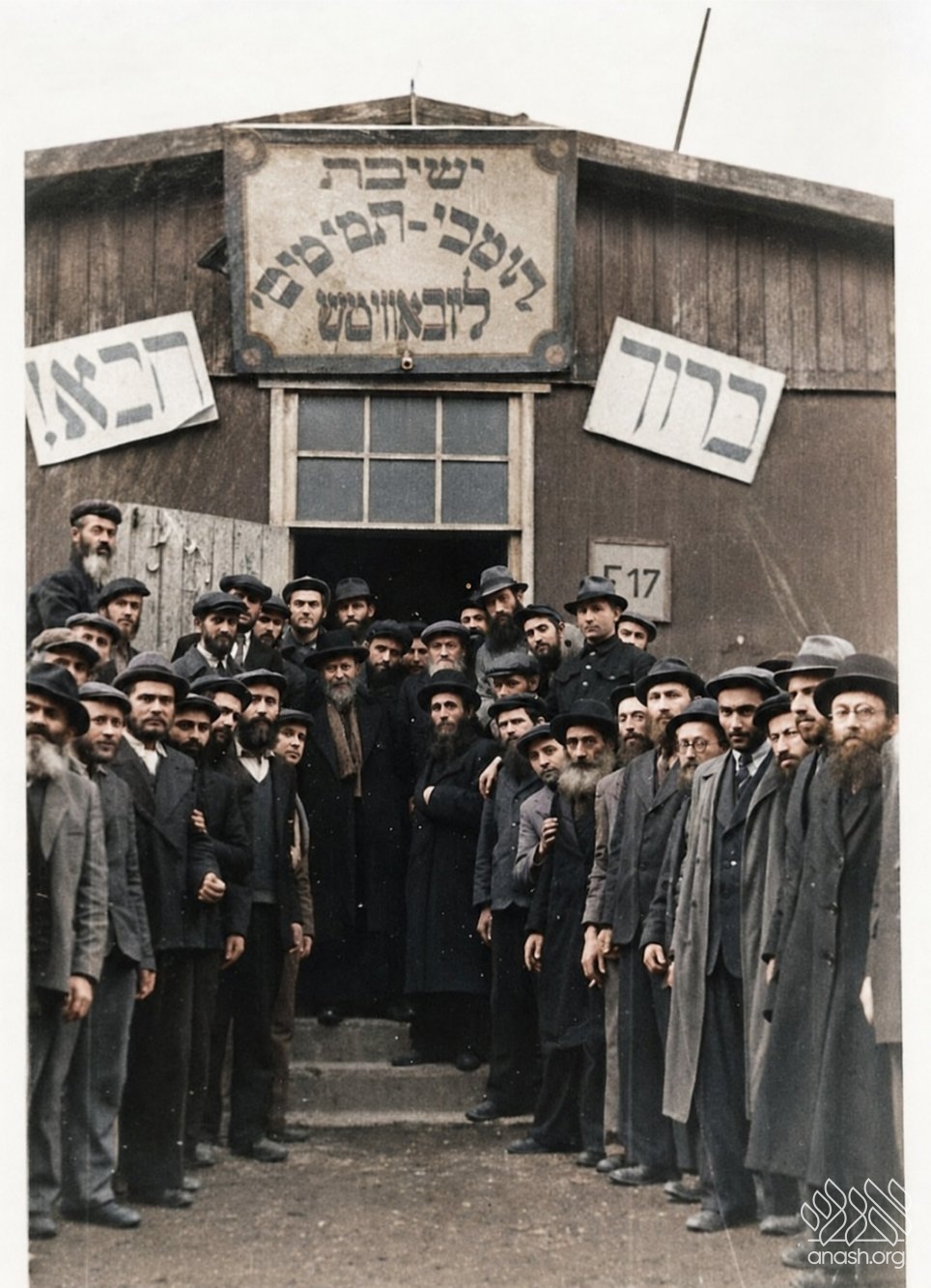
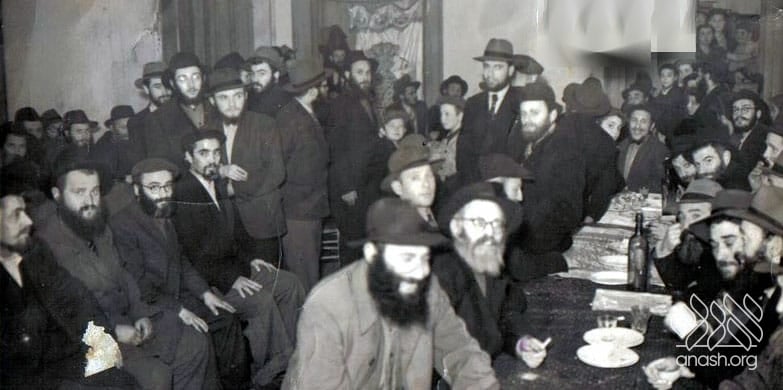
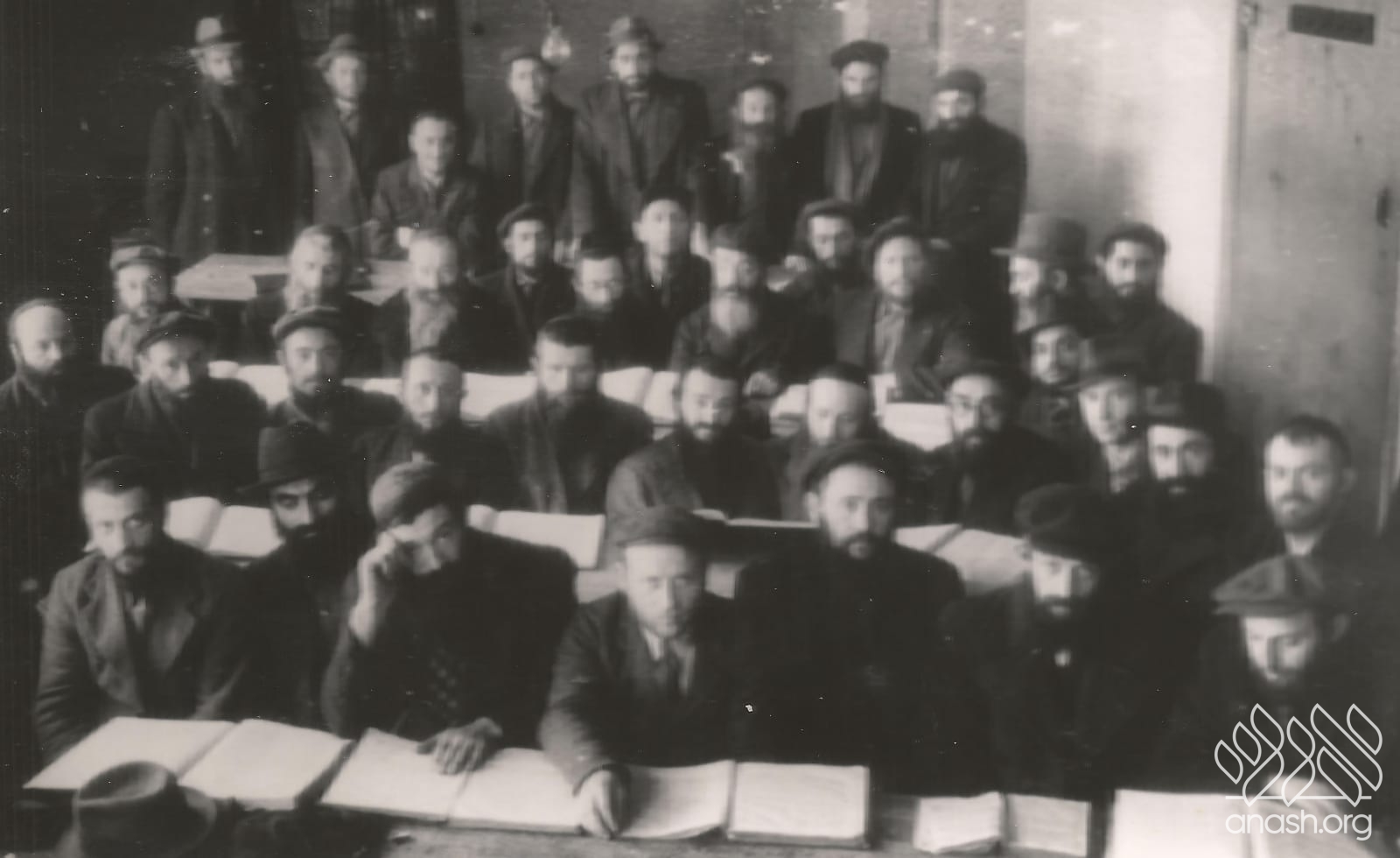
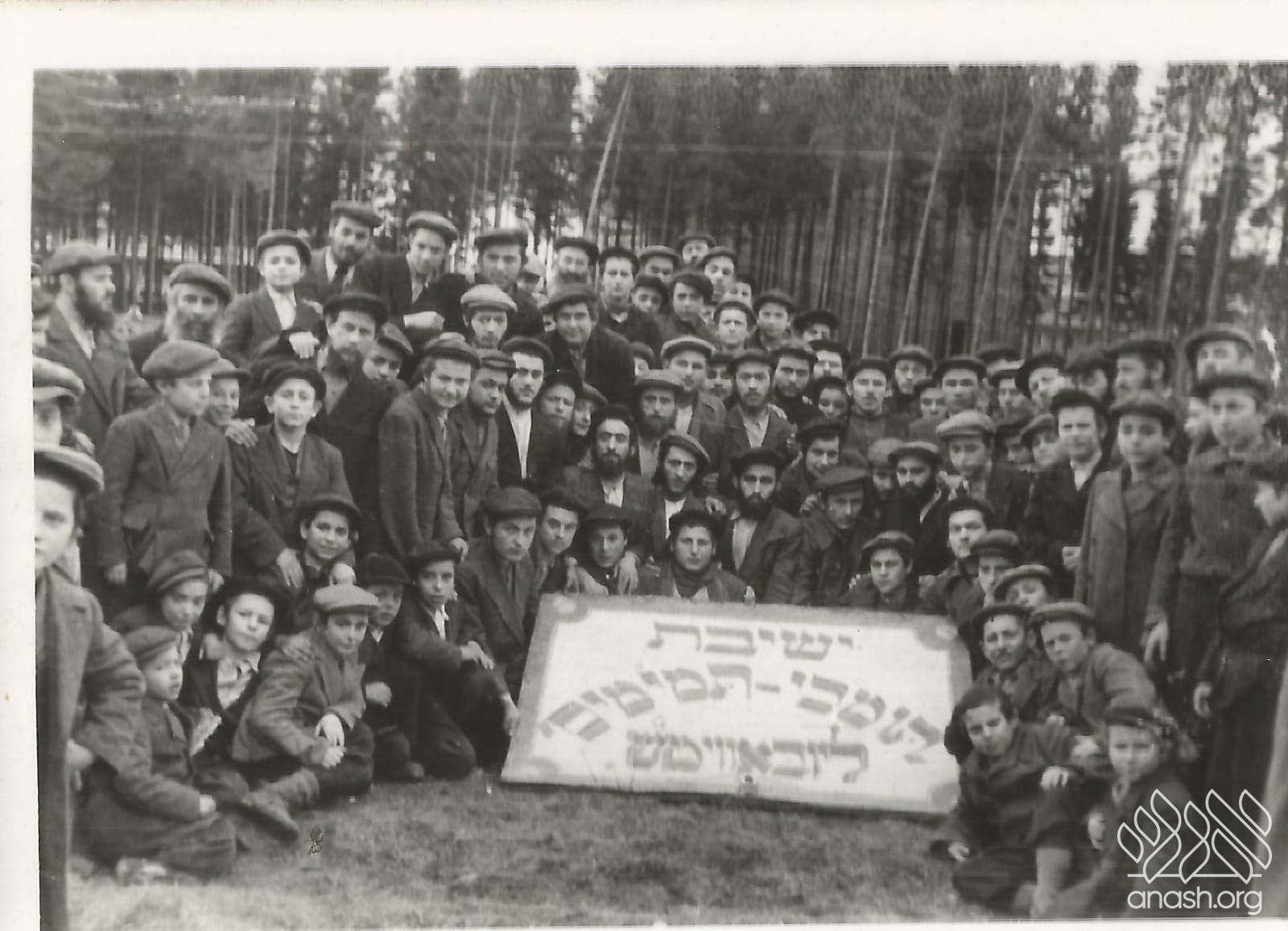
With very basic accommodation and food provided by international aid organizations, the chasidim were able to spend most of their day davening and learning in the Yeshivah they established. Living together in a row of dormitory-style barracks, community life and farbrengens thrived, despite the material hardship.
The chasidim in the Austrian DP camps had a more difficult time physically, and their ruchniyus was also less developed, but there, too, yeshivos were established and communal life was reconstituted.
The DP camps were only ever intended to be temporary stations on the way to resettlement. Most of the chasidim wished to settle in America, where they would be reunited with the Rebbe. But immigration to America was severely limited, and the gates to Eretz Yisrael were tightly controlled by the British mandate, leaving most of the chasidim in limbo.
In light of the deadlock, the Frierdiker Rebbe advised resettlement in Paris, France, from where they would continue to work on emigration options. The chasidim in the Austrian DP camps were given precedence due to the adverse conditions there, and over the course of Iyar-Elul 5707, most of them resettled in Paris. The chasidim from Pocking followed in Tishrei-Kislev of 5708.
After some months or years in Paris, most of the chasidim eventually settled permanently in Eretz Yisrael and America. A large group also remained in France, and smaller numbers continued to other countries.
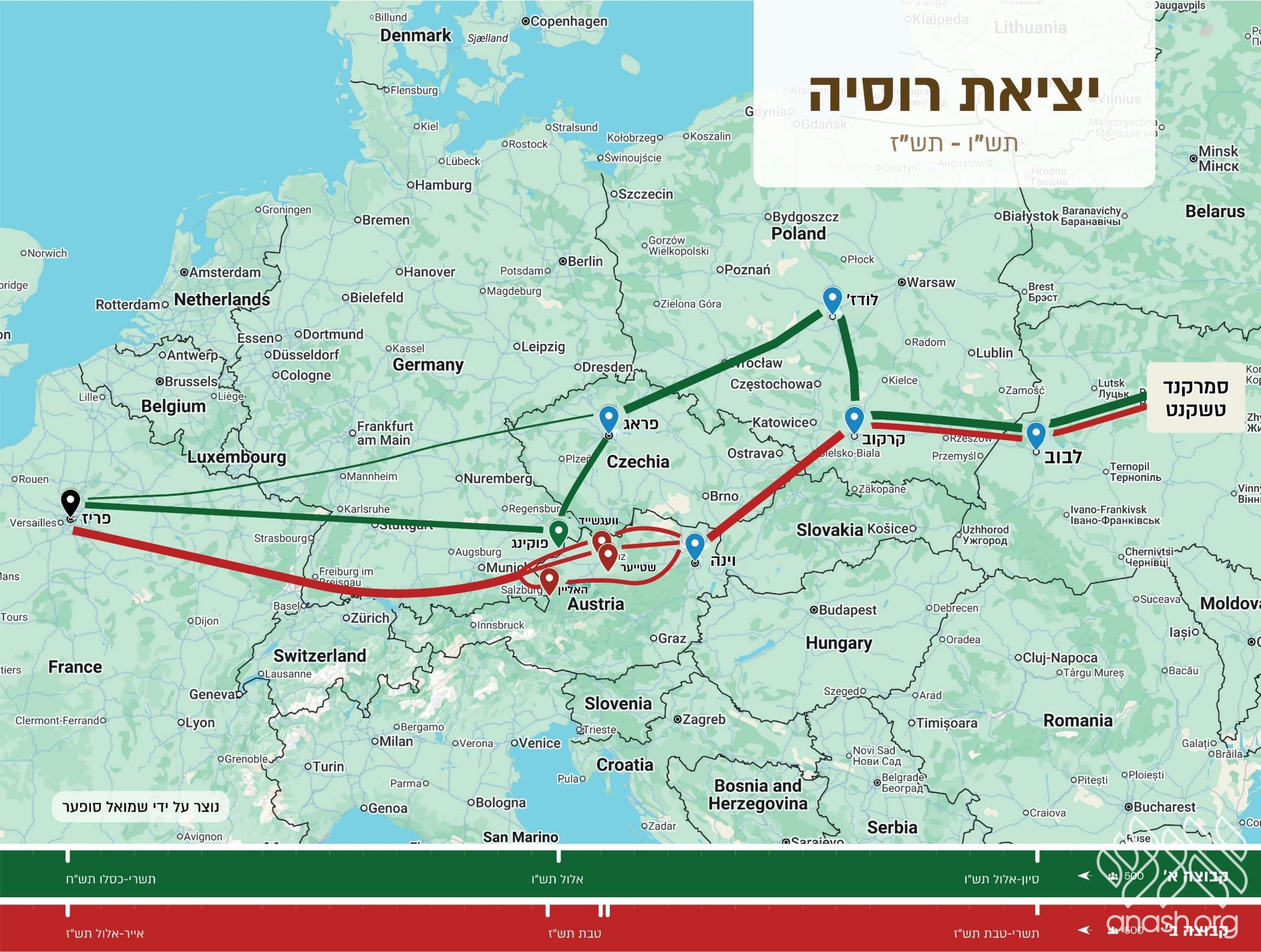
The following map, specially produced for this article, provides a visual representation of the journey.
Map of The Great Escape
For the chasidim who had spent 30 years isolated and in hiding, the joint escape and communal life in the DP camps and Paris refugee centers was a transformational experience. The experience played a significant role in galvanizing them into a united community, and the approximately 1000 escapees became the backbone of Chabad communities in Kfar Chabad, Crown Heights, and other cities around the world. The Great Escape experience became the cradle of the modern Chabad international community.
The first installment of the present series will focus on the experiences of the first chasidim to make it out of Russia, Group A, who settled in Poking. Further installments will relate the experiences of Group B in the Austrian DP camps, and of the later resettlement in Paris.
Arriving in Prague
Wherever the Russian Lubavitcher chasidim went in Europe, they attracted attention. People were amazed by their story of mesiras nefesh, impressed by their cohesiveness as a group, and inspired by their vibrant chasidishe lifestyle. It is no exaggeration to say that they left an indelible impression on all who encountered them.
Dr. Yaakov Griffel
The general impression these chasidim made is beautifully captured in the words of Dr. Yaakov Griffel, a celebrated Agudas Yisrael-affiliated askan. During the war, Dr. Griffel devoted his life to saving Jews from the Holocaust, and in the war’s aftermath, he worked tirelessly to help the survivors resettle.
Dr. Griffel first met the Lubavitcher chasidim in Prague, where the early escapees concentrated after smuggling themselves out of Poland. He worked together with the chasidim throughout the post-war period and developed a warm relationship with the Frierdiker Rebbe and, later, the Rebbe.
The unpublished memoir of Dr. Griffel is held in the Agudah Archive, and the following excerpt was made available to us by Nochum Zajac.
During that period, a transport of some two thousand Lubavitcher Chassidim arrived from Russia via Poland, who had managed to escape from Russia as Polish repatriees. The very fact of the survival of this type is one of those things for which one can hardly find a natural explanation.
Many of them had already been born under the Soviet Regime, but all of them had spent about thirty years under the Bolsheviks, exposed not only to the whims of Stalin-dictatorship, but also to the severe persecutions by the “Yevsekzia”, that notorious group (later liquidated by Stalin himself during one of his purges) who saw their supreme task in eradicating every remnant of religion among Russia’s two and a half million Jews.
How these people manage to remain not just observant Jews but “Chassidim” in the fullest sense of the word, not only in their private manner of life but even in their outward appearance, and—what is even more how they managed to bring up their children in their spirit—all this is beyond reasonable understanding.
They ascribed it to the miraculous power of their leader, the Lubavitcher Rebbe Rabbi Joseph I. Schneerson, reference to whom has been made above. The Lubavitcher Rebbe himself had led them until his condemnation in ‘27, and had remained in contact with them all throughout the years.
This group of Lubavitcher Chassidim who then escaped from Russia won the admiration and appreciation of all Jewish quarters without exception, through their discipline, through their reasonable, correct attitude and it may be said even from the purely human viewpoint, apart from the religious aspect that in the Europe of DP Camps, transit camps and the chaotic mentality encountered all around, they were a unique and refreshing oasis.
And, last not least; Many of these people had spent a great number of years in prison, in forced labor camps, in Siberia, many wives had seen their husbands deported to an unknown destination, never learning of their fate, and despite these decades of suffering and persecution they had maintained their high moral standards.
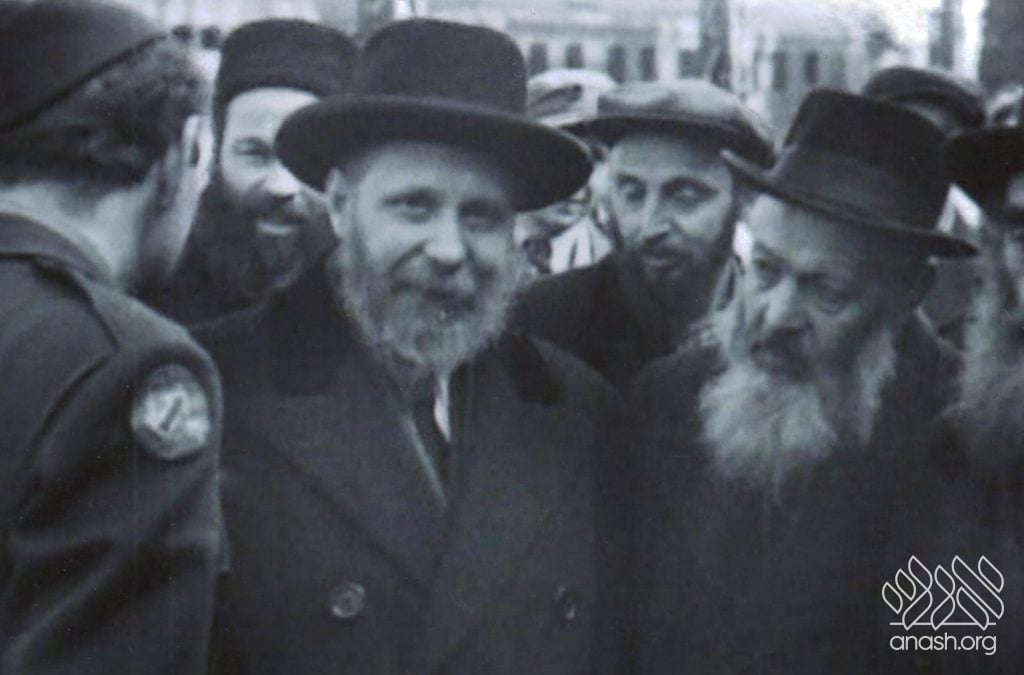
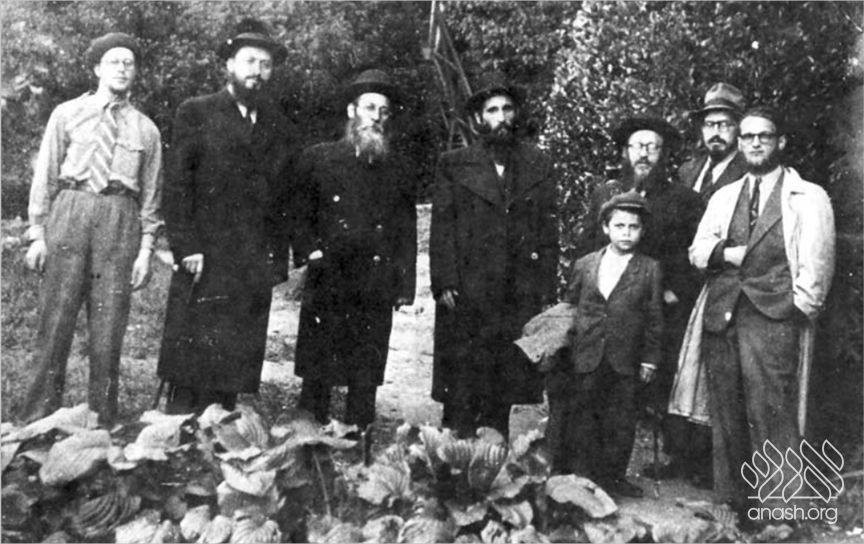
R. Yisrael Jacobson (third from left), during his post-war visit to Europe. To his right stand R. Binyamin Gorodetzky and R. Shneur Zalman Schneersohn.
Shortly after their arrival, Rabbi Israel Jacobson of Brooklyn, NY arrived in Prague as a special representative of the Lubavitcher Rebbe. I met him several times. Later I received a personal letter from the “Rebbe”. In this letter the Rebbe, in addition to encouraging me in my work, also insured me of the full cooperation of his followers everywhere, authorizing me to apply for the assistance of Lubavitcher Chassidim wherever I needed help in the educational or communal work.
Tishrei in Paris
Some of the early escapees were able to obtain visas to Paris and traveled there from Prague. This is the location of our next eyewitness account, from Tishrei 5707. Among the chasidim present in Paris at this time were R. Binyamin Gorodetzky, R. Yehudah Chitrik, R. Michoel Lipsker, and R. Shneur Zalman Schneersohn, who had survived the war in France.
This report appeared in the Yerushalayim-based Kol Yisrael newspaper, an Agudas Yisrael-affiliated publication that reflected the viewpoint of the chareidi Jews of the yishuv hayashan in Yerushalayim.
The author of this article is R. Uriel Tzimmer (5681-5722), a man with a remarkable life story of his own. Born in Vienna to a modern Jewish family, he joined the yishuv hayashan circles in Yerushalayim as a teenager. A staunch ideologue and committed activist, after the war, R. Uriel and his wife picked up and traveled to Europe to assist the survivors, working on behalf of Agudas Yisrael.
R. Uriel Tzimmer
In Europe, R. Uriel had his first significant exposure to Lubavitcher chasidim, and he was profoundly impressed by them. The chasidim feature prominently in the regular articles R. Uriel submitted to the Kol Yisrael newspaper, and we will continue to quote from him in future installments of this series.
These encounters served as the catalyst for R. Uriel’s connection to Lubavitch. After he moved to America in 5712, he became a devoted chasid of the Rebbe, working on behalf of the Rebbe in a range of roles, including translating the Tanya to Yiddish and editing the first publications of Likutei Sichos.
Here is R. Uriel’s account of his first encounter with the refugee chasidim, published in Kol Yisrael, 5 Kislev 5707 (November 28, 1946):
Among Exiled Brethren
I met them in Paris—the remnants of Soviet Russian Jewry. To tell the truth, before I saw them with my own eyes, I did not know that such remnants existed. Had I not seen them, I would not have believed it. More than that, even they themselves could not believe it while they were sitting there.
Standing before you, you see Jews with a chasidishe appearance—young men, people born in Russia, who had never left it until now—and you are struck with wonder. Each and every Jew is a story of extraordinary mesirus nefesh. At a time when the observance of any single mitzvah could cost them their lives, they endured all these years—not only keeping the basic mitzvos, but even chasidishe minhagim, in the chasidishe way.
I spent the days of Simchas Torah with them, and I have no words to describe my amazement. These Jews, with their distinctive Russian Yiddish—only a year ago one was in hiding in Moscow, another in distant reaches of Samarkand, or in some other corner of that vast red empire. Now they have arrived here, after enduring wanderings and upheaval, planning to continue on their journey in search of a place of rest. Where will they find it?
They honored me and took pride in me, because they saw me as an emissary from Eretz Hakodesh. And I, to tell the truth, felt ashamed. They are honoring me? They are looking at me with admiration? Why? Because I lived in peace and tranquility in the holy city of Yerushalayim, baruch Hashem, two steps from a shul and a mikveh, a few moments from a kosher butcher and kosher fruit shop, while for them every mitzvah—bris milah, shechitah, matzos, tefillin, etc. came with fear of death and prison?
R. Uriel Tzimmer (second row, second from the right) with survivors in Salzburg, Austria, during his post-war visit to Europe. To R. Uriel’s left sits Harav Yitzchak Sternhell.
And yet, they looked with admiration upon a resident of Eretz Yisrael. Most of them are Chabad chasidim, and even the olomishe ones are close to them, for the Lubavitcher chasidim were the life and soul of Yiddishkeit in Russia. These are not regular chasidim, but chasidim of the old generation. It seems as though all the chasidishe stories, all the sichos and maamarim, the Beis Rebbe, etc., are standing alive before your eyes.
How absurd it was when a Mizrachi activist tried to convince them to take part in the Congress elections. He is clean-shaven and barely frum, and he wishes to teach them what Eretz Yisrael is about?
I saw their children, children with peyos like the children of Yerushalayim, and I could not understand how they had managed to raise them frum in Soviet Russia.
What an upside-down world. In a country where learning Torah is among the most dangerous things, where a sefer is hard to come by, there are Jews, even if only one in a million, who have mesiras nefesh to raise their children in the Torah path. And in Yerushalayim, the holy city?…
For many years, these Jews were cut off from the world. In many cases, they didn’t even know of each other, even someone from their own city. They knew nothing of all that had taken place in the Jewish world, and yet they feel that their place is in Agudas Yisrael.
Indeed, the Jewish people are not bereft. May these remnants soon succeed in reaching Eretz Hakodesh, and may they strengthen the ranks of those who fight for Hashem and His Torah.
With the Chasidim in Pocking
Our next article comes from the opposite spectrum of the frum world, the Religious Zionist journalist and activist Shabtai Don-Yichye. Also known as Shabtai Daniel, Don-Yichye was a descendant of a prominent family of Chabad rabbonim, the son of Harav Bentzion Don-Yichye of Lutzin, and grandson of Harav Eliezer Don-Yichye of Lutzin, a chasid of the Tzemach Tzedek.
Shabtai Don-Yichye (5669-5742)
Shabtai himself was a prominent member of the Mizrachi party in Eretz Yisrael and the long-time editor of their newspaper, Hatzofeh.
In the 30 Sivan, 5707 (June 18, 1947) edition of Hatzofeh, Don-Yichye wrote a beautiful article about his encounter with the Chabad chasidim he met in Poking. As a descendant of the Chabad family, Don-Yichye was well acquainted with Chabad terminology and culture, a familiarity reflected in his article.
This article is cited in Hayetziah Mirusiyah, pp. 335-339, but we are including it here due to its great value.
The Rav’s Nigun, in the Refugee Camps in Germany
The cold train car was packed full with German men and women carrying their baskets loaded with produce from the villages back to their dwellings in the bombed-out cities. A low murmur of whispered conversation hung in the air. They smoked poor cigarettes and chewed on something or other.
Out of the packed car, a familiar nigun begins to rise—an intense, soulful Jewish nigun. The Germans grimace and exchange glances, as though some wondrous being had descended among them to scrutinize their identity. They turned pale, perhaps from anger, perhaps from fear, or as if they had suddenly remembered all their unpunished sins.
Their eyes fixed on one young Jew, whose face was framed by a small, curled, blondish beard. In both hands, he held a Tanya, bound in a worn cover. He was looking out the window at the passing sights, at the ruined cities, and then returning to his sefer. He looked out and studied, as if he was seeing some connection between the scenes outside and the words in the sefer. And all the while, he continued humming softly to himself: “In what way is the strength of the nefesh haElokis greater than the strength of the nefesh habehamis?”
I draw closer to him. A courageous face. Open, direct eyes. Great alertness in all his movements.
“A Jew from Eretz Yisrael? Shalom aleichem! Do you know what I am thinking about now? About the destruction these Amalekites brought upon themselves.
Harav Eliezer Don-Yichye (5598-5686). A chasid of the Tzemach Tzedek in his Youth, Harav Eliezer served as the rov of Lutzin for 50 years.
“In them, we saw the nefesh habehamis in full control. Look at their dull faces, the stupefied look in their eyes, the coarse brutishness stamped into their every limb. Animalism in human form, bursting forth from the left chamber of the heart and drowning their land, and the entire world, in blood and fire.
“These sights awaken a deep teshuvah, a teshuvah toward the nefesh haElokis. To grow angry, literally, at the yetzer hara that consumes and destroys, and to thunder against it with a loud cry: ‘I do not want to be a rasha, not even for one moment’… as the Alter Rebbe, zichrono liverachah, writes in the holy Tanya.”
“Where were you all these years, and especially during the war?”
“I come from there, from that red, red place. Only a handful of us remained faithful to Hashem—one in a city, two in a district. But with Hashem’s help, we stood firm through the harsh trials. We overcame the nefesh habehamis.
“A story is told about the Alter Rebbe. Once, while walking outside toward evening, he saw something improper and turned his face to the wall. When he turned back around, he saw that it had already grown dark and the time for Minchah had passed. At once, he found a solution: he lifted himself above time and davened Minchah.
“So too, we lifted ourselves above time in order to daven like a Jew…
“Oy, how hard it is to remain a Jew in that land. Precisely because they grant you full civil rights, because they open every gate before you, you are swept away by the mighty current of total assimilation. And our Jews, to our sorrow, are becoming assimilated in the land of the Soviets. Intermarriage is wreaking havoc among Russian Jewry.
“If we remained Jews and devoted ourselves to Yiddishkeit with mesiras nefesh, it was, with Hashem’s help, through the strength of Chabad. Our fathers raised us on a tradition of mesiras nefesh. The history of the Chabad movement begins with prison and chains. And in our own days, too, we saw prison and chains. But the nefesh haElokis prevailed. This is our strength.”
He turned back to the sefer and studied it with intensity, like a man gasping for air.
“Draw Me After You; We Will Run”
The Pocking camp is the center of the Chabad Chassidim among the she’eiris hapleitah. After meeting Jews of every sort, Jews despondent and battered by the blows of the time, it is good to find yourself among Jews like these, Jews of the type you would meet thirty or forty years ago in the shtibelach of Lubavitch and Kopust. They are fiery spirits with their burning intellect, clear faith, fearless spirits, and unwavering certainty in the truth held in their minds and souls. Men of ein od milvado in their very lifeblood and in the marrow of their bones.
Harav Shmaryahu Gurary (Rashag) on his visit to Pocking in 5707, standing outside one of the barracks where the chasidim lived.
Their bearing is different from that of other Jews. There is a certain pride in the movements of their hands and feet, a certain self-awareness. You can recognize a Chabad chasid among the hundreds of Jews moving through the corridors of the “institutions” in Munich, and among the thousands of Jews hurrying along the paths that lead to their camps. You can recognize him not only by his beard and peyos, but by the look in his eyes, the uprightness of his back and head, his vigorous stride, and his distinctive way of speaking.
Anash are devoted to one another like brothers, and even more so. Their first concern is to bring their fellow out of prison, move him across the borders, and bring him among them, among Anshei Shlomeinu. They resolve, and they fulfill their resolutions.
Only a few remained loyal in that land, but those few are firm in their convictions, utterly fearless. They simply do not see any obstacle that can stop them.
Among them are young men, born after the October Revolution, raised and educated under the most thoroughly secular regime, a regime that for many years waged an active war against religion. And yet they are chasidim like their fathers and grandfathers before them.
Rashag and Harav Avraham Eleh Plotkin, 5707.
For example, a young chasid who worked as an engineer in a Russian factory and never once was mechalel Shabbos—an extraordinary achievement in Russia. For many years, he wore a scarf wrapped around his chin to hide his beard and peyos, explaining to anyone who asked, “I have constant pain from my teeth.”
In the long barrack in Pocking, they are preparing for shalosh seudos, davening Minchah. Near the aron kodesh stands their elderly rov, a Jew with eyes overflowing with kindness, and beside him stood a second rov, a sharp Chabad chasid and a great lamdan. Everyone wore kasketen and long coats, with gartelach tied around their waists.
They daven with passion, as is their custom. Afterward, they sit down around bare wooden tables, without tablecloths and without food or drink, and begin to sing “the Rebbe’s nigun,” the daled bavos, a nigun with no words, with no barrier at all between the soul and its Creator. Once, twice, three times, again and again without end, summoning every element of the nefesh haElokis in order to drive away the animalistic coarseness within the person. They swayed back and forth for a long while, their eyes closed, humming and humming the holy nigun.
It is a remarkable and rare sight. In Pocking, not far from the Austrian border, these strong-minded and courageous Jews have settled, and they are fighting with all their might against the flood of animalism that nearly consumed the world.
The nigun purified them, kindling an inner fire until their faces glowed with warmth in the unheated barrack, nestled among mountains of snow and sheets of frost. A young man then began to say Chasidus on the pasuk mashcheini acharecha narutzah—“draw me after You; we will run…”
One chasid stood up and related something about the life of the community:
“The Rebbe, sheyichyeh, often says: ‘Negative attacking forces awaken deep inner forces of good.’
“The fierce opposition to Yiddishkeit in that country awakened in us great powers of endurance. That is why we were able to preserve ourselves and even to educate children. We established Chabad yeshivos in towns and cities, all with mesiras nefesh. In Siberia and in the prisons, you will find many victims of this underground campaign.
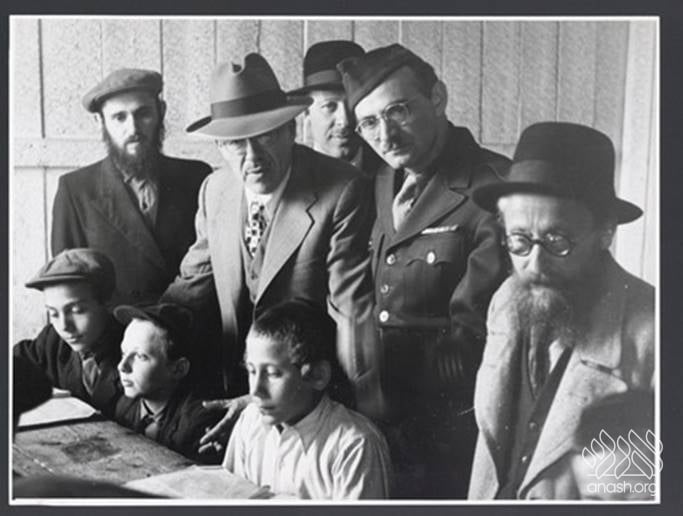
A delegation visiting Pocking. Left to right: R. Nissan Pinson; Dr. Samuel Sar, European representative of the Central Orthodox Committee; R. Shlomo Shapiro, JDC religious director; and R. Yosef Yehudah Lipsh.
“There is no obstacle when something must be done; when you know clearly that without this work, life isn’t really life at all.
“We were alone among millions of Jews. But what is loneliness to one who believes in Hashem? Is he really alone? Does he not see in every single thing a revelation of the Shechinah? How did R. Mendel of Vitebsk put it? ‘When I see a bundle of straw lying in the street, the very fact that it lies lengthwise and not crosswise is, in my eyes, a revelation of the Shechinah.’
“We worked in factories, workshops, and fields. In the evenings, we would gather children and teach them Torah and Chasidus. During the war years, we opened yeshivos in Tashkent and Samarkand. Real yeshivos. The government was preoccupied with the war and did not interfere with our work.
“And do you know who gives us life, with Hashem’s help? The Rebbe, sheyichyeh. He strengthens us spiritually. His brachah accompanies us in all our ways.
“It is in his merit that I remained connected to Yiddishkeit. It is in his merit that we were moser nefesh for shemiras Shabbos and limud Torah. It is in his merit that there is such brotherhood and friendship among us. Every one of us helps each other with all of his heart, soul, and might. Literally, without any exaggeration.
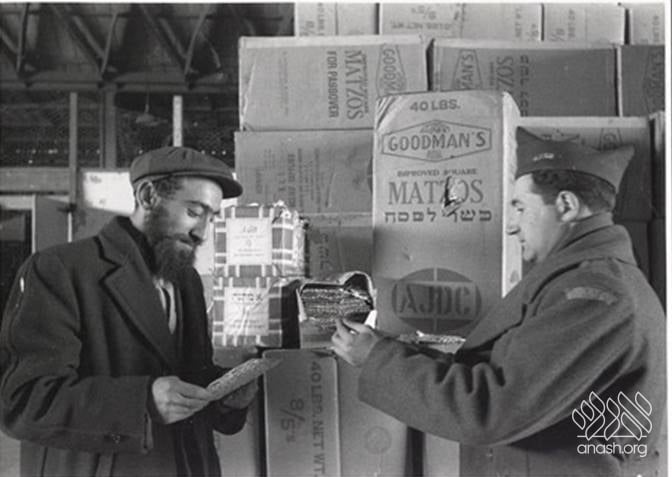
R. Mordechai Glatstein, deputy director of the JDC Religious Department in Germany, delivers matzos to R. Yechezkel Brod. Schleissheim, Germany, circa 1949.
“Being himself a wondrous example of mesiras nefesh, the Rebbe has imparted that great quality to us. Indeed, we nullify our will before his will. His words are laws for us; commands. We carry them out without hesitation and without doubt.
“If he were to tell us today, for example, to go up to Eretz Yisrael, then today and tomorrow you would find us on the mountain paths leading to the shores. You would find us in the boats of the ma’apilim. We are waiting only for his word.”
Don-Yichye concludes his article by lamenting reports that the chasidim intend to settle in America, rather than in Eretz Yisrael. Of course, many of these chasidim ultimately moved to Eretz Yisrael, where they established Kfar Chabad.
Friday Night in Pocking
Our final article comes from yet another corner of the Jewish world, the American Yiddish newspaper Der Morgen Zhurnal.
Dovid Leib Meckler
The author of this article, Dovid Meckler, had a close relationship with Lubavitch. Born in Lithuania in 5651, Meckler received a traditional frum education before immigrating to the United States at age 16. He became a journalist with the Morgen Zhurnal and was appointed the newspaper’s editor-in-chief in 5698, a position he held until the paper closed in 5731. Meckler was a member of the Mizrachi in America and a prominent activist for religious Jewish education. He passed away in 5736, at the age of 85.
Meckler’s connection with Lubavitch began in 5690, when the Frierdiker Rebbe visited America, and grew stronger when the Frierdiker Rebbe settled in America a decade later. He is best known in Lubavitch circles as the editor of the Frierdiker Rebbe’s Sefer Hazichronos. Articles by Meckler about the Frierdiker Rebbe’s 5690 visit to America were cited in an earlier installment of this column.
The following article, published in the Morgen Zhurnal of 24 Adar I, 5708 (March 5, 1948), documents Meckler’s visit to Pocking a few months earlier, before most of the chasidim departed for Paris.
Friday Night with Lubavitcher Chassidim in a German Camp
From My European Travel Diary
By D. L. Meckler
My first impressions, as well as my first information, about the religious life of the Jewish DPs in Germany, came from the Department for Religious Affairs at the Joint headquarters in Munich.
Rabbonim of the Pocking DP camp. Left to right: Harav Menachem Mendel Dubravsky; Dr. Samuel Sar, European representative of the Central Orthodox Committee; Harav Naftali Henig;Harav Shlomo Kutner; and R. Shlomo Shapiro, JDC religious director.
This department, headed by the young American rabbi Shlomo Shapiro, who had served as a chaplain in the American army during the war, may still not be fully meeting the religious needs of the DPs. It will certainly now have to be expanded, or perhaps merged entirely with the Orthodox Central Committee, which, through an arrangement with the Joint, is meant to assume supervision over all religious matters for the she’eiris hapleitah in Europe.
From this department in Munich, and specifically with the help of the good-natured and friendly Rabbi Shapiro, you can find out anything you wish to know. Most importantly, you can gain access to all the interesting corners of the DP camps.
It was at Rabbi Shapiro’s suggestion, and with him as our guide, that we spent a Shabbos in the Pocking camp. Perhaps more than any other Jewish camp in Germany, this camp reflects the authentic Jewish spirit, and especially the spirit of Torah, that animates a very large portion of the Jewish DPs. For although one can find deeply rooted religious life in other camps as well, in Pocking it appears on a much larger scale and in a far more striking way.
Rashag, standing outside the barrack that housed the yeshivah in Pocking.
Many camps in Germany have yeshivos, large or small, where people sit and learn Torah, as Jews have done for thousands of years. But in Pocking, there are two full yeshivos. One of them is the yeshivah of the Lubavitcher chasidim.
Already for the Lubavitcher yeshivah alone, one wants to be in this camp. Here you have yeshivah students and ordinary Lubavitcher chasidim, who differ greatly from the regular Displaced Persons. These are yeshivah students and chasidim who emigrated from Soviet Russia, where they had been all along. They are not simply Polish Jews, or Jews from other countries, who made their wartime journey through Russia and then reached the camps.
The Lubavitchers are Jews who almost did not taste the bitterness of Nazism. If they had been in the part of Russia that the Nazis occupied for a time, they, together with many Russians and other Jews, fled deeper into Russia and spent the war years there. Now they have left Soviet Russia because they wanted to have full freedom to learn Torah and to live a religious life without interference, something they had been denied all those years under Soviet rule.
I had already seen some of these Lubavitcher yeshivah students and chasidim in and around Paris.
In Paris, I had even seen some of the yeshivah students who had previously been in Pocking and had emigrated from there together with their rosh yeshivah, Harav Plotkin. I knew that here we are dealing with a very different type of people. They are not exhausted and tortured people like the other Displaced Persons, but people who, under Soviet rule and in hiding, had found strength in their own faith and in their own inner resources to preserve a pure Jewish Torah life, one profoundly deepened through mesiras nefesh.
Left to right: Harav Avraham Eliyahu Plotkin, Harav Nachum Shmaryahu Sassonkin, and Harav Nissan Nemanov.
Because the trip from Munich to the Pocking camp was quite long, and because we left fairly late on Friday, we arrived at the camp just at candle-lighting time. The camp, among the worst in Germany because of its old wooden barracks, makes a rather pitiful impression. It was also a rainy, cold day, and in the barely heated barracks—some of them entirely unheated—there was little sense of comfort. Yet we found ourselves entering such a warm atmosphere, so filled with chasidishe enthusiasm, that we forgot the poverty and need all around us, and the bone-chilling cold.
The Lubavitcher shul, which also served as the center of the yeshivah, was packed with mispalelim: ordinary Lubavitcher chasidim and yeshivah students; young boys, older bachurim, and yungerleit. While the Kabbalas Shabbos and Maariv followed the usual Chabad nusach, the warmth and fervor were nevertheless exceptional.
A glance at the faces of the mispalelim, faces of Jews of all ages, with beards of every kind, carries you back many years, to a time when you saw such Jews in the authentic chasidishe habitat. How had these Jews, after so many wanderings and so much pain and torment, managed to preserve that thousands-year-old Jewish spirit, without losing even an iota of the fire in their burning souls? You are simply spellbound.
You had to forget that you were standing here in a DP camp. And if that fact did nevertheless stick in your mind, you were all the more moved that even here, in a camp, the old ner tamid of Jewish fervor still burns.
The fervor of that Friday-night tefilah was strengthened further by the Chabad-style Torah said by R. Avraham, who is regarded as the rov of the Lubavitcher chasidim in the camp. He is a Jew with a patriarchal appearance, and the simple cap with a visor that he wore instead of a rabbinic hat only added to the charm of his simplicity. In his case, that simplicity made him even more impressive. His Torah was woven through with deep ideas and subtle allusions, showing that the dignified Reb Avraham was a thinker with a perspective on real life.
R. Shlomo Shimanovitch (5666-5743) and his family, shortly after leaving Russia. Library of Agudas Chassidei Chabad.
But where we truly felt the Chabad spirit was at the Friday-night meal in the home of Harav Shlomo Shimanovitch. His poor dwelling in one of the barracks was suddenly transformed into a “golden palace.” The narrow walls seemed to expand, and suddenly there was room at the table for even more guests, fellow Jews from the camp who had come to join, whether for the meal itself or for the farbrengen that followed.
As always, there were nigunim and Torah. There was enthusiasm and deveikus, together with clear, sober words that never once lost touch with reality. And yet they covered the tragic reality with a mantle of such refined and precious spiritual material that you felt you were not walking on the wet, muddy floor of the camp on that rainy Friday night, but on carpets that had been laid out especially for you.
The nigunim seem to begin from one side, but they are quickly taken up by everyone present. The entire room becomes wrapped in the sweetness of neginah, and you are swept up in the singing even when the nigunim are unfamiliar to you.
The “choirmaster” was R. Nissan, the menahel of the yeshivah in the camp. This Reb Nissan is the sort of figure that, once you see him even once, you never forget him.
With his flame-red, pointed beard, had you met him outside, you might have taken him for a fonye, a Russian goy, rachmana litzlan. But when he sits at the Friday-night table, his face takes on an entirely different appearance. It becomes not only unmistakably Jewish, but illuminated with a radiant holiness.
R. Nissan is renowned for his mesiras nefesh for Torah and Yiddishkeit. It was through the inspiration of Jews like R. Nissan that the Lubavitchers were able to maintain their Torah Yiddishkeit in Soviet Russia for thirty years, and to find the courage and strength to tear themselves out of Russia and begin one of the most remarkable odysseys, remarkable even by the standards of the Jewish wanderings in today’s Europe.
Harav Nissan Nemanov, pictured after leaving Russia.
This Reb Nissan does not participate in the singing itself. He doesn’t even open his mouth as the entire group sings to the point of kelos hanefesh. He sits in the middle of the gathering and only drums on the table with two fingers of his right hand.
It isn’t just rhythmic drumming. When R. Nissan warms up, it begins to turn into music. Naturally blessed with healthy, strong hands, his two fingers were like drumsticks on a drum, and the sound rang through the whole room, rising above the voices of the singing group.
At first, R. Nissan begins only as an accompanist, drumming along to the singing of the others. But before long, he takes over the lead, and the entire group sings in response to his drumming on the table. Even the dancing fork and spoon seem to join in, and R. Nissan’s face lights up until it begins to shine with that exuberance possessed only by chasidim, who live a life of true atzilus.
When the Lubavitchers stop their singing, only to catch their breath or to recall some new nigun, another song begins. This one is not a Lubavitcher nigun, but one whose roots lie in the dynasty of the Ropshitzer Rebbe, in the style of the nigunim sung in the court of the Melitzer Rebbe.
It is sung by Reb Baruch’l of Melitz, a brother of the Melitzer Rebbe in New York, R. Yitzchak’l Horowitz, and of the scholar and activist R. Dovid’l Horowitz.
Reb Baruch’l, a Jew in his fifties with a silvery beard, did not have to be introduced to me at all. His strong resemblance to the Melitzer Rebbe in New York, whom I know well, immediately revealed his identity.
Reb Baruch’l is like a lost soul, perhaps because in that camp, where such a strong Torah spirit reigns, he can barely find his own people, Jews who come from his region. So he attaches himself to the Lubavitchers, or to the Hungarian Jews, who have their own yeshivah in the same camp and who themselves represent a distinct branch of Torah Yiddishkeit, not only in Pocking but throughout Germany.
Harav Baruch Horowitz (c. 5660-5715), known later in America as the Melitz-Lizensker Rebbe.
This Reb Baruch’l, who is respected by both the Lubavitchers and the Hungarians, had come to participate in that Friday-night gathering, where there were foreign guests. As is customary, he was honored with a nigun.
After the nigunim, they move on to Torah. Once again, it is a chain weaving together the Jewish past with the present, and the present with the future.
Outside, a driving rain was falling. The cold pierced the bones. In most of the barracks, there was not even a hint of light; not everywhere were there lights, and not everywhere was there enough wood to warm the rooms and barracks.
But in the home of R. Shlomo Shimonowitz, where a Friday-night gathering was being held in honor of the American guests, it was bright and warm. Above all, there reigned that enthusiasm which can be shown only by people who are not stopped by any danger and are determined to continue spinning the golden thread of Torah Yiddishkeit.
From Eretz Yisrael and America, chareidim and Religious Zionists, everyone who encountered the Lubavitcher chasidim in Europe sang their praises glowingly.
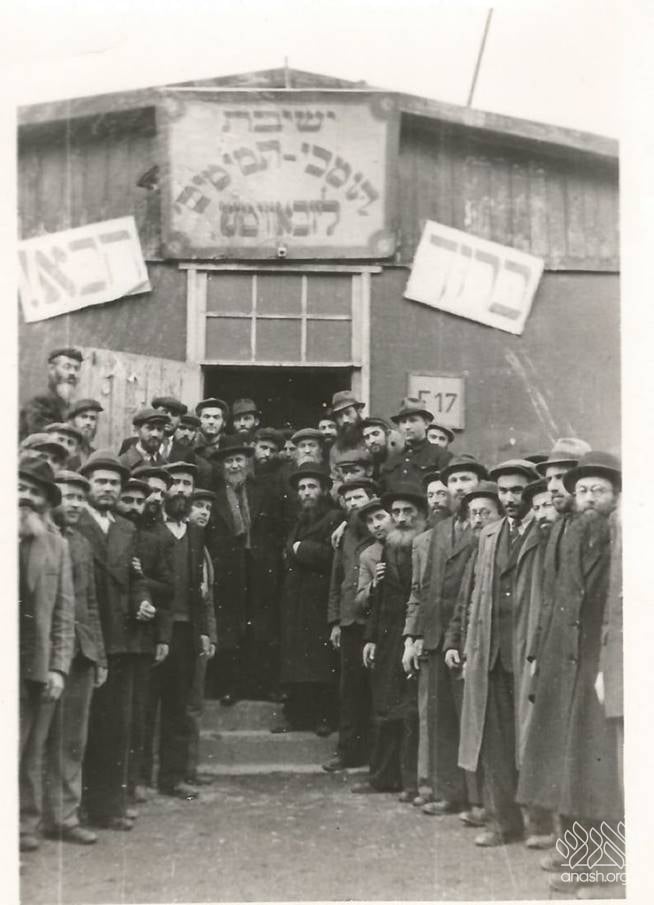
חומרים על תקופת המחנה פורסמו בספר ר’ זלמן דער ליובאוויטשער.
נראה בתמונה מחזיק את שלט ישיבת תומכי תמימים
הרב זלמן הכהן אבעלסקי הרב הראשי של מולדובה וכו’.










 COMMENTS


A great new book just came out by a granddaughter of rabbi schwei a”h “promises”, detailing his family’s escape together with rebbetzin chana
חומרים על תקופת המחנה פורסמו בספר ר’ זלמן דער ליובאוויטשער.
נראה בתמונה מחזיק את שלט ישיבת תומכי תמימים
הרב זלמן הכהן אבעלסקי הרב הראשי של מולדובה וכו’.
אולי כדאי לעשות פיענוח וזיהוי לכל העומדים בתמונה
Great article. Wonderful series
Do you have any info about the dp camp in shwebishhaal?