




ב׳ סיון ה׳תשפ״ו | May 18, 2026
New App Makes Shabbos Meal Hospitality Effortless
A new platform called “Hosted” is hoping to transform one of the most cherished — and most logistically chaotic — parts of Jewish life: offering and finding a place at the Shabbos table.

A new platform launched this week is hoping to transform one of the most cherished — and most logistically chaotic — parts of Jewish life: offering and finding a place at the Shabbos table.
Called Hosted, the app gives families with an open seat a simple way to post it, and gives guests — bochurim, students, travelers, singles, or anyone in town for Shabbos — a simple way to find one. No more frantic group chats on Thursday night, no more awkward “do you know anyone who needs a meal?” texts, no more guests slipping through the cracks.
“Every community has incredible hosts and people looking for a meal — the problem was never generosity, it was coordination,” said the app’s creator, Shlomie S, a member of the Crown Heights community. “Hosted is just the bridge.”
Ask anyone who’s spent a Shabbos away from home, or anyone who’s tried to organize meals for a yeshiva, seminary, or a community influx around Yom Tov: the system has always been ad-hoc. WhatsApp groups overflow with requests. Guests who don’t know who to ask end up eating alone — or skipping a meal altogether. Hosts who would gladly open their home often have no idea anyone nearby is looking.
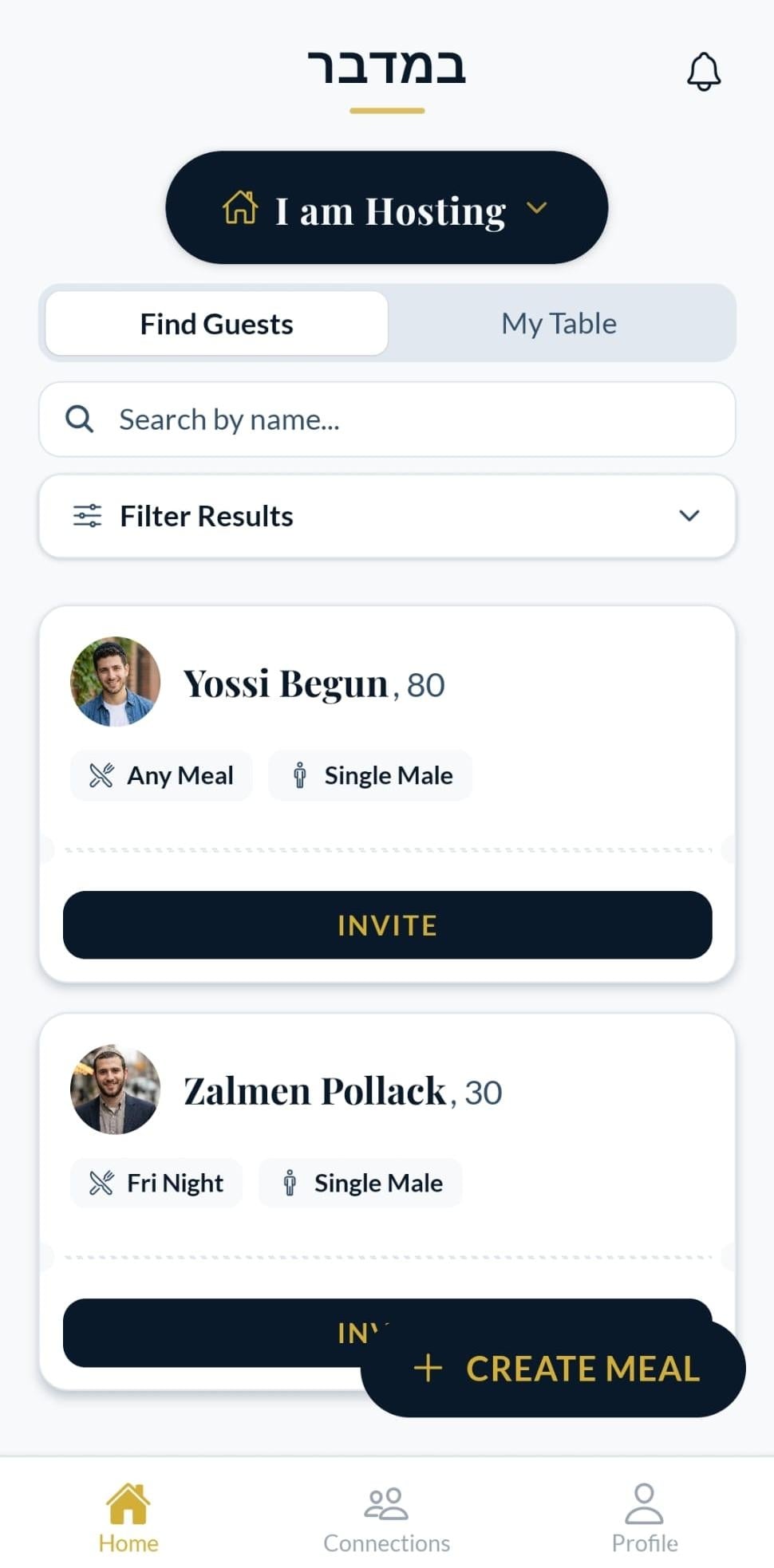
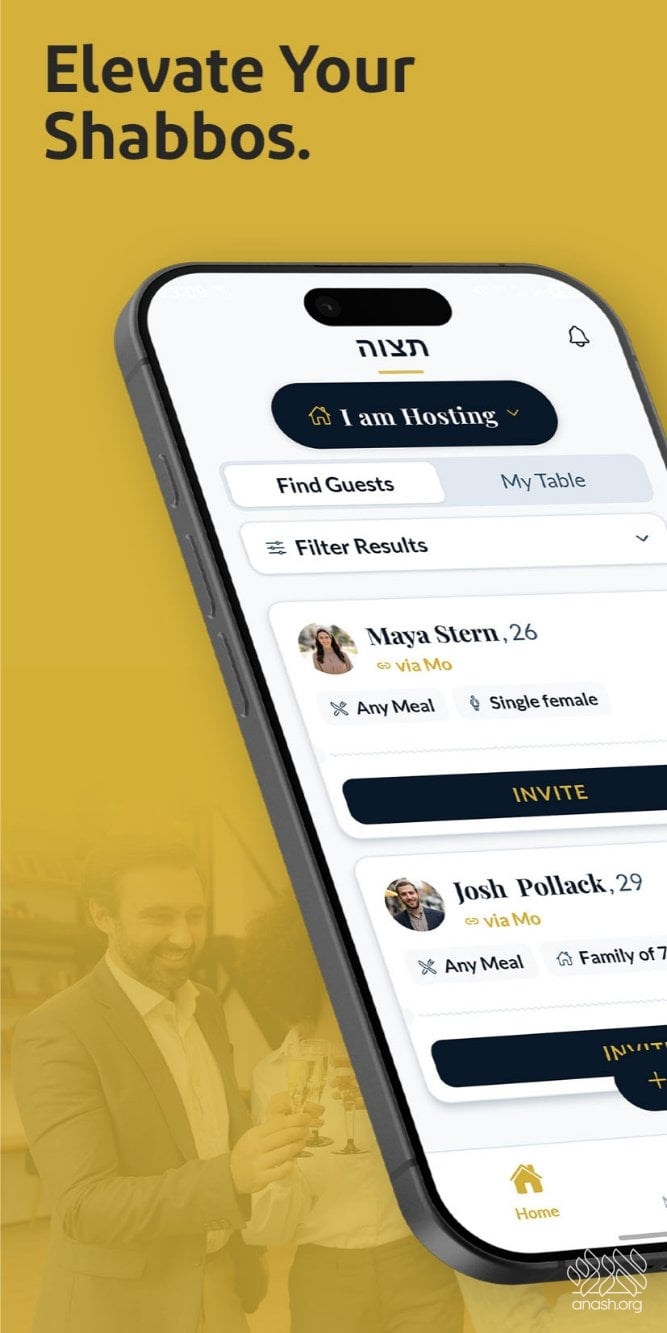
Hosted was built to close that gap. Instead of broadcasting requests to a group chat and hoping someone responds, hosts post their meals in advance and guests can browse what’s available in their neighborhood, filter by what fits them, and request a seat directly.
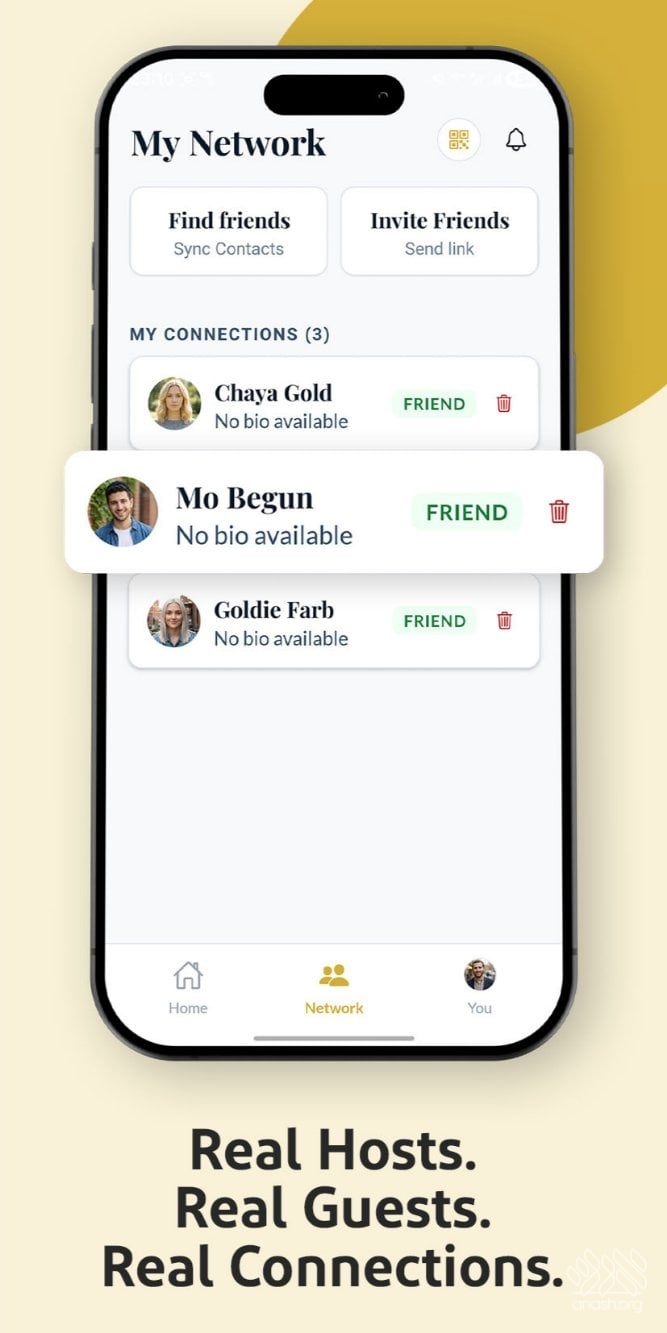
Perhaps the most important thing to understand about Hosted is what it isn’t: it isn’t a public listing site, it isn’t a marketplace, and it isn’t a place where strangers can browse into your home. A meal you post is only visible to your contacts and to contacts of your contacts — nobody else.
That single design choice is the foundation of the entire app. When a host opens a seat, they’re not broadcasting it to the world; they’re extending it to the same circle of trust they’d extend it to in real life — friends, neighbors, the people their friends vouch for. A random user across the city cannot see that a meal exists, and cannot request a seat. The network only grows through people you (or someone you know) already trust.
For hosts, that means the privacy of opening your home is preserved. For guests, it means every seat you can see is one extended through someone in your real social fabric — not from an anonymous stranger on the internet.
How it works
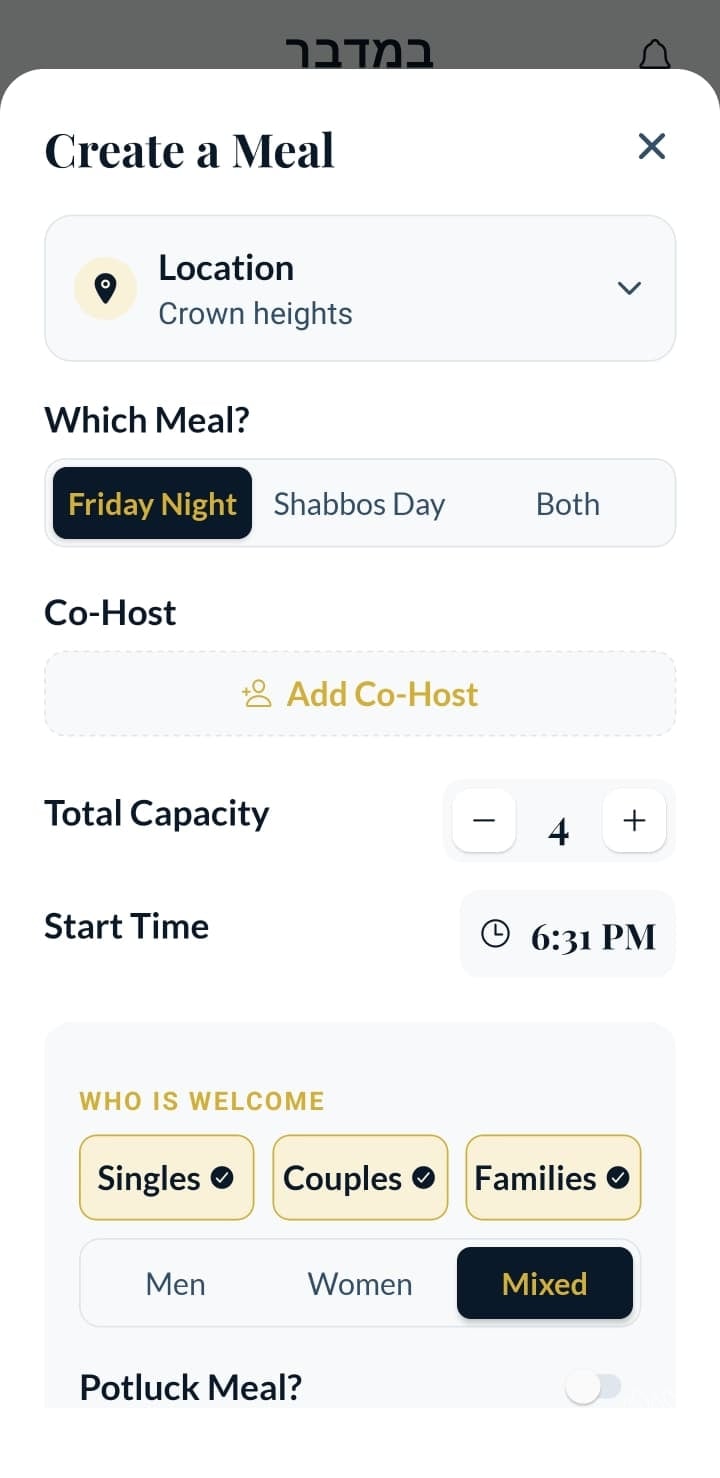
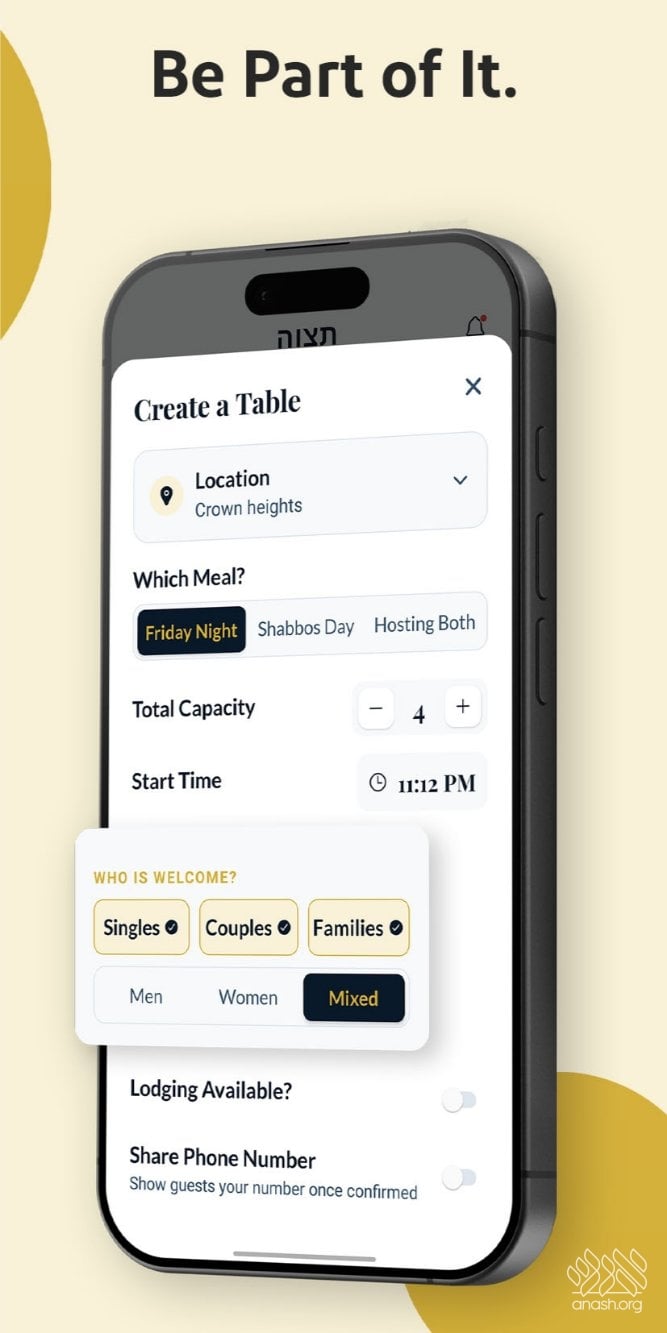
Hosts list their meal with the details that matter — how many seats are open, what kind of crowd they’re hosting (families, singles, bochurim), where they’re located, and any preferences. Guests can search by location and party size see what’s available, and request a seat with a single tap.
The app supports both English and Hebrew, and is available now on the iOS App Store and Google Play.
A tool for shluchim
For shluchim, hosting is not a once-in-a-while thing — it’s a way of life. Open homes, full tables, and a constant stream of guests are part of their Shlichus. But the logistics behind that hospitality can be exhausting: fielding calls all week, juggling last-minute additions, remembering who said yes and who never confirmed, and making sure no one is left without a place.
Hosted is built to make that side of shlichus easier. A shliach can post their Shabbos table in the app, set how many seats are open, and let guests in their city request a spot directly — bochurim on mivtzoim, students from the local campus, travelers passing through, or mekuravim looking to experience a Shabbos meal for the first time. Instead of a dozen separate conversations, it’s one clean list of who’s coming.
“The goal isn’t to change how shluchim host — it’s to take the back-and-forth off their plate so they can focus on the meal itself,” Shlomie explained. “Every minute a shliach isn’t spending on logistics is a minute they can spend learning or teaching.”
Beyond logistics, the project has a quieter ambition: to make Shabbos hospitality something anyone can participate in, not just the families with the biggest tables or the most connections. A young couple with one extra seat can offer it as easily as a veteran host with twenty.
“If even one more person ends up at a Shabbos table because of this, it was worth building,” Shlomie added. “But the dream is much bigger than that — it’s a world where no one has to wonder where they’re eating, and no host ever has an empty seat they wishes they’d filled.”
Hosted is free to download. Anyone interested can find it at https://gethosted.app/get or search “Hosted” in the iOS App Store or Google Play.

 COMMENTS


This is a brilliant idea! I’ve always wished there was something like this.
Yasher koach!
Reminds me of WrapIt app order a young Chabad boy to your office…
How do you do a background check on someone?