




כ״ב סיון ה׳תשפ״ו | June 7, 2026
What the Rebbe Really Said About the Israel Day Parade
“In recent years, claims have circulated that the Mitzvah Tanks operating during the Israel Day Parade are acting against the Rebbe’s instructions. Having been actively involved with the Mitzvah Tanks for several years, including mivtzoim during the Israel Day Parade, I felt it was important to investigate these claims and speak directly with individuals who were involved.”
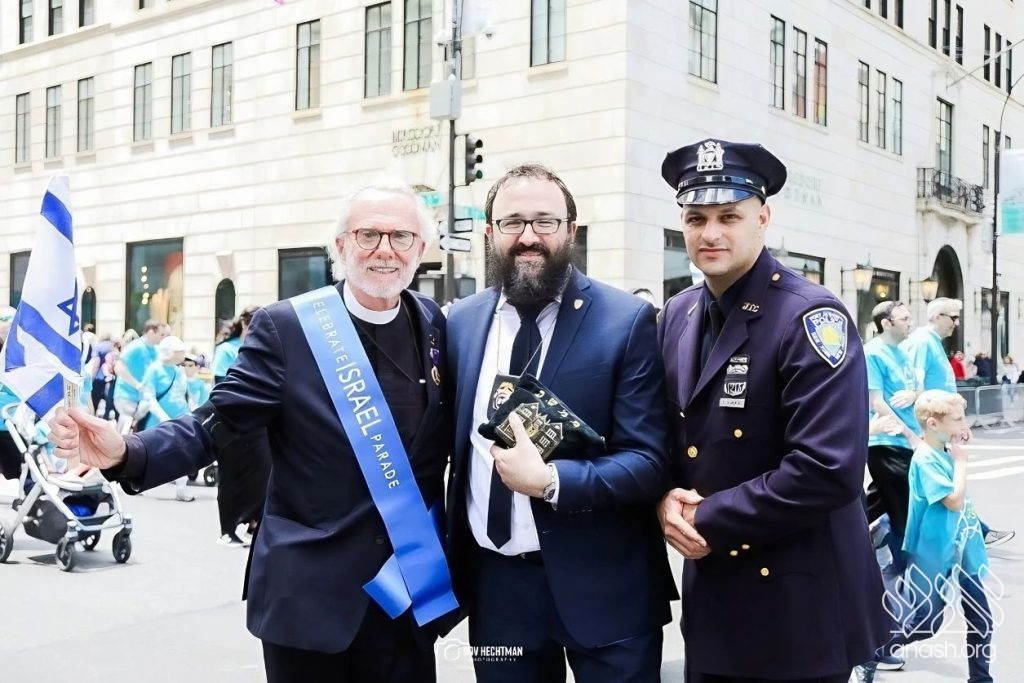
By Rabbi Yitzchok Roness
In recent years, claims have circulated that the Mitzvah Tanks operating during the Israel Day Parade are acting against the Rebbe’s instructions. Various quotes are repeatedly shared on WhatsApp statuses and other platforms, often accompanied by accusations that those involved in organizing these mivtzoim under the auspices of Tzach are disregarding the Rebbe’s directives.
What makes these claims particularly puzzling is that these mivtzoim have been conducted for decades, under the guidance of individuals whom the Rebbe charged with organizing mivtzoim in New York and were in direct contact with the Rebbe’s mazkirus.
Having been actively involved with the Mitzvah Tanks for several years, including mivtzoim during the Israel Day Parade, I felt it was important to investigate these claims and speak directly with individuals who were involved.
Throughout the years, the Mitzvah Tank Office has consistently followed the instructions conveyed to Rabbi Kasriel Kastel of Lubavitch Youth Organization by Rabbi Chadokov. The mivtzoim stands were stationed on adjacent streets, not on the parade route itself. Although the parade organizers offered to give the Mitzvah Tanks a space on the parade area itself, nonetheless they are parked a block away. The purpose was to conduct mivtzoim among the many Jewish people gathered in the area while ensuring that Chabad was not perceived as participating in the parade.
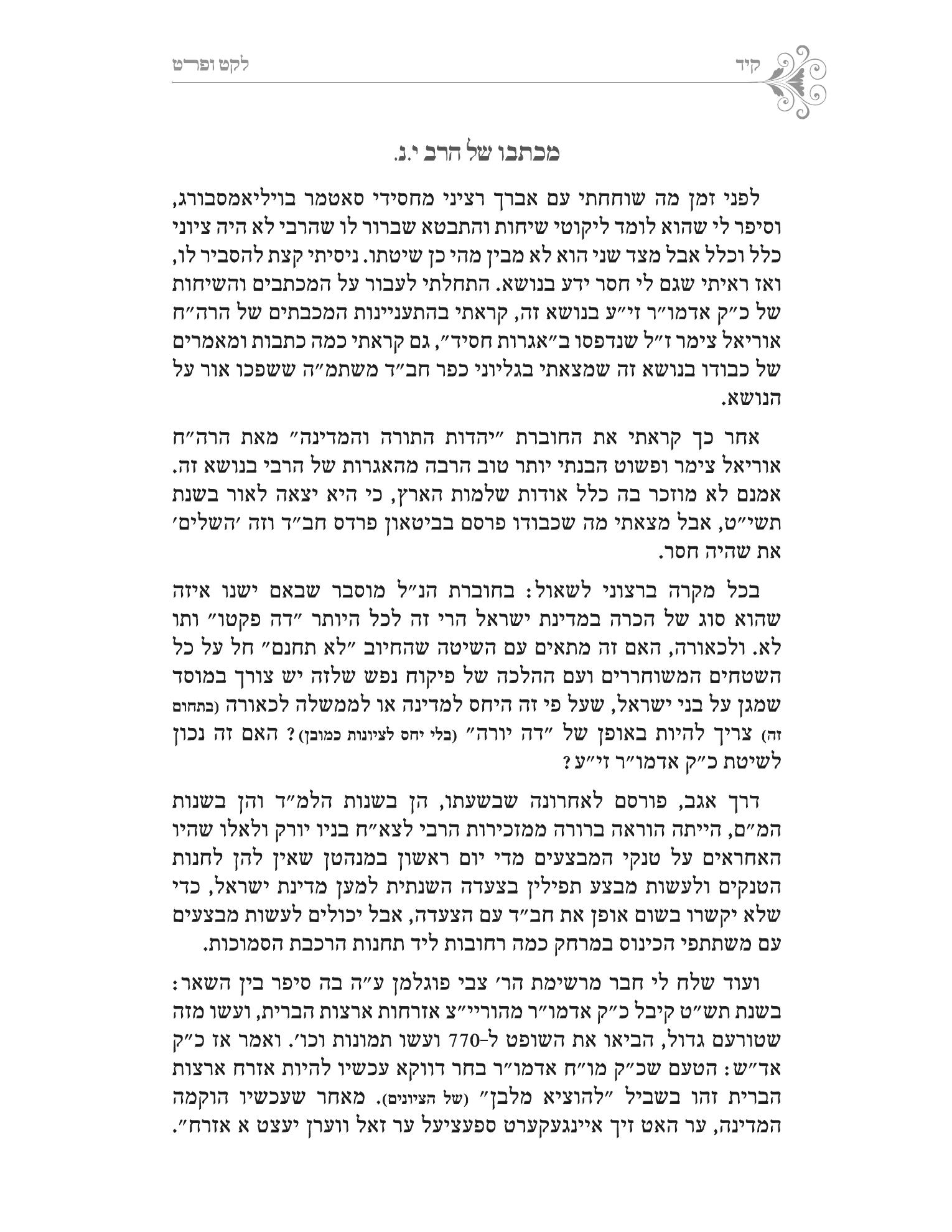
One source frequently cited by those claiming that the Rebbe opposed these activities appears in Leket U’Peret (Yerushalayim 5776, p. 114). It took considerable effort to locate this publication. Once I found it, I realized that it isn’t much of a source on this matter.
The publication was printed in honor of Rabbi Tuvia Blau’s birthday. One section contains correspondence between Rabbi Blau and an unnamed individual. In the course of his letter, this individual casually mentions having heard a report that the Rebbe opposed going on mivtzoim at the Israel Day Parade. No source is cited. No testimony is provided. No claim is made that the writer personally heard this from anyone involved.
Yet somehow this second-hand rumor, recorded by an anonymous individual, has been accepted by some as authoritative evidence, while firsthand testimony from people who were directly involved is dismissed.
In researching the matter, I heard the following accounts.
Rabbi Kastel of Lubavitch Youth Organization relates:
“Rabbi Chadokov called me and told me that the mivtzoim should be done in the nearby streets, and not on the actual street of the parade”.
It should be noted that Rabbi Kastel was not the only one to receive such guidance. Other shluchim have likewise related receiving similar instructions through Rabbi Chadokov regarding not participating in Zionist events for the purpose of doing mivtzoim.
Others claimed that Rabbi Yosef Katzman had received instructions from the Rebbe that Chabad should not be anywhere near the parade, not even on adjacent streets, rather they must be at least several blocks away. After speaking with him directly, I heard a somewhat different account.
Rabbi Yosef Katzman relates:
“I was one of the organizers of the Mitzvah Tanks during those years. After hearing from Rabbi Kastel, I approached Rabbi Chadokov to discuss the matter further. I asked him whether we could stand nearby without participating in the parade. Rabbi Chadokov replied that if we stood nearby, people might view it as though we were participating. Sensing that I was being somewhat persistent about finding a way to get the maximum number of people to put on Tefillin, Rabbi Chadokov responded that there was no need to be nearby at all, since it was possible to stand at a nearby train station and have the participants put on tefillin on their way to the parade.”
Rabbi Katzman adds that he did not understand this as a specific hora’ah requiring a certain distance from the parade. Rather, the point was to avoid doing anything that would create the impression that Chabad was participating in the parade itself. In response to his questions, Rabbi Chadokov suggested the train station as a practical way to reach the participants. According to Rabbi Katzman, conducting mivtzoim on nearby side streets would likewise be consistent with that objective, provided it was done in a manner that did not make it appear that Chabad was joining the parade.
Others pointed to the position of Rabbi Shlomo Cunin, who was involved in a similar situation in California.
Rabbi Shlomo Cunin relates:
“A very similar parade took place in California. I brought a Mitzvah Tank and conducted mivtzoim there. Security demanded that I leave. When I refused, they pointed their guns at me. Photographs of security officers pointing guns at a rabbi appeared in a local newspaper, and they were eventually forced to apologize. I continued doing mivtzoim at these events thereafter without interference. I obviously reported these activities to the Rebbe and never received a negative response. It is difficult for me to believe that the Rebbe opposed it. The Rebbe was not hesitant about giving me instructions when necessary. Had the Rebbe opposed conducting mivtzoim at these events, I am confident that he would have instructed me to stop.”
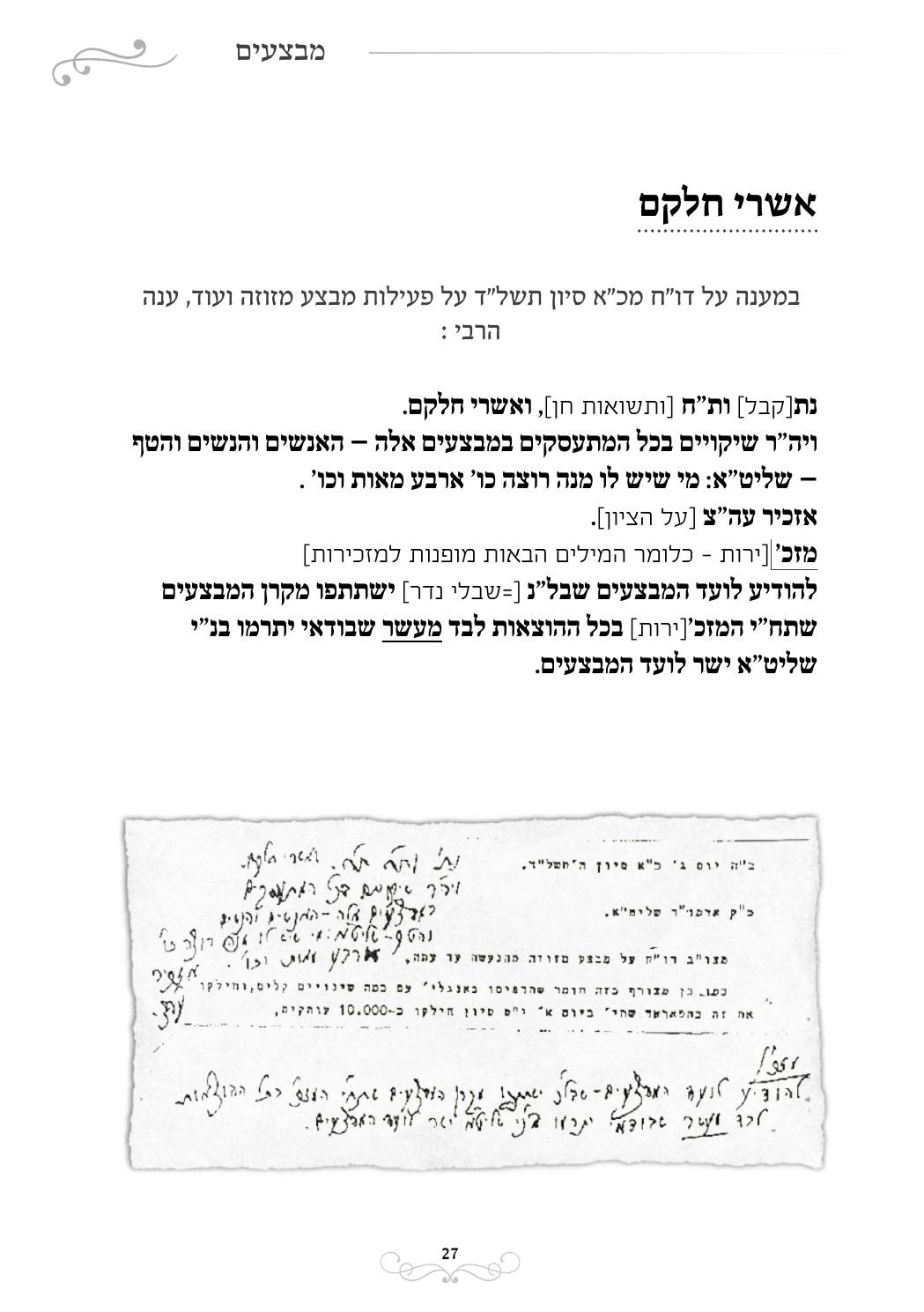
Furthermore, in a ksav yad kodesh from 5734, the Rebbe responded to a report from the Vaad Hamivtzoim stating that 10,000 flyers promoting the mezuzah campaign had been distributed at the parade on Sunday, י”ט סיון, the date of that year’s Israel Day Parade. The Rebbe responded with words of praise and encouragement and offered to cover ninety percent of the expenses.
As mentioned, the Mitzvah Tank Office has consistently followed the guidance conveyed to Rabbi Kastel: not to be on the parade route itself, but to conduct mivtzoim on nearby streets.
At the parade, we always had to take care as to how our presence would be viewed. On the one hand, Chabad should not appear to be participating in the parade. On the other hand, Chabad should not be confused with protest groups that sometimes gather in the vicinity.
In fact, one of the indications that we were maintaining the proper distance was the reaction of many parade participants. It was common for people to ask why Chabad was not marching in the parade. Some expressed disappointment that they did not see a Chabad float or Chabad representatives participating in the procession. I always found those comments reassuring, as they demonstrated that observers did not view us as part of the parade itself.
During the years that I directed the Mitzvah Tanks, I also took care that no Israeli flags or similar displays were placed on our stands. On occasion, people unfamiliar with the policy would add such items, and of course, we had them removed. Unfortunately, some Lubavitchers today seem unaware of the Rebbe’s strong opposition to Zionism and assume that such displays are appropriate. Certain individual bachurim coming for mivtzoim do indeed go on the parade; however, this has nothing to do with the mivtzoim organized by Tzach.
We likewise avoided using blue-and-white “I Did a Mitzvah for Israel” stickers. When such stickers were printed, they were reprinted in orange instead. This led to some good-natured jokes that Chabad had come to protest the evacuation of Gush Katif.
Reasonable people may disagree regarding the interpretation of various events and conversations. What should not be acceptable, however, is the practice of taking a rumor, elevating it to the status of a directive of the Rebbe, and then using it to accuse tzach and devoted shluchim and bochurim of acting against the Rebbe’s instructions.
If we are concerned with following the Rebbe’s directives, then we must first ensure that our claims are based on reliable sources rather than hearsay.
 COMMENTS


Back in the day almost 50 years ago, we knew to not participate in the parade itself but to do mivtzoyim on side streets nearby. Keep up those mivtzoyim everywhere! A friend of mine became completely frum after she was handed brochures near an Israel Day parade, and she’s a grandmother today B”H.
Something to keep in mind, not every hora’ah that came from Rabbi Chadokov came from the Rebbe
#1. if there was anyone that really had inside knowledge of the Rebbe’s opinions, it was him.
#2. even if you’re correct, all chassidim and shluchim were expected to absolutely comply with his instructions, there was no monkey business and free-for-all
its discussed in shlichus kehilchoso in the zionism section i think you should check it out
See the picture of this post, where Mivtzoim is being by the parade and not a block away
Once people allow it, the lines of the Rebbes conditions get blurred
It’s very clear to all the participants that see Mivtzoim being done at the parade that chabad is joining the parade, exactly what the Rebbe was concerned about
This is a very fair observation. ‘Asu Siyag LaTorah’, if it is too hard to ensure the perception of separation, the Rebbes preference was always to look for other opportunities for Mivtzoim
Rabbi Roness, Thank you for this important message.
B”H we still have chassidim who care to do what the Rebbe said, with no modern reinterpretations.
Let’s get back to basics
Do what the Rebbe told us, not what makes you feel good.
Al debur L’shone harah! Please be as careful with what comes out of your mouth, as with what goes into it. Titzku l’mitzvot!