




כ״ז תשרי ה׳תשפ״ז | October 8, 2026
‘The Only Person Who Tells My Husband What to Do Is My Father’
In an interview, Rabbi Mayer Plotkin of Montreal recalls personal memories of the Rebbe, Rebbetzin Chana, and an exceptional exchange with Rebbetzin Chaya Mushka. “From the day I got married, there was not one instance that I told my husband what to do. The only person until today who tells my husband what to do is my father.”
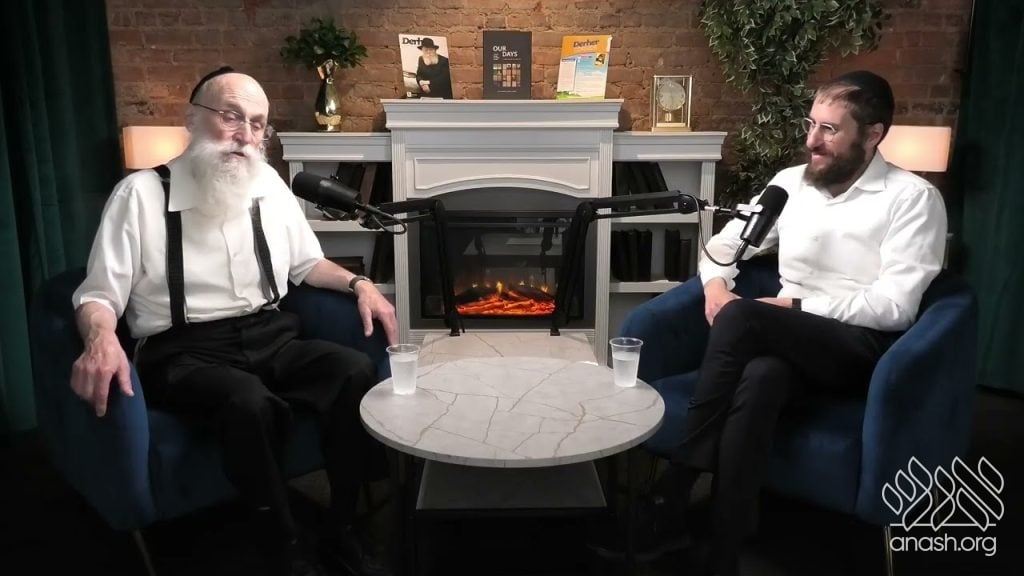
In a podcast interview, Rabbi Mayer Plotkin of Montreal shares stories and memories spanning his Montreal childhood, his years in Torah Vodaas, and his time in the Lubavitch yeshivos in Montreal and 770 as a bochur in the late 1950s and early 1960s. He also recalls his interactions with the Rebbe’s mother, the days surrounding the Rebbe’s heart attack, and stories he heard firsthand from elder Chassidim.
Rabbi Plotkin was born in Montreal in 1942 to parents who were deeply committed to Yiddishkeit long before Lubavitch had a presence in the city. Yiddish was his first language, and the home was strictly careful about kashrus. His parents were just as careful about his surroundings.
“I couldn’t have friends. My parents refused to let me have a friend who wasn’t religious,” he says, describing the small circle of boys who grew up together.
After his bar mitzvah, he spent a short time in Pittsburgh and then came to Torah Vodaas in Brooklyn at the beginning of Elul 1956, where he remained for two years. He describes the yeshiva as large and well run, with a four-story dormitory. On Shabbos, bochurim ate by local balabatim.
Even though he was not yet connected to Lubavitch, he would walk to 770 for farbrengens. He recalls being struck by the elder Chassidim who sat through the long farbrengens without moving. “You might think they were glued to the seats,” he says.
His first personal connection to the Rebbe came through a letter.
“I had a very close shaychus with the Rebbe, and it wasn’t one-way. It was a two-way street.”
He had taken on saying Chitas daily, but did not fully understand Tanya and began wondering whether it was worth continuing. He wrote to the Rebbe, who replied at length that although the question was a valid one and needed an answer, he must nevertheless never stop doing what he needed to do.
“Since I got that letter, there hasn’t been one day in my life that I missed,” Rabbi Plotkin says.
From there, he joined the Lubavitch yeshiva in Montreal, influenced by two older bochurim there, and later learned in 770. He describes davening in the first seat by the door and hearing the Rebbe’s farbrengens on Shabbos and weekday evenings.
A good part of the conversation focuses on the Rebbe’s mother, Rebbetzin Chana. Rabbi Plotkin remembers her often sitting on a bench on Eastern Parkway in front of 770 during the warmer months.
He tells of one day when he saw her shopping in a grocery store near 770. Along with the store owner, he realized that she would need someone to carry her bag home. He offered to carry it, trying to convince her that he was going that way anyway. She immediately caught on, pointing out that he was obviously going to 770, which was in the other direction.
“She was sharp like a razor, and when you spoke to her you were speaking to somebody smart,” he says.
Another incident he recalls is when the Rebbe’s mother opened the door to the Rebbe’s room and made a lot of noise trying to open it (the door to the Rebbe’s room had a latch rather than a knob). She apologized to the Rebbe for the disturbance, and the Rebbe laughed at the fact that his mother was apologizing.
Rabbi Plotkin also describes the Rebbe’s heart attack. He was at 770 with his young daughters while the Rebbe led hakafos, and within seconds the windows in the back were broken to let in air. “Everybody was standing on Eastern Parkway crying,” he remembers.
He recalls that the specialists who were called at six in the morning arrived with a police escort and told the Rebbe that he needed to go to the hospital. The Rebbe said it was impossible.
After Yom Tov, hoping to take his three small daughters back to Montreal, Rabbi Plotkin asked Rabbi Leibel Groner for a yes-or-no answer. The answer was no, and he stayed.
Ultimately, a small group of no more than 30 people like him, who had yechidus with the Rebbe every year on Motzaei Simchas Torah, were zocheh to go into the Rebbe, give him a tzetel, and receive a dollar from the Rebbe.
He also relays two stories about Rebbetzin Chaya Mushka from those days.
He recalls hearing that she came down to the Rebbe’s room and stayed only a few minutes. When she came out, she looked at the Rebbe’s secretaries, and her eyes settled on Rabbi Zalman Gurary. Rabbi Gurary ushered Rabbi Hodakov and the others out, closed the door, and spoke with her alone for a few minutes.
When the others returned, Rabbi Gurary was visibly shaken and would not say what had happened. “Zalman Gurary doesn’t get emotional,” Rabbi Plotkin notes.
Rabbi Gurary later told him that when the Rebbe left home early in the morning of Hoshana Rabba, davened, remained on his feet for hours, and returned around five without having eaten, before heading out again for hakafos. Rabbi Gurary had then asked the Rebbetzin how she had allowed him to leave the house that way.
“From the day I got married in 1928 until today, there was not one instance that I told my husband what to do,” she answered calmly. “The only person who tells my husband until today what to do or not to do is my father.”
Rabbi Plotkin went on to marry, build a business, and remain involved in the Rebbe’s work. When he and a friend were both getting married in Montreal, they asked the Rebbe where they should learn. Rabbi Plotkin had written “New York,” but the Rebbe crossed it out and wrote “Montreal,” so they opened a kollel there.
He also reflects on the young couples he sees leaving for shlichus in remote places and how much there is to learn from their dedication. “These people never saw the Rebbe, and they are going to such places. That is something we should learn from.”
Among Chassidim is a podcast by Derher, hosted by Rabbi Yossi Kamman, director of A Chassidisher Derher. The podcast captures the vibrancy of dor hashvi’i through immersive, in-depth conversations. To view all episodes, visit here.
VIDEO:
 COMMENTS


We appreciate your feedback. If you have any additional information to contribute to this article, it will be added below.