




כ״ז תשרי ה׳תשפ״ז | October 8, 2026
I Never Knew How Closely the Rebbe Was Watching
After a serious medical ordeal left him struggling to find his footing in yeshivah, Rabbi Moshe Weiss had no idea that the Rebbe was closely following his progress, until years later, when he discovered what had prompted two unexpected visitors to suddenly show up at his dorm room.
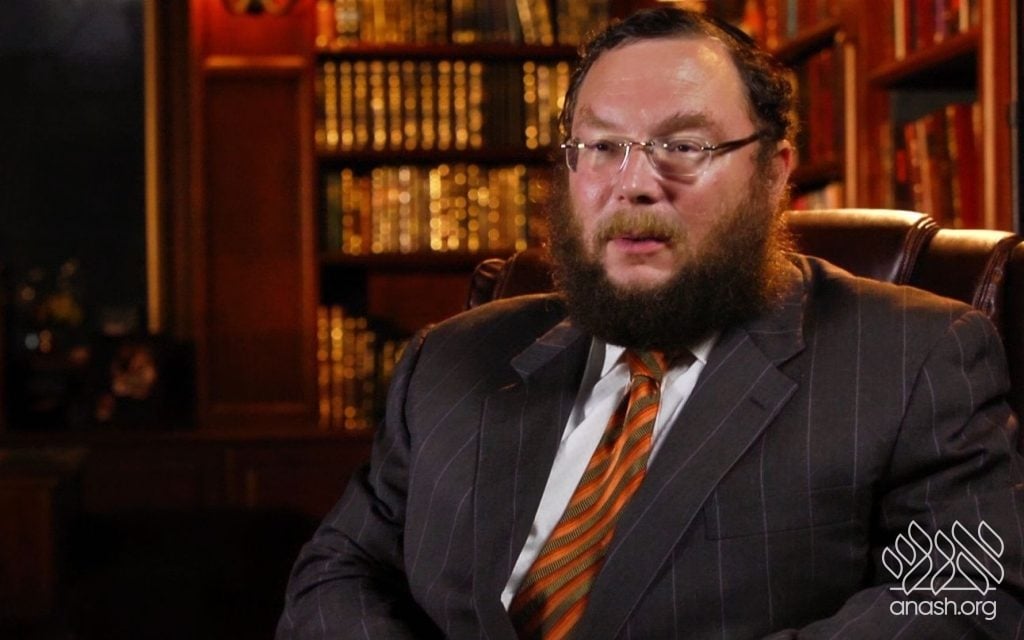
Rabbi Moshe Weiss serves as the director of Chabad of Sherman Oaks, California. He was interviewed in September 2011.
When I was fourteen, a growth was discovered at the base of my spine – an aneurysmal bone cyst. Thank G-d, it was benign, but because it was in such a sensitive place, the doctors we consulted were very reluctant to risk performing a procedure to remove it. Medication and radiation therapy helped to subdue it, but eventually this cyst began to affect a nerve in my leg. I was in pain, I struggled to function, and soon I could only hobble around on crutches.
The bottom line was that for nearly all of 1974, I was out of commission. Instead of studying Torah in yeshivah, I was in the hospital or in bed at my home in Los Angeles. I had been hoping to join some friends who had gone to study at the Lubavitch yeshivah on Ocean Parkway in Flatbush, New York, but it just wasn’t possible.
As the baby of the family, I didn’t fully realize just how concerned everybody around me was and how hard my parents were taking it all. Long-time supporters of Chabad activities in California, my parents had a very close relationship with the Rebbe and were in constant contact with him about my condition.
Towards the end of that year, we got some really bad news. My doctor felt that if the cyst wasn’t removed completely – by a terribly invasive operation – it would start affecting other organs.
My mother came home from the doctor crying. “I’m going to New York,” she told my father. “I’m going to the Rebbe.”
In addition to seeing the Rebbe, she also wanted to meet with a doctor at New York’s Memorial Hospital for the Treatment of Cancer and Allied Diseases, a world specialist by the name of Dr. Marcove.
My father managed to get her an appointment for an audience with the Rebbe, but although I went with her to see the doctor in New York, I decided not to join her for the audience. At fourteen years old, I already thought of myself as a full-fledged chasid, and I knew that chasidim would normally only have an audience once a year – and I had already been to the Rebbe with my father a few months prior.
But as soon as she came into the Rebbe’s office, he asked her where I was; clearly, he had been expecting me. After explaining my reason for not coming, my mother began to cry as she spoke about my medical situation.
“First of all,” the Rebbe told her, “you’re going to walk your son to the chupah.” (Years later, before I was actually about to get married, I think he even mentioned this to her: “I told you you’re going to take him to the chupah!”)
My parents had sent my medical records to the Rebbe, but he wasn’t impressed with the prognosis I had received. “Are you going to see another doctor here?” he inquired.
“Yes,” my mother answered. “Dr. Marcove in Memorial Hospital.”
The Rebbe was satisfied with this: “They have very prominent specialists there; you have nothing to worry about.” The sense he gave that everything would be fine was a blessing in its own right.
The appointment with Dr. Marcove did bring refreshing news. In contrast to the other doctor, who was actually his student, his opinion was that since the cyst wasn’t spreading, there was no reason to be concerned. All I had to do was work on strengthening my leg, which had atrophied from disuse.
My parents were obviously happy to hear this, and I was itching to go off to the Ocean Parkway yeshivah. But first my mother put the question back to the Rebbe.
“The only way I would agree for him to come to New York is if he brings me a letter from the doctor saying that it’s okay,” the Rebbe answered, before explaining why sending me to this particular yeshivah might not be a good idea: “There are a lot of steps at Ocean Parkway.”
This was true: The only way to get around the Ocean Parkway study hall and dormitory was by walking up and down some five flights of stairs. But what was remarkable – aside from the unusual way the Rebbe put himself into my parents’ position when giving his advice – was that, as far as I know, the Rebbe had never been to the yeshivah.
“On the contrary,” Dr. Markov replied when we expressed the concern about the stairs, “I want you to walk more. It will be good for you!”
He was quite a prestigious doctor, not a person you would typically have a long conversation with, but he agreed to sit down and write a letter, using my legal name: “Dear Rabbi Schneerson. My patient, Howard Weiss, is able to walk five flights of stairs. As a matter of fact, I prefer that he does.”
Steps aside, though, I didn’t acclimate well to Ocean Parkway. With the trauma of the previous year, my parents understood that they couldn’t keep me at home anymore, and I was set on going there. But whether it was because of my newfound freedom, or the cold climate, or the New York chaos, I wasn’t doing well; I was learning Torah, but not as seriously as I should have.
Before long, 1975 passed, and in the beginning of 1976, I found myself in my dormitory room, with a cold – which was really just an excuse to lay in bed and read. Suddenly the door opened, and my brother-in-law Rabbi Sholom Ber Levitin walked in. More than a decade older than me, Sholom Ber ran several Chabad institutions in Seattle and was a very busy man; he didn’t normally have time to visit and chat.
He asked me what I was doing in bed, I told him about my cold, and he walked out. That evening my older brother Yona Mordechai, who was studying in the yeshivah in 770, also came by.
“What’s this about having a cold?” he asked me. “We have to go learn Torah!”
Despite my protestations, he schlepped me down to the study hall. “I’m going to come every night,” he pledged, “and we’re going to have a little study session.” For the next few weeks, he did just that.
But it was only years later that I learned what had actually happened. The night before coming into my room, Rabbi Levitin had entered the Rebbe’s office for a private audience, intending to get the Rebbe’s guidance on some important issues in Seattle. But before he began, the Rebbe turned to him and asked, “What’s happening with your brother-in-law?”
At that moment, the question of how his wife’s brother was doing in yeshivah was probably the furthest thing from Sholom Ber’s mind.
“I want you to find out what’s going on, and get back to me,” the Rebbe told him. “And I want you to tell the older brother that he needs to pay more attention to his younger brother.”
I finally understood why my brother-in-law and my brother had come running to Ocean Parkway.
In a way, I had grown accustomed to receiving such personal guidance from the Rebbe. And yet, when I heard how the Rebbe opened that audience – one with an important emissary, involved in major communal work – by inquiring about the wellbeing of a fifteen-year-old boy who was struggling in yeshivah, it had a profound impact on me. The thought sometimes crosses my mind: Had I known at the time that the Rebbe was paying such close attention to how I was spending my time in yeshivah, I would have been transformed.
 COMMENTS


We appreciate your feedback. If you have any additional information to contribute to this article, it will be added below.