




י״ד מרחשון ה׳תשפ״ז | October 24, 2026
When Chassidishe Things Replace Chassidishkeit
“The point is not merely that we need to care about the ‘important things’ too. The Alter Rebbe is saying something much sharper: If we turn the secondary into the primary, the actual primary will eventually become secondary. That principle has enormous relevance to how we understand the Rebbe’s expectations of a Chossid.”
Part 2 of a discussion of the common root of several challenges facing Lubavitch. For part 1, click here.
By Rabbi Aharon Lindenblit
In the previous article, I introduced what I called the danger of “disproportionatism”: when a true and important Chassidishe idea is emphasized out of proportion to its place within the larger picture of Yiddishkeit and avodas Hashem. When external features of Chassidishkeit become detached from their purpose, they replace rather than strengthen Torah, avodah, and the Rebbe’s actual expectations and thereby become empty of their purpose.
I want to elaborate here on another aspect of that danger.
There is an important principle mentioned by the Alter Rebbe in a maamar: when a person places excessive emphasis on matters of lesser importance, the result is not merely that those matters receive too much attention. Inevitably, the more important things receive too little.
This is not a concern I concocted. The Alter Rebbe says it explicitly. Human attention is finite. When secondary matters are elevated beyond their proper place, the primary matters are necessarily diminished.
Because of the brevity of this remarkable and largely self-explanatory maamar, I have translated it here in full (Sefer Maamarei Admur Hazaken HaKetzarim):
“And this is the Torah: man.” Just as a person has a head, a body, and feet, so too the Torah contains commandments that are more weighty and those that are lighter.
This is the meaning of the teaching, “Be as careful with a light mitzvah as with a weighty one.” Nevertheless, the more weighty mitzvah takes precedence in the sense that it demands greater caution — that is why it is called “weighty.” Yet our Sages strongly warned us to be careful even with a light mitzvah as with a weighty one. Still, one must know which is light and which is weighty.
This is true when a person is close to the truth and is guided by the Torah. But when he falls from that state, what is light becomes stringent in his eyes, and what is stringent becomes light. How much more so when he falls from the entire Torah: he will grasp onto stringencies that are not written in the Torah at all, while correspondingly descending from the true stringencies of the Torah and becoming lenient regarding matters of Torah, G-d forbid.
This explains the vidui [of R’ Nissan Gaon], “That which You [Hashem] treated lightly I made severe.” At first glance, what was his sin in doing so? According to the above, it is understood: once a person adopts a stringency that is not in accordance with the Torah, it necessarily follows that he descends from the Torah’s true hierarchy and falls from it. Inevitably, he will end up being lenient in other areas where the Torah itself requires stringency. This is the intent of the statement in the Talmud Yerushalmi, “Is it not enough for you what the Torah has prohibited…”
The point is not merely that we need to care about the “important things” too. The Alter Rebbe is saying something much sharper: distorting the hierarchy itself has consequences. If we turn the secondary into the primary, the actual primary will eventually become secondary.
That principle has enormous relevance to how we understand the Rebbe’s expectations of a Chossid.
Mipnei HaTzivuy
Despite the decades that have passed since Chof-Ches Nissan, the Rebbe’s expression of painful disappointment ought to shake up a Chossid every time we think about it.
The Rebbe said “ve’od vehu ha’ikar” — that the main concern was that we remained in our “golus pnimi b’avodas Hashem.” The Rebbe added that the fact that Chassidim were calling out for and expressing a desire for Moshiach was merely “mipnei hatzivuy” — because the Rebbe had told us to do so — rather than flowing from a genuine appreciation of the catastrophic and unnatural state of golus.
There is, I think, a broader lesson contained in the words mipnei hatzivuy. It is possible to listen very carefully to what the Rebbe says and still fail to grasp the full import of what the Rebbe wants.
Let me explain.
Context Matters
To understand anything a person says, it is essential to understand the context in which he is speaking.
Think, for example, about the Rebbe’s sichos against television or attending college. To whom were those sichos directed? R’ Mendel Futerfas? R’ Yoel Kahn?
Obviously, many of those sichos were directed toward people living in an American environment who struggled with hanochos and attitudes absorbed from the surrounding culture.
Now compare that with a sicha in which the Rebbe speaks sharply about someone adding salt to his food and calls such behavior “behaymish” (animalistic). Does anyone imagine that the Rebbe was addressing precisely the same person, with precisely the same spiritual problem, in both sichos?
The words are all Torah. But understanding what the Rebbe wants requires more than collecting statements. It requires understanding their context and, more importantly, understanding the larger picture into which they fit.
The same is true when looking back at life around the Rebbe.
The Atmosphere Around the Rebbe
Those Chassidim who did not merit to experience life around the Rebbe before Gimmel Tammuz can sometimes overlook an important facet of the Rebbe’s influence on bochurim and Anash.
There were the obvious things: participating in farbrengens, watching the Rebbe daven, receiving dollars, listening to sichos, carrying out the Rebbe’s instructions.
But there was also an atmosphere.
When the Rebbe entered 770, the air was thick. His presence filled the room.
In Tanya, perek 42, the Alter Rebbe describes the sense of urgency surrounding a king, with his servants and officers running to and fro in his presence. Obviously, when speaking about the Rebbe we are speaking about a tzaddik, not merely force of personality or charisma. But in ordinary English, those are among the words we might reach for in trying to describe the effect of being in the Rebbe’s presence.
As the years went on, reaching a crescendo in the Mems, there developed among Chassidim an extraordinary immersion in the atmosphere of 770 and the Rebbe’s inyonim.
It was an incredibly powerful and holy atmosphere. Even a bochur who was not the greatest oved could live inside a bubble that was exciting, compelling and filled with the Rebbe. There were endless things to occupy oneself with — farbrengens, mivtzoim, the Rebbe’s sichos, activities surrounding 770 and the Rebbe’s inyonim.
The Rebbe filled the lives of bochurim and Anash.
Those of us who merited to experience some of it yearn for those days. I certainly do. I have only warm and glorious memories of them, and we daven every day for the moment when we will once again be reunited with the Rebbe.
But precisely because that atmosphere was so powerful, there was also a possibility of living within it without sufficiently translating it into the behavior the Rebbe actually demanded.
A bochur could be completely immersed in the world surrounding the Rebbe without necessarily learning behasmadah, keeping sedorim, or putting sufficient effort into his personal avodas Hashem.
That is not a criticism of the atmosphere. The atmosphere was holy. It is a description, in hindsight, of what could happen to us inside it.
When the Makif Does Not Become Pnimi
This, I believe, is another form of disproportionatism.
The Rebbe could, so to speak, be separated from what the Rebbe stood for: increasing in Torah, avodah and mivtzoim.
The Rebbe himself repeatedly pushed against precisely this danger. He did not want his influence to remain merely makifdik. He wanted it to change the person.
With that background, think about the sicha in which the Rebbe addressed those who spent their time looking at him during davening rather than davening themselves. The problem was obviously not that looking at the Rebbe was somehow a bad thing. The problem was what had happened to the hierarchy. The means had begun to displace the purpose.
There is somewhat of a parallel to the Chossid discussed by the Rebbe in Ve’atah Tetzaveh. A Jew could display tremendous mesiras nefesh in Soviet Russia, yet when he later reached the free world, that mesiras nefesh did not necessarily translate into his new circumstances.
Similarly, if a person’s Chassidishkeit consisted largely of being around the Rebbe and living within the atmosphere of 770, then after Gimmel Tammuz the ground beneath his feet could disappear.
Being a Chossid today demands tremendous discipline. It requires toichen: learning, davening, working on oneself, going on mivtzoim, engaging in hafatzah, and actually doing what the Rebbe wants b’poel.
If we sanction the external excitement — the hu-ha — of being around the Rebbe while detaching it from what the Rebbe was actually trying to produce, we can end up with the very situation about which the Rebbe cried out on Chof-Ches Nissan: we can listen to the sichos, follow the instructions, and nevertheless remain in a “golus pnimi b’avodas Hashem.”
Hiskashrus is one of the deepest and truest concepts in Chassidus. But if connection to the Rebbe doesn’t drive a person toward greater avodas Hashem and greater devotion to what the Rebbe wants, then hiskashrus itself can become a true concept emptied of much of its content.
It pains me to write this, and anyone who merited to be there knows how much we miss those days. I’m not looking back critically at the world around the Rebbe. I’m looking critically at ourselves and acknowledging, with the benefit of hindsight, that for many of us something did not always translate in the way the Rebbe wanted it to.
Chassidishe Substitutes
To some extent, the same phenomenon continues today.
Bochurim can find Chassidishe substitutes for avodas Hashem. The substitutes may themselves be genuine Chassidishe things, and that’s precisely what makes the problem difficult to identify.
The solution is not to attack those things. It is to restore the proper hierarchy.
Realign our values and emphases with the Rebbe’s priorities: Engage in serious learning, daven, work on yiras Shomayim, go on mivtzoim, engage in hafatzah, learn Chassidus seriously enough that it changes the way we think.
Then the recalibration happens almost automatically.
Real Torah, Chassidus and avodas Hashem are all-consuming. When a person is genuinely immersed in them, there is far less room for obsessing over trivialities. The ohr of Torah and Chassidus illuminates the darkness without requiring us to spend our lives fighting with the darkness.
There is an interesting demonstration of this in the definition of a “Chassidishe bochur” in most yeshivos today, with some notable exceptions.
Generally, the definition includes hasmadah in learning together with a strong dogesh on yiras Shomayim. A bochur may be naturally fascinated by the world of Chassidus and Torah and may speak its language fluently. But if he does not actually invest effort in learning and avodah, he generally will not be regarded as a genuinely Chassidishe bochur.
(Eventually, especially with the accessibility of taavos olam hazeh today, if the hours are not filled with Torah and avodah, something else will fill them. At best, it will be narishkeiten.)
“But the Rebbe Encouraged It”
I can already hear a response to what I’m writing. People will produce a whole series of maanos and expressions of chizuk that the Rebbe gave to various activities and styles of chassidishe hanhagos that developed during the Mems.
But this is precisely where context matters.
In the earlier decades of the Rebbe’s nesius, communication was far more limited. The Rebbe’s message of hafatzah needed to be spread and strengthened. Those immersed in the atmosphere of 770 naturally felt a responsibility to promote devotion to the Rebbe and his mivtzoim.
Obviously, the Rebbe encouraged and appreciated those efforts. But none of that meant minimizing the demands of Torah, avodah, or the teachings and expectations of the previous Rebbeim.
There is a story that brings out this point.
At the conclusion of large farbrengens, the Rebbe would give dollars for tzedakah to the tankisten to distribute to the crowd. R’ Mordechai Mentlik once suggested that the Rebbe give this zechus to bochurim who kept sedorim and learned well.
The Rebbe responded that he was trying to promote his chiddush, which needed strengthening. Standard frum and Chassidishe behavior had already been promoted by Torah and by the previous Rebbeim.
This point has broad relevance. When the Rebbe encouraged something new, the encouragement was not a declaration that the new emphasis had displaced the old hierarchy. The foundation remained the foundation.
Could This Really Be What the Rebbe Meant?
There is a story told about R’ Peretz Chein. In his old age he lost his eyesight, and his grandson, R’ Meir Simcha from Nevel, would read seforim aloud to him. Once, while reading a Tosafos, R’ Peretz corrected him. His grandson was surprised.
R’ Peretz told him, in effect: “Don’t think I know every Tosafos in Shas by heart. I simply know that Tosafos could not have said such a shtus.”
I don’t have to know the background of every maane the Rebbe ever gave. But if you understand what the Rebbe wanted from a bochur or a yungerman, there are things you can recognize as being inconsistent with that larger picture.
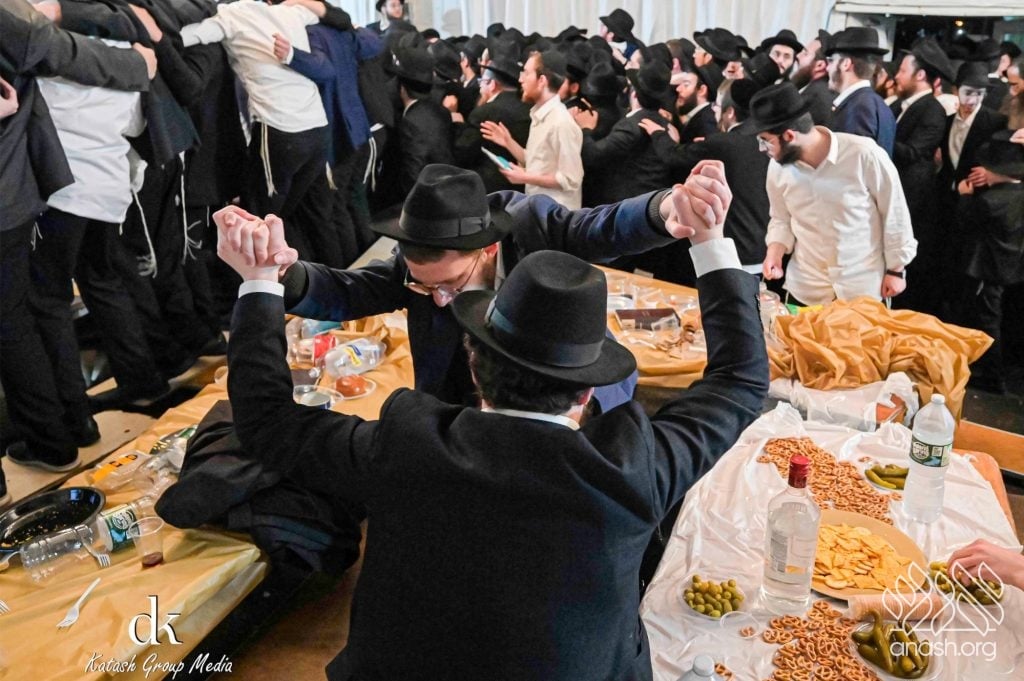
No quote will convince me that dancing for hours every night during Adar is consistent with the Rebbe’s expectations of a bochur. This is not because dancing is wrong. It is not that excitement about the Rebbe, mivtzoim, mimush or Chassidishe enthusiasm are wrong.
Quite the contrary. They are important enough that we need to understand what they are for.
Restoring the Hierarchy
That brings us back to the Alter Rebbe’s maamar.
The danger of disproportionatism is not merely that we sometimes spend too much time on relatively minor things. The deeper danger is that once we distort the hierarchy, the distortion spreads. When the light becomes heavy, the heavy becomes light.
And that can happen even with holy things. A genuine Chassidishe value can become distorted when it is detached from the larger avodah it was meant to serve.
Hiskashrus is supposed to bind us more deeply to what the Rebbe wants. Chassidishe enthusiasm is supposed to propel us into Torah, avodah and mivtzoim. The atmosphere surrounding the Rebbe was supposed to transform the person living within it.
The answer, therefore, is not less hiskashrus ch”v, but true hiskashrus. Not less preoccupation with the Rebbe, but a preoccupation with the Rebbe that makes us ask constantly: What does the Rebbe want from me? What is all of this supposed to produce?
Ultimately, the surest protection against disproportionatism is not endlessly debating which Chassidishe expressions have become excessive. It is filling our lives with the things that are unquestionably central: serious Torah learning, Chassidus, davening, yiras Shomayim, mivtzoim and hafatzah.
When the center is strong, the rest naturally finds its proper place.
And perhaps that is the simplest test of all. If something truly brings us closer to the Rebbe, it should also bring us closer to what the Rebbe demands from us.
 COMMENTS


We appreciate your feedback. If you have any additional information to contribute to this article, it will be added below.