




י״ב אייר ה׳תשפ״ו | April 29, 2026
The Day I Chose Shabbos and Kosher Over My Baseball Career
When a devastating wrist injury forced him off the field, Reuben Bezaquen was facing struggle with keeping Shabbos and kosher. What felt like a punishment, he now sees as guidance towards a decision he didn’t yet have the strength to make.
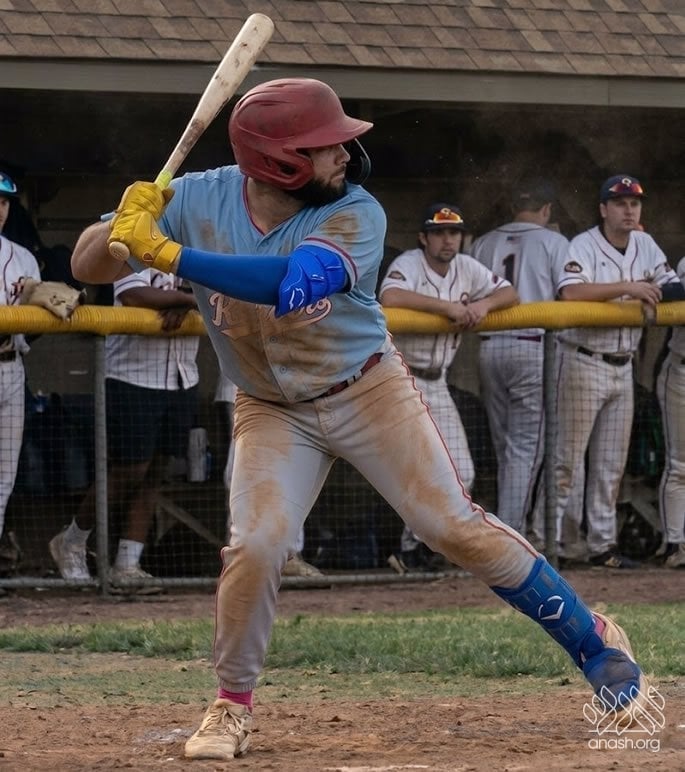
Pop! The ball traveled straight into my mitt, sending a fiery sensation through my hand and up my forearm. The crowd and all external noises faded out, leaving only the sound of my breath.
As I reached into my glove to grab the ball, I could feel my body fighting any movement of my hand. While the ball was flung around the infield, I played around with my hand to figure out which movements caused the least pain.
Within seconds, the ball was back to me, and a shockwave ten times more intense shot up my arm.
I walked towards the mound to hand the ball off to our pitcher, who could tell something was wrong.
“Are you alright?” he asked.
“Always,” I responded, trying to believe it myself.
Between pitches, the thought crept in: Should I call time?
The next time the ball made contact with my glove, I felt my wrist start to give out.
“Don’t hit the ball to me, please don’t hit the ball to me,” was the only thought in my mind for the rest of the game.
As the other team’s batter rounded the bases for the final time, my teammates and I jogged off the field, a universal feeling of disappointment filling the dugout.
While the rest of the team packed their bags, I was tearing mine apart, focused on one thing only: pain relief. Gulp, I downed a thousand milligrams of acetaminophen within seconds of finding the bottle.
I repacked my bag and took one last look at the diamond. I spent a few minutes standing there, alone, fighting back tears.
I took my usual seat on the bus, 6A, but this time it was different. As we started driving, I opened my siddur (prayerbook) to a random page, but I barely knew where to go for scheduled prayers, let alone an impromptu bus prayer.
At this point, I had been keeping Shabbat for five months and kosher for four. My relationship with G‑d was still new, still fragile, but it was sincere for the first time in my life.
I would learn with my rabbis each week, identifying the next rung on the ladder to climb. The day I got hurt was the first time I broke Shabbat in five months.

In the days leading up to the game, I felt backed into a corner, forced to choose between keeping Shabbat and being there for my team during the first away game of the season.
I chose to travel and play, not as an act of rebellion or resentment, but out of a sense of obligation to my team, myself, and the 15 years I had spent working to get there. I wanted to believe that I could have it all, that I could hold onto professional baseball and my faith without losing either.
I leaned my head against the window, a hollow pit filling my chest. I rearranged myself, and before I knew it, I was folded over, hunched into the fetal position with the siddur still on my lap.
I stared out the window until the tears arrived; they sat beside me, uninvited, filling up the little room between me and the window. I didn’t ask them to come, and I didn’t know how to send them home.
My breathing broke into short, shallow breaths, each one getting trapped in my chest as if it had nowhere to go. The tears grew heavy enough to pull my head down. My hat tilted lower to give them privacy.
Every few seconds, my eyes shot from my lap to the closest guy. “Please don’t look at me,” I thought, fighting for air, just trying to catch my breath.
As I stared at the stars, I began to speak to G‑d. “Please, G‑d, I’m begging you, don’t make this true. I promise if I wake up tomorrow and my hand is better, I’ll never play on Shabbat again.”
“He must be punishing me for prioritizing this game over Shabbat,” I thought.
The first leg of the drive was three hours. About halfway through, we stopped for dinner. Chick-fil-A. When we pulled into the parking lot, I could feel my mind racing a thousand miles per hour. On road trips, the coach would always pay for our meals, none of which were ever kosher. Normally, I would walk across the street to a CVS and grab a protein bar, but today was anything but normal.
When we got into line, I looked at the menu: grilled chicken sandwich, waffle fries, chicken nuggets.
It had been over 12 hours since my last real meal and I was struggling to cope with everything going on.
At the register, up until the second I opened my mouth, I had no idea what I was going to say.
“Grilled chicken sandwich with waffle fries and lemonade, please.”
My teammates’ heads turned in unison, as if something had tripped a switch.
“You’re eating here??” they asked.
I looked at them and walked by in silence, headed to an open seat.
A couple of teammates and I shared a table, and conversations began immediately. I remember every minute detail of that day, but I can’t remember one word from those conversations.
The sound of their voices faded away, and all I was left with were my thoughts. “What am I doing? This isn’t right.”
“Reuben! Reuben!” my teammate shouted, “your food is ready.” I stood up, grabbed my food, and sat back down.
As everyone began to dive in, I sat there frozen, in a staring contest with my sandwich. Who was going to break first, me or the sandwich? The duel lasted more than 10 minutes. After a hard-fought battle, I decided I wasn’t going to lose this fight today.
I looked up to see Big Mike studying my sandwich the way one does a difficult page of Gemara, shocked that it hadn’t been touched. “All yours,” I said, and pushed the tray towards him. Within two minutes, he had downed the sandwich, fries, and lemonade. Where my strength came from in that moment, I still don’t know.
On the ride back, all I could do was stare at the stars, questioning every decision I had made up until that point. We got back to Dallas just past 1:00 AM, unpacked the bus and put everything in the clubhouse. Before heading home, I felt the need to loop in my coach.
I knocked on his office door, “Got a minute, coach?”
“Is it important?”
“I wish it weren’t.”
He could tell something was wrong and asked me what was going on.
“I think I might be done. I’ll need to get it checked out to confirm, but I’m pretty sure I broke my wrist during today’s game.”
After a short back and forth, he embraced me and said, “Whatever you need, please let me know. We can figure this out together.”
The car ride home was silent. I didn’t want to talk to anyone.
When we got back to the house, I showered and then texted my mother. “Don’t freak out, but my baseball career might be coming to an end.” As I typed the message, my new reality settled in and the tears returned. We spoke for a few minutes and then I went to sleep.
The next few days are a blur. I spent hours looking for a flight back home, but the earliest one I could find was the following week. I spent the first of the interim days hanging out with the team, pushing myself more than I should have, trying to make something, anything work.
On the drive home from a double header in San Antonio, I decided to check flights to Arizona for Shabbat. I was struggling more than I would have admitted, and I didn’t know what would happen if I were alone again for a Shabbat in Texas.
With only $250 to my name, I managed to find a round-trip flight that worked. Before I booked it, I called Rabbi Tiechtel, my rabbi from my stint at Arizona State University, to ask if I could come.
“Reuby, not only can you come for Shabbat, but I would be personally offended if you wanted to and didn’t.”
That Shabbat was exactly what I needed. Although I wasn’t in a social mood, being back at Chabad of ASU, surrounded by people who had become my family, was rejuvenating.
On Monday, I flew back to Dallas, spent Tuesday packing, and headed back home to Toronto on Wednesday. For the first little while, my room felt smaller than usual, the silence quieter, the days stretched with nothing to train for. I woke up every morning not knowing what to do with myself for the next 16 hours. I was home, but I wasn’t home.

At the time, I thought I was being punished; I believed G‑d was disappointed in me, that He was taking his anger out on the thing I cared about most. I see now that it wasn’t punishment, but guidance towards a decision I didn’t yet have the strength to make on my own.
Since then, I have spent countless days learning about the importance of Shabbat and studying the Torah in ways I never thought possible. A full year has passed, all 52 Shabbats have come and gone, and I’m proud to say I haven’t missed a single one.
 COMMENTS


We appreciate your feedback. If you have any additional information to contribute to this article, it will be added below.