




כ״ד תשרי ה׳תשפ״ז | October 5, 2026
‘TanyaMap’ Project Tracks Tanya Printings Around the Globe
A new interactive website, TanyaMap, allows users to explore a three-dimensional globe marking every documented location where the Tanya has been printed, alongside records, photographs, historical information, and sources. From Antarctica to Mount Everest, the map traces the spread of Tanya printing to some of the most remote places on earth.
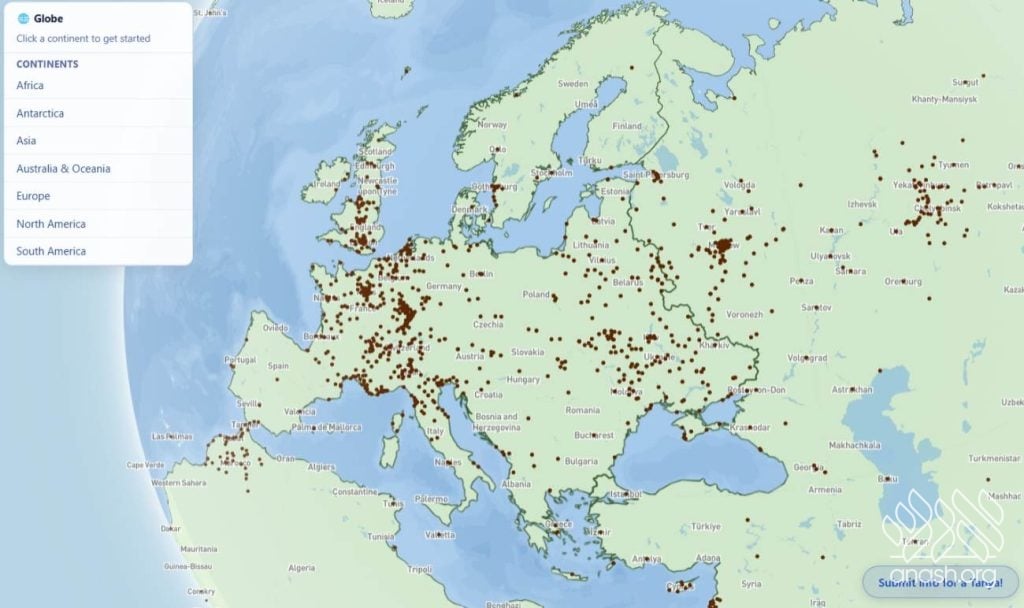
A new website launched in beta offers an interactive way to explore the worldwide reach of the Rebbe’s Tanya-printing campaign.
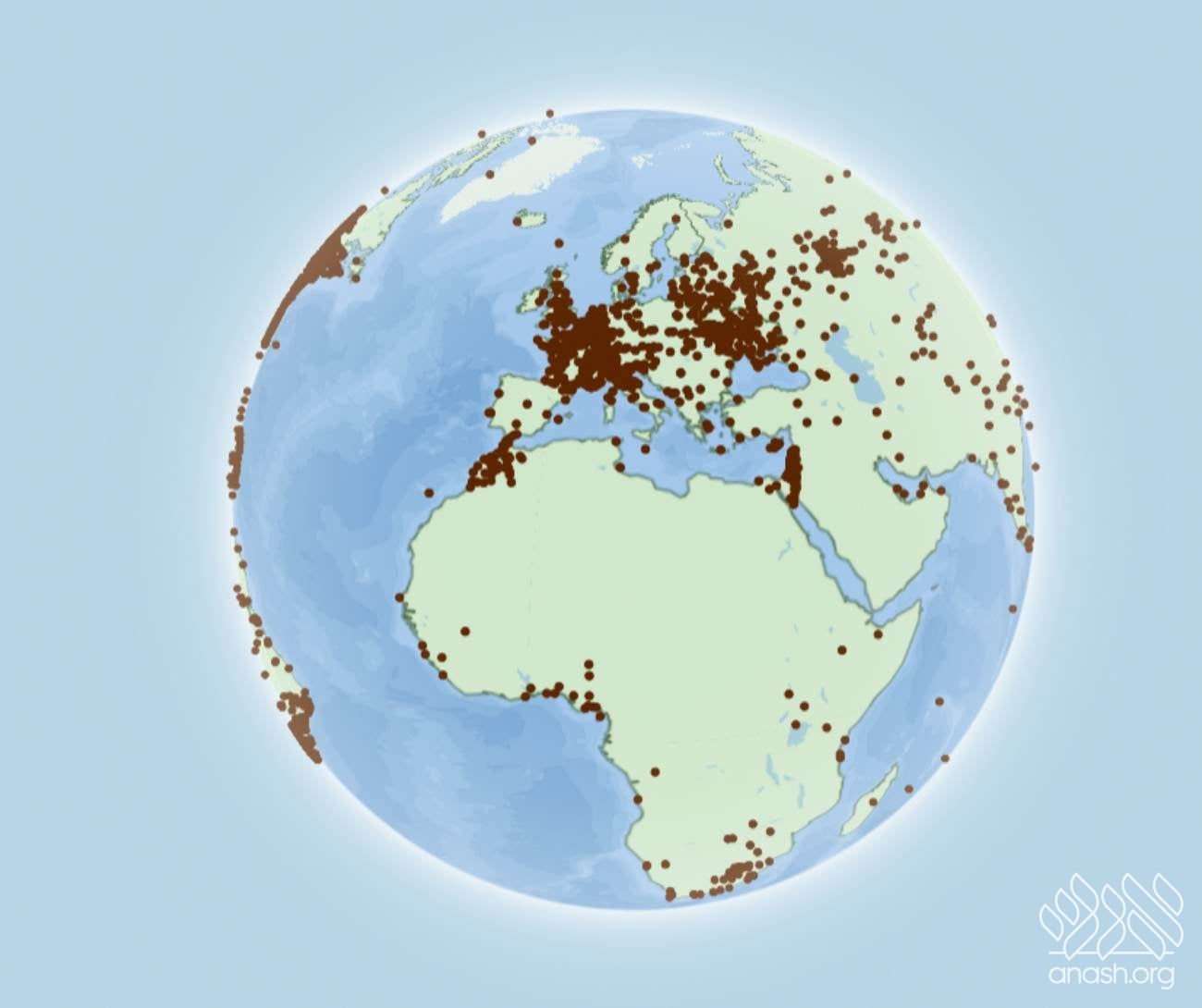
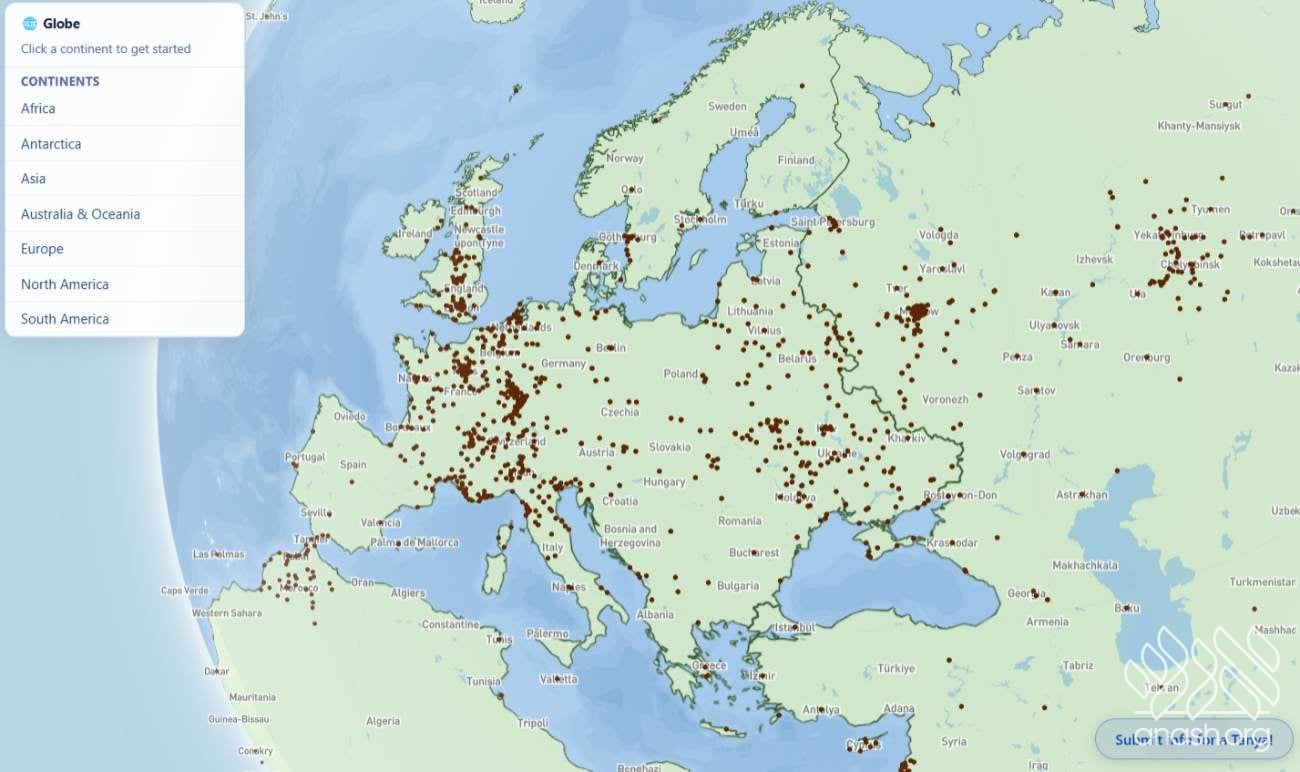
Called TanyaMap, the website opens to a three-dimensional globe covered with illuminated points, each representing a location where the Tanya has been printed.
Users can spin the globe, zoom into cities and regions, and open individual locations to explore the history behind specific printings.
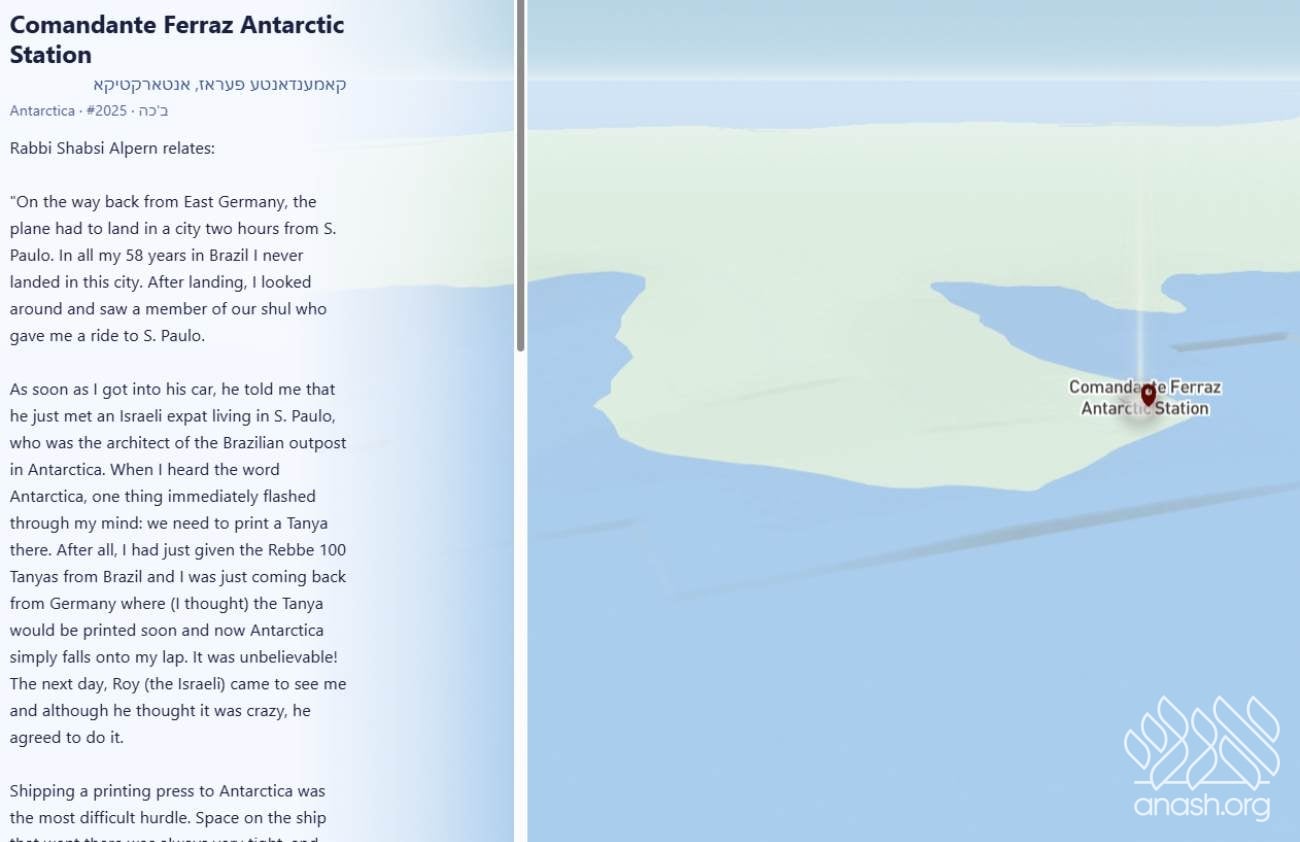
The map currently features hundreds of documented printings, with records that include photographs, historical background, details about the printing and, where available, links to source material. Each record is intended to preserve not only where a Tanya was printed, but the story of how and why it happened.
“TanyaMap was created to collect the stories, photographs, locations, and records behind the Rebbe’s Tanya-printing campaign, and to present them in a way that is easy to explore,” the organizers explain.
The project builds on a unique feature of the Tanya-printing campaign itself. When the Rebbe launched the campaign in 5738 (1978), he directed that the back of newly printed editions include a cumulative list of previous Tanya printings, together with their respective hometown title pages.
The growing list created a physical record of the campaign, with each new edition carrying forward the history of those that came before it.
TanyaMap takes that concept beyond the printed page.
“The project builds on the record of printings that the Rebbe instituted should appear in the back of each Tanya,” the organizers write, “while adding the details that could never fit there.”
Those details include exact locations, photographs, historical background and the stories surrounding individual printings.
The significance of a local Tanya printing goes beyond simply producing another edition of the sefer. The Rebbe explained that when the Tanya is printed in a particular location, the wellsprings of Chassidus themselves are established there. The printing gives that place a role in the spreading of Chassidus outward.
Over the decades, Tanyas have been printed in an extraordinary range of locations, from Jewish communities and shuls to military bases and places under difficult circumstances. The campaign has reached countries across the globe, as well as locations as unusual as Antarctica and Mount Everest.
TanyaMap seeks to preserve those stories before the details are lost.
A dot on a map may represent an edition number and a location, but behind it can be a story of a shliach, a community, a historic Jewish site, unusual circumstances or significant effort to bring a Tanya to a particular place.
The organizers say they are drawing on contemporary reports, firsthand accounts, historical records, photographs and other sources to document those stories.
The site is also intended to look forward, not only backward.
“What you see now is only the beginning,” the organizers write. “As more stories, pictures, and records come in, TanyaMap will keep growing.”
The team hopes the project will ultimately help inspire thousands of new Tanya printings in places that have not yet had one. By showing what has already been accomplished and preserving the experiences of those involved in previous printings, the map can also serve as a resource for those looking to undertake a new printing.
The site includes a “Surprise Me” feature that takes visitors to a random location on the globe, offering an easy way to discover some of the more unusual and fascinating stories already documented.
TanyaMap is being organized by Shimon Chanin and Avi Rosenfeld, together with the TanyaMap team.
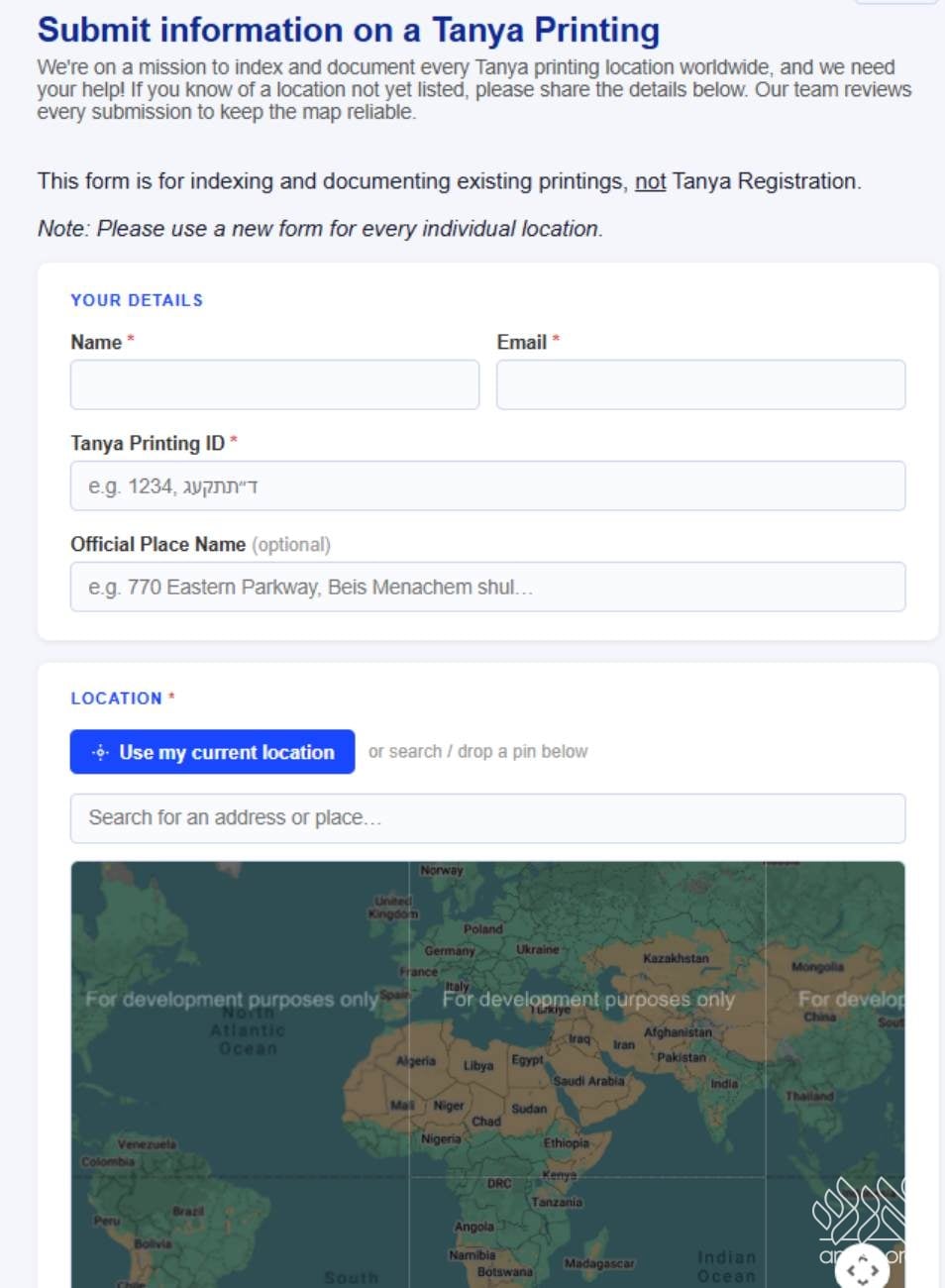
The organizers are calling on anash and shluchim around the world to help complete the record. Anyone who knows of a Tanya printing that is not yet documented, or who has photographs, documents or firsthand information about an existing printing, can submit the details directly through the website.
The goal is to build a comprehensive record of the Rebbe’s Tanya-printing campaign, one location at a time.
Have a Tanya to add? Submit information at tanyaprintings.org/submit.
Explore TanyaMap at tanyaprintings.org.
 COMMENTS


What’s the contact info to print a new Tanya?