




י״ז אלול ה׳תשפ״ו | August 29, 2026
Rabbi Yitzchak Alfasi, Prolific Chassidic Historian, Passes Away
Rabbi Yitzchak Alfasi, one of the foremost historians of the Chassidic movement and the author of close to 100 books, who held a special esteem for the Rebbe, passed away at the age of 96.
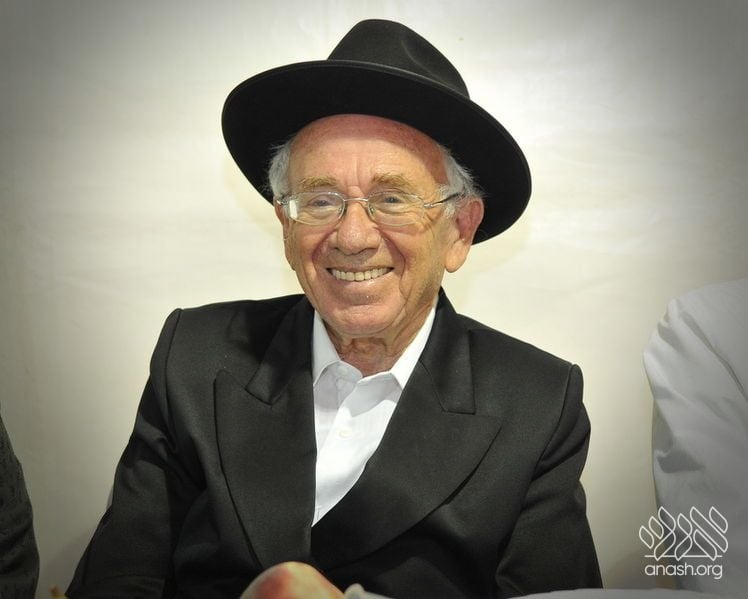
Rabbi Yitzchak Alfasi, one of the foremost historians of the Chassidic movement and the author of close to 100 books, passed away on Thursday, 14 Elul, at the age of 96.
Known widely as “Choker HaChassidus,” Rabbi Alfasi spent more than seven decades documenting the Rebbes, personalities and dynasties of Chassidus. His research covered virtually the entire Chassidic world, including Gur, Breslov, Ruzhin, Vizhnitz, Chabad and many other courts.
Alfasi was born in Tel Aviv around Yom Kippur of 5690 (1929), to Bella Chava and Yisrael Alfasi, from a prominent family of Gur Chassidim that was also among the early industrialists of Tel Aviv.
Growing up in that environment gave him an intimate familiarity with Chassidic life from an early age. Over the years, he became close with leading Rebbes of Gur, including the Beis Yisrael, the Lev Simcha, and the Pnei Menachem.
He learned in Yeshivas Chevron in Yerushalayim and later combined traditional Torah scholarship with academic historical research. He earned a doctorate from Bar-Ilan University and went on to teach Chassidus and Jewish history there and in other educational institutions.
In 5716, he married Adina, daughter of R’ Menachem Asher Bartler, a prominent Vizhnitzer Chossid who was among the founders of Kiryat Vizhnitz in Bnei Brak. The couple settled in Tel Aviv near his parents.
His first book on Chassidus, published in 5712, dealt with the Kotzker Rebbe. It was followed by books on Reb Nachman of Breslov, the Chiddushei Harim and many other Chassidic figures.
Over time, what began as individual biographies grew into a sweeping effort to document the entire world of Chassidus.
Among his best-known general works were Toras HaChassidus, covering some 1,600 Chassidic personalities; HaChassidus V’Shivas Tzion; HaChassidus B’Romania; and HaSipur V’Hamaaseh HaChassidi.
He also authored major works on individual dynasties, including Gur, Kosov-Vizhnitz, Ropshitz-Dzikov and Ruzhin.
His sweeping encyclopedia of Chassidus, first published in 5725 and later expanded as Traklinei HaChassidus, became an important reference work and included hundreds of rare photographs he had uncovered over decades of research.
Remarkably, Rabbi Alfasi wrote all his books by hand, carrying out much of his research before computerized databases and digital archives existed.
His work helped preserve not only the histories of famous Rebbes, but also the names and stories of countless lesser-known rabbonim and Chassidim from communities destroyed in the Holocaust.
Alongside his research, Rabbi Alfasi maintained an active rabbinic and literary career. He served for years as editor of Shabbos B’Shabbato and B’Nesivei Chesed V’Emes.
Chabad occupied a particularly important place in Alfasi’s vast body of research. In 5769, he published HaMeirim LaAretz, devoted to the lives of the seven Rebbeim of Chabad.
Over the years, he corresponded with the Rebbe, sent his books to the Rebbe’s Library, twice merited lengthy yechidus, and on several occasions received comments and corrections from the Rebbe on his writings.
Though not a Chabad Chossid, he had immense admiration for the Rebbe. Having spent decades studying the tzadikim of Chassidus from all the generations, he wrote about the Rebbe in extraordinary terms. “I say this clearly,” he said. “The Rebbe is a one-of-a-kind figure in all of Jewish history.”
In a lengthy appreciation, Rabbi Alfasi wrote that the Rebbe seemed to embody the qualities associated with the great leaders of Chassidus throughout the generations.
He compared the Rebbe’s worldwide influence to that of the Baal Shem Tov, his extraordinary knowledge to the Maggid of Mezritch, his Torah genius to the Alter Rebbe and Tzemach Tzedek, his removal from worldly comforts to the Mitteler Rebbe, his phenomenal memory to the Rebbe Maharash, his spreading of Torah to the Rebbe Rashab, and his mesirus nefesh for Jews everywhere to that of the Frierdiker Rebbe.
“In our great Rebbe,” Rabbi Alfasi concluded, “were concentrated all the qualities of the leaders of Chassidus, from the Baal Shem Tov until him.”
When Rabbi Alfasi was once asked on the radio to summarize the Rebbe in a single word, he chose: “Malach.” He explained that this was not merely poetic praise, but the conclusion he had reached through personal experience, correspondence with the Rebbe, and his two lengthy yechidus meetings.
He described the Rebbe as a holy being descended from Heaven (“ir v’kaddish min shemaya nachis”), and wrote that he could not be adequately defined in ordinary human terms.
Rabbi Alfasi was particularly struck by the Rebbe’s command of seemingly minute details.
He recalled that despite receiving hundreds of people, delivering Torah and directing affairs around the world, the Rebbe could notice an error on page 15 of one of Alfasi’s books and suggest that something on page 254 be compared with a specific sicha of the Frierdiker Rebbe from Shemini Atzeres 5696.
He also recalled entering yechidus and being astonished by the Rebbe’s knowledge of personal matters. “When I came to yechidus,” he wrote, “the Rebbe knew all my deeds, to my very innermost self, astonishingly.”
Rabbi Alfasi wrote that some of the things he personally witnessed could not, in his view, be explained naturally. “One thing I know,” he concluded. “A malach walked in this world.”
One particular incident moved him personally.
In 5739, Rabbi Alfasi sent the Rebbe a letter together with students in his Chassidus course at Bar-Ilan University. He signed it “Dr. Yitzchak Alfasi.” The Rebbe crossed out “Doctor” and wrote “Harav” instead.
Not long afterward, Rabbi Alfasi related, two prominent rabbonim granted him semicha without his having requested it. From then on, people increasingly referred to him as “Rabbi.” Rabbi Alfasi would quote this as an example of “a tzaddik decrees and Hashem fulfills.”
Rabbi Alfasi continued writing and researching into old age.
His legacy is not only the enormous shelf of books he produced, but the historical record he preserved: generations of Rebbes, Chassidim, families, communities, photographs, and traditions that might otherwise have disappeared.
He also served as rabbi of the Komemiyut Avraham shul in Tel Aviv, widely known as the Goren Shul.
Yehi zichro boruch
 COMMENTS


We appreciate your feedback. If you have any additional information to contribute to this article, it will be added below.