




ט׳ תמוז ה׳תשפ״ו | June 23, 2026
Operation Entebbe: The Daring Rescue That Defied Nature
50 years ago, Israel shocked the world with the miraculous rescue of 102 Jewish hostages from Uganda, in what became known as Operation Entebbe. While the world celebrated and debated the daring mission, the Rebbe revealed Hashem’s guiding hand throughout the story and the lasting lessons it carried for every Jew.
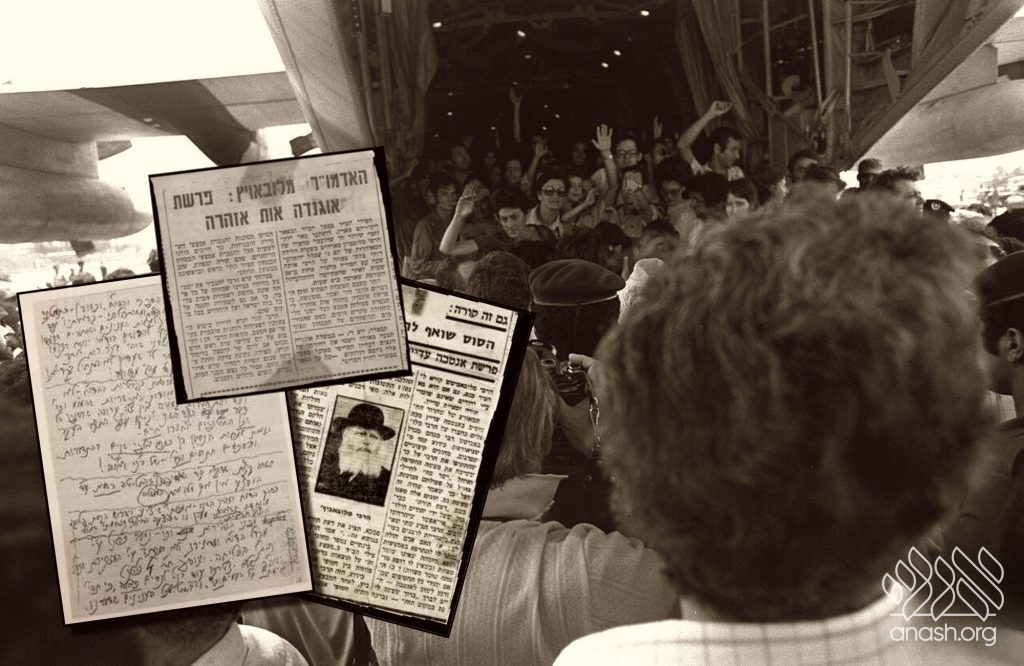
Fifty years ago, on 6 Tammuz 5736, Israel shocked the world. A hundred elite fighters flew more than 2,500 miles to Uganda and, in just ninety minutes, rescued 102 Jews who had been held hostage by Palestinian hijackers. The success of the seemingly impossible mission stunned the world, and Jewish pride soared.
Everything that happens in this world, of course, is orchestrated to the finest detail by the Creator. While Israel and the world celebrated, mourned, and debated for months afterward, the Rebbe, from his place at 770, illuminated the unmistakable hand of Hashem running through the entire story. From the hijacking, through the planning of the rescue, the miraculous nature of the operation itself, and in the months that followed, the Rebbe focused, with his characteristic clarity, on the deeper lessons to be drawn from it.
*
The Hijacking
On a quiet Sunday afternoon in the summer of 1976, the world was jolted by news that an international passenger flight carrying hundreds of travelers, including more than a hundred Jews, had fallen into the hands of Palestinian terrorists. What began as a routine flight from Eretz Yisroel to Europe turned into a global crisis as the plane was diverted deep into Africa.
After a series of dramatic developments, the passengers were brought to Entebbe Airport in Uganda, where the terrorists, aided by the Ugandan regime, held them captive. In chilling scenes that evoked painful memories of the past, the Jewish passengers were singled out and separated from the others, who were eventually released, while the Jews were held hostage and threatened with death unless Israel met the hijackers’ demands.
As word spread of the deadline the terrorists had set, anxiety gripped the Jewish world. Communities everywhere gathered for Tehillim and heartfelt tefillos, while families waited desperately for news. With the hostages’ fate hanging in the balance, an entire nation, together with Jews around the world, watched and davened as the crisis unfolded.
*
The Twelve Pesukim
A few months earlier, on Rosh Chodesh Iyar 5736, the Rebbe held a special farbrengen marking the launch of Shnas Hachinuch, in which he said:
“One of the most powerful ways to tip the scale, for oneself and for the entire world, to the side of merit, is through the principle of ‘From the mouths of babes and sucklings You have founded strength.’ In this way, the enemy and the avenger will be destroyed while they still exist only in potential, before they can emerge into actual reality.”
The Rebbe then launched the first set of six pesukim for children to learn, recite, and share with their friends. Two weeks later, on Lag BaOmer, the Rebbe introduced a second set of six pesukim, bringing the total to twelve.
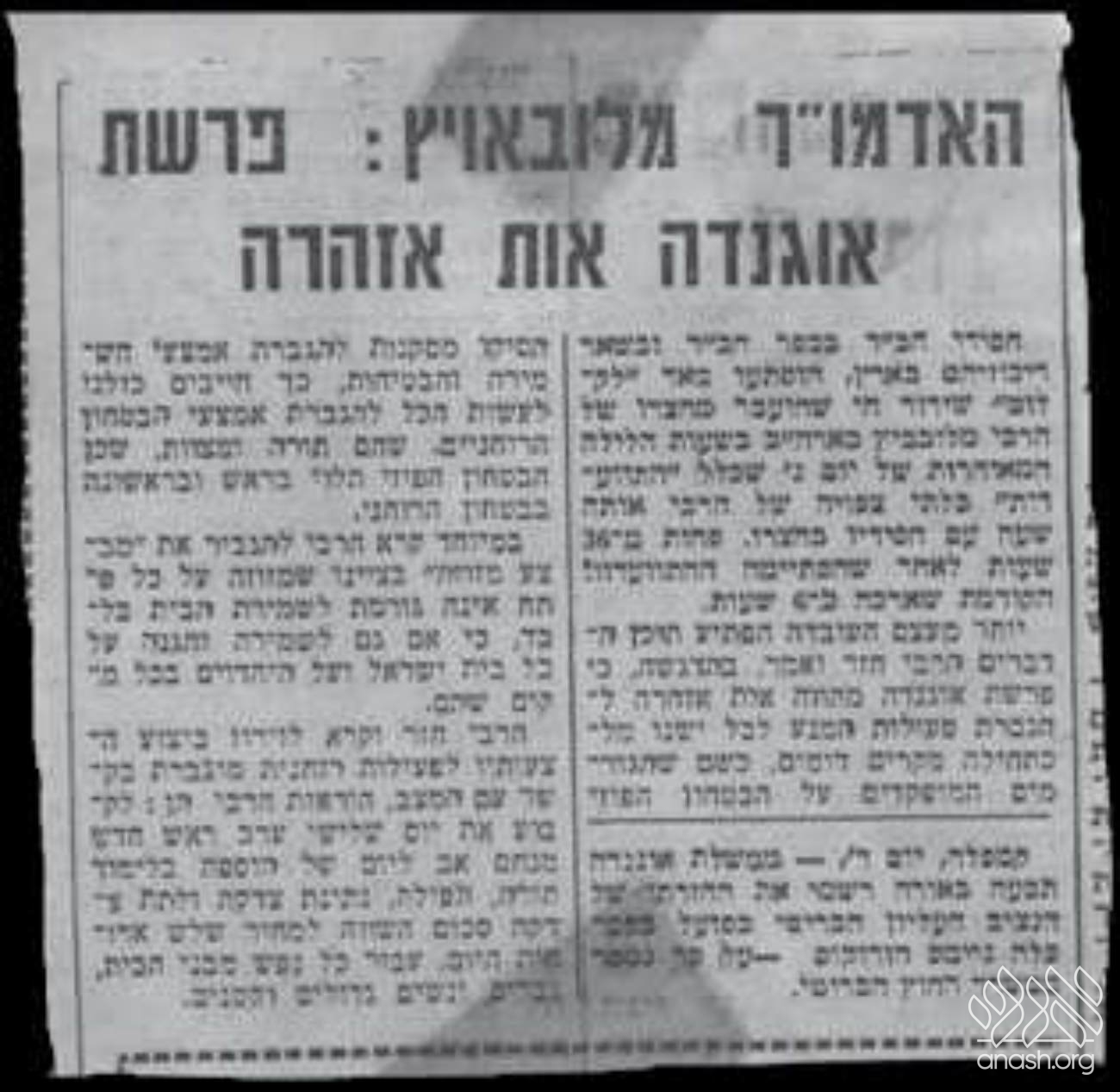
Several days after the hijacking, on Gimmel Tammuz, the Badatz of the Eida Chareidis in Yerushalayim called for one of the largest gatherings of its kind, bringing together tens of thousands of Jewish schoolchildren to daven for the hostages’ safe return.
On the morning of the gathering, several of the Rebbe’s shluchim in Eretz Yisroel went to the home of Harav Yitzchok Weiss, the Av Beis Din of the Eida Chareidis, with whom they shared a warm relationship.
Rabbi Avrohom Baruch Pevzner relates:
“We met with him in his study and asked that he allow the Twelve Pesukim to be recited at the gathering. We explained that since the gathering was meant to bring about salvation from our enemies, and Jewish children have a special power to do so, it would only be fitting to recite these specific pesukim, chosen by the Rebbe, which surely carry extraordinary power in that regard.
“The Rav read through the list of pesukim we had handed him, and after some thought asked us whether these pesukim have a special power to bring about salvation, or whether the Rebbe had simply chosen them because they are educational, while any pesukim recited by children would do the job just as well.
“We answered that although we hadn’t heard specifically from the Rebbe that these twelve pesukim are especially suited to bring salvation, we could be certain that they are, simply because the Rebbe had chosen specifically these twelve.
“Harav Weiss agreed, only he asked that we convey the question he had raised back to the Rebbe, which we did.”
Several days after the miraculous rescue, at the farbrengen of Yud-Gimmel Tammuz, the Rebbe dedicated almost the entire sicha to the operation, focusing especially on the power of the Jewish children’s davening and again encouraging them to learn the recently introduced Twelve Pesukim by heart. The Rebbe went on to elaborate on each of the twelve pesukim, explaining the unique power each one carries to help us overcome our enemies.
“You can imagine how thrilled we were to hear, on the hookup of the Rebbe’s next farbrengen, that he was addressing exactly that question,” Rabbi Pevzner said. “We passed the Rebbe’s words on to Harav Weiss, and he was very pleased.”
This was far from the only time the Rebbe spoke about the rescue. To understand the full picture, it’s worth rewinding to how the hijacking itself unfolded.
*
The Hijacking
The story began on June 27, 1976.
Air France Flight 139 was a long-haul passenger flight from Tel Aviv to Paris, with a scheduled stopover in Athens. Nothing about the boarding in Israel that day stood out as unusual. Families and tourists took their seats for what was meant to be a standard international flight. After Athens, more passengers boarded, and the plane took off again into the Mediterranean sky.
Shortly after departure, once the aircraft was cruising normally, four passengers revealed themselves as armed hijackers. Two were Palestinians linked to the Popular Front for the Liberation of Palestine, and two were German militants from a radical leftist group. They moved quickly through the cabin, forcing their way toward the cockpit and announcing that the plane was now under their control.
At gunpoint, the pilot was ordered to change course. The plane turned south, away from Europe, and was redirected toward Libya.
Hours later, it landed in Benghazi.
On the ground, the aircraft was immediately surrounded and placed under control. Libyan authorities did not interfere, and fuel trucks were brought in under supervision. The engines remained off while coordination and communication took place through intermediaries. Inside the plane, passengers sat for long stretches under guard, while the hijackers moved through the aisle checking passports, speaking quietly, and beginning to sort people in ways that already hinted at what was coming.
A woman among the passengers became (or feigned being) seriously ill during the stop and was eventually allowed to leave the aircraft for medical treatment in Benghazi, the only passenger released at that stage.
For everyone else, nothing changed immediately. Fuel was brought in, the aircraft was prepared for departure again, and behind the scenes, the hijackers began laying out their demands more clearly: the release of dozens of imprisoned Palestinian militants held in Israel and several European countries.
After several hours on the ground, the plane took off again from Benghazi.
No one on board knew where it was headed next.
It flew southeast across Africa for hours, far beyond the point of easy return. Eventually, it came down again, this time in Entebbe, Uganda.
As the plane rolled to a stop, it became clear this was not a temporary landing. Ugandan soldiers were present, and the aircraft was treated not as an emergency but as a controlled arrival. The hijackers were not isolated. They had the backing of Idi Amin’s regime, who would later personally appear at the airport and involve himself in the situation.
The passengers were ordered off the plane and marched into an old, unused terminal building nearby. It was dark, hot, and poorly maintained, with little ventilation and no comfort for the growing number of people inside. Families were kept together at first, but confusion spread quickly as armed men moved through the group, separating passengers based on nationality and identity.
Passports were checked one by one. Names were called out. Israeli passengers and those identified as Jewish were pulled aside, in a process that brought back painful memories of earlier moments in Jewish history when separation itself meant danger. The non-Jewish passengers were eventually released in stages over the following days. Around a hundred hostages remained behind, held under heavy guard.
By this point, the situation had settled into a tense routine: waiting, controlled movement, shifting deadlines, and growing uncertainty about what would happen if the demands were not met.
Outside that terminal, the response was already beginning to form in Israel.
*
Beyond the Natural Order
In the sichos and farbrengens that followed, the Rebbe showed how each detail of the entire story was clearly outside the regular rules of nature. Each part was inexplicable, a clear sign of Hashem’s guiding hand and presence throughout, meant to serve as a lesson for everything we need to take from it.
The Rebbe explained that the very fact that the hijacking succeeded in the first place was completely beyond the natural order. In a normal situation, the hijackers would have failed at some point. They should have been caught at the airport, since even a cursory check would have found their weapons. Yet although they were checked, like everyone else, their weapons went undiscovered. They also conspicuously stood out from the crowd in their dress, language, and baggage, the kind of thing that should have prompted security to search them further.
“In fact,” the Rebbe said, “the extent to which this was completely against the natural order can be seen from the fact that one of the passengers, who was later held hostage, told those sitting near her that these people [the hijackers] looked suspicious, and that she was scared to board the plane…”
Yet no one stopped them. Even once they were on the flight, they could easily have been stopped. They were greatly outnumbered, a mere four hijackers against more than two hundred passengers, and some of the passengers even had the training to overpower them. But no one did. By every natural calculation, the hijackers should have been stopped at some point along the way. Yet against all odds, the hijacking went off without a hitch.
All of this, the Rebbe explained, was Hashem showing us, step by step, that this was all orchestrated by Him and meant to serve as a lesson.
*
The Decision to Act
In Israel, the crisis quickly became a national obsession. Newspapers carried constant updates, and families of the hostages pleaded for action. Military leaders, intelligence officials, and government ministers met around the clock, searching for a solution to a problem that seemed impossible.
For years, Israel had maintained a firm policy against giving in to terrorist demands. The fear was that every concession would invite another hijacking, another kidnapping, and another round of blackmail. But now more than one hundred Jewish and Israeli hostages were being held in Uganda, with the threat of execution hanging over them. Reluctantly, Israel entered negotiations.
Publicly, officials appeared willing to discuss the hijackers’ demands and requested additional time. Yet behind the scenes, something very different was taking shape.
Information began pouring in from released hostages, intelligence sources, and airport experts: the layout of the terminal, the positions of guards, the number of terrorists, and the routines inside the building. Officers studied maps, built models, and began developing a rescue mission that many considered almost unimaginable. Uganda was more than 2,500 miles from Israel, deep inside hostile territory.
The proposed operation seemed so risky that even some of its planners doubted it could succeed.
Dan Shomron, one of the generals who helped lead the operation, later recalled the atmosphere in those meetings:
“After I presented the plan, [Defense Minister Shimon] Peres asked everyone present: ‘What chance do you give this? How many casualties do you think there will be? Do you recommend the execution of this plan?’ Most of them didn’t want to answer…”
If the rescue failed, dozens of hostages could be killed. Israeli soldiers could be stranded in Uganda. The country could face a military and political disaster unlike anything in its history.
Even as the plans became more detailed, there was no final decision. The operation remained only one option among several. Ministers argued, military commanders debated, and intelligence officials weighed new information as it arrived.
Even as the aircraft crossed Africa on their way to Uganda, members of the Israeli cabinet were still discussing whether the mission should proceed. The risk of heavy casualties weighed heavily on everyone involved.
There were political concerns as well. Much of the equipment being used, including the transport aircraft, had been supplied by the United States. American policy held that such equipment was intended for defensive purposes. Some officials worried that a long-range raid into Uganda could create a diplomatic crisis, potentially affecting future military cooperation and arms sales.
Finally, after intense debate, the government reached its decision. The vote was unanimous. Operation Entebbe was on.
*
A Decision Beyond Calculation
The decision to launch the operation, the Rebbe later highlighted, was itself a miracle.
From a practical standpoint, Operation Entebbe made little sense. The hostages were being held thousands of miles away, the risks were enormous, and the chances of success appeared slim. According to military calculations and the advice of Israel’s allies, there was every reason not to proceed.
“According to all calculations and according to the advice of their ‘good friends,’ there was no place at all that they should go ahead with such a thing. But once Hashem gave the idea that they should not consider all the calculations, they went ahead with this.”
The same was true of the soldiers themselves. The Rebbe explained that volunteering for such a mission ran contrary to the body’s most basic instinct, the desire to preserve one’s own life. Yet these soldiers willingly chose to fly thousands of miles into enemy territory to rescue fellow Jews. Their readiness to do so reflected something deeper than physical calculations. It was a victory of the spiritual over the physical.
“This shows us clearly, first and foremost, that there is a Master to this palace,” the Rebbe said. Once again, the events of Entebbe demonstrated how every stage of the story, from the decision to act to the operation’s success, unfolded in a manner that transcended ordinary expectations and revealed Hashem’s guiding hand.
*
A Question Left Unasked
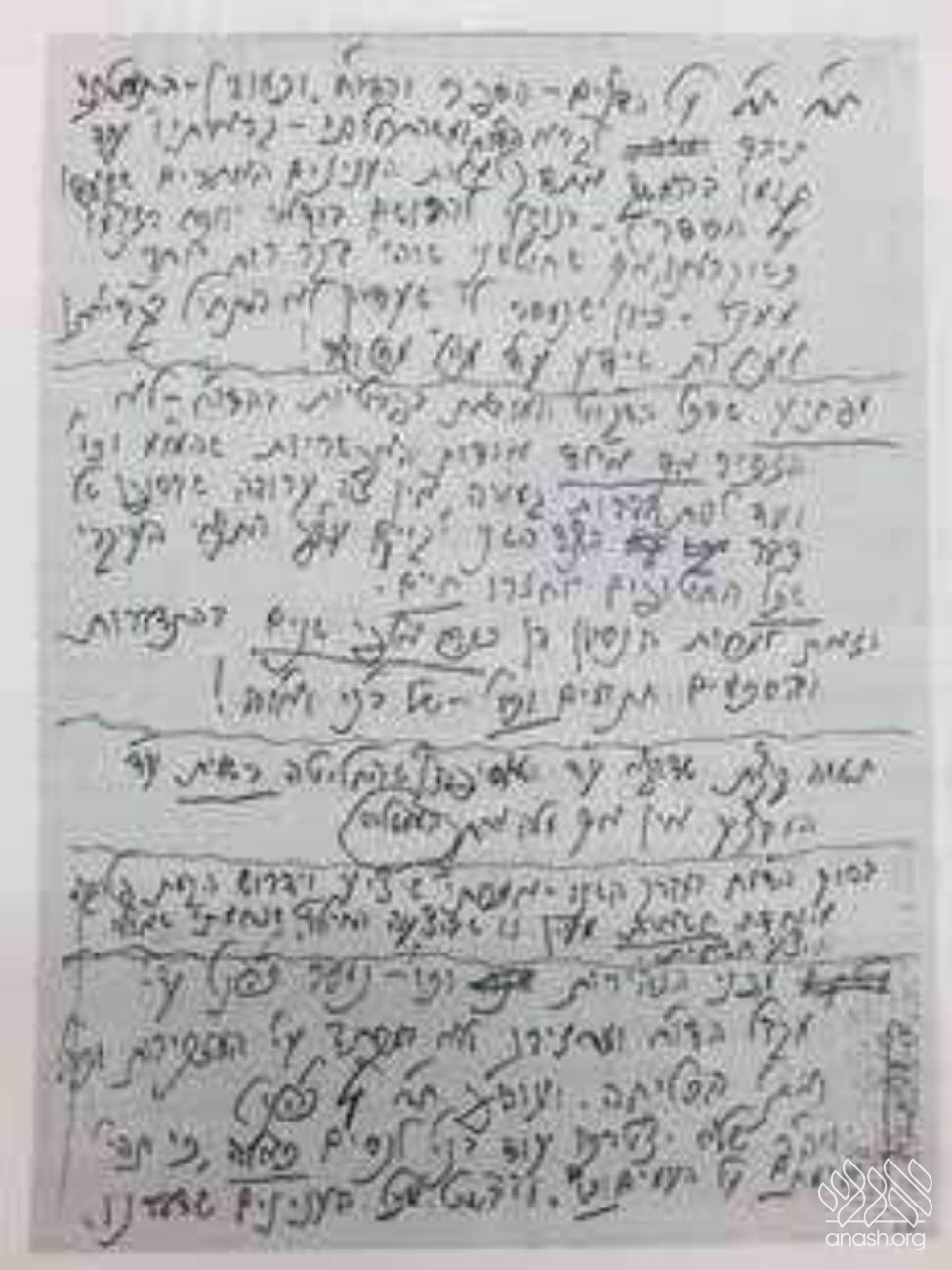
Following the operation, the Rebbe was given a detailed report of the entire rescue mission by a senior Israeli security official.
In a lengthy handwritten response, the Rebbe expressed surprise that throughout the extensive discussions described in the report, no one appeared to raise a fundamental concern that even if negotiations succeeded and a complete agreement was reached, there was no guarantee that the terrorists would ultimately fulfill their most basic commitment and return the hostages alive.
“This is despite the experience of several thousand years of negotiations, signed agreements, and the like between the Jewish people and the nations of the world,” the Rebbe wrote. “It is somewhat puzzling that, regarding the government meeting that officially approved the operation, not a single word is mentioned.”
The Rebbe concluded by noting that, due to security concerns, his response was being conveyed directly through the individual who had delivered the report rather than through the regular channels of the mazkirus.
*
Ninety Minutes at Entebbe
Shortly before midnight on July 3, 1976, four Israeli Air Force planes disappeared into the darkness over Africa.
In New York, it was Shabbos afternoon, and many Chassidim recalled a strange thing they witnessed that Shabbos: in the middle of davening Mincha, the Rebbe suddenly took a Tehillim and began reciting several kapitlach.
Inside the aircraft were hundreds of soldiers from elite IDF units, flying more than 2,500 miles away from Israel toward a mission many believed could not succeed.
The entire operation depended on surprise.
The soldiers knew they had only minutes. They needed to land, reach the terminal, eliminate the terrorists, free the hostages, and escape before Ugandan forces could respond. They were also taking an enormous risk, flying across several countries where they could be detected by enemy radar or intercepted.
The small force of commandos knew that if the mission went wrong, they could find themselves facing not only the terrorists, but potentially the entire Ugandan military.
As the planes approached Entebbe, the pilots flew extremely low to avoid detection. They landed in darkness, and the rescue force immediately moved toward the terminal.
Leading the first vehicles was a black Mercedes meant to resemble the official car of Uganda’s president. The plan was to pass the guards before they realized anything was wrong.
For a moment, it worked. Then Ugandan soldiers noticed the deception and opened fire.
The commandos immediately accelerated toward the building. As they stormed inside, they shouted to the hostages: “Everybody down! We are Israeli soldiers!”
The hostages dropped to the floor as the soldiers moved quickly through the terminal. The terrorists were caught off guard, and within moments, the commandos had eliminated the threat.
The soldiers continued searching every room, calling out: “Israeli soldiers are here! You are safe!”
One of the greatest challenges was making sure the hostages understood that the rescue force had truly arrived. Some were afraid it was another trick by the terrorists.
The commandos gathered the hostages and began moving them at lightning speed toward the waiting aircraft, all while Ugandan soldiers continued firing from the surrounding area.
Outside, the battle continued. Israeli forces destroyed Ugandan fighter jets on the runway so they could not pursue the planes after takeoff.
The entire rescue was completed in roughly 90 minutes. When the final aircraft left Entebbe, the impossible mission had succeeded. 102 hostages had been saved.
*
The World Reacts
The news spread across the world quickly. Governments, military leaders, and ordinary people were stunned that such a daring operation, carried out thousands of miles from Israel and deep inside a hostile country, had succeeded.
In Israel, the fear and uncertainty that had gripped the country turned into scenes of celebration. Families who had waited anxiously for days finally saw their loved ones return home. At the airport, thousands gathered to welcome the rescued hostages, cheering and crying as they stepped off the plane.
Across the Jewish world, communities followed the news with emotion and relief. Beyond a military victory, it became a symbol of courage and the determination to protect Jewish lives wherever they may be.
Military experts later described the Entebbe raid as “the most daring hostage rescue mission in history.” The operation became a case study for special forces around the world and remains remembered decades later as one of the most remarkable rescue missions ever carried out.
*
Stacked Against Them
At the farbrengen, the Rebbe explained that the greatest miracle of the Entebbe rescue was not only the daring operation itself, but the fact that the entire mission succeeded despite the overwhelming challenges against it.
Under normal circumstances, a military operation relies on overwhelming strength. A large force arrives, using superior numbers and firepower to intimidate and defeat the enemy. The Entebbe mission, however, had to be carried out in complete secrecy.
The odds were stacked heavily against them. The Ugandan military forces at the airport outnumbered them and had more weapons and ammunition.
The fact that the planes reached Entebbe unnoticed was itself a miracle. Such a long journey over so many countries should have been impossible to hide. Hundreds of people, including soldiers’ families and others involved in the preparations, were aware that something was taking place. Yet the terrorists had no idea that a rescue mission was coming.
This, said the Rebbe, demonstrated to the entire world that Hashem guides the world, and that when Jewish lives are at stake, the usual rules of nature do not stand in the way. The spiritual power of protecting Jewish life can overcome even the strongest physical obstacles.
The Rebbe added that the lesson from Entebbe applies to every individual. Just as the spiritual overcame the physical in that operation, each person must strive to allow his neshama to lead his physical side. This means bringing more kedusha into everyday life, and expressing Yiddishkeit through his actions and behavior.
*
A Painful Lesson
A sad element of the Entebbe rescue came during the final moments of the operation. When the Israeli commandos stormed the terminal, they called out to the hostages in Hebrew and English, instructing them to get down on the floor. Tragically, several hostages stood up, and in the confusion, the soldiers mistook them for terrorists. The result was that three Yidden were killed during the rescue.
The Rebbe explained that this too was an indication of Hashem’s involvement in the entire operation.
These deaths were not simply a natural or unavoidable consequence of a military mission. Had the hostages remained on the ground as instructed, they would have survived. Similarly, the loss of the commander of the operation, Yonatan Netanyahu, was not because casualties were inevitable; his death came from a random bullet.
“If the purpose of this entire episode was only to reveal Hashem’s miracles, why did it have to come through so much pain and suffering?” the Rebbe asked.
Why did Yidden have to spend a week terrified in captivity? Why did anyone have to lose their life? There must be a deeper message from Hashem.
The Rebbe explained that the rescue was not only a miracle, it was also a warning. Just as the world responded by strengthening airport security so that such a tragedy would not happen again, the Jewish people must strengthen their own security, their spiritual security, through Torah and mitzvos.
The Call for Mezuzah
The Rebbe compared a Jew without Torah to a fish removed from water. No matter how many people decide that the fish belongs on dry land, it cannot survive there. A Jew’s true existence is Torah, and there is no substitute.
The Rebbe then urged everyone to strengthen the mitzvah of mezuzah, explaining that it has a special connection to security. The mezuzah guards the home and the person, as the Zohar explains on the possuk “Hashem will guard your going and your coming.”
The Rebbe emphasized that every additional kosher mezuzah adds protection for the entire Jewish nation. Therefore, everyone should immediately check their mezuzos, regardless of when they were last examined, especially the soldiers involved in the operation and the freed hostages.
“The security of the Jewish nation is at stake,” the Rebbe said, “every person must do everything in his power that every single Jewish home has a mezuzah.”
A Startling Discovery
In the days that followed, chassidim in Eretz Yisroel launched a major initiative, going from house to house to check mezuzos, with special attention given to the homes of the freed hostages. To their shock and amazement, in every one of the hostages’ homes that was checked, a problem or deficiency was found in one of the mezuzos.
Three days later, on 15 Tammuz, the Rebbe held another farbrengen and explained that one of the purposes of the gathering was to once again emphasize the urgency of ensuring that every Jew has a kosher mezuzah on every door.
The Rebbe shared the startling report he had received from the Shluchim regarding the hostages’ mezuzos, explaining that these results added even greater urgency to the call. Every hostage should publicize the findings, not to point out a mistake, but to awaken others to the importance of having kosher mezuzos.
At a subsequent farbrengen held Erev Rosh Chodesh Av, the Rebbe again stressed that everyone involved in Entebbe, both the hostages and the soldiers, should ensure that they had kosher mezuzos, and that the soldiers should work to ensure that every soldier in the army had mezuzos wherever they were stationed.
[During a Hebrew yechidus that summer with wounded Israeli soldiers, whom the Rebbe famously referred to as metzuyanai Tzahal (“exceptional soldiers”), the Rebbe encouraged them to ensure that they had kosher mezuzos in their homes, adding that it would be a great honor if they accepted mezuzos as a gift from his representatives in Eretz Yisroel, who would visit them after their return to help arrange them properly.]
*
The Istanbul Attack
Not long after the Entebbe rescue, another tragic attack took place when terrorists targeted an El Al flight in Istanbul, Turkey. As passengers were boarding the plane, the terrorists opened fire and threw a grenade into the crowd. Three people were killed, and twenty-four were injured, many seriously. The terrorists later stated that the attack was carried out as a continuation of what had happened at Entebbe.
At the farbrengen of Chof Av, the Rebbe explained that this was another heavenly warning, adding urgency to the call for every Jew to strengthen their security through kosher mezuzos.
Throughout the summer, the Rebbe continued sending letters to individuals and organizations, urging them to add in Torah, mitzvos, and especially mezuzah, emphasizing the responsibility of every Jew to ensure that their homes have kosher mezuzos.
*
Was It a “Miracle”?
Following Operation Entebbe, the Jewish nation was filled with overwhelming emotion and gratitude. After a week of fear and uncertainty, the miraculous rescue of the hostages left Jews around the world in awe, thanking Hashem for the incredible salvation and the open miracles that had taken place.
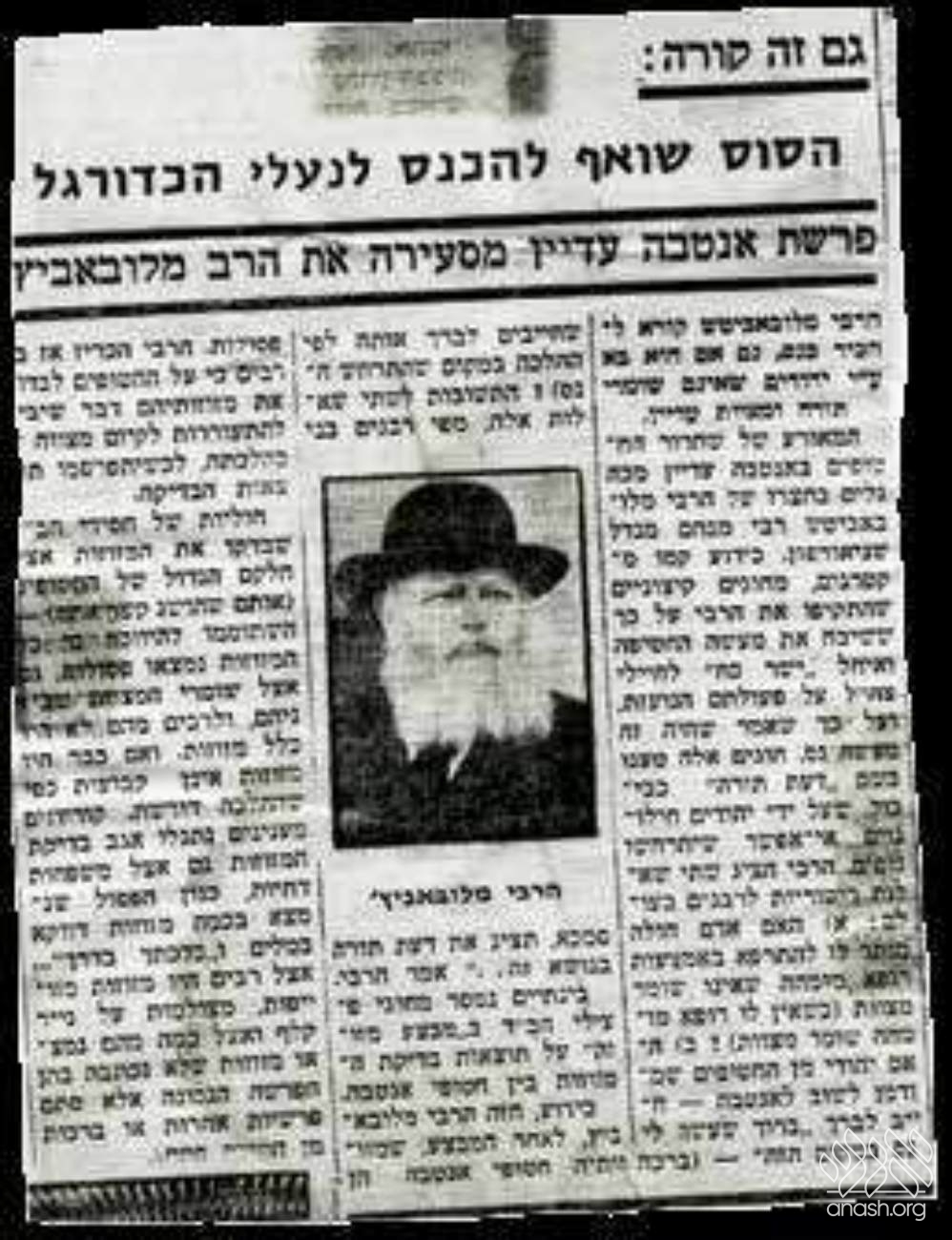
However, some frum Yidden argued that the operation was not a miracle. Their reasoning was that Hashem would not perform miracles through people who were not observant of Torah and mitzvos, and since many of the Zionist Israeli soldiers involved were not religious, they claimed the rescue could not be considered a miracle.
In a sicha on Simchas Torah 5737, the Rebbe spoke very sharply about these claims. The Rebbe brought the example of Chizkiyahu, whom Hashem did not make Moshiach because after the miracle of the defeat of Sancheriv’s army, he did not sing shira and properly thank Hashem.
The Rebbe explained that this teaches the tremendous importance of recognizing and thanking Hashem for miracles. When a miracle of the magnitude of Entebbe occurs, the Jewish people must acknowledge Hashem’s kindness. To deny that such a rescue was a miracle is therefore a very serious matter.
Rabbonim Should Pasken
The Rebbe then made an unusual request: that rabbanim around the world should clearly pasken on two related questions.
First, whether a hostage returning to Entebbe would be obligated to recite the bracha of she’asah li nes bamakom hazeh. Second, whether one should choose a less experienced doctor who is a yerei Shamayim or a greater expert who is not religious.
The Rebbe explained that the answer to this question also applies to Entebbe: If Hashem sends healing through non-religious doctors, He can also bring miracles through non-religious soldiers.
The Rebbe added that rabbanim should take this issue seriously, because it is a practical question that affects Jews everywhere.
The Rebbe pointed out that those who claimed Entebbe was not a miracle had already answered the question themselves. When they or their families needed medical help, they turned to the best doctors available, without first checking the doctor’s level of observance.
The Rebbe wanted the rabbanim’s response to be clear and direct. Instead of allowing the issue to become buried in lengthy discussions, every rov should state his position clearly. Rabbanim should not avoid the question; they must courageously address this matter and give a clear psak.
*
Fifty years later, Entebbe remains a powerful reminder that behind every event stands the guiding hand of Hashem. The Rebbe taught that the true lesson of the rescue is not only to recognize the miracle, but to respond by strengthening our connection to Hashem with Torah and mitzvos.
Much thanks to A Chassidishe Derher, whose informative articles helped shape this piece and provided valuable insight.
 COMMENTS


We appreciate your feedback. If you have any additional information to contribute to this article, it will be added below.