



ד׳ סיון ה׳תשפ״ו | May 20, 2026
Building a Lamdon From the Inside Out
A sharp and wide-ranging conversation with Rabbi Ezra Shochet, Rosh Yeshiva of Ohr Elchonon Chabad in Los Angeles, on what it truly takes to produce an independent lamdon – covering independent thinking, the right order of Rishonim and Acharonim, the unique derech halimud of our Rebbeim, and how one can reach the highest levels of learning today.
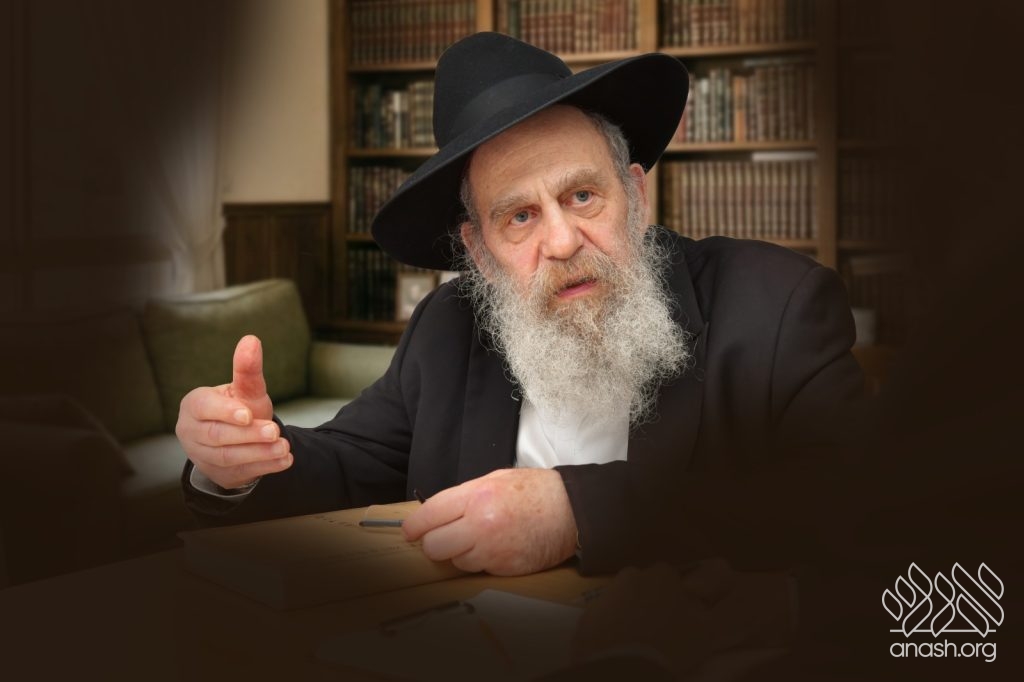
Rabbi Ezra Shochet is the longtime respected Rosh Yeshiva of Yeshivas Ohr Elchonon Chabad in Los Angeles. Renowned for his geonus in learning, he has hundreds of talmidim, many of whom serve as maggidei shiurim and shluchim.
Ahead of Shavuos, we bring you an in-depth interview with Rabbi Schochet about limud haTorah. The interview was conducted by Rabbi Shlomo Kenig, magid shiur in Tomchei Temimim of Kfar Chabad, for the Bnei Heichala magazine. It was translated by Anash.org staff.
The Bnei Heichala Chabad journal is available in Crown Heights stores and online at Bnei-Heichala.com
*
Interviewer: Many talented bochurim sit and learn hard, understand the material well, and ask sharp questions after shiur – yet the moment their teacher stops handing them mareh mekomos and telling them where to look, they get lost. They never developed the ability to approach a sugya as an independent lamdon. The gap between how much they invest and what they actually gain is striking. Is the problem in how bochurim are being taught?
Rabbi Schochet: One reason is a shortage of time.
Today’s bochurim carry a heavy load, and the demands only grow as time goes on – as the Rebbe noted in the sicha of Acharon shel Pesach 5736. They are expected to learn nigla and Chassidus, iyun and girsa, three perakim of Rambam daily, and sichos. A bochur needs to find the time to sit for a sustained stretch, struggle, and develop his own thinking.
So is there no way today to produce a bochur who is an independent lamdon?
The first step is to put away the likut seforim. A bochur who doesn’t struggle with himself to analyze and develop the sugya will never learn to learn on his own. Only when the bochur toils himself does he become one with the learning – the Torah becomes him. If he is served a fully prepared meal, he won’t learn from that how to cook for himself. A bochur needs to be given time to develop the sugya.
Only after thinking independently should he open the Acharonim and see what they say. If you arrived at their conclusion – wonderful. And if not – who knows, maybe your approach is actually better and more correct.
I recall my melamed from childhood, who, in his youth, had learned in the famous Mir Yeshiva in Russia. He would always say: “You don’t need to come to the Maharsha’s answer, but his question – that you should think of yourself.”
Only when a question arises for you personally, when it genuinely interests you, do you feel an inner drive to think. As long as the question isn’t yours, what will push you and motivate you to find an answer?
First and foremost, a bochur needs to learn the sugya himself: stop and ask – what is Rashi adding here that I wouldn’t have known without him? Why did he use this word and not another? Why do certain words appear that seem unnecessary – what new understanding do they provide? This kind of thinking produces a foundational understanding and develops a true derech halimud.
The same applies to learning halacha in the Shulchan Aruch of the Alter Rebbe. It is well known that every word of the Alter Rebbe is absolutely precise. Are you aware, as you learn, of the precision embedded in each word? Do you think about why the Alter Rebbe extends his language at length when he could have stated the halacha in fewer words?
Simply being conscious of this and approaching learning with this mindset is the right start.
But as we said before, to work on a sugya, to develop it and think independently, takes time. If a bochur would sit every day with his chavrusa for five or six hours, dedicated to serious study of the sugya and independent thinking, everything would be different.
How does a bochur know he is on the right track and actually acquiring the skill to learn as a lamdon?
Every bochur must internalize: as long as you don’t have your own “osiyos,” you don’t understand. You need to think for yourself, in your own words: what is Rashi saying, and where do Tosfos argue with him. The material needs to be settled clearly in your mind, as the Rebbe Rashab guides us in the Kuntres Eitz Hachaim. If the ideas are handed to you ready-made in shiur, you will never know how to learn.
Quantity and Quality
What is the right way for a bochur to broaden his Torah knowledge? And how does he retain what he has learned?
To retain knowledge, there is simply no substitute for chazara. Memory varies from person to person, but it’s obvious that without proper review, learning doesn’t hold. It is important to remember that according to the Alter Rebbe, the very knowledge of Torah is itself the mitzvah of Talmud Torah.
As for those who claim they are incapable of acquiring bekius – in many cases the very same people are quite knowledgeable in other areas (such as the history of Chassidim), and not only the content but the details and dates as well. The capacity to remember exists – it simply isn’t being sufficiently directed toward broad Torah knowledge.
Which seforim are worth learning outside the regular sedorim to enrich one’s knowledge?
In earlier generations, bochurim would learn Sha’agas Aryeh on the side. I think today that may be too difficult for many, but there are other options. The works of R’ Yosef Engel or the Shev Shmaatsa provide a broad background to many sugyos.
It is worth knowing that learning the Rebbe’s sichos gives you extensive Torah knowledge – but the sichos must be learned as a sugya in every respect, not only as a matter of hiskashrus.
The sicha in Likkutei Sichos typically opens by presenting the sugya and the different approaches.
Not necessarily. Whoever is satisfied with just learning the sugya as it appears in the opening of the sicha is fooling himself into thinking he understands. His understanding remains on the surface; he doesn’t really understand it. It’s like learning Rambam without learning the sugya first.
In the Rosh’s responsa (31:9), he writes about the Rambam that “anyone who reads it thinks he understands, but that is not the case.” He brings in the name of “a great man in Barcelona” who said that in areas where he had studied the sugya before looking at the Rambam, he understood what the Rambam was saying – but in Hilchos Kodshim and Zeraim, where he had not first studied the source material, he could not get to the bottom of it.
The same applies to the Shulchan Aruch of the Alter Rebbe. His sons write clearly in the introduction that in order to understand his words, one must first study at a minimum the Gemara, the Rosh and Ran, the Tur and Beis Yosef, and the Shulchan Aruch with its commentators – the Taz and Shach, or the Magen Avraham. Only then can one see the light and appreciate the reasoning and chiddush that the Alter Rebbe introduced in his golden language.
All of this applies to bochurim who already have the drive to broaden their Torah knowledge. But what about bochurim who want to invest in hiskashrus and learning sichos, or those who are more drawn to Chassidus and devote their outside-of-seder time to Chassidus rather than nigla?
The desire of a mekushar must be to broaden his knowledge across all of Torah. A bochur who learns Gemara but doesn’t feel it is truly his business is lacking. He does not know that the Rebbe’s will is for a bochur to invest all his strength in Torah learning. That is hiskashrus. The Rebbe introduced the reality of bochurim publishing questions and chiddushim in kovtzei ha’aros. The Rebbe so strongly encouraged and pushed them to put their questions and chiddushim in writing – “your chelek in Torah.”
When learning a sicha of the Rebbe, one should open the sugya the sicha deals with, study the shitos of the Rishonim, and then approach the explanation in the sicha. It’s impossible to truly understand a sicha without opening the Gemara and the Rishonim it revolves around. When you toil to understand what the sicha adds and innovates in your understanding of the sugya – that is hiskashrus.
It is worth knowing that in the well-known sicha for talmidim of Tomchei Temimim (on Acharon shel Pesach 5736, printed in the supplements to Likkutei Sichos vol. 14), in which the Rebbe defined the essence of a yeshiva bochur as one whose “Toraso Umnaso,” it emerges that within Torah learning itself, a bochur’s primary occupation should be devoted to nigla! This essential perspective is sometimes missing, and every bochur must grasp it.
There is a reason for this: learning nigla brings about the refinement of the body, while Chassidus is the ohr haneshama, the light of the soul. Without the birur haguf, there is no vessel for the ohr haneshama to shine into. That refinement is achieved through the toil of learning nigla.
Through the exertion and the “koch,” the vessel is created through which one can grasp the light of Chassidus, the light of the neshamah. The refinement happens when one is immersed in Torah on the level and in the subjects that relate to the physical reality. Then the guf is refined, and itself becomes a vessel in which the ohr haneshama can shine.
The Derech Halimud of the Rebbeim
Is there something distinctive about the approach to learning of our Rebbeim, compared to other gedolei Yisrael?
The learning approach of the Alter Rebbe was already defined by R’ Shlomo Yosef Zevin (Sofrim U’Seforim, Pesakim, p. 19), who wrote that the world attributes to R’ Chaim Brisker the method of deep analytical penetration to the heart of the pshat of a sugya, from the understanding that “if there are not two tzdadim, there isn’t even one tzad.” But in truth, the Alter Rebbe had already founded and innovated this approach; numerous examples of this can be found in his Kuntres Acharon to the Shulchan Aruch (Rav Zevin brings several examples there).
When you learn the works of our Rebbeim and their talmidim – in the Kuntres Acharon to the Alter Rebbe’s Shulchan Aruch, in the Tzemach Tzedek, and in the work of his talmid the Toras Chesed – a distinctive characteristic emerges that is not found in other works:
Among Acharonim in general, there are two approaches. Some Acharonim – like Reb Akiva Eiger in his responsa – mention all the meforshim and opinions that preceded them. Other Acharonim – like the Chasam Sofer – barely mention other meforshim at all, instead developing the sugya according to their own approach.
[It is said that the Chasam Sofer told his talmidim that when it comes to psak halacha, they should rely on his father-in-law, Rav Akiva Eiger, but for derech halimud, they should learn from him. For a long time, I didn’t understand: what did he mean by that?
The explanation is that the Chasam Sofer’s derech is the way of chiddushim. His sevaros emerge from and through the depth of the sugya, and can only be understood after studying the sugya in depth. That’s why he doesn’t cite those who preceded him.
Rav Akiva Eiger, by contrast, accounts for every detail of the sugya through pshat, addressing all the different opinions before him. And so – contrary to what people commonly think, that the Chasam Sofer issues psakim while Rav Akiva Eiger innovates sevaros – the opposite is actually true.]
In the Torah of our Rebbeim, we find something unique – both the Alter Rebbe and the Tzemach Tzedek (and similarly the Toras Chesed) combine both approaches: they encompass the sugya in all its details and address every opinion, while simultaneously driving to the depths of the sevaros.
Many times we see that the Tzemach Tzedek learns a Gemara that everyone until then had understood one way, and he learns it completely differently, in an entirely new way. This is unique even compared to other Gedolei Yisrael of his generation. That is why it is important to emphasize: in order to understand the Tzemach Tzedek, one must learn the sugya and the Rishonim in depth.
Often, he says a sevara, and it is difficult to understand why he doesn’t learn the way everyone else does. When you feel that way, that’s the key to begin understanding his chiddush.
The same applies to the Alter Rebbe’s Shulchan Aruch: To understand the depth of his words, and not merely learn the practical halacha, there is no point in approaching a se’if before you have properly studied the sugya. In the Kuntres Acharon, he often teaches a new pshat, but within that pshat lies a wonderful depth. We must work hard and learn the depth within the pshat.
(There are people who read the chiddushim of R’ Chaim Brisker and don’t understand them, and immediately rush to find another explanation; that’s a foolishness born of laziness. You need to toil and understand its depth. And yet, for us – why invest all our energy into toiling to understand Reb Chaim? We can invest it in understanding the Alter Rebbe and the Tzemach Tzedek! Though the toil and the understanding of Reb Chaim will help you see the depth of the Alter Rebbe and the Tzemach Tzedek as well.)
This uniqueness is evident in the Toras Chesed – he too brings all the opinions, and at the same time innovates his own lomdishe approach to the sugya. Therefore, I would suggest that a bochur who wishes to broaden his knowledge should learn the teshuvos of the Toras Chesed. There is material there that is even more essential for a bochur’s Torah learning than the Sha’agas Aryeh. (You don’t need to learn the entire sefer; choose the topics that interest you.)
In the Divrei Nechemia as well, this derech halimud is clearly evident, which can probably be defined as the derech halimud of the Alter Rebbe: on the one hand, bringing and addressing all the opinions, yet at the same time charting a new path of his own. In the Divrei Nechemia, one sees tremendous ge’onus; he often engages in pilpul with the Tzemach Tzedek, and at times there is even a machlokes between them (such as mechiras chametz, and elsewhere).
When you invest in learning the chiddushim of a particular meforash, it shapes your way of learning. Does learning the Alter Rebbe and the Tzemach Tzedek shape your derech halimud and change your approach as well?
Certainly. First of all, one who learns through this approach trains himself not to deceive himself. He learns to seek the true understanding, and gets used to learning the depth of the pshat. True, it is not within the capacity of people on our level to learn a sugya to the depth of the Alter Rebbe and the Tzemach Tzedek – but this trains you to think in that way, and to seek both the depth and the pshat in every sugya. That is to say, to arrive at the pshat from within the depth of the sevara.
This is clearly visible in Reb Chaim as well; it is the depth of the sevara that brings him to the simple pshat. After you hear and understand the depth, you see that this is the straightforward reading of what is written.
It is said that the difference between the Beis HaLevi and his son Reb Chaim of Brisk is this: with the Beis HaLevi, even after the answer, the question doesn’t go away. But with Reb Chaim, after you understand, not only is the question answered, it disappears entirely from the start.
This statement rings very true with regard to the chiddushim of the Alter Rebbe and the Tzemach Tzedek.
When speaking of the Rebbe’s Torah, can the uniqueness of the Rebbe’s derech halimud be defined?
The Rebbe’s derech halimud cannot be reduced to a single definition.
There are different darkei halimud: the analytical method of R’ Chaim Brisker is unlike the pshat-based approach of the Netziv; the “l’shitasaihu” approach – finding the shared sevara connecting distant sugyos – is unlike the method of “chilukim,” which seeks precisely what is unique to each sugya; the encyclopedic scope of the Rogatchover, who finds a common thread to explain widely disparate sugyos, is unlike close reading in context; the way of logic differs from the way of pilpul; and so on.
But we ought to remember that all these approaches are merely tools to reveal the light of Torah. Each learner, in his own way, according to his own “tzurah” – the tools he was given and the style of thinking natural to him – is engaged in striving to understand Torah.
But with the Rebbe, we find the removal of the boundaries between these different darkei halimud: the pshat is intertwined with the depth of the biur; from within the depth, a shared point emerges with distant sugyos; together with a local analysis of the sugya and an explanation of each approach through a “chakirah,” there is descent into the breadth and depth of the sugya.
(By the Rebbe, even the distinctions between the different parts of Pardes – pshat, remez, derush, sod – are removed. The Rebbe takes the pshat with all its depth, remez with all its depth, derush with all its depth, sod with all its depth – and specifically from within the depth reveals that they are all one: Torah is one.)
The reason for this is that every person is limited by a particular tzurah and framework. But when speaking of the yechida – when the depth that transcends any “tzurah” or framework is revealed – the limitations fall away, and the achdus is revealed.
The one place where it is possible to define a distinct derech halimud of the Rebbe is in his explanations of Rashi. The Rebbe teaches us that the understanding of a Rashi must fit with every single detail of his language – everything must align and be precise. This is truly a very distinctive approach. A bochur who learns Rashi on the Torah or in Shas can learn from the Rebbe how to approach Rashi. In all likelihood, this is how the Rebbe learned everything, not only Rashi – everything must align and be precise.
It is obvious that a bochur cannot learn on his own at that level, and certainly cannot learn with the depth of abstraction of the Rebbe – but certainly everyone can adopt the Rebbe’s derech that every word in Torah is precise and must align.
Learning Rishonim and Acharonim
After one has toiled to understand the pshat of the Gemara, Rashi, and Tosfos, he wants to go deeper into iyun on the sugya. What is the order of learning? Which Rishonim should he open first?
As I emphasized, it is not right to go immediately to likut seforim. Even when beginning to look at Rishonim, one should start with the foundational ones.
In general, the Rishonim on Shas who appear in the poskim are the Ramban, Rashba, Ritva, and Ran.
My general recommendation for a bochur starting out is to first learn only the Rosh and the Ran. Learning the Rosh is essential for a proper understanding of the pshat in Tosfos. This is consistent with the Alter Rebbe’s introduction to his Shulchan Aruch, where he writes that one should learn the Rosh on the sugyos. There were those who even learned the Gemara from the start together with the Rosh. In the Ran, the ideas are clear and well-explained.
After that, as he advances, he should open the Ramban, Rashba, and Ritva. The Ramban is very concise, and what is sometimes unclear in his brief language is often explained by his talmid, the Rashba, who elaborates more fully (though at times disagrees with the Ramban) – and likewise in the Ritva.
These are the main Rishonim. There are additional Rishonim collected in the Shita Mekubetzes (which in certain masechtos also adds at length from his own explanations), as well as Rishonim discovered from manuscripts. But those should be consulted only in a targeted way – when a question arises and one is looking for an answer in the Rishonim. Trying to learn all the Rishonic opinions on a sugya can overwhelm the learner.
After one has properly learned the sugya with the Rishonim, he can then examine the Rambam’s shita in the sugya and how it is brought down l’halacha in the Tur and Shulchan Aruch.
Is there a particular sefer among the Acharonim worth learning systematically?
Among the Acharonim, one should choose those who clarify the pshat – such as Reb Akiva Eiger, whose questions “open the mind.” That is certainly a sefer worth learning systematically. The Pnei Yehoshua also often touches on pshat, but looking into him is more suited to when a question arises in the pshat, not for systematic study.
Another excellent sefer to learn is the Kovetz Shiurim. It engages with lomdus, but focuses on what relates to the pshat and gives you pshat. This is a sefer well worth learning systematically, after studying the sugya with the Rishonim. In most cases, if there is a sevara in the Ketzos HaChoshen relevant to the body of the sugya, the Kovetz Shiurim will cite it, at which point it would be appropriate to open the Ketzos and learn it from the source properly.
Is there a place for learning a sugya through the “l’shitasaihu” approach, the method associated with the Rogatchover Gaon?
Learning l’shitasaihu – finding the sevara and the common thread between distant sugyos – is certainly very satisfying. However, learning in this way is not realistic. Can one ask a bochur to learn like the Rogatchover? Of course not, he simply doesn’t have the breadth of knowledge required to learn that way.
That said, when occasionally learning a sugya, reflecting on a sevara, and sensing that it connects to a sevara in another sugya, there is merit in that. Sometimes there is a sicha of the Rebbe that explains the sugya being learned in a l’shitasaihu manner. In such a case, the magid shiur would certainly mention and teach the Rebbe’s explanation, but only after first teaching and explaining the sugya in the way of pshat.
There is value in the teacher occasionally showing bochurim the expansiveness of Torah, and the “abstract” sevaros of the Rogatchover that go far beyond a local understanding of the sugya. But as a general rule, one should not teach in a way that the bochur could not walk that path on his own. For the same reason, one does not teach through an elaborate pilpul method (“gag al gabei gag“).
Today, the amount of material covered in the iyun seder in yeshivos is very limited – very few dapim are completed. Is the reason that too much lomdus is being said?
In earlier times, roshei yeshiva would deliver extensive lomdus and still complete twenty or thirty dafim each zman. The reason is that they were great lamdanim, and they knew what matters – what to dwell on in iyun, what is needed to give the bochur a derech and open his thinking – and therefore on a particular Tosfos that was crucial for building a bochur’s derech halimud, they would pause; while other Tosfos they would learn more for girsa. That is how they moved forward and covered many topics.
(This is along the lines of what is mentioned in the introduction to the Alter Rebbe’s Shulchan Aruch – that learning a masechta according to halacha should be with the Tosfos that bear on the halacha. The same applies in iyun – not everything requires dwelling on.)
This doesn’t mean skipping Tosfos – but knowing what is relevant to understanding the sugya and dwelling on that, while a Tosfos dealing with a “side” matter that could distract from the overall understanding and topic of the sugya should be learned in girsa mode: proper understanding of the pshat, but without dwelling.
One cannot spend weeks on the opening Tosfos about yuchasin at the beginning of Perek “Eilu Na’aros” at the expense of the sugyos in the perek itself. That is precisely what limits the pace and leads to completing only five dapim in an entire zman.
Additionally, there are fundamental sugyos that would be a shame to miss. For example, the first ten dapim of Maseches Yevamos contain sugyos of such importance, such as “asei docheh lo sa’aseh.” Studying these sugyos does more for building a bochur’s lamdonus than some of the masechtos that are currently learned in the regular yeshiva curriculum.
A bochur who wishes to broaden his knowledge of important fundamental sugyos would do well to use bein hazmanim or other opportunities to learn the first dapim of Yevamos with proper iyun.
The Success of Tomchei Temimim
You mentioned at the outset the problem of time. The learning obligations on a bochur demand a great deal, and the Rebbe wants us to learn the “chassidishe parsha” as well. How can one manage it all?
There is a famous story about Reb Adin Even-Yisrael, who wrote to the Rebbe that he was collapsing under the weight of his many responsibilities, which occupied him from morning to night. He asked the Rebbe what his order of priorities should be and what he should let go of. The Rebbe answered: Continue with everything you are doing – and add more.
That story gives us the Rebbe’s perspective: “Ani lo nivreisi ela lshamesh es koni,” I was created for nothing other than to serve my Creator. Every moment must be used. And then, there is time for everything, and moreover, it is possible and necessary to add. In the Rebbe’s worldview, there is no concept of “wasting time.” If a bochur learns to use every free moment and avoids idle matters, he will find that he has sufficient time to properly learn three perakim of Rambam.
I recall that when the Rebbe first launched the takana of learning Rambam, I asked myself: Is this really what the Rebbe wants from me? It initially seemed impossible. But after the Rebbe delivered several sichos on the subject and I understood that this was indeed his intent and his will, I began giving a shiur in Rambam every evening after the Chassidus seder. There were days when the halachos were complex, and the shiur ran two and a half hours; and beyond the shiur itself, the preparation required was considerable. But the reality proved: when there is a decision, the time is found.
Can a bochur in Tomchei Temimim – who dedicates time to Chassidus and mivtzoim on Fridays – reach the same level of lamdonus as a bochur of a different yeshiva who spends the entire day on nigla alone?
The answer is: Absolutely yes. Without any doubt. But it requires hanachas atzmuso – total devotion.
The Rebbe cited many times what the Alter Rebbe writes – that one “one’s mind and heart becomes purified a thousand times over.” We see this clearly: a bochur who knows “Ani lo nivreisi ela lshamesh es koni,” and for whom learning Chassidus means a few hours are taken from his nigla learning each day – merits siyata diShmaya in Torah learning, and arrives at a clarity of understanding in nigla in a mode of “a thousand times over” – he gains in one hour a clarity of understanding that would otherwise require a thousand hours.
Sometimes it takes learning a sugya ten or twenty times to arrive at the correct sevara. But when one merits siyata diShmaya, and is immersed in Torah learning, the correct understanding comes immediately – and one also remembers what is learned, so that bekius and breadth of knowledge are affected as well. But it is understood that for all this, one must still toil, learn, and be immersed in learning, and then, even in less time, one acquires everything needed.
I will share a story that happened to me, which I still don’t fully understand to this day:
When I was a bochur of around twenty, I traveled to visit my parents in Toronto. Before the trip, I merited to enter yechidus, and the Rebbe instructed me to visit all the rabbonim of Toronto and speak with them in learning. The thought crossed my mind: “Who am I? What am I?” The Rebbe read my thoughts and said: “P’sach picha v’ya’iru dvarecha – open your mouth and your words will illuminate.”
And so, I saw clearly how every time I spoke with one of the rabbonim, ideas and sevaros fell into my mind that I had not prepared, and had in fact never thought of before. I felt that I was nothing but a tzinor – a conduit, a “golem” of the Rebbe…
I share this to illustrate how success in Torah learning can come as a gift. And one who devotes and toils to the best of his ability will merit success “a thousand times over.”
But it requires hanachas atzmuso – total devotion. It doesn’t come on its own. You must be devoted, use your time, invest in learning, and toil. Remember that you are not engaged for your own sake – for your own honor, success, perfection, or the enhancement of your name. You are here for what is being asked of you – and then you merit siyata dishmaya that is beyond the natural order.
 COMMENTS


Thank you for sharing this fascinating glimpse into true Torah learning!