




י״א סיון ה׳תשפ״ו | May 27, 2026
Auction House Threatens Legal Action When Challenged
Serious concerns are reportedly continuing to surround significant alleged items of the Rebbeim and Beis Harav sold by an auction house, after a lengthy correspondence shared with Anash.org appears to show repeated requests by collectors and researchers for ownership history, chain of custody, and authentication details that were largely left unanswered, with responses at times escalating into warnings of legal action.
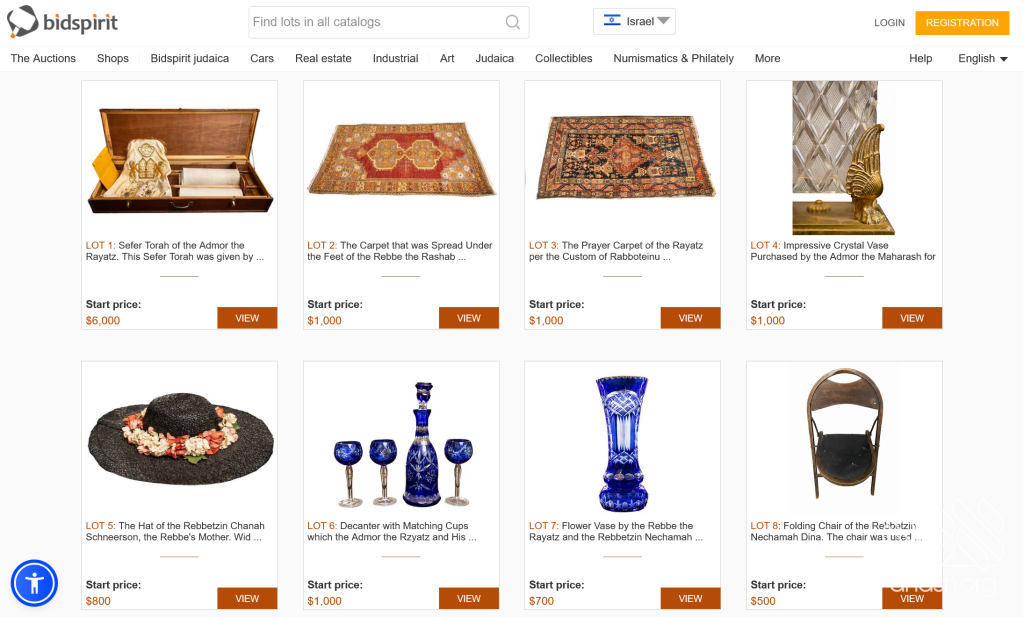
Serious questions are continuing to surround historically significant items of the Rebbeim and Beis Harav sold by the auction house “Kiflayim Letushiya” through the platform Bidspirit, after the auction house allegedly refused to answer detailed authentication and ownership history questions and instead responded at times with threats of legal action.
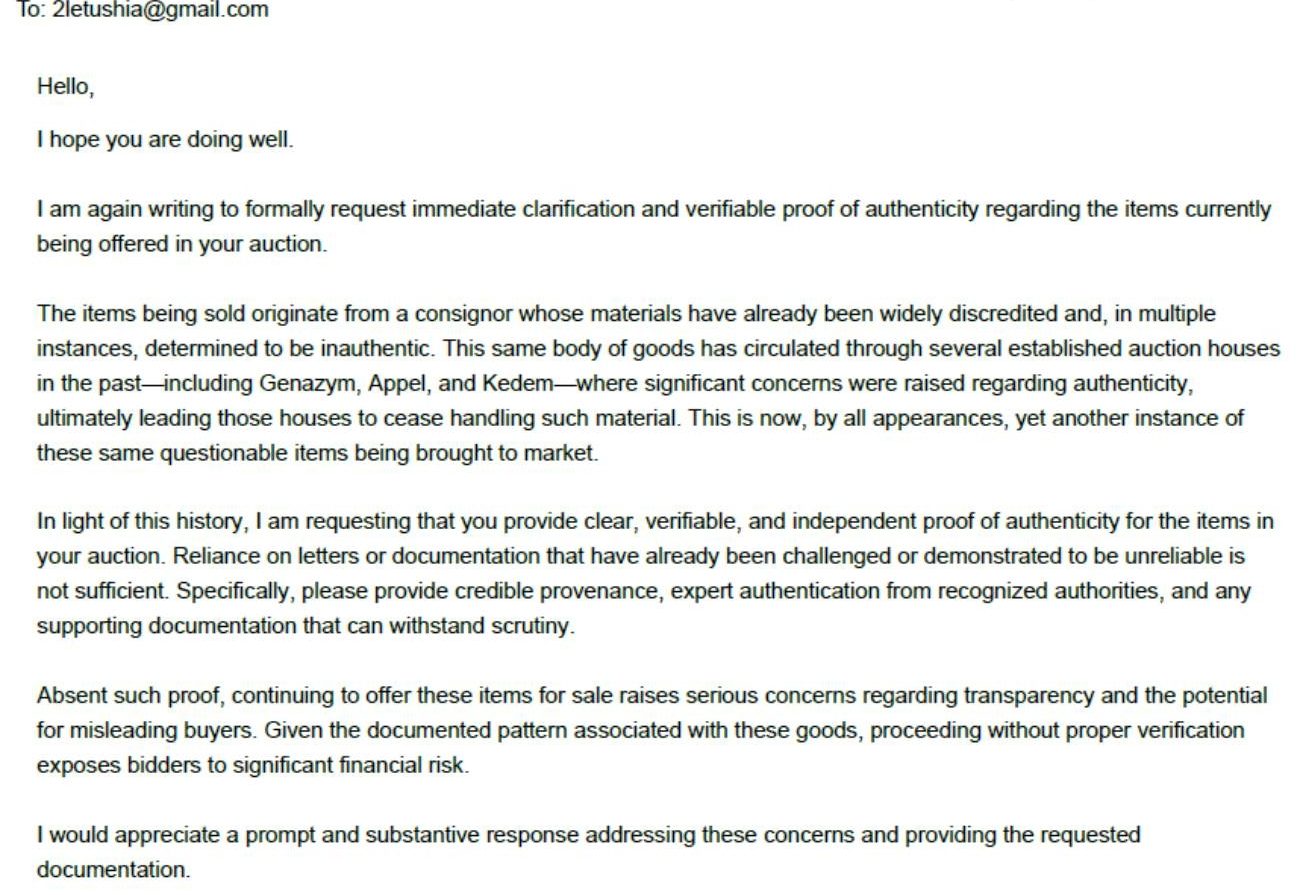
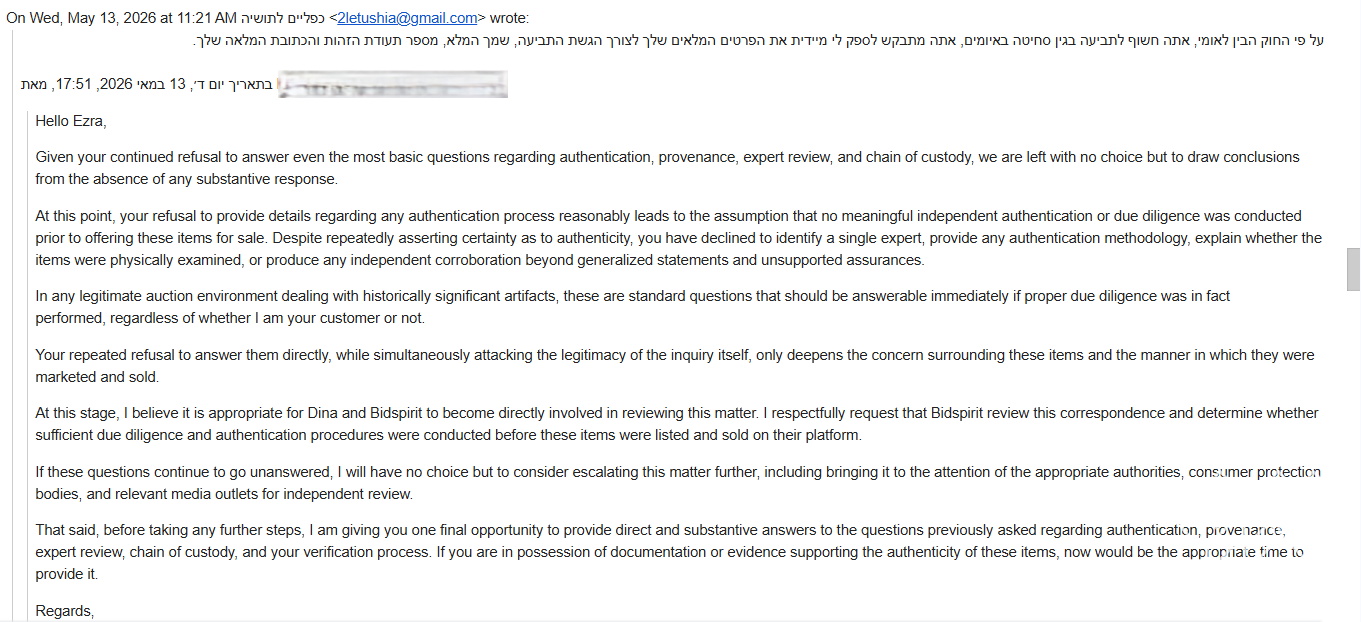
A lengthy correspondence shared with Anash.org appears to show repeated requests by collectors and researchers for information regarding ownership history, chain of custody, expert review, and authentication procedures, which the auction house largely declined to answer directly.
The correspondence comes amid longstanding controversy surrounding a stream of highly questionable artifacts allegedly connected to the Rebbeim and members of Beis Harav that have continued appearing on the Judaica auction market.
Among the items reportedly offered for sale were a supposed Sefer Torah of the Frierdiker Rebbe, carpets and shtenders allegedly belonging to the Rebbeim, Rebbetzin Chanah’s hat, personal clothing items, coins and dollars allegedly distributed by the Rebbe, and numerous other sensational claims.
According to previous reporting by Anash.org, nearly all of the items originated from a single source identified as “S.D.,” who allegedly supported the claims through letters said to have been signed by members of the Frierdiker Rebbe’s family. A prior Anash.org investigation reportedly uncovered what it described as “incontrovertible evidence” that at least one authentication document tied to the collection was forged.
Despite the controversy, the items reportedly continued to appear in auctions through the auction house “Kiflayim Letushiya” on the platform Bidspirit, drawing growing calls from collectors and researchers for greater transparency regarding authentication and ownership history.
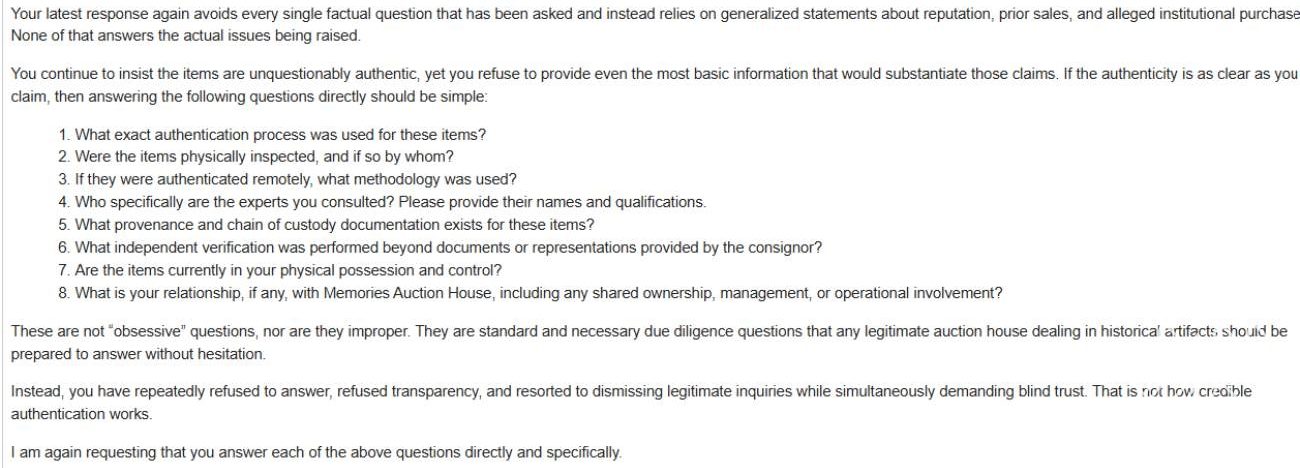
In the correspondence shared with Anash.org, the collector repeatedly requested what he described as standard due diligence information, including ownership history records, chain of custody documentation, the names of experts involved in authentication, whether the items had been physically inspected, and what methods were used to verify authenticity.
“Your latest response again avoids every single factual question that has been asked,” the collector wrote in one email. “At this stage, I am not asking for rhetoric or assurances – I am asking for verifiable information. If such information exists, it should be straightforward to provide.”
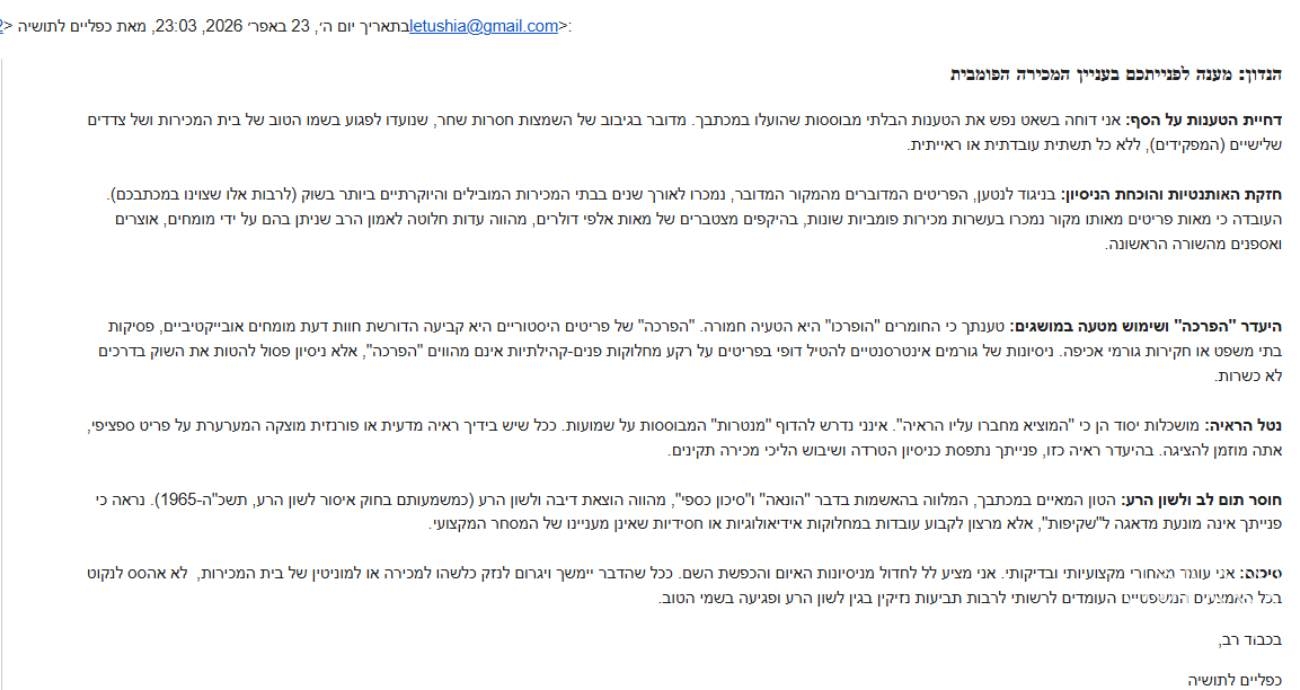
Instead of directly answering the questions, the auction house repeatedly dismissed the concerns as “baseless,” “obsessive,” and “not made in good faith.” In one response, the auction house wrote that it was “not required to refute ‘mantras’ based on rumors,” while another message stated that the collector’s inquiries were “obsessive and harassing” and that “repeating your unjustified questions many times will not make them legitimate.”
The correspondence also appears to show the auction house responding with increasingly aggressive language as the questions continued. “I reject with disgust the unfounded claims made in your letter,” one response stated. “This is a collection of baseless slander intended to damage the good name of the auction house and third parties (the depositors), without any factual or evidentiary foundation.”
At one stage, after the collector warned that unresolved concerns could potentially be brought before consumer protection bodies and media outlets, the auction house allegedly accused him of “extortion by threats” and demanded his personal information for possible legal action.
“According to international law, you are exposed to a lawsuit for extortion by threats,” one email written in Hebrew stated. “You are requested to immediately provide your full name, identification number, and full address.”
In another message, the auction house warned: “If this continues and causes any damage to the sale or the reputation of the auction house, I will not hesitate to take all legal measures at my disposal, including defamation lawsuits and claims for damages.”
Despite the repeated threats and aggressive responses, many of the original questions appear to have remained unanswered throughout the exchange.
As the dispute intensified, the matter was eventually escalated to Bidspirit, the online auction platform hosting the sales. In emails included in the correspondence, Bidspirit emphasized that it was “not an independent authenticator or appraiser” and that “responsibility for authentication practices, ownership history research, and responses to inquiries remains with the individual auction house.”
“At this stage, we believe all parties have communicated their respective positions, and we have reached the limit of what we can facilitate regarding this matter”, Bidspirit said.
Many collectors, researchers, and scholars argue that the refusal to provide detailed authentication information, combined with repeated legal threats and aggressive responses toward those asking questions, has only intensified public skepticism surrounding the collection.


 COMMENTS


We appreciate your feedback. If you have any additional information to contribute to this article, it will be added below.