




י״ג תמוז ה׳תשפ״ו | June 28, 2026
Why Didn’t the Rebbe Spend Those Hours Helping More People?
“The Rebbe carried the burden of Klal Yisroel on his shoulders. Thousands of letters flowed through his office. People from every corner of the world sought his guidance and blessing. And yet, the Rebbe insisted on devoting countless hours every day to intensive Torah study.”
By Rabbi Aharon Lindenblit
We all understand the importance of helping another Jew. Whether offering guidance, encouragement, material assistance, or spiritual direction, caring for fellow Yidden is among the greatest expressions of Ahavas Yisroel and one of the highest forms of avodas Hashem.
Recently, an Amshinover Chossid shared with me a remarkable insight into the conduct of the revered Amshinover Rebbe, who is widely recognized as one of the great rebbes of our generation.
The Amshinover Rebbe has become deeply involved in guiding individuals regarding serious medical concerns. For decades, he was known for extraordinarily lengthy tefillos; a routine Maariv could last two hours. His famous irregular schedule was due in no small measure to the tremendous amount of time he devoted to davening.
In recent years, however, the Amshinover Rebbe has reportedly curtailed portions of his tefillah schedule. Not because he values davening any less. Quite the contrary. He determined that the pressing needs of Jews seeking his guidance in matters of health and potentially life-threatening situations demanded his attention. Unable to fully devote himself to both, he applied the principle of “ha’osek b’mitzvah patur min hamitzvah“—one who is engaged in one mitzvah is exempt from another, and often skips certain teffilos altogether. Helping Yidden comes first.
This story provides a new perspective on the Rebbe’s conduct.
The Rebbe carried the burden of Klal Yisroel on his shoulders. Thousands of letters flowed through his office. People from every corner of the world sought his guidance and blessing. Communities, institutions, shluchim, educators, activists, and individuals looked to him for direction. The Rebbe’s concern for the spiritual and physical welfare of every Jew was legendary. It is impossible to overstate how much he cared about the future of Yiddishkeit and how much of his time and energy he dedicated to strengthening it.
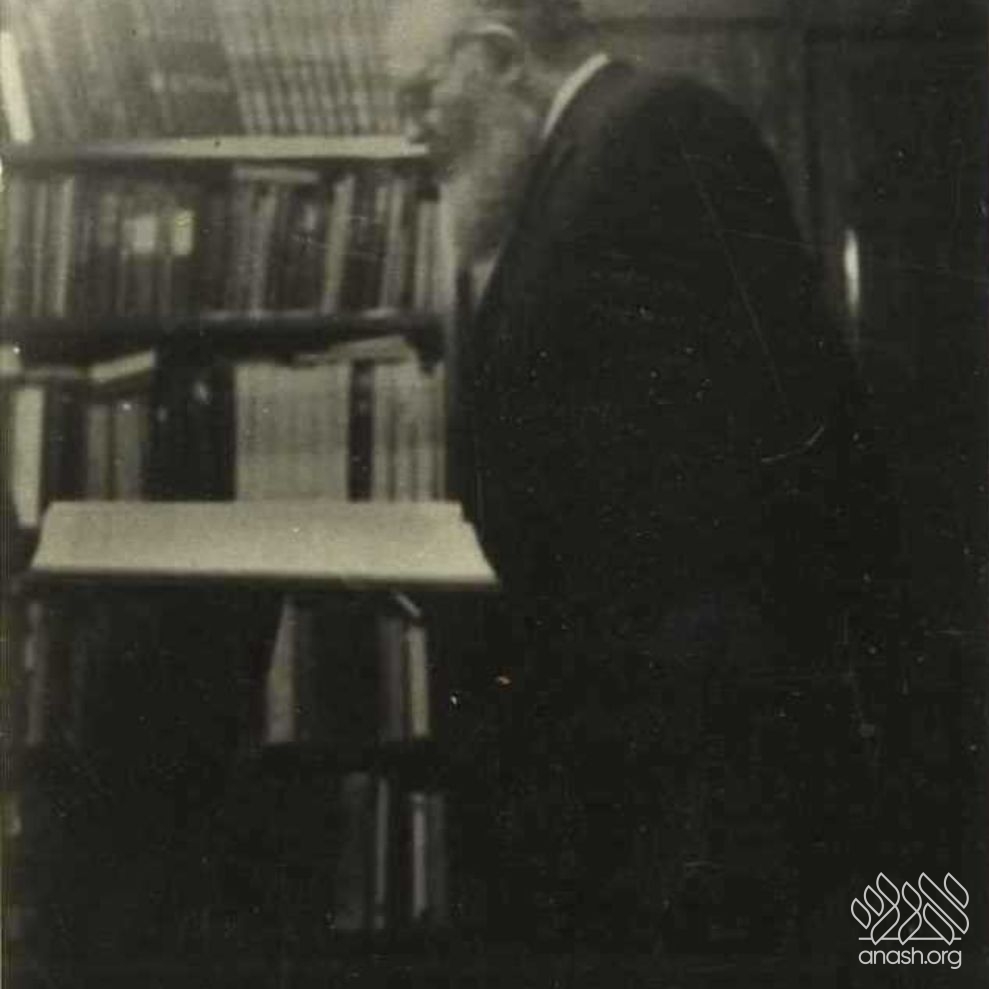
And yet, notwithstanding all these responsibilities, the Rebbe insisted on devoting countless hours every day to intensive Torah study.
One could imagine that a person whose every moment was so valuable to so many people would be justified in reducing his learning in order to help more Jews. Yet the Rebbe did not see it that way. He obviously believed that his personal Torah study was not a private pursuit or personal spiritual need, but something of supreme importance to the Eibershter’s plan for creation.
The Rebbe understood better than anyone the needs of the Jewish people. He understood better than anyone how much could be accomplished by another meeting, another letter, another audience, another initiative. Yet, he continued to dedicate vast amounts of time to learning Torah b’iyun, demonstrating how Torah study itself occupies a unique and irreplaceable place in the Divine scheme.
If a tzaddik can reduce even his treasured tefillos because helping Jews requires it, and if the Rebbe, despite carrying responsibility for the spiritual and physical welfare of world Jewry, still devoted hours every day to profound Torah study, what message does that send to us?
Most of us cannot claim that our schedules are more crowded than the Rebbe’s. Most of us cannot claim that our responsibilities are more consequential than his. If the Rebbe found it necessary to carve out substantial time for serious learning, then surely we must do the same.
In a generation filled with distractions, Torah study is often the first thing pushed aside. We tell ourselves that we’re busy with important matters. Indeed, sometimes we are. Yet the Rebbe’s example reminds us that Torah is not what remains after everything else is done. Torah is itself one of the most important things that must be done.
Just coming from Gimmel Tammuz, perhaps one of the most meaningful ways to connect ourselves to the Rebbe is to strengthen our commitment to limud haTorah. Not merely a few extra moments here and there, but a renewed dedication to serious, consistent, disciplined study.
The Rebbe taught us through both word and example that Torah is the blueprint of creation and the lifeblood of the Jewish people. By dedicating ourselves more deeply to Torah learning, we not only enrich our own lives; we participate in the fulfillment of the very purpose for which the world was created.
There can be few more fitting tributes to the Rebbe’s legacy.
 COMMENTS


We appreciate your feedback. If you have any additional information to contribute to this article, it will be added below.