




כ״א מרחשון ה׳תשפ״ז | November 1, 2026
Who Is Watching the Kashrus in Our Yeshiva Kitchens?
Every day, tens of thousands of children eat meals prepared in yeshivos, schools, and chadarim, with parents trusting that the kitchens are in good hands and the food is 100% kosher. Unfortunately, serious kashrus problems in unsupervised kitchens often go unnoticed because everyone assumes someone else is watching.
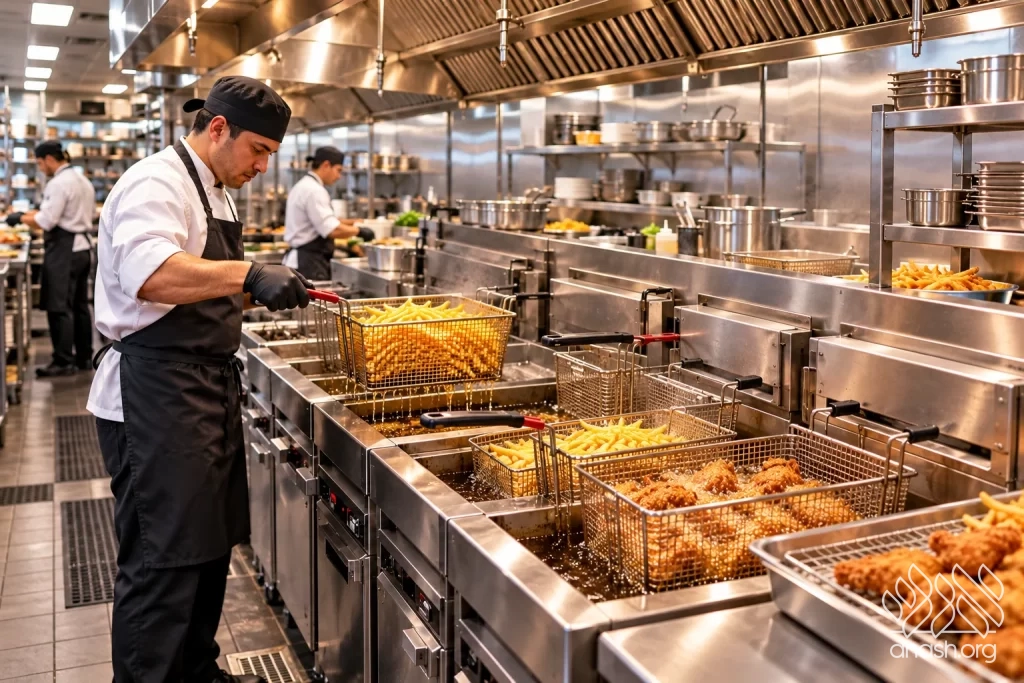
Every day, tens of thousands of children in yeshivos, schools, and chadarim sit down to breakfast, lunch, and, in many yeshivos, supper. Parents trust that the kitchens are in good hands and that the food is 100% kosher.
Unfortunately, the reality inside an unsupervised yeshiva kitchen can be far more serious than most people realize, with problems often going unnoticed because everyone assumes someone else is watching.
On a recent episode of Let’s Talk Kashrus, senior mashgiach Rabbi Meilech Friedman, Rosh HaMashgichim at Tartikov, discussed this serious and rarely discussed issue. He described milchig and fleishig utensils getting mixed up, unchecked deliveries, a water filter that had been bypassed for years, fires being lit by non-Jews, and much more.
Drawing on numerous firsthand experiences and stories, he discussed how the problem developed and what can be done to address it.
“It is a very painful topic,” Rabbi Friedman said. “We have hundreds of thousands of kids being served every day, three meals a day, and there’s no hashgachah whatsoever in, I would say, 99% of the kitchens of yeshivos, schools, and chadarim.”
“The worst scenarios in kashrus that I’ve seen during my years in kashrus were in yeshiva kitchens,” he added.
He explained how things got to this point. When mosdos were smaller and more local, everyone knew the administrator, the manager, and the cook, and relying on them was acceptable. As the mosdos grew, the administrator lost touch with the kitchen. The cook was sometimes a frum Yid and sometimes not, and today, the cook is often only in and out to guide the workers rather than being present throughout the day.
One example that came to Rabbi Friedman’s attention involved a case when cook took breaded chicken cutlets, mistook them for breaded eggplant, and laid mozzarella on top. While mistakes can happen even when there is hashgachah, this kind of mistake, he explained, stems from a lack of organization and awareness that milchig and fleishig must be kept completely separate.
While virtually every restaurant, eatery, or catering company has completely separate kitchens for milchig and fleishig, many yeshivos prepare milchig, fleishig, and pareve food in the same kitchen. The same open spice containers may be used in a morning pot of cheese eggs and a pot of chicken soup at night.
In one small kitchen he was called to inspect, roughly 75 sheet pans were lying around, with only a small divider separating the milchig and fleishig sides. When he asked a non-Jewish worker how he knew which pans belonged to which side, the answer was that whatever was on one side was milchig and whatever was on the other was fleishig.
In another yeshiva kitchen, the chef came every couple of days and assumed that the bochurim were the ones turning on the fires. When Rabbi Friedman asked the Rosh Yeshivah about it, he was told that the bochurim were not allowed in the kitchen.
“The reality is that there’s often no one in charge,” Rabbi Friedman said. “Everybody assumed that someone else turned that on.”
For years, the non-Jewish workers had been lighting the fires. The solution was fairly simple, he explained: wooden covers with screws were placed over the range knobs so the fires could not be turned on or off without removing them. Only one bochur had a key, which he used each morning to open the covers and turn on the fires.
He also described a girls’ school that requested a one-day review, assuming it did not need hashgachah. By the end of the day, the mashgiach had found 30-35 issues, despite having two frum women working in the kitchen full-time. After seeing the list, the administrator hired a mashgiach.
Rabbi Friedman pointed to other gaps that are easy to miss. When food arrives, nobody checks the bill of lading against what was ordered. Food supplied through government programs often comes with a letter of certification, but no identifying information on the can itself.
“Anyone who walks into the kitchen who sees StarKist tuna, for example, has no idea if this is the bishul Yisroel run or not,” he explained. The only way to know is to match the lot code to the certification letter. Even then, he noted, a case with the wrong lot code could easily slip in.
Addressing the obvious question of cost, it was noted that mosdos often say they cannot afford another expense. But, aside from the responsibility, the “timtum hamoach vehalev” is something that effects the children’s chinuch directly.
As for staffing, Rabbi Friedman said the requirements depend on the volume of food being prepared. At a minimum, however, two or three people on staff should be responsible for the kitchen, rather than leaving the responsibility to a Rosh Yeshivah sitting in his office.
His main practical suggestion was directed at parents.
“It is important you should calmly and respectfully ask one simple question: Do you have a hashgachah in the kitchen? If they’ll get 100 parents per registration season asking this simple question without any conversations after that, they will get a hashgachah.”
He emphasized that the administrators are not bad people. They simply have so much on their heads that it may not occur to them that the kitchen needs hashgachah.
This conversation is part of Let’s Talk Kashrus, presented by the Kashrus Awareness Project in conjunction with the Chicago Rabbinical Council (cRc) and hosted by Rabbi Yitzchok Hisiger. The Kashrus Awareness Project is a project of cRc Kosher Chicago.
VIDEO
 COMMENTS


Yeshiva kitchen has no supervision.
Meat under no one’s watchful eye.
I work in a Yeshiva. There are workers in the Kitchen, until late and on Friday.
Only non Jewish people with meat dishes cooking.
The Rabbonim must do something.
Give the Talmidim proper Kosher food.
Thank you