



כ״ט אב ה׳תשפ״ו | August 12, 2026
The Work That Brought Chassidus Into Every Frum Community
In an interview, Rabbi Leibel Altein shares memories spanning generations, from his grandfather Reb Yisroel Jacobson’s years in Lubavitch and pioneering askanus in America to his own personal memories and interactions with the Rebbe, including preparing Likkutei Sichos and his work in Hafatzas Hamayanos.
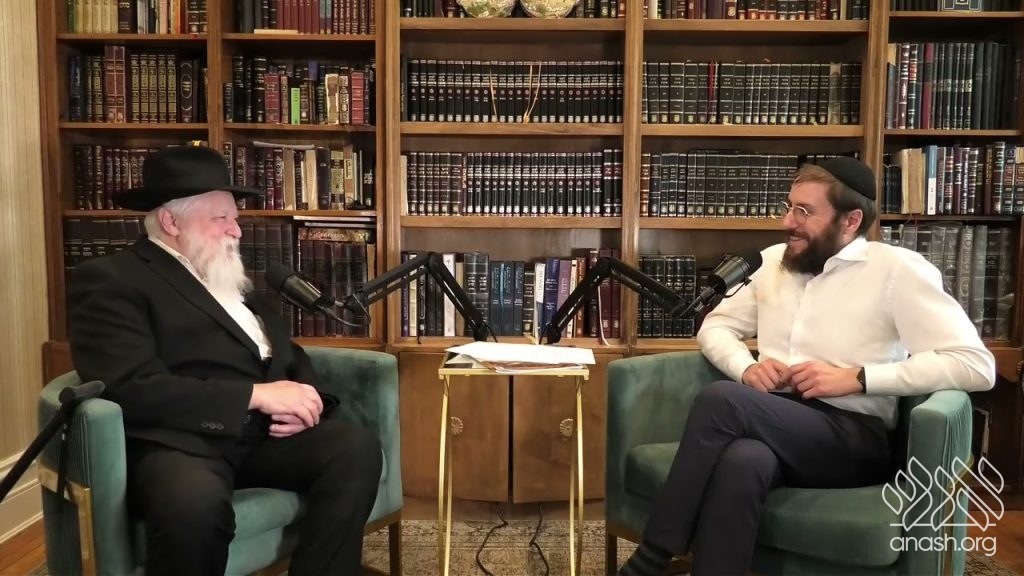
In a podcast interview, Rabbi Leibel Altein of Crown Heights shared fascinating stories and memories spanning generations of Chabad, from his grandfather’s earliest years in Lubavitch to his own decades of work preparing Likkutei Sichos for the Rebbe.
He speaks about his grandfather, Reb Yisroel Jacobson, who learned in Lubavitch as a young boy and became closely involved with the Frierdiker Rebbe and the Rebbe, going on to become one of the pioneering askanim of early Chabad in America.
Rabbi Altein’s father, Harav Mottel Altein, became close to Lubavitch through his future father-in-law, Reb Yisroel Jacobson, and went on to serve on several shlichus, most notably in the Bronx, where Rabbi Altein was born and raised.
He shares the story of the esrogim from Calabria, which his grandfather began preparing for the Frierdiker Rebbe and later the Rebbe, along with unique details of how the Rebbe personally selected his esrog each year.
He describes how the Rebbe would carry the chosen esrog with both hands rather than free one to open the door. “He kicked the door back open with his foot,” Rabbi Altein says.
Rabbi Altein discusses his own upbringing and his shlichus as a young bochur in Australia, where he was sent along with five other talmidim to help establish the yeshiva there.
A large part of the episode focuses on his remarkable zechus of preparing Likkutei Sichos for the Rebbe to edit, a process that spanned decades and often went through several rounds of hagahos by hand. He describes the labor-intensive hot-metal typesetting process of the era, when correcting a single mistake meant physically replacing a whole line of metal type.
He recalls how the Rebbe would often take a short piece written in Loshon Kodesh and instruct that it be expanded and rewritten in Yiddish, sometimes reworking a sicha two or three times before it was ready for print.
Rabbi Altein shares personal stories from his years by the Rebbe, including receiving a name for his daughter after she was born on Shabbos, and the bracha his father-in-law, Rabbi Yechezkel Deren, received twice.
He also speaks about his lifelong involvement in Hafatzas Hamayanos, including his work with Heichel Menachem and Chassidus Mevu’eres, projects born from the Rebbe’s directive to bring Torah study to people who couldn’t otherwise access it.
“The whole idea was that a person can sit in his house,” he says. “He shouldn’t have to walk into a center to hear the shiur. He can sit at home and learn this.”
“Among Chassidim” is a podcast by Derher, hosted by Rabbi Yossi Kamman, director of A Chassidisher Derher. The podcast captures the vibrancy of dor hashvi’i through immersive, in-depth conversations. To view all episodes, visit here.
VIDEO:

 COMMENTS


We appreciate your feedback. If you have any additional information to contribute to this article, it will be added below.