




כ״ט אב ה׳תשפ״ו | August 12, 2026
Late to Minyan: Daven or Wait?
Ask the Rov: I walked into Mincha, and they’re in the middle of Shmoneh Esrei. Should I daven or wait? Rabbi Chaim Hillel Raskin responds.
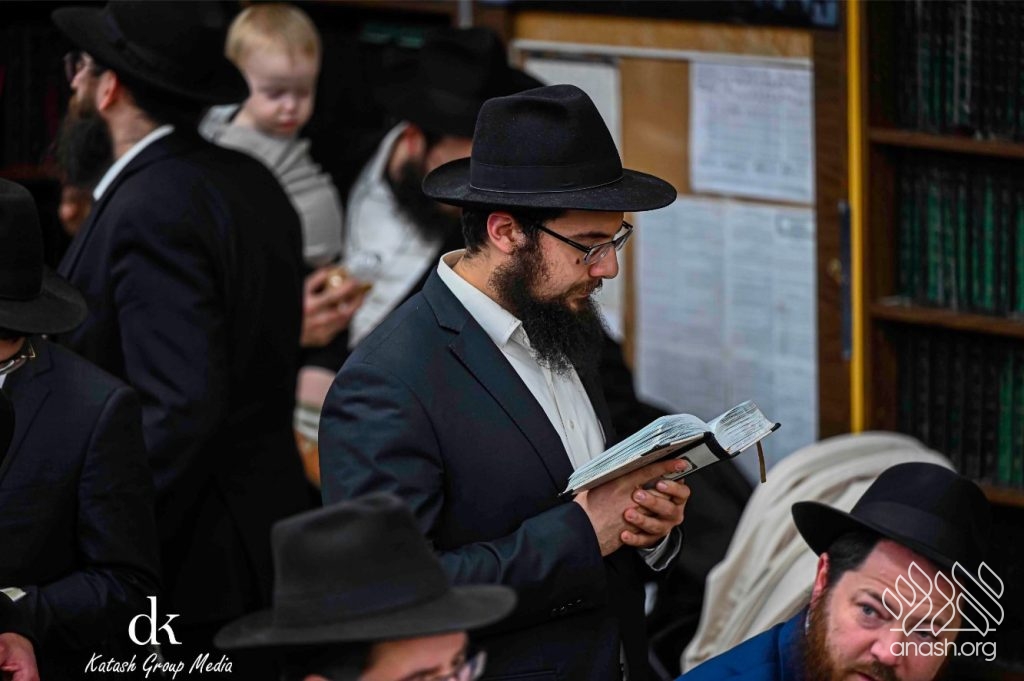
I walked into Mincha, and they’re in the middle of Shmoneh Esrei. Should I daven or wait?
Davening with a minyan is of great importance, as the tefilos of a tzibur are more readily accepted. One who davens with a minyan is blessed with parnassa and success.1
The primary part of davening with a minyan is reciting Shmoneh Esrei together. Ideally, they should all start together,2 beginning with the preface of “Hashem sefasai tiftach,”3 while others count it as tefilla b’tzibur if they joined during the first bracha.4 Though some hold it’s sufficient if they joined at any part of Shmoneh Esrei,5 this does not seem to be the Alter Rebbe’s opinion.6
When starting late, one must be able to finish before the chazzan reaches kedusha. If not, he should wait to answer amen to HaKel Hakadosh and Shomeia Tefila, and to bow at Modim with the tzibur. If he already heard kedusha or will hear it later, he doesn’t need to wait for it (though he must finish for the other responses).7
By Maariv (and other tefilos), he should begin only if he will manage to answer yehei shmei rabbo of kaddish after Shmoneh Esrei. An earlier kaddish doesn’t replace it, since kaddeishim have no limit. Kaddeishim from Aleinu and on are only a minhag and may need not be waited for.8
In a situation of duress, one can say Shmoneh Esrei quietly along with the chazzan and recite the entire kedusha with him, word for word. He should likewise say the full text of HaKel Hakadosh and Shomeia Tefila with the chazzan, concluding those brachos together with him so that no amen is needed, and time himself to bow at Modim with the chazzan. If he can finish Shmoneh Esrei before the chazzan reaches Shomeia Tefila, he may do so.9
The Alter Rebbe writes in Shulchan Aruch that this shouldn’t be done unnecessarily, since he will then be saying the nusach of “Nakdishach,” which should ideally be heard from the chazzan rather than said along with him. Today, when minhag Chabad is anyway for the congregation to say “Nakdishach” (and other passages), many write that one may do so even initially.10
Some write that reciting Shmoneh Esrei along with the chazzan may be considered like davening with a minyan. Yet, the quiet Shmoneh Esrei with the minyan still remains the primary tefilla betzibur.11
See Sources (open PDF)
 COMMENTS


We appreciate your feedback. If you have any additional information to contribute to this article, it will be added below.