



י״ז תמוז ה׳תשפ״ו | July 2, 2026
The Rebbe’s Push Behind Chicago’s First Cholov Yisroel Milk
Through constant support from the Rebbe, R’ Yitzchok Kosofsky of Chicago took on a mission that would change Midwest Jewish life: making Cholov Yisroel milk available for the first time.
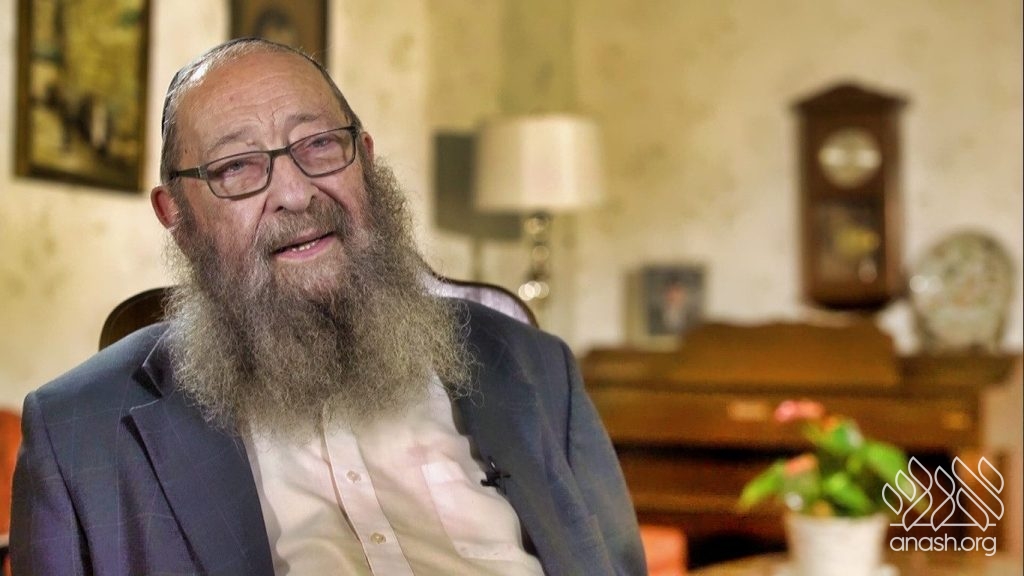
An accountant by profession, Mr. Yitzchok Kosofsky spearheaded a number of community initiatives over the eighty years he lived in Chicago. He was interviewed in July 2015. He passed away in 2020.
One hundred years ago, there were many Lubavitcher chasidim living in the Midwest; not just in Chicago, Illinois, but also in smaller cities in Wisconsin like Manitowoc and Sheboygan.
But for the most part, the more observant Jewish immigrants who came to America before World War I were reluctant to travel further west than New York; Chicago had some Judaism, but not as much, nor as strong, as New York. There was no yeshivah in Chicago until the early 1920s, when the Beis HaMidrash LaTorah, also known as the Hebrew Theological College, was founded; and there was no day school until the late ‘30s – which was when I started going to school.
One of the schools founded at around that time was connected to Bnei Ruven, one of the bigger Chabad shuls in Chicago, and it was just two blocks from my house. So when I was seven or eight years old, my parents took me to the Bnei Ruven Talmud Torah, as the school was called, and registered me to come and study Torah there every afternoon, for two dollars a month.
When the Previous Lubavitcher Rebbe came to visit Chicago in 1942 – his second time there, after an initial trip to America in 1929 – I was eleven years old, and I remember going with the school to visit him. We took a “street car” trolley to the Graemere Hotel on Washington and Homan, and waited in the lobby until it was our turn to have an audience with him.
The following year, around the time I graduated from the Talmud Torah, a few chasidim the Previous Rebbe had sent to Chicago started a new yeshivah. I studied there with Rabbi Avraham Hershberg and Rabbi Yosef Wineberg, as well as with Rabbi Sholom Posner, for a few months before this yeshivah was founded. And although this yeshivah only lasted for a year or two, these people made a very big impression on me, and brought me even closer to Yiddishkeit, and to Lubavitch in particular. As a result, I continued to study Torah at night in the Beis HaMidrash LaTorah yeshivah even when I went on to attend a secular high school, went to college, began working, and got married.
In 1950, the Previous Rebbe passed away and was succeeded by his son-in-law. In 1951, my wife and I got married, and four years later, I finally met the Rebbe in person.
It was the summer of 1955, and I had just gotten a car, so on July 4th weekend – which that year fell out on the 12th of Tammuz, an important day on the Chabad calendar – I decided to drive in to see the Rebbe in New York. In those days, it took nearly twenty-four hours to drive from Chicago to New York.
I stayed in Boro Park and made the long walk into Crown Heights with a friend on that hot Shabbos afternoon in order to attend the farbrengen. Afterwards, I had a private audience with the Rebbe in which he instructed me to start studying the teachings of Chasidus, and specifically the Tanya, the classic work from the Alter Rebbe, the first leader of Chabad.
When I went back to Chicago, I called Rabbi Dovid Moshe Lieberman to schedule a regular study session with him and a friend, and we continued studying chasidic discourses once a week for many years after that.
While Rabbis Posner, Wineberg, and Lieberman had a big influence on me in terms of my personal growth and connection to Judaism, some of the younger yeshivah students I met over the years, like Bentzion Schaffran and Naftoli Berg, would encourage me to take on different Lubavitch activities. Among them was helping to produce chalav yisrael milk for the Midwest. According to the letter of Jewish law, in order for milk to be kosher, it must be under proper supervision during the milking process, to ensure that no milk from non-kosher animals has been mixed in. However, for decades, drinking unsupervised milk had become common in America, even among observant Jews.
In the early ‘60s, I tried to arrange chalav yisrael milk, but most of the dairies I called were not interested. The amount of milk we needed for people who were willing to pay extra for chalav yisrael was nothing compared to the size of their production.
It was a hard journey, but finally, I found a Jewish man in the dairy business who was excited about the idea. He got me a huge farm with a dairy by the Illinois-Wisconsin border, and he helped us set things up to get production going. On the day before Pesach, the milk finally came out, to a tremendous level of demand. And so our chalav yisrael business started.
When we wrote to tell the Rebbe about it, he replied to tell us how happy he was, especially in light of a Chabad tradition concerning this area of kosher practice. Our Rebbes taught, he wrote, that drinking chalav yisrael “strengthens one’s faith, whereas milk that is not supervised by a Jew leads to doubts in one’s belief in G-d.”
In the Rebbe’s eyes, not only was chalav yisrael important for halachic reasons, but also for its effects on one’s spiritual well-being. For this reason, the Rebbe encouraged me to persevere through the many challenges we faced. After some time, the dairy closed down, and so Rabbi Yisroel Shmotkin of Wisconsin found us another farm in that state. Then that dairy stopped, and I got milk from Minnesota; then that stopped, and we got from other places, and so it went. The business wasn’t very profitable, but I wasn’t in it for the money. “Clearly, energetically promoting chalav yisrael is fitting” – the Rebbe once wrote to me – “and it is necessary.”
Generally, I hired other people to do the supervision and to drive the milk from the dairy in a special tank truck. One year, though, I myself had to drive the truck back from Wisconsin, on the day before Pesach, which was also the day of my son’s Bar Mitzvah. There was a big snowstorm, so the highway was completely covered in snow, and you couldn’t see the lines on the sides of the road. I just followed the tire tracks in front of me. Thank G-d, I made it home in time to take my son to shul.
Once, during a personal audience, I told the Rebbe that the volume of milk we were selling wasn’t as great as we had expected. People either didn’t know about chalav yisrael – some thought it meant the milk had come from Israel – or didn’t think it was important.
“How come we didn’t need to have chalav yisrael until now – and now we do?” they would say.
The Rebbe suggested a counterclaim: “Up until now you didn’t have a television,” I could tell these people, “– and now you do!” That is, when something better comes along, you accept it; chalav yisrael represents an advancement in Jewish observance, so you should grab it.
And so we were able to take something that was distant from most people, bring it close, and make it available. Since those days, other people have taken over this work, and chalav yisrael is now widely available in Chicago.
Today, many growing Jewish communities throughout the Midwest rely on this milk. In a 1961 English letter, the Rebbe wrote to me that with “proper organization,” chalav yisrael has “good prospects, not only spiritually but also materially, especially as the circle of observant Jews has been widening in recent years, and consequently also the circle of potential users of milk products under strict Jewish supervision.”
 COMMENTS


We appreciate your feedback. If you have any additional information to contribute to this article, it will be added below.