




ד׳ מרחשון ה׳תשפ״ז | October 15, 2026
The Rebbe’s Advice That Ended My Arguments with My Mother
As a young teenager, Rabbi Moishe Yosef Engel found himself in constant arguments with his widowed mother over his beard and tzitzis, until a simple piece of advice from the Rebbe brought the conflict to an end.
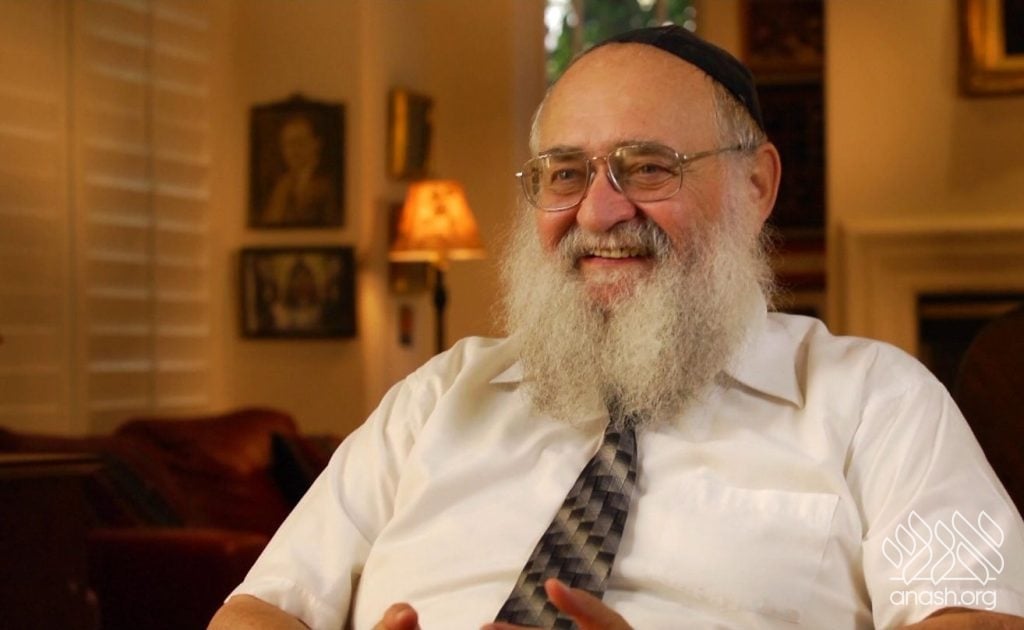
Since 1970, Rabbi Moishe Yosef Engel has served as a Chabad emissary in Long Beach, California. He was interviewed in September 2011.
I was born with a hole in my heart — otherwise known as an atrial septal defect — where a fissure exists in the wall separating the heart’s two upper chambers. This defect was discovered when I was two years old, but it was not life-threatening and the complicated surgery — which would be necessary in the future — could wait until I was a teenager.
The time finally came when I was seventeen. Back then, an operation to repair a hole in the heart was much more rare and risky than it is today and, certainly, “open heart surgery” was very scary to me as a teenage boy. As it turned out, the Rebbe had a great deal to do with putting me at ease.
By way of background, I was raised in a traditional, though not completely Torah-observant, home. Nonetheless, my widowed mother wanted me to get a religious Jewish education, so she sent me to a local Jewish cheder in Montreal where we lived. One day, however, I came home crying because the teacher slapped me for forgetting my tzitzis, so she pulled me out. Fortunately, an uncle persuaded her not to send me to public school, but to the nearby Lubavitcher yeshivah which had a gentler approach to educating little boys.
The yeshivah made an annual trip to New York to meet the Rebbe, and that is how I first met him when I was twelve years old, and then at least once every year thereafter.
All along, I had been getting regular check-ups and my heart condition was stable, but I knew that the operation was necessary and would come soon. My mother took out special insurance for this purpose, and it was decided that I would have the operation right after the insurance kicked in and started providing coverage, which was March 1, 1964.
About a month before this, I went for my annual visit to see the Rebbe and I asked for his blessing. I explained my situation and showed him slides of my heart. At around that time, a new procedure had been introduced, as I explained that to the Rebbe. I also mentioned that I had been told that only about a hundred operations like this had been performed so far in Canada.
In response, the Rebbe recommended that I get a second opinion from a specialist in this field and said that the local Chabad doctor and his personal physician, Dr. Avrohom Seligson, would find the right cardiologist for me to see. Dr. Seligson set up the appointment right away, but after he already did so, I had to tell him that my mother was a poor widow and there was no way I could ask her to pay hundreds of dollars for something like this. “Don’t worry,” he said simply, “the Rebbe has already taken care of the payment.”
So I went to the specialist who confirmed that the operation was needed and reassured me that it would be okay.
Now, when the Rebbe told me to get a second opinion, the operation was already scheduled for a few days after Purim. The Rebbe remarked that this was close to Pesach, and I immediately replied that I was certainly happy to postpone it till after.
“Why push it off that far?” the Rebbe asked. “Adar [the month of Purim] is a month of mazal!”
Then the Rebbe gave me a blessing that the operation would be successful and, as a result, instead of being petrified, I went into the hospital with a whole different attitude.
That was not the only time that the Rebbe was instrumental in changing my attitude.
After a number of years in the Lubavitcher yeshivah, I had resolved to become a fully committed chasid, which in my young mind meant growing a beard and wearing my tzitzit outside my pants so they could be readily seen.
Now, I should mention that both my mother and father were Holocaust survivors — in fact, I had been born in a displaced persons camp in Germany. Once we immigrated to Canada, my parents were concerned that I properly adjust to life in the new country, speak good English, and so forth. After my father passed away when I was ten, my mother was all the more determined that I should be a success in America. Even though she did want me to have a Torah education, going around dressed like a Jew from the Old Country was a step too far for her, and it really disturbed her.
Whenever I was home, she would be nagging at me to tuck the tzitzis inside my pants out of view. And when my beard started growing out, she would be nagging me to shave it off. “Why?” I’d retort, “I am proud to be a Jew!” To which she’d respond, “We don’t do that here!”
We’d get into shouting matches whenever the subject came up, which — at a certain point — was almost every night at dinner.
Afterwards, I’d always feel terrible because I was supposed to be following the Torah commandment to respect my mother. Not only that, she was a widow, and there are many Torah prohibitions against hurting a widow. And I was bringing her to tears.
I very much wanted to be a good Lubavitcher chasid with a beard and tzitzis out, but I also didn’t want to hurt my mother, so I didn’t know what to do.
In the end, I laid out my dilemma in a letter to the Rebbe — asking for his advice and his blessing — and I brought this letter with me to the next audience.
When the Rebbe read what I wrote, he said (and I am paraphrasing because I don’t remember the exact words): “Concerning the issue that you have with your mother, I suggest that the next time she brings up this subject, you don’t argue with her, don’t answer back, just let her say what she feels she needs to say. Just listen to her and sit there respectfully.”
I took his advice to heart.
The next time my mother asked at dinner, “Nu, when are you cutting off that beard already?” I just sat there. “Moishele, when?! Come on, you want me to cut off your beard in the middle of the night? You know it bothers me!”
I just sat there. Didn’t say anything, didn’t fight back, and dinner continued. The next night, the same question, the same response from me. And that was it — the issue never came up again.
In retrospect, I realized that the solution was simple — the problem went away when I stopped adding fuel to the fire. As for her part, I think my mother realized that I was going to follow my own path, but that I didn’t want to fight about it, and so she let it go.
In the end, my mother herself became much more religious, and she was very proud of her son being a Lubavitcher chasid and, eventually, an emissary of the Rebbe.
 COMMENTS


We appreciate your feedback. If you have any additional information to contribute to this article, it will be added below.