




כ״ב תמוז ה׳תשפ״ו | July 7, 2026
The Reason I Keep Coming Back To The Ohel
“Earlier this week, while in New York, I made it a point to stop at the Ohel, as I often do. This isn’t something I grew up doing, nor was it a practice of most of my rebbeim. So I found myself wondering: What draws me there? Why do I keep going back again and again?”
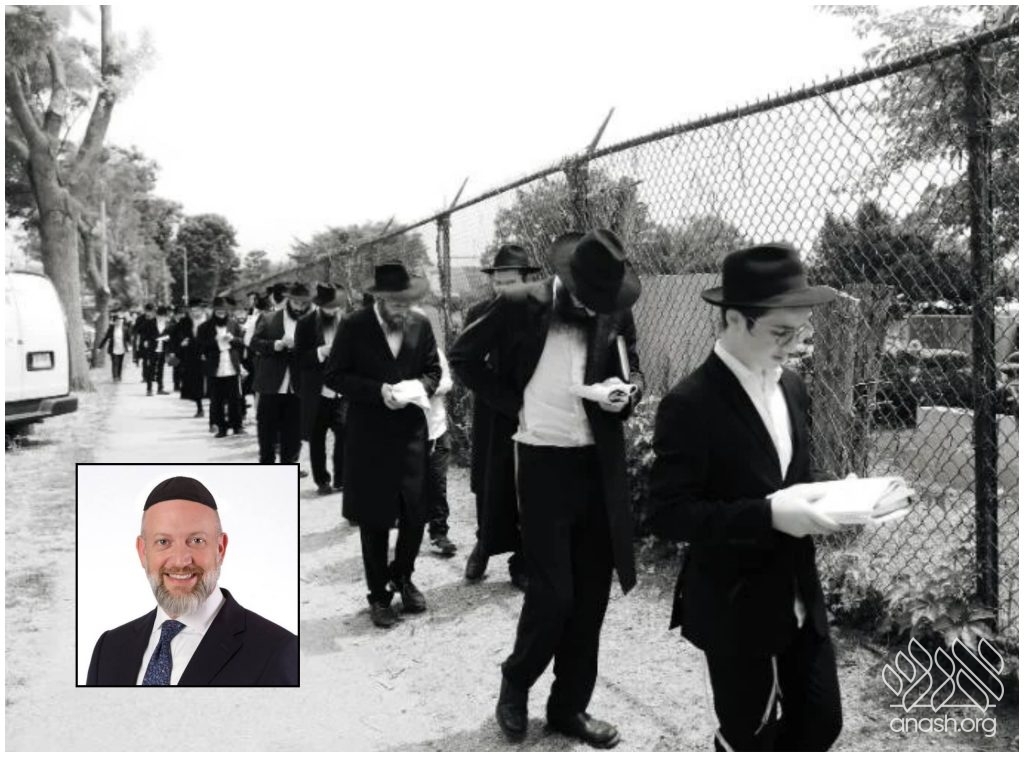
By Rabbi Efrem Goldberg – Boca Raton Synagogue
Earlier this week, while in New York, I made it a point to stop at the Ohel, as I often do. This isn’t something I grew up doing, nor was it a practice of most of my rebbeim. So I found myself wondering: What draws me there? Why do I keep going back again and again?
The cookies, apples, and hot and cold beverages, all provided to make a beracha, are fantastic, but that isn’t it. So, what is it?
The simple answer is the opportunity to connect with the Lubavitcher Rebbe, his father-in-law, the Frierdiker Rebbe, their Rebbetzins, and other holy people buried there. Indeed, I am regularly inspired and moved by the Rebbe’s legacy, tenacity, what he stood for, what he accomplished, his energy, positivity, and his leadership, which unleashed an army around the world, including selfless followers who were only born after he passed away but nevertheless love him as their spiritual father.
That is certainly a reason to go daven there once or occasionally, but it still doesn’t explain what draws me back regularly.
And then it occurred to me. The holiness of the Ohel comes not only from the righteous people buried there, but from the diversity of the living people who unite there. Men and women, people of all backgrounds, levels of knowledge, levels of observance, and modes of dress come together there.
In that Ohel are people who have never felt more whole, happy, and grateful for something good that has happened, and people who have never felt more broken, wanting, longing, waiting, and desperately hoping. This diverse group is united in being drawn to this holy place, to connect with our Creator by leaning on the merit of these great people who loved all Jews unconditionally and who saw the best in us, believed in us, all while demanding the best of us and having expectations for us.
The Rebbe brilliantly lived and modeled for us how to be principled, steadfast, and unrelenting when it comes to Torah, mitzvos, and halacha, while being loving, welcoming, and open-minded when it comes to loving and seeing the good in fellow Jews. That combination is palpable in that place, and it energizes and obligates all who visit there.
At the Ohel, one’s eyes are easily drawn to the matzeivos, the tombstones of these extraordinary tzaddikim, and to think of them. But I believe they would remind us and encourage us also to look around, to see others and to make them feel seen, to connect with them, love them, and see the best in everyone gathered there, no matter how they are dressed, what they have on their head, or why they are there. Going to the Ohel is to daven at a holy site, but it is also to go to a gathering place for our holy people.
We find ourselves in the Bein HaMetzarim, the Three Weeks during which our people suffered countless calamities, most prominently the destruction of our two Batei Mikdash. Our prophets, and later our great rabbis, didn’t pull punches in telling us that what caused it was our mistreatment of one another, including judgment, dismissiveness, and divisiveness.
Starting with the Nine Days, countless siyumim will be celebrated across the Jewish world, marking the completion of a significant section of learning but usually motivated by the meat menu that goes with it. There is a fascinating Chabad custom, going back at least to the Rabbi Sholom DovBer Schneersohn, to make siyumim during the Nine Days but nevertheless specifically not to serve or eat meat at the meal.
The Rebbe explained that a siyum is an opportunity to invite and bring together a group of Jews to celebrate and share in another person’s accomplishment. By having a siyum with no meat, one demonstrates that the purpose and goal are Torah and loving fellow Jews, with no ulterior motive, agenda, or personal benefit.
In fact, for that reason, the Rebbe strongly encouraged making a siyum every day of the Nine Days, even on Tisha B’Av itself (on a masechta permitted to be learned that day), and continuing through the 15th of Av. Meat is permitted anyway on Shabbos, and eating altogether is forbidden on Tisha B’Av, so clearly the goal of such siyumim is simply to come together and celebrate Torah and one another.
The antidote and answer to the Three Weeks, Nine Days, and Tisha B’Av is more Ohel in our lives. I don’t necessarily mean visiting there, but rather bringing its energy into our lives and our communities: to be unrelenting and inflexible when it comes to Torah, yet unconditionally loving of all Jews, and to find a way to be united despite our differences.
 COMMENTS


Being by the Rebbe is also a reason to go often.