As we approach Simchas Torah, From the Margins of Chabad History presents a series of first-hand accounts of Simchas Torah with the Frierdiker Rebbe. Spanning decades and countries, they take us from the bittersweet farewell to Russia in Leningrad, 5688, to the historic visit to America, 5690, the remarkable celebrations in cosmopolitan Riga, 5693, and finally the iconic scenes at 770 Eastern Parkway.
The Frierdiker Rebbe was released from Soviet arrest and exile on 13 Tammuz 5687. With the Soviet regime carefully watching his every move, the Frierdiker Rebbe spent a few weeks lying low in Malachovka, a summer retreat suburb of Moscow.
It quickly became clear that the Frierdiker Rebbe would not be able to continue his activities in Russia and would be compelled to leave for Riga, Latvia. The Frierdiker Rebbe paid a farewell visit to the ohel of the Rebbe Rashab in Rostov, and then returned to his pre-arrest home in Leningrad for the yamim tovim.
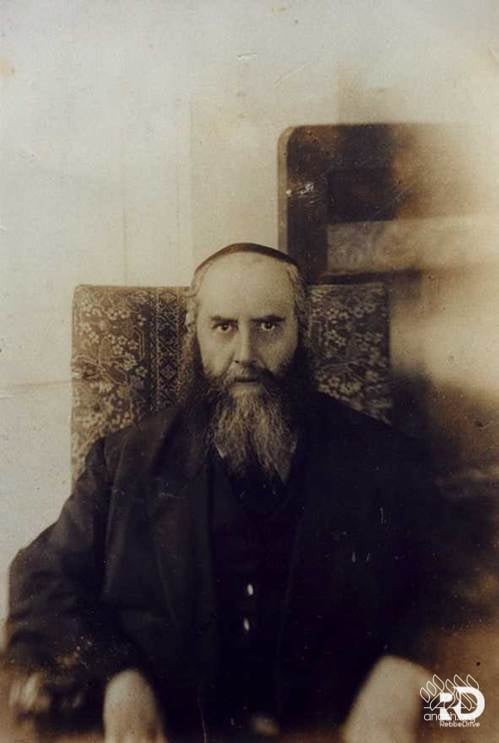
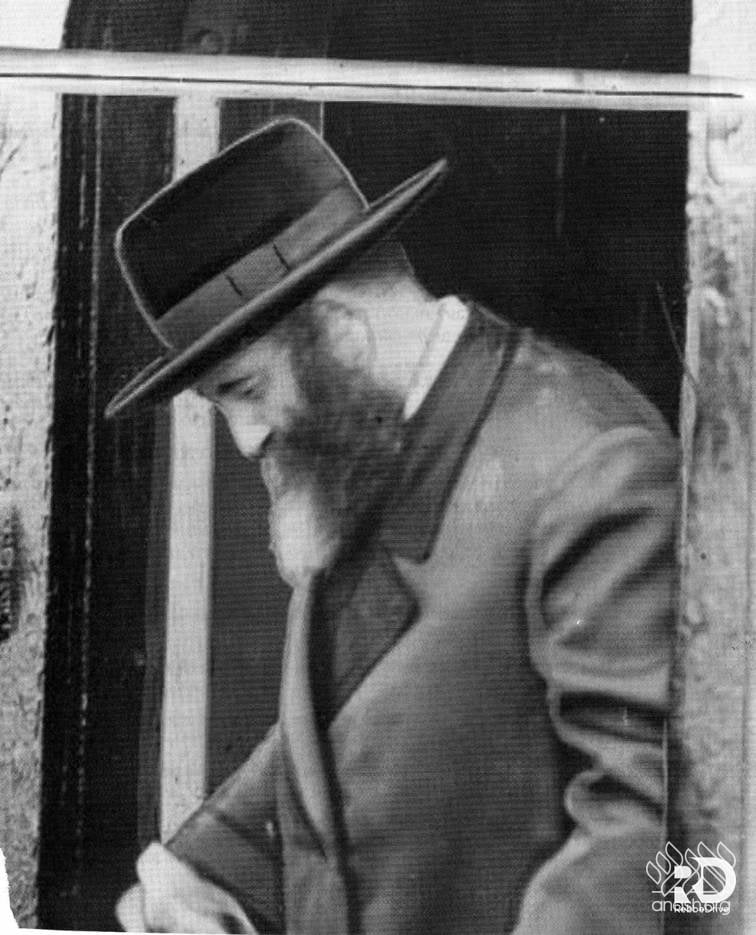
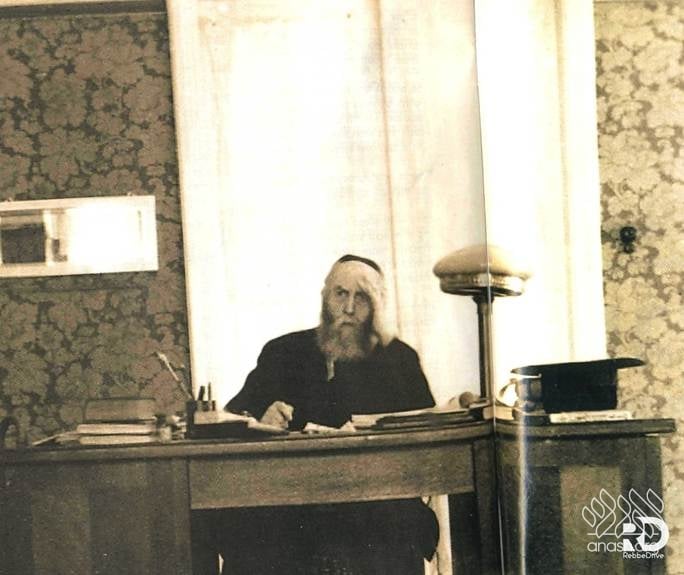
The Frierdiker Rebbe in Leningrad, shortly before leaving Russia. Image courtesy of RebbeDrive.
The news that the Frierdiker Rebbe would be leaving Russia immediately after yom tov spread among the chasidim like wildfire. Overjoyed that the Rebbe would now be safe, and heartbroken that they would be separated from him, over a thousand chasidim flocked to Leningrad for Simchas Torah to see the Rebbe and receive his berachos one final time.
On Isru Chag, 24 Tishrei, the Frierdiker Rebbe departed Leningrad and arrived in Riga the following morning.
In this article, we present two first-hand descriptions of this historic Simchas Torah in Leningrad. The first comes from R. Mordechai Dubin, the Chabad chasid and member of the Latvian parliament (Saeima) who played an instrumental role in securing the Rebbe’s release.
In an interview with the Latvian Jewish press immediately after arriving in Riga, Dubin recounted the story of the Rebbe’s departure from Russia. His account, published in Riga’s Frimorgen newspaper (27 Tishrei 5688—October 23, 1927), includes a brief description of the remarkable Simchas Torah he had just experienced.
“I must say,” Deputy Dubin remarked, “that I could never have imagined that the spirit of Jewish faith was still so strong in Russia.
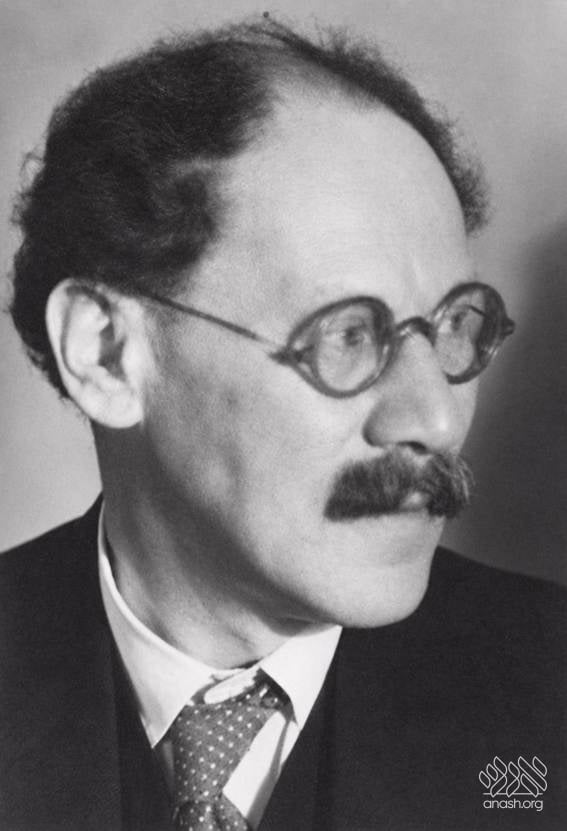
Oskar Cohn (5630–5695), the “advocate O. C.” mentioned in the Frimorgen article. A prominent German-Jewish political leader, Oskar Cohn played a key role in securing the Frierdiker Rebbe’s release.
“On Simchas Torah, a crowd of a thousand people gathered at the Rebbe’s residence at Mokhovaya Street, 22, in the house once occupied by the czarist minister Polivanov. They had come from every corner and region of vast Russia: rabbonim, officials, craftsmen, and even Jews far removed from Chasidus and religious observance, among them the well-known Professor M., the advocate O. C., and others. They danced, sang chasidishe nigunim, and rejoiced just like in the old times. I could never have imagined that the GPU would permit such a thing.”
This Dubin interview is a valuable contemporary source about the Frierdiker Rebbe’s release from Soviet Russia in general. Dovid Margolin, a historian of Chabad in Soviet Russia, has used this source in articles about the Frierdiker Rebbe and Mordechai Dubin, and a full translation of the piece is appended to this article.
Our next Simchas Torah 5688 eyewitness account comes from Harav Shmaryahu Gurary (Rashag), the Frierdiker Rebbe’s son-in-law. This account appeared in an article by Dovid Leib Meckler, a Yiddish journalist best known in Lubavitch as the editor of the Frierdiker Rebbe’s Sefer Hazichronos.
Meckler’s relationship with the Frierdiker Rebbe began during the Rebbe’s 5689–5690 visit to America. In a series of four articles in New York’s Morgen Zhurnal newspaper, Meckler gave a vivid description of a 19 Tishrei farbrengen with the Frierdiker Rebbe in the sukkah, a personal yechidus, and the events of Shemini Atzeres–Simchas Torah.
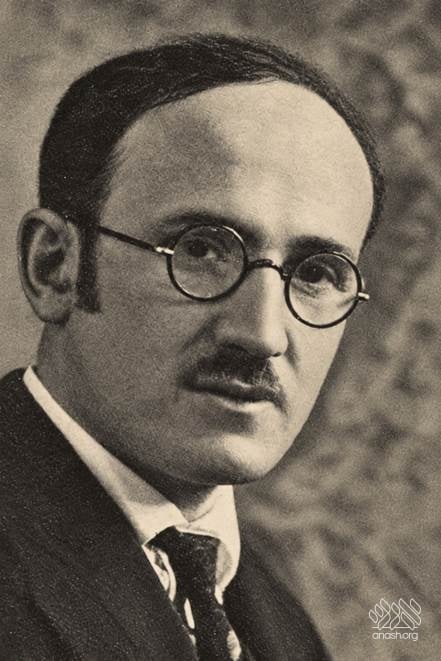
Dovid Leib Meckler (5651–5731)
We cited from the first three Meckler articles in an earlier installment of this column, and a translation of the 5690 Simchas Torah description will follow in the next section of the present installment. But first we will cite the conclusion of the Simchas Torah 5690 article, which contains Rashag’s account of the historic Simchas Torah in Leningrad two years earlier (Morgen Zhurnal, 26 Tishrei 5690—October 30, 1929).
Harav Shmaryahu Gurary, the Rebbe’s son-in-law and right-hand man in directing his work to strengthen Torah life, related the story of another remarkable Simchas Torah with the Rebbe.
This took place a year ago [sic], before the Rebbe left Russia.
The Rebbe was released from exile following great efforts by a number of prominent figures abroad, with R. Mordechai Dubin, a member of the Latvian parliament, playing a leading role. Shortly thereafter, the Rebbe received permission to leave the country.
The news spread like wildfire among chasidim throughout Russia: the Rebbe was leaving the country.
Their feelings were a mixture of joy and sadness. There was joy because the Rebbe’s departure meant that he was finally free from persecution, and sadness because the Rebbe was leaving the country.
From every corner of the country, people began making their way to Leningrad, where the Rebbe lived.
Not everyone was able to reach Leningrad in time for the final days of Sukkos. But a vast crowd did arrive, and together with the local chasidim and other Jews, thousands upon thousands surrounded the Rebbe that Simchas Torah.
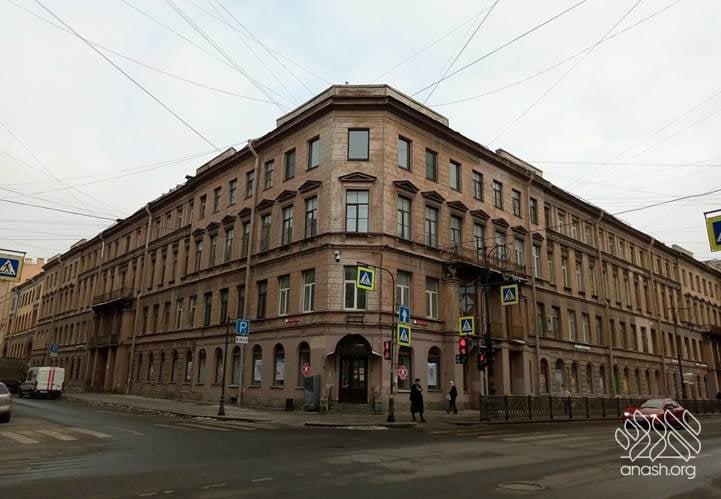
The Rebbe’s home was far too small to hold even a fraction of the enormous crowd. The house was besieged from outside, and several times the Rebbe had to step out onto the balcony so that the people could see him.
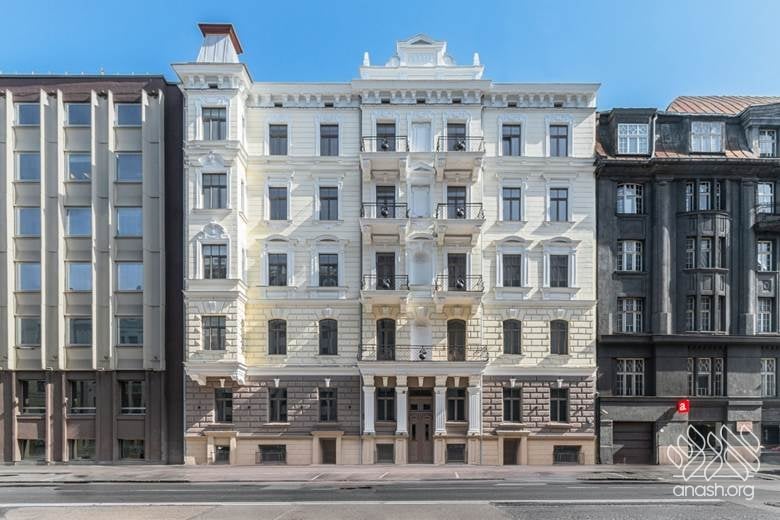
Mokhovaya Street, 22, Leningrad (now S. Peterburg). The Frierdiker Rebbe’s apartment was on the corner, on the second floor.
Nothing like it had ever been seen in the Soviet Union. The chasidim regarded the fact that the authorities placed no obstacles in their way as nothing less than an “etzba Elokim.”
The Rebbe had prevailed over his opponents… No power could withstand the strength of Torah… That Simchas Torah was festive, unforgettable, historic.
The crowd couldn’t bear to part from the Rebbe. Their only consolation was his promise that even after leaving the country, he would continue to concern himself with the Jews of Russia and with strengthening Yiddishkeit there.
And it was that very promise that brought the Rebbe to America, seeking the help of American Jewry on behalf of the Jews living under Soviet rule.
Crown Heights, 5690
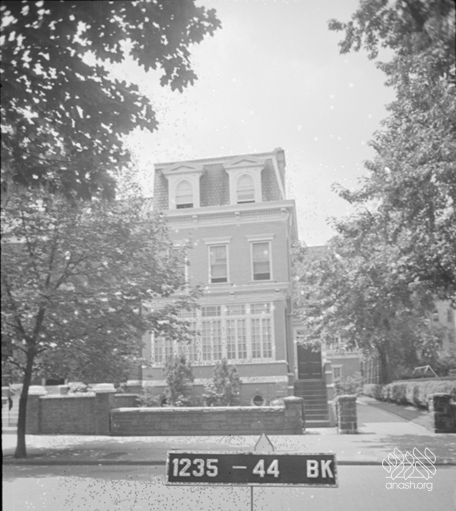
On 12 Elul 5689, the Frierdiker Rebbe arrived in the United States for the first time, for a ten-month visit. After staying initially in Borough Park and spending Rosh Hashanah in Brownsville—as documented in a previous installment of this column—the Frierdiker Rebbe moved into a home at 184 Brooklyn Avenue, where he remained for the duration of his first stay in New York.
184 Brooklyn Avenue, Crown Heights. The Frierdiker Rebbe stayed in this house from 4 Tishrei to 13 Kislev, the end of his first stay in New York. The house is no longer standing. Imagecourtesy of the New York City Municipal Archives.
Selections from Dovid Meckler’s account of Simchas Torah 5690 were reproduced in Toldos Chabad Beartzos Haberis, pp. 56–58. Following is a translation of the entire account.
Two Days of Torah, Song, and Dance with the Lubavitcher Rebbe
For chasidim, “Simchas Torah” is actually something that lasts the entire year. It is a constant joy, a joy that has its source in the Torah and radiates through the Rebbe, the central figure in a chasid’s life.
And for that very reason, Simchas Torah is the joy that rises above all other joys. The chasid’s fervor burns with such intensity, his happiness becomes so all-consuming, that he is like a pot boiling over, spilling its joy and enthusiasm beyond its own brim.
Simchas Torah among chasidim is indeed something to behold. And Simchas Torah with the Lubavitcher Rebbe is a breathtaking sight.
The twenty-four hours that the calendar itself allots to Simchas Torah stretched into more than two full days. And what two days they were: two days of Torah, song, and dance. Torah that set the mind ablaze; song that seemed to carry one heavenward; and dancing that merged into a symphony of rhythmic movement.
For in Lubavitch, the rejoicing with the Torah began already on Friday evening, and did not end until early Monday morning, when the morning star was already beginning to rise.
As is the custom, the hakafos already began on the evening of Shemini Atzeres, and the night and following day were spent in the Rebbe’s large sukkah.
The Frierdiker Rebbe upon his arrival in America, 12 Elul 5689.
On Shabbos evening, the real great rejoicing began, and it continued until Sunday morning, when the seudah finally came to an end. It was already well into the morning when a short break was made to prepare for davening. After davening, everyone sat down at the table once again, and this tish continued until before dawn on Monday.
But it wasn’t only about how long they sat at the table. It was what happened there, and the way it happened.
It was one great wave of joy that swept up everything and everyone. A crowd of hundreds of Yidden packed the room so tightly that you couldn’t even squeeze a pin in. The entire crowd seemed to melt into a single body, with one will and one longing, with the Rebbe before them as the wellspring of joy.
And on Sunday evening, the Rebbe’s house presented a remarkable sight.
Everywhere else, Havdalah had long since been made. Yom Tov was over. But in Lubavitch, they were still very much in the midst of the tish.
The crowd stood shoulder to shoulder. If you stood up front, against the wall behind the Rebbe, you looked out upon a magnificent sea of human faces. And what faces they were!
Each face was like a Rembrandt portrait of its own: young faces and old, faces glowing with joy and expectancy, every eye fixed upon the Rebbe. He sat there in his characteristic pleasant posture of cheerfulness and deep thought, showing an outward intensity only when he plunged into the depths of Chasidus, or when the crowd around him broke into song and dance.
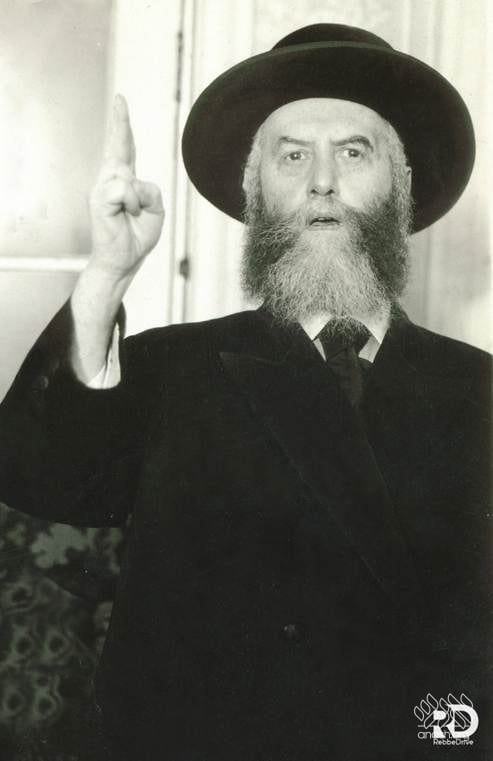
The Frierdiker Rebbe speaking in Philadelphia, 5690.Image courtesy of RebbeDrive.
Though the Rebbe has been carrying on this avodah for hours on end, and had not slept the night before, he is as fresh as though he had only just sat down at the table.
The fire of Torah keeps him fresh and drives away physical weariness. It is spirit mastering body.
The Rebbe says Chasidus. He is continuing what he began the previous evening, and, as always, the stream seems inexhaustible. He is like a spring that never runs dry: the deeper you go, the more powerfully the waters rise.
And what magnificent, brilliant ideas!
The Rebbe develops his teaching like a mighty tree, sending its roots deep and its branches high into the many paths of Chasidus. At times, you feel as though you have lost the thread of his thought. There seem to be several threads at once, and you are no longer sure which one to follow.
But before long, they are all gathered together and woven into one. Every strand converges upon a single point, a great lesson to take away.
For the Rebbe speaks with a purpose and a goal. This is authentic Chabad Chasidus, and that means a union of everything for which Chabad stands: Chochmah, Binah, Daas.
And the crowd does not tire. They stand spellbound, drinking in every word.
Even such a dyed-in-the-wool misnagdishe Litvak as our own Ephraim Caplan, seated among the honored guests at the Rebbe’s table, is captivated, marveling at the depth of the Chasidus.
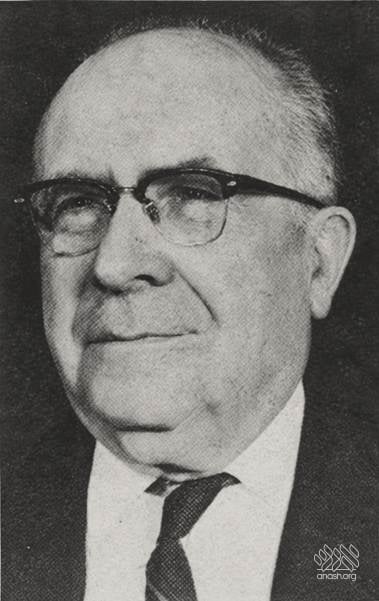
Ephraim Caplan (5638–5704). A native of Lita and graduate of the Slabodka yeshivah, Ephraim Caplan came to America in 5664, where he worked as a journalist for the Morgen Zhurnal. An activist for frum education in America, Caplan was the founder and president of the Vaad Hachinuch Hachareidi.
The Rebbe pauses for a little while. The crowd awakens as if from a trance and bursts into a nigun, and then into dance.
And captivating as the nigun is, the dancing is even more so.
It is crowded, people pressed one against another, a sea of faces rising almost to the ceiling.
There is no room for a real chasidishe dance. Everyone is wedged in place.
But they find a way. Because when the mind is lifted with enthusiasm, the feet cannot remain still. The body refuses to stand quietly in one spot, no matter how crowded the room may be. So they dance up and down.
And with the house packed so full, with people filling it from floor to ceiling, it seems as though the entire house itself is dancing. The walls and ceiling appear to join in the fiery, communal dance, all moving to the rhythm of the stirring nigun set to the words, “Al hasela hach.”
The singing grows more passionate, the dancing more deeply absorbed in dveykus, until the entire house seems to be aflame. The song does not stop, and the crowd does not tire of dancing. They dance and sing until kelos hanefesh.
Only the Rebbe remains seated in his place. But you can see that the fervor of the singing and the fire of the dance have swept him up as well.
If he himself does not dance, his hand does, beating out the rhythm of the song and the dancing upon the white-covered table.
And when the dancing comes to an end, the Rebbe resumes saying Torah. He has now reached the heart of his message. He speaks about chinuch. The main thing, he says, is to leave behind children who will follow the proper path of Torah. He speaks about the genuine emunah a Jew must possess, about the true purpose of a Jew’s life in this world, an emunah penimis.
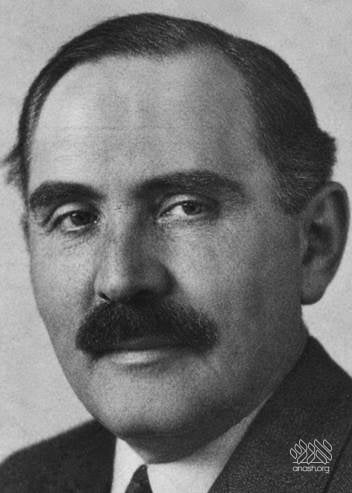
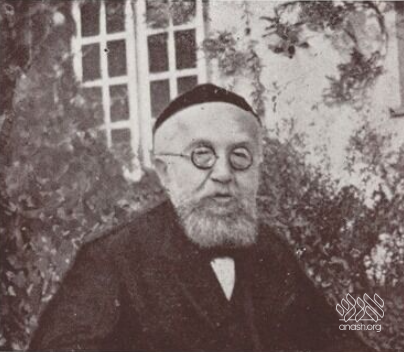
Dr. Fishel Schneersohn (5648–5718)
Everyone listens to him with the closest attention. The words come from the depths of the Rebbe’s heart. He is the expositor, the one who spreads Torah in the spirit of Chabad.
The older chasidim nod their heads. The Rebbe is speaking from their own hearts. The younger ones are captivated. The Rebbe has won them over with his depth and sincerity.
Caplan and Dr. Fishel Schneersohn, a nephew of the Lubavitcher Rebbe who often comes to sit at the Rebbe’s table and is here this time as well, nod along too. The Litvishe misnaged and the modern Chabadnik alike are captivated by the Rebbe’s words.
Riga, 5693
After leaving Russia at the beginning of 5688, the Frierdiker Rebbe established his primary residence in Riga, Latvia, where he remained until the end of 5693. During these six years, the Rebbe’s home at Pulkveža Brieža Street was the bustling headquarters of Chabad.
The Riga period was the topic of an early installment of this column, and it featured again in the recent Rosh Hashanah installment.
Our next Simchas Torah with the Frierdiker Rebbe comes from Riga, 5693, at the close of what turned out to be the last Tishrei the Frierdiker Rebbe spent in the city, before moving to Warsaw, Poland. Present at this Simchas Torah, and mentioned in the account, was our Rebbe, then known as the Frierdiker Rebbe’s son-in-law.
Here is the full report, translated from Riga’s Yiddish-language Batog newspaper (24 Tishrei 5693—October 24, 1932):
Riga Chasidim Celebrate All Night at the Lubavitcher Hoyf
The time is 9:00 in the evening.
In the local shuls and minyanim, the hakafos are already over. But there is one beis medrash in Riga where no one is even thinking about hakafos yet. The official simchah there does not even begin before midnight.
For the Lubavitcher Rebbe’s hakafos, you can arrive as late as you please and never miss a thing. You may calmly dance and revel to your heart’s content at one minyan and then another, eat a hearty supper, catch a nap, and only then make your way down to the Lubavitcher hoyf. You will still arrive before hakafos; you will not have missed a thing.
The building in which the Frierdiker Rebbe lived in Riga, on Pulkveža Brieža Street 10 (the street was previously known as 1. Weidendamm St.). The Frierdiker Rebbe’s apartment was on the second floor of the building.
The beis medrash is crowded with people. Young and old Jews of every sort are milling about. Near the bimah, a group has gathered to listen to the Rebbe’s Chasidus, which the shochet, R. Mottel Chefetz, is repeating for the crowd. They debate and analyze what the Rebbe meant by this word or that. The chasidim nod, sway, and enter a dveykus state…
Then, suddenly, there is a rush, a surge, a crush. The crowd presses into the next room, where a table has been set. The Rebbe is due to arrive at any moment. Everyone wants to secure a good place, to stand closer to the Rebbe, to be near the table.
Several men serving as waiters force their way through the large crowd, carrying bottles of mashkeh and refreshments. They can barely clear a path to the table, where the leading chasidim take their places, with Deputy M. Dubin at their head.
Suddenly there is an uproar: “Sha shtil! The Rebbe is coming! Make way!” voices call out from every side. The tightly packed, compressed crowd goes to work with its elbows, somehow squeezing itself even closer together to clear a path for the Rebbe and those accompanying him.
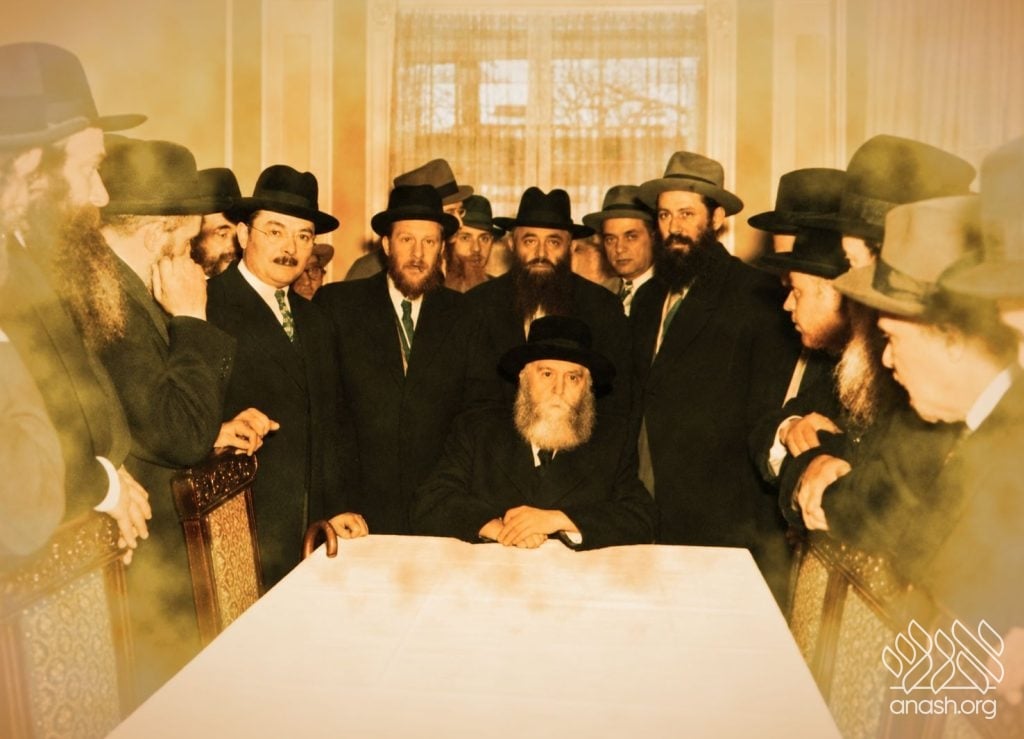
The Rebbe enters, escorted by his three sons-in-law. He takes the place of honor at the head of the table. To his right sit Deputy M. Dubin and the Rebbe’s son-in-law Gurary; to his left, his other two sons-in-law, R. Schneerson and R. Horenstein.
Around the table sit elder chasidim and young, bearded bochurim. Beards of every variety catch the eye: thick black beards, blond ones, and little reddish beards just beginning to sprout on the pale cheeks of the youngest bochurim.
The Frierdiker Rebbe at his home in Riga.Image courtesy of RebbeDrive.
But the crowd’s attention is drawn to the only shtreimel and the only top hat in the room: the Rebbe’s shtreimel and Dubin’s top hat. Dubin’s top hat has already acquired a reputation even among his Christian fellow deputies in the Saeima. Only once a year, on Simchas Torah, does the deputy put on his top hat, which is why it still looks so new. For no other celebration or festive occasion will Dubin profane the sanctity of his “Simchas Torah top hat.”
After the crowd has made kiddush, the Rebbe removes his shtreimel and gartel. It is a sign that it is hot and sweaty… But it is also a sign that the Rebbe is about to say Chasidus.
After the Chasidus, the crowd sings various nigunim. The chasidim clap their hands, snap their fingers, and sing along with uplifted spirits and chasidishe fervor. Some of them sway more than they sing; others sing more than they sway; and still others are focused primarily on a little glass of brandy.
Russian rabbonim who have emigrated here have brought along their young children, and they too sway along…
Groups of young “guests,” who have simply come to get a taste of what goes on in the Lubavitcher courtyard on Simchas Torah night, stroll about in the adjoining women’s room, smoking cigarettes, joking around, and casting glances at the pious young girls who have come to watch the Rebbe conduct the hakafos.
It is already past midnight. The clock strikes half past twelve. Once again there is a great “migration” from the room with the table back into the beis medrash. And in this sort of “resettlement,” there are bound to be a few “casualties” as well…
Chalilah that Yidden and chasidim should actually fight, or, chas veshalom, raise a hand against anyone. But a shove, a pinch, a squeeze, a push here and there, well, that is only natural…
You cannot buy an Atah Hareisa in the Lubavitcher hoyf, for the simple reason that it has been sold out well in advance.
And it turns out that what was sold was not the entire Atah Hareisa, as is customary in other shuls and minyanim, but individual pesukim. Each person who purchased a pasuk then honored the Rebbe with reciting it, so that in the end the Rebbe himself recited the entire Atah Hareisa.
The first Atah Hareisa was bought by locals: the Rebbe’s sons-in-law, Deputy M. Dubin, Deputy S. Wittenberg, and other chasidim, all of whom honored the Rebbe with their pesukim. For the second Atah Hareisa, the buyers themselves and other chasidim were given the honors.
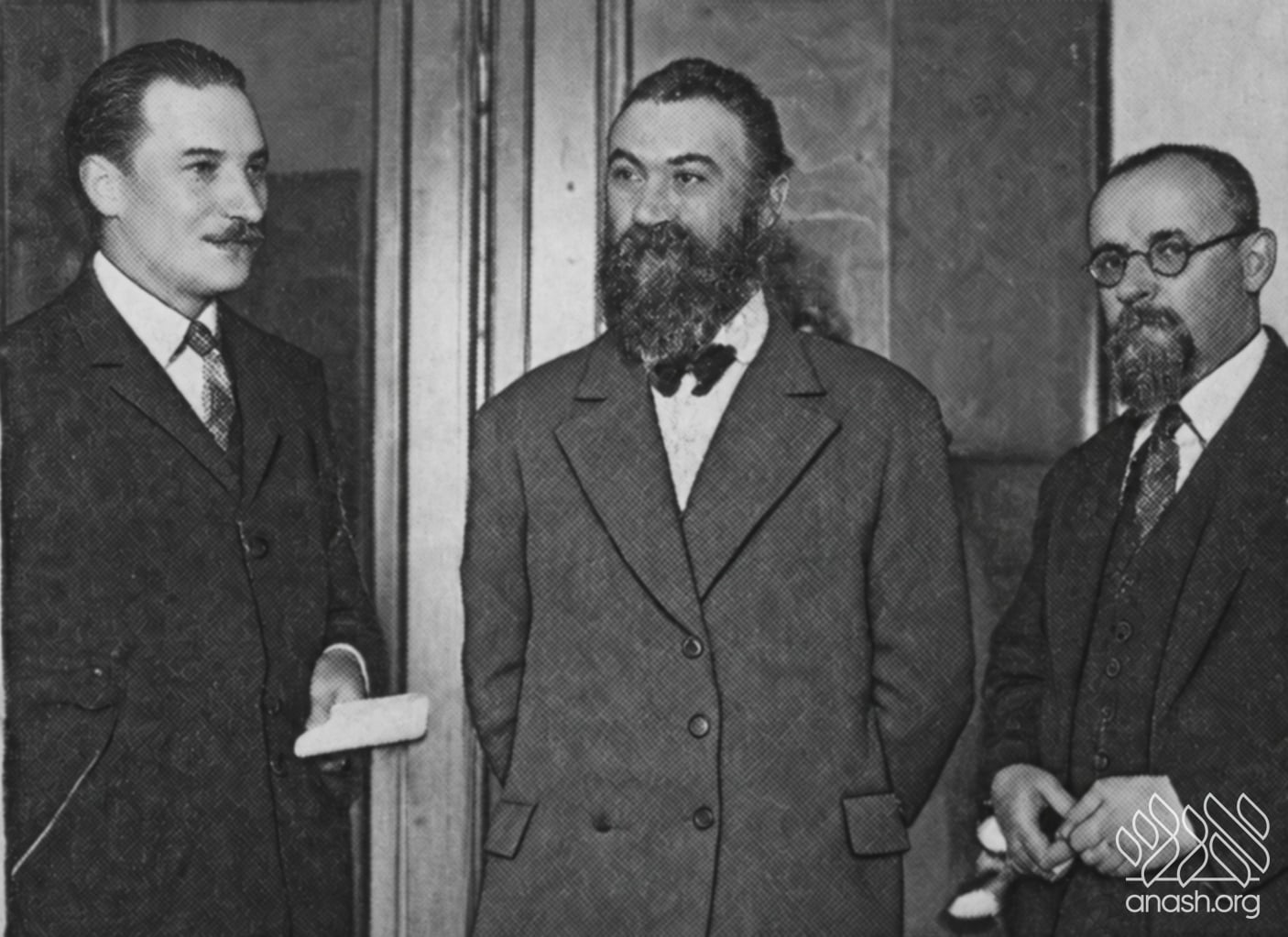
R. Mordechai Dubin (center) with his fellow member of parliament for Agudas Yisrael R. Shimon Wittenberg (right) and non-Jewish parliamentarianAlfreds Berzins (left).
The third Atah Hareisa was bought up by chasidim from abroad, primarily Americans. And so the announcements rang out: Harav Rabinovitch of New York honors the Rebbe with such-and-such a pasuk; Ploni the gabbai from Chicago has purchased another pasuk; a donor from Cape Town or Johannesburg honors him with yet another; and Almoni the askan from China has bought this particular pasuk…
In short, Jews from all over the world have a share in this Atah Hareisa.
After all three Atah Hareisas have been recited, the hakafos begin. The first hakafah is given to the Rebbe, together with his sons-in-law and his grandson, Harav Gurary’s young son. The entire family sets off in a dance, and when the Rebbe dances, the chasidim dance along with him…
The later hakafos are given to the Rebbe’s mekuravim, while the final hakafah once again goes to the Rebbe and his sons-in-law. The entire crowd dances along, lifting their feet off the ground.
No sooner has the crowd finally finished dancing than an announcement is made: the Rebbe has purchased a dance and is honoring the entire crowd with it. Men wipe away the sweat, throw off their neckties, and can barely remain on their feet. But when the Rebbe says to dance, there is no getting out of it…
And so they dance until four o’clock in the morning.
Then, upstairs in the Rebbe’s residence, a seudah begins, stretching on until daybreak, literally ad shehigia zeman kerias shema shel shacharis.
770 Eastern Parkway
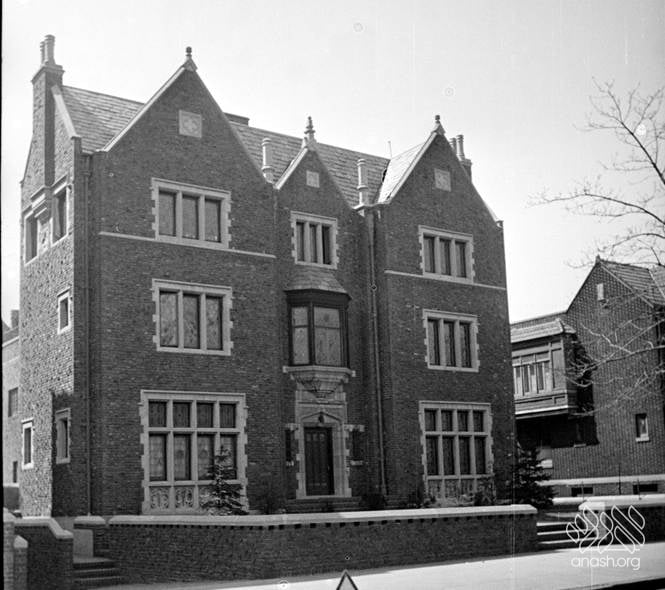
After escaping Nazi-occupied Poland, the Frierdiker Rebbe arrived in America on 9 Adar II 5700. A few months later, the building on 770 Eastern Parkway was purchased to serve as the personal residence and beis medrash of the Frierdiker Rebbe. On 19 Elul, just ahead of Tishrei, the Frierdiker Rebbe and his family moved in.
770 Eastern Parkway, pictured in 5700.Imagecourtesy of the New York City Municipal Archives.
A few weeks later, a few brief lines appeared in New York’s Der Tog newspaper, reporting on Simchas Torah 5701 in 770 (24 Tishrei 5701—October 26, 1940):
Several thousand people gathered at the Lubavitcher Rebbe’s beis medrash. Well-known rabbonim, roshei yeshivah, communal leaders, and even maskilim came for the hakafos. Some walked fifty blocks, a hundred blocks, and even farther. Others came on foot all the way from Manhattan.
Many people had to remain outside, because there was simply no room left inside.
770 quickly became a popular destination for Simchas Torah. In addition to the many chasidim who came for hakafos, crowds of curious onlookers came to watch. Local Jewish non-frum youth would congregate outside.
In a guide for celebrating Simchas Torah in New York published in Der Tog’s English supplement on 18 Tishrei 5707 (October 13, 1946), “Ben Asher” tells his readers that they don’t need to go all the way to Manhattan’s Lower East Side for a good old-fashioned Simchas Torah. Brooklyn has many traditional frum centers of its own, with Lubavitch at 770 being one of the top attractions.
One need not, however, go to Manhattan to participate in the joy of Simhat Torah, the old-fashioned style. Williamsburg is full of Hassidic rabbis, yeshivoth and youth organizations. New Lots and Boro Park are not much behind in festive air.
And since his coming to this country a few years ago, the Liubavitcher Rabbi has made his headquarters on Eastern Parkway near Kingston Street a top attraction. Here Hassidim, young and old, earlocks flying, dance for hours to their dynastic melody, sung by us common Mithnagdim as the tune of “Day Day Dayenu.” The place is always mobbed.
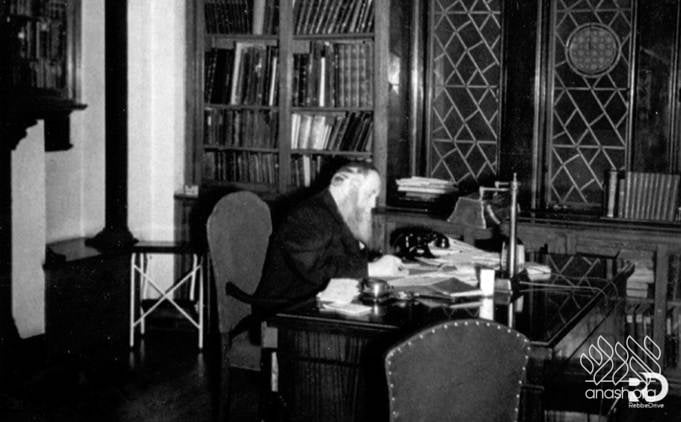
The Frierdiker Rebbe in his office in 770.
Do not be shocked if one of the pious followers of the Rebbe, stationed at the door, will ask you to show him your tzitzith, and smilingly reprove you for their absence.
In case you are unable to get in because of the crowd, just wait outside. There will be a hora-line formed in the street by the younger crowd. For everywhere you will see plenty of young faces.
Appendix: Getting the Frierdiker Rebbe Out of Soviet Russia
Our first source regarding Simchas Torah in Leningrad 5688 was extracted from an interview R. Mordechai Dubin gave to the Latvian Jewish press, published in the Frimorgen newspaper (27 Tishrei 5688—October 23, 1927). Here is a full translation of this important account of how the Frierdiker Rebbe left Russia.
How the Lubavitcher Rebbe Obtained Permission to Leave the USSR
(A Conversation with Saeima Deputy Mordechai Dubin)
On Friday, representatives of the local and foreign press visited the Lubavitcher Rebbe and asked him to share his impressions of his life in the USSR. The Rebbe categorically refused to receive them or to discuss the subject.
Deputy Dubin came to the aid of the journalists. As is well known, Dubin was the one who secured the Rebbe’s exit visa and had spent the Rebbe’s final month in Russia together with him.
Deputy Dubin related the following:
More than once, representatives of various Jewish communities in Europe and America had approached the Lubavitcher Rebbe and urged him to move his residence abroad. The Rebbe rejected every such proposal, because he did not wish to abandon the two-million-strong Jewish community in the USSR.
Harav Meir Hildesheimer (5624–5694), director of the Berlin Rabbinical Seminary.
Recently, following the Rebbe’s arrest and release, representatives of European and American Jewish communities approached Deputy Dubin and asked him to prevail upon the Rebbe to leave the USSR and settle abroad. After much discussion and back-and-forth, Deputy Dubin succeeded in convincing the Rebbe to leave Soviet Russia temporarily. The Rebbe hopes, however, to return to his former place of residence at the first opportunity, as soon as his health permits.
The representatives of Berlin Jewry—Hildesheimer, Munk, and others—as well as representatives from America, approached Dubin and asked him to undertake the mission of securing an exit visa for the Rebbe. Dubin declined at first, knowing that this would be no simple matter, but in the end, he agreed.
Dubin armed himself with a letter from Lorents, the Soviet plenipotentiary [ambassador] in Latvia, stating that, inasmuch as Jews in Europe and America wished to see the Lubavitcher Rebbe abroad, the Soviet authorities should look favorably upon his request.
Deputy Dubin then traveled to Moscow and took up the matter with the Narkomindel, the People’s Commissariat for Foreign Affairs. There he was told that they couldn’t promise him anything and that an answer would be conveyed through the Soviet mission in Riga.
Harav Ezriel (Ezra) Munk (5628–5701), a rov in Königsberg and Berlin.
Hildesheimer and Munk, meanwhile, took steps of their own. They delegated the Independent Socialist Oskar Cohn, who had served for thirteen years as a deputy in the German Reichstag, to assist Dubin. Deputy Dubin met with Cohn in Berlin, and together they decided to make another approach to the Soviet authorities regarding an exit visa for the Rebbe.
They traveled once again to Russia and appealed to Chicherin, Litvinov, and Rothstein. After extensive negotiations, Chicherin, Litvinov, and Rothstein promised to convene a special session of the Narkomindel on the second day of Rosh Hashanah to consider the matter. At that special session, it was decided to grant the Rebbe permission to leave Russia.
After further considerable difficulty, they also succeeded in obtaining visas for the Rebbe’s family, whom the authorities had been absolutely unwilling to allow out of the USSR.
At the same session, permission was also granted for the Rebbe to take all his possessions with him, including his rich library of 10,000 volumes, among them 650 manuscripts of the Baal Shem Tov, R. Shneur Zalman, the Tzemach Tzedek, the Maharash, the Maggid of Mezeritch, and others. As an aside, we have been informed that a large part of the Rebbe’s library is housed in the Rumyantsev Museum, as some of the books from the Rebbe’s library were confiscated by the authorities in 1919.
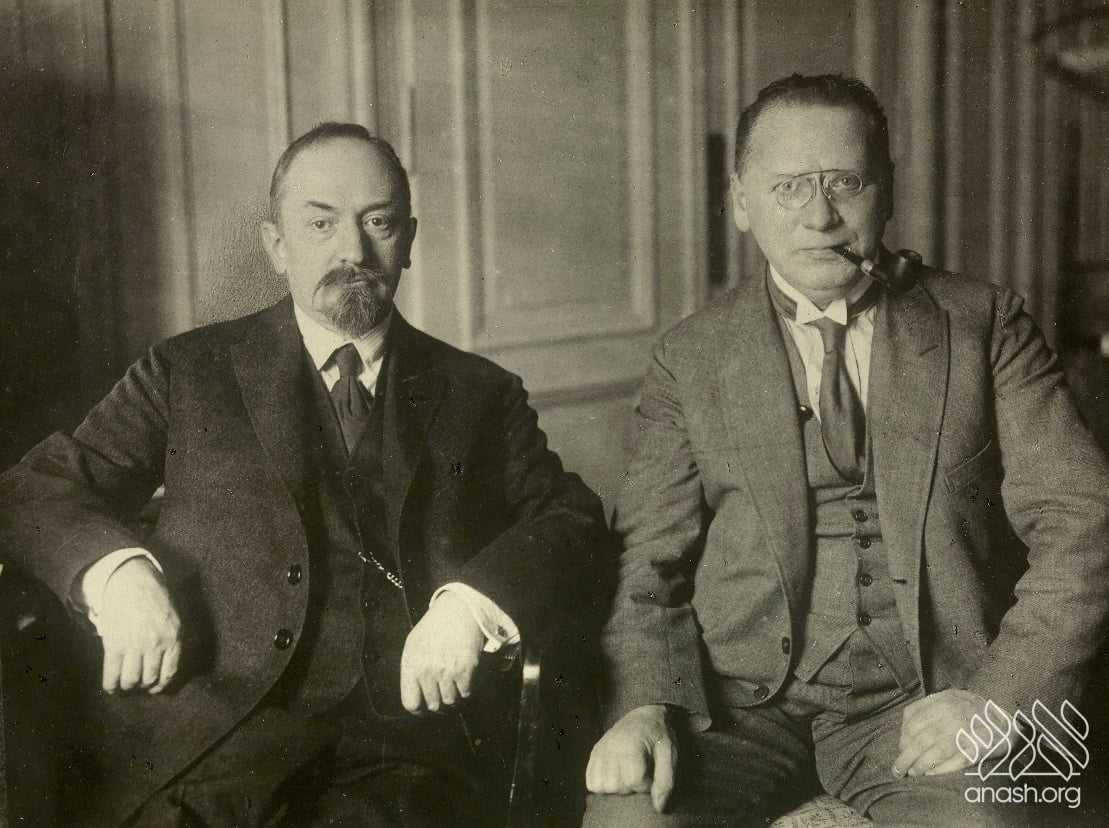
L–R: Georgy Chicherin and Maxim Litvinov. During the period of the Frierdiker Rebbe’s arrest and release, Chicherin served as the “People’s Commissar for Foreign Affairs of the Soviet Union.” Litvinov, born in Bialystok as Meir Henoch Wallach, served as Chicherin’s deputy.
The decision of the Narkomindel was telegraphed to Leningrad, and that very day a representative of Gublit came to the Rebbe’s residence and officially sealed the fifty-six large crates, certifying them for export from Russia. The Rebbe’s entire household and belongings were then dispatched to Latvia in four railroad cars.
There were no difficulties or obstructions along the way, either from the Russian or the Latvian authorities, and the entire journey proceeded without incident.
“I must say,” Deputy Dubin remarked, “that I could never have imagined that the spirit of Jewish faith was still so strong in Russia.
“On Simchas Torah, a crowd of a thousand people gathered at the Rebbe’s residence at Mokhovaya Street, 22, in the house once occupied by the czarist minister Polivanov. They had come from every corner and region of vast Russia: rabbonim, officials, craftsmen, and even Jews far removed from Chasidus and religious observance, among them the well-known Professor M., the advocate O. C., and others. They danced, sang chasidishe nigunim, and rejoiced just like in the old times. I could never have imagined that the GPU would permit such a thing.”
“A large crowd accompanied the Rebbe as far as Pskov. All along the route, at every station, delegations of Jews came to greet the Rebbe. The second-class railway car in which the Rebbe and his family were traveling was transformed into a veritable Chabad shtibel, and the rejoicing continued all the way to Riga.”
The Frierdiker Rebbe upon his arrival in Riga, 25 Tishrei 5688. R. Mordechai Dubin (with bowler hat and bowtie) stands on the right.
In response to the journalists’ request for details about the Rebbe’s arrest, Deputy Dubin said that since reports on the matter had already appeared in the press from correspondents in Russia for various newspapers, there was almost nothing to add.
We are only informed that among those chiefly responsible for the Rebbe’s arrest were two young Jewish men, Lulav and Nachimson [sic], whose fathers had been ardent Lubavitcher chasidim and had more than once sat at the table of the previous Rebbe.
The article continues with Dubin’s general impressions of the state of the Jews in Russia.
Thanks to Dovid Margolin for his assistance with the Leningrad section.
To view all installments of From the Margins of Chabad History, click here.
For additional exclusive content, follow the column on X: x.com/ChabadMargins
COMMENTS
We appreciate your feedback. If you have any additional information to contribute to this article, it will be added below.







 COMMENTS


We appreciate your feedback. If you have any additional information to contribute to this article, it will be added below.