Riga, Brownsville, Crown Heights: Rosh Hashanah with the Frierdiker Rebbe
As we approach Rosh Hashanah, From the Margins of Chabad History presents contemporary accounts of Rosh Hashanah with the Frierdiker Rebbe in Riga, Brownsville, and Crown Heights. A letter of Rosh Hashanah berachos from the Frierdiker Rebbe to American Jews is also published here, for the first time.
After being forced to leave Russia at the beginning of 5688, the Frierdiker Rebbe settled in Riga. For the next six years, Pulkveža Brieža Street 10 was the Frierdiker Rebbe’s primary residence, although he spent much time traveling during this period.
A significant number of Chabad chasidim and other frum refugees from Russia had already settled in Riga by this time. Still, the city and its established Jewish community were modern and cosmopolitan.
The Frierdiker Rebbe’s arrival in Riga and the establishment of a chasidishe chatzer in the heart of Riga’s most affluent and aristocratic neighborhood evoked a range of reactions in the local Jewish community. Some were excited, some were bewildered, and others were downright antagonistic.
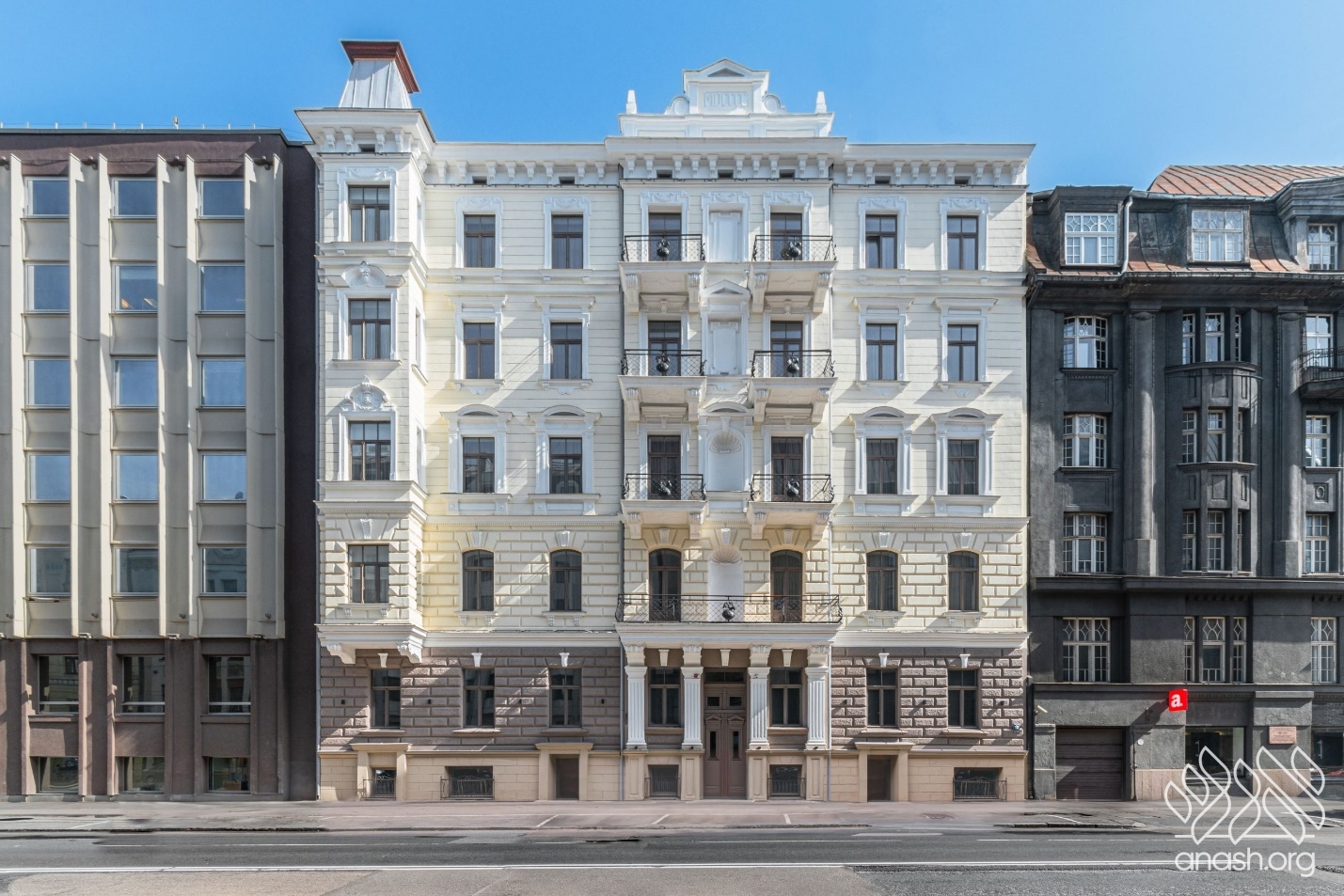
The building in which the Frierdiker Rebbe lived in Riga, on Pulkveža Brieža Street 10 (the street was previously known as 1. Weidendamm St.). The Frierdiker Rebbe’s apartment was on the second floor of the building.
Rosh Hashanah of 5689 was the first to be celebrated in the new chatzer in Riga, attracting much interest and curiosity from the local Jews. A brief report in Riga’s Haynt newspaper (3 Tishrei 5689—September 17, 1928) gives us a description of the events of the days.
Rosh Hashanah at the Lubavitcher Rebbe’s Hoyf
The Lubavitcher Rebbe’s minyan was packed over the days of Rosh Hashanah. About half of the mispalelim were guests, chasidim who had come to the Rebbe for the Yamim Noraim, mainly from Lita and Poland.
Some thirty men came from Kovno and the Litvishe shtetlach, and about twenty from Warsaw and elsewhere in Poland. While the chasidim from Lita look much like ordinary “European” Jews in their dress, the Polish chasidim stand out strikingly in their appearance. All wear long kapotes, some of them silk; all wear gartels and full beards, and many of them are quite young.
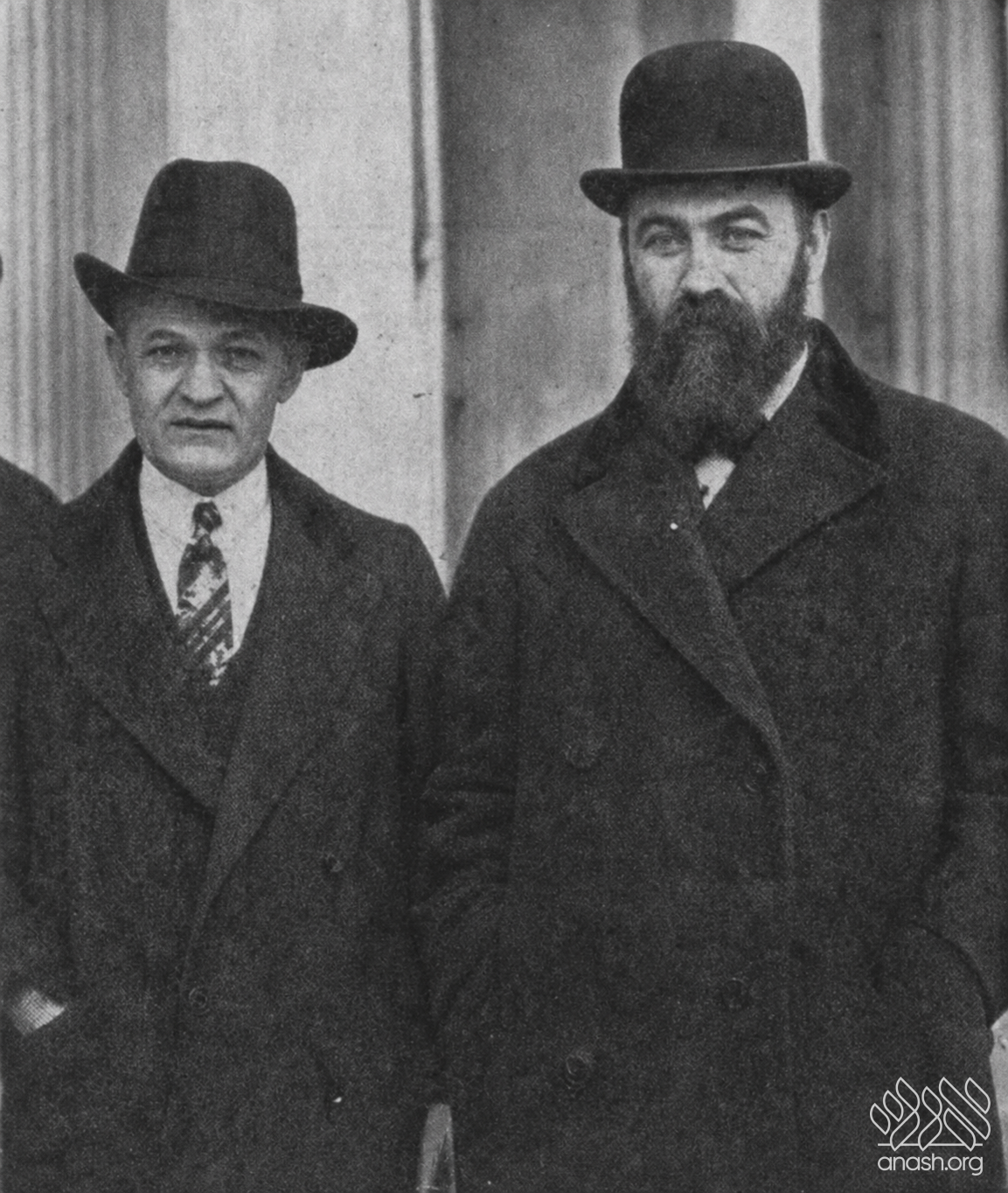
Mordechai Dubin with New York congressmanSamuel Dickstein at the White House, where Dubin met President Hoover on 1 Kislev 5690.
The distinguished guests were honored not only with aliyos but also with leading the davening: a chasid from Lita davened Shacharis, and a Warsaw balebos davened Musaf. Yesterday, the baal korei was Saeima Deputy R. Mordechai Dubin. Per custom, the Lubavitcher Rebbe received Maftir on both days of Rosh Hashanah. The Maftir lasted some forty minutes. The Rebbe also blew the shofar.
The Rebbe davened together with the olam on Rosh Hashanah. On Friday night, the Lubavitcher Rebbe שליט”א also davened Maariv at the amud, and Maariv did not conclude until eleven o’clock at night. On both days of Rosh Hashanah as well, davening in the Lubavitcher minyan did not finish until 4:00. After davening, refreshments were served to the guests, and the olam soon gathered again to daven Minchah.
Throughout this time, the door of the Lubavitcher minyan was constantly opening and closing, as curious onlookers kept coming to see what was taking place in the Rebbe’s kloiz. There was a particularly large crush yesterday, on the second day of Rosh Hashanah, when a large number of Riga chasidim and other Yidden came to daven in the Rebbe’s minyan.
Brownsville, 5690
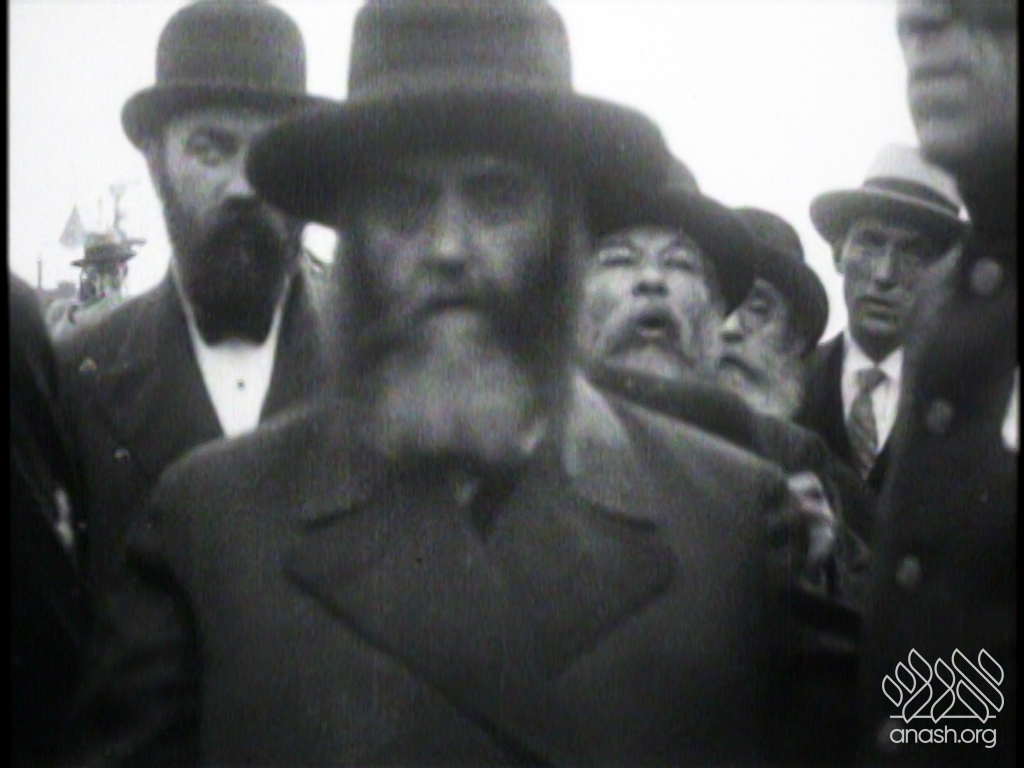
The Frierdiker Rebbe disembarking from the boat in New York, 12 Elul 5689. Behind the Frierdiker Rebbe on the left is R. Mordechai Dubin, and on the right, Harav Mendel Leib Lokshin.
The Frierdiker Rebbe spent Rosh Hashanah of the next year, 5690, on the other side of the world. On 12 Elul 5689, the Frierdiker Rebbe arrived in the United States for the first time, for a ten-month visit. Upon arrival, the Frierdiker Rebbe initially stayed at the home of Harav Eliyahu Yaichel Simpson, on the second floor of the Tzemach Tzedek shul on 4515 14th Avenue, Borough Park.
At this time, the largest concentration of traditional Jews in New York was in Brownsville, which earned the nickname “Yerushalayim of America.” Brownsville’s over 100,000 Jewish residents included many chasidim and Jews from a Chabad background, and there were no fewer than twelve Nusach Ari shuls in the neighborhood.
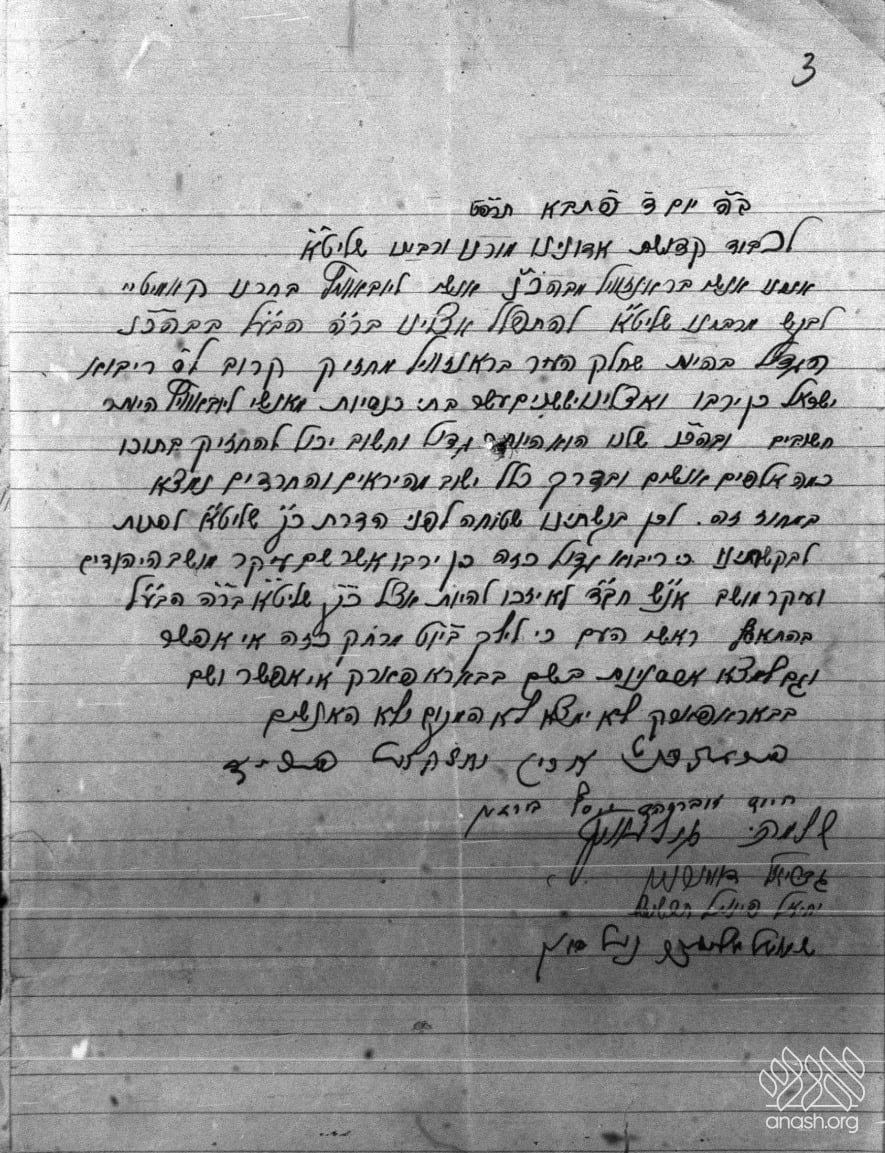
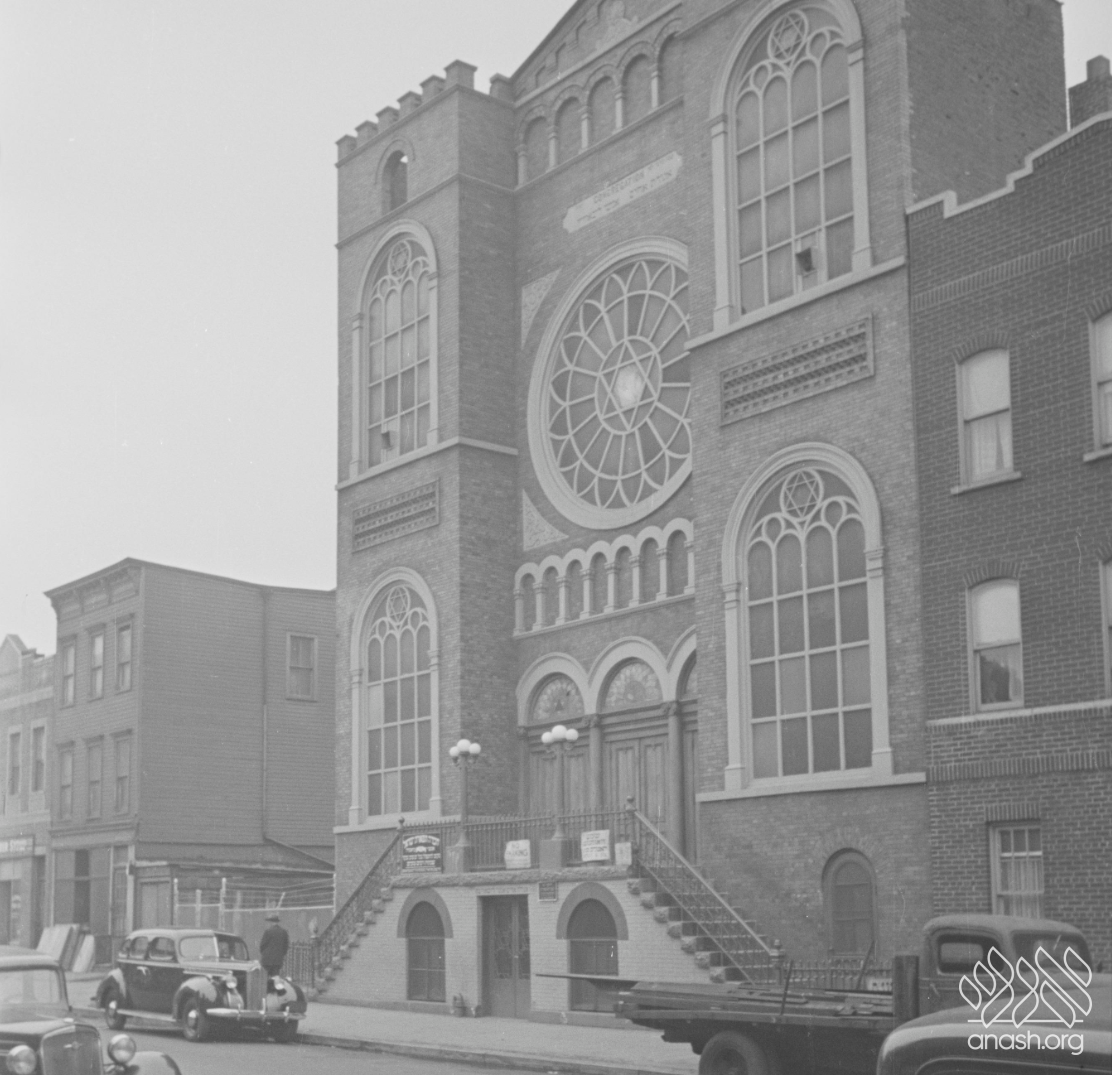
The very next day after the Frierdiker Rebbe’s arrival, Anash of Brownsville wrote a letter to the Frierdiker Rebbe asking him to spend the upcoming Rosh Hashanah with them. They explained that the Anshei Lubavitch shul on 195 Watkins Street was the largest in the area and could accommodate thousands of people.
Anash of Brownsville’s invitation to the Frierdiker Rebbe to spend Rosh Hashanah in their neighborhood. This document was published inGinzaya, vol. 1, pp. 105–106.
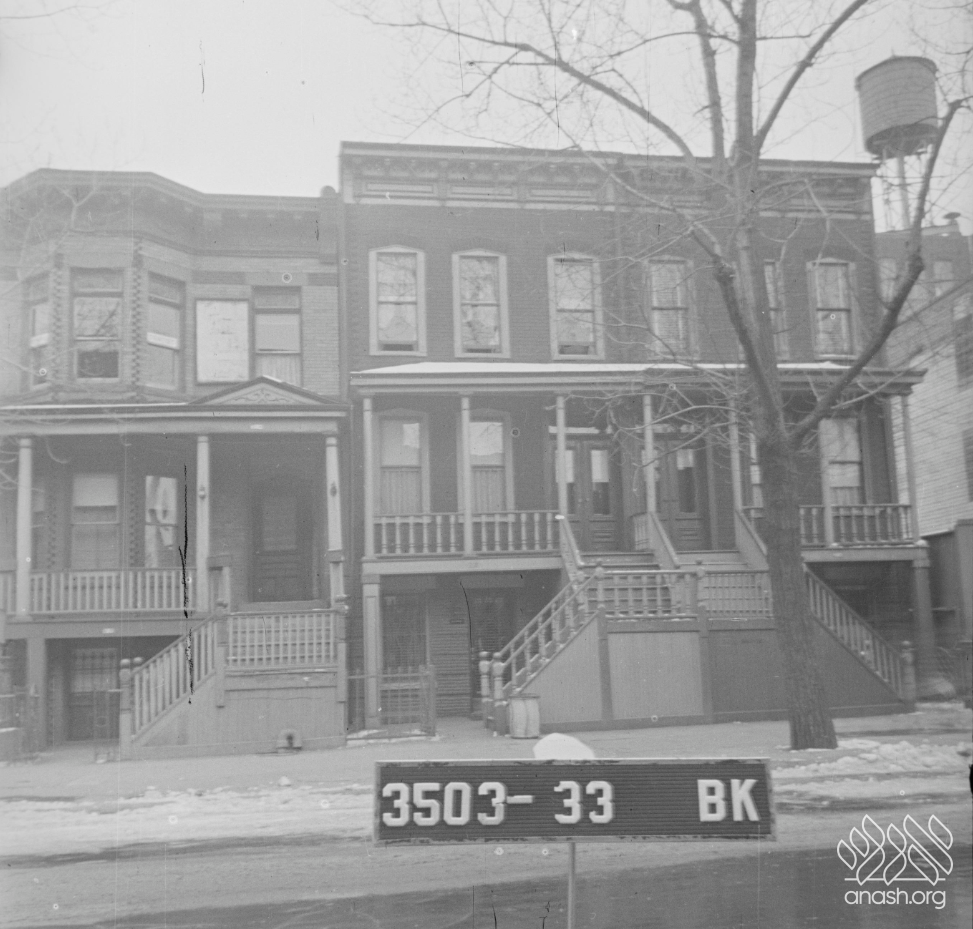
Indeed, the Frierdiker Rebbe accepted their invitation. For Rosh Hashanah, the Rebbe stayed at the home of Dr. Okun, on 332 Stone Avenue, and the tefilos were held at the grand Anshei Lubavitch of Brownsville.
Last year, Kehos published a kuntres including the Rosh Hashanah maamarim of 5690 (Zeh Hayom and Min Hameitzar). As an appendix to the maamarim, two documents describing the events of the days were published: the Frierdiker Rebbe’s personal diary and his letter home to Rebbetzin Nechamah Dinah.
These documents described the events of the Yom Tov from the Frierdiker Rebbe’s perspective. We now publish a complementary account from the contemporary press, relating the events of the days from the perspective of a participant.
This account appeared originally in New York’s Morgen Zhurnal newspaper, but we have only been able to locate a reproduction of it that appeared in the Frimorgen newspaper in Riga (27 Tishrei 5690—October 31, 1929). The factual points of this account closely track those provided in the Frierdiker Rebbe’s descriptions, but this report gives us a window into the emotions and experiences of the participants as well.
How the Lubavitcher Rebbe Davened the Yamim Noraim in America
New York’s Morgen Zhurnal reports:
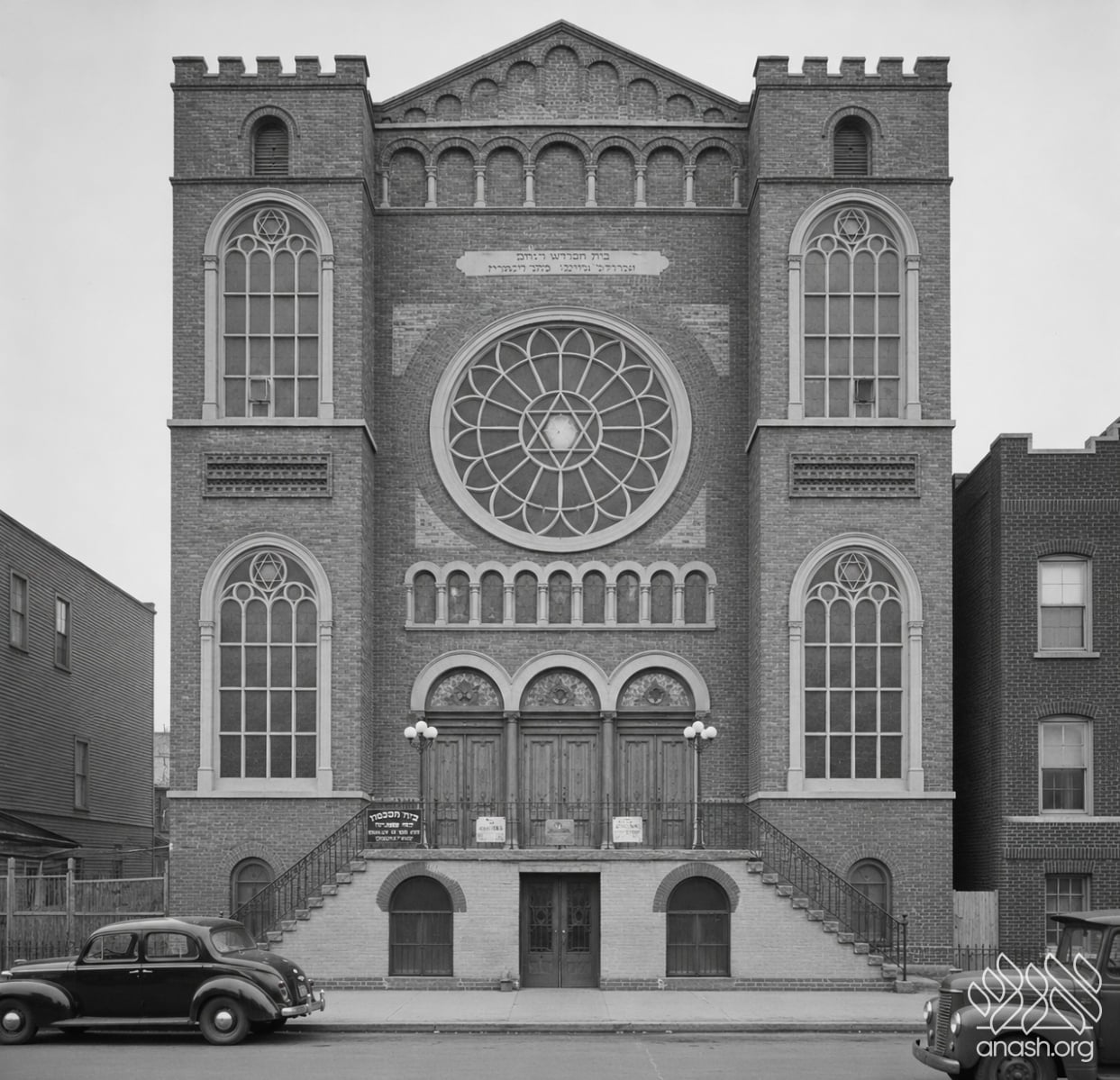
Agudas Achim Anshei Lubavitch, 195 Watkins Street, Brownsville. New York City Municipal Archives.
The Brownsville Agudas Achim Anshei Lubavitch invited the Rebbe to daven for the Yamim Noraim in their large shul. With the Rebbe’s consent, the invitation was accepted, for the simple reason that there was more room there, enabling many more Yidden to come and be with the Rebbe for Rosh Hashanah and Yom Kippur.
On both days of Rosh Hashanah, the Lubavitcher shul was packed with Yidden for davening, and again in the evening to hear the Rebbe say Torah. Yidden came from far away: from Canada, Chicago, Pittsburgh, and from places closer by, to spend Yom Tov here, to be near the Rebbe during the Yamim Noraim.
There are chasidim here who know how much hardship the chasidim back home had endured in order to travel to Lubavitch for Rosh Hashanah and Yom Kippur. They therefore felt fortunate to have the zechus to be with the Rebbe during the Yamim Noraim here in America.
A digitally straightened view of Anshei Lubavitch of Brownsville.
In keeping with the custom of the Lubavitcher Rebbes, the Rebbe davened the first Maariv of Rosh Hashanah at great length. Although the rest of the shul finished Maariv at the usual time, a large crowd remained behind and waited until the Rebbe finished davening. By then it was already ten o’clock.
The people could not cease to wonder at how the Rebbe stood in his corner for three hours and fifteen minutes, weeping continuously, his tears flowing as if from an inexhaustible wellspring. They attribute it only to the Rebbe’s superhuman strength: the Lubavitcher Rebbe personally bears and feels the pain and anguish of the sorrowful state of Jewish life in the lands of galus and in Eretz Yisrael, both materially and spiritually.
On the first day of Rosh Hashanah, davening concluded at 4:00 PM, at which point Minchah was davened as well. By 5:00, the shul and the surrounding area were packed with Yidden who had come to see and hear the Rebbe say Torah.
While in Brownsville for Rosh Hashanah, the Frierdiker Rebbe stayed at the home of Dr. Okun, at 332 Stone Avenue (now Mother Gaston Boulevard). New York City Municipal Archives.
After the crowd finished Minchah, the Rebbe went up onto the bimah and sat down on a chair to say Torah, surrounded by rabbonim. The Torah he delivered was Chabad Chasidus, but he said it loudly and explained it with such clarity that every ben Torah could understand it.
On the second day of Rosh Hashanah, the Rebbe was mesader the tekios, which lasted an hour and a half. Those who were in the shul and heard him recite the Lamnatzeach and the pesukim before the tekios will never forget it for the rest of their lives. One Jew, not a chasid, who had come to hear the tekios, later described the experience to others with tears streaming down his face; so deeply had he been moved by the unforgettable impression it made upon him.
Once again, in the evening the shul and the surrounding area were packed with Yidden, many of whom could not get inside. Police stood near the entrance, and when the Rebbe arrived, he instructed that the doors be opened wide and everyone be allowed in. The Rebbe again said Torah from the bimah. This time, however, no one else was permitted onto the bimah, so that the crowd could hear better. His Torah lasted for more than an hour.
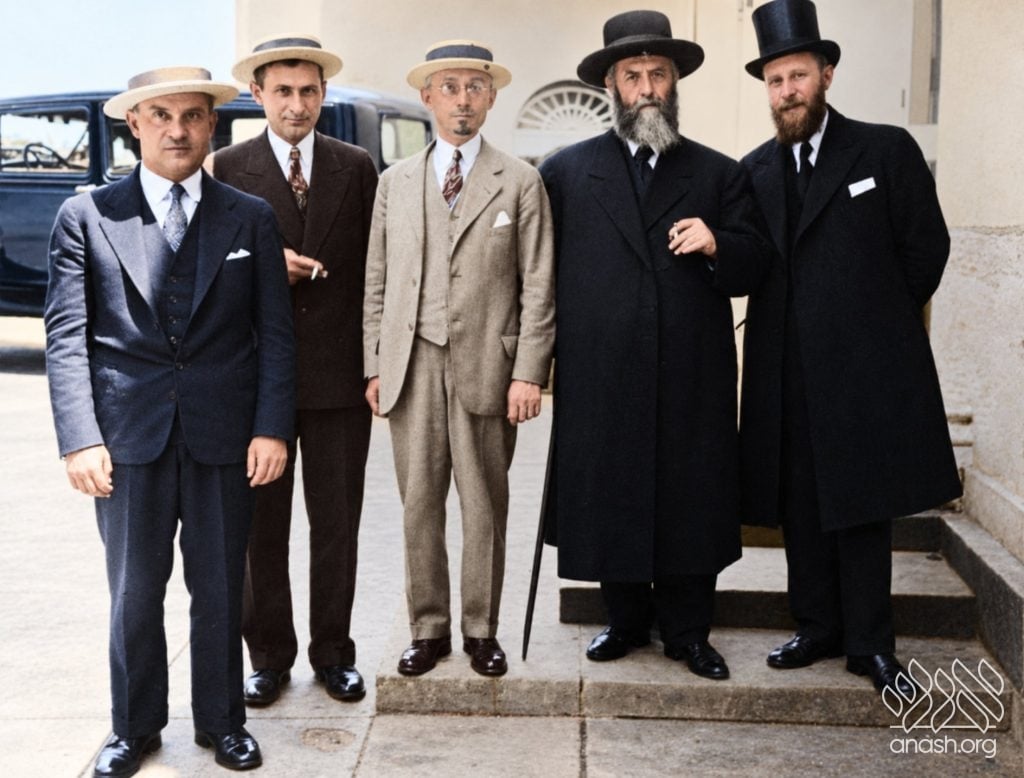
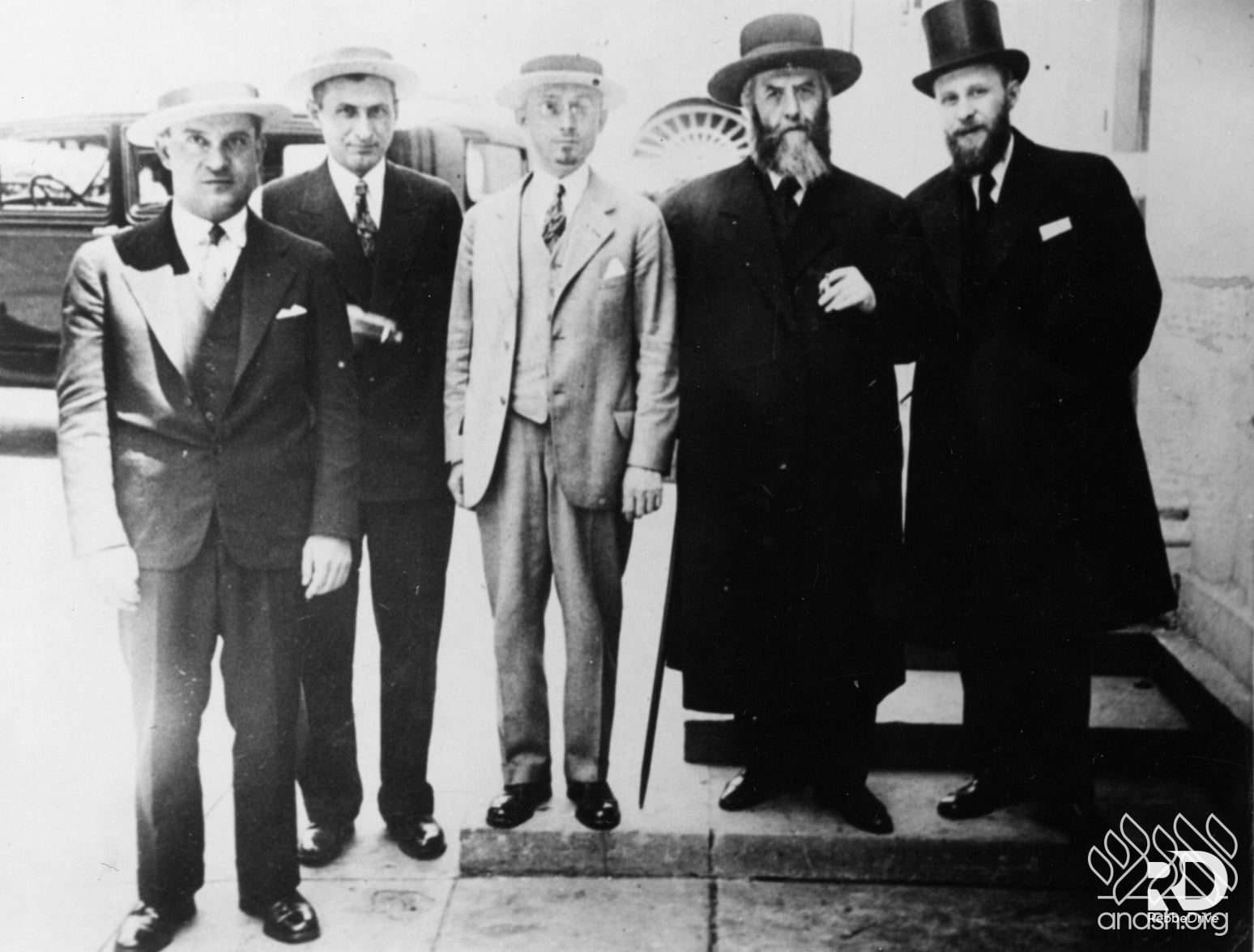
The Frierdiker Rebbe at the White House, where he met with President Hoover on 14 Tammuz 5690. L–R: Arthur Rabinowitz, Chaim Elchonon Fogelman, Hyman (Chazak) Kramer, the Frierdiker Rebbe, and Rashag. Courtesy of RebbeDrive.
Among those present were chasidim from back home, including several former talmidim of the Lubavitcher yeshivah. Many Yidden came simply to catch a glimpse of the Rebbe.
Everyone’s eyes were also drawn to the Rebbe’s two companions: his son-in-law, Harav Gurary, and the member of the Saeima, R. Mordechai Dubin. Their appearance and refined bearing inspired affection and respect in anyone who so much as caught sight of them.
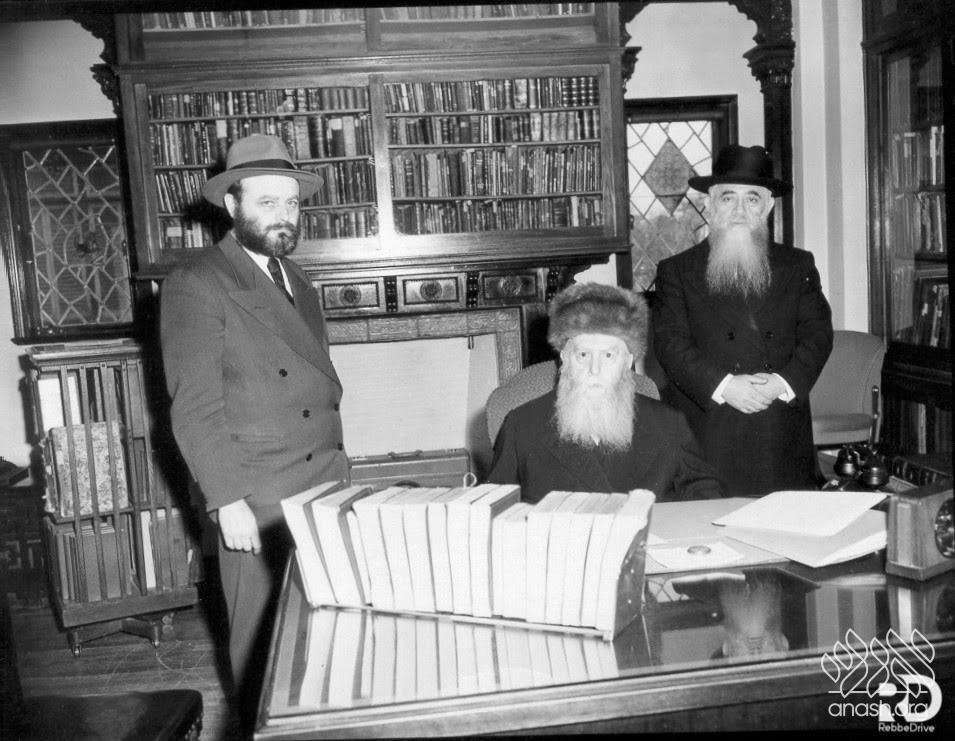
The house at 184 Brooklyn Avenue is filled from early morning until late at night with visitors from every walk of life, some coming with pressing matters, and others simply to visit the Rebbe.
Crown Heights, 5707
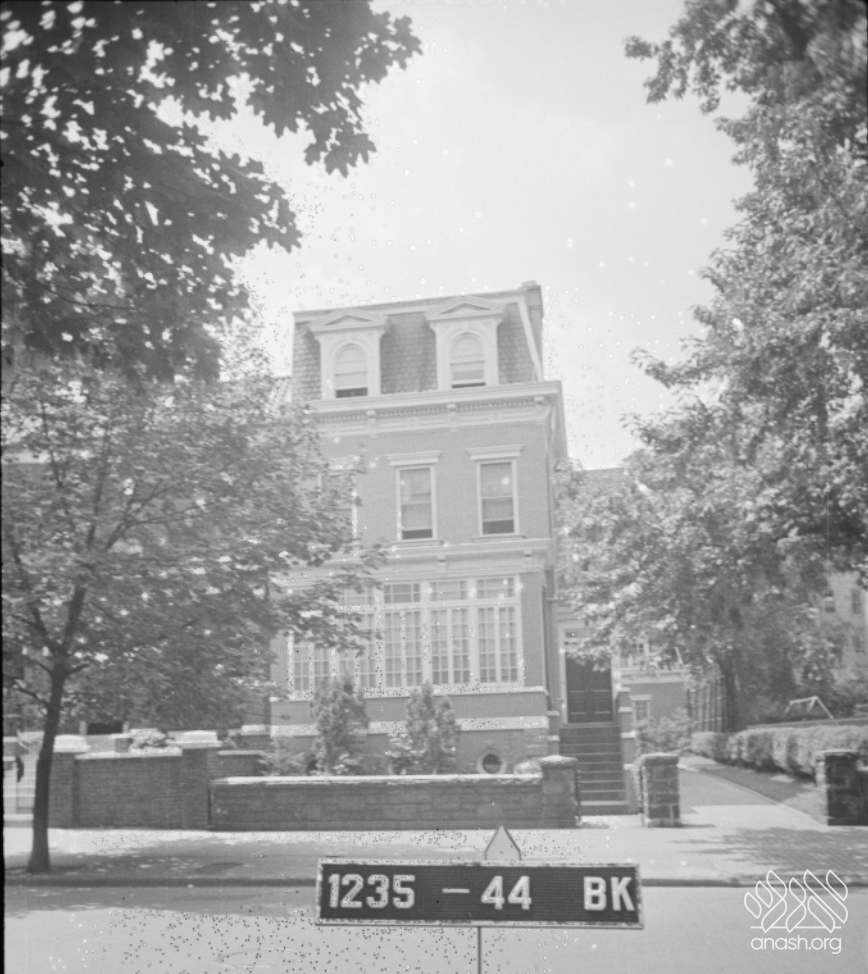
On 4 Tishrei, the Frierdiker Rebbe moved into a house at 184 Brooklyn Avenue in Crown Heights. The Rebbe held farbrengens, delivered maamarim, and received people for yechidus here until 13 Kislev, the end of his first stay in New York.
Our final account of Rosh Hashanah in the chatzer of the Frierdiker Rebbe comes seventeen years later, when Lubavitch was already firmly established at 770 Eastern Parkway in Crown Heights. This report describes one event of the day—tashlich.
After the Frierdiker Rebbe settled in Crown Heights, chasidim began to walk to the Brooklyn Botanic Garden for tashlich. From the beginning, the Rebbe—then known as the Ramash—arranged that the procession march together down Eastern Parkway in an orderly fashion, singing Jewish songs—not necessarily chasidishe nigunim.
The goal of the tahaluchah was to draw the attention of the many non-frum Jews living in Crown Heights, inspire them to join, and show onlookers—especially the youth—what authentic, proud Yiddishkeit looks like. Such open and loud Jewish conduct was very novel in the affluent modern Jewish neighborhood of Crown Heights, and the tahaluchah was highly successful in its goal of raising Jewish pride.
In last year’s article surveying tashlich throughout the generations of Lubavitch, we published one account of the tashlich procession and the hirhur teshuvah it inspired in an onlooker. The present piece, describing the procession in 5707, gives us another contemporary description.
In his weekly column in Der Tog newspaper, Di Voch in Yidishen Ortodoksishen Leben (8 Tishrei 5707—October 3, 1946), Lubavitch-affiliated journalist Nisson Gordon describes the Lubavitcher tashlich procession in Crown Heights and its impact on the local Jews.
The Tashlich March on Eastern Parkway
If there is still a Jewish child in the Eastern Parkway area of Brooklyn who does not know that Jews go to tashlich on the first day of Rosh Hashanah to cast away their bundle of aveiros, it can only be because he was not home that afternoon and missed the impressive tashlich march staged this year by the Lubavitcher chasidim.
The Frierdiker Rebbe at his citizenship ceremony in 5709, with the Rebbe standing on the left. On the right is Harav ShlomoAharon Kazarnovsky.
From their shul at 770 Eastern Parkway to the brook in the historic Botanical Gardens, some three hundred chasidim marched to the strains of chasidishe march songs and various other Chabad nigunim. It was a march with all the bells and whistles. No one was permitted to step out of the carefully formed double line, which stretched for more than a block. If discipline began to break down anywhere, a “policeman” would immediately rush over and restore order; and when necessary, Rabbi Hodakov, the commander, even stopped traffic.
Many of the marching Chasidim, who knew Rabbi Hodakov as the author of textbooks and as an educational expert, could not get over his military talents…
A Lubavitcher talmid who has only just arrived from Shanghai kept repeating that he could hardly believe this is how they are going to tashlich in America. He had never imagined, he said, that in New York people would go to tashlich with a greater parade than in Warsaw.
Interestingly, the balabatishe Jewish residents of the aristocratic Eastern Parkway greeted the marchers with cries of “Gut Yom Tov,” and many of them joined the march themselves.
Around the narrow, grass-lined brook in the park, the tashlich-sayers mingled with hundreds of Yidden from other shuls in the neighborhood. It was already beginning to grow dark outside by the time the crowd finished the Yehi Ratzon and shook the corners of their tzitzis.
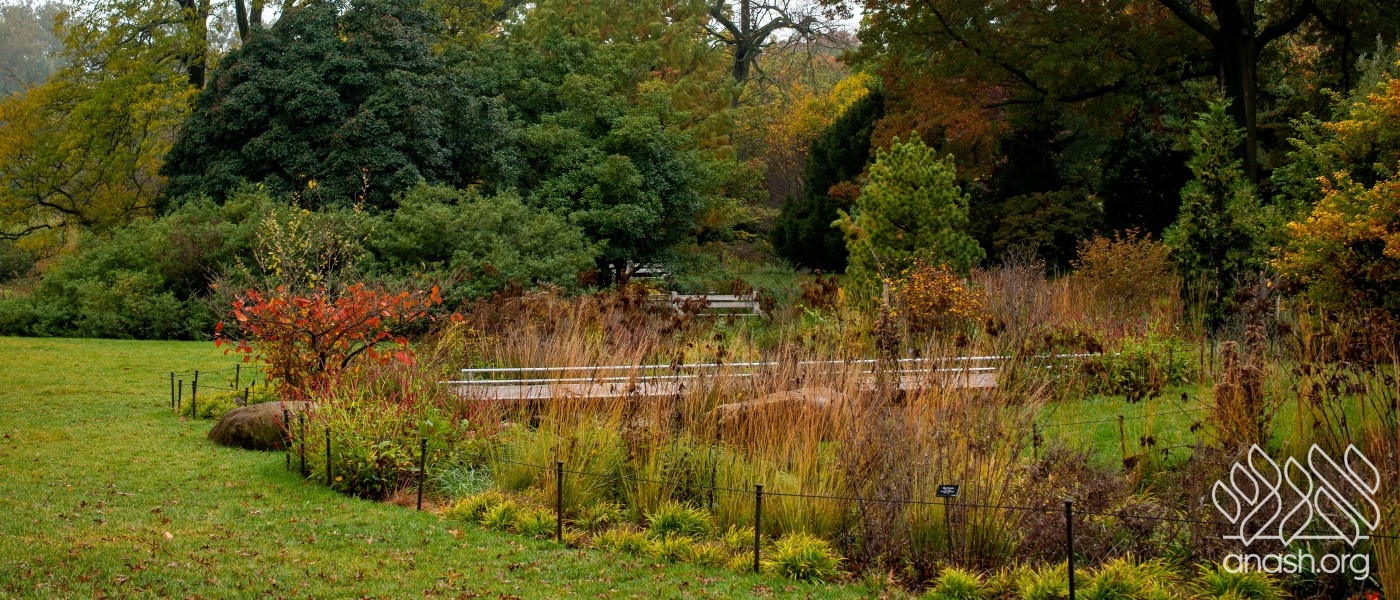
The stream in the Brooklyn Botanical Garden where tashlich was performed, now named “Belle’s Brook.”
A young American man wearing a yarmulke called over one of the tashlich-sayers and pointed out a small monument standing beside the brook, commemorating a victory George Washington had won at that spot in a battle against the British during the American Revolution.
“Who knows,” the tashlich-sayer replied, “perhaps he was assisted back then by the zechus that one day Yiddishe kinder would find a home in America and be able to go peacefully and freely to tashlich…”
Rosh Hashanah Berachos to America
As an appendix to this collection of descriptions of Rosh Hashanah with the Frierdiker Rebbe, we publish here, for the first time, a letter of Rosh Hashanah berachos to American Jewry sent ahead of Rosh Hashanah 5689.
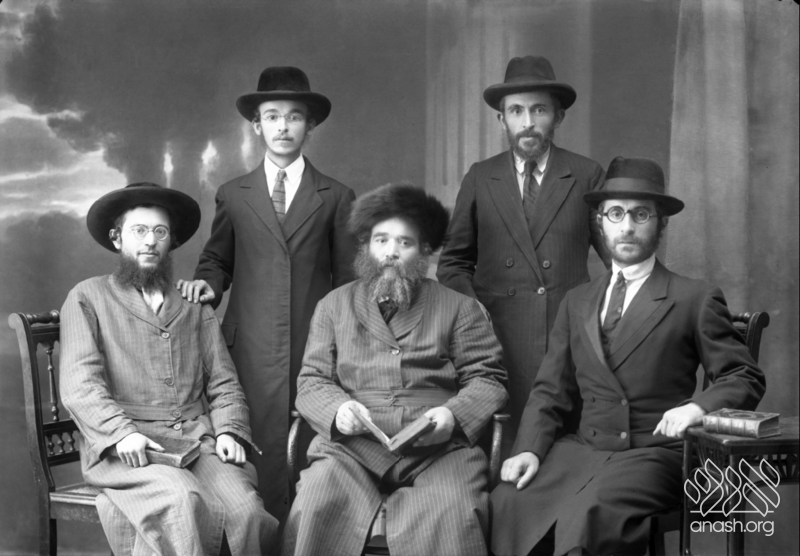
In the summer of 5688, Harav Shlomo Zalman Havlin and Harav Moshe Dovber Rivkin arrived in America. Both were temimim who had learned in Lubavitch, and they were now members of the hanhalah of Yeshivas Toras Emes in Yerushalayim, with Harav Havlin serving as menahel.
The hanhalah of Yeshivas Toras Emes in Yerushalayim. Harav Havlin is seated in the center, and Harav Rivkin is standing on the right.
The primary goal of their visit to America was to raise funds for Yeshivas Toras Emes. However, while on their way to America, they stopped in Riga to visit the Frierdiker Rebbe, and they were asked to also establish a collection of maamad money to support the Frierdiker Rebbe.
After their arrival, a dedicated maamad committee was established under the auspices of Agudas Chasidei Chabad in America, and Harav Rivkin was appointed to head it. Harav Rivkin (5653–5737) ended up settling permanently in America, where he served as Rosh Yeshivah in Yeshivas Torah Vodaas for many years.
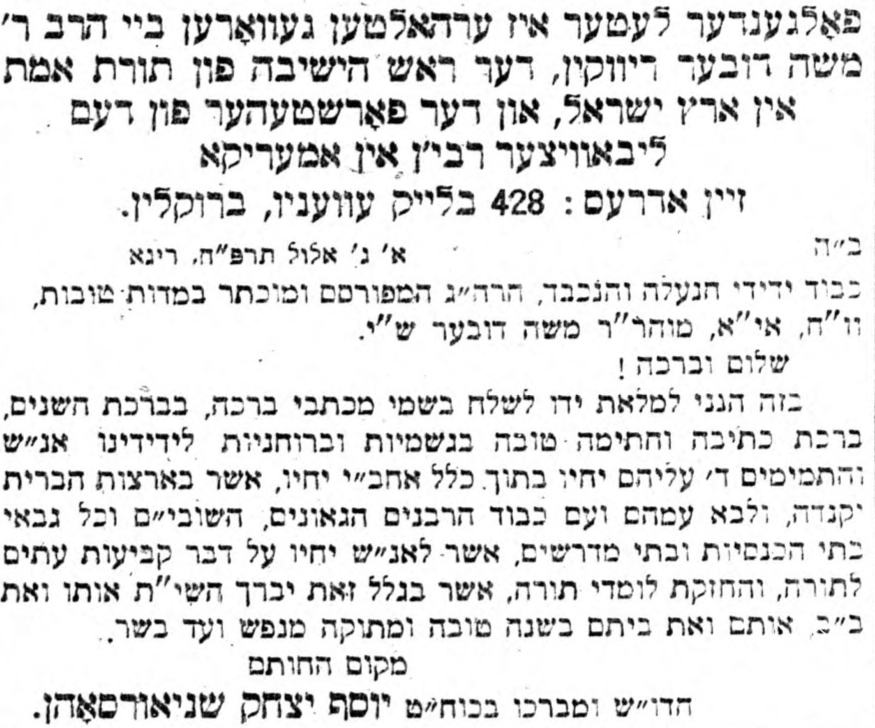
Ahead of Rosh Hashanah 5689, the Frierdiker Rebbe sent a letter to Harav Rivkin empowering him to send letters of Rosh Hashanah berachos on his behalf to the Jews of America and to encourage them to increase their study and support of Torah.
Harav Rivkin had this letter published in the local Morgen Zhurnal newspaper on Erev Rosh Hashanah (September 14, 1928). This letter was not included in Igros Kodesh and is reproduced here for the first time, together with an English translation.
The following letter was received by Harav Moshe Dovber Rivkin, Rosh Yeshivah of Toras Emes in Eretz Yisrael and the Lubavitcher Rebbe’s representative in America. His address is 428 Blake Avenue, Brooklyn.
B”H, Sunday, 3 Elul 5688, Riga
To my esteemed and honored friend, the renowned gaon, distinguished with fine midos, vasik vechasid, ish yerei Elokim, Harav R. Moshe Dovber, sheyichyeh.
I hereby empower you to send letters of blessing in my name, with blessings for the year, the blessing of a kesivah vachasimah tovah, materially and spiritually, to our friends, Anash and the temimim, may Hashem grant them life, amongst all our Jewish brethren, may they live, in the United States and Canada.
You are empowered to correspond with them, and with the honored rabbonim and geonim, the shochtim, and all the gabbaim of the shuls and batei midrash of Anash, may they live, regarding the establishment of fixed times for Torah study and the support of those who study Torah.
In this merit, may Hashem bless them and the members of their households, them and their homes, with a good and sweet year, in soul and body.
[Signature]
He who seeks your welfare and blesses you with a kesivah vachasimah tovah, Yosef Yitzchak Schneersohn
To view all installments of From the Margins of Chabad History, click here.
For additional exclusive content, follow the column on X: x.com/ChabadMargins
COMMENTS
We appreciate your feedback. If you have any additional information to contribute to this article, it will be added below.
Very accurate just one detail is wrong.
The Frierdiker was given the entire house.
My wife’s grandfather Rabbi Eliyahu Simpson, had recently built it and delayed his move to the house, until the Rebbe would no longer need it.
The lodging was on the upper floor, and the tefillos were on the ground floor
Can you identify the three individuals in the photo alongside Rav Berel Rivkin? Additionally, I’m curious as to why Rav Berel Rivkin didn’t assume the role of Rosh Yeshiva when Tomchei Temimim was established in NY 1940, resulting in a period without a Chabad Rosh Yeshiva.







 COMMENTS


Very accurate just one detail is wrong.
The Frierdiker was given the entire house.
My wife’s grandfather Rabbi Eliyahu Simpson, had recently built it and delayed his move to the house, until the Rebbe would no longer need it.
The lodging was on the upper floor, and the tefillos were on the ground floor
Can you identify the three individuals in the photo alongside Rav Berel Rivkin? Additionally, I’m curious as to why Rav Berel Rivkin didn’t assume the role of Rosh Yeshiva when Tomchei Temimim was established in NY 1940, resulting in a period without a Chabad Rosh Yeshiva.