



ט׳ סיון ה׳תשפ״ו | May 25, 2026
Teaching Torah to Children: What and How?
Ask the Rov: What is a father’s obligation to teach his son Torah? Rabbi Chaim Hillel Raskin responds.
What is a father’s obligation to teach his son Torah?
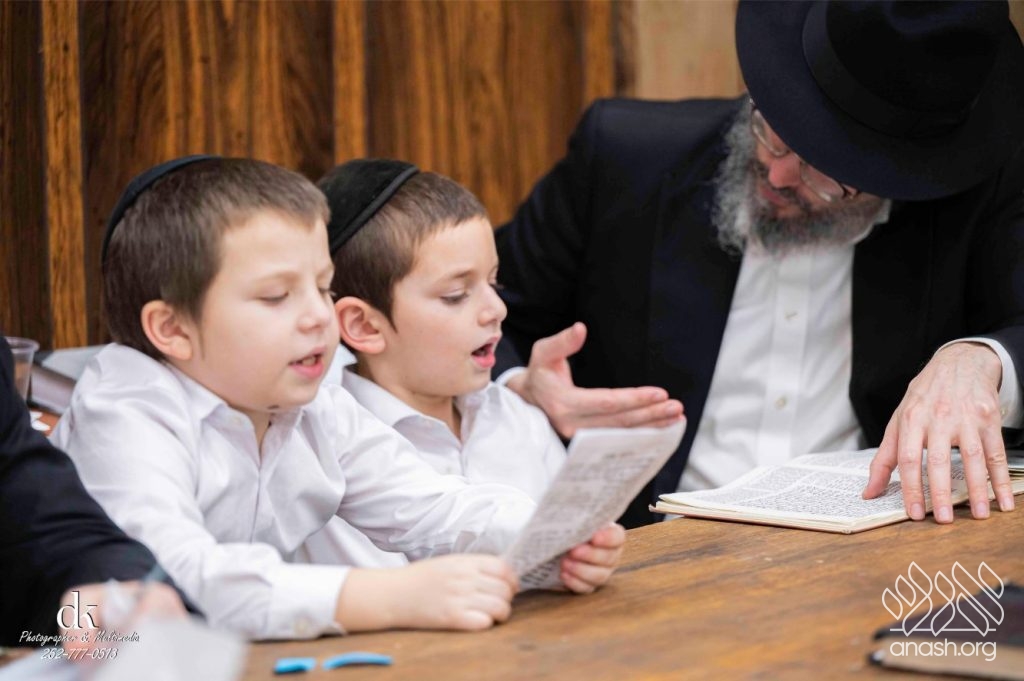
The father is obligated mide’oraisa to teach his son Torah. After introducing him to Torah from a young age (see previous issue), once the son turns six or seven (depending on his strength and ability), the father brings him to a teacher.
Whether personally or through a teacher, he must ensure his son covers the entire Torah: Torah shebichsav and Torah sheb’al peh in their entirety, including Tanach and every conclusive halacha with its reasons, and even for mitzvos that aren’t currently applicable. Where Chazal disagree, all the opinions must be studied, since eilu va’eilu divrei Elokim chayim. He must also be taught the Aggados and Midrashim, though halachos take priority.1
The Mishna in Avos sets out a fifteen-year curriculum: five years each for Mikra, Mishna, and Gemara. Mikra is the root of Mishna, and Mishna of Gemara, so each foundation must be acquired before moving on.2
In Chazal’s time, all of this was learned orally. Mikra was written without nekudos, and Mishna and Gemara could not be written down at all. Five years were needed to commit Tanach to memory with the proper nekudos, trop, and kri uksiv; five more for Mishna baal peh; and five more for Gemara. In that framework, the father would ensure that his son learned every part of the Torah from beginning to end.
Today, with Mishna and Gemara now available in text, Gemara could be started much earlier, alongside Mikra and Mishna.3 Gedolei Yisroel deliberately moved up the order, since the latter areas of Torah are primarily what set Yidden apart from other nations.4 And since the Gemara incorporates Mikra and Mishna, one who learns Gemara is learning them as well.5
In addition, a father is no longer obligated to teach his son every part of Torah, but instead he must train him to understand Gemara well (including deep sugyos with early and later poskim), so that he can learn, understand, and reach halachic conclusions on his own. Once the son reaches that level, he can continue independently and acquire the rest of Shas, Poskim, Tanach, and Aggados.
However, if the son cannot reach that level, or he won’t learn on his own, the father must hire a teacher who will teach him properly, until the son learns every halacha with its reasons.
A father is also obligated to influence his son to learn Torah,6 and pay for expenses related to his son’s learning, including food and lodging when the son travels to learn in another city.7
See Sources (open PDF)
 COMMENTS


We appreciate your feedback. If you have any additional information to contribute to this article, it will be added below.