




ד׳ תשרי ה׳תשפ״ז | September 15, 2026
Rosh Yeshiva, Rov and Shliach Opens Up on His Journey of Shlichus
In a video interview, Rabbi Zushe Winner of Brighton Beach, NY shares fascinating stories spanning his mother’s close relationship with the Rebbe following his father’s sudden passing, his formative years by the Rebbe, and his own shlichus, in Caracas, Venezuela, and in Brighton Beach, NY.
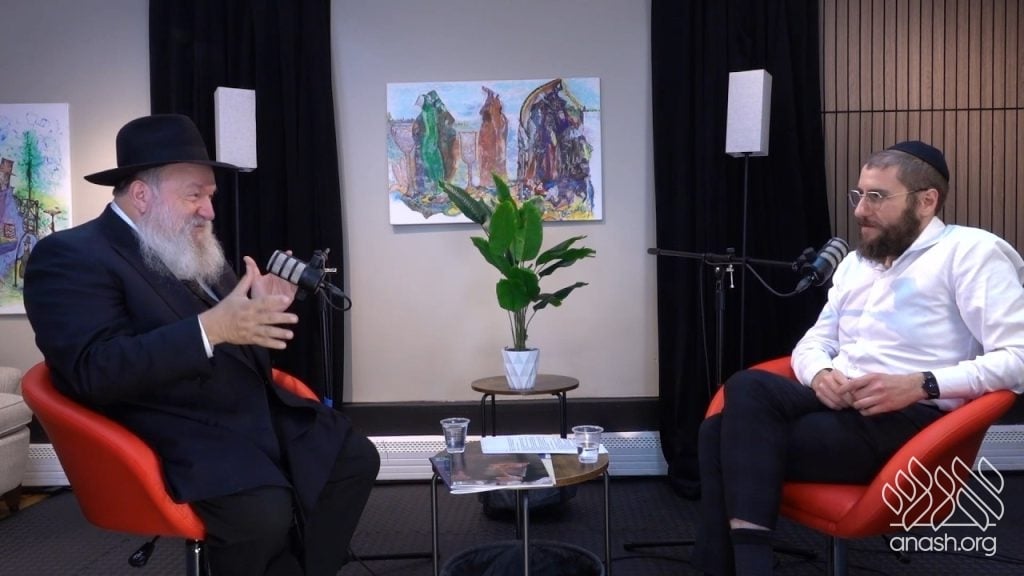
In a podcast interview, Rabbi Zushe Winner of Brighton Beach, NY, shares fascinating stories and memories spanning his parents’ arrival in America after the Holocaust, his mother’s close relationship with the Rebbe following his father’s sudden passing, his formative years learning in Yeshivas Achei Temimim, and his own shlichus, first in Caracas, Venezuela, and later in Brighton Beach.
Rabbi Winner’s father was born in Mir and learned in the famed yeshiva there before the war forced him to flee, eventually making his way through Vilna, Russia, and Shanghai to the United States. His mother was born in Mukacs and survived Auschwitz, where she lost her mother and sisters. The two met and married in America, settling first in Williamsburg before moving to Crown Heights.
The move to Crown Heights was not an easy one. Their block at the time had few Jewish families, and Rabbi Winner’s mother, unhappy with the change, went in to the Rebbe to ask for guidance. The Rebbe’s response became a guiding line for the family. “We don’t retreat,” the Rebbe told her, instructing her husband to publicize in the neighborhood’s shuls that apartments were available, which in time helped draw more Jewish families to the block.
The Rebbe also directed Rabbi Winner’s father, a busy real estate businessman managing apartment buildings largely on his own, to set aside two hours a day for learning. It was a serious commitment for an immigrant running a business by himself, but he kept to it.
Rabbi Winner’s father passed away suddenly from a stroke when Rabbi Winner was just ten years old. The Rebbe was on his way out to the Ohel, something that he ordinarily did not interrupt. Yet, he put down the bag of panim in the car, joined the levaya, and went back inside to wash his hands and recite Yoshev Bseser before heading out to the Ohel.
In the years that followed, Rabbi Winner’s mother turned to the Rebbe regularly for guidance in running the family’s real estate business, which had fallen to her. “She would sit down in front of the Rebbe’s desk, and she would tell the Rebbe about her issues, and the Rebbe would give her brachos and advice,” Rabbi Winner recalls. Though the secretary would come in to move things along, the Rebbe would motion that she should be allowed to stay longer.
Rabbi Winner’s own memories of the Rebbe begin in early childhood, from being driven past the Rebbe walking to 770 and singing along on the bus, to standing near the Rebbe’s table on the day of his bar mitzvah.
“The Rebbe was constantly touching the knot of his tefillin shel rosh to make sure it was in place,” Rabbi Winner recalls of that day. “No one tells you to check that; I just happened to notice it.”
As a bochur, in 5734, Rabbi Winner served as head counselor in Gan Yisroel, and at the conclusion of camp, the entire camp would come to daven Mincha with the Rebbe before ending camp.
As was customary, the head counselor would briefly address the campers in front of the Rebbe. Needless to say, he was nervous, so he had prepared his short speech well. He concluded by saying, “With the Rebbe’s brachah, we will have a ksivah v’chasimah tovah.”
As he said those words, the Rebbe turned to him and said, “Zog: Der Eibershter vet gebben a ksivah v’chasimah tovah – say that Hashem will give a ksivah v’chasimah tovah.” Nervous and confused, he said, “With the Rebbe’s brachah, the Eibershter will give a ksivah v’chasimah tovah.”
But the Rebbe wasn’t satisfied. The Rebbe turned to him again and said, “Say that Hashem will give a ksivah v’chasimah tovah.” This time, he repeated the words exactly as the Rebbe had instructed.
Soon after his marriage, Rabbi Winner wrote to the Rebbe asking what he should do, whether he should enter rabbonus, join a Chabad House, or pursue another path. The Rebbe responded that he should consider whatever was most practical at the time. Rabbi Winner explained that the Rebbe wanted him to have practical options on the table, after which the Rebbe could approve one of them or direct him toward a different path.
Some time later, Rabbi Mordechai Mentlik asked Rabbi Winner to help open a new yeshiva in Caracas, Venezuela. The plan was to send a group of bochurim there, with Rabbi Winner serving as the rosh yeshivah.
It appears that the Rebbe had suggested the idea of establishing a yeshiva to Rabbi Pinchas Brener, the Ashkenazi Chief Rabbi of Caracas, during yechidus. Rabbi Brener in turn passed the message on to Caracas shliach Rabbi Moshe Perman.
Rabbi Winner wanted to travel to Caracas first to see the community and assess the situation before committing. Rabbi Perman, however, told him to come without making an advance visit. The reasoning was that if the local baalei batim learned beforehand that a yeshiva was being planned, there could be pushback. The Rebbe instructed Rabbi Winner to listen to the local shliach, and he ultimately spent seven years there, helping establish and develop the new yeshiva and its activities.
Rabbi Winner also spent years there writing a sefer on the Alter Rebbe’s Hilchos Shechita, sending portions to the Rebbe along the way. When he submitted the first printed pages, the Rebbe encouraged him to print it. When the sefer was finally printed years later, a copy made it to the shelf in the Rebbe’s own room, directly behind his desk.
When Rabbi Winner returned to New York, he was asked to submit a resume for a position as rav of a shul in Brighton Beach. Seeing the opportunity as a shlichus, he wrote to the Rebbe. The Rebbe responded that he should accept the position, even though at that point he had only been asked to submit a resume and a vote still needed to take place. Though at first they chose someone else, he was ultimately chosen for the job.
During the first Kinus Hashluchim, Rabbi Winner was surprisingly not invited. He was told that although he was doing great things as a rav, since he was not working for the Rebbe’s mosdos, he could not be considered a shliach.
Rabbi Winner wrote a long, heartfelt letter to the Rebbe, explaining that throughout his life he had wanted only one thing – to go on the Rebbe’s shlichus. That was precisely why he had accepted the position in Brighton Beach. The Rebbe’s response was one line: “The inyan of shlichus is shayach to Mazkirus or Merkos.”
Rabbi Winner returned to the Mazkirus, who directed him to Rabbi Dovid Raskin. Sure enough, following negotiations, Rabbi Raskin made him an official shliach to Brighton Beach, a community with tens of thousands of Jews.
During the conversation, Rabbi Winner, who today serves as the Rosh Yeshiva of Tomchei Temimim Chovevei Torah, speaks about the importance of looking up the sources the Rebbe brings in his sichos, maamarim, and letters.
He recalls that at the farbrengen, the Rebbe addressed a question someone had raised regarding that year’s Michtav Kloli. The Rebbe explained that if he had actually looked up the marei mekomos brought in the footnote, his question would have been answered.
The Rebbe continued by explaining that whenever he writes “see” or “refer to” a source, his intention is that the person should actually go to the bookshelf and look it up.
The Rebbe gave two reasons for this. First, by looking up the sources, a person gains a great deal of knowledge in Torah. The second reason, the Rebbe said, is, “What do you care if another person [i.e. the Rebbe himself] will have a chelek in your learning Torah?”
“When you look up the sources, the Rebbe has a chelek in your learning Torah,” Rabbi Winner explains. “This is plain and basic hiskashrus!”
Among Chassidim is a podcast by Derher, hosted by Rabbi Yossi Kamman, director of A Chassidisher Derher. The podcast captures the vibrancy of dor hashvi’i through immersive, in-depth conversations. To view all episodes, visit here.
WATCH

*Spotify*: https://tinyurl.com/AC65SP
*Apple Podcasts*: https://tinyurl.com/AC65APO
*Google Drive*: https://tinyurl.com/AC65GD
 COMMENTS


What years was Rabbi Winner in the Newark Yeshiva under Reb Yisroel?