




ט״ז מרחשון ה׳תשפ״ז | October 27, 2026
Record Turnout in Israel Election, Exit Polls Show No Clear Winner
Polls closed Tuesday night in Israel’s national election, with the first exit polls showing no clear winner. It appears that the opposition camp led by Gadi Eisenkot is slighty ahead of Prime Minister Benjamin Netanyahu‘s bloc, although Netanyahu’s Likud looks to be the largest single party.
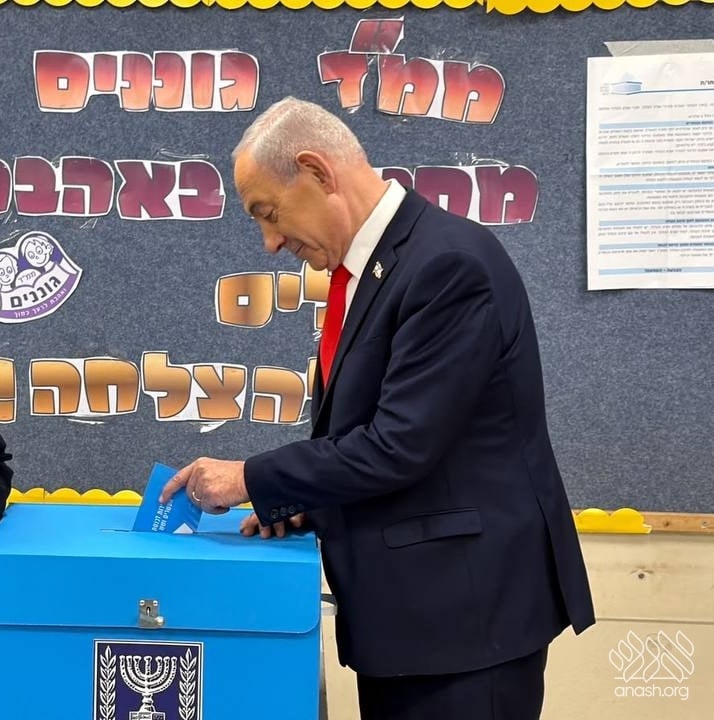
Polls closed Tuesday night in Israel’s national election, with the first exit polls showing no clear winner. It appears that the opposition camp led by Gadi Eisenkot is slighty ahead of Prime Minister Benjamin Netanyahu‘s bloc, although Netanyahu’s Likud looks to be the largest single party.
Voters turned out in numbers that rank among the largest in Israel’s history, with 74.3 percent of eligible voters having cast ballots by 8 p.m. local time, two hours before polls closed, the highest rate at that point in the day since 1988.
The election is widely seen as one of the most consequential and divisive in Israel’s history. At a time when Israeli society appears more divided than ever, it is expected to bring a host of major issues to the forefront, with competing parties offering sharply different visions for the country’s future.
The exit polls were published by several Israeli networks, and the numbers differ from one to the next. Across them, Likud comes out as the largest party, ranging from 24 to 30 seats, with an average of about 26. Eisenkot’s party is second, between 19 and 23 seats, averaging about 21.
On the bloc level, Netanyahu’s camp averages about 53 seats, though individual polls range from 50 to 60. Eisenkot’s camp averages about 50, ranging from 43 to 53. The Arab parties, counted separately, average about 17. Eisenkot’s side appears to lead only when the Arab parties are counted with it, and it is unclear whether they would join a coalition. Without them, neither side has a clear path to 61 seats.
Eisenkot said the results “express a complete loss of confidence in Netanyahu” and added that “if these are the final results, they would mark a victory.” Opposition leader Yair Lapid called them a “tough defeat” for Netanyahu’s bloc.
Exit polls have a mixed record of accuracy, especially in a close race. The next step is the final count. Votes are counted by hand at more than 12,000 polling stations, and it will be hours before real results are known. Once the final results are certified, the president will give the mandate to form a coalition to the candidate with the best chance of putting together a majority.
The party with the most seats is not necessarily the one that forms the government, and negotiations could take weeks or even months.
As of now, some are already assuming Eisenkot is best positioned to form the next government, but nothing is clear until the real results come in.
 COMMENTS


We appreciate your feedback. If you have any additional information to contribute to this article, it will be added below.