



ו׳ תשרי ה׳תשפ״ז | September 16, 2026
New Chapter in the Dramatic Rescue of Reb Levik’s Seforim
An unpublished memoir by a clandestine Israeli activist describes how they managed to smuggle out seforim filled with the handwriting of the Rebbe’s father, which had been preserved with mesirus nefesh by Rebbetzin Chana.
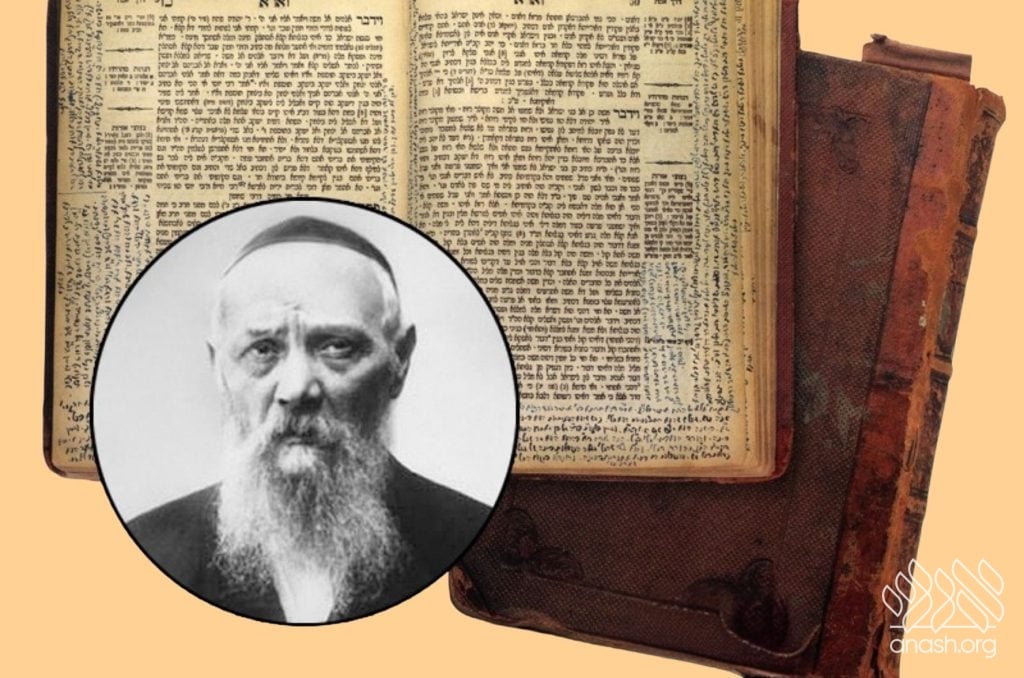
An unpublished and fascinating memoir by a longtime clandestine Israeli activist describes how, against the odds, chassidim in the Soviet Union managed to smuggle out seforim filled with the handwriting of the Rebbe’s father, Harav Levi Yitzchak, which had been preserved with mesirus nefesh by Rebbetzin Chana.
The memoir was written by Shlomo Leibovitz, a longtime activist in Nativ, the undercover Israeli government body that worked to maintain ties with Jews behind the Iron Curtain and gather information from the Soviet Union.
His account, part of an unpublished manuscript titled Chaim Bematana, describes a dramatic mission, his efforts to make contact with the underground Chabad community in the Soviet Union, and how the Rebbe’s father’s writings eventually reached the Rebbe through the hands of Israel’s president.
As is well known, Harav Levi Yitzchak wrote extensively in both nigleh and nistar throughout his life. Even while in exile under conditions of tremendous hardship, he continued writing in the margins of seforim, using ink that had been specially produced by Rebbetzin Chana with tremendous mesirus nefesh.
Unfortunately, much of what he wrote could not be saved. NKVD agents raided their home and confiscated his seforim and manuscripts. Later, when the Nazis overran Dnipropetrovsk, the remaining collection could not be recovered.
The writings from the years of exile were also hard to recover. It appears that Rebbetzin Chana managed to smuggle a small portion of them out herself, while entrusting other parts to trusted chassidim inside the Soviet Union. Some of this material eventually made its way out to the Rebbe in New York, including volumes of Zohar and Tanya with the Rebbe’s father’s hagahos in the margins, which the Rebbe would later, in 5729, instruct to be prepared for print.
In a letter from Tammuz 5734, the Rebbe wrote to Reb Isser Kluwgant, Rebbetzin Chana’s first cousin, about a large two-volume set of Midrash Rabbah that his mother had entrusted to Kluwgant’s brother in Moscow, with its margins filled with Harav Levi Yitzchak’s glosses.
“Please understand the tremendous significance of this,” the Rebbe wrote, asking if anything could be ascertained about what had become of the seforim.
The following is the account of one such set of seforim, filled with the writing of Harav Levi Yitzchak, which made its way to the Rebbe in a fascinating manner, as described by Leibovitz in his unpublished memoir.
“I very much wanted the boys [the Nativ people] to make contact with the Chabad underground, not only to bring us reliable information, but also so that they would know they hadn’t been forgotten. I turned for this purpose to the Rebbe’s representative in Eretz Yisroel, a merchant from King George Street in Tel Aviv named Gross, to get from him some thread of contact with the Chabad community there. He admitted he needed the Rebbe’s permission and promised an answer.
“The Rebbe forbade him from passing on even a single detail, and he backed away from any contact with us. I kept searching. My approaches to Rabbi Neriah, Rabbi Zevin, and Pinchas Kahati did not help.
“I had one address of a Chabad minyan, a kind of underground minyan, given to me by a Jew who had made aliyah, from when I dealt with all the countries of Eastern Europe, before the aliyah of Yosef Mendelevitch. The records, which seemed strange to my superiors, helped me again this time.
“I instructed the boys that upon arriving in Leningrad, they should go up the stairs behind the official shul, where the Chabad chassidim held their minyan, and daven with them on Sukkos, equipped with the daled minim I had given them before they left.
“The Chabadnikim in Leningrad were so convinced that the Rebbe had not forgotten them, and had sent them the arba minim they so badly lacked, that they pressed the boys to take with them for the Rebbe, each one a sefer, five volumes of Chumash in three parts. From there they also managed to get the address of the Chabad minyan in Minsk, and so they came back full of experiences, which they told me about with great emotion. We filled in our information.
“Shaul [Shaul Avigur, founder of Nativ] told Shazar [Zalman Shazar, president of the State of Israel at the time] about the seforim the students had brought with them, and he came to take them, to send them to the Rebbe. Since the Chumashim were full of notes written by hand on nearly every page, I assumed they were in the handwriting of the Baal HaTanya, and I refused to give them over. I relied on the law protecting national assets, and against such a claim, even Shaul found it hard to object.
“Shazar suggested showing the seforim to Rav Zevin, one of the leading rabbonim in Yerushalayim and one of the prominent Chabad chassidim.
“I went up to Yerushalayim with one of the seforim. Rav Zevin was lying in his sickbed at the time, from which he sadly never rose again. We saw on his face the effort it took him to sit up in bed, in the sense of ‘Vayischazek Yisroel vayeishev al hamitah.’
“He took the sefer in his hand, opened it, and let out, ‘Nikolaever Rav’s shrift,’ [the handwriting of the Nikolaever Rav], and then explained, ‘These are the interpretive notes that the father of the current Rebbe wrote, when he taught Chumash to his son.’ In light of this determination, I raised my hands. The seforim were the personal property of the Rebbe.
“Shazar was about to leave for America, and I promised to bring him the seforim at the airport in Lod. The airport was then in Rimon, and at the early hour I arrived there, despite the relatively small number of travelers, I didn’t notice Shazar. Since I was known at the airport at the time, once it became clear I was looking for Shazar, I was told that although the restaurant there wasn’t operating, they had let him in for a cup of coffee.
“I knocked on the restaurant window and was let in. Sitting at a side table, without his coat, his suspenders visible on his body, was Shazar, sipping a cup of tea. Next to him on the table was a bag that looked full to me. I asked him what he was carrying there. His answer: ‘Tallis and tefillin. What did you think, that one travels to the Rebbe without tefillin?!’ These were unusually large tefillin, the likes of which I had not seen before.”
The story ends there. There is no further documentation in the memoir of what happened to the seforim after they were handed over to Shazar, or of how the Rebbe responded upon receiving them.
 COMMENTS


Can we determine what seforim these were? Were they indeed R’ Levik’s notes? As an aside, I think it’s a mitzvah lefarsem that when the Rebbe gave R’ Zalman Haditcher [Levitin] his father’s letters to prepare for print, he gave along with them copies of his own letters to his father. Those were never published because someone pulled off a so-called Chassiddishe geneiva and they were never recovered. Somewhere languishing in some collection are a treasure trove of Torah of the Rebbe that’s value cannot be overstated. Maybe an einikel of the thief can rummage through his zeida’s archive and find it and finally print it. What a nachas reach it will be for the Rebbe and Chassidim!
there are various details here that dont add up.
1. do we know of a chumash that the Rebbe got with his father’s haoros?
2. shazar passed away in 5735 and was by the Rebbe on his final visit in 5733. Rabbi Zevin passed away in 5738 and was active in the years in between (here the author says he was on his sickbed from which he never recovered).
3. the Rebbe’s father was not the nikoayever rav, he was yekaterinoslav/Dnepropetrovsk
It’s also possible that rabbi zevin realized what was happening and said that it was the Rebbe’s personal heritage in order to make sure that it gets sent to the Rebbe and he doesnt pull his israeli shtik…
basically, these are his memoirs, but they give no real information about almost any of the important details
As this commentator points out we don’t know if it was R’ Leviks Ksav Yad at all. Although there are other sources that Netiv was involved in bringing out R’ Levik’s seforim. I don’t recall where I read it, perhaps in the book Harabi Vehamosad, or in Dedushka or in an old KC or BM magazine. I think there is a chapter in the new edition of Toldos Levi Yitzchok about how the seforim were brought to the Rebbe, it probably brought there. That would be the first place to look.