




ה׳ אלול ה׳תשפ״ו | August 18, 2026
My Memories of Living in the Rebbe and Rebbetzin’s Building
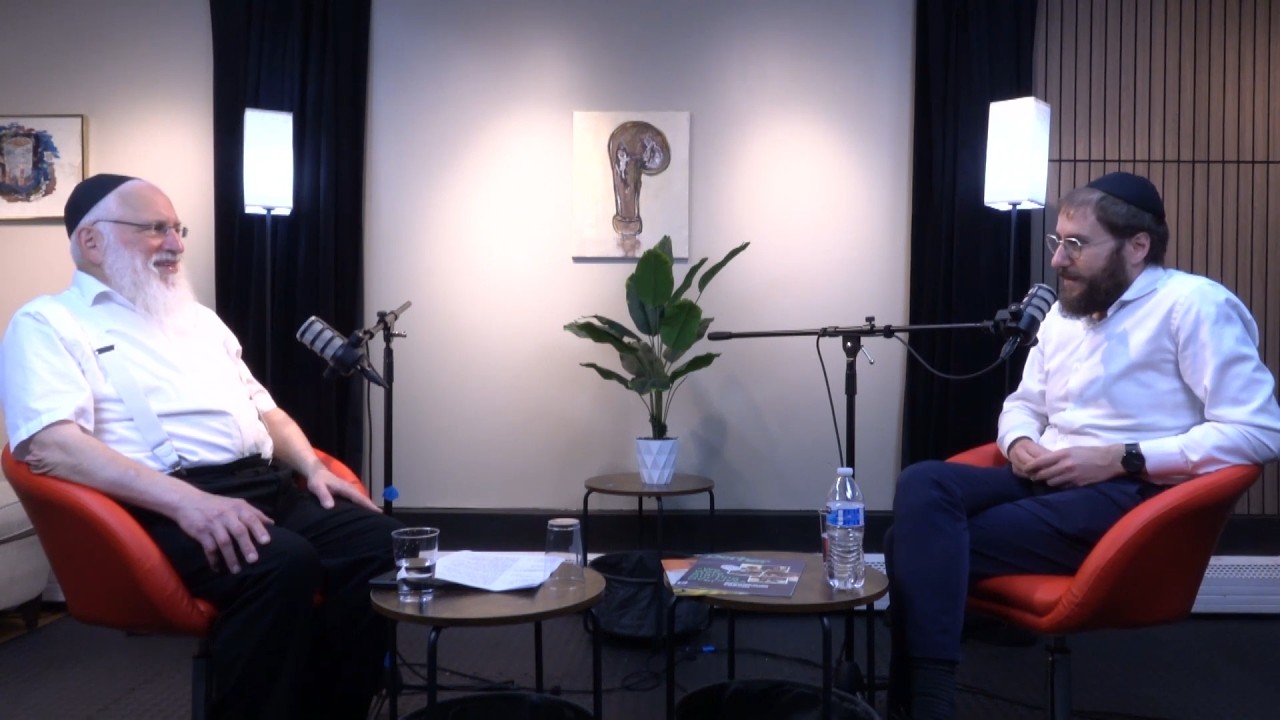
In a video interview, Rabbi Chaim Levi Goldstein of Crown Heights, a veteran mechanech, shares fascinating stories and memories spanning his family’s roots in Lubavitch, his childhood living in the same apartment building as the Rebbe and Rebbetzin, and decades of guidance and personal encounters with the Rebbe.
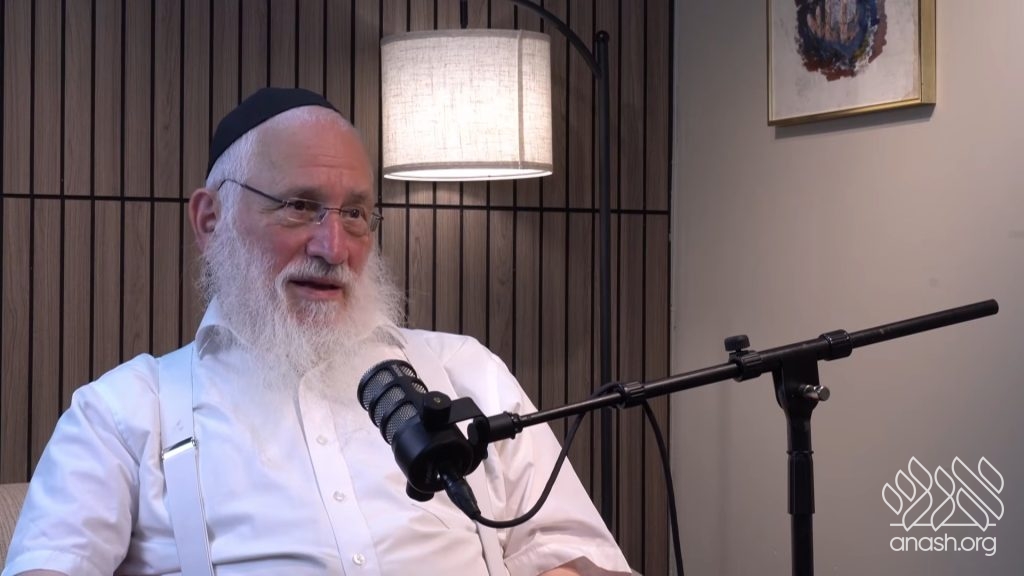
In a video interview, Rabbi Chaim Levi Goldstein of Crown Heights, a veteran mechanech, shares fascinating stories and memories spanning his family’s roots in Lubavitch, his childhood living in the same apartment building as the Rebbe and Rebbetzin, his years in yeshiva and in Brunoy, his work with Mesibos Shabbos, and decades of guidance and personal encounters with the Rebbe.
Rabbi Goldstein’s father, known widely as “Uncle Yossi,” was born in Providence in 1927 to a family that kept the only Shabbos-observant home in town. After his parents grew concerned about the children’s chinuch in public school, the family moved to Boro Park, and from there Uncle Yossi made his way to 770 in 1942.
He became one of the first “770 boys,” sleeping in the building and helping out around the Frierdiker Rebbe. In 1946, he was sent to Rochester for what he understood to be a short-term teaching assignment. When he returned home after a few weeks, he received a sharp letter from the Frierdiker Rebbe reprimanding him for leaving without permission.
“You don’t do things on your own,” Rabbi Goldstein recalls his father being told. “You have to be devoted.”
Rabbi Goldstein was born in 1952 while his father was serving as a shliach in New Haven. The family later moved into 346 New York Avenue, the building where the Rebbe and Rebbetzin lived on the fourth floor, with the Goldsteins on the second. He remembers running to the window as a small child to watch the Rebbe come and go.
After the Rebbe and Rebbetzin moved to their house on President Street, the Goldstein family remained close by, and Rabbi Goldstein has vivid memories from that period as well, including being enrolled in a kindergarten next door to the Rebbe’s house and receiving a wave and a smile from the Rebbe most mornings on his way in.
As a bochur, Rabbi Goldstein was sent to learn in Brunoy, France, under Reb Nissan Nemanov. It was there that a rebbi, without explanation, assigned him, still just seventeen and struggling with his own learning, to teach a group of younger boys.
“I loved teaching,” he says. “I loved sharing, teaching, telling stories. It was part of me.” He describes it as a turning point that pushed him to grow into the material himself in order to teach it.
Rabbi Goldstein took over Mesibos Shabbos as a teenager after his older brother left for a position in England, running it out of a rented space near 770 with funding from Reb Binyomin Klein. He later sought to move the program into the small zal in 770 itself, and asked Rabbi Chaim Mordchai Aizik Chodakov to intervene on his behalf.
Rabbi Chodakov’s response became a guiding lesson for him: “Why don’t you speak? You’re not the one speaking. Mesibas Shabbos is speaking!”
Over his many years as a teacher, Rabbi Goldstein brought numerous questions from his students to the Rebbe, some of which were addressed publicly at farbrengens. One question, about how the Torah counts Noach’s years before and after the mabul, sparked an extended written exchange with the Rebbe that was eventually published and became the source for an entire sicha in Likkutei Sichos on the subject.
Rabbi Goldstein also developed and published a well-known step-by-step method, based on a sicha of the Rebbe, for training children to learn out of love of Torah rather than for prizes. Within a few weeks of trying it in his own classroom, he says, his students refused treats after a learning session so that “it won’t be considered like we learned for the candies.”
He kept a detailed diary of the process at the time and is now preparing an expanded, professionally edited version for publication.
The interview closes with Rabbi Goldstein’s account of recovering from a serious illness and a month-long coma, during which he says he never lost a sense of simcha. A video of him singing from his hospital bed, tubes and all, went viral.
He also relayed a story he heard from Reb Binyomin Klein, who once told a colleague that the Rebbe remarked that if people would only learn more, the pile of letters requiring the Rebbe’s response “would be less than half its size, because through learning itself the problems get resolved.”
Among Chassidim is a podcast by Derher, hosted by Rabbi Yossi Kamman, director of A Chassidisher Derher. The podcast captures the vibrancy of dor hashvi’i through immersive, in-depth conversations. To view all episodes, click here.
VIDEO:
 COMMENTS


We appreciate your feedback. If you have any additional information to contribute to this article, it will be added below.