




כ״ה מרחשון ה׳תשפ״ז | November 5, 2026
Thousands of Dots Tell the Rebbe’s Global Impact
A new interactive atlas uses modern technology to map the Rebbe’s global impact, bringing together the places the Rebbe lived and traveled, thousands of shluchim and Chabad houses, Tanya printings, letters, Merkos Shlichus visits, and more. The atlas contains 28,910 geo-referenced records spanning 186 countries and territories, from 1797 to today.
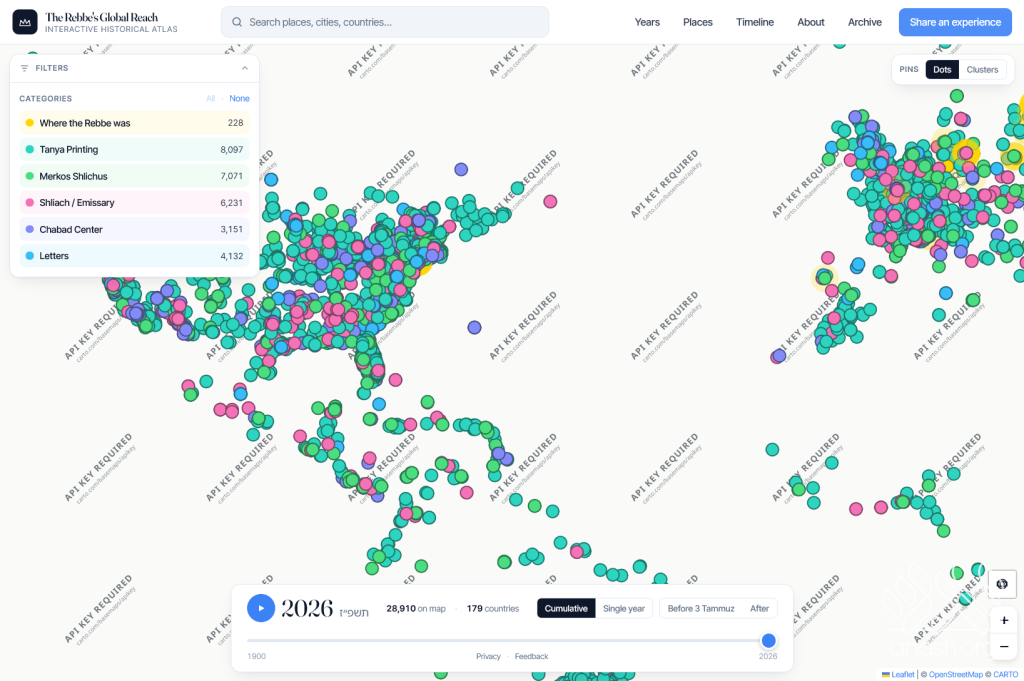
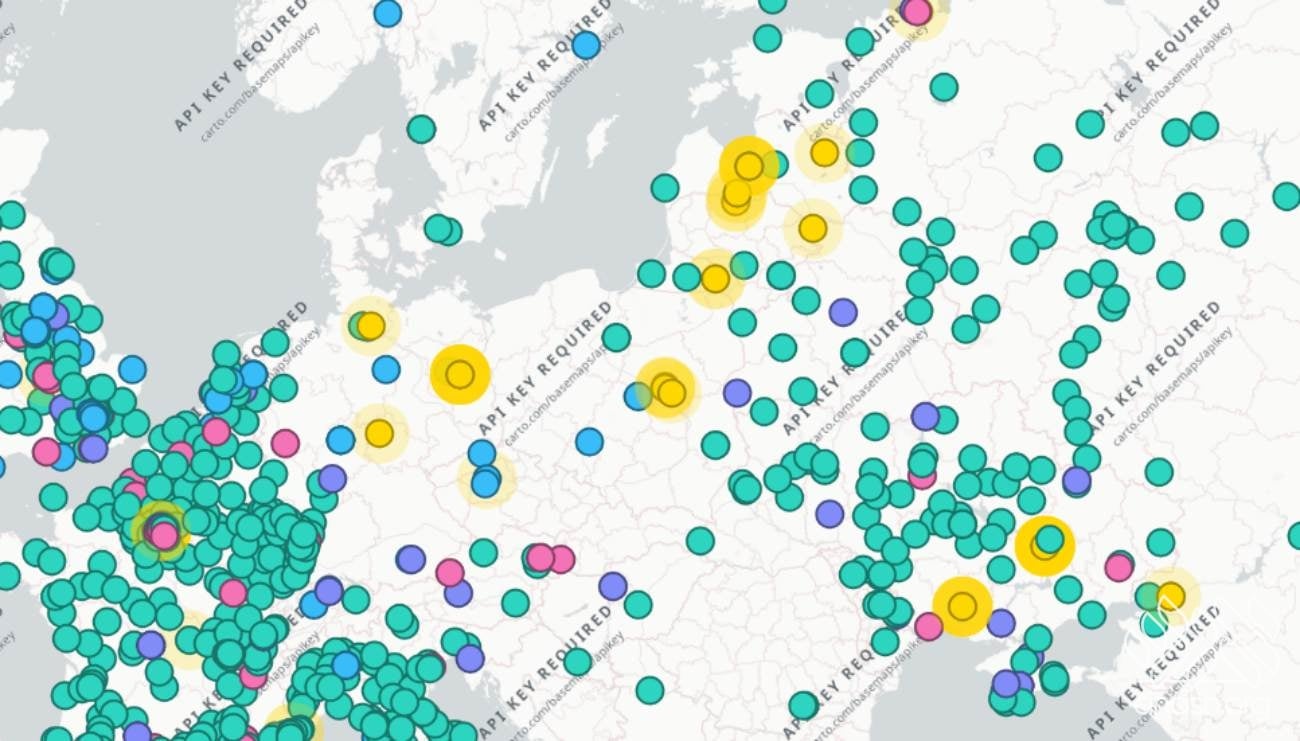
As the world races to see what AI and new technology can do, a new project created by a team of bochurim is using modern technology to explore the Rebbe’s impact in a real, concrete, and groundbreaking way. The Rebbe’s Global Reach, an interactive historical atlas, brings together the places the Rebbe himself lived and traveled, as well as the thousands of shluchim, Chabad houses, Tanya printings, and much more spread across the globe.
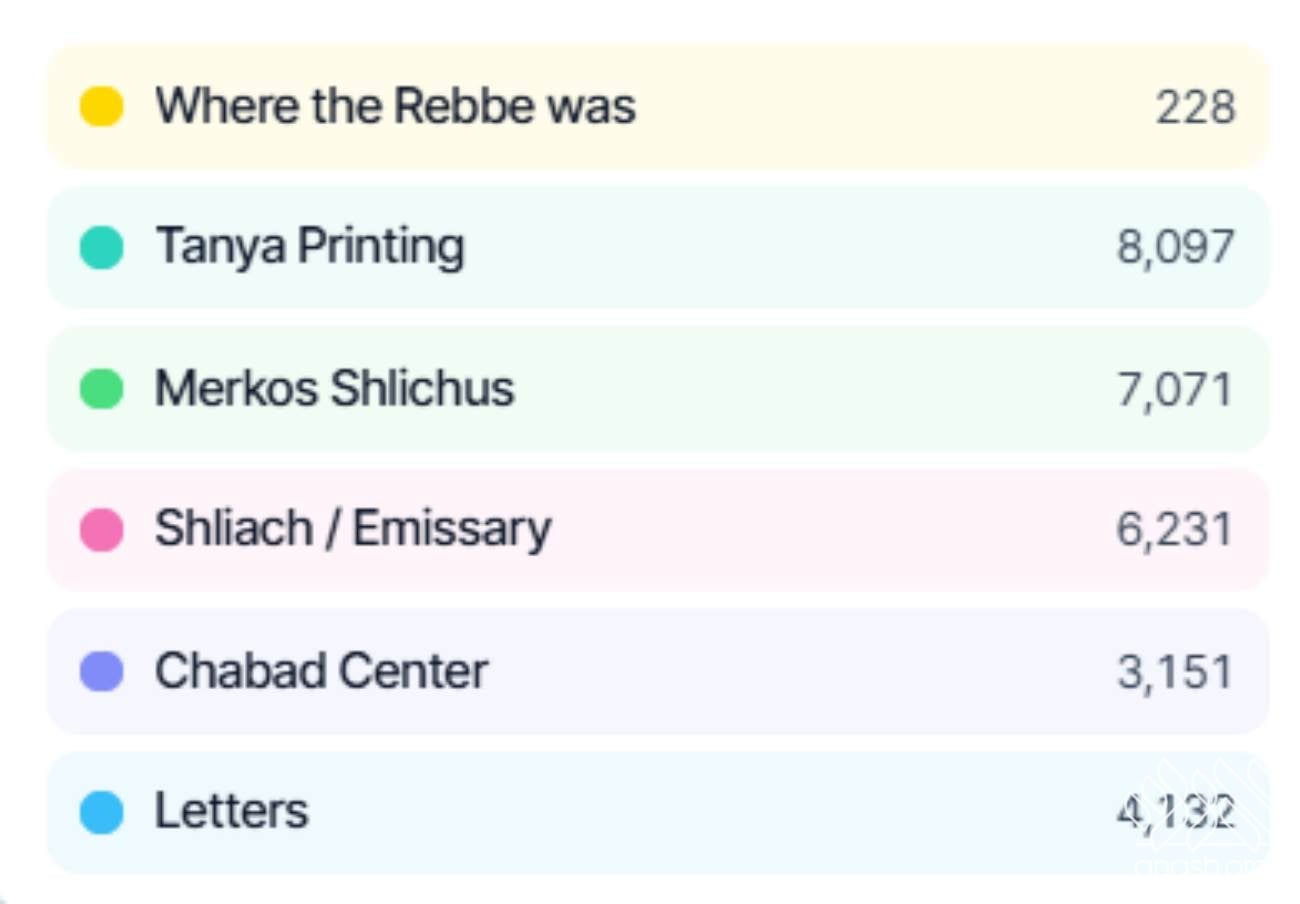
The atlas holds 28,910 geo-referenced records across 186 countries and territories, dating from 1797 to the present. Every record appears as a dot on the map, with each category assigned its own color. Yellow dots mark the 228 locations where the Rebbe was, from Nikolaev and Yekaterinoslav through Leningrad, Riga, Warsaw, Berlin, and Paris, and then Vichy, Nice, Marseille, and Lisbon before arriving in New York in 1941.
Teal dots show the 8,097 places where Tanya was printed, following the Rebbe’s campaign to print Tanya wherever Yidden live. Green dots mark the 7,071 Merkos Shlichus visits, representing the roving bochurim who reach small and isolated communities. Pink dots represent the 6,231 places where shluchim are today, while purple dots stand for the 3,151 Chabad houses.
Light blue dots show 4,132 places where the Rebbe sent dated letters that can be geographically located. Clicking on any dot reveals the details behind that record.
The map can be filtered by category, allowing users to view only Tanya printings, only shluchim, or any combination of categories. Users can also switch between individual dots and clusters that show the total number of records in an area. A slider at the bottom allows users to explore any range from 1900 to 2026, either in cumulative mode, which shows everything up to a given year, or single-year mode, which shows only what happened in that year.
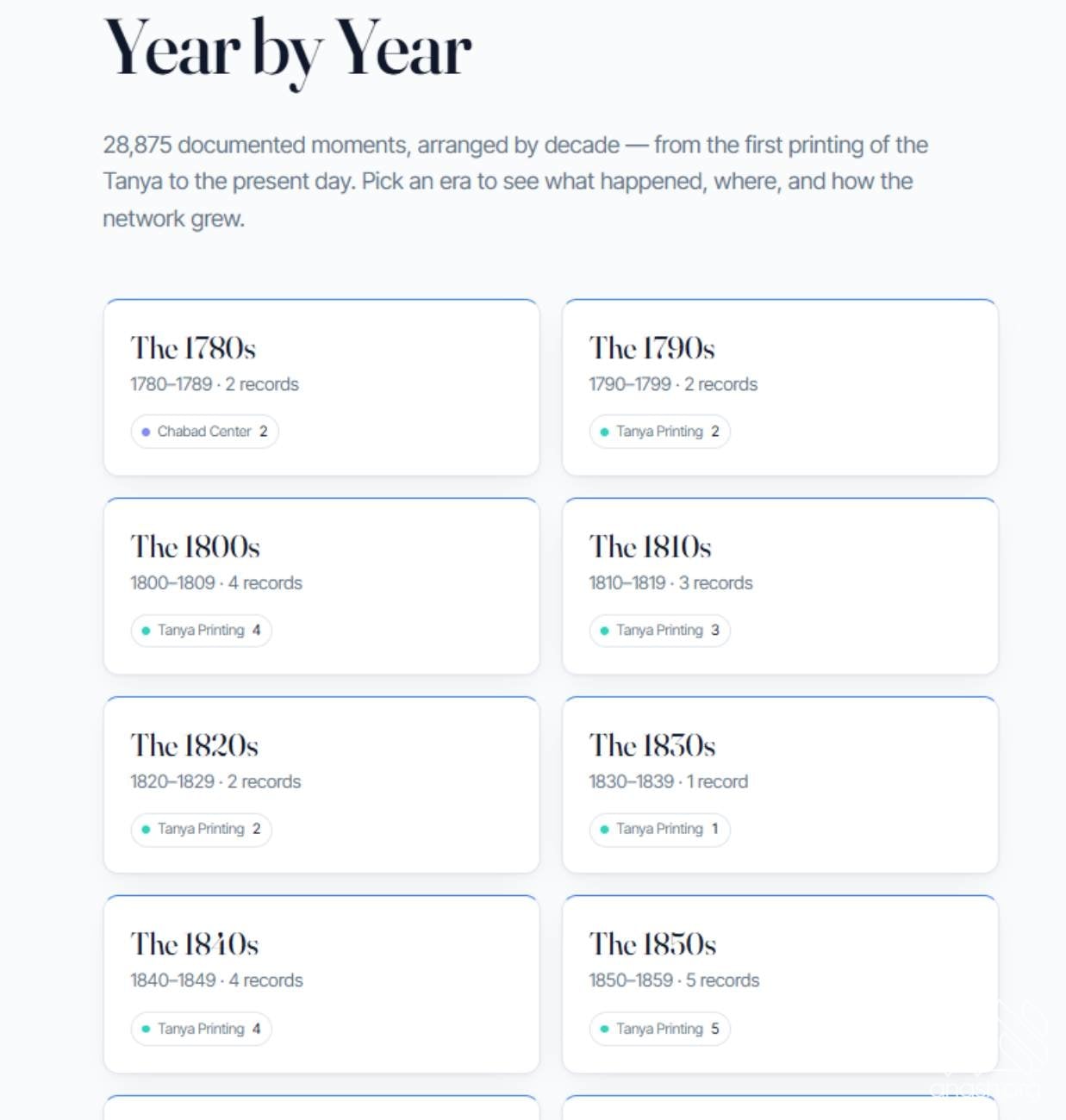
Browsing by era tells its own story. From the 1900s to the 1930s, 72 of the 93 records trace the Rebbe’s own movements across Europe. The 1940s through the 1960s are dominated by letters, with more than 2,000 records, alongside the first permanent postings. The 1980s alone account for 3,168 Tanya printing records. From the 2000s onward, growth is driven by Merkos Shlichus, with 4,812 records in the 2010s, as well as more than 4,700 new permanent shluchim and centers.
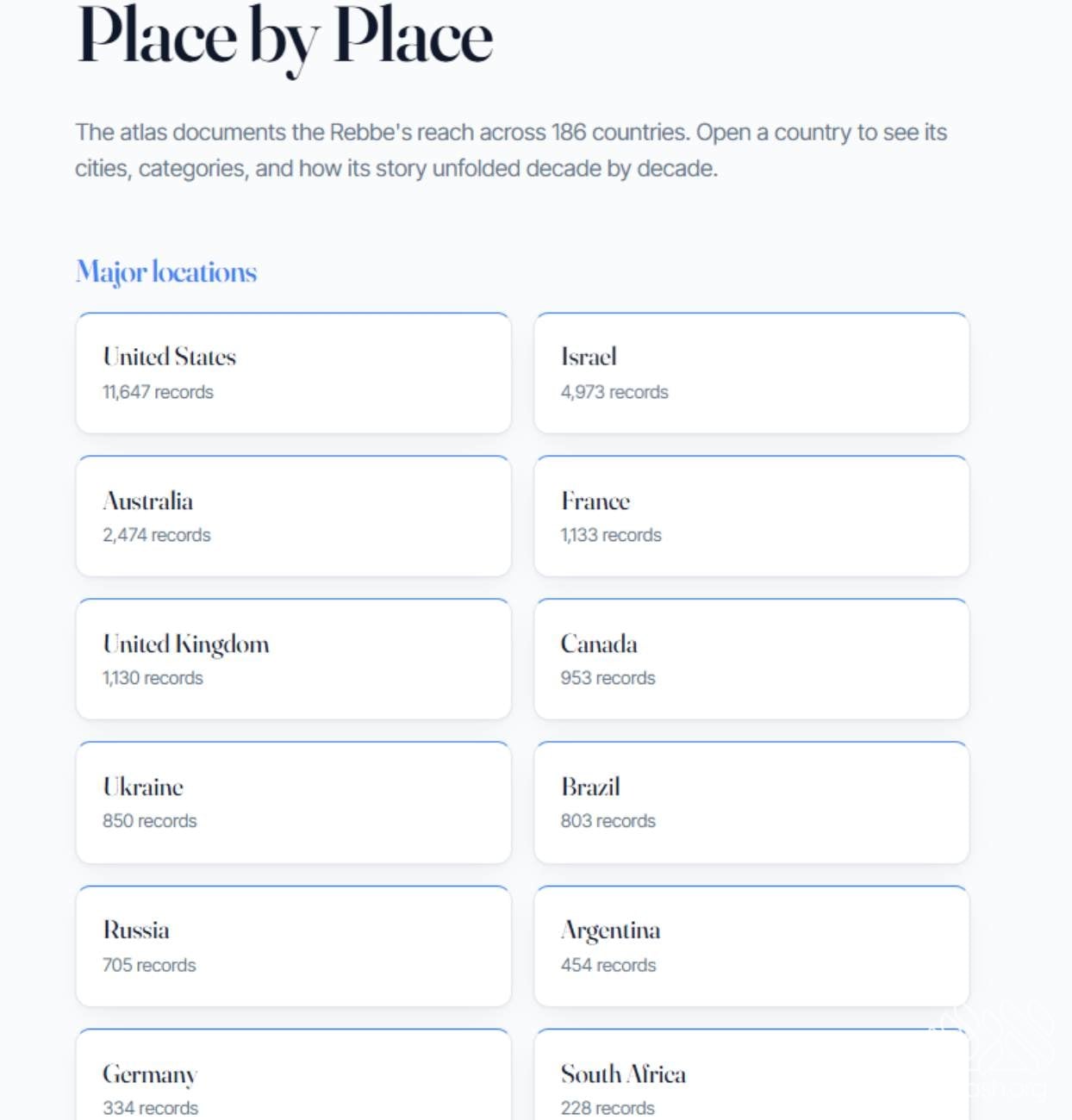
For those who want the full chronological picture, the Timeline page lists 24,884 dated events across 146 years. The Place by Place section covers all 186 countries and territories, with each one receiving its own page. The United States has the most records, with 11,647.
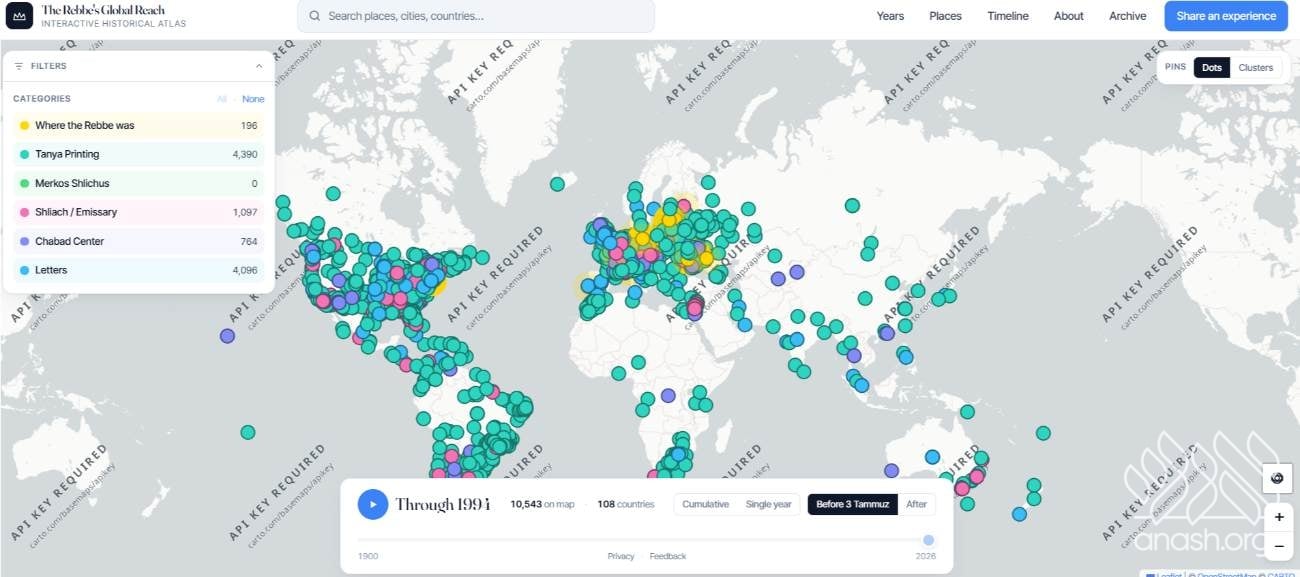
There is also a Before and After Gimmel Tammuz feature, allowing users to see the Rebbe’s continued impact and the growth of Chabad’s global reach even after Gimmel Tammuz.
For a more visual experience, the play button at the bottom allows users to watch the map grow year by year, showing how the Rebbe’s reach expanded across the globe over time.
The atlas is available at therebbesimpact.com, and the site is still growing. Visitors are invited to submit a shliach, letter, Tanya printing, or other record so it can be added to the map.


 COMMENTS


We appreciate your feedback. If you have any additional information to contribute to this article, it will be added below.