




י״ח סיון ה׳תשפ״ו | June 3, 2026
Leadership Is Sometimes Measured by What One Chooses Not to Do
In public life, attention is usually given to those who show up, speak out, and make headlines. Far less attention is paid to those who quietly exercise restraint. The recent Gracie Mansion event provided such an example. The Vaad Hakohol of Crown Heights chose not to attend. The decision was made quietly, respectfully, and without fanfare.
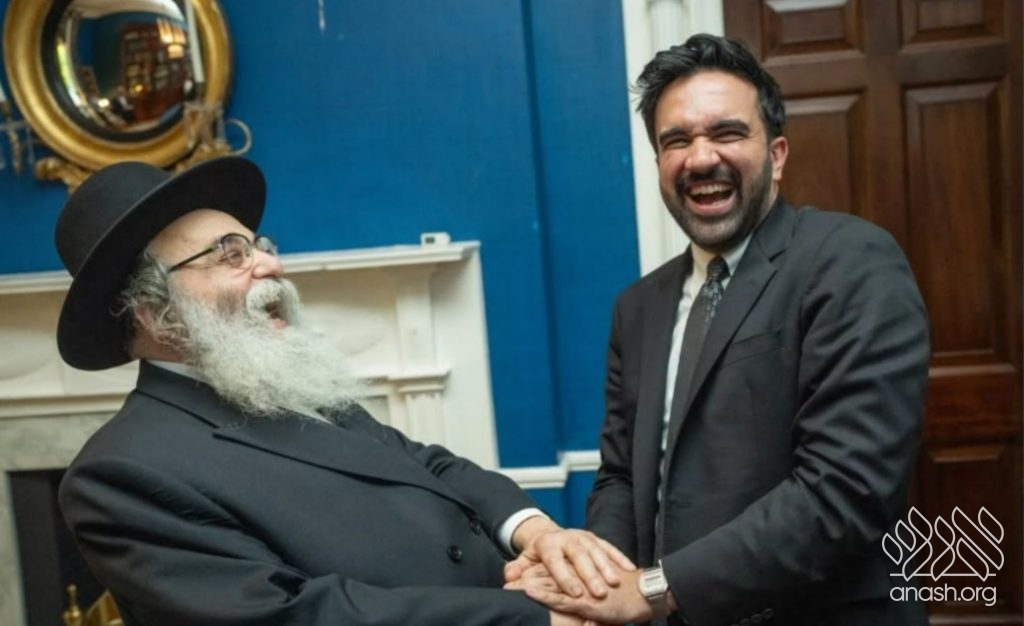
By Moshe M. Schwartz
In public life, attention is usually given to those who show up, speak out, and make headlines. Far less attention is paid to those who quietly exercise restraint. Yet, in many cases, that restraint reflects the highest form of leadership.
The recent Gracie Mansion event provided such an example.
The Vaad Hakohol of Crown Heights chose not to attend. Importantly, it did not organize a boycott, issue public condemnations, or seek publicity. It simply concluded, after consultation and deliberation, that attendance was not appropriate. The decision was made quietly, respectfully, and without fanfare.
This is not a minor detail.
Too often, communal decisions become public campaigns. In this case, the Vaad did not seek confrontation. It did not criticize those who made different choices. It merely fulfilled its responsibility as an elected communal body entrusted with representing the community.
Just as significant as the decision itself was how it was made.
The Vaad did not act in isolation. It sought Daas Torah. It also consulted with Agudath Israel and reached out to other communities and communal leaders to better understand how they were approaching the matter. The resulting picture was that many established communal bodies and leaders similarly chose not to attend.
The decision was not made in a vacuum. Zohran Mamdani has, over the years, become one of the most controversial political figures from the perspective of many in the Jewish community. His positions regarding Israel, support for boycott-related efforts, associations with activist movements viewed with suspicion by many mainstream Jewish organizations, and his handling of rhetoric that many Jews perceive as hostile have generated significant concern.
Whether one agrees with those concerns or not, they are genuine concerns shared by a substantial portion of the Jewish community.
Given those concerns, attendance at such an event could not be viewed as a routine appearance. Any participation by recognized communal representatives would inevitably be interpreted as carrying broader communal significance. That reality required careful thought and consultation.
One may agree or disagree with the conclusion reached by the Vaad. But it is difficult not to appreciate the seriousness with which the matter was approached.
The situation also raises a larger question for Jewish communities: the distinction between participation and representation.
Every citizen has the right to attend political events, meet elected officials, and express personal views. Civic engagement is both legitimate and important. The difficulty arises when private participation is perceived as communal representation.
When public officials look around a room, they naturally draw conclusions from who is present. Attendance can be interpreted as approval, acceptance, or endorsement. The presence of prominent activists or community figures may create the impression that they are speaking on behalf of the broader community, even when no such mandate exists.
No individual gets to declare himself the voice of a community. That responsibility comes through trust and established communal structures. An elected communal body speaks differently than an individual, no matter how sincere, dedicated, or well-connected that individual may be.
This is why the Vaad’s conduct deserves recognition. While others were free to make their own decisions regarding attendance, the Vaad understood that it was acting not as private individuals but as representatives of a community. That responsibility demanded a higher level of deliberation and accountability.
Perhaps most importantly, the Vaad demonstrated that it is possible to take a principled position without creating unnecessary conflict. It did not launch a boycott. It did not make noise. It did not seek headlines. It simply consulted, deliberated, and acted accordingly.
In an age when visibility is often mistaken for leadership, the Vaad Hakohol offered a different model. Leadership is not measured by who gets invited into the room. It is measured by accountability, consultation, humility, and fidelity to those whom one represents.
Sometimes leadership means showing up. Sometimes leadership means choosing not to. The wisdom lies in knowing the difference.
 COMMENTS


Time to rid ourselves of all these self anointed quote “ch leaders” only the people elected to serve should represent our community period.
The vaad hakohel should endorse Ahron Gluck because the puppet show isn’t working anymore for ch.
Someone who was allegedly paid off by the Cuomo campaign and was strongly encouraging everyone to vote against Mamdani was later seen attending a Mamdani event. This same individual has also been loudly opposing Ahron’s run for Assembly.
Unfortunately, we can’t blindly trust every self-appointed “CH leader,” because it’s becoming clear that some are more interested in their own agendas than in the community’s best interests.
I trust that the Vaad Hakohol will endorse Ahron Gluck. Even if he doesn’t win, an endorsement would send a strong message that our community is unhappy with the way the district has been represented and managed over the past several years.
The Vaad should support Gluck but not officially endorse. We have nothing to lose by supporting him even if he doesn’t win because our needs are being ignored by the incumbent anyway.
The CH Vaad Hakohol certainly supports Ahron Gluck and would give their fullest endorsement of his candidacy.
However, since they are a non-profit organization, they are not allowed to formally endorse any political candidate, or else risk serious consequences such as revocation of their tax-exempt status.
https://www.irs.gov/charities-non-profits/charitable-organizations/restriction-of-political-campaign-intervention-by-section-501c3-tax-exempt-organizations
https://www.irs.gov/charities-non-profits/eo-operational-requirements-endorsing-candidates-for-public-office
Please understand, though, that the lack of endorsement is a legal one, and do not misconstrue it as lack of support.
I assume the esteemed editors of Anash.org confirmed with the Vaad Hakohol that “Moshe M. Schwartz” speaks for them before publishing his article. After all, he claims to know who the Vaad spoke to and what they were thinking.
So is Schwartz a spokesperson for the Vaad, or just a writer who somehow knows what is in their hearts and minds?
More importantly, the argument makes no sense. If the Vaad represents Crown Heights, then it should speak out when the mayor crosses a line. If they do not speak out, who exactly is supposed to?
And since when is courage defined as not showing up and not speaking out? That is the easiest route possible.
There is no courage in staying silent, hiding, and then criticizing those who did speak up.
It is also rich that Schwartz praises the Vaad for supposedly not criticizing anyone, while using the same article to criticize everyone else for going.
And the claim itself is false. The Vaad did criticize people. They posted on their statuses and called Rabbonim and askanim to complain
We finally have a positive article. No need to put in mudslinging here.