




ל׳ סיון ה׳תשפ״ו | June 15, 2026
Israeli Shadchanim Cancel Proposal After Public Backlash
After a wave of public criticism, a group of Lubavitch Israeli shadchanim has walked back a proposal that would have charged dating couples 100 shekels per meeting even when the shidduch doesn’t work out.

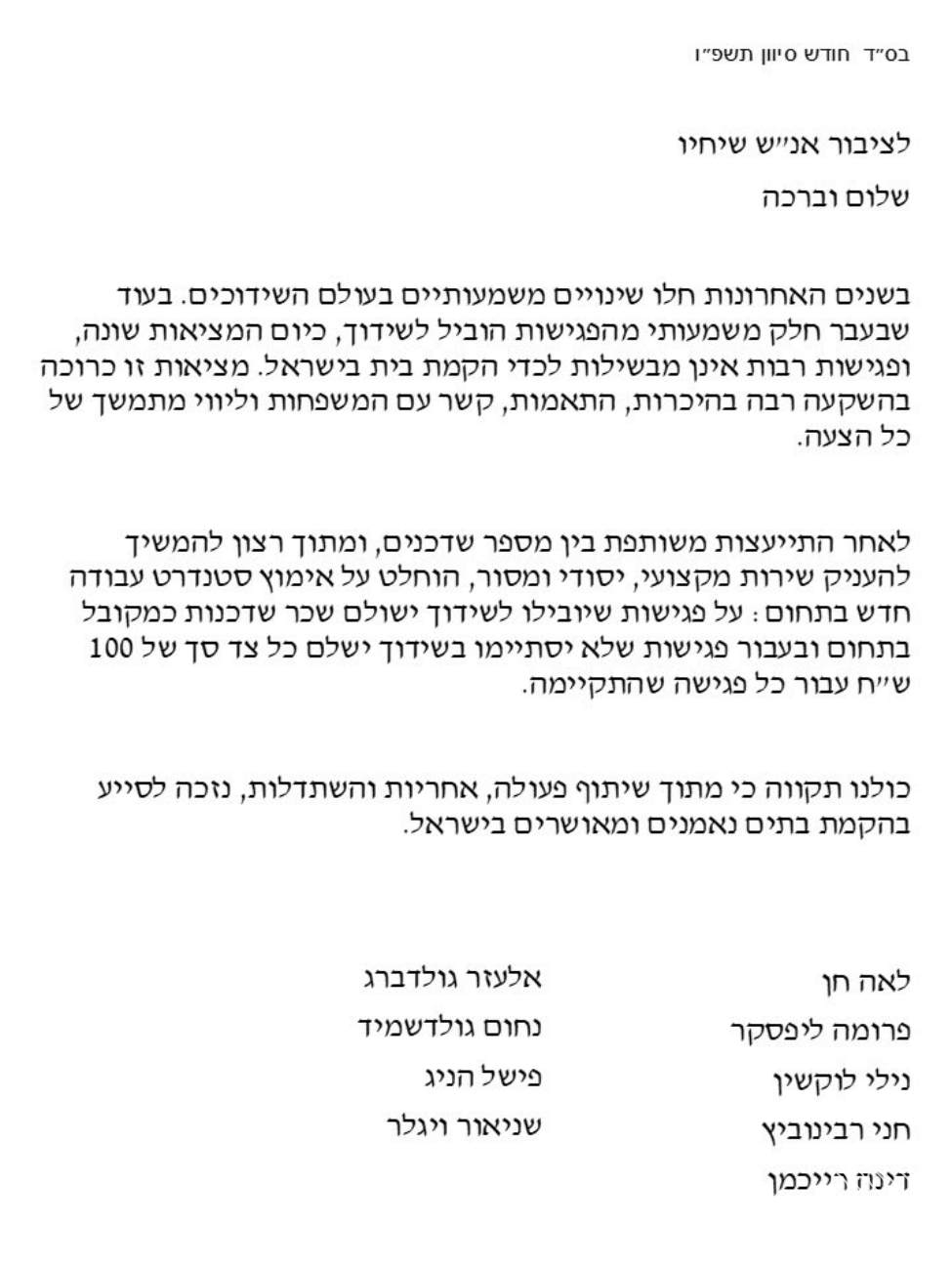
After a wave of public criticism, a group of Israeli shadchanim has walked back a proposal that would have charged bochurim and girls 100 shekels per meeting (around $35), even when the shidduch doesn’t work out.
The original proposal, signed by ten Lubavitch matchmakers, including men and women shadchanim, argued that the landscape of shidduchim has shifted dramatically: “While in the past a substantial portion of meetings led to matches, today the reality is different, and many meetings do not develop into the establishment of a Jewish home.”
The shadchanim described the extensive investment involved in each suggestion, including endless phone calls, introductions, compatibility checks, communication with families, and ongoing guidance, even when things don’t move forward.
Under the new model, standard shadchanus fees would still apply for successful matches, while each side would pay 100 shekels per meeting for dates that didn’t lead to an engagement.
The decision came “after joint consultation among several matchmakers, and from a desire to continue providing professional, thorough, and dedicated service,” they wrote.
For context, shadchanus fees have risen considerably over the years, from around $1,000 per side to as much as 5,000 shekels (around $1700) per side upon a vort. The new proposal would have added costs on top of that during the dating process itself.
The proposal immediately drew a wide range of reactions. Parents, communal figures, and shadchanim themselves weighed in from all sides.
One of the most discussed concerns was that financial pressure during the dating process could warp decision-making in ways nobody wants.
Shadchanis Naama Wiesel, one of the most vocal opponents, argued that today’s generation tends to explore and deliberate more than in the past, which is part of why shidduchim now routinely stretch to more meetings. Adding a per-meeting fee, she argued, creates the wrong incentives.
Parents might skip meetings to avoid costs, or prolong background checks for weeks to delay expenses, slowing the process significantly. Young people could be left with unresolved questions and pushed toward decisions before they’re ready. In her view, the shadchan’s reward comes from Hashem, not from per-meeting accounting.
Others warned that pressure to shorten the process for financial reasons could lead to unsuitable matches and, in extreme cases, marriages that end in divorce, r”l.
Some defended the shadchanim, arguing that matchmakers must be properly compensated or they’ll leave the field, ultimately hurting the families they serve.
“This is not merely suggesting names, but serious proposals that involve significant background work before reaching the stage of an actual meeting”, one parent wrote. “If only one in many suggestions leads to a shidduch, the work that went into the rest still needs to be recognized.”
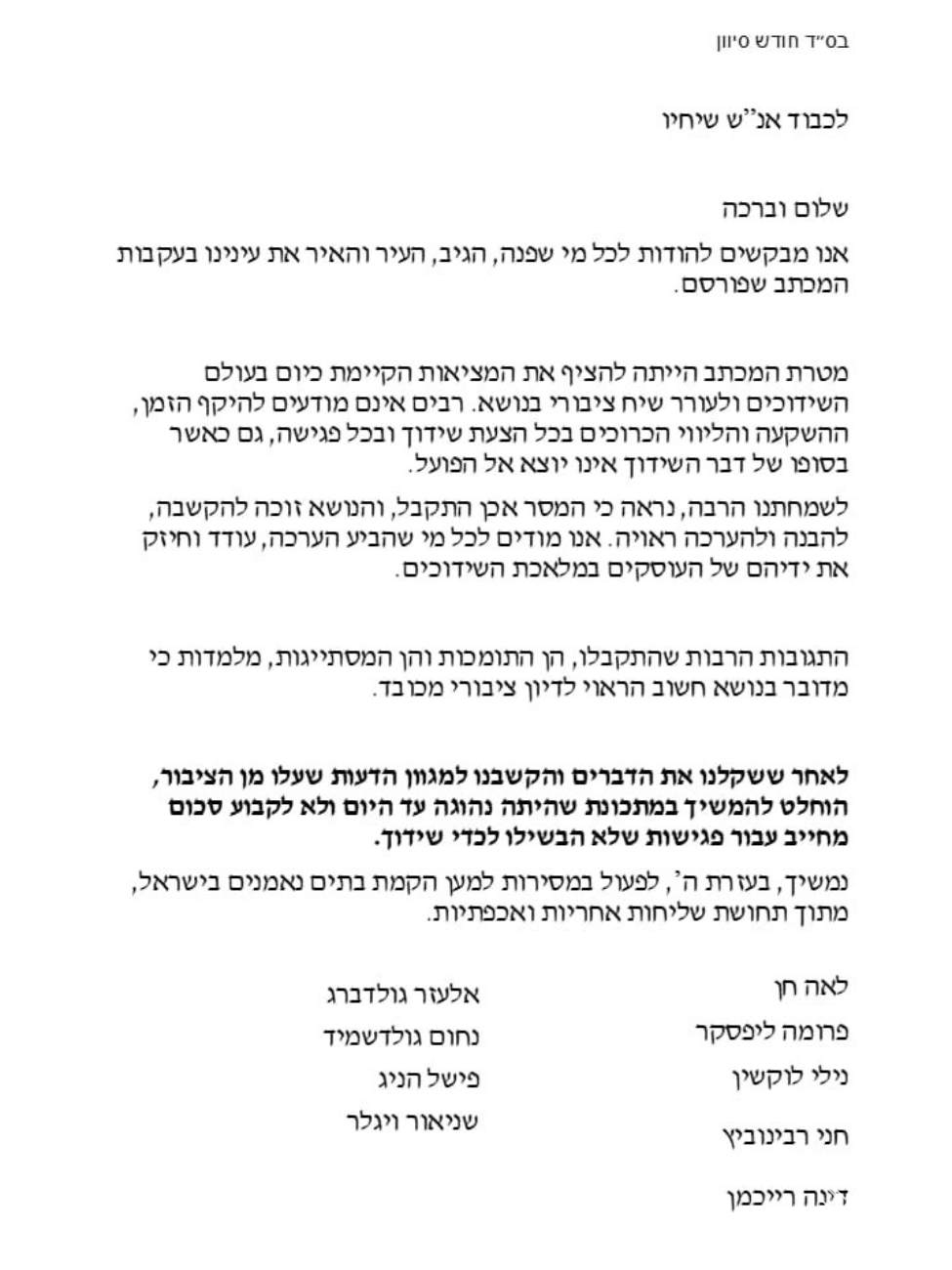
After extensive discussion and public feedback, the shadchanim issued a new letter retracting the original proposal.
The shadchanim thanked the public for the respectful discussion and noted that the response itself, both supportive and critical, showed the issue deserved to be heard. Notably, they said the original goal had been awareness, not necessarily the fee:
“The purpose of the letter was to bring the current reality in the shidduch world to the surface and to spark a public conversation. Many are not aware of the scope of time, investment, and guidance involved in each shidduch suggestion and each meeting, even when the shidduch ultimately doesn’t come to fruition.”
Having felt that message was received, they announced they were returning to the previous model, with no fixed charge for meetings that don’t lead to an engagement.
“A major yasher koach to the shadchanim who listened to the public and reconsidered,” one commentator said online. “This is the right place to mention that this really is exhausting, grinding work, often without any compensation, so there’s nothing wrong with occasionally treating a shadchan even when things didn’t work out all the way.”
 COMMENTS


We appreciate your feedback. If you have any additional information to contribute to this article, it will be added below.