




ט״ז מרחשון ה׳תשפ״ז | October 26, 2026
In Rare Letter, the Rebbe Reveals What He Did Before Asking Anything
In a recently released letter, the Rebbe reveals two rare details about his personal conduct, describing how he responded when people turned to him for help and how he decided when to ask others for assistance.
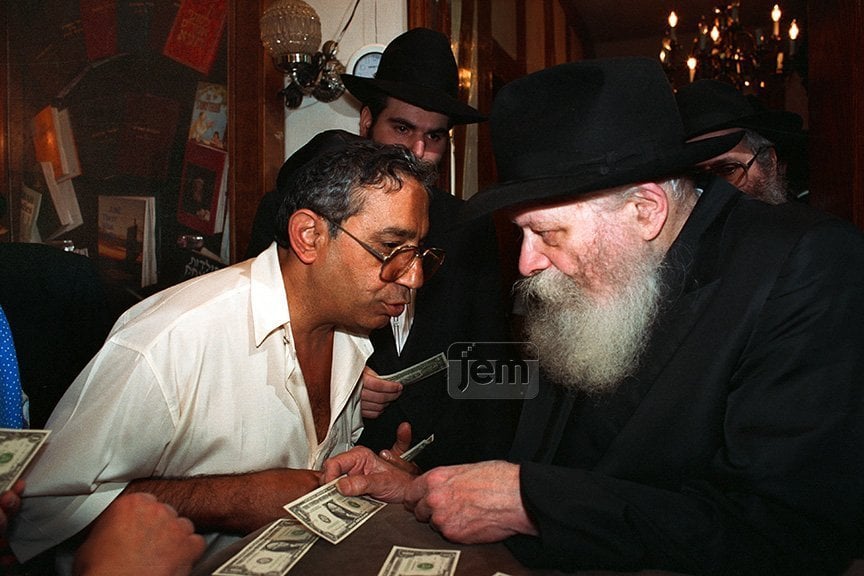
In a recently released letter, the Rebbe reveals two exceedingly rare details about his personal conduct, describing how he responded when people turned to him for help and how he decided when to ask others for assistance.
The tens of thousands of letters from the Rebbe contain guidance on nearly every area of Jewish life, but it is uncommon to find the Rebbe describing his own personal practices.
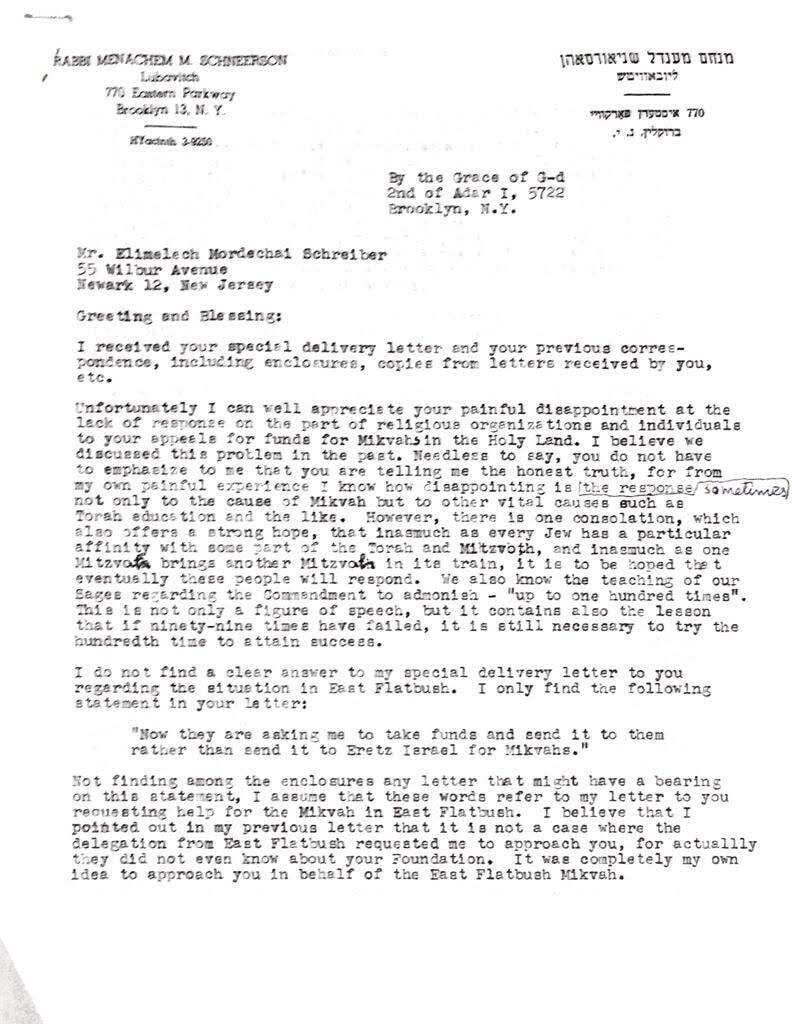
The letter, dated 2 Adar I, 5722 (February 6, 1962), is addressed to Mr. Elimelech Mordechai (Max) Schreiber, a philanthropist who devoted much of his life to building mikvaos in Eretz Yisroel, and offers a rare glimpse into the Rebbe’s personal approach.
Representatives of the Rabbinical Board in East Flatbush had approached the Rebbe after construction of a local mikvah stalled due to a lack of funds.
The Rebbe decided to reach out to Schreiber personally, explaining why he did so despite Schreiber’s reservations about redirecting funds to a project in America.
“Whenever I approach anyone with any kind of request, I try it on myself first, to the extent that this is possible, namely, what would be my own reaction to such a request,” the Rebbe writes, offering a striking insight into when the Rebbe approached others for help. “If I feel that it would be positive, then I go ahead with it. This is also what happened when I wrote my last special delivery letter to you.”
This candid explanation sheds light on the thought the Rebbe gave to the thousands upon thousands of requests he made of others, whether approaching individuals privately through correspondence and yechidus or making requests publicly at farbrengens. Before asking someone to do something for others, the Rebbe first considered how he himself would respond if approached with a similar request.
Toward the end of the letter, the Rebbe addresses Schreiber’s hesitation by emphasizing the principle of Hashgacha Pratis: “Everything happens by Divine Providence which extends to everyone and everything to the minutest detail.”
The Rebbe then offers a rare description of his own commitment to helping Yidden, explaining that he strives to respond to every request for assistance, regardless of the limitations of his personal resources or the funds at his disposal.
“In view of the above, whenever anyone approaches me for any kind of help, I try my best, regardless of the strained resources, both personal as well as of any fund at my disposal, to respond with some help; if the request is for financial help; or to give any other personal assistance if the request is in some other area, if it is at all kosher from the Torah viewpoint.”
The Rebbe continues, explaining that the very fact that someone approached him was itself an expression of Divine Providence, creating a responsibility to respond.
“For inasmuch as the request came to me, I consider it Providential and feel that I must respond in some positive way, however limited it may be, because of circumstances.”
For the Rebbe, a person turning to him is not a random interference. The fact that this particular person came to him was itself part of Hashgacha Pratis, and it carried a responsibility to do something to help. The Rebbe explains that this was precisely why he reached out to Schreiber on behalf of the East Flatbush mikvah.
“This is what happened also in the case of the Mikvah of East Flatbush when the delegation came to me for advice and help. This is why I turned to you and, as above, I leave it to you to decide in the matter as you may deem fit.”
*
The Rebbe Responsa app contains more than 5,000 of the Rebbe’s original English letters, organized by subject and date and accessible from a phone.
The project is also seeking additional English letters from the Rebbe that may be in private hands or scattered throughout other publications. Letters can be sent to [email protected]. The weekly booklet is available free of charge, and readers can subscribe here.
 COMMENTS


We appreciate your feedback. If you have any additional information to contribute to this article, it will be added below.