



י״ט אלול ה׳תשפ״ו | September 1, 2026
I Wanted My Children to Speak Yiddish, Here’s What Worked
“I’ve often heard parents say that they would love for their children to speak Yiddish, but they’re not sure how to make it happen, especially when everything around them is in English. I don’t claim to be an expert in language or chinuch, but I can share what worked in our home.”
By a Lubavitch mother
I’ve often heard parents say that they would love for their children to speak Yiddish, but they’re not sure how to make it happen, especially when everything around them is in English.
I don’t claim to be an expert in language or chinuch, but I can share what worked in our home. And now that my children are older, I can look back and see that the effort we put in when they were young really did pay off.
For us, the main thing was very simple: Yiddish had to be the language of the home.
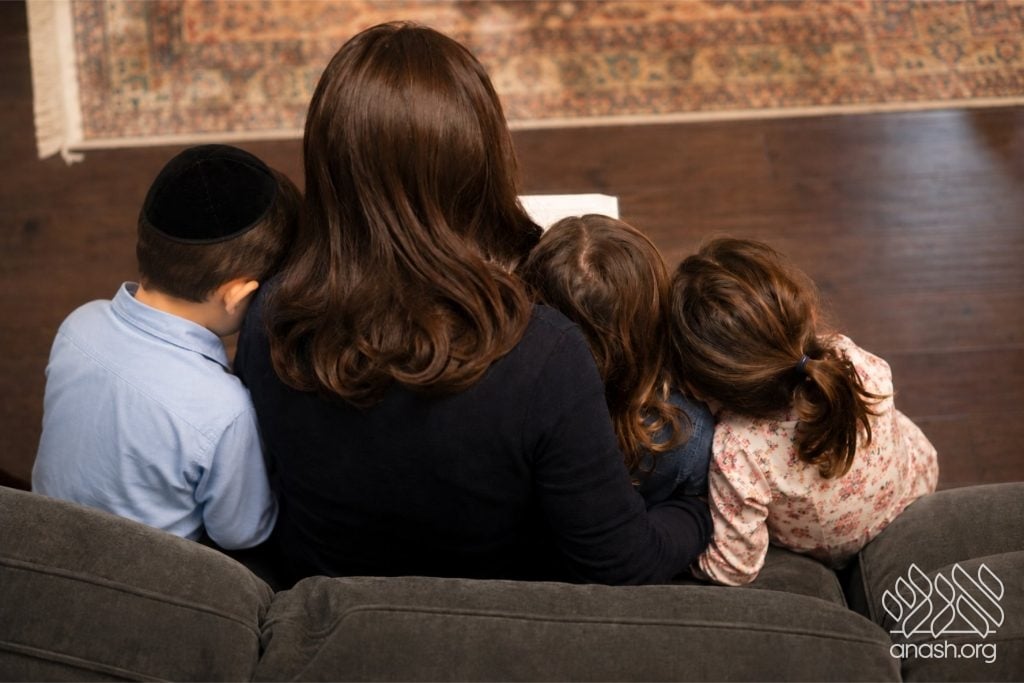
From when my children were little, I spoke to them in Yiddish. Not just certain phrases, or when telling them to wash negel vasser or say a bracha, but regular, everyday Yiddish. Getting dressed, eating breakfast, talking about what happened that day, asking for something, telling a story, everything.
Interestingly, my husband and I actually speak English to each other (Yiddish is not our first language). Our children also read plenty of English books and, of course, speak English fluently. We never tried to keep English out of the house. We simply established that the language between parents and children, and among the children themselves, was Yiddish.
When they were very young, I also tried to make Yiddish the language of their books and stories. We bought Yiddish books, and when I read them an English children’s book, I would often just read the story aloud in Yiddish. With a small child, it doesn’t really matter what language is printed on the page. They are listening to Mommy tell them a story, and for us that story was told in Yiddish.
Of course, once they started going to preschool and spending more time around other children, English started coming home with them.
At three or four years old, a child suddenly comes home with a new English word or expression picked up from a friend. I found that the best response was not to make a big deal about it. I didn’t have to say, “We don’t speak English!” or keep correcting them. I would simply respond in Yiddish.
If a child asked me something in English, I answered the question normally, but in Yiddish. That alone was usually enough to bring the conversation right back into Yiddish. The message was natural and unspoken: to others, you might speak English, but with Mommy, we speak Yiddish.
As they got older, though, I discovered that there was another stage that required more effort.
At seven or eight, children begin expressing more complex ideas. Their world is getting bigger, and so is the vocabulary they need to describe it. If all the words they need are readily available to them in English, but not in Yiddish, naturally they will begin falling back on English.
That made me realize that if I wanted my children’s Yiddish to grow, my Yiddish had to grow too.
I began paying more attention to Yiddish words and expressions. We subscribed to a Yiddish magazine and listened to Yiddish story tapes. Without even noticing it, all of us were picking up vocabulary, expressions and ways of saying things that we might otherwise only have known how to say in English.
I would strongly encourage parents who want to maintain Yiddish at home to invest in Yiddish material. Buy the books, get the magazines, put on the story recordings. There are wonderful resources available today, and they make such a difference.
There is another benefit as well. I have found that the Yiddishkeit standard of Yiddish children’s material is often higher, and the content tends to be more eidel. So besides strengthening their language, you’re surrounding your children with stories, ideas and expressions that reflect the Yiddishe atmosphere you want in your home.
I also learned not to become overly nervous about an occasional English word. Sometimes I don’t know the Yiddish word. Sometimes I’m not even sure there is a commonly used Yiddish word. So we borrow the English word and keep going. When the sentence and conversation are taking place in Yiddish, one English word here and there isn’t going to change that.
Today, one of the nicest things for me is to watch the results.
My children are teenagers now. They are completely comfortable in English and read plenty in English. My husband and I still speak English to each other. And yet, when my children speak to us, they speak Yiddish. When they sit around talking to each other, they naturally speak Yiddish. It isn’t something they have to think about; it’s simply their language with each other.
They can pick up a Yiddish book or magazine and read it easily. They understand a broad range of Yiddish, and some of them have developed a richer Yiddish vocabulary than I have. Sometimes they’ll use a word and I’m the one who has to ask what it means!
For me, that is especially gratifying to see. Yiddish didn’t remain something they associate only with grandparents, school, or certain expressions. It became a living language for them, the language they grew up speaking to their parents and siblings.
It does take consistency and intention, especially when you live in an English-speaking environment. But looking back now and hearing my teenage children chatting naturally among themselves in Yiddish, I can say that the effort was very much worth it.
 COMMENTS


I wish much more families in Crown Heights would adopt the Yiddish speaking.. Yasher koach!
While many people react as you do, wishing for Yiddish to be more mainstream and included in our lifestyle. The writer of this article is encouraging us, that it can be done if we apply the effort. She definitely makes the case that it’s well worth it.
This is amazing. Such a great method, hatzlacha with your children and anyone who follows this!
Story tapes. In our house, my wife doesn’t talk yiddish at all, and the kids are fluent!! Don’t underestimate the power of storytapes.
What type of story tapes are out there that is our Yiddish?
there is so much good content from the polisher. kids pick it up easily. im talking from experience.
Books! Read to them from the many books that are out there and you can pronounce it our way. There are literally thousands of books for younger kids.
Please share links to Yiddish resources (books, tapes, etc)!! Thank you!
https://www.jewishbedtimestories.com/yiddish
A Lubavitcher with our Yiddish. He even has the same stories in english so its very easy to train kids into yiddish this way, just listen to the english one first!
I’m sorry, but it’s a very broken Yiddish. very cringe inducing.
I’m not promoting it, but me and my friends know Yiddish from the Yiddish plays, it works cause its entertaining, also there are many videos on youtube and hotlines, you can also listen to the many story’s and/or yiddish music
Any advice for those of us who have not started out that way ( or only spoke to babies in Yiddish) and would like to bring more Yiddish in without causing older children to resent it?
start with nouns. tish, bet, vasser. they are the easiest and stick best.
the objective is not to forbid english, its to add a yidish taam to the home. every word, phrase, song, expression, flavors the home with more eidelkait and healthy frame of reference.
I’d be honest…
Tell the older kids that in the course of life you learn more and grow more.
This is something we now appreciate the value of more when they were smaller.
This is a gift we want to give the little kids…. I think they’d understand.
Another point that I feel is worth mentioning. I know plenty families that started their older boys in schools that they were counting on bringing them to Yiddish fluency.
They counted on it, because these schools did it successfully and consistently for a very long time.
How? I don’t know, but they did.
For some reason, that stopped or considerably weakened, so the parents realized they need to get more involved if they want their littler kids to know Yiddish
Visit Rabbi Goldstein’s website.
He has many stories in Yiddish available.
Chinuchtime.com click on stories-tab then look for the Yiddish-tab.
Also, Rabbi Weinstock made many very interesting children’s stories in Yiddish, probably available online.
Also Reb Yomtov Ehrlich.
tzeirei hatmimim camp has put out nice videos, well done, by rabbi avrohom browd
It is truly remarkable and unbelievable how much there is out there in Yiddish.
Most stores in Monsey, Boro Park and Williamsburg have a wealth of things. The nice thing about books, is that you could read them to your children and your older kids could read them to your younger kids in Lubavitch pronunciation.
They’ve worked absolute wonders in our home, and I recommend them highly to you.
We love greenfelds because they have a website and amazing customer service and a shluchim discount to boot
https://www.greenfieldjudaica.com/books-yiddish-books-young-readers.html
Any other examples of story tapes in our (litvishe/russian) Yiddish?
Rabbi Phillips positive section on his phone line
The 39 Melachos.
It’s also very educational, kids learn a lot
https://storytymewithrabbijuravel.com/products/the-39-melachos-in-yiddish?_pos=1&_sid=afa033869&_ss=r
Comics! Use comics.
While there is great debate about the use of comics in our children’s education. I tell you with certainty that comics in Yiddish will give your kids a ton of yiddish.
My younger aged children really enjoy the yiddish stories on jewishbedtimestories.com
For little kids listening to yiddish songs is a great tool. Chani brod and morah baila bronshtein have cds on parsha, yom tov and minhogim.
Thanks for starting this thread here!
Wonderful inspiring article
Thank you!
so i remember way back when, in preschool, i only knew what yiddish sounded like, but didn’t know any yiddish, only things like “gutte nacht” and thats it, and in preschool, everything was in yiddish, unless you asked the teahcer something in english, she would respond in english, but that was it, so, what did i learn in preschool being taught in a language i didnt understand? zilch, i do recommend to schools, just cuz you think yiddish is more “chassidisheh” doesnt mean it helps anyone, consult the parents before making everything in full fledged yiddish