




י״ט אלול ה׳תשפ״ו | September 1, 2026
Aguch: The Rebbe’s Picture Is Not an Advertising Tool
In a newly released public letter, Agudas Chassidei Chabad Haolamis (Aguch) calls on Chassidim to exercise greater care and sensitivity in the use of the Rebbe’s picture, videos and sichos in advertisements, fundraising campaigns, personal materials and graphic design.
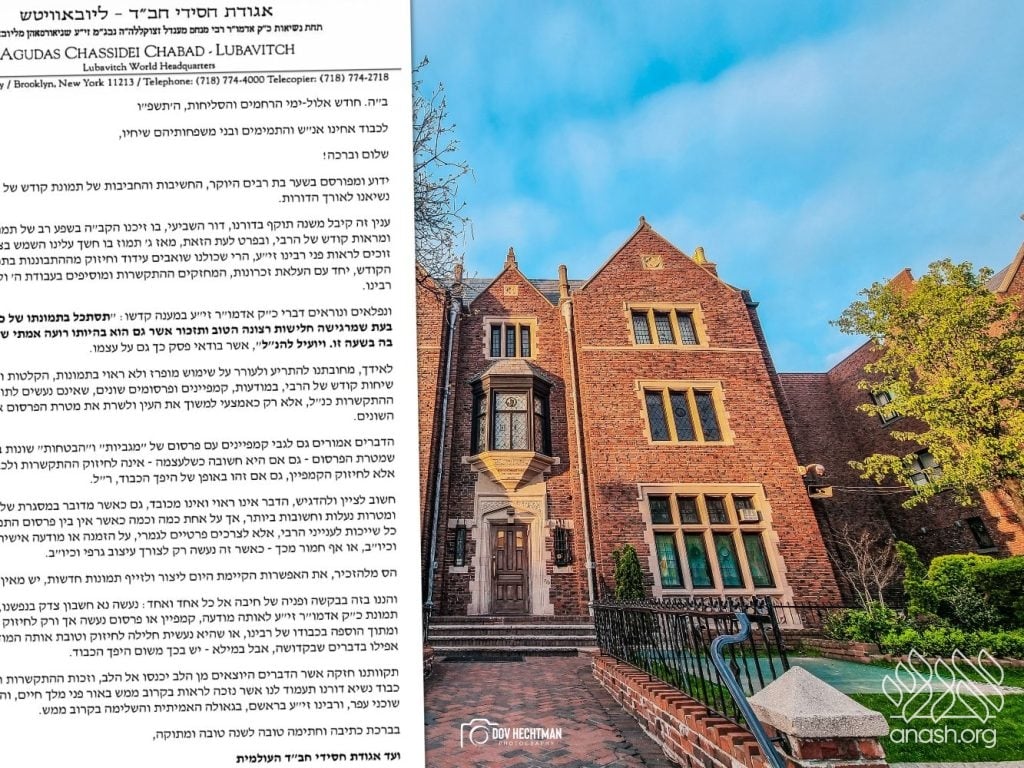
In a newly released public letter, Agudas Chassidei Chabad Haolamis (Aguch) calls on Chassidim to exercise greater care and sensitivity in the use of the Rebbe’s picture, videos and sichos in advertisements, fundraising campaigns, personal materials and graphic design.
The letter begins by emphasizing the extraordinary preciousness of pictures of the Rebbeim, and particularly of the Rebbe. In the years since Gimmel Tammuz, Chassidim “draw encouragement and strength from contemplating the Rebbe’s picture and holy images,” strengthening their hiskashrus and avodas Hashem.
Precisely because of that significance, however, they warn against turning the Rebbe’s image into a tool for publicity.
The letter decries the “excessive and inappropriate use” of the Rebbe’s pictures, videos and even sichos in campaigns and advertisements where they are used “as a means to attract the eye and serve the purpose of the advertisement or advertisers.”
That distinction applies even to worthy causes. Aguch specifically mentions fundraising campaigns that use the Rebbe’s image or various “promises” in the Rebbe’s name to bolster a campaign, stressing that the concern remains even when the money is being raised for matters of kedushah.
The letter is even more pointed regarding uses that have no direct connection to the Rebbe, such as personal invitations, announcements and profile pictures, or when the Rebbe’s image is included simply “for the sake of graphic design.”
Turning to the growing phenomenon of AI images, they write, “It goes without saying, the possibility that exists today to create and fabricate new pictures, something from nothing, rachmana litzlan.”
The issue was first addressed on Anash.org earlier this year in an extensive article by Rabbi Yisroel Shmotkin, himself a longtime member of Aguch, titled “The Rebbe’s Holy Image Isn’t Meant as Artwork.” In his article, he distinguished between using the Rebbe’s picture itself as a source of hiskashrus and respect, and employing it as a means to promote something else.
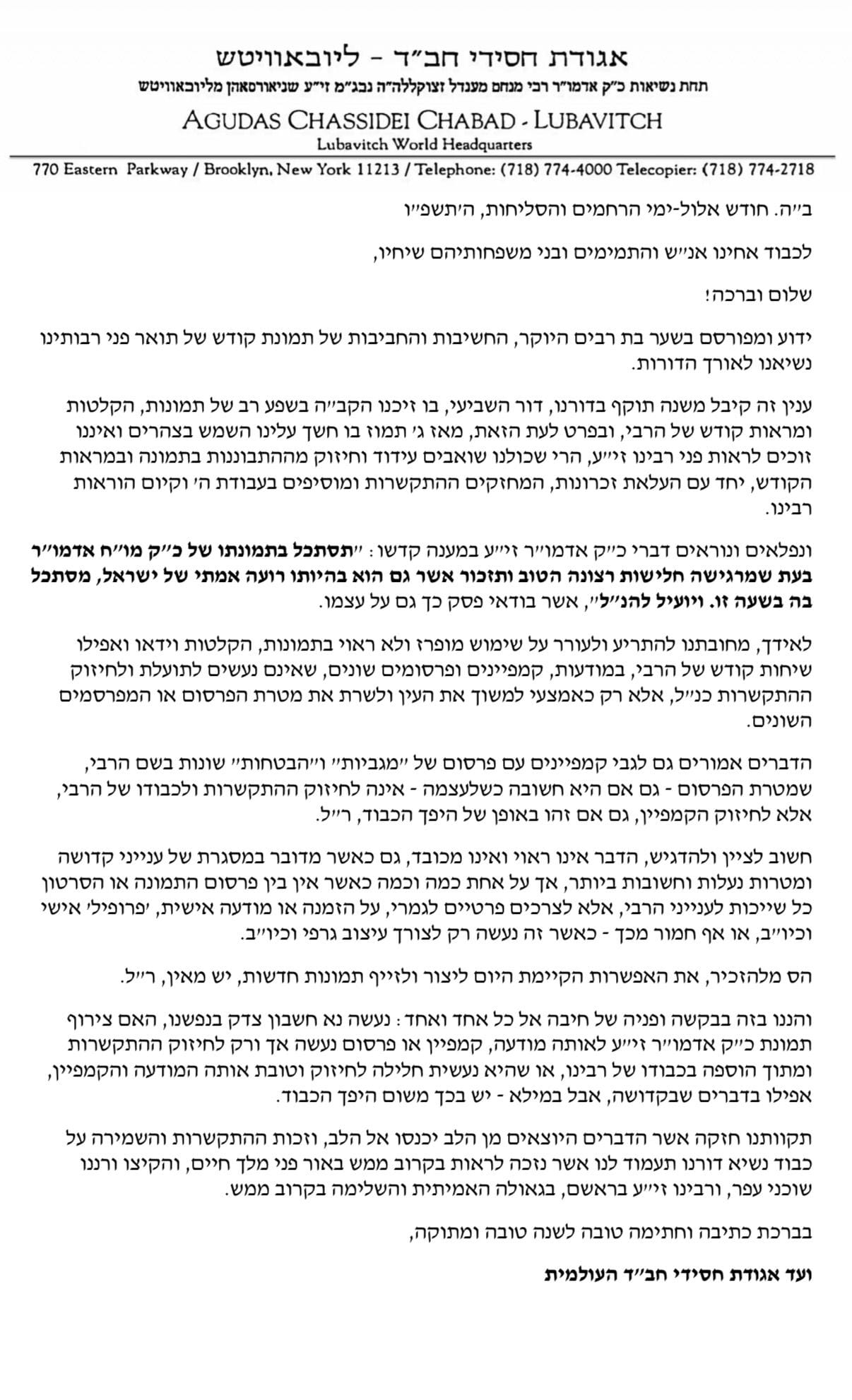
The full letter:
B”H. Elul, the Days of Mercy and Selichos, 5786
To our brethren, Anash and the Temimim and their families, may they live and be well,
Greetings and blessings!
It is well known and widely recognized how precious, important and beloved are the holy pictures depicting the faces of our Rebbeim throughout the generations.
This has taken on even greater significance in our generation, the seventh generation, in which Hashem has privileged us with an abundance of photographs, recordings and holy images of the Rebbe. Particularly at this time, since Gimmel Tammuz, when the sun darkened for us at midday and we no longer merit to see the face of our Rebbe, zy”a, we all draw encouragement and strength from contemplating the Rebbe’s picture and holy images, together with recalling memories, which strengthen our hiskashrus and add to our avodas Hashem and fulfillment of the Rebbe’s directives.
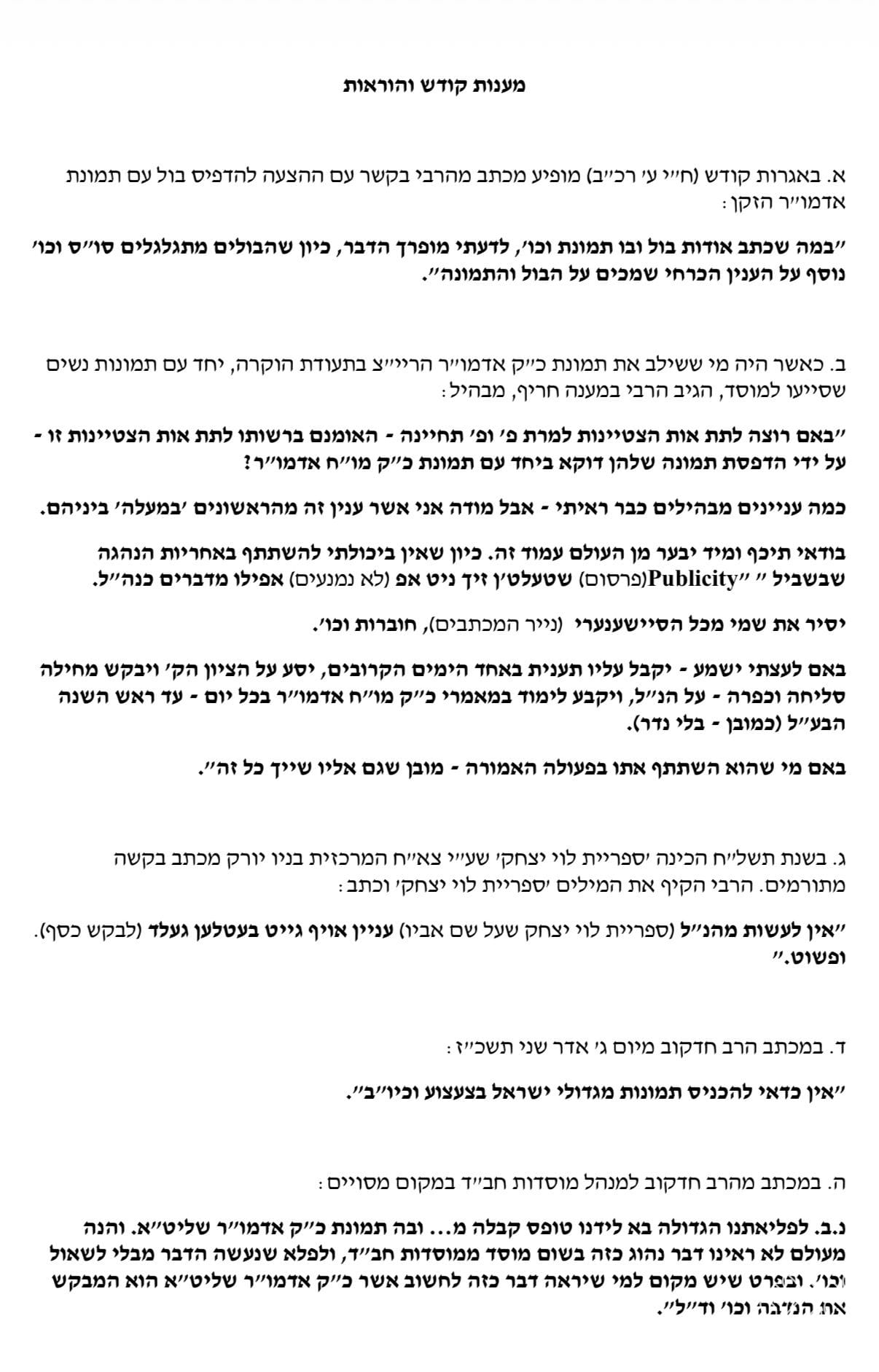
Wondrous and awe-inspiring are the Rebbe’s holy words in his response:
“Look at the picture of my father-in-law, the Rebbe, when you feel your good will weakening, and remember that he too, as a true shepherd of Yisroel, is looking at you at that very moment. This will help with the above.”
Certainly, the Rebbe ruled this way regarding himself as well.
On the other hand, it is our obligation to warn and arouse awareness regarding the excessive and inappropriate use of the Rebbe’s pictures, video recordings and even holy sichos in advertisements, campaigns and various publicity materials, when these are not being used for the purpose of strengthening hiskashrus, as described above, but merely as a means of attracting the eye and serving the purpose of the advertisement or the various advertisers.
This also applies to campaigns publicizing various “fundraisers” and “promises” in the Rebbe’s name, where the purpose of the publicity, even if it is important in its own right, is not to strengthen hiskashrus and the honor of the Rebbe, but rather to strengthen the campaign, even when this is done in a manner that is the opposite of proper respect, rachmana litzlan.
It is important to note and emphasize that this is inappropriate and disrespectful even when it is done in the context of matters of kedushah and for the loftiest and most important causes. How much more so when there is no connection whatsoever between publishing the picture or video and matters of the Rebbe, but rather it is being used for completely personal needs, on a personal invitation or announcement, as a personal “profile,” and the like; or, even more seriously, when it is done merely for the sake of graphic design and the like.
It goes without saying, the possibility that exists today to create and fabricate new pictures, something from nothing, rachmana litzlan.
We therefore turn with an affectionate request and appeal to each and every individual: Let us make an honest accounting within ourselves. Is the inclusion of the Rebbe’s picture in that advertisement, campaign or publication being done solely to strengthen hiskashrus and with the intention of adding to the honor of our Rebbe? Or, chalilah, is it being done to strengthen and benefit that advertisement and campaign, even when dealing with matters of kedushah, but as a result, it entails the opposite of proper respect?
We have strong hope that words that come from the heart will enter the heart, and that the merit of our hiskashrus and our safeguarding the honor of the Nasi of our generation will stand for us, so that very soon we will merit to see the light of the face of the living King, when “those who dwell in the dust will awaken and sing,” with our Rebbe, zy”a, at their head, with the true and complete Geulah, very soon indeed.
With blessings for a kesivah vachasimah tovah for a good and sweet year,
Agudas Chassidei Chabad Haolamis
 COMMENTS


We appreciate your feedback. If you have any additional information to contribute to this article, it will be added below.