




ל׳ אב ה׳תשפ״ו | August 13, 2026
Historical Find Sheds New Light on the ‘King in the Field’
A remarkable historical find has emerged surrounding the famous mashal of “the King in the Field,” first said by the Alter Rebbe in Elul 5557 (1797), showing that the maamar was said just three months after the newly crowned Russian emperor took a tour through the region to meet people from across his kingdom.
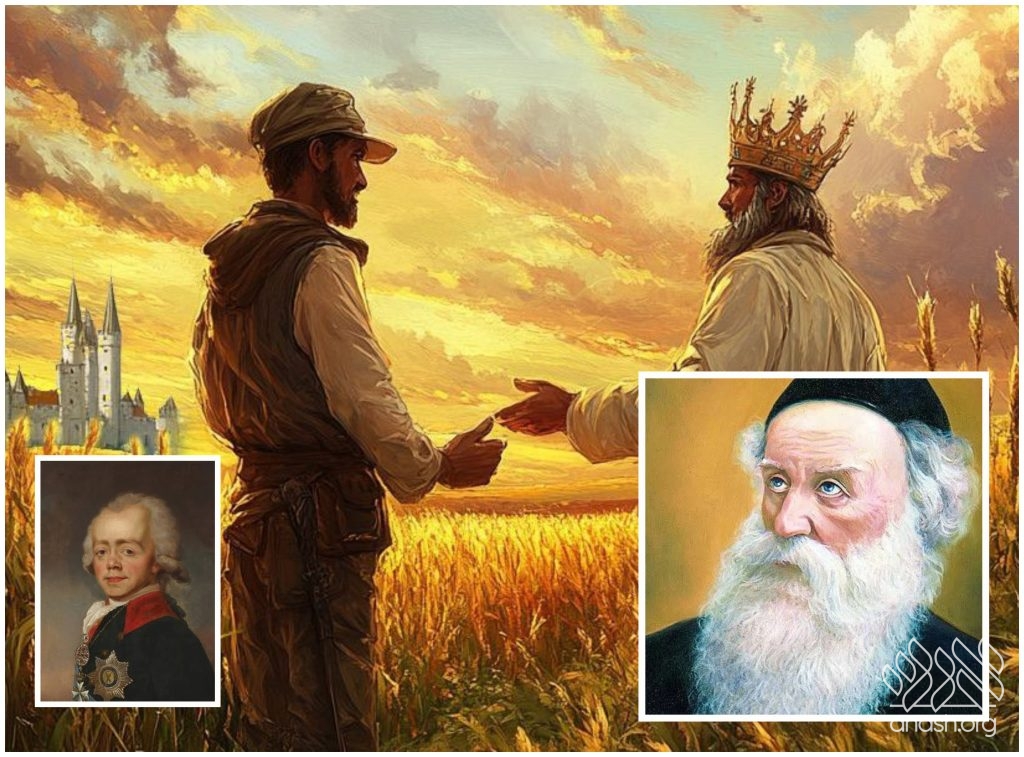
A remarkable historical find has emerged surrounding the famous mashal of “the King in the Field,” first said by the Alter Rebbe on Shabbos Mevorchim Elul 5557 (1797), showing that the maamar was said just three months after the newly crowned Russian emperor took a tour through the region to meet people from across his kingdom.
The discovery was made by Chabad researcher and historian Rabbi Shraga Dovid Homnick while researching the historical background of the Alter Rebbe’s time.
Catherine the Great died in November 1796, and her son, Paul I, became emperor. Paul wanted to change the public image of the monarchy and present himself as a more accessible ruler who personally concerned himself with the needs of ordinary people.
Following his coronation in Moscow in April 1797, he embarked on an extensive journey through the western provinces, traveling through Smolensk, Orsha, Mogilev, Minsk and other cities.
Based on records in the Chamberlain’s Ceremonial Journal for April–June 1797, an official daily record documenting the movements of the Russian imperial court, Anash.org found that on May 7-8, Paul traveled through Orsha, in the very district where Liozna was located and where the Alter Rebbe was then living and teaching.
Further research into the records shows that he was much closer to Liozna than it might initially appear.
Paul I’s May 1797 journey to Orsha took him from Smolensk through Krasnoye and Liady, then along the historic road toward Dubrovna and Orsha. Based on the historical road maps and route evidence, the road between Liady and Dubrovna passed through Kozyany, bringing the imperial party to roughly 30 miles from Liozna, where the Alter Rebbe was then living.
While it cannot be established that Paul passed through Liozna itself, the route evidence shows that he came remarkably close.
Only about three months later, on Shabbos Mevorchim Elul of 5557, the Alter Rebbe delivered the famous maamar beginning “Ani Ledodi Vedodi Li,” introducing the mashal that would become perhaps the most famous mashal in Chassidus: A king who leaves his palace and goes out into the field, where ordinary people can approach him and present their requests.
Fascinatingly, the people living in the region surrounding Liozna had just experienced, in real life, a newly crowned king traveling through the countryside and becoming accessible to ordinary people.
In a further discovery made by Anash.org, a documented incident during Paul’s journey was found that is even closer to the imagery of the mashal. The account, based on archival records from the National Historical Archives of Belarus, describes how, while traveling through the Minsk Governorate, Paul stopped overnight in a village called Nacha.
While there, a large number of local residents gathered together and personally approached the emperor, handing him a petition directly. The archival account identifies them as peasants from the area who wanted to present a complaint concerning religious matters. They took advantage of the czar’s presence and attempted to hand their petition directly to him.
The mashal of Melech Basadeh is perhaps the most famous mashal in all of Chassidus and has become one of the central teachings of Chassidus about Elul.
The mashal was discussed by each of the Rebbeim, and the Rebbe discussed it dozens of times in countless sichos and maamarim, explaining its every detail and every word. The Rebbe also, on numerous occasions, asked that the mashal and its message about the unique opportunity of Elul be publicized, specifically emphasizing the importance of telling children about it.
There is an old story told about the chossid Reb Dovid Horodoker.
When Czar Nicholas II was overthrown in the Russian Revolution of 1917, Reb Dovid wept. “Why do you cry over the fall of a tyrant?” he was asked. “I weep,” he replied, “because a mashal in Chassidus is gone.”
He was referring to the mashal of a king in Chassidus, which explains a dimension of our relationship with Hashem that is difficult to grasp through any other metaphor. For Chassidim living under a monarchy, the concept of a king was tangible. Without that reality, the mashal would be far harder to experience in the same way.
This remarkable historical find offers a new glimpse into how the mashal the Alter Rebbe taught was an extremely relatable mashal. Indeed, the King had quite literally been in the field only months earlier, in the very region surrounding Liozna.
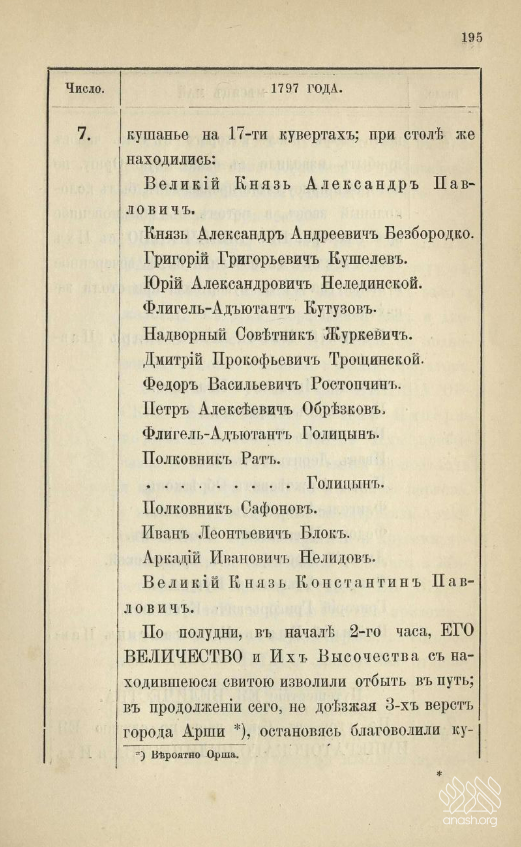
Departure toward Orsha on May 7.
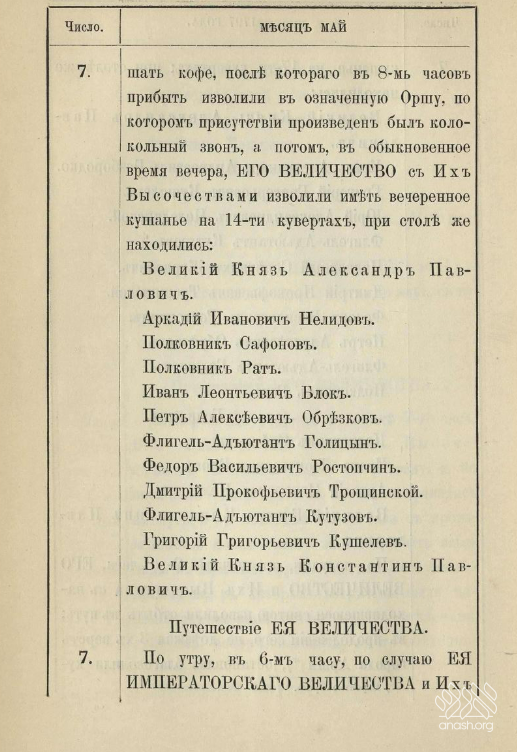
Evening arrival and dinner list in Orsha on May 7.
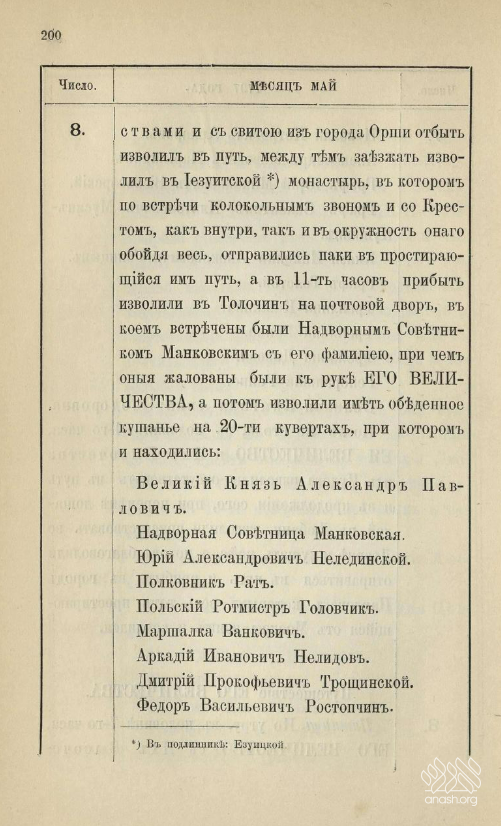
Departure from Orsha on May 8.
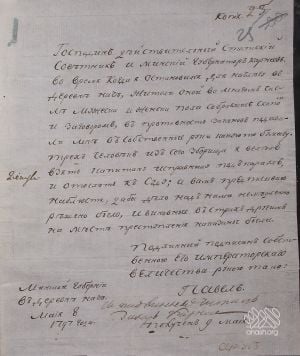
A handwritten note by Czar Paul I describing the incident in Nacha.
 COMMENTS


As far as I know not all the rebbeim spoke about it, the rebbe really turned it into a “thing”
Please share the podcast link
להעיר שבפסח אדמו”ר הרייץ אמר את השיחה על האוויר של חודש אלול
It is not appropriate to have two thumbnail photos on the same picture, of a Holy Tzadik and Nosi the Heligeh Bal Hatanya V’Hashulchan Aruch and the other l’havdil alef havdalos. Please consider correcting.
Thank you for saving us from gehinom. What a wonderful correction straight out of shulchun uruch! Hilchos thumbnails siman websites
Before the Alter Rebbe, the Bal Shem Tov discussed the idea of מלך בשדה (however, not connecting it to אלול specifically) כתר שם טוב שי״ב
Didn’t Czar Paul arrest several of the petitioners in Nacha? so it wasn’t quite the same thing as the reception of the king in the field.
The opposite is true
He ordered that they not be chased away and he personally took their petition and looked into their complaint about the corrupt and cruel officials.
This meddling into the corruption of the dukes led directly to his assassination.
It’s amazingly appropriate. Actually, the point of the whole story. A king (his majesty the Czar [Emperor] of all the Russias) has no business in a field! His place is only in his palace, in a royal setting, where his majesty can be observed. It is only through this physical reality (example) that we could achieve any grasp and understanding of the Nimshal at all. Melech Malchai Hamelochim, Hakodosh Baruch Hu, in a field! That’s completely incongruous and not how we could imagine his exalted and unfathomable being. And yet, the Alter Rebbe says here, this is it! He makes his presence felt here, among us, in our weekday lives and attire, the complete opposite of the normal reality. It behooves us to take advantage of such a unique occasion and make the most of it. Only the Alter Rebbe could elucidate this for us and give us a real-life example of what is taking place now! It requires his holy vision and explanations to make us cognizant of what is taking place!
Instead of being sarcastic and snarky, perhaps you should have a look at the מענה to the shliach who had a picture of the Fr. Rebbe and a couple on the same page. I don’t have it תח”י, but suffice it to say, that it was absolutely in line with what this person posted, i.e. it is entirely inappropriate for the picture of the nassi to be on the same page with….
This website, which bH holds to higher standards, should be aware of this.
I believe it was published in a Teshura for a Simpson wedding
אמר צדוקי גלילי, קובל אני עליכם, פרושים, שאתם כותבין את המושל עם משה בגט. אומרים פרושים, קובלין אנו עליך, צדוקי גלילי, שאתם כותבים את המושל עם השם בדף, ולא עוד, אלא שאתם כותבין את המושל מלמעלן ואת השם מלמטן, שנאמר ויאמר פרעה מי ה’ אשר אשמע בקלו לשלח את ישראל. וכשלקה מהו אומר ה’ הצדיק.
just comenting but i think mundshaqin has a article about the moshel coming from magiid and how all the talmisim said it