




י״ז תשרי ה׳תשפ״ז | September 27, 2026
From Yekkishe Buenos Aires to Leading Shlichus Across Argentina
In a podcast interview, Rabbi Tzvi Grunblatt, Head Shliach of Argentina, shares memories of his unlikely path from a Yekkishe home to a Lubavitch yeshiva, his years transcribing the Rebbe’s maamorim, and decades of shlichus in Buenos Aires.
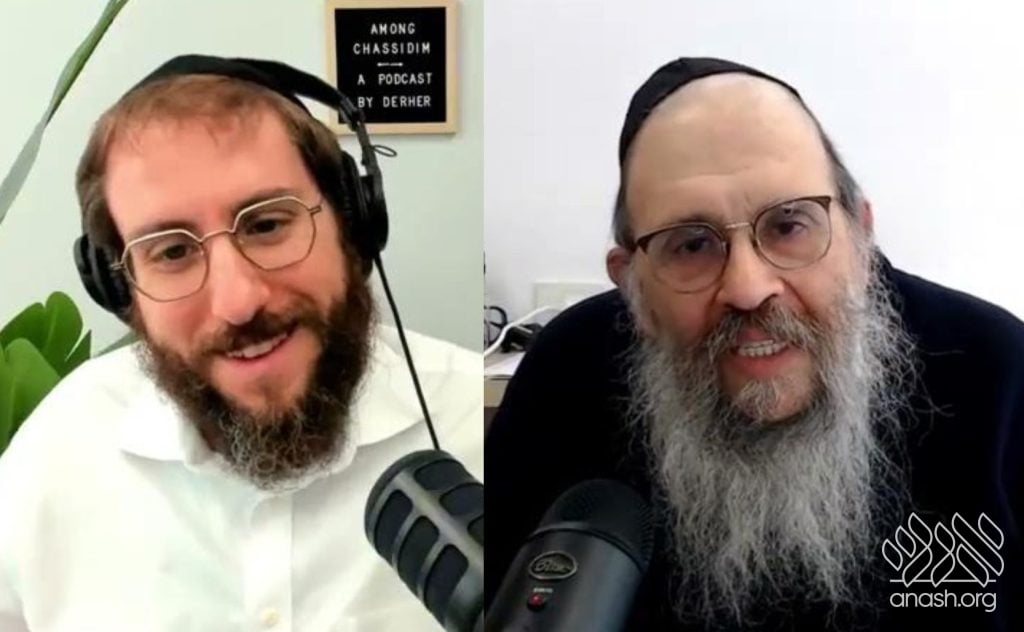
In a recent podcast interview, Rabbi Tzvi Grunblatt, Head Shliach of Argentina, shared fascinating stories and memories spanning his childhood in a Yekkishe home in Buenos Aires, an unplanned path that brought him to a Lubavitch yeshiva in New York, his years close to the Rebbe working on maamorim, and decades of shlichus that followed.
Rabbi Grunblatt’s parents were both Holocaust survivors. His father came from Hungary to Argentina in 1947, and his mother arrived from Berlin by way of Uruguay at age fifteen, on a ship carrying two hundred Jews, only two families of whom kept kosher. His grandmother refused offers to take work that required working on Shabbos.
“Yiddishkeit is what saved our lives,” she told the family. “We’re not about to leave it now.” A week later, he says, they found parnassa.
His father spent the war years in a Hungarian labor camp rather than a concentration camp, and never missed putting on tefillin a single day throughout, even under the eyes of a German commander. He managed a secret Pesach seder in the camp with matzah smuggled to him through censored mail from his own father, and built an underground sukkah as well.
Growing up, Rabbi Grunblatt’s father served for seven years as president of the Yekkishe kehillah in Buenos Aires, but the home was not chassidish. He says he never heard of Chassidus or Tanya until he was twelve or thirteen, when he grew close to Rabbi Berel Baumgarten, the Rebbe’s shliach to Argentina at the time. Rabbi Baumgarten had taken the position under an agreement that he would not formally teach Chassidus or promote Lubavitch, so his influence came entirely through example.
He lived on the sixth floor of his building with no porch, so he built a sukkah using two iron poles jutting out over the street. Every Pesach he brought in water from outside the city for the students to drink. When he grew too sick to walk, he had his entire class come learn around his bed.
At fourteen, wanting to learn full time rather than split his day between a general high school and yeshiva, Rabbi Grunblatt wrote to the Rebbe on his own, without telling his parents or Rabbi Baumgarten. Within a month he received a personal, signed reply blessing him with diligence in learning and instructing him to keep a daily seder of Tehillim divided by the days of the month.
Finding an actual yeshiva proved harder. His father wanted him sent to a more general institution in New York, and an uncle there spent weeks going from yeshiva to yeshiva with Rabbi Baumgarten trying to place him, but each one raised objections over tuition or unfamiliarity with an Argentinian teenager. Chabad alone had no such obstacles.
“I came to Lubavitch because it was free,” he says. “That’s why I came.”
He arrived at the Lubavitch yeshiva on Ocean Parkway in 1969 at age fifteen, having never met a single person there in advance. He saw the Rebbe for the first time entirely by chance, when a door happened to open as he stood in a hallway at 770. His first Shabbos happened to fall on a farbrengen Shabbos.
As his connection to the Rebbe’s teachings deepened, Rabbi Grunblatt became involved in chazara and in the work of preparing the Rebbe’s maamorim, comparing what was heard at farbrengens against earlier reshimos and later hanachos to understand not just the words but the structure and the connections between ideas.
Rabbi Baumgarten suffered a stroke and passed away suddenly, and Anash in Argentina suggested that Rabbi Grunblatt take his place as shliach. When he wrote to the Rebbe accepting, the Rebbe underlined his own words affirming that he wanted it and was capable of it.
In the same letter, when Rabbi Grunblatt wrote that he was not yet married, the Rebbe responded that he should look into shidduchim. Within days he had three suggestions, one of which became his kala in a short time.
At their yechidus before the wedding, the Rebbe gave her five dollars rather than the standard three that other girls received that day, which the couple understood as a bracha meant for both of them.
Their flight to Argentina after the chassuna was delayed and rerouted through several stops. That night, after they landed without their luggage, they learned that a plane had gone down in trees near the airport. Boruch Hashem, they had carried their most precious items, including the Rebbe’s edits and Shabbos candlesticks, in their hand luggage, and not with their luggage which was destroyed.
Building up the community brought its own guidance from the Rebbe. When a group of parents asked him to open a girls’ school, the Rebbe instructed him to first establish a strong, organized base and expand what Chabad already had in Argentina, cautioning that even a small school of fifteen girls would consume most of his time. Decades later, Rabbi Grunblatt and his colleagues took over the failing school, which was down to 118 students, raising it today to over 550 students.
Perhaps the clearest guidance from the Rebbe came during the Falklands War, when a struggling economy left him unable to raise even small funds to distribute the weekly community newsletter. Frustrated, he placed a call to 770 that connected almost instantly, unusual at that time. Rabbi Chodakov relayed the Rebbe’s response.
“We didn’t send you to make the calculations of the economic policy of the country,” the Rebbe said. “Your job is to spread Yiddishkeit and the wellsprings, with confidence.”
Among Chassidim is a podcast by Derher, hosted by Rabbi Yossi Kamman, director of A Chassidisher Derher. The podcast captures the vibrancy of dor hashvi’i through immersive, in-depth conversations. To view all episodes, visit here.
VIDEO:
 COMMENTS


Really enjoyed this magnificent interview !
Rabbi Grunblatt and his Rebbetzin are two incredible shluchim